







![[251103] 한중 ‘합의문’ 없다고 시비 거는 조선일보](https://i.ytimg.com/vi/wEKo-Yb-xck/maxresdefault.jpg)













The Paris Agreement demonstrates that seemingly impossible global challenges can be solved when leaders shift from confrontation to collaboration by reframing problems as opportunities for shared benefit; this approach transformed the failed Copenhagen negotiations (2009) into the historic Paris Agreement (2015), showing that national and local interests can align with global needs when approached with optimism and mutual trust.
How 195 Nations Achieved the Paris Climate Agreement | Christiana Figueres
Added:Basic understanding of climate change science, greenhouse gas emissions, and the global targets to limit warming to 1.5°C or 2°C.
The history of international climate negotiations prior to 2015, specifically the structure of the UNFCCC and the perceived failures of the 1997 Kyoto Protocol and the 2009 Copenhagen Summit (COP15).
Fundamentals of international relations and multilateral diplomacy, including how consensus-based decision-making works among sovereign nations with competing economic interests.
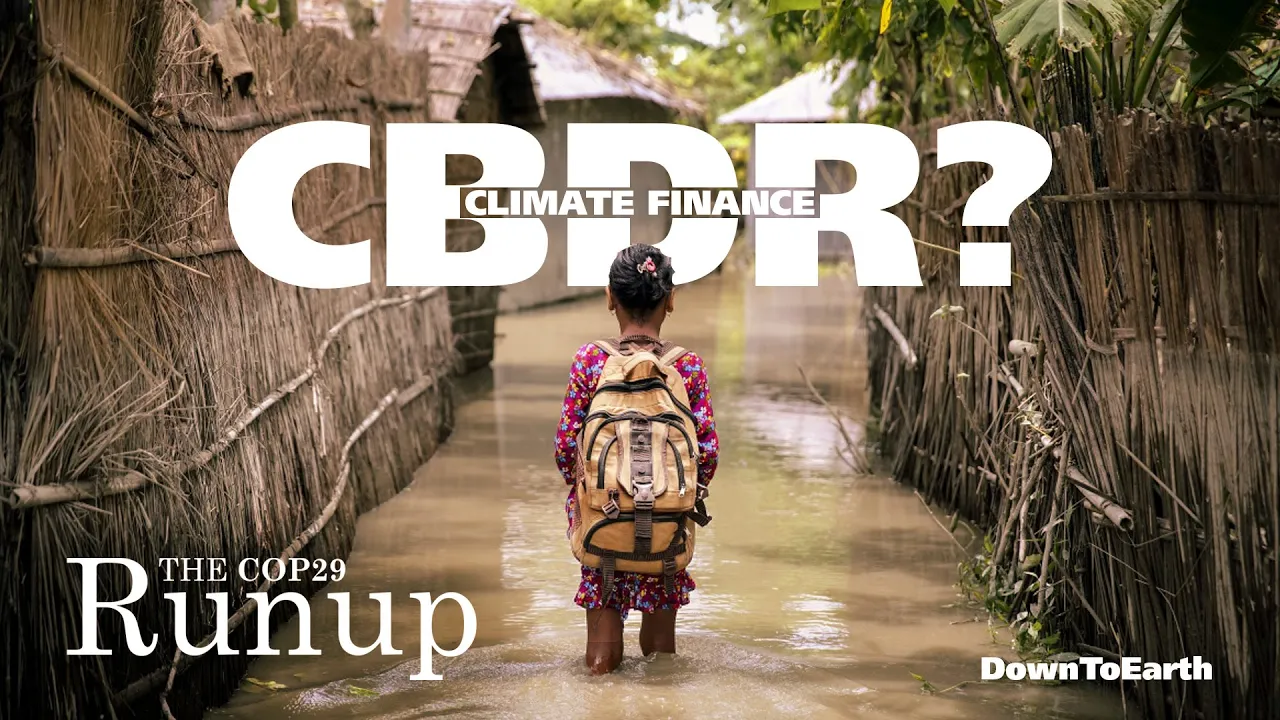
The concept of 'Common But Differentiated Responsibilities' (CBDR), which balances the climate obligations of developed versus developing nations.
The mechanisms of implementation and accountability under the Paris Agreement, such as Nationally Determined Contributions (NDCs) and the Global Stocktake.
The geopolitics of climate finance, including the debates surrounding 'loss and damage' funding and the mobilization of capital from developed to developing nations.
Analysis of the 'ambition gap'—the disparity between current national pledges and the actual emissions reductions required to avoid catastrophic warming.
The role of non-state actors, such as multinational corporations, municipal governments, and civil society, in driving climate action post-Paris.
294.9K views4Klikes14:50Original Release: 2016-05-11
I have one more reason for optimism: climate change.
Maybe you don't believe it, but here is the fact.
On December 12, 2015, in Paris, under the United Nations, 195 governments got together and unanimously -- if you've worked with governments, you know how difficult that is -- unanimously decided to intentionally change the course of the global economy in order to protect the most vulnerable and improve the life of all of us.
Now, that is a remarkable achievement.
(Applause) But it is even more remarkable if you consider where we had been just a few years ago.
2009, Copenhagen.
Who remembers Copenhagen?
Well, after years of working toward a climate agreement, the same governments convened in Copenhagen and failed miserably.
Why did it fail miserably?
For many different reasons, but primarily because of the deeply entrenched divide between the global North and the global South.
So now, six months after this failure, I was called in to assume the responsibility of the global climate change negotiations.
You can imagine, the perfect moment to start this new job.
The global mood on climate change was in the trash can.
No one believed that a global agreement could ever be possible.
In fact, neither did I.
If you promise not to tell anyone outside of this wonderful TED audience, I'm going to divulge a secret that has been gratefully buried by history.
On my first press conference, a journalist asked, "Um, Ms. Figueres, do you think that a global agreement is ever going to be possible?"
And without engaging brain, I heard me utter, "Not in my lifetime."
Well, you can imagine the faces of my press team who were horrified at this crazy Costa Rican woman who was their new boss.
And I was horrified, too.
Now, I wasn't horrified at me, because I'm kind of used to myself.
I was actually horrified at the consequences of what I had just said, at the consequences for the world in which all our children are going to have to live.
It was frankly a horrible moment for me, and I thought, well, no, hang on, hang on.
Impossible is not a fact, it's an attitude.
It's only an attitude.
And I decided right then and there that I was going to change my attitude and I was going to help the world change its attitude on climate change.
So I don't know -- No, just this? Thanks.
I don't know -- what you would do if you were told your job is to save the planet.
Put that on the job description.
And you have full responsibility, but you have absolutely no authority, because governments are sovereign in every decision that they take.
Well, I would really love to know what you would do on the first Monday morning, but here's what I did: I panicked.
(Laughter) And then I panicked again, because I realized I have no idea how we're going to solve this problem.
And then I realized I have no idea how we're going to solve this problem, but I do know one thing: we have got to change the tone of this conversation.
Because there is no way you can deliver victory without optimism.
And here, I use optimism as a very simple word, but let's understand it in its broader sense.
Let's understand it as courage, hope, trust, solidarity, the fundamental belief that we humans can come together and can help each other to better the fate of mankind.
Well, you can imagine that I thought that without that, there was no way we were going to get out of the paralysis of Copenhagen.
And for six years, I have stubbornly, relentlessly injected optimism into the system, no matter what the questions from the press -- and I have gotten better at those -- and no matter what the evidence to the contrary.
And believe you me, there has been a lot of contrary evidence.
But relentless optimism into the system.
And pretty soon, we began to see changes happening in many areas, precipitated by thousands of people, including many of you here today, and I thank you.
And this TED community will not be surprised if I tell you the first area in which we saw remarkable change was... technology.
We began to see that clean technologies, in particular renewable energy technologies, began to drop price and increase in capacity, to the point where today we are already building concentrated solar power plants that have the capacity to power entire cities, to say nothing of the fact of what we are doing on mobility and intelligent buildings.
And with this shift in technologies, we were able to begin to understand that there was a shift in the economic equation, because we were able to recognize that yes, there are huge costs to climate change, and yes, there are compounded risks.
But there also are economic advantages and intrinsic benefits, because the dissemination of the clean technologies is going to bring us cleaner air, better health, better transportation, more livable cities, more energy security, more energy access to the developing world.
In sum, a better world than what we have now.
And with that understanding, you should have witnessed, in fact, part of you were, the spread of ingenuity and excitement that went through, first through nonnational governments, the private sector, captains of industry, insurance companies, investors, city leaders, faith communities, because they all began to understand, this actually can be in their interest.
This can actually improve their bottom line.
And it wasn't just the usual suspects.
I have to tell you I had the CEO of a major, major oil and gas company come to me at the beginning of last year and say -- privately, of course -- he did not know how he was going to change his company, but he is going to change it, because he's interested in long-term viability.
Well, now we have a shift in the economic equation, and with that, with broader support from everyone, it did not take very long before we saw that national governments woke up to the fact that this is in their national interest.
And when we asked countries to begin to identify how they could contribute to global efforts but based on their national interest, 189 countries out of 195, 189 countries sent their comprehensive climate change plans, based on their national interest, concurrent with their priorities, consistent with their national sustainable development plans.
Well, once you protect the core interests of nations, then you can understand that nations were ready to begin to converge onto a common path, onto a common direction of travel that is going to take us probably several decades, but over those several decades is going to take us into the new economy, into a decarbonized, highly resilient economy, And the national contributions that are currently on the table on behalf of national governments are insufficient to get us to a stabilized climate, but they are only the first step, and they will improve over time.
And the measurement, reporting and verification of all of those efforts is legally binding.
And the checkpoints that we're going to have every five years to assess collective progress towards our goal are legally binding, and the path itself toward a decarbonized and more resilient economy is legally binding.
And here's the more important part: What did we have before?
A very small handful of countries who had undertaken very reduced, short-term emission reduction commitments that were completely insufficient and furthermore, largely perceived as a burden.
Now what do we have?
Now we have all countries of the world contributing with different intensities from different approaches in different sectors, but all of them contributing to a common goal and along a path with environmental integrity.
Well, once you have all of this in place and you have shifted this understanding, then you see that governments were able to go to Paris and adopt the Paris agreement.
(Applause) So, as I look back over the past six years, first I remember the day the Paris agreement was adopted.
I cannot tell you the euphoria in the room.
5,000 people jumping out of their seats, crying, clapping, screaming, yelling, torn between euphoria and still disbelief at what they had just seen, because so many people had worked for years towards this, and this was finally their reality.
And it wasn't just those who had participated directly.
A few weeks ago, I was with a colleague who was trying to decide on a Tahitian pearl that he wanted to give to his wonderful wife Natasha.
And once he had finally decided what he was going to buy, the jeweler said to him, "You know, you're very lucky that you're buying this now, because these pearls could go extinct very soon because of climate change."
"But," the jeweler said, "have you heard, the governments have just come to a decision, and Tahiti could have a chance."
Well, what a fantastic confirmation that perhaps, perhaps here is hope, here is a possible chance.
I'm the first one to recognize that we have a lot of work still to do.
We've only just started our work on climate change.
And in fact, we need to make sure that we redouble our efforts over the next five years that are the urgent five years.
But I do believe that we have come over the past six years from the impossible to the now unstoppable.
And how did we do that? By injecting transformational optimism that allowed us to go from confrontation to collaboration, that allowed us to understand that national and local interests are not necessarily at odds with global needs, and that if we understand that, we can bring them together and we can merge them harmoniously.
And as I look forward to other global issues that will require our attention this century -- food security, water security, home security, forced migration -- I see that we certainly do not know how we are going to solve those problems yet.
But we can take a page out of what we have done on climate change and we can understand that we have got to reinterpret the zero-sum mentality.
Because we were trained to believe that there always are winners and losers, and that your loss is my gain.
Well, now that we're in a world in which we have reached planetary boundaries and that we are not just so interconnected, but increasingly interdependent on each other, your loss is no longer my gain.
We're either all losers or we all can be winners.
But we are going to have to decide between zero and sum.
We're going to have to decide between zero benefit for all or living life as the sum of all of us.
We've done it once. We can do it again.
Thanks.
(Applause)
Up Next

9:34
5 Essential Music Theory and Composition Books for Musicians
@AdamNeely
648.4K views•2018-06-04

12:54
Triumph of Orthodoxy Icon: Byzantine Art & History Explained
@BenCallan
2.1K views•2024-08-06

17:40
Visual Storytelling & Future Media: Scott McCloud’s Comic Theory
@TED
332.3K views•2009-01-15

1:42
Game of Thrones Opening Credits: A Cinematic Analysis
@gameofthrones
46.3M views•2011-04-18
Related Study Plans & Knowledge Roadmaps
Structured learning paths in General & Interdisciplinary Studies
general-studies
Elevator Engineering: History, Physics & Cities
01From Hoists to Safety Brakes: The Dawn of Vertical Lift
02Hydraulic vs. Traction: The Engineering Physics of Elevators
03Modern Speed, Safety, and Algorithms
+ 2 more learning modules
12h5 modules
Explore Roadmap
general-studies
Rubber: Material Science, History & Geopolitics
01Origins of Natural Rubber & Mesoamerican History
02The Chemistry of Natural Rubber & Vulcanization
03The Geopolitics of the Rubber Boom & Colonization
+ 2 more learning modules
12h5 modules
Explore Roadmap
general-studies
Containerization: Evolution, Logistics & Trade
01Ancient Trade & Bulk Cargo: Amphorae to Barrels
02The Industrial Revolution & Cardboard Packaging
03The Containerization Revolution: Malcom McLean
+ 2 more learning modules
12h5 modules
Explore Roadmap
general-studies
Textile Tech: Evolution, Labor & Global Impact
01Pre-Industrial Textiles: Handloom & Cottage Industry
02Mechanization: The Spinning Jenny to the Power Loom
03The Factory System & Global Labor Transformation
+ 2 more learning modules
10h5 modules
Explore Roadmap