








![2022개정 [완자 지구과학] I-2-01 대기와 해양의 상호작용(1)](https://i.ytimg.com/vi/EGZeebY0e4k/maxresdefault.jpg)









Blue whales use wind patterns to locate their food sources by detecting coastal upwelling events, where winds push surface water offshore and bring nutrient-rich deep water to the surface, triggering phytoplankton blooms that attract prey species like krill and anchovies; researchers discovered this connection by using hydrophones to track whale movements and found that whales congregate in upwelling regions (which can span 1000 square kilometers) when winds create these conditions, and they may share this information through their loud calls that travel hundreds of kilometers underwater.
Blue Whales Rely on Wind to Locate Food in Coastal Upwellings
Added:The oceanographic process of coastal upwelling, including how wind patterns and the Coriolis effect drive deep, nutrient-rich water to the surface.
The biological profile of krill (euphausiids) and their role as a keystone species in marine food webs.
Basic concepts of sea surface temperature (SST) anomalies and how ocean currents influence marine thermal gradients.
The fundamentals of marine foraging ecology, particularly how large marine predators navigate vast, dynamic habitats to locate patchy food resources.
The impacts of climate change and marine heatwaves (e.g., El Niño) on the stability and timing of wind-driven coastal upwelling systems.
Dynamic Ocean Management (DOM) applications, such as using predictive modeling to adjust shipping lanes and prevent ship strikes on foraging whales.
The use of advanced biotelemetry (satellite tagging) and remote sensing technology to study marine megafauna migration in real-time.
The ecological significance of the 'whale pump' and how whale feeding and excretion cycle nutrients through upwelling ecosystems.
90.8K views5.1Klikes6:06Original Release: 2022-12-19
This SciShow video is supported by Fabulous, an app that helps you start building your ideal daily routine.
The first 100 people to click on the link in the description down below will get 25% off a Fabulous subscription.
[♪ INTRO] The largest creature on Earth, the blue whale, spends most of its time below the ocean waves.
So it stands to reason that these gentle giants aren’t too connected with most things above the water, like, you know, the wind.
Except, new research out of the Monterey Bay Aquarium Research Institute finds that blue whales are actually strongly in tune with the winds blowing around our planet.
And, as it turns out, these 150-ton creatures are using the wind to find their next meal.
Now, blue whales aren’t like sticking a fin out of the water and testing for the wind as a way to find food… that we know of, at least.
Rather, it’s about how the winds interact with the ocean that the whales are relying on to tell them where to fill their giant bellies.
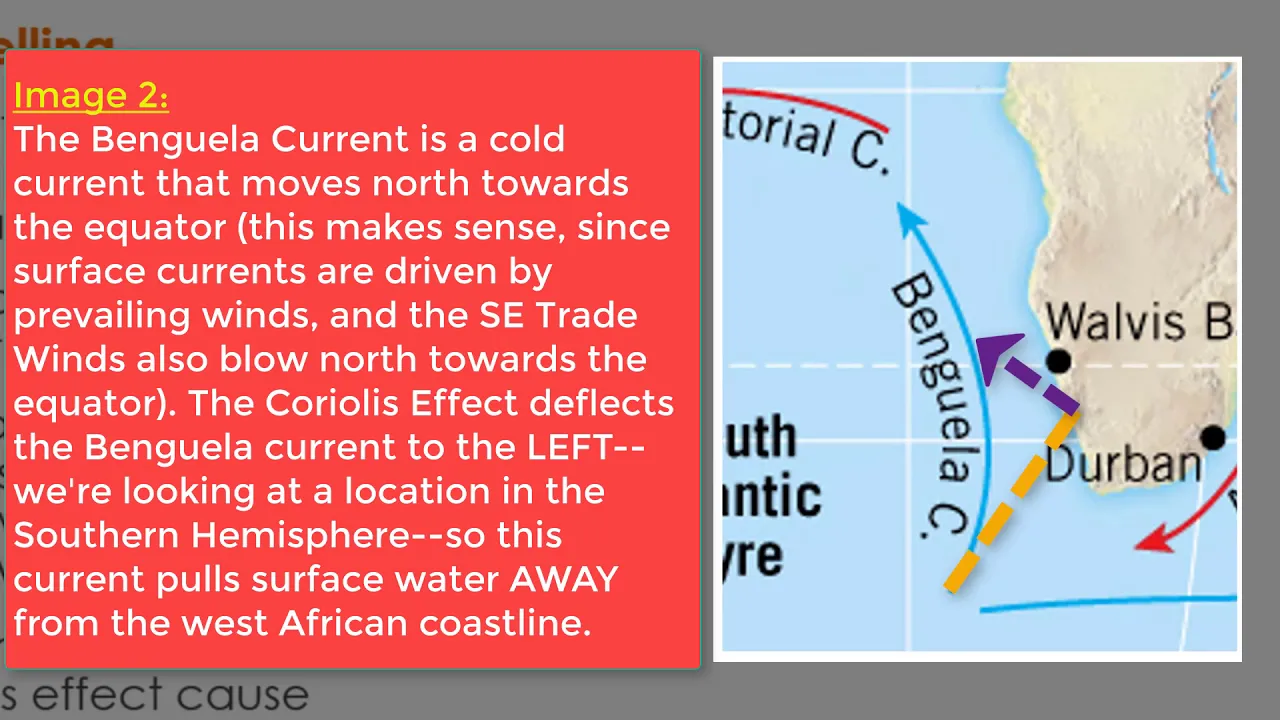
Coasts around the world experience a process called coastal upwelling, where the top layer of water gets pushed offshore by winds and cooler water rises from the depths to take its place.
In the northern hemisphere, like along the California coastline, the process gets jumpstarted by seasonal winds that blow north to south.
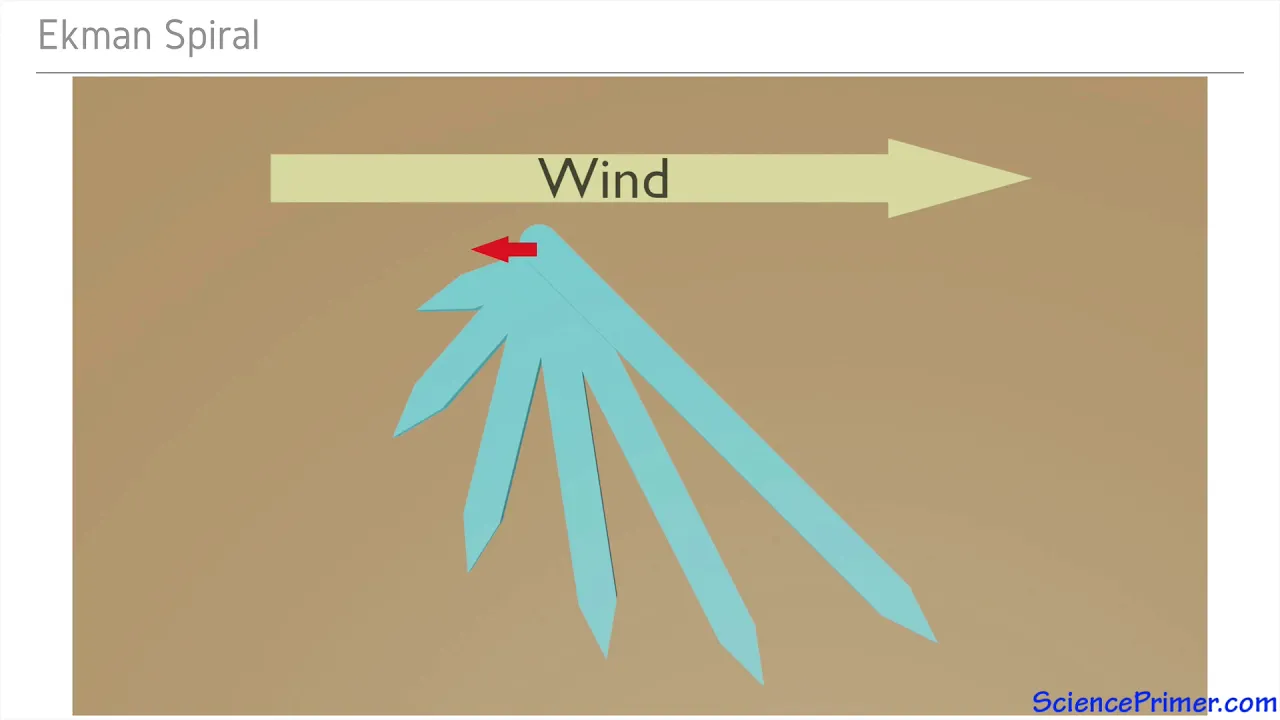
Due to the spin of the Earth and the friction between the wind and the water, the top layer of ocean gets pushed away from the land, perpendicular to the direction the wind is blowing.
As the top layer of water moves away from the land, the colder deep water below moves up, bringing with it a lot of nutrients that have been hanging around in the depths.
This nutrient-rich water is liquid gold; fertilizer for all the tiny plankton, or microscopic photosynthesizers, that live in the surface waters.
And nutrients equal growth.
This pulse of water causes a phytoplankton population explosion, also called a bloom.
Phytoplankton are the base of the ocean food web, so a phytoplankton bloom is like an ocean buffet.
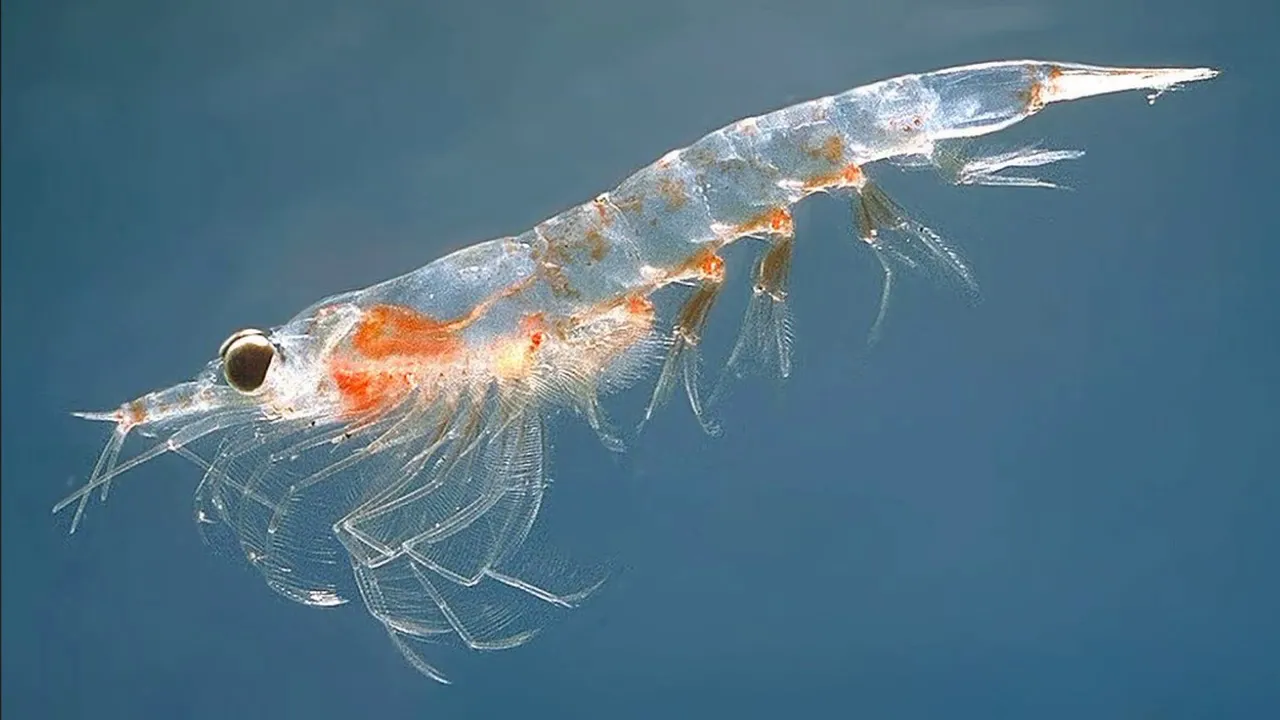
And in earlier research, some of these same scientists found that small prey species, like krill and anchovies, congregate in upwelling regions, summoned there by this buffet.
The authors of this new study hypothesized that the predators of these prey species, like blue whales, might also be flocking to these large patches.
And that would make sense given that otherwise, krill tend to be pretty spread out in the ocean.
And when you eat 20 tons of food in a day, it’s way more efficient if you can swallow a lot of it in one go.
Unfortunately, tracking blue whales to understand their behavior is tricky.
Despite their massive size, they are fast and elusive creatures and have the entire ocean at their disposal to hide.
Researchers have found that one way to better understand them is to listen to them.
So they installed hydrophones, or underwater microphones, on an underwater observatory located just off the California coast in order to listen to the whales.
One of these underwater microphones is a directional microphone, which could pinpoint the specific direction each whale call came from.
And the hydrophone data, in combination with tracking tags on some of the whales, helped researchers determine when individual whales were moving into the area, and where each whale was spending most of its time once it got there.
The data showed that when winds were blowing and causing an upwelling event, blue whales head to the coasts to forage.
Upwelling regions can be massive; those along the California coast can reach 1000 square kilometers in size, roughly a third of the size of the state of Rhode Island.
And there’s a bunch of them.
That’s a lot of whale food.
Based on the behavior they observed through listening and tracking, researchers believe that blue whales are relying on water temperature changes that occur during upwelling, which is a signal that soup’s on.
It also appears that blue whales may be sharing this information with other blue whales, although whether intentionally or not we don’t know.
Blue whale calls are so loud that they travel hundreds of kilometers underwater.
So whales don’t need to be close to each other to catch the gist of the conversation.
Whales can be chatty Cathies, and it may not be deliberate that they’re being overheard Individuals that are far away from the coast may be using sounds from whales who have already reached an upwelling region to navigate to that same spot.
But even if it’s eavesdropping, they are able to forage more efficiently if they can reach a food patch faster, knowing exactly where to find it.
When the winds eventually change direction, the upwelling stops and the prey become more patchy.
The whales head off elsewhere in search of their next all-you-can-eat-buffet.
Unfortunately, traveling long distances is one of the reasons why blue whales are endangered.
Ship strikes are a major hazard for blue whales, and when they’re trekking across entire ocean basins they are inevitably having to cross main shipping lanes.
Or maybe it’s more fair to say that the shipping lanes cross the whale lanes.
Either way, it increases their risk of being hit.
But thanks to this new research, there may be ways to prevent ship strikes in the future.
Researchers could use both hydrophones and wind patterns to accurately predict when blue whales will heading to a specific location for food.
Based on all that information, ecosystem managers and authorities could set restrictions to reduce ship speed or possibly even reroute ships entirely during critical whale migration periods.
So hopefully one day, this research and more like it will lead to the preservation of this iconic species.
Whether you are rerouting a ship or your life, making a change takes a lot of work.
But you don’t have to do the work alone because there’s Fabulous.
Fabulous is the number #1 self care and habit forming app in the app store with over 30 million users.
They provide you with self care and coaching tools based in behavioral science to help you establish meaningful daily rituals and achieve your goals.
One of those daily rituals could be as simple as a three minute coaching session with Fabulous.
Instead of giving you a map and leaving you on your own to find your way, these daily coaching sessions take your hand and walk you down the path toward real change.
With a coach that inspires a shift in your mindset, you can get your day started the right way and win every day.
To start today with Fabulous, just click the link in the description down below.
The first 100 people who click on that link will get 25% off a Fabulous subscription.
Thank you for watching this SciShow video and thank you to Fabulous for supporting it!
[♪ OUTRO]
Up Next

60:35
Kelp Forest Ecology in a Changing Ocean | MLML Seminar
@MossLandingMarineLab
195 views•2025-05-15
50:12
Bacterial Communication: Quorum Sensing and Biofilm Formation Explained
@JHUAAP
12.6K views•2011-06-28
3:21
How Animals Navigate Using Magnetic Fields: Magnetoreception
@SciShow
225.2K views•2012-09-21
7:08
Bacteriophages: Earth's Deadliest Killers and Future Antibiotics
@kurzgesagt
34.6M views•2018-05-13
Related Study Plans & Knowledge Roadmaps
Structured learning paths in Biology
biology
RNAi: Biogenesis, RISC & Gene Silencing
01Molecular Biology Foundations: DNA to Protein
02Introduction to RNA Interference (RNAi)
03Molecular Biogenesis of miRNA and siRNA
+ 2 more learning modules
10h5 modules
Explore Roadmap
biology
Mycorrhizae: Signaling, Biophysics & Ecology
01Foundations of Mycorrhizal Symbiosis
02Molecular Signaling and Root Colonization
03Biophysics and Bioenergetics of Nutrient Exchange
+ 1 more learning modules
11h4 modules
Explore Roadmap
biology
Circadian Clocks: TTFL, SCN & Periphery
01Foundations of Molecular Biology & Gene Expression
02Introduction to Chronobiology and Actograms
03The Core TTFL: Molecular Architecture of the Clock
+ 3 more learning modules
14h6 modules
Explore Roadmap
biology
Population Genetics: Math, Drift & Selection
01Genetic & Probability Foundations
02The Hardy-Weinberg Principle and Baseline Models
03Mathematical Modeling of Natural Selection
+ 3 more learning modules
18h6 modules
Explore Roadmap