


















Mendelian genetics explains how traits are inherited through alleles—specific gene variants located on chromosomes. Humans inherit one allele from each parent, resulting in two alleles per gene. When both alleles are the same (homozygous), the trait is expressed; when different (heterozygous), the dominant allele determines the phenotype while the recessive allele remains hidden. The genotype represents an individual's genetic code, while the phenotype represents their observable physical traits. Punnett squares are used to predict the probability of different allele combinations in offspring, allowing us to understand how genetic traits are passed from parents to children.
Mendelian Genetics: Alleles, Genotypes & Punnett Squares
Added:Understanding of basic cell structure, specifically the nucleus, chromosomes, and how they house genetic material.
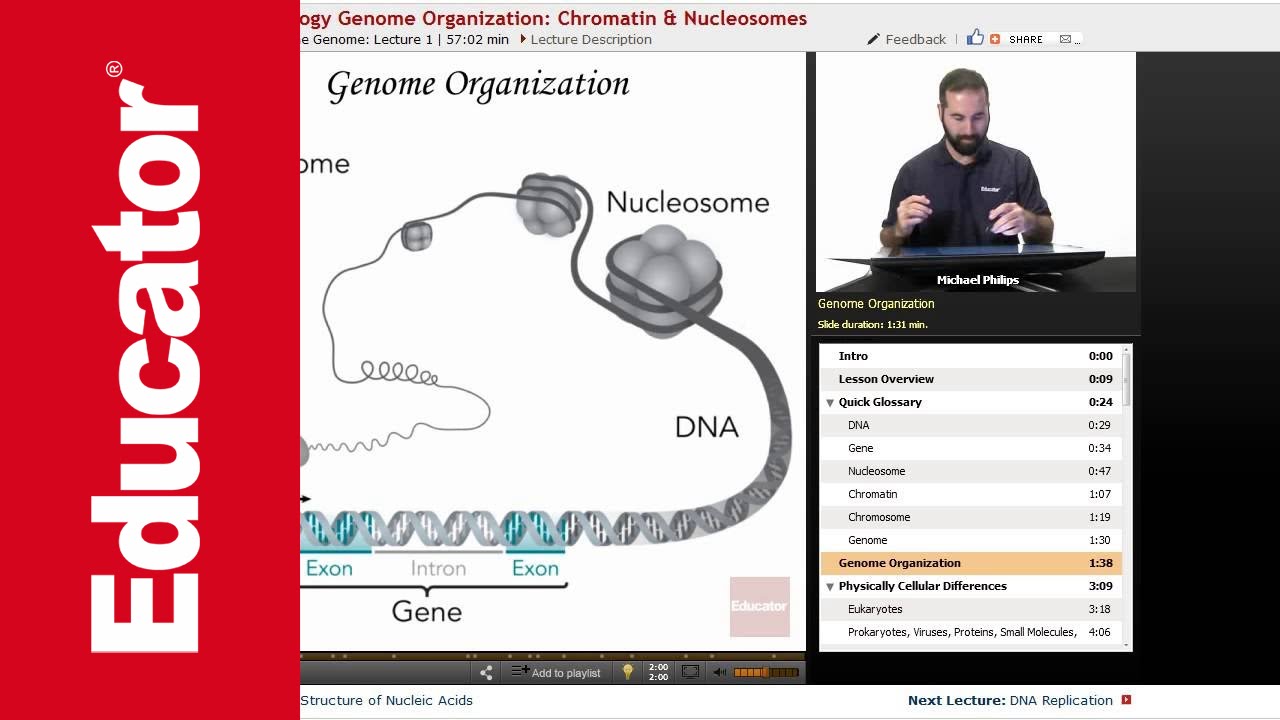
Concept of DNA as the hereditary molecule and what a gene represents at a molecular level.
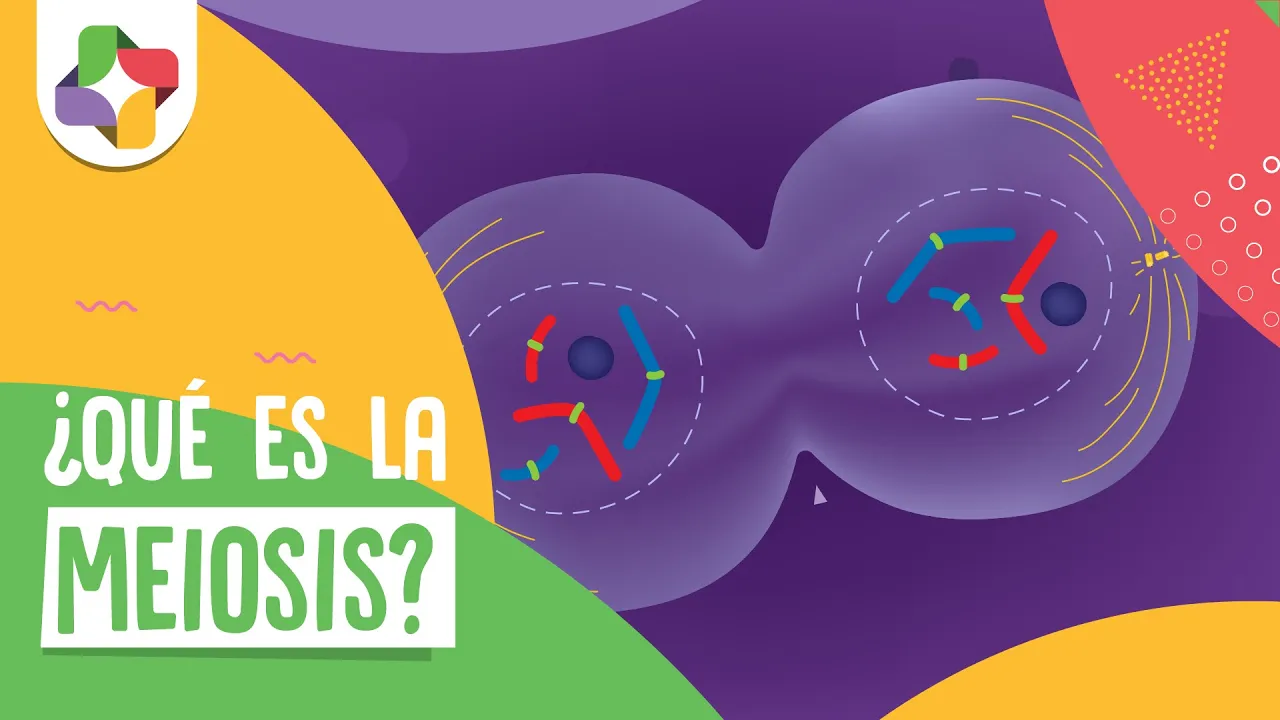
Familiarity with the process of meiosis, particularly how homologous chromosomes separate to form haploid gametes.
Basic understanding of sexual reproduction and the fusion of gametes to form a diploid zygote.
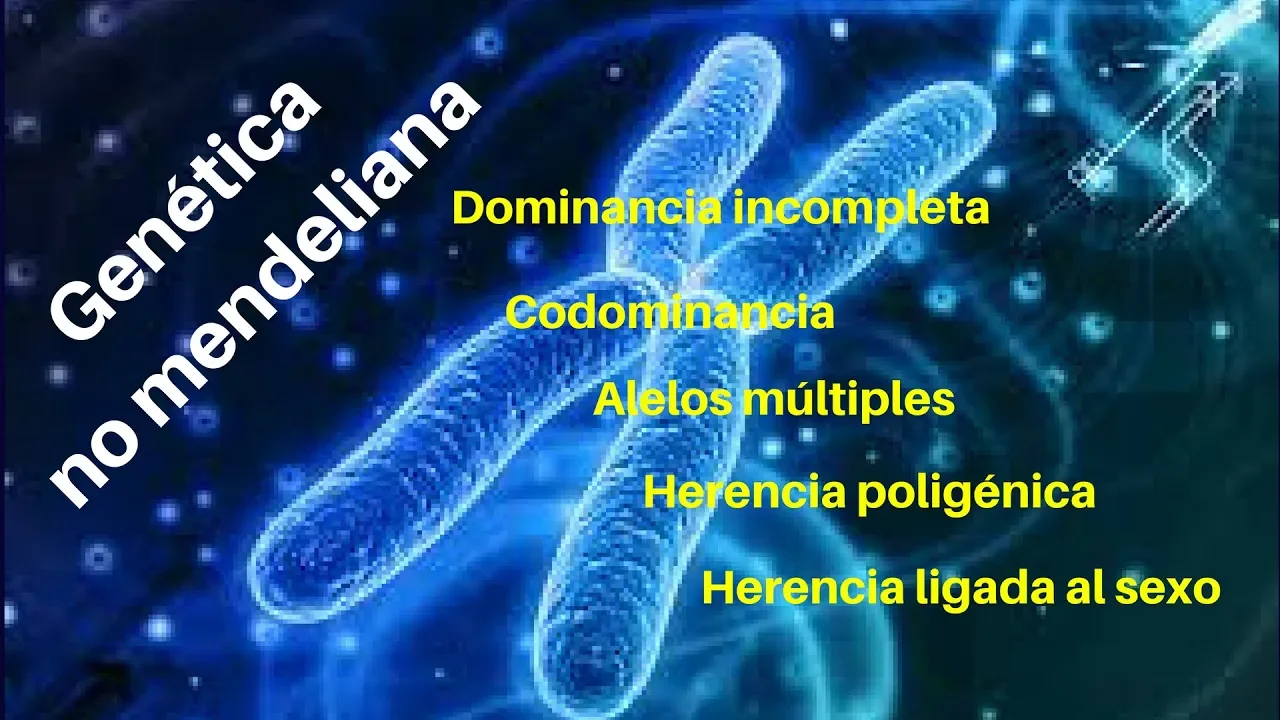
Exploring non-Mendelian inheritance patterns, such as codominance, incomplete dominance, and multiple alleles.
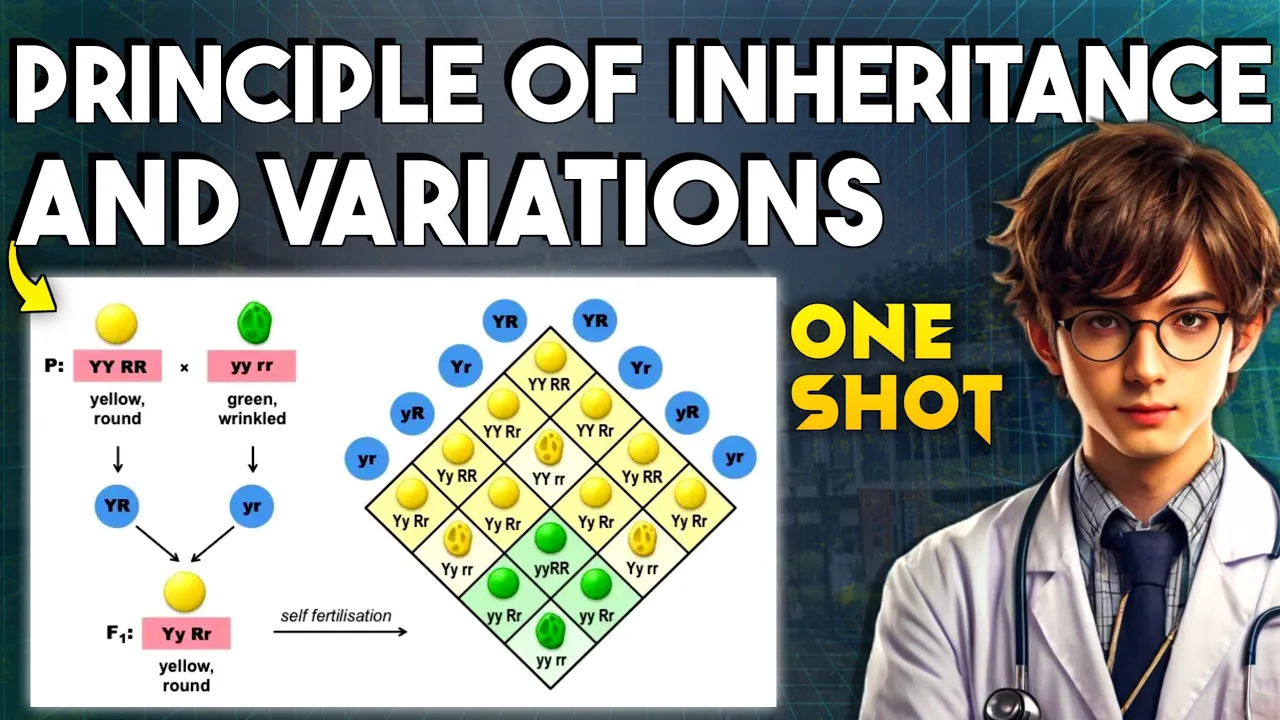
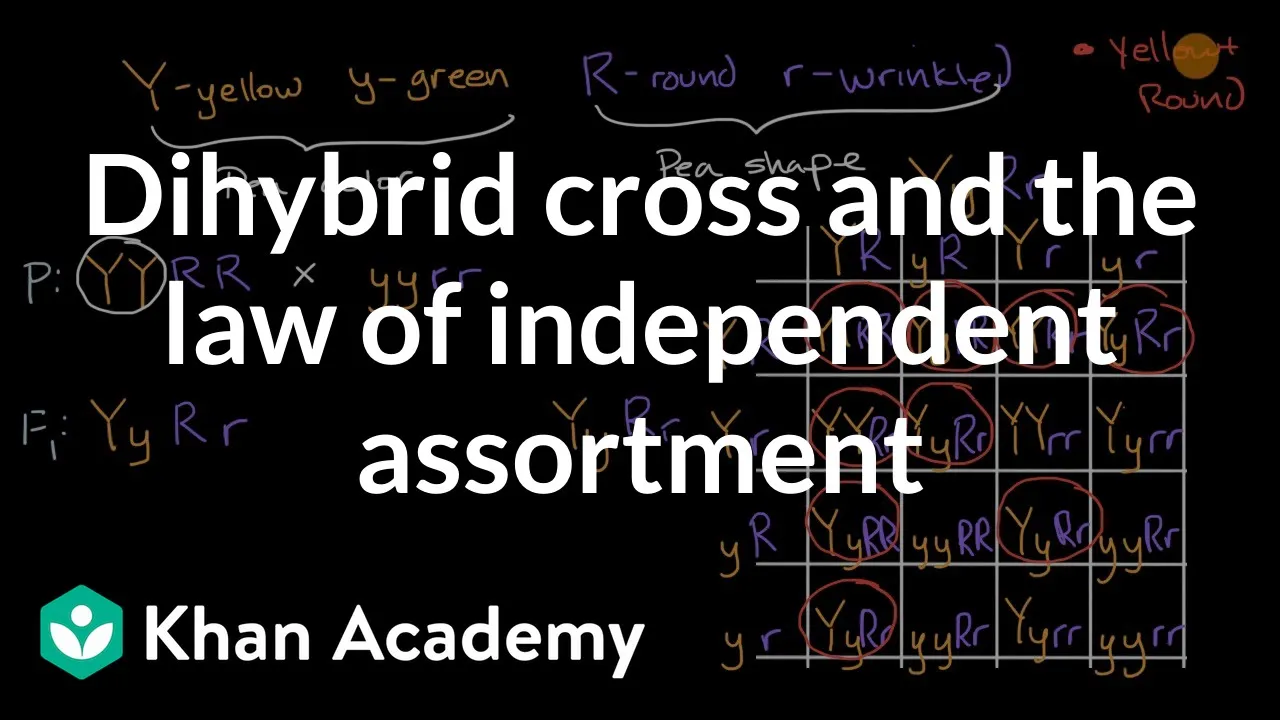
Studying dihybrid crosses to understand Gregor Mendel's Law of Independent Assortment.
Understanding sex-linked inheritance and how traits are passed down via sex chromosomes.
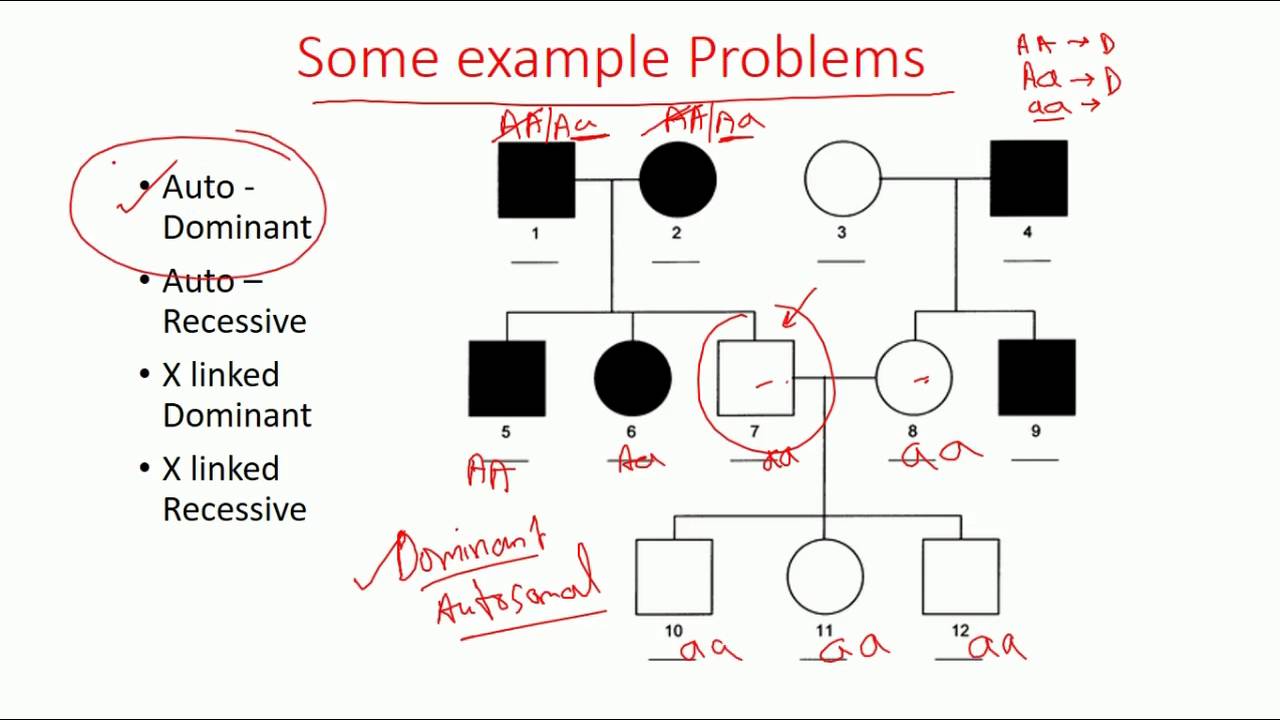
Learning how to construct and analyze pedigrees to trace genetic disorders through generations.
Investigating polygenic inheritance, where multiple genes influence a single phenotypic trait, such as human height or skin color.
648.4K views6.4Klikes5:10Original Release: 2014-06-16
-[Voiceover] An introduction to Mendelian Genetics.
Now before we start, let's review the idea that human cells contain 46 chromosomes, which contain the DNA that makes each cell unique.
23 of these chromosomes were inherited from a person's father and 23 were inherited from the mother.
We can say that each person's made up of a combination of genetic code from both of their parents.
Now sometimes we like to say that we have 23 pairs of chromosomes.
Instead of saying that we have 46 total because that way we remind ourselves that for each chromosome we have a maternal and paternal copy.
Now the first thing I want to introduce is the term allele.
If we have a chromosome here and then an allele is one small section on that chromosome that codes for a specific gene that makes you, you.
Since humans have at least two copies of each chromosome, we can say that humans usually have at least two alleles for every specific gene.
One allele from their mother and one from their father.
Let's look at an example and we'll start by talking about blood type.
I'm sure that you've heard that blood types are usually named with letters like A, B, and O.
What does that actually mean?
Well there's a specific allele that codes for blood type.
Let's say that we have this guy here and his alleles both code for blood type A.
I'll use the letter A for that.
Let's say we have this girl here who has one allele coding for A and another allele coding for blood type O.
Now for the guy, he has both alleles coding for blood type A then it's pretty clear that when we check his actual blood type it will be A.
For the girl, we're not so sure since she has one of each.
Now, I'm going to introduce a couple new terms to you.
The first is that since the guy has two alleles that code with the same thing both code for blood type A then we say that this guy is homozygous.
Homo means the two alleles are the same, homo the same and zygous refers to mixture of DNA that he got from his parents.
Someone who is homozygous got the same allele from both parents.
In the case of the girl, is she going to have blood type A or blood type O?
Well it turns out that she's going to have blood type A and that's because the A allele is the dominant allele.
While the O allele is the recessive allele.
When an allele is dominant that means if someone has two different alleles it will be the dominant one that wins.
In this case since A is dominant over O which is recessive, A will win and she'll have blood type A.
Since this girl has two different alleles we call her heterozygous since hetero means different and zygous refers to the same thing, a mixture of DNA that she got from her parents.
Now I want to introduce two more terms.
We can describe a person's genes in two different ways.
We can look at the person's individual alleles and we call this the genotype.
For this guy his genotype is AA referring to his two alleles which both code for blood type A.
We can also look at a person's physical traits which we call the phenotype.
For this guy and girl the phenotype would be blood type A.
You can see that genotype and phenotype are different but it is possible for two different genotypes to make the same phenotype.
Since some alleles are dominant over others.
Let's talk about gene inheritance for a bit.
Let's say that our guy and girl from before have offspring together.
We can use something called a Punnett Square to determine what different genotypes their kids could have.
Each of the parents two alleles are on separate chromosomes, so each parent will contribute one of their two alleles to the child.
The Punnett Square allows you to determine all possible combinations.
If we take the father's alleles and line them up vertically and then take the mother's alleles and line them up horizontally, we can fill in the chart to find the possible genotypes for our offspring.
In this case, two of our boxes will have the AA in them and two will have AO in them.
That means half of the children will have the genotype AA and half of the children will have genotype AO.
Since both of these genotypes code for the same phenotype all of the children will have the blood type A phenotype.
Let's see what happens if we change our father's genotype to match our mother's genotype.
Now only one-quarter of the children will have the AA genotype, half will have the AO genotype since the order of the two alleles doesn't matter OA and AO are the same.
One quarter will have the OO genotype.
This means that 75% of the children will have blood type A in their phenotype.
Since AA and AO make blood type A but 25% of the children will have the blood type O phenotype, since OO makes blood type O.
What did we learn?
Well first we learned what an allele is and the difference between homozygous and heterozygous, as well as the difference between dominant and recessive traits in relation to alleles.
Second, we learned about the difference between genotype and phenotype and how the genotype refers to a persons DNA while a phenotype refers to the physical traits that the DNA codes for.
Finally we learned about how we can use a Punnett Square to determine how different alleles will be inherited from two parents.
Up Next

11:04
Population Genetics: Darwin Meets Mendel | HHMI BioInteractive
@crashcourse
1.8M views•2012-05-28
50:12
Bacterial Communication: Quorum Sensing and Biofilm Formation Explained
@JHUAAP
12.6K views•2011-06-28

12:46
Olfaction Anatomy and Function | MCAT Biology | Khan Academy
@khanacademymedicine
419.2K views•2013-10-25
7:08
Bacteriophages: Earth's Deadliest Killers and Future Antibiotics
@kurzgesagt
34.6M views•2018-05-13
Related Study Plans & Knowledge Roadmaps
Structured learning paths in Biology
biology
RNAi: Biogenesis, RISC & Gene Silencing
01Molecular Biology Foundations: DNA to Protein
02Introduction to RNA Interference (RNAi)
03Molecular Biogenesis of miRNA and siRNA
+ 2 more learning modules
10h5 modules
Explore Roadmap
biology
Mycorrhizae: Signaling, Biophysics & Ecology
01Foundations of Mycorrhizal Symbiosis
02Molecular Signaling and Root Colonization
03Biophysics and Bioenergetics of Nutrient Exchange
+ 1 more learning modules
11h4 modules
Explore Roadmap
biology
Circadian Clocks: TTFL, SCN & Periphery
01Foundations of Molecular Biology & Gene Expression
02Introduction to Chronobiology and Actograms
03The Core TTFL: Molecular Architecture of the Clock
+ 3 more learning modules
14h6 modules
Explore Roadmap
biology
Population Genetics: Math, Drift & Selection
01Genetic & Probability Foundations
02The Hardy-Weinberg Principle and Baseline Models
03Mathematical Modeling of Natural Selection
+ 3 more learning modules
18h6 modules
Explore Roadmap