A potlatch is a ceremonial gathering practiced by Indigenous peoples, particularly in the Pacific Northwest, where families share their 'box of treasure' through naming ceremonies, weddings, and memorials, while distributing gifts as payment for witnessing the event; these ceremonies serve to transfer chieftainship to the next generation, tell the community's story, and showcase cultural identity through dance and song, all while maintaining values of humility despite the celebratory nature of the event.
Understanding the Potlatch Ceremony | Indigenous Cultural Teachings
Added:Deep Dive
An understanding of the geographic and cultural landscape of the Pacific Northwest Coast Indigenous peoples, specifically the Kwakwaka'wakw (Laichwiltach) nation.

Indigenous People of the Pacific Northwest DOCUMENTARY
159.7K
The Pacific Northwest Coast, stretching from Alaska to Oregon, features one of Earth's most linguistically diverse regions with tightly clustered linguistic zones separated by mountains and rivers. Major cultural groups include Coast Salish, Chinookan, Wakashan, Haida, and Tlingit peoples—each as distinct as European language families. Villages consisted of massive longhouses housing hundreds of people, fronted by ornately carved totem poles representing family lineage and inherited privileges. Social organization featured rigid hierarchies of nobles, commoners, and slaves, with no empires or confederacies—each village an independent polity. The western red cedar provided all material necessities: bighouses, canoes, clothing, and storage boxes. Salmon runs enabled ceremonial lifestyles through specialized gillnet technology. Families claimed descent from mythic entities like Raven, Thunderbird, and Sisiutl, with crests displayed on totem poles representing both spiritual ancestry and material entitlements. The potlatch served as the central institution, defining status through generosity rather than hoarding, with lavish gift-giving ceremonies accompanied by sacred performances preserving collective memory and spiritual knowledge.
Click to watch →

Franz Boas - The Shackles of Tradition
234.4K
Totem poles served as ultimate proclamations of Kwakwaka'wakw identity, representing family status and lineage through animal carvings claiming descent from specific fables. Families claimed emblems like killer whale, raven, wolf, and grizzly bear, which carried deep meaning for community members. Boaz recognized that language serves purposes beyond communication—it is a vehicle for transmitting cultural identity itself. Despite his heavy accent, Boaz learned Kwakwaka'wakw fluently, working mornings on grammar while afternoons listening to elders tell stories. This linguistic approach demonstrated that to truly understand a culture, one must grasp its language, as language encodes worldview, values, and historical memory. Boaz trained George Hunt to write the language, ensuring documentation could continue independently.
Click to watch →
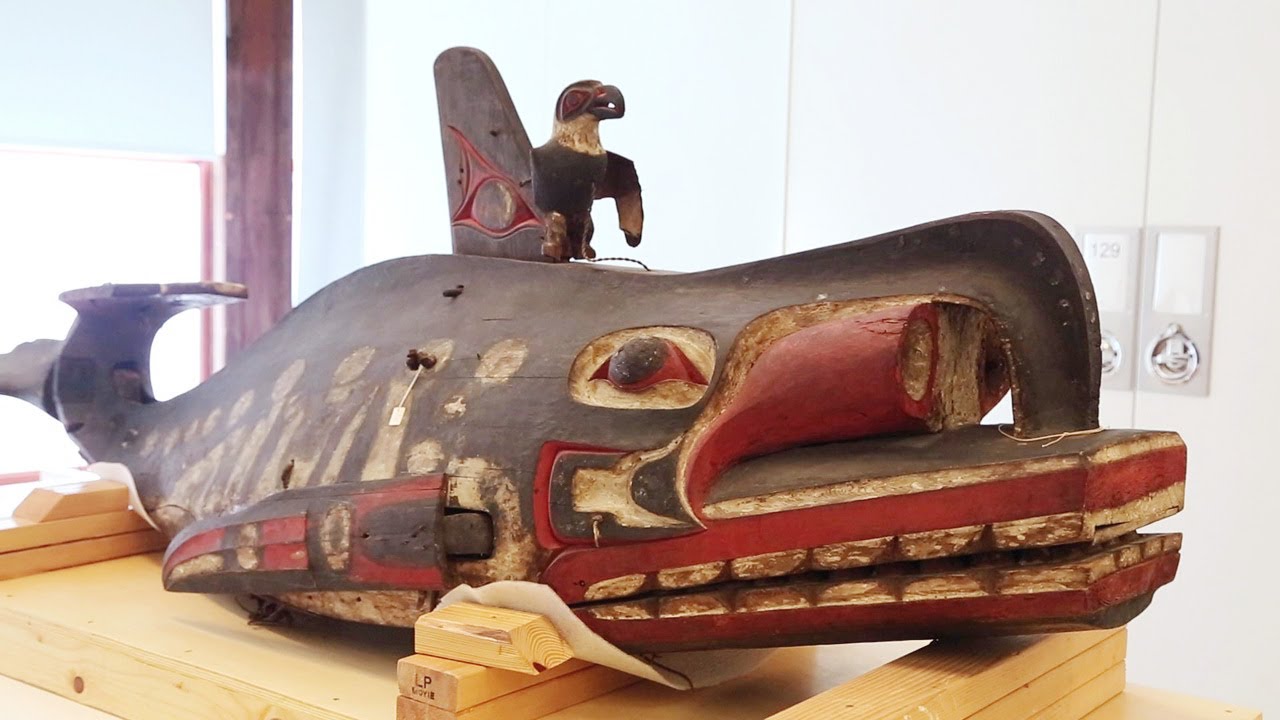
Inside the Collections: Pacific Northwest Coast Peoples
118.1K
The American Museum of Natural History houses one of the world's premier collections of Pacific Northwest Coast indigenous artifacts, amassed primarily through the Jesup North Pacific Expedition (1897-1902) led by Franz Boas. This collection includes remarkable examples such as a giant Kwakwka'wakw whale mask with multiple moving parts, Chilkat blankets woven from mountain goat wool and cedar bark for ceremonial use, and shaman's rattles depicting supernatural creatures like raven, which in indigenous mythology represents the creator who stole fire from the underworld to bring light to the world.
Click to watch →

Kwakwaka'wakw: The Kwakiutl People - Pacific Northwest - British Columbia, Canada, "Turtle Island"
2.6K
The Kwakwaka'wakw (Kwakiutl) people of British Columbia, Canada, practice the potlatch—a ceremonial tradition where hosts give away most or all of their wealth and material goods to demonstrate goodwill, maintain social status, and strengthen community bonds; this practice, which involves ceremonial masks, dances, feasting on local resources like salmon and clams, and passing down cultural knowledge through generations, was outlawed by Canadian law in 1884 but resumed legally after the Indian Reorganization Act of 1934 and remains central to Pacific Northwest Indigenous life today.
Click to watch →
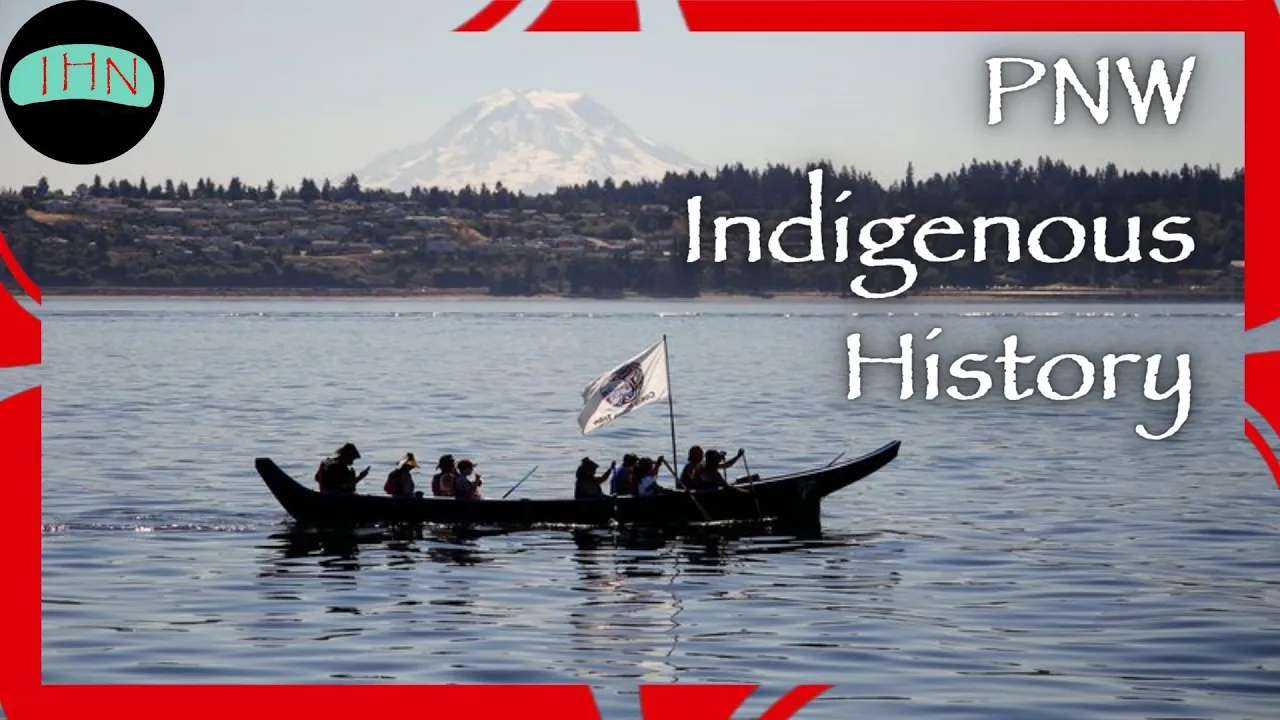
Indigenous History of the Pacific Northwest Coast
22.7K
The indigenous peoples of the Pacific Northwest Coast developed sophisticated maritime societies with complex trade networks, spiritual traditions, and social hierarchies dating back thousands of years; however, European contact in the late 18th century initiated a devastating process of colonization that systematically stripped these communities of their lands, sovereignty, and cultural practices through treaties, allotment policies, and assimilation efforts, though contemporary indigenous peoples continue to resist and revitalize their cultures through initiatives like the annual canoe journey and legal battles for treaty rights.
Click to watch →
Deep Dive
The concept of oral history and the traditional role of Elders as primary knowledge keepers in Indigenous societies.
Historic Takoma Inc. -- Doing Oral History: An Introduction
454
Elders serve as tradition bearers who are the links in the chain of family oral tradition—the knowledge, stories, and customs passed down by word of mouth from one generation to the next. Since this knowledge is not written down, if we don't record these stories before elders die, we lose our stories and all that accumulated knowledge of the past. Oral history doesn't always get the facts right because when stories are passed down by word of mouth, different versions emerge. What people believe to be true tells us a lot about their values, perspectives, and how they navigated their world. Understanding these personal beliefs helps us grasp the broader social context and historical reality.
Click to watch →
Panel "Responsibility to Represent" with Indigenous Artists in Portland, Oregon—Monday 9 April 2018
367
The titles 'Beloved Man' and 'Beloved Woman' are bestowed on indigenous culture bearers who have made significant contributions to their communities. These titles recognize individuals who have done enough in their lives to keep the culture alive. Once these individuals pass away, a piece of the culture is lost, making these titles highly significant and rarely given. Indigenous cultures, particularly Cherokee, have strong oral history traditions where stories are passed down through generations. Storytellers must earn the right to tell stories correctly, and they can adapt stories for different audiences. Elders serve as crucial knowledge keepers, preserving cultural practices, stories, and traditions. When elders pass away, their knowledge is lost, making their role essential for cultural continuity.
Click to watch →

S1E3 Going Against the Current-Beating the Status Quo with: Tohono O'odham Elder David Garcia
464
Elder knowledge and oral tradition represent the primary means of preserving indigenous history and wisdom. Stories and experiences passed down through oral tradition provide context and understanding that written records cannot capture. Young people must actively listen to and learn from elders to truly understand their heritage and the experiences of those who came before. Women have historically been the primary decision-makers in many indigenous communities, despite often being overlooked in formal leadership structures.
Click to watch →

Eskimo Heritage (Inupiat Paitot) Elders Workshop
10.1K
This video captures Inupiat elders from Kotzebue, Alaska, in 1976, discussing the critical importance of preserving and transmitting cultural knowledge to younger generations through oral tradition, as written records were not available to their people unlike civilizations such as the Chinese and Egyptians, and emphasizing that elders serve as the primary knowledge keepers who must actively share their wisdom before it is lost.
Click to watch →

Aula 2 | 11/08/25 | Unidades temáticas | Profa. Andréa Silveira
503
Indigenous traditions are oral traditions transmitted through ancestral relationships, giving elders a special social position. Among indigenous peoples, the relationship with elders is a desire of children and adults. Elders are admired because they guard all the knowledge of their peoples - how to live and survive in their space and preserve traditions. The preservation of elders' lives is fundamental for passing on this knowledge. Unlike written traditions where knowledge is accessed through libraries and research, indigenous knowledge is held by elders as 'living libraries.' The relationship with ancestral knowledge and preserving elders is essential for maintaining cultural continuity.
Click to watch →
Deep Dive
Basic knowledge of alternative economic systems, specifically the contrast between gift economies (prestige-based) and market economies (accumulation-based).

Waring School Baccalaureate Ceremony 2018
249
According to Lewis Hyde's book 'The Gift: Creativity and the Artist in the Modern World,' there are two kinds of economies: market economies and gift economies. Market economies operate in large complex modern societies where everything has a cash value and can be bought and sold. Gift economies operate in groups of under 1,000, often in pre-modern or traditional societies, built on giving where property circulates rather than accumulates. When given a gift, there is an understanding that it must eventually be given away, with each regifter increasing the object's value. This creates a less acute sense of private property but a greater perception of abundance.
Click to watch →
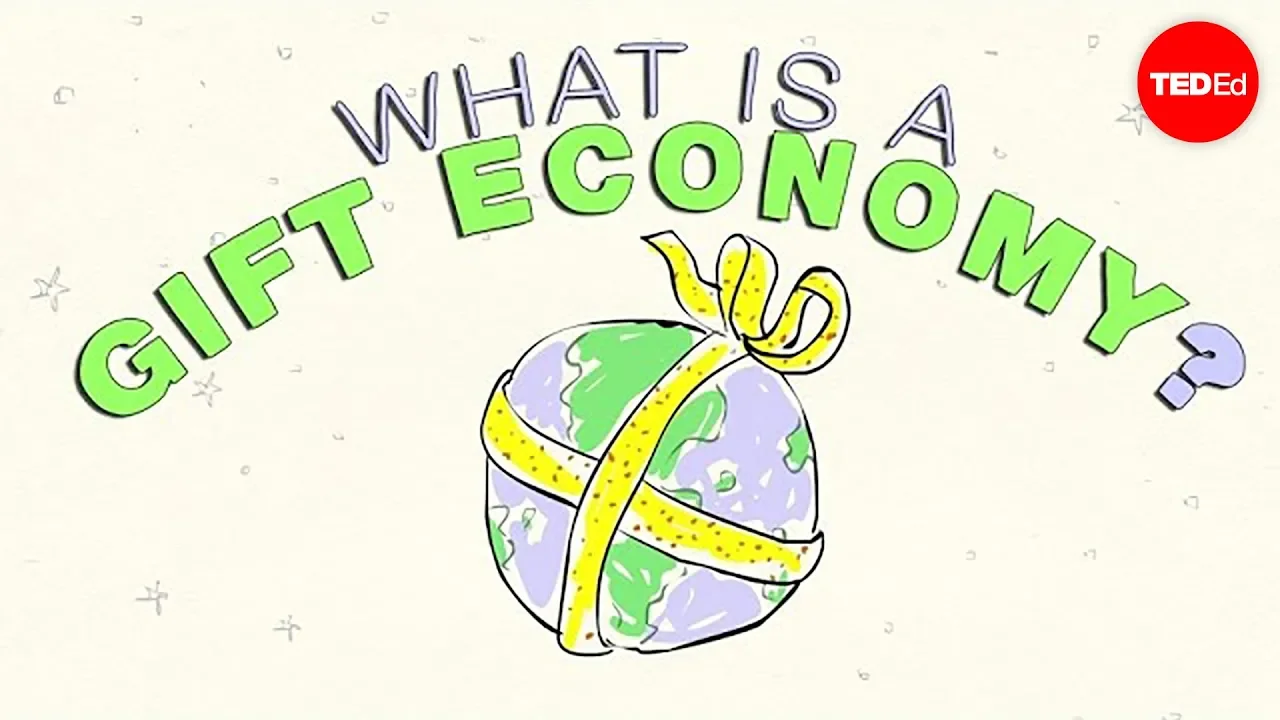
What is a gift economy? - Alex Gendler
487.1K
A gift economy is a social system where gifts given without explicit conditions foster relationships and obligations between people, contrasting with market economies that focus on item exchanges; anthropologists like Bronislaw Malinowski and Marcel Mauss studied this through examples such as the Trobriand Islands' kula ring and the Pacific Northwest potlatch, demonstrating how non-material items carry social significance and how gift-giving accumulates social wealth rather than material wealth, with modern manifestations including open-source communities and cultural traditions.
Click to watch →
cours de grève n°1
1.3K
In gift economies, prestige from generosity replaces wealth accumulation as the primary source of status. Being a powerful partner in the Kula or Potlatch creates extraordinary glory and aura. This prestige-based system encourages generosity and circulation rather than hoarding, creating social bonds that purely economic systems cannot replicate.
Click to watch →

Wirtschaft ohne Geld? Diskussion über 20-Stunden-Woche, Donut-Ökonomie & freiwillige Arbeit
261
The gift economy is an alternative to the market economy. In a market economy, exchange is based on money and profit. In a gift economy, exchange is based on mutual benefit and satisfaction. The current system forces people to work for money, which creates stress and unhealthy competition. The gift economy would eliminate these problems while still allowing people to help each other.
Click to watch →

Ep #18 ‘Human Nature’ with Professor Jeff Cates, M. A.
897
In gift economies, there is no quid pro quo between people. If you do something for someone in a community, they will do something for you later, but not immediately. If someone tried to give something back immediately, it would be seen as rude and as trying to cut ties. This contrasts with market economies where trade is based on immediate exchange.
Click to watch →
Deep Dive
Familiarity with the social structures of Northwest Coast Indigenous communities, including clans, crests, and hereditary leadership.

Indigenous American Culture Zones: The Pacific Northwest Coast
4.5K
Northwest Coast societies had rigid social hierarchies based on titles, privileges, and wealth, distinguishing them from egalitarian generalist hunter-gatherers. Status was determined by inheritance of titles, privileges, and wealth rather than rank—privilege determined rank rather than vice versa. Seating order at feasts, rights to certain names, crests, dances, and songs were inheritable privileges. Names and crests conferred status because they carried the prestige of all previous holders. Usufruct rights to land were inheritable privileges, and more productive parcels made title-holders wealthier, impacting their status. No two people had exactly equal status because privileges were graded differently. Social mobility was theoretically possible but practically constrained—those born with fewer privileges had less access to wealth creation. Marriage offered limited climbing since title-holders married similarly ranked partners. Family groups consisted of high-class family members, extended relatives, slaves, and retainers claiming lineage, with family heads administering property and privileges. Clans extended across villages and incorporated multiple family groups, with clan heads holding privileges on behalf of the whole clan, most commonly crests or totems. Inheritance patterns varied—southern Oregon allowed inheritance from both parents, making clan affiliations weak, while northern Canada and Alaska used strict unilineal descent, making clan identity more firmly established.
Click to watch →

Native Americans People of the Northwest Coast
1.3M
Northwest Coast peoples lived in small villages along rivers in five cedar houses built on stilts for flood protection. Clans functioned like extended families with strict rules prohibiting marriage within the clan, requiring parents to arrange marriages. Each house bore carved clan symbols indicating ownership—wolf, frog, or other figures. Men hunted deer and elk using traps and snares, while women gathered berries and fruits in designated clan areas. Clans maintained exclusive territories for cedar trees used in construction. Men processed cedar by setting fires to fell trees, then splitting them into planks using pounding stones and wedges, producing approximately 50 planks per small tree.
Click to watch →

Кто жил в Америке ДО Колумба. ЧАСТЬ 1: От Берингии до Великих озёр
7.4K
Northwest Coast societies were divided into three classes: hereditary chiefs (10-20% of population) who owned names, fishing rights, and ritual privileges; free commoners who worked for chiefs in exchange for food, protection, and social status; and slaves (up to one-third of population in some communities) who were war captives or their descendants. The potlatch was the main mechanism holding this structure together, serving as ceremony, political ritual, property rights, economy, and theater simultaneously.
Click to watch →

Indigenous American Culture Zones: The Pacific Northwest Coast
56.3K
The Northwest Coast's unique geography—mountains 2,000 miles long creating a narrow coastal strip averaging 100 miles wide—produced the world's largest temperate rainforest with 7-14 feet of annual precipitation. This abundance supported the second most densely populated region in North America (200,000 pre-contact), with over 40 languages from 12+ families. Peoples practiced sophisticated silviculture through controlled burning to encourage desired plant growth, creating concentrated orchards of harvestable resources. This environmental manipulation reduced unpredictability in food sources, demonstrating that hunter-gatherer societies could achieve agricultural-like productivity through careful ecosystem management. Northwest Coast societies developed sophisticated social hierarchies based on inherited titles, privileges, and wealth rather than rank. Status was determined by what one possessed, with privileges including seating order at feasts, gift-receiving order, and usufruct rights to productive land. No two people had exactly equal status. Slavery existed (4-30% of population) but wasn't a slave economy—slaves performed similar labor as free people. Wealth accumulation was expected but must be redistributed through potlatches to maintain status.
Click to watch →
Indigenous People of the Pacific Northwest DOCUMENTARY
159.7K
The Pacific Northwest Coast, stretching from Alaska to Oregon, features one of Earth's most linguistically diverse regions with tightly clustered linguistic zones separated by mountains and rivers. Major cultural groups include Coast Salish, Chinookan, Wakashan, Haida, and Tlingit peoples—each as distinct as European language families. Villages consisted of massive longhouses housing hundreds of people, fronted by ornately carved totem poles representing family lineage and inherited privileges. Social organization featured rigid hierarchies of nobles, commoners, and slaves, with no empires or confederacies—each village an independent polity. The western red cedar provided all material necessities: bighouses, canoes, clothing, and storage boxes. Salmon runs enabled ceremonial lifestyles through specialized gillnet technology. Families claimed descent from mythic entities like Raven, Thunderbird, and Sisiutl, with crests displayed on totem poles representing both spiritual ancestry and material entitlements. The potlatch served as the central institution, defining status through generosity rather than hoarding, with lavish gift-giving ceremonies accompanied by sacred performances preserving collective memory and spiritual knowledge.
Click to watch →
Prerequisite Knowledge
- Concept 01An understanding of the geographic and cultural landscape of the Pacific Northwest Coast Indigenous peoples, specifically the Kwakwaka'wakw (Laichwiltach) nation.
- Concept 02The concept of oral history and the traditional role of Elders as primary knowledge keepers in Indigenous societies.
- Concept 03Basic knowledge of alternative economic systems, specifically the contrast between gift economies (prestige-based) and market economies (accumulation-based).
- Concept 04Familiarity with the social structures of Northwest Coast Indigenous communities, including clans, crests, and hereditary leadership.
Subsequent Learning
- Step 01The history of the Canadian Potlatch Ban (1884–1951), its assimilationist motives, and its long-term social and cultural impacts.
- Step 02The ongoing movement for the repatriation of confiscated Potlatch regalia from international museums back to communities of origin.
- Step 03Comparative anthropological studies of ceremonial exchange, such as Marcel Mauss's theories in 'The Gift' or the Melanesian Kula ring.
- Step 04The role of the contemporary Potlatch in modern Indigenous self-governance, tribal law, and cultural revitalization movements.
Core Mission
Potlatch Basics
Engagement Call
Core Mission
0:01Playing Section
- 1
Platform for health providers to learn cultural safety.
- 2
Focuses on open dialogues with elders and mentors.
- 3
Aims to understand Indigenous care perspectives.
Colonial and Capitalist Critiques of the Potlatch
While Indigenous teachings emphasize the potlatch as a vital system of governance, community welfare, and cultural preservation, historical Western perspectives viewed it with deep hostility. In the 19th and 20th centuries, Canadian government officials, missionaries, and settlers argued that the potlatch was a regressive, wasteful, and heathen custom. From a capitalist and assimilationist viewpoint, the practice of redistributing wealth was seen as antithetical to individual accumulation, private property, and thrift. These critics believed the ceremony fostered poverty and hindered Indigenous integration into the wage-labor economy, which served as the justification for the Canadian potlatch ban from 1884 to 1951. Additionally, early Western social theorists sometimes analyzed the potlatch through the lens of 'conspicuous consumption' and aggressive status rivalry, reducing a complex socio-political and legal institution to mere economic irrationality. Understanding these historical counterpoints highlights the intense ideological clash between communal Indigenous economies and Western capitalist frameworks.
Deep Dive
The history of the Canadian Potlatch Ban (1884–1951), its assimilationist motives, and its long-term social and cultural impacts.

First Nations History Overview
16.6K
The Canadian government banned potlatches from 1884 to 1951 to assimilate First Nations people, causing catastrophic cultural loss. Communities practiced potlatches secretly, storing regalia in disguised cedar boxes and paddling to hidden gathering places during dangerous weather, resulting in many deaths. Disease epidemics in the 1860s (smallpox killing up to 99% of some communities) and 1913 (flu epidemic) devastated populations so severely that some received improper burials. The reserve system then forced nomadic peoples onto small parcels of land, reducing their territory to less than 1% of its original size while they never surrendered rights and title to their ancestral lands.
Click to watch →

164 Transformation mask 20211202 015304
301
The Canadian government banned potlatches from 1885 to 1951. The government and church wanted Native Americans to assimilate into Canadian culture and felt that potlatches hurt the economy because people would stay for long periods. Giving away wealth was contrary to Western culture, which valued accumulation over distribution. In 1921, after Chief Dan Kramer's potlatch, all masks were surrendered or taken from the people who attended.
Click to watch →

So many questions, so few answers | Chief Gélpcal | TEDxWhistler
2.4K
The potlatch ban lasted from 1884 to 1951 and aimed at taking away anything that appeared to make Indigenous peoples strong. This included culture, language, tradition, self-sufficiency, land, spirituality, ceremony, prayer, and family. These elements were specifically targeted because they represented sources of strength and identity that the system sought to eliminate.
Click to watch →

Wizard101: LEGENDS OF THE HIDDEN SPIRAL - NEW GAUNTLET - SPRING 2026
412
The Potlatch was a highly important ceremony in the Quac Wakawa culture, valued for its cultural and social significance. From 1885 to 1951, the Canadian government banned the Potlatch, with Christian groups also opposing it. The ban was driven by religious views of it as pagan/satanic (with false cannibalism rumors) and government concerns about productivity and cultural assimilation. During the ban, many masks were taken, destroyed, or sold to museums. The ceremonies could last days or weeks, during which participants would not work. The ban was overturned in the 1950s as unconstitutional, allowing the Quac Wakawa to resume their cultural practices. This demonstrates how indigenous cultural practices were suppressed and eventually restored.
Click to watch →

Virtual Gallery Talk: "In The Land of War Canoes" by Edward Curtis
2.1K
During the last decades of the 19th century, both U.S. and Canadian official government policies toward Aboriginal peoples were assimilation. The northwest coast people posed special problems because they were hierarchically organized with a keen sense of property and devoted considerable time and effort to accumulating wealth to share with one another and care for their communities. Officials and missionaries believed that what they judged to be senseless extravagances had to be eradicated before the northwest coast groups could be called civilized beings. As a result, in 1884 the Canadian government banned the Potlatch and related dances, criminalizing ceremonies that were central to identity and culture.
Click to watch →
Deep Dive
The ongoing movement for the repatriation of confiscated Potlatch regalia from international museums back to communities of origin.

Keeping our Culture Alive 一 Aldona Jonaitis
213
The Canadian government outlawed the potlatch in the 1880s, believing it wasteful and contrary to Christian values. The Quakwakiwak refused to obey, continuing with variations. In 1923, an Indian agent arrested attendees, forcing surrender of regalia or jail. Many masks ended up in museums. In 1951, the law was dropped, and in 1953, the first legal potlatch occurred. Mungo Martin held a major potlatch for the Royal British Columbia Museum house opening—the first public potlatch in decades. Since then, barely a month passes without potlatches in Alert Bay. Potlatch ceremonies feature dynamic masks, particularly bird masks that snap open and shut, creating dramatic effects in firelight. The copper elements shine dramatically. Jokester dancers run around clowning, making everyone laugh—a tradition existing throughout Native America including Pueblo Indians. The fool dancer gets power from mucus and can throw wet seaweed at misbehaving people. Masks confiscated under duress were returned to the Native Cultural Center in Alert Bay in the 1970s. When creating exhibits about Native culture, native groups must be brought into the creation process. Chief Tom Willey orated for half an hour in Kwakwala about his family's masks, explaining their ownership and stories. The Tlingit potlatch was a memorial to deceased distinguished family members, inviting people from the opposite half as participants. Regalia embodies ancestors and crest history—the more times an item is displayed with wealth distributed, its power becomes greater. Governor Brady declared a last potlatch in 1904, but potlatching continued. The Alaskan Native Brotherhood (1912) initially believed assimilation required abandoning traditions, but by the 1960s-70s began sponsoring dance troops for cultural preservation.
Click to watch →

Global National: June 28, 2026 | Canada beats South Africa 1-0 in 1st World Cup knockout match
33.7K
First Nations groups are working to repatriate thousands of sacred and ceremonial items from a privately owned museum in Zurich, Switzerland, which has been amassing indigenous artifacts for over 30 years. The collection includes sacred pipes, holy feathers, ceremonial bundles, and regalia from Dakota, Ojibwe, and Cree ancestry. The museum owner estimated the collection worth $13-17 million and stated he needed to sell it to fund his personal goals. The Bringing Them Home project aims to raise $20 million to purchase the collection and return items to their nations of origin. This effort reflects broader international pressure on governments, museums, and private collectors to repatriate indigenous items plundered during colonization, following the Vatican's return of over 60 items to Canada last December.
Click to watch →
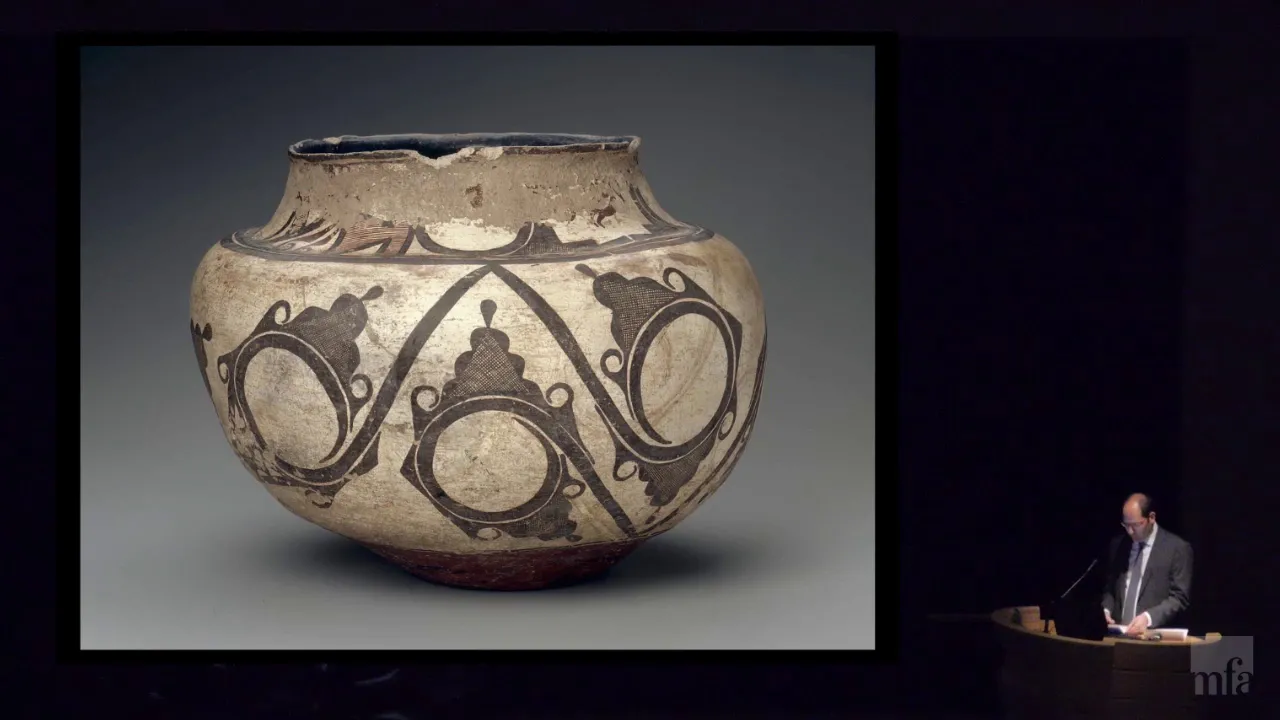
Origin Stories: Native American Art and American Museums
6.7K
In 1913, Indian Agent William Halliday began prosecuting potlatch ceremonies among Kwakiutl people, culminating in 1921 with arrest of 45 participants at a wedding ceremony. As alternatives to jail time, Kwakiutl were ordered to surrender ceremonial masks, coppers, and objects. George Gustav Hi purchased 35 items from Halliday for $291, while others went to the National Museum in Ottawa. This represents one of the foundational moments of modern repatriation, with materials eventually returned to the U'mista Cultural Center at Alert Bay.
Click to watch →

Native Economies: From the Potlatch Ban to the Masks of Beau Dick
142
The potlatch is a comprehensive indigenous system encompassing economy, governance, and ceremonial wealth redistribution practiced by First Nations peoples in the northwest of North America. Colonial authorities banned it in 1884 due to economic anxieties during British Columbia's recession, viewing displays of wealth as wasteful and competitive. More significantly, the potlatch represented an alternative governance structure incompatible with colonial authority, where leaders gained rank through displays of wealth and complex social contracts. Franz Boas sought to find the outer limits of European knowledge by studying these peoples, while early Europeans mischaracterized potlatch as 'medicine feasts,' struggling to understand that healing was integral to communal wealth sharing. The 1921 crisis saw 45 people arrested when Dan and Emma Kramner hosted a potlatch to repay marriage debts—the largest group arrest in Canadian history. Confiscated objects entered museum collections, becoming commodities traded internationally. Beginning in 1967, Chief James Psyllid led repatriation efforts, discovering that museums refused original purchase prices because objects had transformed into museum artifacts requiring care costs. Upon return, communities built cultural centers rather than traditional museums, maintaining ceremonial functionality with spaces open for dance and objects displayed according to ceremonial roles.
Click to watch →

Indigenous Canada Module 7
7.8K
During the potlatch ban, when Indigenous people were caught practicing ceremonies, the government bargained by reducing jail sentences in exchange for ceremonial objects. For 67 years, the government collected sacred items, selling them to museums and private collectors. After the ban ended in 1951, Indigenous nations faced barriers to reclaiming objects, including requirements to prove theft and build museum-quality facilities. Some Indigenous nations prefer museums, while others believe objects should return to the earth according to traditional teachings. The way objects are displayed matters significantly. When Indigenous artifacts are displayed in museums, the act of observation may be the opposite of how objects were intended to be viewed, representing white possession and disruption of proper relationships.
Click to watch →
Deep Dive
Comparative anthropological studies of ceremonial exchange, such as Marcel Mauss's theories in 'The Gift' or the Melanesian Kula ring.

सामाजिक विनिमय सिद्धांत (WITH DETAILS EXPLANATION) IN ONE CLASS ||UPPGT||NTA NET||UPSC ||SOCIOLOGY.
12.7K
James Frazer's anthropological exchange theory (1954-1994) based on Australian Aboriginal fieldwork argues cultural values shape economic motivations. He supported cross-cousin marriage where bride wealth is unavailable. Three conclusions: exchange fulfills basic needs, determines behavioral patterns, and cultural values create conformity pressure. Melvin Kohn's psychological exchange theory opposes economic determinism, emphasizing cultural and social factors maintain solidarity. His Kula Ring study of South Pacific shell exchanges demonstrates exchange creates social bonds beyond economics. Marcel Mauss's gift exchange theory (1925) argues exchange creates social structure, challenging utilitarianism by emphasizing social relationships over material goods.
Click to watch →

贈与論|【哲学】の必読書!贈与による「人と人のつながり」が資本主義を見直すヒントになる
7.9K
Marcel Mauss's 'The Gift' presents three core themes: gift-giving involves obligation and reciprocity, it supports human society, and it offers insights for re-examining capitalism. Mauss argues that gift exchange is not one-time transactions but continuous cycles where gifts flow between parties with obligations to return them. The Kula Ring of Papua New Guinea exemplifies this: three islands (A, B, C) exchange gifts in a circular pattern where A gives to B, B gives to C, and C gives back to A. Key rules include mandatory returning of gifts and obligatory participation in both giving and receiving. Mauss explains this reciprocity through two reasons: fear of losing gifts (islanders believed keeping them too long was dangerous) and the social bonding function that connects people. Similar gift exchange systems exist across ancient China, Egypt, Europe, and the Americas, suggesting this is a fundamental human social practice.
Click to watch →
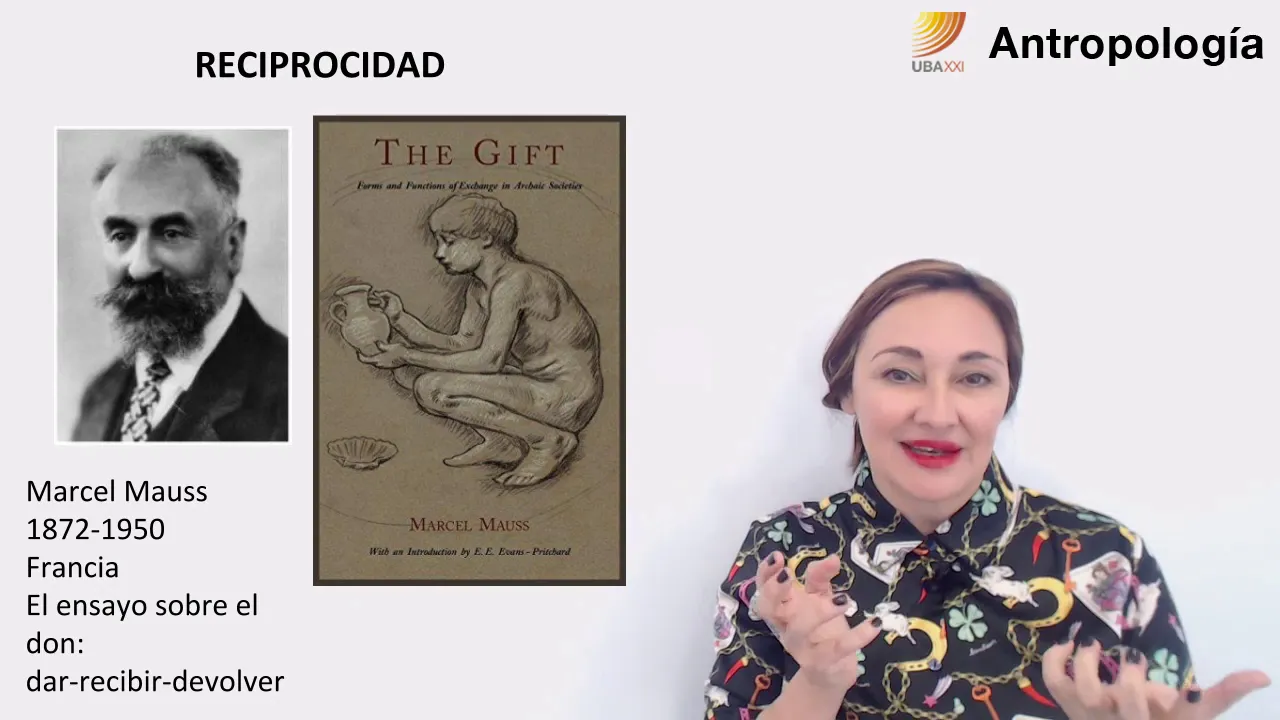
12. Antropología: Etnografias de Malinowski y Boas
17.1K
This segment covers the foundational anthropological theories of gift exchange. Bronisław Malinowski's functionalism, developed through fieldwork in the Trobriand Islands, revealed the Kula Ring—a ceremonial exchange system where islanders trade bracelets and necklaces through giving, receiving, and returning. Similarly, the Potlatch among Kwakwaka'wakw tribes represents a prestige competition where tribes burn objects to demonstrate power and establish hierarchy. Marcel Mauss synthesized these observations in 'The Gift,' arguing that gift exchange involves three movements (giving, receiving, returning) that create social obligations. He described the gift as a 'total social fact' that binds people together through implicit debts, where refusing a gift breaks alliances and receiving creates obligations to reciprocate.
Click to watch →

Anthropologie du don (par Alain Caillé)
29.4K
Anthropologist Marcel Mauss, successor to Durkheim and founder of French ethnology, published 'Essai sur le don' (1925), challenging economic reductionism. Through comparative study of archaic societies, Mauss discovered that humans were not always economic animals. Pre-modern societies operated on a triple obligation of giving, receiving, and returning, not market exchange. This gift economy was agonistic—competitive and potentially violent—where individuals demonstrated superiority by giving more than rivals. This competitive generosity served as a peaceful alternative to warfare, enabling enemies to become allies. Women functioned as primary gifts establishing generational and ancestral connections, forming archaic society's fundamental matrix. The gift operates as an ambivalent political operator, conferring power while enabling social cohesion.
Click to watch →

Gift Giving
17.3K
Gift giving is a fundamental economic exchange that creates and maintains social relationships through reciprocity, as demonstrated by Malinowski's study of the Kula Ring exchange system among Trobriand Islanders and Mauss's analysis of how gift exchange builds group solidarity through obligations to give, receive, and reciprocate, with three types of reciprocity: generalized (no expectation of return), balanced (equivalent exchange), and negative (attempting to gain without giving).
Click to watch →
Deep Dive
The role of the contemporary Potlatch in modern Indigenous self-governance, tribal law, and cultural revitalization movements.

Museum of Anthropology Tour
1.4K
The potlatch is described by sociologist Marcel Mauss as a 'total social fact' because it embodies economics, politics, legal regime, and social work simultaneously. During potlatches, hosts publicly displayed their status through elaborate ceremonies feeding guests well, similar to modern celebrations, with feast dishes telling stories of how families came to be on specific lands. Canada banned the potlatch from 1884 to 1951, recognizing it as the organizing governance structure of First Nations peoples. Colonial authorities viewed it as non-Christian and unsafe. Since the ban lifted in 1951, potlatching has increased as Indigenous peoples use it to assert land rights, particularly in British Columbia where many treaties were never signed and reserves were established without consent. The museum works with communities to determine what should not be displayed or photographed, maintaining culturally sensitive spaces.
Click to watch →
Native Economies: From the Potlatch Ban to the Masks of Beau Dick
142
The potlatch is a sophisticated indigenous economic and governance system practiced by First Nations peoples of the Pacific Northwest Coast, which involves the redistribution of wealth through ceremonial gift-giving and establishes complex social hierarchies; despite being banned by the Canadian government between 1885-1951 as a threat to colonial authority, the potlatch proved remarkably resilient and adaptable, surviving underground and evolving to incorporate new materials and forms, ultimately leading to the repatriation of cultural objects and the continuation of ceremonial practices that remain central to indigenous identity and community governance today.
Click to watch →

How The Heiltsuk Tribe Survived on Triquet Island for (14,000 Years)
216
The potlatch functioned as parliament, court of law, and economic institution combined in a society without written language. Chiefs recorded deeds and laws through witness testimony—hosting potlatches inviting hundreds of guests from other clans, feeding them for days, and giving gifts (blankets, canoes, dried fish). Guests became paid witnesses accepting truths through acceptance of gifts. Wealth was measured by what one could give away, not possessions held. This redistribution ensured no clan starved during poor fishing years. During winter gatherings, transformation masks taught children that appearances deceive—spirit worlds exist behind rainforest veils. The potlatch bound communities together through shared ritual, creating social cohesion that sustained the civilization through generations.
Click to watch →
White Ravens: A Legacy of Resistance | Haida Nation Documentary | Full Movie | Native American
9.4K
The potlatch functions as the Haida Nation's legislative assembly where elected leaders discuss economic matters and resolve conflicts. It also marks significant life events like weddings and memorials. Prayers, songs, and dances serve as truth-telling mechanisms that set atmospheric tones for gatherings. Despite colonial suppression, potlatch traditions have experienced remarkable revival, with participation expanding from approximately 20-24 people to encompassing preschoolers through elders. This cultural renaissance represents resilience against assimilation policies and demonstrates how traditional governance structures continue to provide community cohesion and cultural continuity.
Click to watch →
Indigenous People of the Pacific Northwest DOCUMENTARY
159.7K
The potlatch was a central ceremonial practice among Indigenous peoples of the Pacific Northwest, serving as both a social and economic institution where wealth was redistributed through lavish gift-giving to establish and confirm social status, with families displaying their lineage crests on totem poles and performing sacred dances that preserved cultural knowledge; however, this tradition was banned by colonial authorities in 1885 as part of assimilation policies, leading to the seizure of ceremonial regalia and the forced removal of Indigenous children to residential schools, though the practice has been revived since its legalization in 1951 and continues today among surviving communities.
Click to watch →
Core Mission
Potlatch Basics
Engagement Call
Core Mission
0:01- 1
Platform for health providers to learn cultural safety.
- 2
Focuses on open dialogues with elders and mentors.
- 3
Aims to understand Indigenous care perspectives.
Colonial and Capitalist Critiques of the Potlatch
While Indigenous teachings emphasize the potlatch as a vital system of governance, community welfare, and cultural preservation, historical Western perspectives viewed it with deep hostility. In the 19th and 20th centuries, Canadian government officials, missionaries, and settlers argued that the potlatch was a regressive, wasteful, and heathen custom. From a capitalist and assimilationist viewpoint, the practice of redistributing wealth was seen as antithetical to individual accumulation, private property, and thrift. These critics believed the ceremony fostered poverty and hindered Indigenous integration into the wage-labor economy, which served as the justification for the Canadian potlatch ban from 1884 to 1951. Additionally, early Western social theorists sometimes analyzed the potlatch through the lens of 'conspicuous consumption' and aggressive status rivalry, reducing a complex socio-political and legal institution to mere economic irrationality. Understanding these historical counterpoints highlights the intense ideological clash between communal Indigenous economies and Western capitalist frameworks.
An understanding of the geographic and cultural landscape of the Pacific Northwest Coast Indigenous peoples, specifically the Kwakwaka'wakw (Laichwiltach) nation.
The concept of oral history and the traditional role of Elders as primary knowledge keepers in Indigenous societies.
Basic knowledge of alternative economic systems, specifically the contrast between gift economies (prestige-based) and market economies (accumulation-based).
Familiarity with the social structures of Northwest Coast Indigenous communities, including clans, crests, and hereditary leadership.
The history of the Canadian Potlatch Ban (1884–1951), its assimilationist motives, and its long-term social and cultural impacts.
The ongoing movement for the repatriation of confiscated Potlatch regalia from international museums back to communities of origin.
Comparative anthropological studies of ceremonial exchange, such as Marcel Mauss's theories in 'The Gift' or the Melanesian Kula ring.
The role of the contemporary Potlatch in modern Indigenous self-governance, tribal law, and cultural revitalization movements.
14.5K views89likes4:11@culturallycommittedOriginal Release: 2021-02-12
what is culturally committed we are a place where health providers can come to deepen their knowledge around the subject of cultural safety and humility where we can have open honest discussions with elders and mentors and learn about what culturally safe care looks and feels like to indigenous peoples [Music] i know for me because i'm i've only really had a really started getting a better understanding of the culture in the communities on the island in the past seven years and i remember first hearing the word potlatch i had no idea what that meant would be comfortable sharing a little bit about what a potlatch is so a potlatch is ceremonies that we do and they're important ceremonies where like i said earlier we do namings we do weddings and we do memorials and and funerals that way um we basically have each family has a box of treasure and we are uplifting our family and sharing and showing our box of treasure but also at the end of it we hand out many gifts and that's those gifts are actually payment for what you witnessed so it's showing in a good way this is what we're showing you and now you witness it and here's your payment and um very exciting because we're in the mix of up out that in 2022 wow it was supposed to be september 20 2020 um but of course with this craziness going on we had to cancel it and extend it so we're hoping 2022 what everything will will go along so so a lot of traditions in our who are patriarchals of the family who are chief is is he's transferring that chieftainship to the next generation so a lot of tradition that way is being done and um it's also telling our our story you know our time memorial where we come from what we do and who we are as a people and it's amazing how the people the people are our family pulled together to create such an event and when we do hand out the gifts usually there's about three to 500 people in the big house so we have to gather that much to to hand out that's amazing so we're showing our dances we're showing our songs we're showing who our chief is and who are our comments our um very high up person that were uplifting and and showing the people in our area who they are um yeah that's amazing we're very in this area we're very i was always taught to be very humble and it's hard to explain all of this and um i was taught not to brag [Laughter] so i really am having a little bit of a hard time with this and explaining all of it so yeah i must create quite a conflict because on one hand a potlatch it sounds like it's a real celebration and like a showing of pride in who you are and you're you know and celebrating each other but then you also have to do it in a way that's very humble it's like kind of a conflict thing it is yes well that's very cool if you are a health provider who wants to deepen your understanding around the subject of cultural safety and humility and you have questions or if you are an indigenous person who would like to contribute knowledge and guidance to the conversation please reach out to info at culturallycommitted.com
Up Next

15:46
Moral Economy Explained | Anthropology Concepts
@NicholasHerriman
11.6K views•2013-02-21

38:41
Astrobiology Through an Anthropological Lens: Field Insights
@georgiatechastrobiology
128 views•2021-04-14
4:45
Proxemics Explained: The Study of Personal Space
@Vox
536K views•2016-07-05

10:38
Psychology of Internet Trolling and Pranks Explained
@AzzyLand
10.7M views•2017-12-20
Related Study Plans & Knowledge Roadmaps
Structured learning paths in Anthropology
anthropology
Space Anthropology: Analogs, Culture & Habitats
01Foundations of Space Anthropology & Cosmic Imaginaries
02Extreme Isolation & Micro-Societies in Orbit
03Space Analog Habitats & Earth-Based Simulations
+ 2 more learning modules
15h5 modules
Explore Roadmap
anthropology
Legal Anthropology: Customary Law & Pluralism
01Foundations of Legal Anthropology and Social Justice
02Legal Pluralism: Coexisting Legal Systems
03Customary Law and Indigenous Dispute Resolution
+ 2 more learning modules
15h5 modules
Explore Roadmap
anthropology
Global Tourism: Gaze, Authenticity & Heritage
01Introduction to the Sociology of Tourism
02The 'Tourist Gaze' (John Urry)
03Staged Authenticity in Tourism
+ 3 more learning modules
14h6 modules
Explore Roadmap
anthropology
Modern Kinship (ART, Adoption & Chosen Family)
01Foundations of Kinship and Family
02Assisted Reproductive Technologies (ART) & Relatedness
03Transnational Adoption and Global Kinship
+ 2 more learning modules
12h5 modules
Explore Roadmap