
![[The Health Made Simple Series] Episode 2 - Protein - with Susan Birch and Tiaan de Klerk](https://i.ytimg.com/vi/1qZ3HuPgYc8/maxresdefault.jpg)














All protein ultimately originates from plants, as plants synthesize amino acids from atmospheric nitrogen through symbiotic relationships with soil bacteria; all plant proteins contain all essential amino acids, making complementary protein combining unnecessary, and research demonstrates that plant-based diets provide adequate protein while being associated with lower risks of chronic diseases compared to animal protein consumption.
Protein Chemistry Explained: Plant Sources & Health Impacts
Added:Basic understanding of macronutrients, specifically the general biological role of proteins in the human body.
The chemical structure of amino acids and the concept of peptide bonds that link them to form proteins.
The distinction between essential and non-essential amino acids and how the body obtains them.
An overview of human digestive physiology, particularly how enzymes break dietary protein down into peptide fragments and individual amino acids.
Advanced metabolic pathways of protein synthesis (translation) and nitrogen balance in the human body.
Critically evaluating protein digestibility scoring systems, such as PDCAAS (Protein Digestibility-Corrected Amino Acid Score) and DIAAS (Digestible Indispensable Amino Acid Score).
The epidemiological links between plant versus animal protein intake and chronic diseases, such as cardiovascular disease, renal function, and cancer risk.
Practical dietetic application, including how to design nutritionally complete, plant-exclusive meal plans for specific populations (e.g., elite athletes, pregnant women, or the elderly).
153.4K views4.8Klikes1:19:24Original Release: 2019-08-04
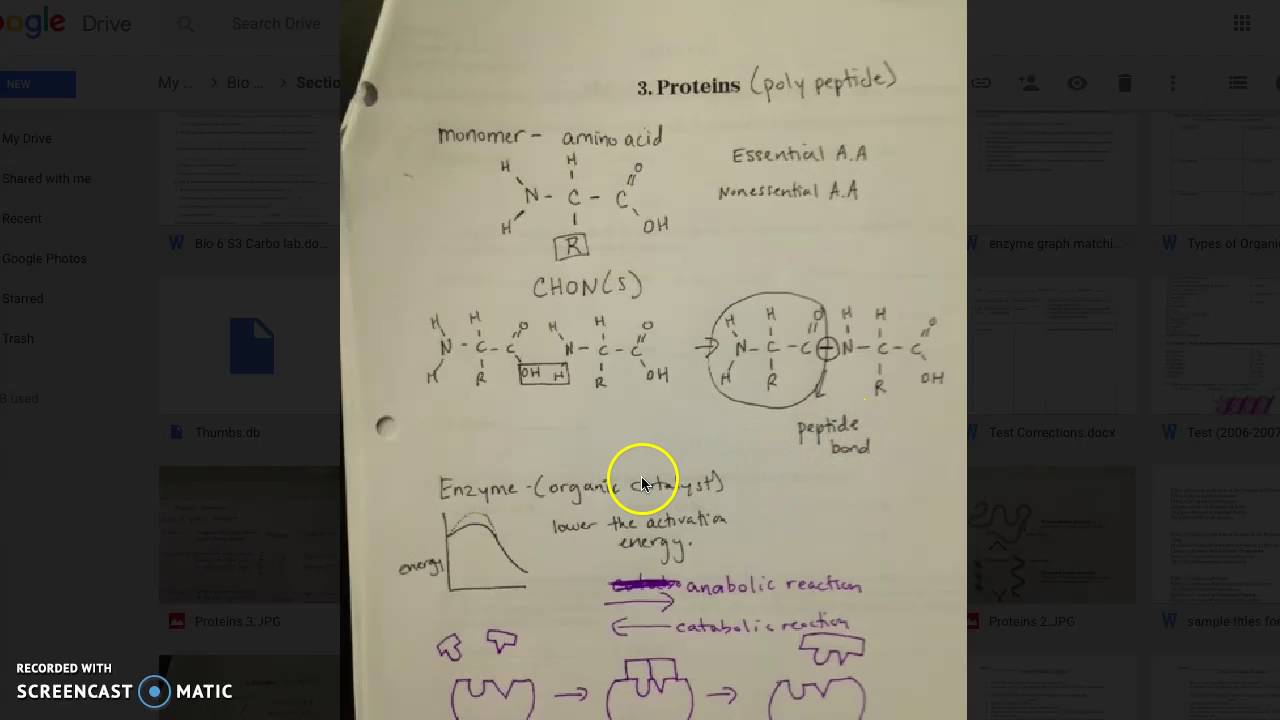
today's lecture is part of my series called chemistry for understanding nutrition this is on protein and as we know protein is of paramount importance because the minute you tell someone you've gone plant base everyone becomes a nutrition expert and instantly begins to worry about whether or not you're going to become protein deficient who's went to a hospital within the last five to ten years okay been to yet to visit you went to see somebody who had what a heart attack stroke operation for something anybody ever been to see someone who was dying a protein deficiency because they went vegan yeah I didn't think so alright there's a quote from the book of Psalms says God rained down on the manna to eat and gave them the grain of heaven even when God chooses to feed us he feeds us with plants this is just a pretty picture of a protein crystal so we're gonna start off talking about exactly what is protein you can't talk about protein without talking about plants because plants are nature's alchemists they literally conjure the stuff of life everything that we know and use out of thin air I mean plants are truly amazing using nothing but sunlight water and carbon dioxide plants manufacture the sugars that actually give our world its shape and structure and energy and then they take nitrogen out of the atmosphere and transform it into the amino acids that make up the proteins that make up the tissues of all living things so next time you see a tree hug it carbohydrates are plant derived compounds made up literally of the elements carbon hydrogen and oxygen and carbohydrate literally means hydrated carbon and so you see that what plants do is they take the carbon dioxide from the atmosphere combine it with water turned it into these five and six carbon sugar molecules using the energy of the Sun and these carbon backbones are then attached to nitrogen containing amino groups to make amino acids which are then joined together to make proteins the five carbon sugars are called pentoses the six carbons are called hexoses everybody with me so far anything confusing and if it is don't be afraid to say so because I'm a chemistry geek and so I get all excited about this but this may look foreign to you guys no questions so if I give you the quiz that I brought with me at the end of this you're gonna be able to label all these things and tell me how they combine right okay see I know there's a question somewhere exactly all living things I mean you know they're the rocks and things like that but yes all living things start off as some form of carbohydrate all right so let's talk about amino acid synthesis this is like really kind of cool because actually what happens is plants taking carbon dioxide through their leaves but they take in the nitrogen that will eventually go into the amino acids and proteins through their roots and they often time work in conjunction with bacteria to break apart the nitrogen molecule and turn it into either no.3 or ammonium ion that then gets incorporated into the amino acids don't worry about how complicated that diagram is it's just to show you that this stuff really happens so symbiotic bacteria working in concert with the plants help them break apart the nitrogen and then incorporate it into these amino groups and these newly synthesized amino acids are then formed into proteins proteins are made up of individual building blocks called amino acids there are 20 different amino acids that make up the proteins of all living things plants and animals and humans can make all but eight of them nine if your baby and the nine that we can't make are called essential amino acids and have two be obtained either from the diet or mother's milk when we're babies we really can't make taurine but that's supplying their mother's milk and then as we become adults we acquire the ability to make Tori the nitrogen in the amino acids comes from atmospheric nitrogen nitrogen gas is one of the most inert and unreactive molecules in the known universe nitrogen atoms are triple bonded to one another and they just don't come apart for any reason only plants working together with the bacteria can do this and this is the fundamental point I want you guys to take home all protein is initially made by plants okay now is that confusing to anybody the the point is is if you were to trace the nitrogen in the proteins that our body makes back it ultimately comes from a plant so it's just like this cabinet here is made out of metal these chairs have metal frames and I can strip the metal frames from these chairs I can take this cabinet I can get a couple of toasters and maybe the frame for this screen thank you and I can ship that all that metal to a factory that makes cars and it can melt the metal down and then refashion it into car parts so but that Factory did not make that steel it only recycled it is that understandable so yes when the our bodies can recycle the amino acids that we eat into new proteins but it did not make those amino acids initially it is only tearing them apart and recycling them all protein has to initially come from a plant source meaning if all the plants in the world died off everything else in the world would die off so the question was does that mean that all of the protein that we get from animals is recycled plant protein and yes that is exactly right and my suggestion is to cut out the middleman so the question was what is the source of the bacteria that work with the plants to make the amino acids and it's just soil bacteria and but it's it's specialized oil bacteria bacteria that actually will gravitate toward specific plants and that's why I've come to understand and realize that soil plants these are really complex ecosystems and it's not just as simple as sticking a plant in some dirt you have to build up build up this complex web of bacteria and even fungi are involved because fungi have the ability to break down like dead leaves dead wood into their you know minerals and old amino acids that can then be taken out by the plants and reutilize and the quality of the soil is of paramount importance all nutrients come from the Sun or the soy vitamin D the sunshine vitamin is created when skin is exposed to sunlight everything else comes from the ground minerals originate from the earth and vitamins from the plants and microorganisms that grow from it the calcium in a cow's milk and her 200-pound skeleton came from all the plants she ate which drew it up from the soil we can cut out the middle mooo though and get calcium from the plants directly where do you get your protein protein contains essential amino acids meaning our bodies can't make them and so are essential to get from our diet but other animals don't make them either all essential amino acids originate from plants and microbes and all plant proteins have all essential amino acids the only truly incomplete protein in the food supply is gelatin which is missing the amino acid tryptophan so the only protein source that you couldn't live on is jello as I covered previously those eating plant-based diets average about twice the average requirement for protein those who don't know where to get protein on a plant-based diet don't know beans get it that's protein quantity though what about protein quality and the concept that plant protein was inferior to animal protein arose from studies performed on rodents more than a century ago scientists found that infant rats don't grow as well on plants but infant rats don't grow as well on human breast milk either so does that mean we shouldn't breastfeed our babies ridiculous they're rats rat milk has 10 times more protein than human milk because rats grow about ten times faster than human infants it's true that some plant proteins are relatively low in certain essential amino acids so about 40 years ago the myth of protein combining came into vogue literally the February 75 issue of Vogue magazine the concept was that we needed to eat complementary proteins together for example rice and beans to make up for the relative shortfalls this fallacy was refuted decades ago the myth that plant proteins are incomplete that plant proteins aren't as good that one has to combine proteins at meals these have all been dismissed by the nutrition community as myths decades ago but many in medicine evidently didn't get the memo dr. John McDougall called out the American Heart Association for a 2001 publication that questioned the completeness of plant proteins thankfully though they changed and acknowledged now that plant proteins can provide all the essential amino acids no need to combine complementary proteins turns out our body is not stupid it maintains pools of free amino acids that can be used to do all the complementing for us and not to mention the massive protein recycling program our body has some 90 grams of protein is dumped into the digestive tract every day from our own body to get broken back down and reassembled so our body can to match amino acids to whatever proportions we need whatever we making it practically impossible to even design a diet of whole plant foods that sufficient in calories but deficient in protein thus plant-based consumers do not need to be at all concerned about amino acid imbalances from the plant proteins that make up our usual diets so again proteins perform a wide variety of functions in our body including tissue building they catalyze energy metabolism as well as serving as neurotransmitters hormones and transport vehicles such as the hemoglobin which transports oxygen around our body proteins are made up of long chains of amino acids joined by bonds that are called peptide bonds and all amino acids contain as I said the element nitrogen in the form of the amino group attached to a carbon skeleton and human tissues like all living tissues are made up of protein so tissues is different as the clear cornea covering our eyes the iris muscle that forms our pupil the white sclera are the hair of our eyelashes the cartilage in our nose or the proteins in our skin all made up of protein and so what you can see is that protein is an amazing substance because just based on the differing ratios of amino acids you can make materials as different as hair and the clear cornea I mean really incredible just the idea of how you utilize protein can be compared to how you build a house so building a body is like building a home your proteins are your building materials right so the how much building material you will need depends on the size of the house and also how many houses you're building if you're building a new development you need a whole bunch of built materials if you are you know some guy who's building a tiny house out in the woods you don't need that bunch so again how much proteins you need depending on how big a building you're building and also how fast you're building that building so if you're building a house but you plan to take a year to build it do you need a semi to dump a load of building materials and you're in the at the building site every week of course not because you can't utilize it so you want your rate of delivery ie your protein consumption to equal your rate of utilization that is your growth or your repair rate so in other words we should only eat as much protein as we can use because there's no advantage to eating excess protein but there's some distinct disadvantages as we'll discuss once your building is completed do you still need that semi truck coming around every week no you don't once your building is complete you don't need the same amount of protein being delivered because now you're in maintenance phase so now you only need to get sheet rock if you punch a hole in the wall you only need shingles if the roofs start to leak and you don't need enough shingles to replace the whole roof just a part that's leaking yes ma'am are eating all kinds of crap including protein shakes right they're making very expensive pee and manure are they doing harm to themselves yes they are and we're going to talk about that yes that is not good because you you're not using it as protein and you are doing potential harm to your body okay and we'll talk about that as well well if you continue delivering building materials to a completed building this is what you end up with and an organic pile of rubble is a tumor that's why people end up developing these things like lipomas and uterine fibroids and cysts in the breast and skin tags and skin growths because they're they're delivering stuff to their body that the body really can't use and it stimulates the body to form these benign tumors but it could get worse than that because you can get bizarre additions and those are your cancers and all of these things have been connected to and associated with excess intake of protein particularly animal protein and let's talk about why that is all right well this is just a picture of a number of different proteins and enzymes they're 20 different amino acids all proteins both animal and plant proteins are made up of the same 20 amino acids the differences are the differences in relative amounts and humans have the enzymes to make all but eight of the 20s adults and those eight are what are known as the essential amino acids the essential amino acids for humans are tryptophan valine methionine isoleucine threonine:lysine leucine and phenylalanine yes ma'am okay so the question is someone said that we were a product of intelligent design which is something I happen to believe but the question is well if we are intelligently designed why can't we make all of the 20 amino acids one that's a question you have to wait and ask God but - I think it's so that we could have the fund of eating I really don't have an answer for that except that you know it takes energy to make anything the fact that we allow the plants to make eight of these amino acids means that we don't have to have the enzymes to make them so we can use that energy for something else alright these are the other non-essential amino acids tyrosine prolene glycine has today in serine and glutamine and I just look how complicated these things are now how many of you were at the plenary on so-called lab-grown meat all right you remember I kept talking about how the heck do these people plan to make these things the chemical processes for trying to make these really complicated amino acids are extremely energy intensive and use some very toxic reagents that's why this pipedream people have that trying to grow meat in the lab is going to be this easy wonderful you know seamless process it's just ludicrous this is not like the fairy tale of Rumpelstiltskin you remember that the guy would go to sleep and he'd break up and there's all these shoes well that ain't gonna happen in a lab you know I'm gonna go to sleep and wake up to all this meat but you don't wake up to as a disaster this just shows the relationship between protein and carbohydrate metabolism so if you start out with protein you can either use the protein for structure and can become enzymes or hormones or actual body tissues or neurotransmitters but let's say you eat 60 grams of protein you only need 35 for this part well the rest of it then comes over here the amino acid the amino group is stripped off and then the carbon backbone becomes carbohydrate and either can he be burned his energy it can be used from structures that utilize carbohydrates or it can be stored in the form of glycogen which is animal starch and if your glycogen pools are full then and only then will it go into your fat cells but the reason your body does not like to try and turn carbohydrate into fat is that fat has a lot more energy than carbohydrate and so it actually has to put energy into the carbohydrate molecule in order to turn it into fat and that again requires a lot more energy you have to put about 25% of the more energy into it and rather than do that your body would prefer to force you to burn that carbohydrate off and so what happens when you eat a lot of simple carbohydrates you get a sugar us exactly that's why kids start bouncing off the walls and running around because their body's trying to force them to burn that carbohydrate off rather than store it yes sir the question was in fact in the video I showed dr. Gregor said our body dumps about 90 grams of protein into our digestive tract breaks it down and recycles the amino acids where does that protein come from every day the entire lining of your gastrointestinal tract is slopped off and digest it and reabsorb that's where that protein comes from well it's more like renew ourselves yes so and here are some very important points our bodies cannot store protein all right we're going to say that together and I want everybody in this room to say this our bodies cannot store protein okay we got to say it again because I'm looking to this guy right back here and he didn't say it so we're gonna say it again everybody's with me that is critically important for everybody to understand because it doesn't make sense to eat huge amounts of steak or chicken or whatever because it doesn't do you any good protein is not money there's no Bank for it so there's no advantage to eating more than you can use again no advantage of consuming act excess as I said all that's not used for building purposes is converted to carbohydrate and again this is why excess animal protein is so dilatory is to our skeletons because the sulfur that is in these animal proteins comes it gets converted into a so furious acid not so Furyk which would melt our bodies but so furious which is a weak acid but there's acid nonetheless and our bodies have to buffer that acid and so what our bodies will do is dissolve phosphate from our bones to buffer and neutralize that acid but that means that the calcium that was in those bones ends up coming out in our urine and that's another reason why high protein diets are associated with an elevated risk for kidney stones and plant proteins are always buffered by frost fate and so they don't cause the same level of acidification and as a result women who are on plant-based diets have higher bone mineral density both before and after menopause than women who eat meat so major determinants of protein utilization number one making sure you just get enough protein the recommendations are half two point eight grams per kilogram per day that is enough plus a margin of safety okay you taking it more than that you're not utilizing it it's coming out in the pee and toilet adequate energy now that's really really key because if you're not taking in enough energy instead of utilizing the protein for building tissue your body is going to burn it for energy okay and the way I want you to think of this is let's say you're trying to build a cabin out in you know Alaska where it gets very cold during the winter and you know you're trying to complete a room on that cabin but turns out you didn't get enough wood to complete the room and fire your wood-burning stove so what are you going to do are you gonna use a little bit of wood you have to try and complete that room and freeze to death are you gonna keep the fire going so you'll stay alive you use it for energy to keep yourself alive same thing with our bodies yeah obviously have to have an adequate intake of essential amino acids which is not hard to do and strict as Michael pointed out in the video protein complementing is absolutely not necessary and it turns out that maintaining regular exercise helps your body utilize its proteins more efficiently and he says down Tabata most Americans including vegetarians and vegans get one and a half to two times as much protein as they need on a daily basis so questions if I'm working out do I need extra protein general answer is no why well well but let's say you start and you start to work out you decide you know what I'm tired of sitting on the couch and being a couch potato and looking like the couch I'm gonna go and start working out do you need to take in extra protein huh you need extra energy but why don't you but you're trying to build muscles so why don't you need extra protein remember what I said at baseline you're already getting about twice as much protein as you can use anyway so you already have that extra whatever extra you're gonna need you already have that built in and yes what you will need is the extra energy more than a natural protein yes and and just increasing energy intake you're right that's going to give you additional protein as well so that's not something you have to worry about all of these protein drinks are a complete waste and it's the other important point for people who are plant-based most of those protein drinks are dairy based they're either way or casing so stay away from them if you feel like let's say you're you start training for a marathon but you also want to get leaner so you are really restricting your calories and you want to try and you know sort of up your protein game use pee powder or soy powder based protein drinks if you must use a protein drink okay yes sir so the question was if you're running a marathon do you need extra protein or do you need extra energy in the form of coconut oil if you're running a pro a marathon or and you're doing that kind of really heavy intensive exercise you do need to intake in more fat because what you need is more energy and essentially you won't be able to eat enough like roughage and and so forth to get that amount of energy so by upping the amount of fat in your diet you can get the extra energy you need and that will spare the protein to be used as protein what type of protein is better for us animal for plant protein okay is there anybody that says animal okay good I didn't want to flunk you our protein needs increased in patients with medical illnesses or trauma like somebody's been in a car accident yes because when you're sick your body becomes much less efficient at utilizing the protein so protein needs in those special specialized check or if you're involved like a motor vehicle accident where you get a crush injury yeah you do need more protein because you have a lot of replacement yes ma'am for something like a concussion you really wouldn't need more than you're already taking in because you've got that safety margin margin I'm talking about somebody who is say involved in a motor vehicle accident and has like a crush injury or you know someone who has like you know a major sepsis where you know they've got a lot of tissue damage and and inflammation yes the question is what do you do if you have a trauma patient who comes in who also has kidney disease that's what you have to have a good nutritionist at the hospital because you have to figure out how to balance the extra protein needs without overwhelming their patients kidneys yeah yes ma'am sure so the question is what about elderly people who may not be absorbing protein well there really isn't a sound reason why even an older person doesn't absorb protein unless there's something wrong with their digestive tract so if i hadn´t somebody brought their say their elderly parent and said you know my mom is losing weight and we don't think she's absorbing her protein or whatever I would look for a problem in the digestive tract such as bacterial overgrowth or something like that that's interfering with the ability of her intestines to do their job because otherwise she should not have a problem with absorbing her proteins and can protein be burned as protein y'all answer that question for me no exactly it's got to be converted to carbohydrate first alright he says these these new food labels are a bit more candid well let that scare you I wish they would put that out there like that traditional Western Dogma says an animal protein is higher because it's closing composition to our own tissues this notion grows out of the faulty assumption that it is always best to consume proteins that are close to our own tissues well that's a reason to eat each other okay I mean really that's that's an argument for cannibalism cow pig chicken and fish flesh is not human flesh the largest strongest land animals are all strict herbivores so it's not necessary to eat flesh to make flesh the best human flesh is made by providing our bodies with amino acids it needs an appropriate amounts and it'll do all the rests all of the research shows that plant proteins are the best for our health yes sir that is absolutely true and we're going to talk about that so what he said was that he thinks that a lot of the problems that we have with the diseases were saying including autoimmune diseases is because we're consuming animal tissue and that's absolutely true so animal protein has been linked to a number of diseases including heart disease cancers diabetes osteoporosis prion diseases Alzheimer's and other dementia as high blood pressure stroke kidney failure kidney stones justin terry food borne illnesses both meat and dairy eggs are potent cancer promoters and in studies suggest putrefaction of animal protein residues in our colon releases toxins that exacerbate problems like depression mood behavior disorders ADHD the amino acid composition of animal protein also increases something called homocysteine which damages not only our blood vessels but also our bones and hurts our brains as well clearly wrong signals lead to disasters so at what point in these animals lives do they eat animal protein all right I heard none and then I heard when they're babies let's let's come to i'ma you guys talk amongst yourselves and then give me one answer when they're babies exactly and because of that right and so but what that means is animal protein for plant eating animals is a growth signal wrong signals end up giving abnormal growth and poor health are beavers mammals should only be exposed to animal proteins during early infancy when they're in their rapid growth phase animal protein is a potent growth signal to herbivorous animals herbivores are exposed to animal proteins and when they're adults it activates oncogenes our cancer genes that can lead to abnormal growth and lead to tumor development and cancers okay because as an adult your cells should not be trying to grow does that I that this is key I want everybody to really get this does this not make does this not quite make sense to anybody honestly do not be afraid to ask ask questions because that's why we're here is to get all of these questions answered make sure everybody gets this because I want you all to run home and get on the phone with your relatives and say stop eating that you're stimulating cancer cells so his the question is he heard that methionine restriction or limitation helps prevent cancer development but what's confusing is with deities in is an essential amino acid right and if it's essential why is it that limiting it helps you be healthier so does anybody use heating oil here in their homes or propane okay how often do you buy purchase propane [Music] okay every five weeks in about how much do you purchase okay all right well let's say every five weeks she purchases 40 gallons of propane and that helps you run your stove heat your house everything's cool right well I tell you what we're going to start putting in 120 gallons of propane in your house every five weeks okay we're just gonna stuff it wherever we can find it what's gonna happen to her home he's gonna blow up that's it's a similar thing when you take it in the right physiologic amount your body utilizes it and does what it's supposed to when you start getting too much you stimulate these cancer genes is that that clear all right and we'll see that a little more clearly as we move on it says bass-ackwards and completely wrong plant-based diets are often discussed in terms of being as good as meat containing diets but this is absolutely backwards it turns out that as we know research shows that plant-based diets are healthiest for us but the early researchers got it wrong common myths and misperceptions that still exist about plant-based diets is you can't get enough and protein on a vegan diet we know that's not true plant proteins are not complete we know that's not true animal protein is better quality we'll talk about why that is complete el bovine fertilizer calcium is hard to come by we've already dismissed that one and it's difficult to build muscle in the vegan diet and we'll look at some evidence that that's not true so looking at plant versus animal protein effects early nutrition researchers discovered that animal proteins had higher percentages of essential or certain essential amino acids okay and that's true animal proteins do have higher amounts of specific essential amino acids and they assumed that that meant that those proteins were better quality and they assumed this because they assumed that the closer the animal protein was to our own tissues the better it was for us well as we are disgust that's an argument for cannibalism which doesn't make sense I already mentioned for a plant any mammal animal protein is a growth stimulant in a growth signal therefore and animal protein turns on growth chains called tor genes and we'll talk about that which increased levels of growth hormones like insulin like growth factors and others in these animals and getting back to the points that you made a minute ago we know that a mammal tissue such as beef and pork and lamb tend to cause more heart disease and more cancer than is slightly more than poultry or fish or shellfish and I think that the reason that these other types of flesh is somewhat less carcinogenic is because their tissues are actually less like ours than the mammal tissue so toward genes function is master regulatory genes for cell proliferation and growth so when tor genes and tor stands for target of rapamycin and how did it get that name well when people started transplanting kidneys they came up with this drug rapamycin that helped prevent organ rejection but what they discovered to their amazement was that when they gave people rapamycin it actually caused skin cancers to regress and they're like oh my god what is happening and they looked for the enzymes and the enzyme systems that this rapamycin was targeting and they realized that it was these growth genes and they called these genes toward target of rapamycin and normally these Tor genes are only active during our rapid growth phase as infants and animal intake increases tor activity and the essential amino acid leucine has the greatest stimulatory impact on these tor genes and their expression and activity well decreasing animal protein intake decreases tor activity it also suppresses insulin-like growth factor levels tor genes are upregulated in human cancers they're also covered in igf-1 receptors human cancers are igf-1 levels have been shown to be 9 to 13 percent lower in vegan men and women versus people who are eating meat and in one landmark study that lasted for 18 years people with higher animal protein intakes had a 75% higher overall mortality and a four-fold increase in cancer death well why is that what the heck is going on well again the reason early nutrition researchers thought that animal proteins were higher quality was because they had more leucine right and because leucine was an essential amino acid they thought more is good no more it's not good mammalian milks have a lot of leucine why because what million babies are supposed to be growing but once so let's just think about a cow when a cow is a calf is gonna be drinking milk it's getting a lot of leucine it's telling this body grow grow grow that's exactly what should be happening but what happens once that calf gets to be an adolescent and then an adult it switches to its normal diet which our platform much lower and loosing its enough leucine to keep it healthy but not enough to make it develop a cancer you get it that's why the plant proteins are better this is why the animal proteins cause cancer development this is why the plant proteins are protective they have enough leucine to keep you healthy but they don't have so much that they turn on cancer genes any questions about that yes sir well actually all ammo are mammals except humans are smart enough to get off milk absolutely that's the entire issue and and that but that's also why we shouldn't be eating these other animal proteins either eggs fish and a meat same problem too much leucine yes I saw Oh what does the word up regulated mean it means turns on turned off so yeah and yeah yes sir rich oh no no what they're what they use in the Space Shuttle is liquid hydrogen yeah because they use liquid nitrogen to remove like moles and warts because it'll get very cold but it won't react with your tissues so that's why they can freeze things off but it is it won't ignite because it's inert it won't react liquid hydrogen will explode yeah it's like a super Hindenburg so again tour genes are upregulated in human cancers mean meaning that you look at those cancer cells those tour genes are very active why because they're telling those cancer genes grow grow grow grow grow leucine has the greatest effect animal protein increases both tor expression meaning it turns on these tor genes and it also increases the level of insulin like growth factor which is a hormone that also stimulates cell growth so you see you got a multi-hit phenomenon going on you got the genes themselves being turned on and you've got growth hormones that being are being secreted that also increases growth activity yes sir okay so the the question of gentleman asked he said that I had mentioned that you could use soy protein if you wanted to use a protein drink but that he had heard that soy protein could increase a gf1 levels as well and it's interesting because soy protein is one of the few plant proteins that kind of closely mimics the composition of animal proteins so you should be judicious in its use yes pea protein is very different P protein is the kind of typical plant protein it's got much lower levels of leucine all right animal proteins also have a much higher content of methionine which also promotes cancer development and the other thing with iron in does is it ages your mitochondria it causes a lot of cellular cellular oxidation and ages your mitochondria and as your mitochondria wear out so do you animal protein accelerates kidney damage increases heart disease diabetes peripheral vascular disease inflammation bone loss and so on and so forth got a question real quick yes ma'am your question okay so the question is that she's heard that sometimes in the processing of P protein they use a gas called hexane which can be toxic but what I can say generally is that I'm not really well versed in that issue but that if you decide to use one of these products it is really important to see where its source and how its produced yeah clearly yes because ISIL is by definition or more processed and again for almost everyone you don't need it anyway so it's best just to stay away from only about one in 10,000 people make it to be a hundred years old what's their secret well 1993 a major breakthrough in longevity research was published a single genetic mutation that doubled the lifespan of a tiny round worm and instead of all being dead by 30 days the mutants lived 60 days or longer this lifespan extension was the largest yet reported in any organism this Methuselah worm medical marvel is the equivalent of producing a healthy 200 year old human all because of a single mutation that shouldn't happen I mean presumably aging is caused by multiple processes many genes how could just knocking out one gene double the lifespan what is this aging gene anyway this gene that so speeds up aging that if it's knocked out the animals live twice as long it's been called the Grim Reaper gene what is it it's the worm equivalent of the human eye gf1 receptor and mutations of that same receptor in humans may help explain why some people live to be a hundred and other people don't so is it just the luck of the draw whether we got good genes or bad no we can turn on and off the expression of these genes depending on what we eat three years ago I profiled a remarkable series of experiments about igf-1 in sunlight growth factor-1 this cancer-promoting growth hormone released an excess amounts by our liver when we eat animal protein so men and women who don't eat meat egg white or dairy proteins have significantly lower levels circulated within their bodies switching people to a plant-based diet can significantly lower igf-1 levels within just 11 days markedly improving the ability of woman's blood streams to suppress breast cancer growth and then kill breast cancer cells off similarly the blood serum of men on plant-based diets suppresses prostate cancer cell growth about eight times better than before they change their diet this dramatic improvement in cancer defenses is however abolished if you add back just the amount of igf-1 banished from their systems because they were eating and living healthier this is one way to explain the low rates of cancer among plant-based populations the drop in animal protein intake leads to a drop in igf-1 which leads to a drop in cancer growth and effects so powerful dr. Dean Ornish and colleagues appeared to be able to reverse the progression of early-stage prostate cancer without chemo surgery or radiation just a plant-based diet and other healthy lifestyle changes now when we're kids we need growth hormones to grow I mean there's a rare genetic defect that causes severe igf-1 deficiency leading to a type of orphism but also apparently makes you effectively cancer proof not a single death from cancer in about a hundred individuals with igf-1 deficiency how about 200 individuals none developed cancer see most malignant tumors are covered in igf-1 receptors but if there's no igf-1 around then there may they may not be able to grow and spread this may help explain why those eating low carb diets appear to cut their lives short but not just any low-carb diet specifically those based on animal sources whereas vegetable based low carb diets were associated with a lower risk of death but look low-carb diets are high in animal fat as well as animal protein so how do we know it wasn't the saturated animal fat that was killing people often had nothing to do with the protein what we need is a study that just Falls a few thousand people and their protein intakes for 20 years or so and just see who lives longest who gets cancer who doesn't but there's never been a study like that until now 6000 men and women over age 50 from across the u.s. fought for 18 years and those under age 65 with high protein intakes at a 75% increase in overall mortality and a four-fold increase in the risk of dying from cancer but not all proteins these associations rather abolished or attenuated if the proteins were plant derived which all makes sense given the higher igf-1 levels among those eating lots of protein the sponsoring University sent out a press release with a memorable opening line that chicken wing you're eating could be as deadly as a cigarette explaining that eating a diet rich in animal proteins during middle age makes you four times more likely to die from cancer than someone with a low protein diet mortality risk factor comparable to smoking cigarettes and when they say low protein diet what they actually mean it's just getting the recommended amount of protein almost everyone is going to have a cancer cell or precancerous cell in them at some point the question is does it progress said one of the lead researchers that may depend on what we eat the question is not whether a certain diet allows you to do well in the short term one of the researchers noted but can it help you survive to be 100 it wasn't just more deaths from cancer middle-aged people who eat lots of protein from animal sources were found to be more susceptible to early death in general crucially the same did not apply to plant proteins like beans and it wasn't the fat but the animal protein that appeared to be the culprit what was the response to the revelation that diets high in meat eggs and dairy could be harmful the health is smoking well one nutrition scientist replied that it was potentially dangerous it could damage the effectiveness of important public health messages why well a smoker might think hey why bother quitting smoking of Miami cheese sandwich is just as bad for me it reminds me of the famous Philip Morris cigarette ad that tried to downplay the risk by saying hey you think secondhand smoke is bad increasing the risk of lung cancer 19% will hang drinking one or two glasses of milk every day maybe three times is bed 62% increased risk of lung cancer or doubling the risk frequently cooking with oil or tripling your risk of heart disease eating non-vegetarian or multiplying over six fold eating lots of meat and dairy so they concluded escapes our perspective here the risk of cancer from secondhand smoke baby well below that other everyday activity so breathe deep what's like saying yeah don't worry about getting stabbed because getting shot so much worse that's like saying if you don't wear seatbelts might as well have unprotected sex if you go bungee jumping might as well disconnect your smoke alarms at home too risks don't make a right of course you'll note film or stop throwing dairy under the bus once they purchased Kraft Foods [Music] again protein that injures your blood vessels damages your heart and kidneys weakens your bone raise your blood pressure increase your risk of developing cancer diabetes after stroke clearly is not high quality protein carnitine colon cancer and cholesterol and the TMAO connection cancer and choline and red meat poultry fish eggs and dairy can't be converted by gut bacteria into a toxic compound called TMAO trimethylamine oxide that increases your risk for cardiovascular disease strokes and cancer vegans do not harbor the strains of bacteria that convert choline according tain into this toxic compound and habitual consumption of choline the quarantine containing foods well by people with these bacterial strain has been also shown to increase cancer risk as well as a risk for stroke and heart but above pressure so again you eat the foods they go into your colon the bacteria convert them into T ma the t ma then goes into the liver and gets oxidized into TMAO which then damages your blood vessels raises your risk for cancer now plant proteins in their natural state are always accompanied by fiber and I need you guys to play close attention to this because this is slightly quirky but it'll make sense B if you kind of follow along any plant protein residues delivered to our colon because they are accompanied by fiber bacteria in our colon will use the fiber for their energy metabolism they ferment the fiber and they take up the protein residues from the plants and use them to make new bacteria but diets high in animal and dairy by contrast generate a host of toxic metabolites and the reason is that when animal protein residues are delivered to the colon there is no fiber and the only thing the bacteria can do with animal protein residues is cause it to rot and so they putrified this stuff and generate toxic compounds such as a Doxil sulfate crystal sulfate hydrogen sulfide and so forth and these compounds can then be absorbed into the bloodstream where they go into the central nervous system and cause some serious damage since the Bluebird of happiness long absent from his life Ned sadly is visited by the chicken of depression studies have shown that diets high in animal proteins and low in fiber can have a detrimental impact on mood behavior disorders and again these putrefaction of these protein residues releases these toxins that are absorbed and then get into the central nervous system and exacerbate depression and anxiety and so you end up with a leaky gut mechanism lipoprotein polysaccharide is a compound that comes from the bacteria in the colon and studies show that and people with major depression they have much higher levels of antibodies to these bacterial compounds than people without which suggests that a lot more of these bacterial compounds are getting into the bloodstream of people with depression well how does that happen it turns out that in these colon cells the cells in our colon prefer to get their energy from the breakdown of fiber when fiber is broken down into short chain fatty acids the first one is butyrate which is a four carbon short chain fatty acid that is what colonic cells prefer to use for their energy if there is not enough fiber in the colon then there's not enough butyrate if there's not enough butyrate the colonic cells become sickly and you see what happens they can't maintain tight junctions and so now you got bacteria slipping down in between into your bloodstream but you don't just get bacteria you get protein fragments because those protein fragments are similar to our own tissues we make antibodies against them those antibodies can sometimes cross react with our own tissues and cause autoimmune disease anybody got any an idea of what this syndrome is called leaky gut because you are literally leaking but you you have material and your gut leaking into your bloodstream so the question was do psychiatrists either know about this or believe in it and more and more psychiatrists are because Rhys you can see the studies that are being done here are coming to understand this but again you know a lot of doctors are behind the times and it's easier to throw drugs at you than to pay attention to nutrition so the bottom line is you will always be your own best advocate or the best advocate for your family members and even if the doctor is you know behind the times or stupid we need to know the truth and make sure that we're doing the right thing inflammation inflammatory mediators can also alter the blood-brain barrier permeability and make it more likely that these toxic compounds will get into the brain now this is something that is really super important this is a nerve cell this is the axon from the nerve cell where the signal is transmitted to another nerve cell just like this electrical cord down on the floor the axon has to be insulated in order for the nerve signal to travel efficiently the insulation around our nerve cells is this stuff called myelin myelin is made by central nervous system cells call oligodendrocytes well studies show that when people eat too much animal protein and they start to get these protein residues delivered to the colon you get to putrefaction the absorption of the toxins those toxins prevent the oligodendrocytes from making the myelin sheaths for these cells and you basically get a disruption of a central nervous system signaling and that presents as mood and behavioral disorders behavioral changes and changes in brain chemistry that are consistent with depression and anxiety disorders have been induced and reproduced in the brains of experimental animals by alterations of their gut microbiome selecting for bacterial strains such as class trevallies and these other and pronounceable ones show that they create these highly toxic permeable toxic metabolites such as crystal crystal has been shown to impair the ability of these oligodendrocytes to number one form in the first place and to actually make the myelin sheath that's around our nerve axon and these transcriptional changes resulted in decreased adult myelination and mice the behaviors exhibited in these animals were consistent with mood and behavior disorder that we see in human beings and this is the reference for the study very very very super important study here because it's really demonstrating the mechanism by which animal food based diet results in demonstrable changes in the brain that result in mood behavior disorders well healthy kidneys filter about half cup of blood every minute removing waste and extra water to make urine and that happens because blood flows into this little tuft of capillaries here inside this capsule and about 40% of the fluid flowing through the capsule comes out okay and and then it starts flowing down that tube and our body pulls back everything it wants to keep everything that's left over is urine and so that's how the kidneys help maintain a balance of sodium calcium phosphorus and potassium but it turns out that animal fat can actually alter the structure of the kidney and animal protein delivers an acid load that can result in scarring you see this you see how now these this little kidneys capillaries are becoming scarred and as they become scarred they can't do their job and you get something called glomerular sclerosis and that leads to kidney dysfunction and ultimately kidney damage and if it's not stopped kidney failure but if you and if you take in an equal amount of plant protein it doesn't have the same effects and that's also why people with kidney dysfunction if they go on a plant-based diet they can stop and even reverse the kidney dysfunction there's actually been cases of people who were getting ready for a kidney transplant who became plant-based and were able to stay off the transplant list and then last night Michael talked about branch chain amino acids well we know that high protein diets are associated with impaired glucose intolerance and insulin resistance that leads to diabetes the leucine isoleucine valine are your branched chain amino acids and the addition of branched chain amino acids to a high-fat diet contributes to the development of insulin resistance and can lead to type 2 diabetes high consumption of dietary branched chain amino acids may also increase the risk of insulin resistance leading to both the metabolic syndrome and diabetes and there's also an accumulating body of evidence that shows that branched chain amino acids are essential nutrients for cancer growth and that they're used by tumors in various biosynthetic pathways and also as a short source of energy research has found an association between an increased level of branched chain amino acids and increased risk of pancreatic cancer particularly when the increase was observed at ten years before diagnosis so that in other words what they're saying is that the longer you are taking in too many of these branched chain amino acids the higher your risk now the one piece that I did not get a chance to include in this slide was where you get the highest sources of branched chain amino acids can anybody guess meat eggs and dairy the usual suspects ladies and gentlemen this is not hard it's very straightforward and it's completely consistent with we want to be healthy we want to live long we want to be in our right mind we need to stop eating animal protein oh gosh I was told I can't make certain comments about certain people but let me just [Music] [Laughter] let me just say there's certain people I would love to feed a whole lot of meat eggs and huh yes branched-chain amino acids because if they're very they're found in very high levels of muscle tissue so a lot of bodybuilders do take them but they shouldn't be they shouldn't do that all right so again all plant proteins have been shown to have a beneficial effect on our cholesterol level bone health exercise physiology immune function kidney function colon health bowel function reduce risk for diabetes improve vascular health acid-base balance decreased cancer risk heart disease risk risk for dementia and Alzheimer's depression and mood and behavior disorders and hopefully we'll end up looking like those people - all right one last video there's been a history of enthusiasm for protein in the nutrition world a century ago the protein requirements were more than twice what we know them to be today this enthusiasm peaked in the 1950s with the United Nations identifying protein deficiency as a serious widespread global problem there was a protein gap that needed to be filled this was certainly convenient for the u.s. dairy industry who could dump their post-war surplus of dried milk onto the third world rather than having to just bury it but this led to the great protein fiasco there was a disease of malnutrition called kwashiorkor that was assumed to be caused by protein deficiency famously discovered by dr. Cicely Williams who spent the latter half of her life debunking the very condition that she first described turns out there's no real evidence of dietary protein deficiency the actual cause of kwashiorkor remains obscure but fecal transplant studies suggest changes in gut flora may be a causal factor how could the field of nutrition have gotten it so spectacularly wrong a famous editorial about the profession started with these words the dispassionate objectivity of scientists is a myth no scientist is simply involved in the single-minded pursuit of truth he or she is also engaged in the passionate pursuit of research grants and professional success nutritionists may wish to attack malnutrition but they also wish to earn their living in ways they find congenial this inevitably encourages researchers to make a case for the importance of their own portion of the field and their nutrient which was protein science eventually prevailed though and there was a massive recalculation of human protein requirements in the 1970s which at the stroke of a pen closed the so called protein gap and destroyed the theory of this pandemic of protein malnutrition infant protein requirements went from a recommended 13% of daily calories down to 10% then seven and then down to 5% however to this day there are still those obsessing about protein those promoting Paleolithic diets for example try to make the case for protein from an evolutionary perspective okay so let's ask the question what is the perfect food for human beings the food that was trying to just for us over millions of years to have the perfect amount of protein human breast milk if high quality protein was the nutrient among nutrients helping us build our big brains of last few million years one would expect that importance to be resounding Lee reflected in the composition of human breast milk especially since infancy is the time of our most rapid growth but this is patently not the case you in breast milk is among the lowest protein milks in the mammalian world in fact it may have the lowest protein concentration of any animal in the world less than 1% protein by weight this is one of the reasons why feeding straight cow's milk to babies can be so dangerous the protein content in human milk is described as extremely low but it's not low at all it's right where it needs to be that's the natural normal level for the human species fine-tuned over millions of years adults require no more than 0.8 0.9 grams of protein per healthy kilogram of body weight per day so that's like your ideal weight in pounds multiplied by 4 and then divide it by 10 so someone whose ideal weight is a hundred pounds may require up to 40 grams of protein a day on average they probably only need about 30 grams a day which is 0.66 grams per kilogram but we say point 8 or point 9 because everyone's different and we want to capture most of the bell curve people are more likely to suffer from protein excess then protein deficiency the adverse effects associated with long term high-protein diets may include disorders of bone and calcium balance disorders of kidney function increased cancer risk disorders of the liver and worsening of coronary artery disease therefore there's currently no reasonable scientific basis to recommend protein consumption above the current recommended daily allowance due to its potential disease risks well wonder four Americans eat fast food every day and this clerk appreciate Li asks because I'll have the half pound double deluxe bacon steer burger says you want some chemotherapy with that fast foods are very high in animal protein and sugar high in saturated trans fat and of course that increases the risk for all the usual problems and fast foods are usually specifically designed to be addictive and should be avoided at all costs and let's look at some plant protein sources you have grains nuts vegetables and legumes and I've divided them into concentrated versus dilute so you're concentrating your legumes grains seitan nuts seeds tofu tempeh textured vegetable protein less concentrated broccoli brussel sprouts potatoes with vegetables asparagus artichokes and so on but they all still have protein so we got some nutrient profiles from various legumes all right here we go with the next set of beans I just want y'all to know that that looks kind of elegant it took me hours all right here come your nuts and what about fish don't eat it these data on BM a a neurotoxin concentrations and animals in South Florida waters indicate that the situation in Guam is not unique it looks like BM a it could be found in high concentrations and aquatic animals in many areas of the world this could explain ALS clustering around lakes in New Hampshire up to 25 times the expected rate of ALS with some families eating fish several times a week or in Wisconsin where the most significant ALS risk factor was the past consumption of fish out of Lake Michigan or clustering in Finland's Lakeland district or maybe seafood eaters in France or on the Baltic Sea building up particularly in fish mussels and oysters when I think algae blooms I think the Chesapeake Bay near where I live that gets choked off thanks in part to the poultry industry pollution and indeed there was a recent report linking BMAA exposure to ALS in Maryland ALS victims living within a half mile of each other raised some eyebrows at the Hopkins als Center the victims ej2 chesapeake blue bay blue crabs every week and so they tested a few and two out of the three crabs tested positive for BMAA indicating if the neurotoxin is present in the aquatic food chain of the Chesapeake Bay and the potential root for human exposure to bring the story full circle things in Guam are looking up the ALS epidemic there may have been triggered by their acquisition of guns but now the epidemic appears to be over thanks to the near extinction of fruit bats due to overhunting but while the rates decline in Guam neurodegenerative diseases like ALS surround the rest of the world are on the rise it's plausible that humans have been exposed to some level of BMAA through our evolutionary history but the increase in algae blooms as a result of human activities is probably increasing this exposure there's a general consensus that harm full al-jalal Goldblum's are increasing worldwide thanks in part to industrialize agriculture more people means more sewage fertilizer manure which may mean more algae which may mean more exposure to this neurotoxin leading to a possible increased incidence of neurodegenerative diseases such as Alzheimer's Parkinson's and ALS BMAA is a strong contender as the cause of her at least a major contributor to the cause of both endemic and sporadic ALS and Alzheimer's disease and possibly conferring risk for Parkinson's disease as well the ramifications of this discovery are enormous with substantial and ever-growing evidence at BMAA does play a role in the onset and progression of neurodegenerative diseases the most important question is what mode of activity does BMAA exert what no it's not the most important question is how do we reduce our risk we know that the presence of BMAA and aquatic food chains could be a significant human health hazard there may even be a synergistic toxicity between mercury and BMA making certain fish even riskier until more is known about the possible link of BMAA to alzheimer's in ALS it may be prudent to limit exposure of BMAA in the human diet so this is about vegan diet and exercise all of these diets are isocaloric mean you have the same number of calories so what about exercise and endurance on the high fat all protein animal food based diet the athletes were only able exercise about a maximum of 60 minutes if you add in some carbohydrate you see that you double the workout time but if you switch to an all carbohydrate diet you triple the workout time because you have maximal energy muscle energy question is can vegans get buff you bet they can says grasses and leaves just look at and so here are some vegetarian vegan bodybuilders and athletes just showing you that you there's no problem putting on muscle mass on a plant-based diet this is a German bodybuilder by the name of Alexander targets this is Albert Beckles he former mr. universe it's Brendan brazier Brendan used to come to Summerfest but he hasn't been here in a while it's a triathlete yes he does and this is Kenneth Williams he's a vegan bodybuilder I love what his shirt says Katie Coryell as a vegan surfer now Katra Corbett is an amazing runner but I think she's a little crazy because she ran 212 miles from your seminary to Mount Whitney and then ran back this is a Seba Johnson who was the first African American a skier on a US Olympic team and Seba is a dedicated vegan and at one point she refused to compete because the uniforms included material made from seals and then there's dr. Ruth Heydrich who cured herself of breast cancer on a vegan diet and is has been named one of the ten for this woman she this this slide is rather old I think she's down on her 80s actually and still going strong NFL star Derek Morgan his linebacker for the Tennessee Titans he transitioned to a vegan diet because he was interested in weight control and mutton and exercise recovery and he found that the more vegan he became the better he felt and the better he performed on field and so he became completely vegan and that then spurred his wife to become vegan and then his teammates saw how about how how much his own game performance improved and so about somewhere between 12 to 17 of them also went on a vegan diet and then there are a number of current and former NBA players who've also adopted a vegan diet for improved performance this is John Salley Kyrie Irving Damien Lord Wilson Chandler Al Jefferson Garrett temple in this Cantor JaVale McGee and Joe Hill aquifer and so again if you go vegan nobody gets hurt alright so in closing I just want to say it can be argued that the greatest successes in history of modern medicine have always been preventive rather than curative who you were calculate total life you're saved through various modalities you see that we save many more lives with prevention than we do and trying to cure people there's no question that surgery antibiotics and all this stuff is important and necessary but there's also no question that the majority of disease and death we see are related to the way we eat and live and that if we change the way we eat and live we could prevent a lot of the ill health and I always remind people nobody ever asked for fried chicken ice cream french fries or a pork chop in the delivery room everything we think we like somebody taught us to like and just like we were taught to like unhealthy foods we can learn to like healthier foods and we have to do this for our own health and well-being and for the benefit of the planet and its other inhabitants and I'll leave you with this picture [Laughter] all right listen thank you guys for staying I hope you had a wonderful time [Applause] at Summerfest this year and I'll see you all next year okay oh that's right you guys have to go all right drive drive safely especially with this rain okay thank you thank you all right and you guys everybody who's driving please drive safely it's very wet out there DC and for those of you who know me I'm going to drive slowly she said that they had noticed a lot of doctors putting diabetics on high-protein yes they were and that was the worst when it just pushed him right over the edge didn't it yes yeah it's it was one of the worst trends ever yeah it I mean it was horrible yeah
Up Next

6:22
Do Zooplankton Eat Microplastics? Lab Experiment
@universityofexeter
8K views•2015-07-03
50:12
Bacterial Communication: Quorum Sensing and Biofilm Formation Explained
@JHUAAP
12.6K views•2011-06-28

5:35
Enteric Nervous System Explained: The Gut's Brain | Neurobiology Lecture
@alumniu6029
438 views•2018-09-12
7:08
Bacteriophages: Earth's Deadliest Killers and Future Antibiotics
@kurzgesagt
34.6M views•2018-05-13
Related Study Plans & Knowledge Roadmaps
Structured learning paths in Biology
biology
RNAi: Biogenesis, RISC & Gene Silencing
01Molecular Biology Foundations: DNA to Protein
02Introduction to RNA Interference (RNAi)
03Molecular Biogenesis of miRNA and siRNA
+ 2 more learning modules
10h5 modules
Explore Roadmap
biology
Mycorrhizae: Signaling, Biophysics & Ecology
01Foundations of Mycorrhizal Symbiosis
02Molecular Signaling and Root Colonization
03Biophysics and Bioenergetics of Nutrient Exchange
+ 1 more learning modules
11h4 modules
Explore Roadmap
biology
Circadian Clocks: TTFL, SCN & Periphery
01Foundations of Molecular Biology & Gene Expression
02Introduction to Chronobiology and Actograms
03The Core TTFL: Molecular Architecture of the Clock
+ 3 more learning modules
14h6 modules
Explore Roadmap
biology
Population Genetics: Math, Drift & Selection
01Genetic & Probability Foundations
02The Hardy-Weinberg Principle and Baseline Models
03Mathematical Modeling of Natural Selection
+ 3 more learning modules
18h6 modules
Explore Roadmap