





















Enterprise software sales requires companies to align their product, marketing, and sales strategies with their target market segment, using the segmentation pyramid model where companies typically start at one end (self-service or enterprise) and migrate as they mature; effective enterprise sales teams are structured around three key functions—access (SDRs/BDRs for lead generation and qualification), persuasion (Account Executives for closing deals), and fulfillment (Customer Success for onboarding and retention)—with inbound marketing relying on content to attract leads while outbound sales uses targeted account-based approaches, and companies must choose between direct sales or channel partnerships based on their segment and resources.
Enterprise Software Sales Guide: Segmentation, Roles, Inbound vs Outbound
Added:Understanding the fundamental differences between B2B (Business-to-Business) and B2C (Business-to-Consumer) business models.
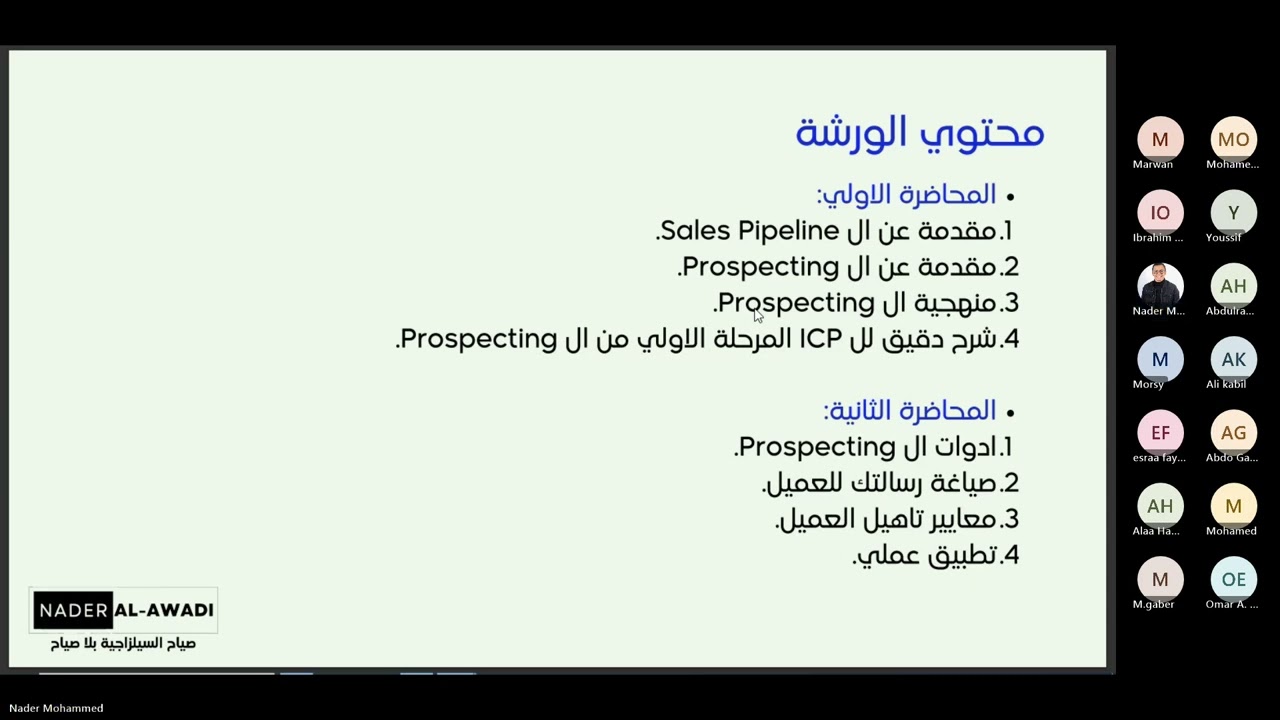
Familiarity with the basic Sales Pipeline/Funnel stages, including lead generation, qualification, and closing.
A basic conceptual understanding of SaaS (Software as a Service) and recurring revenue business models.
The core difference between marketing-led lead generation and sales-led prospecting.
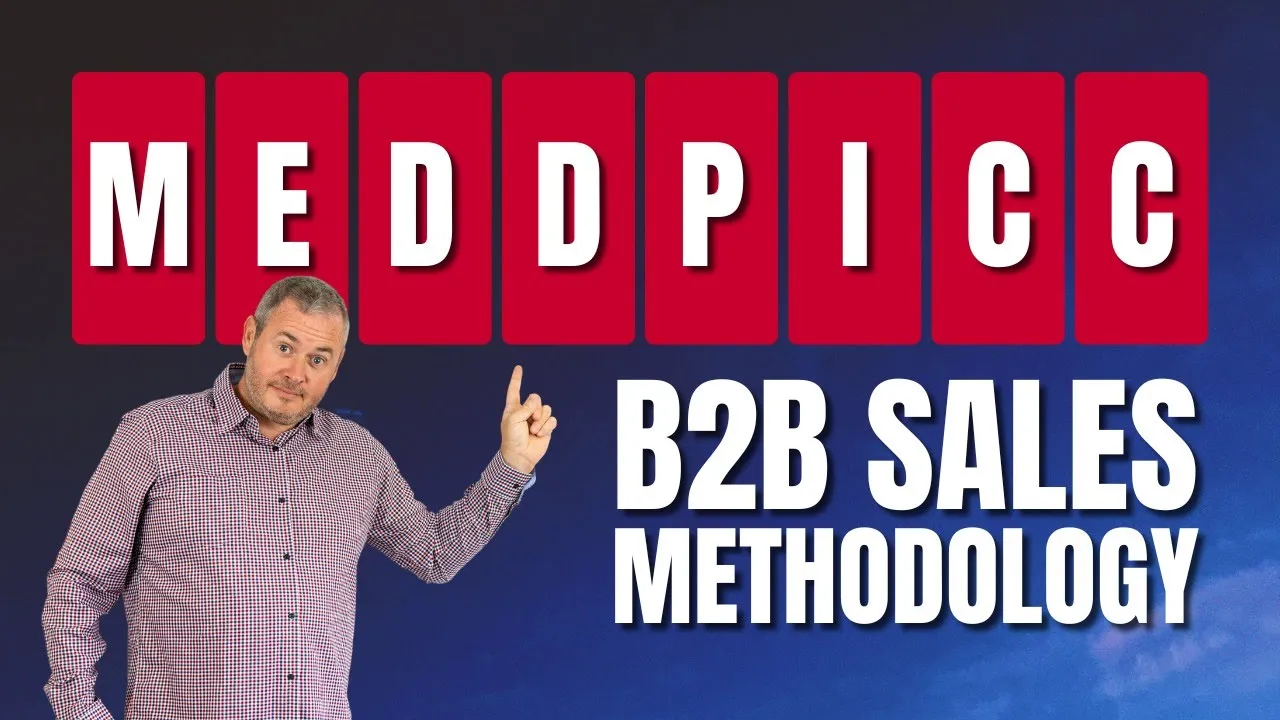
Advanced enterprise sales methodologies, such as MEDDPICC, SPIN Selling, or The Challenger Sale, to manage multi-stakeholder deals.
The mechanics of Account-Based Marketing (ABM) and Account-Based Selling (ABS) for high-value, targeted enterprise accounts.
Navigating enterprise procurement, legal reviews, security compliance, and complex contract negotiations.
Analyzing enterprise sales metrics and KPIs, including Annual Contract Value (ACV), Customer Acquisition Cost (CAC), and Sales Velocity.
Post-sale customer success strategies, retention management, and account expansion (upselling and cross-selling) techniques.
87.9K views1.8Klikes17:39Original Release: 2017-01-07
- So welcome back, Dale.
- Thanks, thanks.
- Yeah, your first video worked really well so we're gonna do another one, and so again, for people who might not be familiar with scale of what you do, so you're helping with portfolio operation what it's called, right? - Yeah, yeah.
- So what is it?
- Yeah, so we broadly call it portfolio operations, but really what we help our portfolio companies to do is help 'em scale to be the next big software company, at the point at which scale invests, which is when they've met that product market fit.
What they're really trying to do is scale their go-to-market function, and that's really what I specialize in.
- Right, so it seems like recently one other thing that you've been called to help with is kind of to say you're structuring sales, like how should you look at sales as a function in your company, how should you structure your team, and what would that look like, and it's something that I think a lot of companies kind of struggle with, and are not honestly aware of the best practices, so we figured we'd try to draw it up on the map and give people a sense of today, if you're doing enterprise software, this is probably what you should be looking at.
- Right, yeah.
- So the big thing probably is to start with, there's all kind of sales, so maybe we should start there and draw a picture, like anything from credit card payments you do on your getup.com account to enterprise strategic sales.
- Yeah, and this changes as a company matures, so some of the companies that we work with will start out with, it's before they've actually sold anything, so this is the first time that they're doing something, and then there's another, another inflection point comes up where they actually start graduating from the web self-service all the way up into the enterprise and the difference stages in between, and what I advise our customers, one of the easiest ways to take a look at your customers, and this has really been used a lot, is the segmentation pyramid.
People think about their product, their marketing and their sales in this perspective.
At the very tippy-top is going to be your enterprise sales.
At the bottom is going to be the broad market where people will typically be a self-service or a VSB or very small business, and there's a lot of different variations in between from an S and B, mid-market to large enterprise.
- And again, there's very few people at the top, there's very few enterprise style customer.
There's only 500 company in the Fortune 500.
- Exactly.
- And there's a lot of people at the bottom, and usually companies tend to specialize on one end of the spectrum or another, although we see companies now also tryin' to cover more of that pyramid.
- Yeah, and people will typically start in one place and they'll migrate either up or down.
We saw this in the marketing automation space.
At the bottom end was HubSpot.
HubSpot took a very broad portion and took the VSB and the SB part of the market.
Marketo took that mid-market portion and Eloqua took the very top, and that's the way that that market segmented out.
In other markets people will start in one area, maybe they'll start at the very bottom servicing their self-service customers, and then as they become more and more mature they'll slowly move up market into the mid-market and eventually the enterprise.
- But so usually you'd recommend a company that are just getting started kind of focus on operating well in one segment?
- Yeah, I mean I think it starts with identifying who your ideal customer is, and this is again, going back into defining out your product and thinking about your product within this pyramid.
It's thinking about how you're going to market to these people, and then how are you actually going to sell to these people.
- This alignment is really critical of course, right.
It takes a very different product shape to sell to the decision-maker, the enterprise, than it does to sell at the self-serve segment, and it's also something where at the end of the day, because you have so few accounts at the enterprise level you need to be able to charge a lot more for your product.
When you're at the bottom you can charge a lot more people a lot fewer money to be able to get to the revenue you need to IPO.
- Right, and your sales and marketing have to align with that as well, 'cause you can't have a very expensive sales model in the S and B and VSB market, versus in the enterprise, you can apply more resources there.
It probably takes more resources in order to get the large multi-million dollar accounts.
So when you're thinking about product, at the very top end it's about customization and integration.
You have to be able to fit within the workflow of the enterprise customer, and all the other products that they're using.
So you have to play nicely with others.
- They're not gonna adjust to you, you need to do something that works for them.
- Correct, exactly, versus the self-service S and B market, it's really about that handy-dandy, easy to turn on, easy to use type of product where they can come in and almost figure it out for themselves how to use it.
You can't have documentation that is like several gigs, or in the days of paper, like several books long, you have to have something that I can turn on, I can go into the credit card, charge it and just start using it right away.
- And again, you can't afford to customize that product for every single one of your customers, and again, the trick almost there is, can you get this one-size-fits-all product that can really appeal to a large portion of the population without forcing you to specialize in term of feature, in term of localization, in term any number of things, because that would really just kind of kill you.
- Right, exactly.
And you know, going into the marketing space when we think about it, it's a very similar story.
We have 50, 200, 500 customers in this large enterprise segment, or strategic segment, whatever you want to call it, so everything there is really targeted.
You're adopting an account-based marketing strategy, where it's basically tailoring the message and the value proposition to that particular company because we know so much about them.
At the bottom you don't have that luxury so it really is this broad value prop where you actually are everything, you're trying to be everything to everybody at the very lower end, or at least segmenting it out by industry or by size or by user personnel.
- Because again, at the bottom, and wherein it's just so critical, and you just want to get as many people as possible to hear about you and you want to repeat a consistent message in a schematic way, whereas in the enterprise level you have a lot more info about each customer and so you can go and say for a Fortune 500 car manufacturer, this is what we can do, and you can use that advantage.
- Exactly, whereas in the S and B market I have to be able to speak broadly about car or even just manufacturing as a whole.
I can't get down to the car manufacturing 'cause there probably aren't that many down in this space.
And then in the sales arena, you also have a much more expensive sales model up here because it takes more people, more specialization in order to sell that enterprise product.
This'll be a mix of, it can be all direct or it can be all channel, but you typically, you'll see some type of crossover between direct and channel, and the channel will be broken out in between people who help you sell, so these are your system integrators, your global SIs, it will be your resellers, it'll be your value-adds, and the other part of your channel is gonna be your partner ecosystem going back here into your integrations.
These are people that make you stickier within an organization, within an account, so people that you work well with.
If you're integrated with Salesforce, you're integrated with Workday, other platforms, Slack, that just makes your product that much stickier.
At the bottom end you'll see the self-service model, web, channel, and people that sell on your behalf, giving you a lower cost sales model, because a one-on-one sales approach at the very small business, if you're hiring a high-end salesperson, just doesn't make sense.
- Right, it's not very effective, and so-- - Well it could be very effective, it's just not very efficient. (laughs) - You're right, you're right, you're right.
It's a very, very good distinction.
'Cause at a high level, again, if you have very few target accounts, you're closing deals for say a million dollars, a good salesperson can lift that price up by literally like hundreds of thousands of dollars sometimes or just get the deal, where another rep couldn't, so putting everything on your side to get those deals and get max value is very important, whereas at the bottom it's much more about repeating it very, very quickly.
- Repeatable volume at high velocity.
I don't want to spend too much time on this because it actually, every small minute that I spend on this costs me money, and it reduces the amount of deals that I can actually process.
- Right, so let's focus a little bit on the enterprise picture.
What does the average team look like?
How would you suggest a company think about structuring their enterprise sales team?
- The easiest way to think about this is, and I like thinking about things in frameworks.
I think about the typical sales process, and it comes down to you need to be able to access the account, you need to persuade the account to buy, and then eventually you need to fulfill the account.
And these will map out into the different types of roles that you'll see within an organization.
What I'm gonna map out here is a very generic, vanilla version of it, but if you think about accessing, this is where what will generally be named as an SDR or a BDR.
These are your lead gen, lead qualification, account qualification people, sales development reps, business development reps.
They take inbound leads or they'll be prospecting outbound, then create opportunities for the salespeople.
- So they're just trying to figure out is this company, does this company have the budget, do they have the need for what we do, who's the decision-maker in that company and can I get that person on the phone or responding to an email.
- Yeah, at a broad level that's exactly what they're looking to do.
What they're trying to do, think about them as a hospital person, they're triaging everything, everything that comes in.
There are people that come in who are looking for jobs, probably not the right place to send to a salesperson, there are people that are just kicking tires.
That's someone that I want to keep in contact with because there might be something coming up down the pipe, but I want to, that's not necessarily something I want to have our salespeople focus on right now.
And then there are the people that are, we actually have an active project or an active pain.
It doesn't have to be an active project, an active pain that we're tying to solve, and those are the urgent ones I'd need to get into a salesperson's hands.
Then once this person, the BBRS has passed on that opportunity, typically a sales-qualified lead, it will go into what we'll generally call an AE account executive and/or an account manager.
- So that's the stereotypical sales guy that people think about, or salesperson in general.
- Right, and that has evolved, and our thinking about this has evolved a lot.
What started out as a one-size-fit-all account executive who handled both the acquisition and the upsell and cross-sell of new products within an account, some companies still do that, and it works for some, and then others have actually differentiated into an acquisition who's job really is just to get as many new logos in the door as possible, knowing that eventually they're going to be upsold or buy new products or expand the number of licenses that they have.
- And because the mechanism for software, between lending and expanding are so different, and the relationship management is different, and the human skills or the sales skills end up being very different.
- Right, exactly.
And typically the type of people that you hire into those will be very different.
What I'll say is that at the enterprise level, that relationship and the understanding of what's actually happening at that account is usually in the head of one person, and so being able to have that person have that quarterback of you is actually usually a good thing.
- [Tim] Right, that makes sense.
- And then what comes into play in the fulfillment is usually what we'll generally label as customer success, and this'll be everything from onboarding, provisioning, professional services to make sure that the customer is successful.
Their responsibilities will be for renewal and churn eventually.
- And so just to kind of give people a clear picture, so usually your access people, your SDRs, BDRs, they will tend to be younger people, sometimes just straight off college, just graduating, very quota-driven, get a lot of calls, line up a lot of meetings, whereas your exec will tend to be a little further in their career, maybe working not on a weekly basis in terms of quota but more like a quarter basis, tryin' to make a certain number, and what does this profile look like after that, between AM and CS, what does that look like?
- Yeah, the BDR-SDR role will typically be someone who is relatively early in their sales career, someone who is hungry, and I would say that that actually, that attribute falls across the entire spectrum.
You want people that are hungry, but the BDR-SDR is younger, earlier in their career and looking at actually closing and giving leads.
Their next step is typically to move into this AE or AM role, and usually what will end up happening is that they start down here at the lower end of the segmentation pyramid, where they start selling into very small businesses, faster to sell, lower cost.
The AE-AM, there's a broad variety here.
There's no set definition, but usually you have some experience in this SDR-BDR world.
Then you can either stay here and continue to move up the segmentation pyramid or you can actually move into a management role, where you're actually managing either a team of BDRs, AEs, AMs or customer success reps.
- Or managing like a territory, like regional director or something like that.
- And then the customer success rep, that is a little bit different.
Those people will typically come up through either support or through the account management function, depending on what the customer success person is being asked to do.
- And usually that tends to be around reducing churn, just increasing spend, extending the accounts, but also helping make sure that the product, the daily support experience is well taken care of and the customers are giving you referrals and staying customers for life.
- Exactly, exactly, customers for life.
That's exactly right.
- So maybe as a one last topic, 'cause that's also a big sales distinction, we should talk a little bit about inbound versus outbound.
So let me just actually wipe the thing and we can talk a little bit about that, 'cause that ends up making a huge difference, and I think a lot of startups don't really think about it all that much.
- Right, right, and I think that there's actually one differentiation that I want to make between inbound and outbound, because there is when we think about it for marketing versus sales, and inbound versus outbound.
And when I think about it from a marketing perspective, inbound marketing I typically liken to the world of content marketing.
You're putting content out there but you're having people, you're fishing.
I mean you have people come in and they'll come to you to ask you the questions because you, you've positioned yourself as a thought leader, as an expert in this category.
- And then you capture them with some sort of form or a webinar, demonstration.
You get that and turn into a lead, that then your BDRs can mine, yeah.
- In the outbound world, this is if you think back to the days, and people still do it and it works, is your direct mail.
We're sending to either, snail mail, which people actually do now, and it's coming back, to email, spam, what you would get into your inbox.
And that's what I think about in terms of outbound marketing.
- And I'm sure you somewhat target again, you're looking at very few strategic accounts, you know them, you kind of have some information from LinkedIn or wherever about the person, and what they might be looking for, and so you're trying to customize that in a very narrow way as opposed to using broad contact messaging.
- Correct, exactly.
And then in the sales model what I would say is that inbound, this is the BDR-SDR that is taking the leads from inbound so the form fills that have come in through inbound or the responses from direct, so people that have responded and raised their hand and said, "Hey, your message resonated with me "when you actually sent me that email.
"I'm responding."
BDR will typically take that inbound and then qualify it, pass it on to the sales rep.
On the outbound side, this is again where they're running into the targeted model where I'm basically going through my list of 500 customers as a SDR, an outbound SDR, outbound AE and saying, "Hey, we just closed this, "we just closed Ford.
"I also think that GM would also be able to "get great benefit from this."
So what I'm gonna do is create a highly targeted campaign from a sales perspective to go into that account.
- And sometime I think it creates a triangle of sort of where you'll have reps having a clear, identified account, and say, "Oh I think "they're gonna be at this conference," asking marketing to do specific targeted marketing duties toward these targets, and then involve the BDRs and feed that really quickly, whereas traditional inbound sales, they're more like, there's a big funnel, there's people coming in the top, and they'll drizzle down to the bottom, eventually talking to a rep, and that's the traditional model people think of, but outbound has been really, getting really popular lately it feels.
That's something that's really coming back.
- Yeah, absolutely.
- Cool.
That's really a lot of info in such a short amount of time so thank you so much.
- Yeah, no, absolutely - This was a great overview on sales and how startups can think about it.
- Awesome.
Up Next

35:28
8 Discovery Call Lessons Every Sales Professional Must Learn
@30MPC
1.5K views•2025-07-29

12:54
Triumph of Orthodoxy Icon: Byzantine Art & History Explained
@BenCallan
2.1K views•2024-08-06

9:49
FastAPI vs Flask vs Django: Choosing the Right Python Web Framework
@TechWithTim
302.5K views•2024-05-26

1:42
Game of Thrones Opening Credits: A Cinematic Analysis
@gameofthrones
46.3M views•2011-04-18
Related Study Plans & Knowledge Roadmaps
Structured learning paths in General & Interdisciplinary Studies
general-studies
Elevator Engineering: History, Physics & Cities
01From Hoists to Safety Brakes: The Dawn of Vertical Lift
02Hydraulic vs. Traction: The Engineering Physics of Elevators
03Modern Speed, Safety, and Algorithms
+ 2 more learning modules
12h5 modules
Explore Roadmap
general-studies
Rubber: Material Science, History & Geopolitics
01Origins of Natural Rubber & Mesoamerican History
02The Chemistry of Natural Rubber & Vulcanization
03The Geopolitics of the Rubber Boom & Colonization
+ 2 more learning modules
12h5 modules
Explore Roadmap
general-studies
Containerization: Evolution, Logistics & Trade
01Ancient Trade & Bulk Cargo: Amphorae to Barrels
02The Industrial Revolution & Cardboard Packaging
03The Containerization Revolution: Malcom McLean
+ 2 more learning modules
12h5 modules
Explore Roadmap
general-studies
Textile Tech: Evolution, Labor & Global Impact
01Pre-Industrial Textiles: Handloom & Cottage Industry
02Mechanization: The Spinning Jenny to the Power Loom
03The Factory System & Global Labor Transformation
+ 2 more learning modules
10h5 modules
Explore Roadmap