

![INTRODUCCIÓN - [Curso Básico de la librería NumPy de Python]](https://i.ytimg.com/vi/nN_TYjT_KiI/maxresdefault.jpg)


![선형대수학 무료강의 - [서울대 AI박사] - 행렬, 벡터, 스칼라, 텐서 등 인공기능 수학 기초](https://i.ytimg.com/vi_webp/k_yto_vDRF0/maxresdefault.webp)













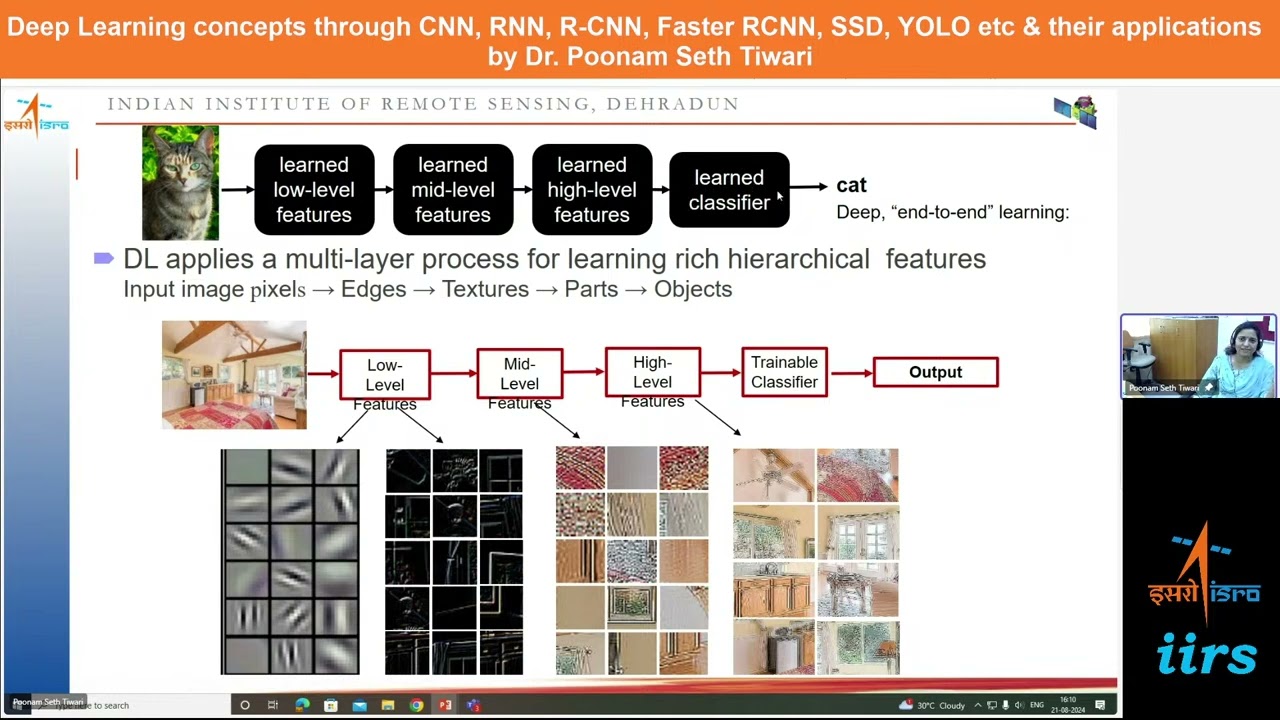







PyTorch is an open-source deep learning framework developed at Meta AI research lab in 2016, derived from the Lua-based Torch library dating back to 2002, that enables developers to build and train neural networks using tensors (multi-dimensional arrays) with dynamic computational graphs that allow runtime optimization and GPU acceleration via CUDA; the framework simplifies building neural networks by allowing users to define custom classes inheriting from the neural network module, where layers are constructed sequentially with linear transformations followed by non-linear activation functions to learn variable importance and make predictions.
PyTorch Deep Learning Framework: Build Neural Networks from Scratch
Added:Proficiency in Python programming, particularly with object-oriented programming (OOP) principles and libraries like NumPy.
Fundamental Linear Algebra, specifically understanding vector and matrix operations, as tensors are multi-dimensional arrays.
Basic Calculus concepts, specifically derivatives, partial derivatives, and the chain rule, which are essential for understanding gradient descent and backpropagation.
Introductory Machine Learning concepts, including supervised learning, features, labels, loss functions, and the general training loop.
Exploring advanced deep learning architectures, such as Convolutional Neural Networks (CNNs) for computer vision or Recurrent Neural Networks (RNNs) and Transformers for natural language processing.
Mastering hyperparameter tuning and model optimization techniques, including learning rate scheduling, regularization (like dropout and weight decay), and advanced optimizers (Adam, RMSprop).
Utilizing PyTorch high-level libraries and ecosystems, such as PyTorch Lightning for structured code, and Torchvision, Torchaudio, or Torchtext for specialized datasets.
Deploying PyTorch models into production environments using tools like TorchScript, ONNX (Open Neural Network Exchange), and serving frameworks like TorchServe.
1.3M views43.4Klikes2:42Original Release: 2023-03-20
pie torch an open source deep learning framework used to build some of the world's most famous artificial intelligence products it was created at The Meta AI research lab in 2016 but is actually derived from the Lua based torch library that dates back to 2002.
fundamentally it's a library for programming with tensors which are basically just multi-dimensional arrays that represent data and parameters in deep neural networks sounds complicated but its focused on usability will have you training machine learning models with just a few lines of python in addition it facilitates high performance parallel Computing on a GPU thanks to nvidia's Cuda platform developers love prototyping with it because it supports a dynamic computational graph allowing models to be optimized at runtime it does this by constructing a directed acyclic graph consisting of functions that keeps track of all the executed operations on the tensors allowing you to change the shape size and operations after every iteration if needed pytorch has been used to train models for computer vision AI like Tesla autopilot image generators like stable diffusion and speech recognition models like open AI whisper just to name a few to get started install Pi torque and optionally Cuda if you want to accelerate Computing on your GPU now import it into a python file or notebook like I mentioned a tensor is similar to a multi-dimensional array create a 2d array or Matrix with python then use torch to convert it into a tensor now we can run all kinds of computations on it like we might convert all these integers into random floating points we can also perform linear algebra by taking multiple tensors and multiplying them together what you came here to do though is build a deep neural network like an image classifier to handle that we can define a new class that inherits from the neural network module class inside the Constructor we can build it out layer by layer the flattened layer will take a multi-dimensional input like an image and convert it to one dimension from there sequential is used to create a container of layers that the data will flow through each layer has multiple nodes where each node is like its own mini statistical model as each data point flows through it it'll try to guess the output and gradually update a mapping of weights to determine in the importance of a given variable linear is a fully connected layer that takes the flat and 28 by 28 image and transforms it to an output of 512. this layer is followed by a non-linear activation function when activated it means that feature might be important and outputs the node otherwise it just outputs zero and finally we finish with a fully connected layer that outputs the 10 labels the model is trying to predict with these pieces in place that next step is to define a forward method that describes the flow of data and now instantiate the model to a GPU and pass it some input data this will automatically call its forward method for training and prediction congratulations you just built a neural network this has been pytorch in 100 seconds thanks for watching and I will see you in the next one
Up Next

21:57
Implementing Transformer Models with Hugging Face & Gradio
@ShawhinTalebi
110.2K views•2023-08-10

12:54
Triumph of Orthodoxy Icon: Byzantine Art & History Explained
@BenCallan
2.1K views•2024-08-06

16:20
Mastering Node.js Fundamentals: A Comprehensive 7-Step Guide
@Fireship
2.1M views•2020-05-21

1:42
Game of Thrones Opening Credits: A Cinematic Analysis
@gameofthrones
46.3M views•2011-04-18
Related Study Plans & Knowledge Roadmaps
Structured learning paths in General & Interdisciplinary Studies
general-studies
Elevator Engineering: History, Physics & Cities
01From Hoists to Safety Brakes: The Dawn of Vertical Lift
02Hydraulic vs. Traction: The Engineering Physics of Elevators
03Modern Speed, Safety, and Algorithms
+ 2 more learning modules
12h5 modules
Explore Roadmap
general-studies
Rubber: Material Science, History & Geopolitics
01Origins of Natural Rubber & Mesoamerican History
02The Chemistry of Natural Rubber & Vulcanization
03The Geopolitics of the Rubber Boom & Colonization
+ 2 more learning modules
12h5 modules
Explore Roadmap
general-studies
Containerization: Evolution, Logistics & Trade
01Ancient Trade & Bulk Cargo: Amphorae to Barrels
02The Industrial Revolution & Cardboard Packaging
03The Containerization Revolution: Malcom McLean
+ 2 more learning modules
12h5 modules
Explore Roadmap
general-studies
Textile Tech: Evolution, Labor & Global Impact
01Pre-Industrial Textiles: Handloom & Cottage Industry
02Mechanization: The Spinning Jenny to the Power Loom
03The Factory System & Global Labor Transformation
+ 2 more learning modules
10h5 modules
Explore Roadmap