















![The Revived Debate About Antitrust [21st Annual Faculty Conference]](https://i.ytimg.com/vi/ROPCVZ1oIMw/maxresdefault.jpg)





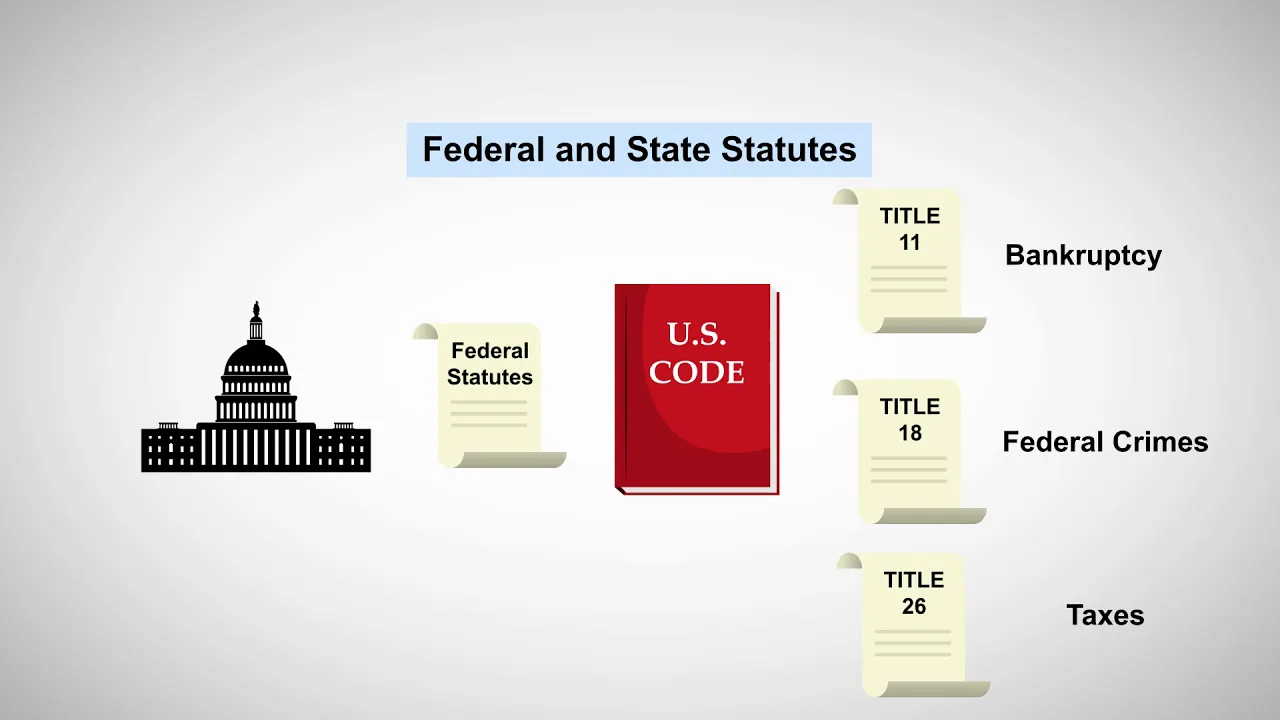
United States antitrust law, governed primarily by the Sherman Act (1890), Clayton Act (1914), and Federal Trade Commission Act (1914), regulates business conduct to promote fair competition and protect consumers from anti-competitive practices. The legal framework distinguishes between per se illegal conduct (such as price fixing, bid rigging, and geographic market allocation) and conduct evaluated under the rule of reason, which considers whether restraints merely regulate or suppress competition. Key enforcement bodies include the Department of Justice Antitrust Division and the Federal Trade Commission, with remedies ranging from structural separation to treble damages for private parties. The law's philosophical foundations remain contested: the Chicago School emphasizes consumer welfare and efficiency, while critics argue for broader public interest considerations in controlling economic power. Major cases like Standard Oil (1911), Microsoft (1998-2001), and AT&T (1982) illustrate evolving interpretations of monopolization and competitive effects.
US Antitrust Law Overview: Sherman & Clayton Acts Explained
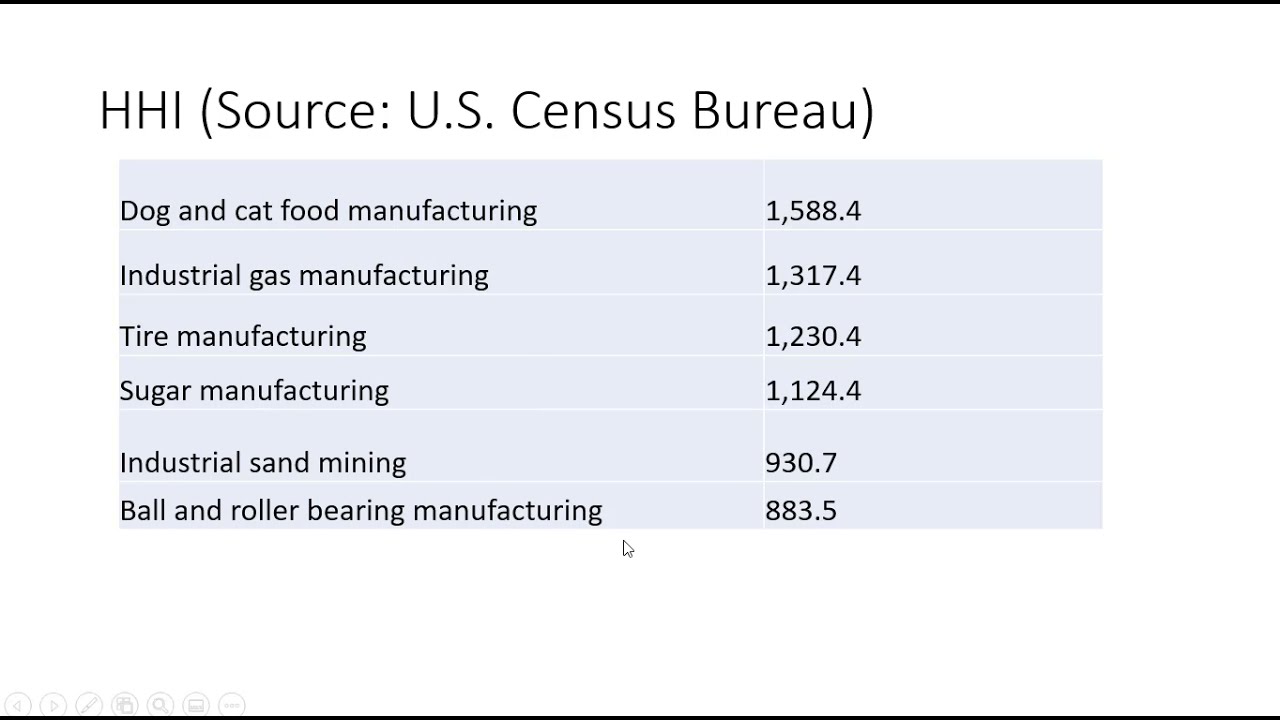
Added:United States antitrust law is a collection of federal and state government laws which regulate the conduct and organization of business corporations generally to promote Fair competition for the benefit of consumers the main statutes of the Sherman Act 1890 The Clayton Act 1914 and the Federal Trade Commission act 1914 these acts first restrict the formation of cartels and prohibit other collusive practices regarded as being in restrict point of trade second they restrict the merges and Acquisitions of organizations which could substantially lessen competition third they prohibit the creation of a monopoly and the abuse of Monopoly power the Federal Trade Commission the US Department of Justice state governments and private parties who are sufficiently affected may all bring actions in the courts to enforce the antitrust laws the scope of antitrust laws and the degree they should interfere in business freedom or protect smaller businesses communities and consumers are strongly debated one view mostly closely associated with The Chicago School of Economics suggests that antitrust laws should focus solely on the benefits to Consumers and overall efficiency while a broad range of legal and economic theories sees the role of antitrust laws is also controlling economic power in the public interest history although trust has a specific legal meaning in the late 19th century the word was commonly used to denote big business large manufacturing conglomerates emerged in great numbers in the 1880s and 1890s and were perceived to have excessive economic power the Interstate Commerce Act of 1887 began a shift towards federal rather than State regulation of big business it was followed by the Sherman Antitrust Act of 1890 the Clayton Antitrust Act and the Federal Trade Commission Act of 1914 the Robinson Patman Act of 1936 and the celak fover act of 1950 indeed at this time hundreds of small Shortline railroads were being bought up and Consolidated into giant systems Advocates of strong antitrust laws argued the American economy to be successful requires free competition and the opportunity for individual Americans to build their own businesses as Senator John Sherman put it if we will not endure a king as a political power we should not endure urane over the production transportation and sale of any of the necessaries of Life Congress passed the Sherman Antitrust Act almost unanimously in 1890 and it Remains the core of antitrust policy the ACT makes it illegal to try to restrain trade or to form a monopoly it gives the justice department the mandate to go to federal court for orders to stop illegal Behavior or to impose remedies public officials during the Progressive Era put passing and enforce forcing strong antitrust high on their agenda president Theodore Roosevelt sued 45 companies under the Sherman Act while William Howard Taft sued 75 in 1902 Roosevelt stopped the formation of the Northern Securities company which threatened to monopolize transportation in the Northwest one of the more well-known trusts was the Standard Oil Company John D Rockefeller in the 1870s and 1880s had used economic threats against competitors and secret rebate deals with railroads to build what was called a monopoly in the oil business though some minor competitors remained in business in 1911 the Supreme Court agreed that in recent years standard had violated the Sherman Act it broke the Monopoly into three dozen separate companies that competed with one another including Standard Oil of New Jersey Standard Oil of Indiana Standard Oil Company of New York of California and so on in approving the bra Pi up the Supreme Court added the rule of Reason Not all big companies and not all monopolies are evil and the courts are to make that decision to be harmful a trust had to somehow damage the economic environment of its competitors United States Steel Corporation which was much larger than Standard Oil won its antitrust suit in 1920 despite never having delivered the benefits to Consumers that standard oil did in fact it lobbied for tariff protection that reduced competition and so contending that it was one of the good trusts that benefited the economy is somewhat doubtful likewise International Harvester survived its Court test while other trusts were broken up in tobacco meat packing and bathtub fixtures over the years hundreds of Executives of competing companies who met together illegally to fix prices went to federal prison one problem some perceived with the Sherman Act was that it was not entirely clear what practices were prohibited leading to businessmen not knowing what they were permitted to do and government antitrust authorities not sure what business practices they could challenge in the words of one critic Isabelle Patterson as freak legislation the antitrust laws stand alone nobody knows what it is they forbid in 1914 Congress passed The Clayton Act which prohibited specific business actions if they substantially lessened competition at the same time Congress established the Federal Trade Commission whose legal and business experts could force business to agree to consent decrees which provided an alternative mechanism to police antitrust American hostility to Big Business began to decrease after the Progressive Era for example Ford Motor Company dominated auto manufacturing built millions of cheap cars that put America on Wheels and at the same time lowered prices raised wages and promoted manufacturing efficiency Ford became as much of a popular hero as Rockefeller had been a villain welfare capitalism made large companies an attractive place to work new career paths opened up in middle management local suppliers discovered that big corporations were big purchases talk of trust busting faded away under the leadership of Herbert Hoover the government in the 1920's promoted business cooperation fostered the creation of self- policing trade Association and made the FTC an ally of respectable business during the New Deal likewise attempts were made to stop Cutthroat competition attempts that appeared very similar to calization which would be illegal under antitrust laws if attempted by some one other than government the national industrial Recovery Act was a shortlived program in 1933 a euro35 designed to strengthen trade associations and raise prices profits and wages at the same time the Robinson Patman Act of 1936 sought to protect local retailers against the onslaught of the more efficient chain stores by making it illegal to discount prices to control Big Business the New Deal policy makers preferred federal and state regulation a Euro controlling the rates in telephone services provided by American Telephone and Telegraph company for example Euro and by building up countervailing power in the form of labor unions by the 19 70s fears of cutthroat competition had been displaced by confidence that a fully competitive Marketplace produced Fair returns to everyone the fear was that Monopoly made for higher prices less production inefficiency and less prosperity for all as unions faded in strength the government paid much more attention to the damages that unfair competition could cause to Consumers especially in terms of higher prices poorer service and restricted choice in 1982 the Reagan Administration used the Sherman Act to break up AT&T into one long-distance company in seven Regional baby bells arguing that competition should replace Monopoly for the benefit of consumers and the economy as a whole the pace of business takeovers quickened in the 1990s but whenever one large corporation sought to acquire another it firsted to obtain the approval of either the FTC or the justice department often the government demanded that certain subsidiary be sold so that the new company would not monopolize a particular geographical Market in 1999 a coalition of 19 states in the federal justice department sued Microsoft a highly publicized trial found that Microsoft had strong armed many companies in an attempt to prevent competition from the Netscape browser in 2000 the trial court ordered Microsoft split into to punish it and prevent it from future misbehavior however the court of appeals reversed the decision ition removed the judge from the case for properly discussing the case while it was still pending with the media with the case in front of a new judge Microsoft and the government settled with the government dropping the case in return for Microsoft agreeing to cease many of the practices the government challenged in his defense CEO Bill Gates argued that Microsoft always worked on behalf of the consumer and that splitting the company would diminish efficiency and slow the pace of software development cartels and collusion preventing collusion and cartels that act in Restraint of Traders an essential task of antitrust law it reflects the view that each business has a duty to act independently on the market and so earn its profits solely by providing better priced and quality products than its competitors the Sherman Act a section 1 prohibits e very contract combination in the form of trust or otherwise or conspiracy in Restraint of trade or Commerce this targets two or more distinct Enterprises acting together in a way that harms third parties it does not capture the decisions of a single Enterprise or a single economic entity even though the form of an entity may be two or more separate legal persons or companies in Copper weld Corporation V Independence tube Corporation it was held an agreement between a parent company and a wholly owned subsidiary could not be subject to antitrust law because the decision took place within a single economic entity this reflects the view that if the Enterprise has not acquired a monopoly position or has significant Market power then no harm is done the same rationale has been extended to joint ventures where corporate shareholders make a decision through a new company they form in Texico Incorporated v d the Supreme Court held unanimously that a price set by a joint venture between Texico and Shell Oil did not count as making an unlawful agreement thus the law draws a basic distinction between concerted and independent action multifirm conduct tends to be seen as more likely than single firm conduct to have an unambiguously negative effect and is judged more sternly generally the law identifies for main categories of agreement first some agreements such as price fixing or sharing markets are automatically unlawful or illegal per se second because the law does not seek to prohibit every kind of agreement that hinders freedom of contract it developed a rule of Reason where a practice might restrict trade in a way that is seen as positive or beneficial for consumers or Society third significant problems of proof and identification of wrongdoing arise where businesses make no avert contact or simply share information but appear to act in concert tacit collusion particularly in concentrated markets with a small number of competitors or oligopolists have led to significant controversy over whether or not antitrust authorities should intervene fourth vertical agreements between a business into supplier or purchaser up or Downstream raise concerns about the exercise of Market power however they are generally subject to a more relaxed standard under the rule of Reason restrictive practices some practices are deemed by the courts to be so obviously detrimental that they are categorized as being automatically unlawful or illegal per se the simplest and Central case of this is price fixing this involves an agreement by businesses to set the price or consideration of a good or service which they buy or sell from others at a specific level if the agreement is durable the general term for these businesses is a cartel it is irrelevant whether or not the businesses succeed in increasing their profits or whether together they reach the level of having Market power as might a monopoly such collusion is illegal per se you United States V Trenton Potter's company 273 us 392 P legality of price fixing appellation calls Incorporated V United States 288 us 344 United States V so can the vacuum Oil Company Incorporated 310 us 150 bid rigging is a form of price fixing and Market allocation that involves an agreement in which one part party of a group of biders will be designated to win the bid Geographic Market allocation is an agreement between competitors not to compete within each other's Geographic territories Adon Pipe and Steel company V United States pipe manufacturers had agreed among themselves to designate one lowest bidder for government contracts this was held to be an unlawful Restraint of trade contrary to the Sherman Act however following the reasoning of Justice Ted in the court of appeals the Supreme Court held that implicit in the Sherman Act a section 1 there was a rule of reason so that not every agreement which restrained the freedom of contract of the parties would count as an anti-competitive violation Hartford Fire insurance company V California 113 SCT 28915 to4 a group of reinsurance companies acting in London were successfully sued by California for conspiring to make us insurance companies abandoned policies beneficial to Consumers but costly to reinsure the Sherman Act was held to of extra territorial application to agreements outside US Territory group boycotts of competitors customers or Distributors fashion Originators Guild of America V FTC 312 us 457 the foga a combination of clothes designers agreed not to sell their clothes to shops which stocked replicas of their designs and employed their own inspectors held to violate the Sherman Act a section 1 CL Incorporated V Broadway hail Stores Incorporated 359 us 207 a group boycott is per unlawful even if it may be connected with a private dispute and will have little effect upon the markets American Medical Association V United States 317 us 519 Molina V National Basketball Association 190 FS sub 241 Associated Press V United States 326 us16 to3 a Prohibition on members selling spontaneous news violated the Sherman Act as well as making membership difficult and freedom of speech among newspapers was no defense nor was the absence of a total Monopoly Northwest Wholesale station is B Pacific stationary 47 2 Us 284 it was not per unlawful for the Northwest Wholesale stationers a purchasing Cooperative where Pacific stationary had been a member to expel Pacific stationary without any procedure or hearing or Reason whether there were competitive effects would have to be adjudged under the rule of Reason nynex Corporation V discon Incorporated 525 us 128 the P group boycott prohibition does not apply to a buyer's decision to purchase goods from one seller or another rule of reason if an antitrust claim does not fall within a per se legal category the plaintiff must show the conduct causes harm in Restraint of trade under the Sherman Act a section 1 according to the facts peculiar to the business to which the restraint is applied this essentially means that unless a plaintiff can point to a clear precedent to which the situation is analogous proof of an anti-competitive effect is more difficult the reason for this is that the courts have endeavored to draw a line between practices that restrain trade in a good compared to a bad way in the first case United States V trans Missouri Freight Association the Supreme Court found that railroad companies had acted unlawfully by setting up an organization to fix transport prices the railroads had protested that their intention was to keep prices low not high the court found that this was not true but stated that not every Restraint of trade in a literal sense could be unlawful just as under the common law the Restraint of trade had to be unreasonable in Chicago Board of Trade V United States the Supreme Court found a good Restraint of trade the Chicago Board of Trade had a rule that Commodities Traders were not allowed to privately agree to sell or buy after the Market's closing time the reason for the Board of Trade having this rule was to ensure that all Traders had an equal chance to trade at a transparent Market market price it plainly restricted trading but the Chicago Board of Trade argued this was beneficial brand IJ giving judgment for a unanimous Supreme Court held the rule to be Pro competitive and comply with the rule of reason it did not violate the Sherman Act a section 1 as he put it every agreement concerning trade every regulation of trade restrains to bind to restrain is of their very essence the true test of legality is whether the restraint imposed is such as merely regulates and perhaps thereby promotes competition or whether it is such as May suppress or even destroy competition to determine that question the court must ordinarily consider the facts peculiar to the business to which the restraint is applied its condition before and after the restraint was imposed the nature of the restraint and its effect actual or probable broadcast music V Colombia broadcasting system 441 US1 blanket licenses did not necessarily count as price fixing under a relaxed rule of Reason test Arizona V Marika County Medical Society 457 us 3324 to3 held that a maximum price agreement for doctors was per se unlawful under the Sherman Act Section 1 w v American Medical Association 895 f2d 352 the American Medical association's boycott of chiropractice violated the Sherman Act a section 1 because there was insufficient proof that it was unscientific United States V tofco asex Incorporated 45 us 596 Palma V brg of Georgia Incorporated 498 us46 broadcast music Incorporated V CBS incor operated 441 US1 National saki of Professor Engineers V United States 435 us 679 a paragraph a paragraph 219-220 ncav Board of Regents of the University of Oklahoma 468 us 857 to2 held at the National College athletics association's restriction of Television of games to encourage attendance was restricting supp and therefore unlawful California Dental assn B FTC 526 us 756 ft CB Indiana fedon of dentists 476 us 447 tacit collusion and oligopoly Matts Electric Industrial company limited V Zenith radio Corporation for 475 us 574 held that the evidence needed to show unlawful collusion contrary to the Sherman Act must be enough to exclude the possibility of individual Behavior B Atlantic Corporation V tumbly 550 us 5445 to2 while Bell Atlantic and other major telephone companies were alleged to have acted in concept to share markets and not compete in each other's territory to the detriment of small businesses it was held that in absence of evidence of an agreement parallel conduct is not enough to ground a case under the Sherman Act a section 1 Interstate circuit Incorporated V United States 306 us 2008 theater Enterprises V Paramount Distributing 346 us 537 no evidence of illegal agreement however film Distributors gave first film releases to downtown Baltimore theaters and Urban theaters were forced to wait longer held there needed to be evidence of conspiracy to injure United States V American Tobacco Company 221 us 106 found to have monopolized the trade American Tobacco Company V United States 328 us 781 after American Tobacco Company was broken up the four entities were found to have achieved a collectively dominant position which still amounted to monopolization of the market contrary to the Sherman Act a section 2 American column and Lumber Company V United States 257 us 377 information sharing Maple flooring manufacturers assn B United States 268 us 563 United States V Container Corporation 393 US 33 33 Airline tariff Publishing Company settlement with the US Department of Justice vertical restraints resale price maintenance Dr Miles medical kov John D Park and Sons 220 us 373 K first Stewart Company V Seagram and Sons Incorporated 340 us 2011 it was unlawful for private liquor dealers to require that their products only be resold up to a maximum price it unduly restrained the freedom of businesses and was per se illegal alre V heral company 390 us 145 setting a fixed price minimum or maximum held to violate section one of the Sherman Act State Oil Company V KH 522 us3 vertical maximum price fixing had to be adjudged according to a rule of Reason Legion Creative Leather Products Incorporated V psks Incorporated 551 us 8775 to for decision that vertical price restraints were not per se illegal a leather manufacturer therefore did not violate the Sherman Act by stopping delivery of goods to a retailer after the retailer refused to raise its prices to the leather manufacturer standards Outlet territory or customer limitations Packard motorc car company V Webster motor car company 243 f2d 418 420 sir denied 355 us 822 Continental television V GTE Sylvania 433 us 366 to2 held that it was not an antitrust violation and it fell within the rule of reason for a seller to limit the number of franchises and require the franchisees only sell Goods within its area United States V Colgate and Company 250 us300 there is no unlawful action by a manufacturer or seller who publicly announces a price policy and then refuses to deal with businesses who do not subsequently comply with a policy this is in contrast to agreements to maintain a certain price United States V Park Davis and Company 362 us29 under Sherman Act a section 4 Monsanto company V spray rights Service Corporation 465 us 752 stating that under Colgate the manufacturer can announce its resale prices in advance and refuse to deal with those who fail to comply and a distributor is free to acquest to the manufacturer's demand in order to avoid termination Monsanto an agricultural chemical terminated its distributorship agreement with spray right on the ground that it failed to hire train salesman and promote sales to dealers adequately held not per se legal because the Restriction related to nonprice matters and so was to be judged under the rule of Reason business Electronics Incorporated V Sharp Electronics Incorporated 485 us 717 electronic calculators mergers although the Sherman Act 1890 initially dealt in general with cartels and monopolies it was recognized that this left a gap instead of forming a cartel businesses could simply merge into one entity the period between 1895 and 1904 saw a great merger movement as business competitors combined into other more giant corporations however upon a literal reading of Sherman Act no remedy could be granted until a monopoly had already formed The Clayton Act 1914 attempted to fill this Gap by giving jurisdiction to prevent merges in the first first place if they would substantially lessen competition ft CV Dean Foods company 384 us 5975 to4 the FTC was entitled to get an injunction to prevent the completion of a merger between milk selling competitors in the Chicago area before its competitive effects are determined by a court Robertson V National Basketball Association 556 f2d 682 injunction issued against merger of the NBA with the ABA citizen Publishing Company V United States 394 US 131 failing company defense carel Incorporated V mon Fort of Colorado Incorporated 479 us 1004 private enforcement Clayton Act 1914a Section 8 interlocking directorates horizontal mergers Northern Securities company United States 193 us 197 horizontal merger under the Sherman Act United States V Philadelphia National Bank 374 us 321 the second and third largest of 42 banks in the Philadelphia area would lead to a 30% Market control and so violated The Clayton Act a section 7 Banks were not exempt even though there was additional legislation under the bank merger Act of 19 1960 United States V F's Grocery Company 384 us 270 IM merger of two grocery firms in the Los Angeles area did violate The Clayton Act a section 7 particularly considering the amendment by the celero Euro key F act 1950 United States V General Dynamics Corporation 45 us 486 General Dynamics Corporation had taken control over by share purchase United Electric coal companies a strip mining coal producer horizontal merger guidelines ft CV Staples Incorporated 970f sub 1066 Hospital Corporation of America V FTC 87 f2d 1381 Federal Trade Commission V HJ Hines company 246 f3d 78 United States V Oracle Corporation 331 F sub Tod 1098 vertical mergers United States V Colombia Steel company 334 us 495 United States v e d Pond Andor and Company 351 us 377 Brown Shoe Company Incorporated V United States 370 us 200 194 there is not one single test for whether a merger substantially lessens competition but a variety of Economic and other factors may be considered two shoe retailers and manufacturers merging was held to substantially lessen competition given the market in Towns over 10,000 people for men's Women's and Children's Shoes conglomerate mergers United States V Sydney W Winslow 227 us22 United States V Continental K company 378 US 441 concerning the definition of the market segments in which the Continental K company was performing a merger FTC V Proctor and Gamble company 386 us 568 Monopoly and power the Law's treatment of monopolies is potentially the strongest in the field of antitrust law judicial remedies can force large organizations to broken up be run subject to positive obligations massive penalties may be imposed and all the people involved can be sentenced to jail under a section two of the Sherman Act 1890 every person who shall monopolize or attempt to monopolize any part of the trade or Commerce among the several States commits an offense the courts have interpreted this to mean that Monopoly is not unlawful per se but only if acquired through prohibited conduct historically where the ability of judicial remedies to combat Market power have ended the legislature of states or the federal government have still intervened by taking public ownership of an Enterprise or subjecting the industry to sector specific regulation the law on public services and administration go significantly beyond the realm of antitrust laws treatment of monopolies when Enterprises are not under public ownership and where regulation does not foreclose the application of antitrust law to requirements must be shown for the offense of monopolization first the alleged monopolist must possess sufficient power in an accurately defined market for its products or Services second the monopolist must have used its power in a prohibited way the categories of prohibited conduct are not closed and are contested in theory historically they have been held to include exclusive dealing price discrimination refusing to supply an essential facility product tying and predatory pricing monopolization Northern Securities company V United States 193 us 1975 to4 a railway Monopoly formed through a merger of three corporations was ordered to be dissolved the owner James Jerome hell was forced to manage his ownership stake in each independently Swift and Company V United States 196 us 375 the antitrust laws entitled the federal government to regulate monopolies that had a direct impact on Commerce Standard Oil Company of New Jersey B United States 221 US1 Standard Oil was dismantled into geographical entities given its size and that it was too much of a monopoly United States V American Tobacco Company 221 us 106 found to have monopolized the trade United States V Alco 148 f2d 416 a monopoly can be deemed to exist depending on the size of the market it was generally irrelevant how the Monopoly was achieved since the fact of being dominant on the market was negative for competition United States V EI dond Andor and Company 351 us 377 illustrates the cellophane Paradox of defining the relevant Market if a monopolist has set a price very high there may now be many substitutable Goods at similar prices which could lead to a conclusion that the market share is small and there is no Monopoly however if a competitive price were charged there would be a lower price and so very few substitutes whereupon the market share would be very high and a monopoly established United States V CFI Enterprises 9003 f2d 659 necessity of barriers to entry low range Jal company V United States 342 us43 attempted monopolization United States V American Airlines Incorporated 743 f2d 1114 Spectrum Sports Incorporated V McCullen 56 us 447 in order for monopolies to be found to have acted unlawfully action must have actually been taken the threat of abusive behavior is insufficient phras of V Major League Soccer 284 F3 d47 there could be no unlawful monopolization of the soccer Market by MLS where no Market previously existed United States V Griffith 334 us4 Cinema corporations secured exclusive rights from Distributors for closing competitors specific intent to monopolize his not required violating the Sherman Act a millisecond Section 1 and 2 United shoe Machinery Corporation V us 347 us 521 exclusionary Behavior United States V grel Corporation 384 us 563 grin made plumbing supplies and fire sprinklers and with Affiliates had 87% of the Central Station Protective Service Market from this predominant share there was no doubt of Monopoly power exclusive dealing Standard Oil Company V United States 337 us 293 oil supply contracts affected a gross business of $58 million comprising 6.7% of the total in a seven state area held to be contrary to Clayton Act a Section 3 Tampa Electric Company V Nashville Coal Company 365 us 320 Tampa Electric Company contracted to buy coal for 20 years to provide Power in Florida a Nashville Coal Company later attempted to end the contract on the basis that it was an exclusive Supply agreement contrary to The Clayton Act a Section 3 or the Sherman Act a millisecond Section 102 held that this did not affect competition sufficiently USV Delta Dental of Rhode Island 943 FS up 172 price discrimination rabine sa Euro Patman act Clayton Act 1914 a section 2 FTC V Morton Salt Company Volvo trucks North America Incorporated V reader Simco GMC Incorporated J truet pain company V Chrysler Motors Corporation FTV Henry Brock and Company ft CV bord and Company Commodities of light grade and quality United States V bord and Company the cost justification Defense United States V United States gypsum company meeting the competition defense F City Industries V vanco beverage Incorporated Great Atlantic and Pacific Tea Company V FTC essential facilities Aspen skiing company v as Highland skiing Corporation 472 us 585 the refusal of Supply Access to ski slopes violated the Sherman Act section two Eastman Kodak company V image Technical Services Incorporated 54 us 451 Kodak has refused to supply replacement parts to small businesses servicing Kodak equipment which was alleged to violate the Sherman Act a millisecond Section 1 and two the Supreme Court held 6 to3 that the small businesses were entitled to bring the case and Kodak was not entitled to summary judgment Verizon communications V law offices of Curtis V trinko LLP 540 us 398 no extension of the essential facilities Doctrine beyond that set in Aspen ail power company V United States 410 us 366 berky photo Incorporated V Eastman Kodak company 603 f2d 263 United States V AT&T led to the breakup of AT&T tying products Sherman Act 1898 Section 1 covers making purchase of goods conditional on purchase of other Goods if there is sufficient Market power International Business Machines Corporation V United States 298 us 100 31 requiring a least machine to be operated only with supplies from IBM was contrary to Clayton Act a Section 3 international Salt Company V United States 332 us 392 it would be a per se infringement of the Sherman Act a section 2 for a seller who has a legal Monopoly through a patent to tie buyers to purchase products over which the seller does not have a patent United States V Paramount Pictures Incorporated 334 US 131 Hollywood Studios practice of requiring block booking was unlawful among other things times pick Alan Publishing Company V United States 345 us 5945 to 4 where there was no market dominance in a product Market tying the sale of a morning and an evening newspaper together was not unlawful United States V loros Incorporated 371 us 38 product bundling and price discrimination the existence of a tie was sufficient to create a presumption of Market power Jefferson Parish Hospital District Number 2 V hide 466 us2 reversing lows it was necessary to prove sufficient Market power for a timeing requirement to be anti-competitive United States V Microsoft Corporation 253 f3d 34 and District courau Microsoft ordered to be split into two for its monopolistic practices including tying but then the ruling was reversed by the court of appeals predatory pricing in theory which is hotly contested predatory pricing happens when large companies with huge cash reserves and large lines of credit can stifle competition by engaging in predatory pricing that is by selling their products and services at a loss for a time in order to force their smaller competitors out of business with no competition they are then free to consolidate control of the industry and charge whatever prices they wish at this point there is also little motivation for investing in further technological research since there are no competitors left to gain an advantage over High barriers to entry such as large upfront investment notably named sunk costs requirements in infrastructure and exclusive agreements with Distributors customers and wholesalers ensure that it will be difficult for any new competitors to enter the market and that if any du the trust will have ample Advance warning and time in which to either buy the competitor out or engage in its own research and return to predatory pricing long enough to force the competitor out of business critics argue that the empirical evidence shows that predatory pricing does not work in practice and is better defeated by a truly free market than by antitrust laws Brook group limited V Brown and Williams and tobacco Corporation 59 us 2009 to prove predatory pricing the plaintiff must show that changes in market conditions are adverse to its interests and that prices are below an appropriate measure of its rival's costs and the competitor had a reasonable Prospect or a dangerous probability of recouping its investment in the alleged scheme Wayan a company V Ross Simmons hardwood lumber company 549 us 3112 a plaintiff must prove that to make a claim of predatory buying the alleged violator is likely to recoup the cost of the alleged predatory activity this involved the S Mill Market Barry Wright Corporation V it grinell Corporation 724 f2d 227 Spirit Airlines Incorporated V Northwest Airlines Incorporated 431 f3d 9917 United States V e d Pond Andor and Company 351 us 377 intellectual property Continental Paper Bag Company V Eastern Paper Bag Company 210 us 458 to1 concerning a self-opening paper bag it was not an unlawful use of a monopoly position to refuse to license a patent used to others since the essence of a patent was the freedom not to do so United States V univis lens company 316 us 241 once a business sold its patented lenses it was not allowed to lawfully control the use of the lens by fixing a price for resale this was the exhaustion Doctrine international Salt Company V United States 332 us 392 it would be a per se infringement of the Sherman Act a section 2 for a seller who has a legal Monopoly through a patent to tie buyers to purchase products over which the seller does not have a patent Walker Process Equipment Incorporated V food machinery and Chemical Corporation 382 us 172 illegal monopolization through the maintenance and enforcement of a patent obtained via fraud on the patent office case sometimes called Walker process fraud United States V Glo group limited 410 us52 the government May challenge a pay and where it is involved in a monopoly violation Illinois tool Works Incorporated V independent Inc incorporated 547 us28 there is no presumption of Market power in a case on an unlawful tying arrangement from the mere fact that the defendant is a patented product Apple Incorporated litigation and United States V Apple Incorporated scope of antitrust law antitrust laws do not apply to or are modified in several specific categories of Enterprise and for several kinds of actor first since The Clayton Act 1914a section 6 there is no application of antitrust laws to agreements between employees to form or act in labor unions this was seen as the Bill of Rights for labor as the ACT laid down that the labor of a human being is not a commodity or article of Commerce the purpose was to ensure that employees with unequal bargaining power were not prevented from combining in the same way that their employers could combine in corporations subject to the restrictions on merges that The Clayton Act set out however sufficiently autonomous workers such as professional sports players have been held to fall within antitrust Provisions second professional sports leagues enjoy a number of exemptions merges and Joint agreements of professional football Hockey baseball and basketball leagues are exempt Major League baseball was held to be broadly exempt from antitrust law and federal baseball club V National League homes J held that the baseball League's organization meant that there was no commerce between the states taking place even though teams traveled across state lines to put on the games that travel was merely incidental to a business which took place in each state it was subsequently held in 1952 in tulson V New York Yankees and then again in 197 72 flood V that the baseball League's exemption was an aberration however Congress had accepted it and favored it so retroactively overruling the exemption was no longer a matter for the courts but the legislature in United States V international boxing club of New York it was held that unlike baseball boxing was not exempt and in raid of each V National Football League professional football is generally subject to antitrust laws as a result of the AFL NFL merger the National Football League was also given exemptions in exchange for certain conditions such as not directly competing with college or high school football however the 20110 Supreme Court ruling in american needle Incorporated V NFL characterized the NFL as a cartel of 32 independent businesses subject to antitrust law not a single entity third anti trust laws are modified where they are perceived to encroach upon the media and Free Speech or are not strong enough newspapers under joint operating Agreements are allowed limited antitrust immunity under the newspaper preservation Act of 1970 more generally and partly because of concerns about media cross ownership in the United States regulation of media is subject to specific statutes chiefly the communications Act of 1934 and the Telecommunications Act of 199 96 under the guidance of the Federal Communications Commission the historical policy has been to use the state's licensing Powers over the airwaves to promote plurality antitrust laws do not prevent companies from using the legal system or political process to attempt to reduce competition most of these activities are considered legal under the nowhere Pennington Doctrine also regulations by States may be immune under the Parker immunity Doctrine professional Real Estate Investors Incorporated V Colombia pictures 8 us49 Allied tube V Indian Head Incorporated 486 us 492 FTC V Superior CT TLA 493 us 411 fourth the government May Grant monopolies in certain industries such as utilities and infrastructure where multiple players are seen as unfeasible or impractical fifth insurance is allowed limited antitrust exemptions as provided by the macaron Ferguson Act of 1945 United States V Southeastern Underwriters Association 322 us 533 the insurance industry was not exempt from antitrust regulation credit swis V billing 551 us 2647 to1 the industries regulated by the Securities act 1933 and the Securities and Exchange act 1934 are exempt from antitrust lawsuits Parker V Brown 3177 us 341 actions by state governments were held to be exempt from antitrust law given that there was no original legislative intent to cover anything other than business combinations gold fob V Virginia State Bar 421 us7 173 the Virginia State Bar which was delegated power to set price schedules for lawyers fees was an unlawful price fixing it was no longer exempt from the Sherman Act and constituted a per se infringement California retail liquor dealers assn B midal aluminum Incorporated 445 us997 the state of California acted contrary to the Sherman Act 1898 Section 1 by set in Fair Trade wine price schedules rice V Norman Williams Company 458 us 654 the Sherman Act did not prohibit a California law which prohibited the importation of goods that were not authorized to be imported by the manufacturer treat and international corporation V Commonwealth of Kentucky 467 f3d 547 Kentucky had not acted unlawfully by giving effect to a tobacco Master settlement agreement because there was no illegal behavior in it United States V trans Missouri Freight Association 166 us 290 the antitrust laws applied to the railroad industry even though there was a comprehensive scheme of legislation applying to the railroads already no specific exemption had been given Silver v New York Stock Exchange 373 us 341 the New York Stock Exchange was not exempt from antitrust regulation even though many of its activities were regulated by the Securities and Exchange act 1934 American Society of mechanical engineers V hydr level Corporation 456 us556 63 that the American Society of mechanical engineers a nonprofit standard developer had violated the Sherman Act by giving information to one competitor used against another back Banks and agricultural cooperatives remedies and enforcement the remedies for violations of us antitrust laws are as broad as any Equitable remedy that a court has the power to make as well as being able to impose penalties when private parties have suffered an actionable loss they may claim compensation under the Sherman Act 1898 section 7 these may be troubled a measure to encourage private litigation to enforce the laws and act as a deterrent the courts May award penalties under a millisecond Section 1 and two which are measured according to the size of the company or the business in their inherent jurisdiction to prevent violations in future the courts have additionally exercised the power to break up businesses into competing Parts under different owners although this remedy has rarely been exercised three levels of enforcement come from the federal government primarily through the Department of Justice and the Federal Trade Commission the government of states and private parties public enforcement of antitrust laws is seen as important given the cost complexity and daunting task for private parties to bring litigation particularly against large corporations federal government the federal government via both the antitrust division of the United States Department of Justice and the Federal Trade Commission can bring civil lawsuits enforcing the laws the United States Department of Justice alone may bring criminal antitrust suits under Federal antitrust laws perhaps the most famous antitrust enforcement actions brought by the federal government were the breakup of AT&T's local telephone service Monopoly in the early 1980s and its actions against Microsoft in the late 1990s Additionally the federal government also reviews potential mergers to attempt to prevent Market concentration as outlined by the Hart Scott rhen no antitrust improvements Act companies attempting to merge must first notify the Federal Trade Commission and the department of Justice's antitrust division prior to consummating a merger these agencies then review the proposed merger first by defining what the market is and then determining the market concentration using the Heine Dal hman index and each company's market share the government looks to avoid allowing a company to develop Market power which if left unchecked could lead to Monopoly Power Federal Trade Commission V sper and Hutchinson trading stamp company 405 us 233 the FTC is entitled to bring enforcement action for businesses that act unfairly as where Supermarket trading stamps and coupons were prohibited from being traded among the holders the FTC could prevent the restrictive practices unfair even though there was no specific antitrust violation state governments State Attorneys General May file suits to enforce both state state and federal antitrust laws parents P TR Haw V Standard Oil Company of Cal 45 us 251 state governments do not have a cause of action to sue for consequential loss for damage to their General economies after an antitrust violation is found private suits private civil suits may be brought in both state and federal court against violators of state and federal antitrust law federal antitrust law laws as well as most state laws provide for triple damages against antitrust violators in order to encourage private lawsuit enforcement of antitrust law thus if a company is sued for monopolizing a market and the jury concludes the conduct resulted in consumers being overcharged $200,000 that amount will automatically be tripled so the injured consumers will receive $600,000 the United States Supreme Court summarized why Congress authorized private antitrust lawsuits in the case Hawai V Standard Oil Company of Cal 45 us 251 262 every violation of the antitrust laws is a blow to the free enterprise system envisaged by Congress this system depends on strong competition for its health and vigor and strong competition depends in turn on compliance with antitrust legislation in enacting these laws Congress had many means at its disposal to penalize violators it could have for example required violators to compensate federal state and local governments for the estimated damage to their respective economies caused by the violations but this remedy was not selected instead Congress chose to permit all persons to sue to recover three times their actual damages every time they were injured in their business or property by an antitrust violation by offering potential litigants the prospect of a recovery in three times the amount of their damages Congress encouraged these persons to serve as private Attorneys General fisa Incorporated V government of India 434 us 38 foreign governments have standing to sue in private actions in the US courts big Lov R KO radio pictures Incorporated 327 us 251 treble damages awarded under The Clayton Act a section 4 needed not to be mathematically precise but based on a reasonable estimate of loss and not speculative this meant a jury could set a higher estimate of how much movie theat Lost when the film Distributors conspired with other theaters to let them show films first Illinois Brick Company V Illinois 431 us 720 indirect purchases of goods where prices have been raised have no standing to sue only only the direct contractors of cartel members May to avoid double or multiple recovery Mitsubishi Motors Corporation V solar Chrysler Plymouth Incorporated 473 us 614 on arbitration Theory the Supreme Court calls the Sherman Antitrust Act a charter of Freedom designed to protect Free Enterprise in America one view of the statutary purpose urged for example by Justice Douglas was the the goal was not only to protect consumers but at least as importantly to prohibit the use of power to control the marketplace we have here the problem of bigness its lesson should by now have been burned into our memory by brandise the curse of bigness shows how size can become a menace both industrial and social it can be an industrial Menace because it creates gross inequalities against existing or putative competitors it can be a social Menace In final analysis size and steel is the measure of the power of a handful of men over our economy the philosophy of the Sherman Act is that it should not exist industrial power should be decentralized it should be scattered into many hands so that the fortunes of the people will not be dependent on the whor Caprice the political prejudices the emotional stability of a few self-appointed men that is the philosophy and the command of the Sherman Act it is founded on a theory of hostility to the concentration in private hands of power so great that only a government of the people should have it dissenting opinion of Justice dogillo in United States V Colombia Steel Company by contrast efficiency argue that antitrust legislation should be changed to primarily benefit consumers and have no other purpose free market Economist Milton Freedman states that he initially agreed with the underlying principles of antitrust laws but that he came to the conclus illusion that they do more harm than good Thomas so argues that even if a superior business drives out a competitor it does not follow that competition has ended in short the financial demise of a competitor is not the same as getting rid of competition the courts have long paid lip service to the distinction that economists make between competition a Euro a set of economic conditions a Euro and existing competitors though it is hard to see how much difference that is made in judicial decision too often it seems if you have hurt competitors then you have hurt competition as far as the judges are concerned Alan Green span argues that the very existence of antitrust laws discourages businessmen from some activities that might be socially useful out of fear that their business actions will be determined illegal and dismantled by government in his essay entitled antitrust he says no one will ever know what new products processes machines and cost-saving merges failed to come into existence killed by the Sherman Act before they were born no one can ever compute the price that all of us have paid for that act which by inducing less effective use of capital has kept our standard of living lower than would otherwise have been possible those like green span who oppose antitrust tend not to support competition as an end in itself but for its results are Euro low prices as long as a monopoly is not a coercive Monopoly where a firm is secur insulated from potential competition it is argued that the firm must keep prices low in order to discourage competition from AR Rising hence legal action is uncalled for and wrongly harms the firm and consumers Thomas dorenzo an adherent of the Austrian School of Economics found that the trusts of the late 19th century were dropping their prices faster than the rest of the economy and he holds that they were not monopolists at all a Rand the American writer provides a moral argument against antitrust laws she holds that these laws in principle criminalize any person engaged in making a business successful and thus are gross violations of their individual expectations such less a fair Advocates suggest that only a coercive Monopoly should be broken up that is the persistent exclusive control of a vitally needed resource good or service such that the community is at the mercy of the controller and where there are no suppliers of the the same or substitute Goods to which the consumer can turn in such a monopoly the monopolist is able to make pricing and production decisions without an eye on competitive market forces and is able to curtail production to price gouge consumers Le a fair Advocates argue that such a monopoly can only come about through the use of physical coercion or fraudulent means by the corporation or by government intervention and that there is no case of a coercive Monopoly ever existing that was not the result of government policies judge Robert bork's writings on antitrust law along with those of Richard Posner and other law and economics thinkers were heavily influential in causing a shift in the US Supreme Court's approach to antitrust laws since the 1970s to be focused solely on what is best for the consumer rather than the company's practices see also Ferman Arnold commissioner Andrew Harris contestable Market dram price fixing duopoly economic regulation Government monopoly limit Price Market anomaly manoni AUD liberalism patent pool ssnip test EU competition law Trade Practices Act 1974 Australian antitrust legislation notes references texts ET Sullivan H havm and HH Lansky antitrust law policy and procedure cases materials problems cjos fs mney and ta Lambert antitrust law interpretation and implementation P reader and L kapau antitrust analysis problems texts cases Theory W Adams and JW Brock antitrust economics on trial dialogue and new learning ISBN 0- Paradox ISBN 0-02 d900 4,456 D1 Choy J pill recent developments in antitrust Theory and evidence the MIT press ISBN 978-263-3385 roft antitrust and the new economy selected essays Johnny quar and Lawrence J White EDS the antitrust Revolution economics competition and policy ra Posner antitrust law an economic perspective articles AA Bell a Euro corporate Powers as powers in trust a Euro unregistered trademark 44 Harvard Law review 1049 AA Bell the theory of Enterprise entity 4 7 3 Colombia law review 343 AA Bell the developing law of corporate concentration 19 full University of Chicago Law review 639 AA Bell property production and Revolution 65 Colombia law Review 1 Herbert havm Chicago and its alternative 6 Duke Law Journal 1014 auro 1029 be all back and G Campbell the antitrust curse of winess Southern California law review or hofstader whatever happened to the antitrust movement in the paranoid Style in American politics and other essays RJR peritz three visions of managed competition 1920 a Euro 19539 1 antitrust bulletin 273 AO 287 historical Adolf bur and Gardner means the modern Corporation and private property Lou Bry the curse of bigness Alfred Chandler the visible hand the managerial revolution in American Business J dim and a KH Fair competition the law and economics of antitrust policy J Dorfman the economic mind in American civilization 1865 a Euro 1918 T frer regulating big business antitrust in Great Britain and America 1880 auro 1990 W Hamilton and iil antitrust in action W Lin law and economic policy in America the evolution of the Sherman Antitrust Act eras wank Ed Roosevelt Wilson and the trusts George Stiga the organization of Industry G stocking and M Watkins Monopoly and free enterprise H Thorley the federal antitrust policy origination of an American tradition s web and B web industrial democracy part three ch2 external links government United States Department of Justice antitrust division homepage United States Federal Trade Commission antitrust and competition division official European Union antitrust site Canadian competition Bureau other academic antitrust policy as corporate welfare by Clyde Wayne Cruz J Euro it is hoped that policy makers will come to recognize that government cannot protect the public from Monopoly power because it is the source of such power Cornell University review of antitrust law the protectionist roots of antitrust by Donald J Bala and Thomas J Delorenzo antitrust was a protectionist institution from the very beginning there never was a golden age of antitrust besieged by rampant calization Institute of mergers Acquisitions and alliances M and an academic research institute on mergers and Acquisitions including antitrust issues consumer Institute for antitrust studies lyola University Chicago School of Law other the truth about the Robert Baron criticizing antitrust law antitrust definition by the Linux information project antitrust review a group Blog the American antitrust Institute International competition Network oecd competition homepage German antitrust law articles on Austrian antitrust law by da de Brer jordis antitrust laws should be abolished by Edward W Yin February 19th 2000 criticism of antitrust by Alan greenpan antitrust law affirmative action for uncompetitive businesses by Mark Schmidt National taxpayers Union Foundation policy paper 132 December 11th 2000 the antitrust Source monthly analysis of antitrust issues by the American Bar Association antitrust by Frederick s mackney the antitrust monitor a law blog antitrust anti-truth by Thomas dorenzo June 1st 2000 Congress considers revoking health insurance Andia Euro unregistered trademark s exemption from antitrust laws video report by democracy Now
Up Next

WGA Lawsuit vs Paramount Merger: Monopsony in Film Industry
@johncampea
21.2K views•2026-08-12

Understanding Copyright and Fair Use in the Digital Age
@techquickie
144.1K views•2016-07-22

Olmstead v. United States: Fourth Amendment and Wiretapping
@audiopedia5493
2.6K views•2016-01-14

Police Interrogation Tactics: False Confessions & Legal Reform
@LastWeekTonight
7M views•2022-04-18
Related Study Plans & Knowledge Roadmaps
Structured learning paths in Law