






















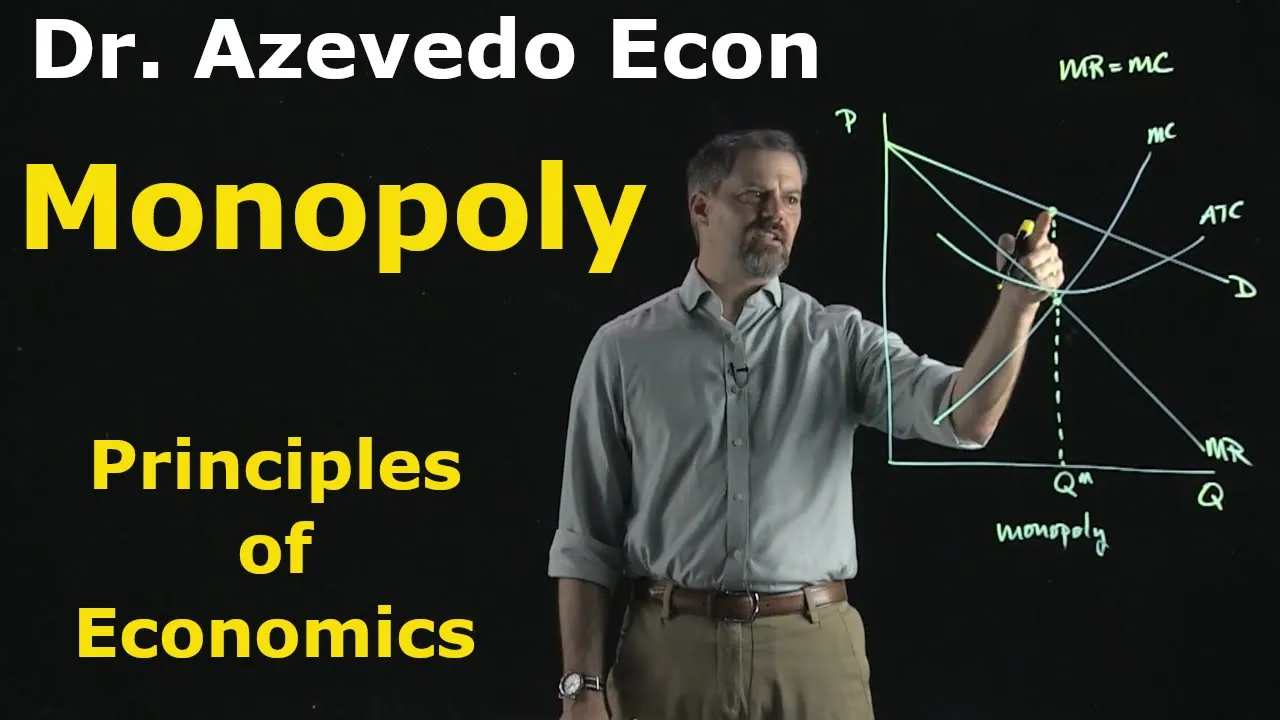


This video compares four fundamental market structures in economics: perfect competition (many firms, costless entry/exit, no product differentiation, zero economic profit in long run), monopoly (single firm, no entry/exit, product differentiation, can earn positive profits), monopolistic competition (many or few firms, costless entry/exit, product differentiation, zero economic profit in long run), and oligopoly (two or more firms, no entry/exit, product differentiation, produces between perfect competition and monopoly outcomes). The key differences lie in the number of firms, barriers to entry, product differentiation capabilities, and equilibrium outcomes in both short and long run.
Market Structures: Monopoly vs Perfect Competition vs Monopolistic Competition vs Oligopoly
Added:Basic principles of Demand and Supply, including market equilibrium and price elasticity.
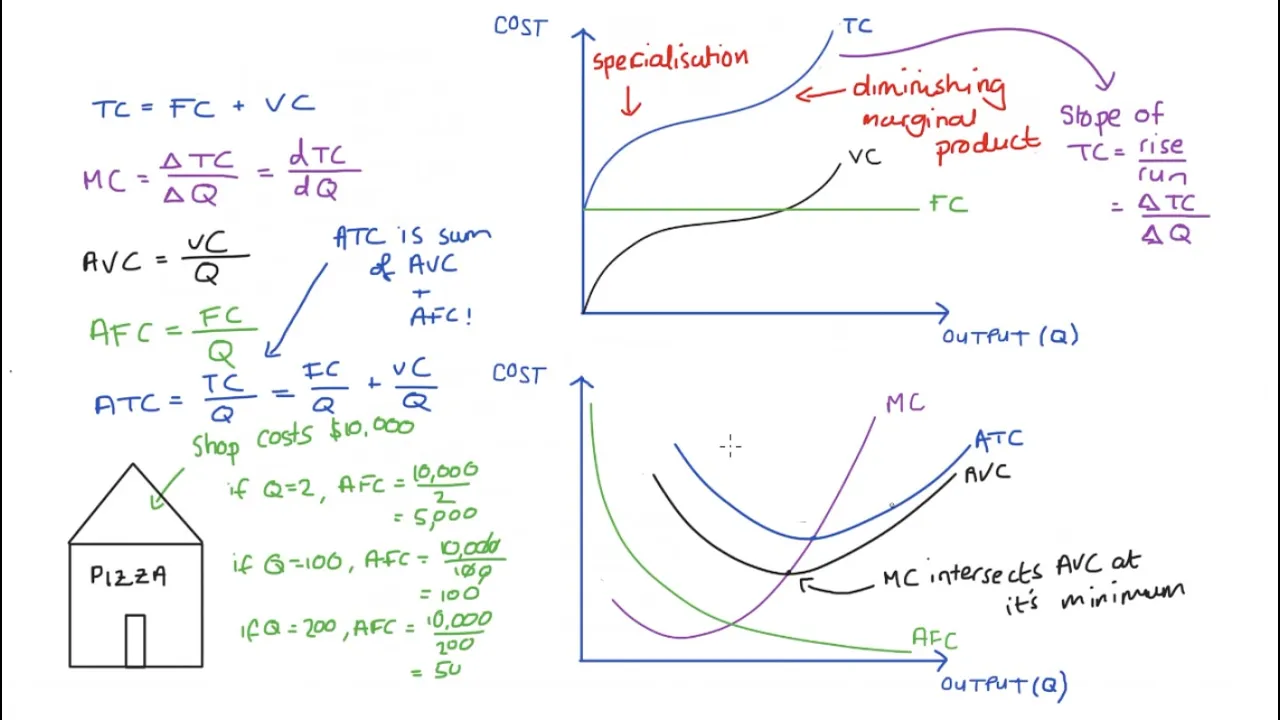
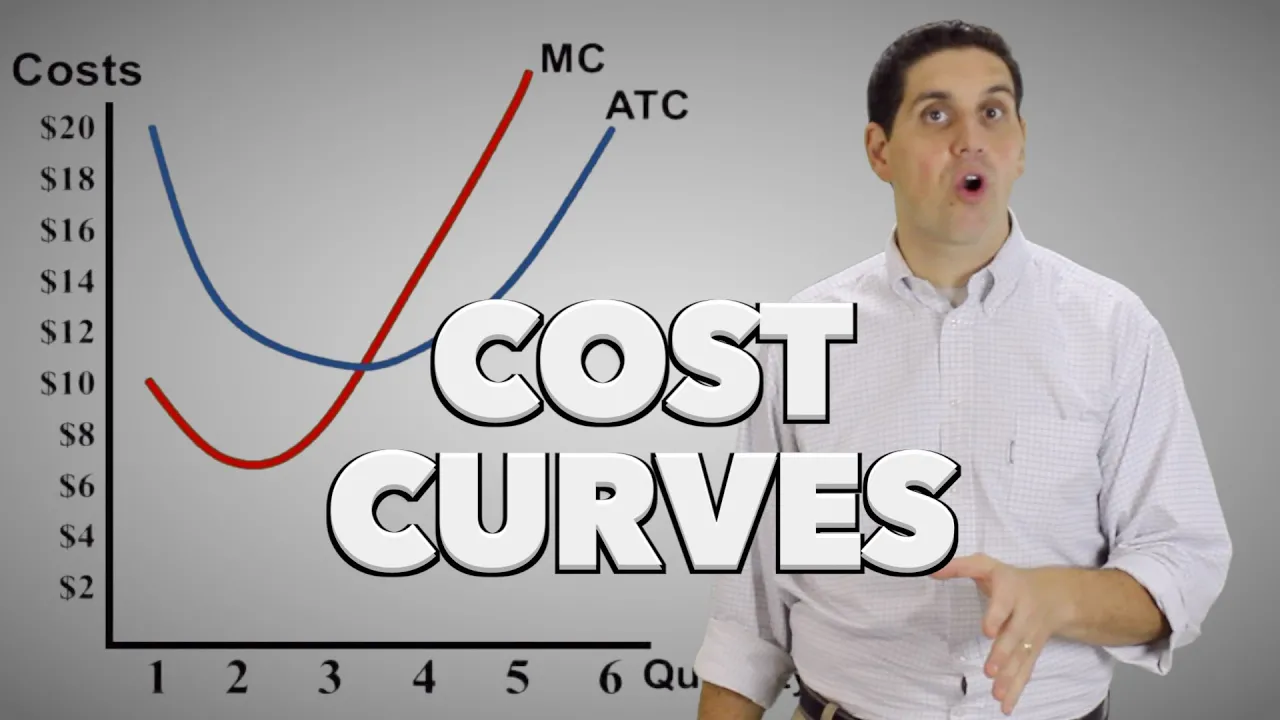
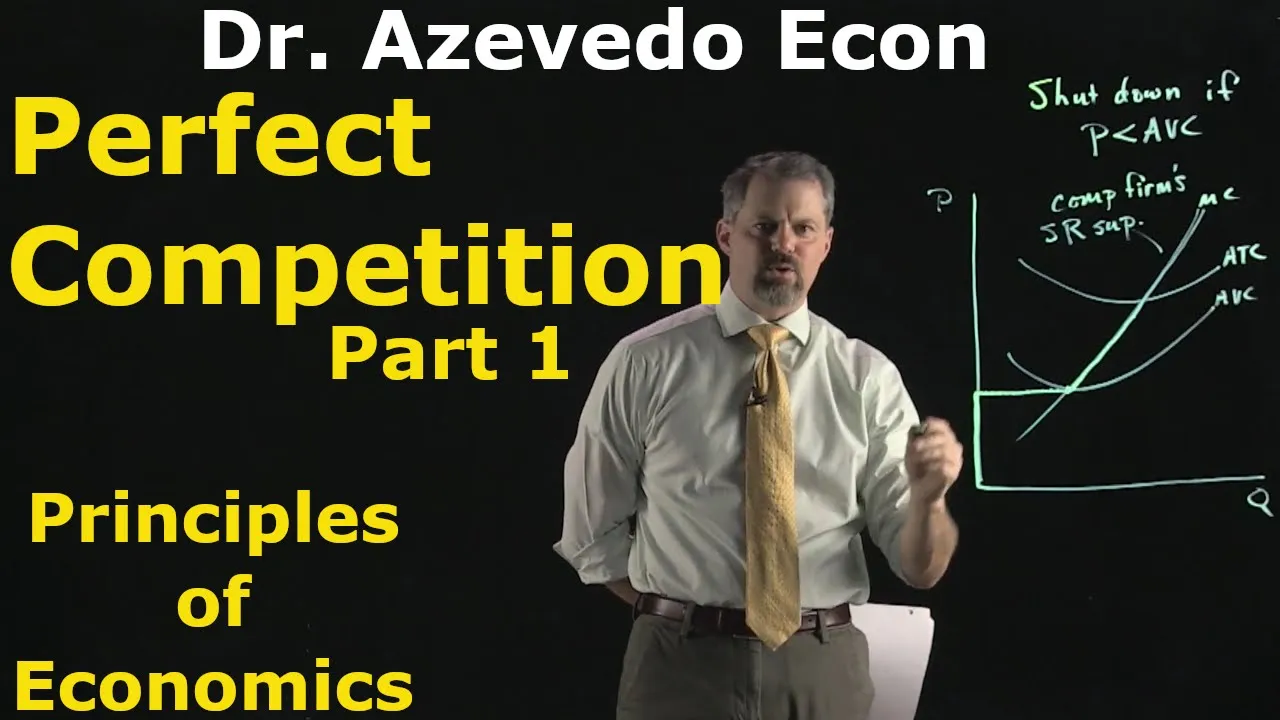
Understanding firm cost structures, specifically Marginal Cost (MC), Average Total Cost (ATC), and Average Variable Cost (AVC).
The fundamental profit-maximization rule where Marginal Revenue equals Marginal Cost (MR = MC).
The distinction between short-run and long-run economic timeframes, including the concept of economic profit versus normal profit.
Game Theory and strategic behavior, specifically analyzing Nash Equilibrium and prisoner's dilemmas within Oligopolistic markets.
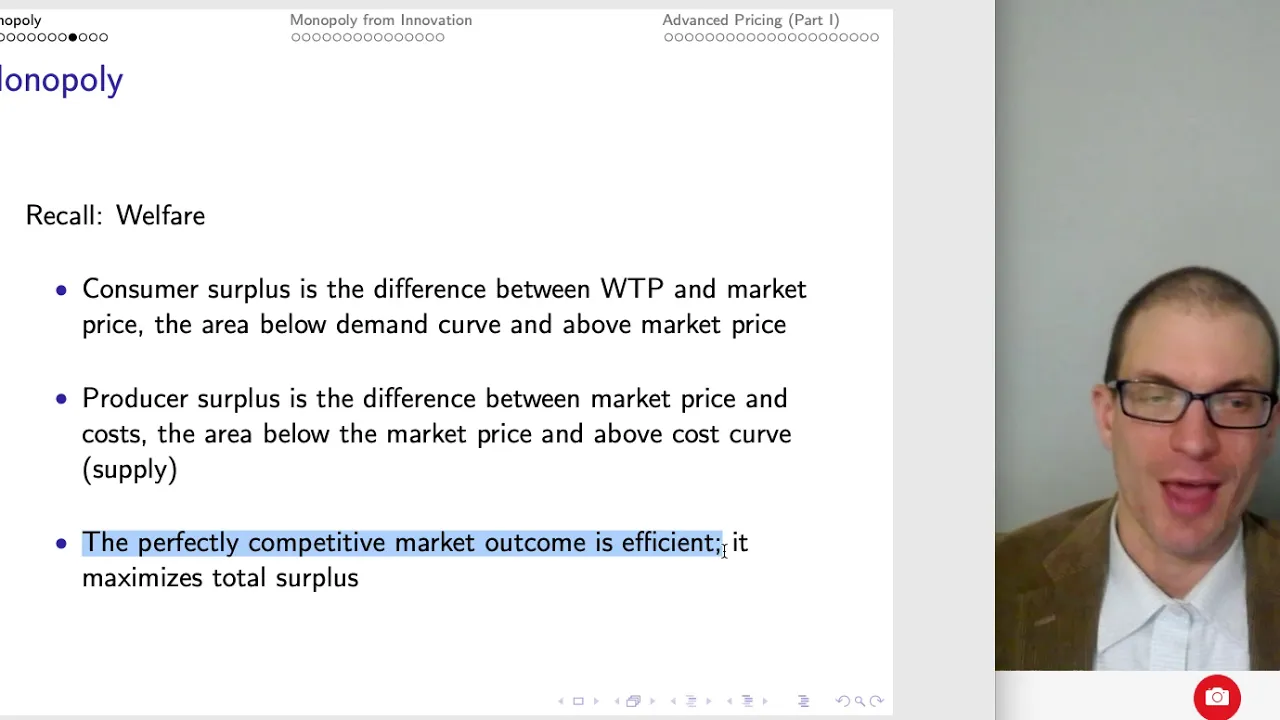
Welfare Economics, evaluating Deadweight Loss, Consumer Surplus, and Producer Surplus across different market structures.
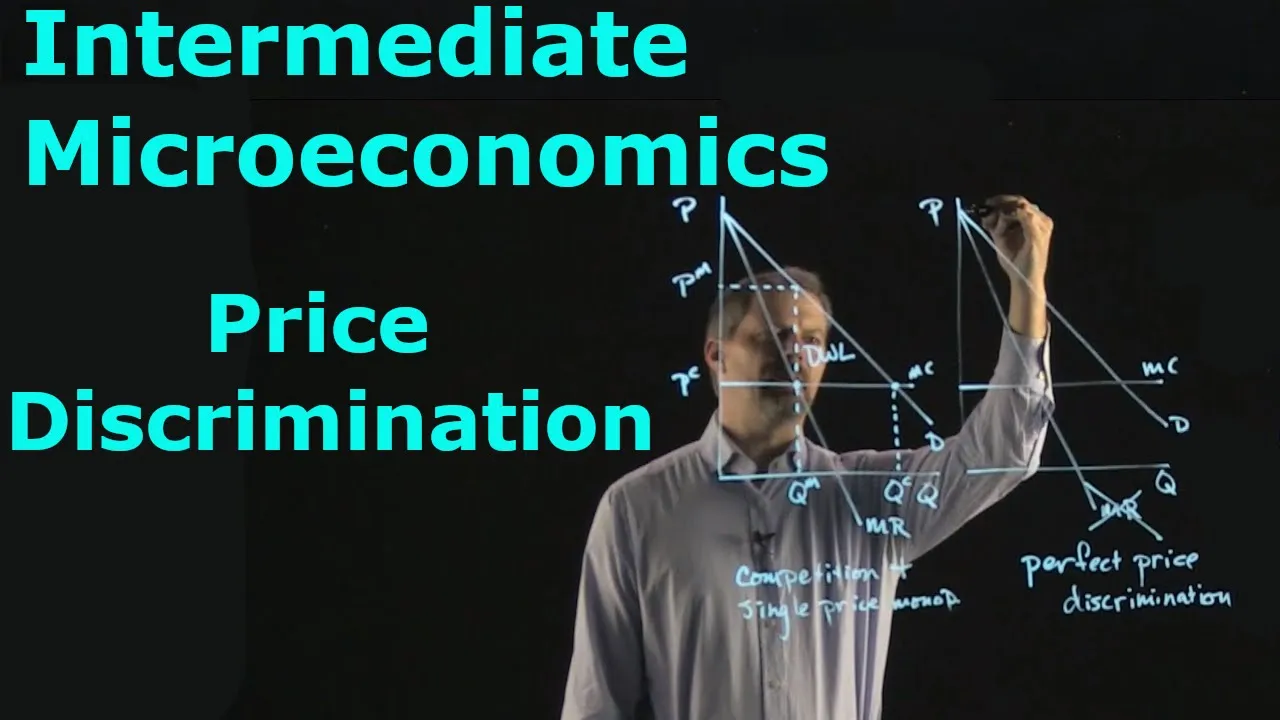
Advanced pricing strategies of firms with market power, such as first, second, and third-degree price discrimination.
Government intervention and antitrust policies designed to regulate monopolies, prevent collusion, and promote competitive markets.
18.1K views203likes16:50Original Release: 2015-07-31
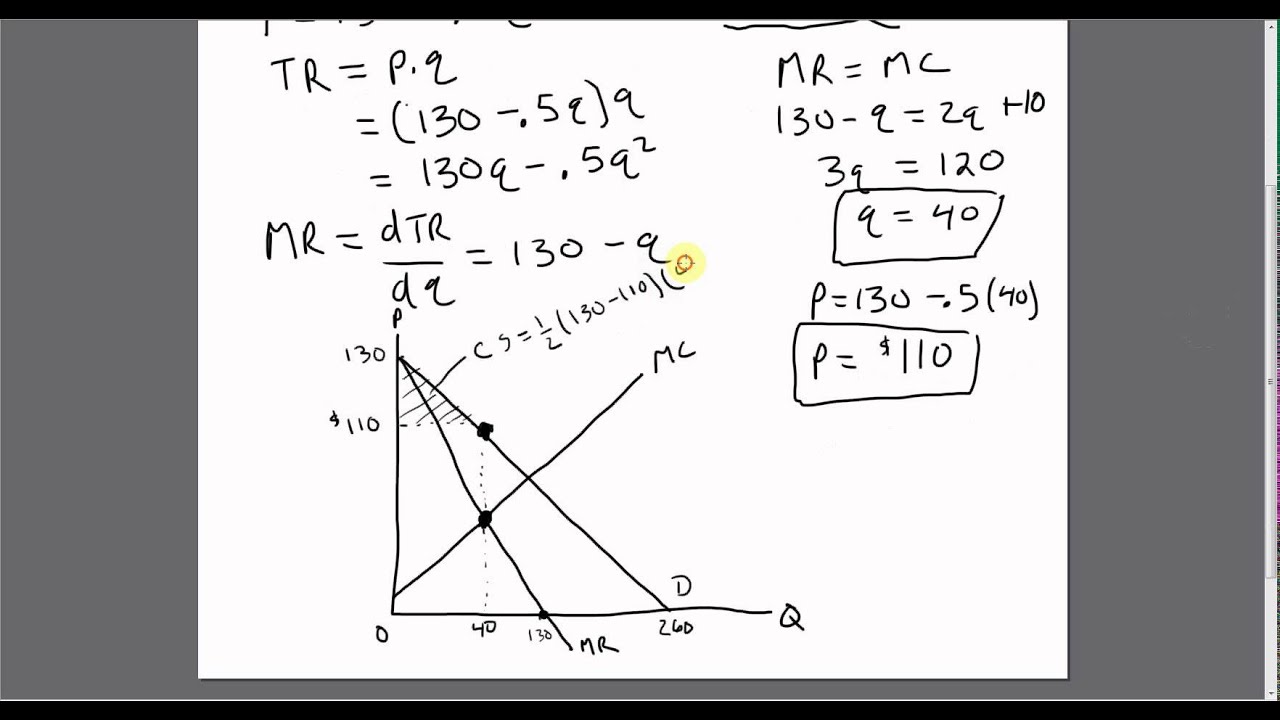
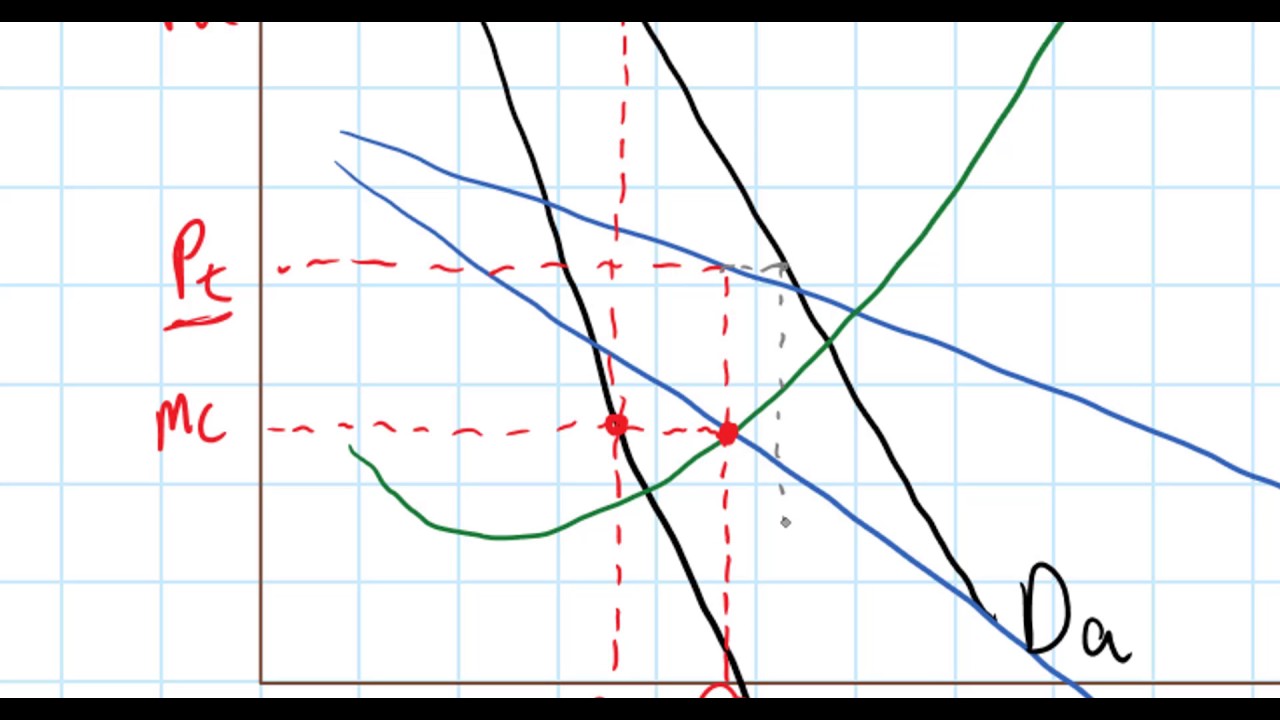
in this video we're going to compare and contrast all of the different Market structures that you learn about in an introductory economics course and really that you study in any economics course you study them a little bit more in depth in others but these really are the basic building blocks for all of the market structures that you study in at least an undergraduate economics degree so these are Monopoly perfect competition monopolistic competition and then over here you see that we have oligopoly so if you haven't seen all of these in your class that's fine you only need to pay attention to the ones that you have um but I'm just doing them all in one place in one video so that you have them all in one place in one video because I was never got kind of a compare and contrast for all of these and it really bothered me for a long time so much so that I finally just put it together myself and I figured that other people would appreciate it as well so we're going to start with the characteristics of each market and then we'll go back and do the graph and the short run and long run equilibrium and then talk about whether they can earn a profit or not so in perfect competition entry and exit is incredibly easy that's what makes it perfect competition so it's Costless and I'm just going to put really easy here and what that really means is that it's absolutely Costless to enter exit the market now in Monopoly it's impossible you can't enter the you can't enter a monopoly by definition because there's only one firm in a monopoly so I'll just put no here here so there's no entry and exit in monopolistic competition again we have this competition word right here so we know that there is going to be entry and exit so we'll put um we'll put yes and you know I really should rather than saying really easy for perfect competition I really should just say yes to keep this kind of uniform so I'll just put yes here and then we're going to go over to oligopoly and in oligopoly remember that's where there are more there's more than one firm but entry and exit you're not going to have more firms entering or exiting so there is no enter entering or exiting here it's like a monopoly except that there's more than one firm in the market so again if you haven't seen some of these and most of you probably haven't seen olop before I'm putting these all in one place so that you have this video and you have it all in one place but if there's one part that you don't see or you don't understand just don't worry about it you'll be fine um as long as you haven't covered it in your course course before so the number of firms in perfect competition is very large so I'm just going to put large in Monopoly there's just one just by definition in monopolistic competition there can be a lot or a little um but entry and exit is Costless so I'll put um I'm just going to put a lot or little and and this may confuse some of you I hope that it doesn't but the point that I'm trying to get at here is that in monopolistic competition there you're not necessarily going to have you know a billion different firms um but they all are still having to compete so there can be just as many firms as in perfect competition or there could be like 10 or 15 all right and then we need to talk about oligopoly and so in oligopoly all that this means is it's a monopoly it's like a monopoly Market but there's more than one firm so I'm just going to put two or more so two plus and then we need to talk about product differentiation so this means can these in these markets can you make your product different and and in perfect competition the answer is no in a monopoly by definition yes because there's no way that any firm can enter this Market except for the Monopoly so there's no entry or exit there's no competition whatsoever so of course the product is going to be different in monopolistic competition you can differentiate the product and we're going to see that that's kind of the that the entry and exit being possible but also being able to differentiate the product in this market structure is really what makes it work and then in oligopoly there also is product differentiation because there are only a certain number of firms so now we're going to get down to the graphs so in perfect competition there are really two graphs and most of the time the these never really get explained together so I'm going to show you them and you're going to recognize both of them I hope if you don't definitely go back and review some of the videos on perfect competition but hopefully you'll recognize them both and hopefully this will show you kind of how they go together so the market is just our regular supply and demand diagram here's demand here's Supply and here's our equilibrium quantity and price so we'll call those P star and qstar now the firm in perfect competition cannot differentiate its product so it faces a flat demand curve and what this means is that since the firm can't differentiate its product it has to sell at the market price so the price is set by the market and then the firm just decides how much to produce the next thing that I want to say is that demand is how much you're getting for each good so you're getting this P star for every single good that you sell so that's also obviously going to be equal to your average revenue because you're going to get this much po per um per good so then we're going to just draw our normal marginal cost curve here that's an m and then I'm going to draw the average variable cost and also then our average total cost so here is average total cost and then here is average variable cost and I'm trying to draw these so that the picture comes out perfectly so excuse my hesitation here so the lower one is average variable cost and the top one is average total cost and we remember that marginal cost is equal to average total cost and average variable cost at their minimums and for the firm it's going to produce where marginal cost is equal to the minimum of average total cost which is also equal to the price or average revenue in the long run so point a is the long run equilibrium so we have that the firm produces where marginal cost is equal to average revenue and average revenue is just another name for demand so it's also equal to demand and that's also equal to average total cost at its minimum so I'm going to put average total cost at the minimum and I'm not going to go into the wise of all of that here because I've done it in other videos so if you any of this is confusing go back and look at those videos but here I just kind of want to put all of this together in one place so in the short run for perfect competition anything can go anything can happen so the firm can make a profit or a loss and it'll still decide to stay in business because firms haven't been able to enter and exit yet and remember that this entry and exit is the difference between the short run and the long run so this is the difference between the short run and the long run so in the short run I'm just going to write anything goes in the long run entry and exit drives profit to zero so profit is zero in perfect competition and that's where average total cost is its minimum price is equal to average total cost and marginal cost is going through there at the same time all right so now we are going to move on to the Monopoly and the big difference here is that there is no entry and exit and so the Monopoly is a one firm market so this is the market and the firm diagram put together and so we're going to put price and quantity on the same axes as before we'll start with a demand line for the monopolies product and then remember we get this that's a little bit too steep excuse me we get this marginal revenue curve and the Monopoly produces where marginal revenue is equal to marginal cost oh I put marginal revenue twice excuse me so that's marginal cost marginal revenue is equal to marginal cost we'll call that point a again and then it goes up to the demand line to find the price so this is p star and this right here is qar and then I'm not going to draw the average total cost curve in here because it's already getting a little crowded but there would be an average total cost going through here and we would expect that the Monopoly is earning at least zero economic profit if not more so in the short run again for a monopoly the Monopoly can actually earn a loss in the short run as long as it's earning enough to cover its variable costs it will stay in business so in the short run again anything goes because what matters to the firm is what's going to happen in the long run and in the long run the firm produces where marginal revenue is equal to marginal cost and then you go up to demand to find price and I'll put to find P star so where marginal revenue is equal to marginal cost gives you this gives you your quantity your qar and then the you go up to the demand line to find how much you can actually charge for that quantity and then a monopoly will can earn positive profits because there's no other firm that can enter this Market by definition so the Monopoly will go out of business if it earns negative profits in the long run so it must earn zero or more so its profit has to be greater than or equal to zero so monopolistic competition I'm just going to draw the long run diagram here because again kind of limited on space but we're going to see that this is kind of like Monopoly and kind of like perfect competition so the way that it's kind of like Monopoly is that the firm does have a downward sloping demand curve so we are going to see this is for the firm here firm and this is really the only diagram that ever gets drawn from monopolistic competition so we're going to have a demand line here and a marginal revenue curve here and this diagram for me is the trickiest of all of them to draw so bear with me and the firm produces where marginal cost is equal to marginal revenue so that's all like this is all so far exactly like Monopoly now what's different is in the long run we know that average total cost excuse me here the average total cost and I just need to focus so that I draw this perfectly hold on one second so we know that the firm produces where marginal revenue is equal to marginal cost but because there is entry and exit in the long run because this is a yes we know that the firm is going to face competition and so we know that if the firm is earning a positive economic profit that other firms are going to enter this exact same market and do the exact same thing and they're going to compete until profits get driven to zero so the way that that manifests itself in this diagram is that they're still producing where marginal revenue is equal to marginal cost but the average total cost curve has to be tangent to the demand line up here so this will be we'll call this point B and at point B what that's saying is that we're going to go and find the equilibrium quantity right here and then we're going to go up to find the equilibrium price and at that equilibrium price the firm is going to be earning zero economic profit because it's just going to be barely covering its cost it's going to be exactly equal to to its cost so to say that one more time in mathematical terms the monopolistically competitive firm produces where marginal revenue is equal to marginal cost and at that point average total cost is going to be equal to the optimum Price p star in other words it's going to be tangent to the demand curve so in the short run again anything goes it can earn a profit or a loss average total cost could be like down here average total cost could be way up here and I'm just going to erase those lines because otherwise that graph is completely confusing but anything goes because we don't have this entry and exit now in the long run we know that marginal revenue they're going to produce where marginal revenue is equal to marginal cost and then P star is going to be equal to average total cost at and sorry that didn't write too well at the optimum quantity so I'll write at qar and all that's saying is that when you go up here to qar you're going to hit demand and average total cost at the exact same time so demand which is equal to price at the optimum quantity is also equal to average total cost of the optimum quantity now profit in the monopolistically competitive market is going to be equal to zero because of the competitive aspect so lastly we're going to go talk about oligopoly and I'm not going to do too much here but I just want to talk about a little bit so the oligopoly is when you have two or more firms in a market with no entry or exit so you have price and quantity and I've talked about some rules for this and there's different forms of olop namely the two big ones that you learn are Corno or stackle Berg or stackelberg and those are just named after the two people that thought up these models and basically what ends up happening is the firms still face a downward sloping demand curve and I want to make that a little more downward sloping and they end up producing somewhere between so if this is marginal revenue and that's demand they end up producing somewhere between where marginal cost is equal to marginal revenue and where uh and where demand is equal to marginal cost so they produce somewhere in between the perfectly competitive market and the uh monopolistic market so this is the Monopoly outcome right here that's Monopoly I'll just write m n and then this right here another way of looking at marginal cost is um is as Supply as long as it's above your average variable cost so we get somewhere in between these two points so this is also like right here this would be like perfect competition so I'll just write PC and so they end up producing somewhere in here and so that's really all that I want to say um and just go to look at the Corno video and I don't I will do a video for stackle BG if anyone needs it but I haven't done one yet so if you need it let me know but most of the times they just teach Corno and I'm not going to say any more about this because because it gets to be way way way complex and I think I've already put a ton of material into this video so with that I hope that you have a better intuition of how perfect competition relates to Monopoly relates to a monopolistically competitive market and then a little bit more about oligopoly so with that I will see you in the next video
Up Next

7:22
Oligopolies and Oligopolistic Markets: An Introduction to Key Concepts
@FreeEconHelp
44.9K views•2012-02-22

5:07
Impact of Yuan in Indo-Russian Trade Amid Sanctions
@WION
261.9K views•2022-07-01
10:33
Behavioral Economics Explained: Rationality, Nudges, and Risk
@crashcourse
1.1M views•2016-03-12

113:18
The Age of Easy Money: Fed & Inflation | Full Documentary
@frontline
21.2M views•2023-03-15
Related Study Plans & Knowledge Roadmaps
Structured learning paths in Economics
economics
Sovereign Debt: Defaults, IMF & Restructuring
01Introduction to Sovereign Debt & Government Bonds
02Debt Sustainability & Credit Ratings
03Anatomy and History of Debt Crises
+ 2 more learning modules
12h5 modules
Explore Roadmap
economics
Market Design: Matching Theory & Gale-Shapley
01Introduction to Market Design and Price-Free Markets
02Two-Sided Matching & The Gale-Shapley Algorithm
03School Choice Systems and Mechanism Design
+ 2 more learning modules
10h5 modules
Explore Roadmap
economics
Impossible Trinity: Forex, Capital & Policy
01Introduction to Monetary Policy and Central Banking
02Exchange Rates and International Capital Flows
03The Mundell-Fleming Model
+ 2 more learning modules
8h5 modules
Explore Roadmap
economics
Healthcare Economics: Market Failures & Systems
01Introduction to Healthcare Markets and Market Failure
02Asymmetric Information and Adverse Selection
03Moral Hazard and Insurance Design
+ 2 more learning modules
12h5 modules
Explore Roadmap