
![ECONOMÍA - Modelos de Mercado [CICLO FREE]](https://i.ytimg.com/vi/jLcqz9m03r4/maxresdefault.jpg)


















![[Extractivism Talks #03]: Oil and the political economy in the Middle East](https://i.ytimg.com/vi/z5Fq25zDG0I/maxresdefault.jpg)


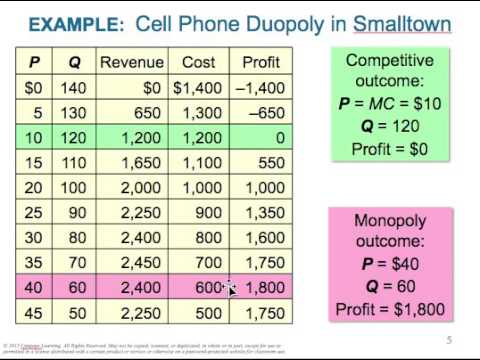


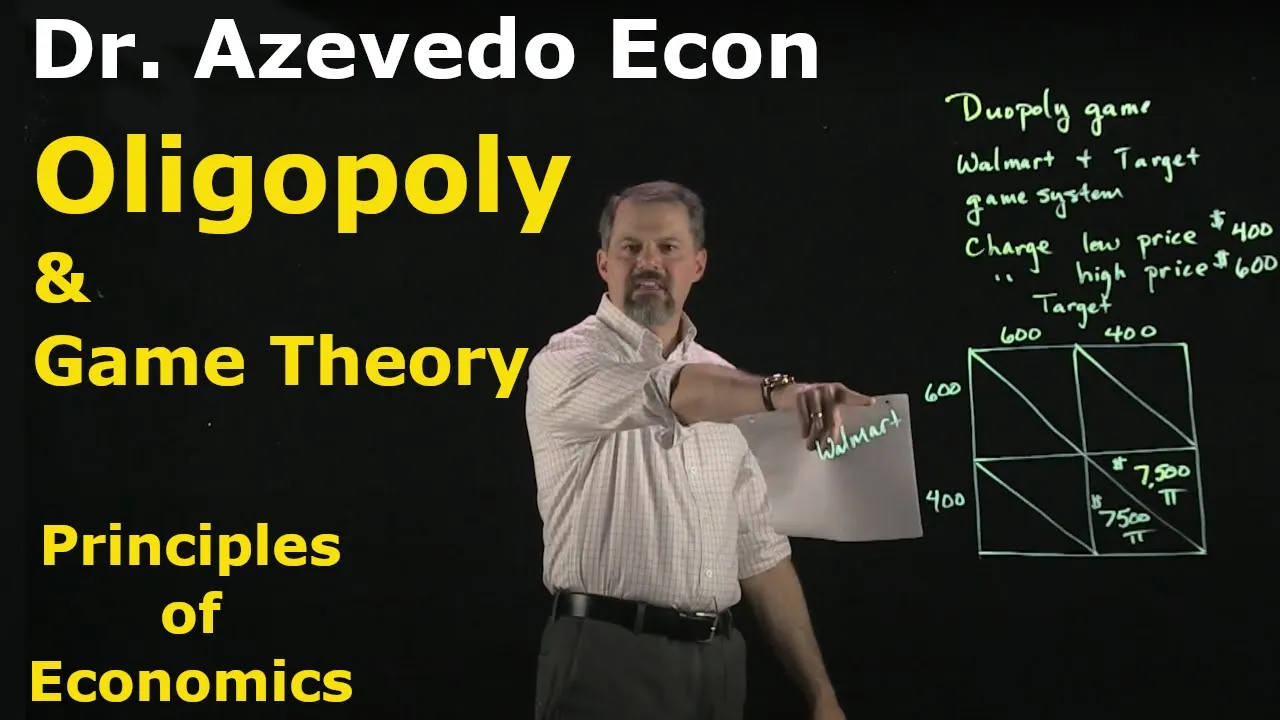
An oligopoly is a market structure characterized by a small number of firms (typically 2-10), significant barriers to entry, and interdependent decision-making where firms must consider competitors' actions when setting prices or strategies; this interdependence leads to game theory applications including potential collusion (which produces monopoly-like outcomes) or competitive price wars (producing outcomes similar to perfect competition), making oligopolistic markets unique among market structures.
Oligopolies and Oligopolistic Markets: An Introduction to Key Concepts
Added:Understanding of basic market structures, specifically perfect competition and pure monopoly, to contextualize where oligopolies sit on the spectrum.
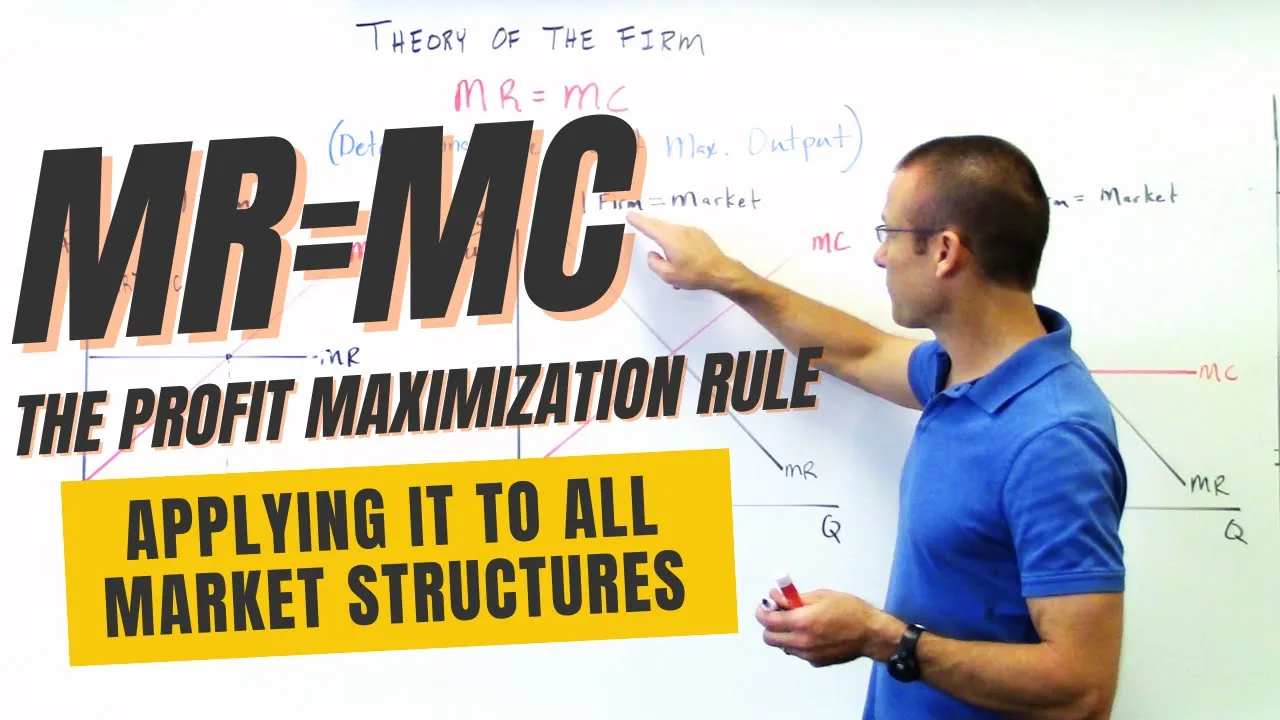
The concept of market power and how firms generally determine profit-maximizing price and output (where marginal revenue equals marginal cost).
An introduction to barriers to entry, such as economies of scale, high capital start-up costs, and legal protections (patents).
Basic demand and supply analysis, including how consumer demand affects firm pricing strategies.
In-depth analysis of formal oligopoly models, specifically Cournot (quantity competition), Bertrand (price competition), and Stackelberg (leader-follower) models.
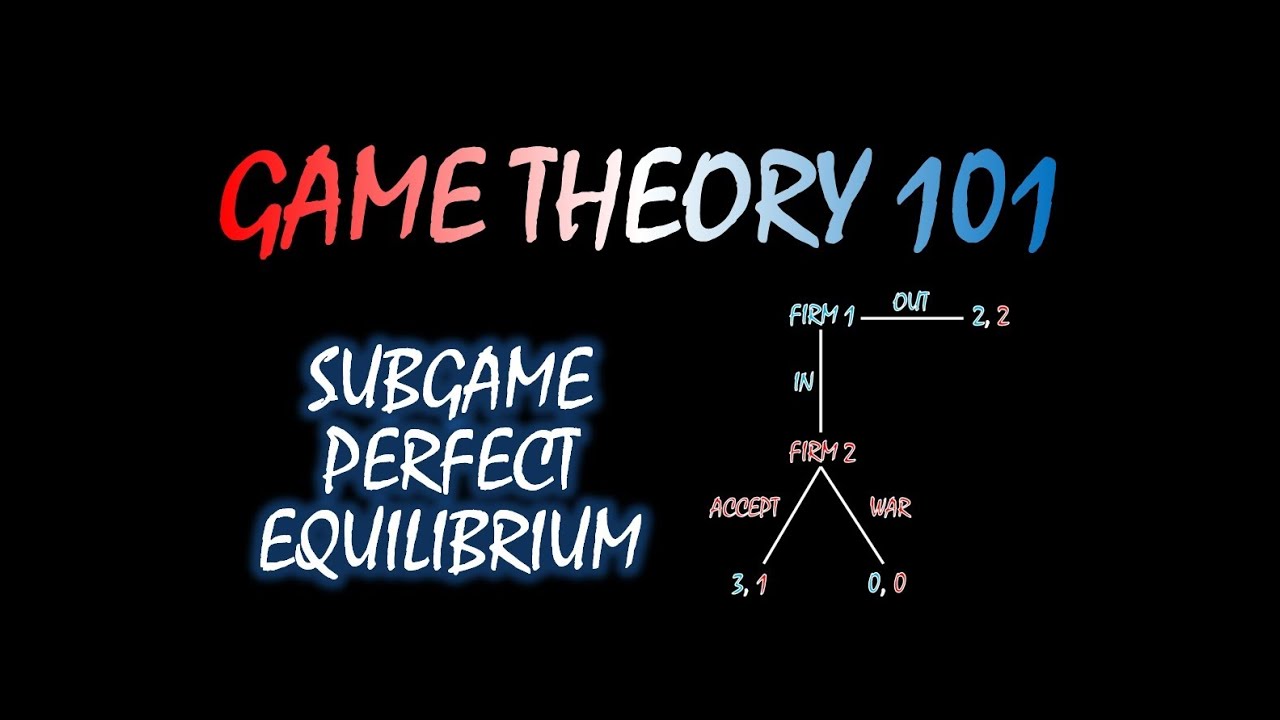
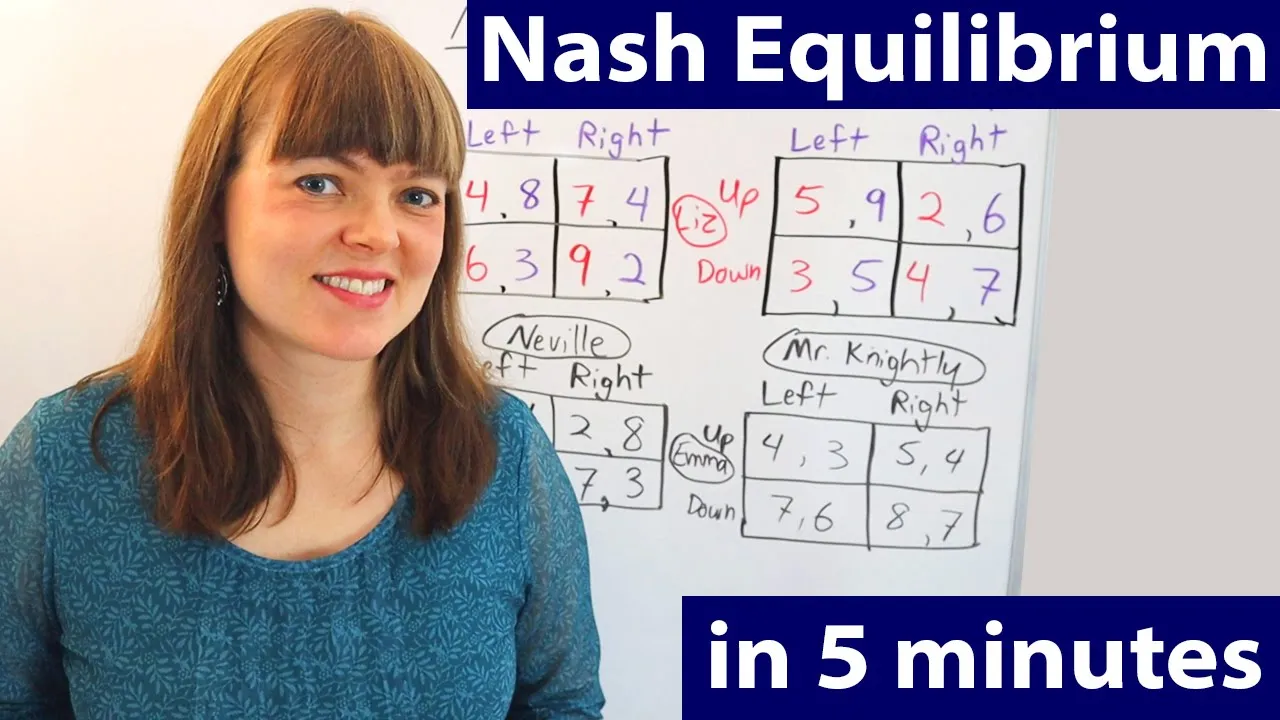
Advanced game theory concepts applied to business, such as identifying Nash Equilibrium in simultaneous and sequential games.
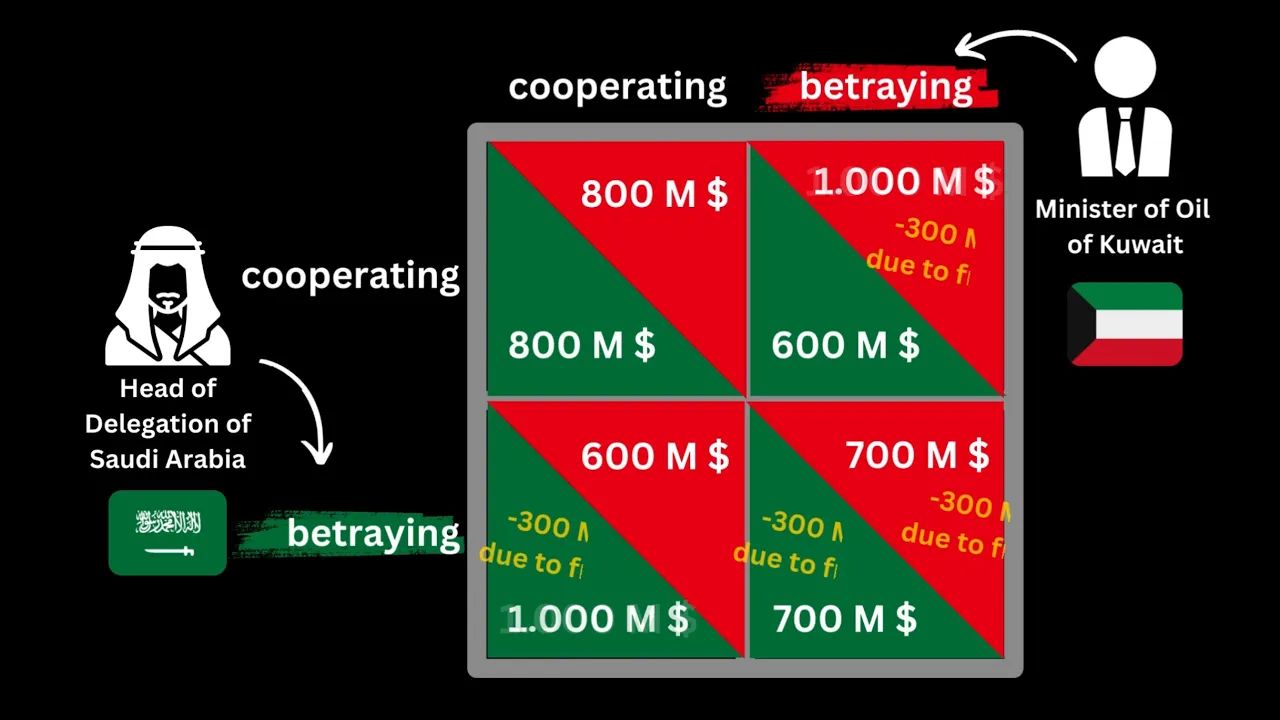
The economics of collusion, cartel formation (such as OPEC), and how the Prisoner's Dilemma explains why collusive agreements often fail.
The role of antitrust laws and government regulation in monitoring mergers, preventing price-fixing, and promoting market competition.
44.9K views203likes7:22Original Release: 2012-02-22
all right this short video is going to go over what an oligopoly is how we can get to it and uh some examples about it so an oligopoly is basically um a firm inside an oligopolistic market and an oligopolistic Market has the following characteristics it needs to have a small number of firms so maybe anywhere from 2 to 10 depending on how they behave if you have one firm you're a monopoly and if you have too many firms you could get into monopolistic competition or perfectly competitive markets so you need to have a small number there need to be significant barriers to entry because if there were no barriers of entry into the market then firms could enter and it could become monopolistically competitive or perfectly competitive what have you and another key trait of an oligopolistic Market is that firms have dependent Behavior meaning that if one firm decides to raise or lower their price the other firm is going to change their price or decision making as well so they have to consider what the other firms are going to do when they make their decision and this characteristic is unique to an oligopolistic Market cuz in a perfectly competitive market their price takers and monopolistically competitive you're worried about your own product through advertising or research or brand development and in a monopoly you're the only one producing it so you don't have to worry about it so what can lead to an oligopolistic Market the small number of firms and barriers to entry well there's two types of barriers natural and legal a legal barrier is just the government either making laws or issuing permits that say there can only be a select number of firms an example of a legal Monopoly might be an electricity company where the government will only allow one power plant or one power company in an area also trash collection is another example of a Le Al oligopolistic Market because they don't the cities don't want to have 20,000 different trash collection companies that just wouldn't make sense now for a natural oligopoly it means that firms can take advantage of economies to scale to minimize their average total cost to get to the whole demand curve so it makes sense to only have a few firms because they can take advantage of economies of scale to result in lower prices to satisfy the whole market demand so the example I have here shows three firms and three average total cost lines one represents one firm two is the second firm three is the third firm and if you notice this D here is the whole Market three firms each producing at the minimum of their average total cost will satisfy the whole market demand so if we were to add in another firm they couldn't produce at their minimum average total cost anymore they would be producing somewhere higher than their minimum and that would result in a higher market price so a natural oligopolistic market can take advantage of these economies of scale can get to the minimum point of their average total cost and it only takes three firms so that's what it looks like graphically what are some examples well the computer chip [Music] manufacturers we have Intel and uh the other one not coming to my brain right now but there are only two firms and the reason for that is because it takes so much money to build the factories to build the machines to get all that together to make these products so having only two firms take advantage of their economies of scale will result in a lower price another one could be car manufacturing again it takes so much money to build that factory to get those inputs and other things that it makes sense to only have a few firms in the indust industry finally with dependent behavior that leads to Game Theory so it's how the firms interact with each other and if the firms collude which means they get together and discuss their actions they say look I'll charge this price you can also charge this price and if we both charge the price the consumer will have to pay it however if one firm charges a high price and the other charges the low price the low price firm gets all the business so if they both meet and decide to charge the high price they collude and they're acting as a monopoly so you can see here with this graph it's identical to our Monopoly graph if they collude they produce for marginal revenue equals marginal cost we can draw that line up to the demand curve and we get a Monopoly price so that's the highest price you'll see in an oligopolistic Market it's when the firms collude however if the firms don't collude and they compete they're going to continue to drop their price to try to gain more market share so one firm will lower its price a little bit the other firm not wanting to lose market share will also lower its price and they'll continue to do this and quantity demanded will continue to increase until we get to the point where marginal cost equals demand and at this point our price would be the same as the perfectly competitive outcome so the highest it can possibly be is the Monopoly outcome the lowest it can possibly be is the perfectly competitive outcome and likewise we have the low quantity with the Monopoly and the high quantity with the perfectly competitive market the oligopolistic market can be anywhere in between or at the extreme of these two points that in addition to the game theory and the opportunity to collude is what makes an oligopoly or oligopolistic markets so interesting
Up Next

5:38
Oligopoly Market Structure: Kinked Demand Curve Explained | Economics
@mjmfoodie
432.9K views•2011-07-09

5:07
Impact of Yuan in Indo-Russian Trade Amid Sanctions
@WION
261.9K views•2022-07-01
7:26
How to Calculate Deadweight Loss: A Step-by-Step Economics Guide
@FreeEconHelp
412.6K views•2011-10-30

113:18
The Age of Easy Money: Fed & Inflation | Full Documentary
@frontline
21.2M views•2023-03-15
Related Study Plans & Knowledge Roadmaps
Structured learning paths in Economics
economics
Sovereign Debt: Defaults, IMF & Restructuring
01Introduction to Sovereign Debt & Government Bonds
02Debt Sustainability & Credit Ratings
03Anatomy and History of Debt Crises
+ 2 more learning modules
12h5 modules
Explore Roadmap
economics
Market Design: Matching Theory & Gale-Shapley
01Introduction to Market Design and Price-Free Markets
02Two-Sided Matching & The Gale-Shapley Algorithm
03School Choice Systems and Mechanism Design
+ 2 more learning modules
10h5 modules
Explore Roadmap
economics
Impossible Trinity: Forex, Capital & Policy
01Introduction to Monetary Policy and Central Banking
02Exchange Rates and International Capital Flows
03The Mundell-Fleming Model
+ 2 more learning modules
8h5 modules
Explore Roadmap
economics
Healthcare Economics: Market Failures & Systems
01Introduction to Healthcare Markets and Market Failure
02Asymmetric Information and Adverse Selection
03Moral Hazard and Insurance Design
+ 2 more learning modules
12h5 modules
Explore Roadmap