











![Act Out! [231] - Grassroots From the Treetops](https://i.ytimg.com/vi/EOKcBy0raFw/hqdefault.jpg)

The 1992 Rio Earth Summit established the UN Framework Convention on Climate Change (UNFCCC), which enshrined the principle of common but differentiated responsibilities, recognizing that developed countries bear greater historical responsibility for climate change and should act first to reduce emissions. However, over the past 33 years, these equity principles have been progressively diluted as economic interests and shifting global power dynamics have taken precedence, leading to a weakening of the original governance architecture. The Global South, which played a crucial role in shaping the original framework, now faces the challenge of reasserting its voice and developing context-specific solutions that integrate environmental sustainability with genuine development needs, rather than accepting externally imposed frameworks that prioritize market mechanisms over equity considerations.
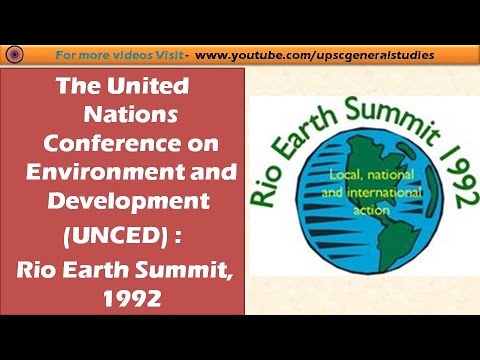
Earth Summit 1992: Lessons for Climate Equity in the Global South
Added:Welcome to carbon politics, a cse podcast series decoding the politics of climate change from the lens of the global south. In this series, we will explore multiple critical questions that are surrounding and pressuring the climate debate today. What happens next on multilateralism or where is the current trade system going and how does the global financial architecture need to be reformed? How are these systems influencing the ability of developing countries to address, respond to, and adapt to climate change? These are some of the critical questions we hope to answer and we hope you join us on this journey this year.
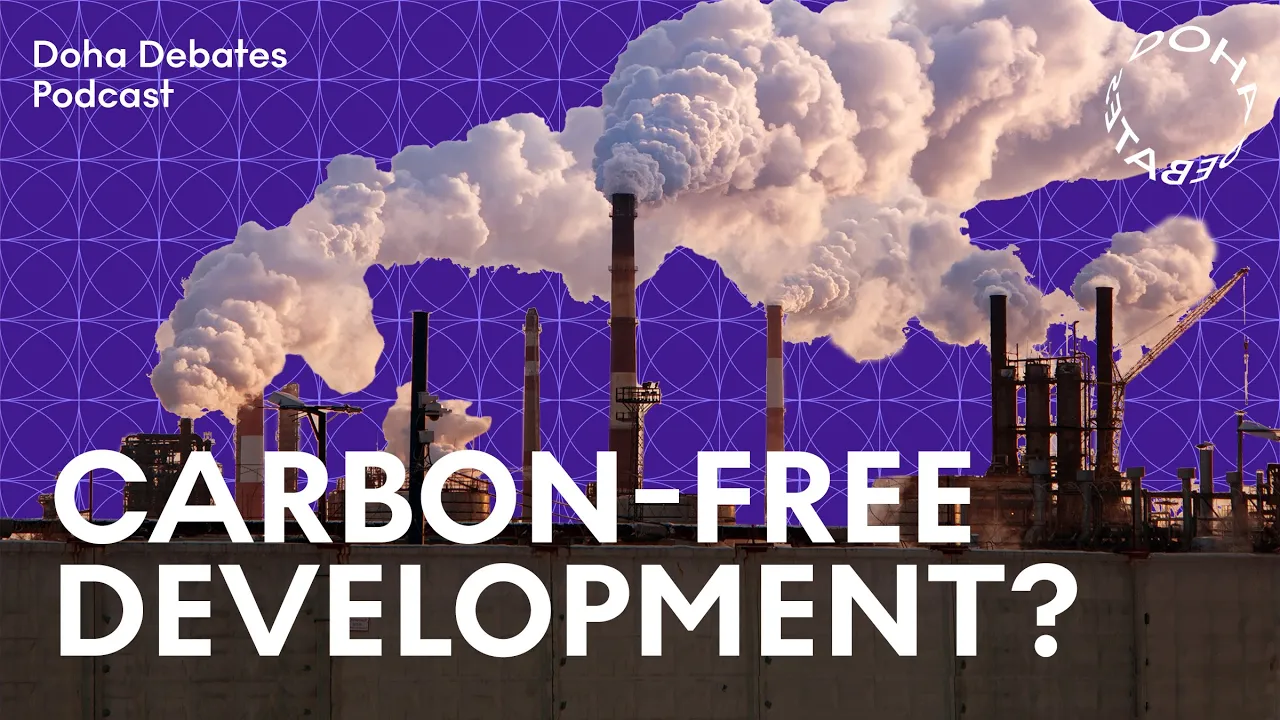
[Applause] [Music] Hi everyone, welcome to carbon politics cse's a video podcast which discusses the politics of climate change from the lens of the global south. I'm Avantika Gowami from CSE's climate change program and we have a very exciting episode planned today. So before I get into explaining and introducing um our very illustrious speakers today um I'm going to talk about a very brief quote from this book. Um it's called conflicts of interest. It's a 2017 publication authored by Sunita Narin. Climate negotiations are not just about cutting emissions but also about negotiating the right to development. This is an excerpt from this book and it's also the core of CSC's politics and engagement in the multilateral UN climate process. So why is this important? Uh this year we are observing 33 years of climate negotiations since the establishment of the UN Framework Convention on Climate Change, the UNF C. Um, also quoting this book, the UNFC was historic because it recognized the historical responsibility in creating the problem and called on those countries to act first and fast to reduce emissions that contribute to climate change. So the UNFC is perhaps the most decisive climate treaty. It enshrines the principle of common but differentiated responsibility. It emphasizes and urges the need for coordinated global action on climate change and very importantly it writes in considerations of financial support and spillover effects of on trade for developing countries. Um all of this was done in 1992 more than 30 years ago.
Three decades since the UNFC endures despite very turbulent political cycles, dilution from industry influence and also a changing nature of global south economies because in the past 30 years we have seen massive changes in you know poverty eradication, growth, prosperity.
The global south has also been you know a shape-shifting kind of entity. But this climate regime today is under immense strain and this is why we are in need of fresh ideas.
I think history is very instructive and which is why I want to intentionally go back today to where it all began. So um I have with me two very special speakers Narayan CSC's director general and Anumita Roy Chri CS's executive director. And other than being leaders in the field of environmental and climate research and advocacy, uh they don't need an introduction. Both of them were also at the Rio Earth Summit in 1992 along with Anil Aaral, CSE's founder. So um usually I have the privilege of just being your colleague, but today I also want to be a student of climate governance and really ask you how this ambitious treaty came about. Um so Anumita I'll start with you. Um if you can kick us off and tell us how the Rio convention came together and can you also like describe the moment the mood how difficult it was to align different interests. So yeah, >> thanks so much Aendiga for this question for to take us back to 1992 and the memories fading but we still have to reconstruct keeping in mind that there are so many relevant messages that are so relevant even today. So when we landed in Rio okay with Sunita and I and Anil G first the excitement okay and then the expectations like for the first time you are creating a multilateral process to address climate change the most uh the most serious survival crisis and putting it on the top global political agenda. You know that was the whole excitement about. So imagine then 125 countries then 12,000 people 100 head of the states right you can imagine the tension that this issue got and but very important that today when we often get so disheartened by the cop after cop and what's happening and their outcome. what really really gave us when we look back what exactly said the key guiding principles to lay the foundational principles to drive and guide climate negotiation. So first the Rio declaration that put on that integrated the CBDR principle it established that the states have the sovereign rights on resources it talked about sustainable consumption it actually talked about not using trade rules arbitrarily and in a discriminatory manner. Yeah.
>> Right. So all these were said then and they at that laid down the foundation.
>> But more important of course at that point of time lot of things got discussed but some important lessons that we want to draw is that in that first convention the role the impressive role that the global south had played >> important >> and I want to give three examples. One at that point of time clearly the north because they did not want to take on ambitious emission reduction targets.
They wanted all these diversionary tactics. Okay. They wanted the to have a legally binding forest convention imposed on everyone. Right. Right. And which means that you're controlling and policing the world's forest resources.
>> Now clearly that meant for the global south and for all of us and India played a very significant role there and we had played the role and we to mobilize to ensure that that convention does not happen. So you remember the late night negotiations and Anil G was there in that also the delegation and all of that and finally we could kill it and got and we got that replaced with own principles right >> but also understand the way they play around like the Africans wanted desertification treaty and the US and others they wanted to hold that as a candidate to them to get their support for the convention the forest convention but Good thing is that they got the desertification treaty. We also could kill the forest convention. We could also get the biodiversity convention even when US did not want it because they wanted to protect their biotechnology industry.
>> Wow.
>> Right. So that's the great that's the thing that we really want to keep in mind going forward that you know if global south could do that once there is no reason why we cannot have a common position to have get a much better deal in the future.
>> Wow. so interesting and uh so instructive in so many ways. So this chess game actually that many of us newly working now in climate policy we get frustrated so easily with I mean it's been there from the beginning. So I think I'll come to you uh Sunita. Um who were some of the key actors that um you know who who were the big power players in Rio ensuring maybe failure, success, good and bad what roles did they play?
So in some senses you know Anumita has taken me back to that moment when we landed in Rio and there was as she said there was at one level this enormous excitement um about you know this this the way we are going to save the world and there was optimism there was I call it the age of innocence uh but there was also the chess play as she has very clearly said and the the players then have remained the players today and I think where we need to understand is that we need to make sure that we find a way ahead because we know that the game play is the chess game is all about vested interests.
>> So the one big issue was climate as I in Rio. Now when we went uh into the climate negotiations in Rio there were three or four major players.
>> On one hand there were the Europeans who were arguing that they wanted an ambitious climate agreement.
>> Yeah.
>> But interestingly as Europe has often done >> by the time they reach Rio they had already whittleled down their expectations. In fact, if I remember right, they had fired or the the leading um voice in Rio, their climate negotiator uh was was sacked because there was a lot of US pressure. So the whereas the Europeans wanted hard targets and ambitious targets by the time they got to Rio it was you know let's have a deal even if we don't have targets. Okay. The Americans were of course the major opposer to the climate convention um then and now. Exactly. But it was also the moment which in some senses is the moment today and we need to remember it. This was the time of Bush senior, George Bush senior. It was also a time when America wanted um they had an economic recession. And the very image in Rio was uh George Bush senior going through the supermarket aisles and asking Americans to consume because the message was the more you consume the more America will grow. And that was really the counter to what you would argue would be climate responsible governance. But the Americans were were were pretty clear that they would not take any supra national agreement which would put curbs on their national growth. They would not take on um any targets. The third part was of course the vulnerable countries at that time. AOSIS not the small island nations were there but not so strong >> but the real strength actually was India China and the G77 >> which was there in Rio not to deny climate change we were not naysayers we were not saying that climate change was not important or urgent but we were demanding that there needed to be rules for climate which took into account that the atmosphere was the world's largest commons.
>> And that was the position put on the table to say we need equity, we need climate justice, not because we don't want to take action, but because we need rules of fairness because only then will you have cooperation in the world. And I think that role that the countries of the south played at that time which of course got a lot of bad press because remember um these positions are not very convenient for either the no western power. So this is often seen as oh they're they're aggressive they're they're denying climate change but what actually you got out of the framework convention on climate change. Yes you didn't get the targets. Those targets were then at the Kyoto protocol but what you did get was an element of fairness built in which said that there is a group of countries which has created the problem. They need to be the first movers. They did not say they needed to be the only movers. They needed to be the first movers.
>> Okay? They would reduce emissions. They would vacate space so that the remaining part of the world could grow and develop. But that the remaining part of the world would grow and develop differently. They would be enablers of technology and finance. So that these countries would grow differently.
>> Yeah. would grow without pollution. Now if you were to rewrite today, you could not do better.
>> But the fact is the last 30 odd years the world has spent all its time trying to dilute, erase, remove the principles of equity which were enshrined at Rio.
And we are suffering today as a global community because we have done so.
>> Right. Absolutely. And it really seems like the principles that were developed at Rio and and written into the convention for a change actually it was rules that the global south had a role in shaping and actually if abided by could have advanced our best interests.
You don't you're not seeing that in the rest of the world. everywhere else in trade, in finance, in every other realm, the rules of global systems are written by the global north. They're also broken by the global north as we are seeing today with all of the trade wars and everything that's happening. So I'm going to actually skip ahead to a question I I have um around what did we get right and what more could we have done because it seems like um I know at that time CSC had argued that this was not an ambitious outcome as you know you both have told me but then now it just seems like oh my goodness we've only gone downhill from there. What do you think in this governance architecture?
Um what did we get right and what could we have done better to ensure the next 30 years may have looked a little different?
So I believe we got the principles of equity right.
>> And you know all global negotiations need to be built on a foundation of trust and trust comes when there is a voice and there is a dialogue and there is a principled position the world takes. It's not transactional.
>> Okay. It's not you give me um apples and I will give you oranges. Okay. And if you don't give me your apples, I will put a tariff on you. Okay? Or if you or or if you put you know a price on your apples, then I won't buy them. You know, I mean these are transact. These are trade rules. Okay.
>> But climate rules and environmental rules require cooperation.
>> Yeah. Cooperation comes out of building principled positions and I think Rio really did embed principles. I mean if you look at biodiversity the question in biodiversity was the question of access of the poor communities to the knowledge that they had the the rights that they would hold to that knowledge the benefits that would acrue to them >> so that the pharma industry wouldn't just come into biopiracy but that they would benefit from it there was a principle established >> climate was a principle establish established and I think to me I'm missing um in future negotiations I think the building blocks that we had in Rio uh of principles is what we have lost over time would you agree with that >> absolutely and I think that exactly is the point that you know the principles and the but the building blocks that were needed >> okay we could not create the right framework to actually crystallize ize and institutionalize that process over a period of time.
>> So now when the cracks and fissures are showing up that because for various reason the whole economic uh you know downturn and as a result of that the barriers and the and the protectionism that is showing up now. So clearly what is showing that the principles could not find or could not be grounded in the proper institutional global framework that was needed to make it sustainable and drive the institutional process to deliver on these principles >> you know and I mean the just slight difference I mean not slight difference but in elaboration of what you're saying that >> you know if you look at it from Rio we went to the Berlin mandate till then the world stood firm and Maybe it was the time, you know, you had the wall coming down. You had a moment when the world was celebrating a sense of, you know, a victory of togetherness, a sense of optimism.
>> Um I think uh in some senses what and I do feel that we are all part of this and we've all in some senses been party to this downfall. I think the fact is since the Berlin mandate in the mid '90s to after that it became more commerce and it became more in terms of you know countries essentially not being able to hold on to the principles that they themselves believed in >> you know or maybe they did not believe in those principles. Okay. Principles of justice, principles of equity, principles of bringing of sharing the resources of this one earth that they didn't really believe in it. And so the bureaucrats took over, the negotiators took over and then all of it was about a comma and a full stop and you take this and I take this and then of course you had at that same time you had the trade negotiations happening. Exactly. You had WTO which had already been born. Free trade was flowing. China joined.
Emissions did not come down in the west.
Manufacturing moved. China grew. Yes.
>> And the world just essentially lost the plot.
>> So when it was losing the plot, something that we were not very conscious of noticing is the whole power shift happening, the power equation changing in that multilateral framework.
>> In what way? So in the traditional way when we always talked about north versus south, north was always US and Europe for us, >> right?
>> But we never understood the gravity and the implication of the power shift from that geopolitics to the Asia and China.
You know, it's a different kind of polarization and multipolar changes were taking place because of the big shifts in the market manufacturing across the world and the Rio process could not respond to that adequately.
>> But it wasn't Rio's fault. It was Paris's fault.
>> That's true. Because in some senses when when the world came up with the Paris Accord, they they rewrote the principles of Rio and they said now every country will do what it can. Now in Rio if you look at all international negotiations they built on a principle of saying okay these this is annex one countries the countries which were the first uh contributors they need to reduce. If you have a rule-based system, then you would actually have rules even for a country like China to move from being a low polluter to a high polluter. Move from this side of the table to this side of the table. But because you actually remove the rules, you now have a situation in which you have a completely freefor-all situation and in which you can't really have a world in which any um any conditions apply and then you get a a president of the most powerful nation of the worldact who comes and says I don't even believe in climate change and it's like a deck of cards >> and they've just >> exactly >> collapse.
>> So the rules that framework just could not be created.
>> I think it's the the question of principles is so important. Um I think complimentary to that I also just want to highlight again emphasizing how important Rio was to anybody listening.
It was not just a kind of you know fluff document. There were um there were there were provisions for finance. There were there were inclusion of questions of trade. There were questions around how countries whose economies are dependent on income generated from fossil fuels will be addressed. Um so there were a lot of very real economy considerations built in along with those principles and the moral obligation. So what does that uh say? I don't have a clear question but I have a clear direction that I'm trying to go in. What does that say about that moment and what happened after that? Why were we not able to kind of translate it into a real economy application? Because you've also said in your book, the UN negotiations are not just about environment. They are intensely economic negotiations. It makes perfect sense. You want to decarbonize, you have to restructure your entire economy. That doesn't happen overnight. So I guess what happened in that missing link? Why were we not able to get these real economy shifts to happen? And of course Paris just diluted all of that.
>> But but this is beyond the Paris question. Anumita.
>> Yeah. So this is also not exactly a real question either.
>> It's really a development question.
Exactly.
>> It's about how we see environmental management and development. And if you look at it, Anumita's entire work on air pollution and looking for the co- benefits is really what should have been the discussions and we should have been able to hold to that. So >> but we are seeing something very interesting now you know now when we are talking about multilateralism and the new context of this >> it is also becoming very clear that what you're saying the economic actually the piling the solutions >> we are today looking for more contextualized solutions in a regional context >> right >> and we are talking about a bottom up terms of >> terms to be set >> right so at one level it is the bottom up more country region driven their own solutions but >> this will have to be supported by a global >> you know policy and finance architecture >> absolutely >> how do you make the two match that's so therefore for the first time I think we are becoming more conscious >> of the development dynamics and glo especially in the global south absolutely >> you know that's the critical uh issue that we need to address >> anita really hit the nail on the head This is the difference today.
>> And if we can take this and celebrate this, we then have a way ahead of Antika because I know you want to move towards what do we do now?
>> And to me the one of the most I mean we we both are telling you that the south played a big role in Rio.
>> But the south did not own the agenda.
>> Okay.
>> We did not own it. We did not feel confident about it. We still saw the environmental agenda as a threat >> as conditionalities coming from the north to us.
>> Exactly.
>> We were not and for us it was all about environment versus development. Okay.
Because that's the way it has been framed all over the world.
>> Yeah.
>> Okay. Today I think the south is beginning to have an agenda of its own which is quite distinctly different. I mean when we talk about electric you talk about transport as a major contributor to climate change in the western world they talk about electric cars >> okay we talk about mobility transformation we talk about the efforts to be able to move people not vehicles now by doing that you're actually making sure that the rare minerals in the world which are scarce which also require mining which are also so conflictdriven will be used much more prudently okay will be much more efficiently managed so if the south can own the agenda which is really what Anumita is saying today then we really have a new way ahead because for us the agenda cannot be anti-development the agenda on environment has to be development we cannot say get rid of coal we are going to have to say why not coal because you need air pollution benefits. But what will you do for energy security? That has to be the centerpiece of the south and we will find new pathways maybe and that may be a turning point. Would you not agree with that?
>> Totally. Totally. And that's why perhaps the conversation is becoming more real today >> because we are now earlier we only said south requires fund so you give us fund and that 100 billion became a you know prefix that always but now look the maturity in the finance conversation okay for the first time now we are seeing development in the global south connected with the debt burden connected with the cost of investment connected with all the distortionary policies globally MD >> policy Now this means that now we really talking about an agenda totally driven by the local imperatives of different regions.
>> Right.
>> Right. And that's where now so the whole uh so so therefore how do you match that? It's just not about giving the fund. It is also about helping the global south to reduce their cost of transition >> right and enabling that structural transformation >> and not thinking that there'll be no cost to transition because that was the message we were always told for so many years we have been told why don't you go solar why don't you do it differently you should learn from our lessons today the global north itself is learning that there is a cost to transition >> that there is a growth of the right-wing parties which are opposing the environmental agenda of the global north. Okay, >> we in our part of the world have to have an agenda which is different and I think that's really to me where we need to amplify this. I in some level you know Avantika you've got us all thinking about this and when I think about it why did we go so wrong >> for 30 years in some senses the inequality in the structures >> you know where we couldn't get the messages out from our world >> strong enough loud enough >> so that we could actually be on the table having a different point of view >> I'm still not sure whether we have that but that really will be required if you want a a new tapestry. Otherwise you have just you know a mono mono frame or mono you know um monochromatic um world which you can never really build. No, this is incredibly compelling in terms of thinking of bottom-up development strategies and I feel like these are things cse and CSE's research has always advocated for but having the global south drive the agenda um uplifting local imperatives contextualized solutions um but then I think I have a useful segue here to my next question which is there is a cost to all of this and uh sure we are doing much of the transition ourselves but do we just completely let go of the questions of international cooperation. I'm using a bad word, reparations, um the obligation to pay. Um so I guess that brings me to this question of equity.
>> So what does equity look like today in today's context um versus the principle that was enshrined in the UNFC? And you two are best positioned to actually answer this question I feel. Anomita. So today I mean so far we have been focusing that yes we need equity as a principle to guide to drive >> but today I think what is very critical is to really understand what operationalizing equity means >> you know we still don't really quite understand that >> one is at that macro level we say that just and fair sharing of the carbon space okay but that is the framing for it >> but how do you do that right? So therefore how do you build equity as a defining parameter in all your trade policies in all your funding policies, financing strategies and the strategy development uh that we do to ensure that equity is everywhere in terms of access to capital, access to market, access to raw material to be part of the supply chain with an equitable presence. you know it has to get defined therefore across all sectors parameters and financing strategies you know so we it's still very fuzzy in my mind but it is that operational framework that has to become much clearer today to make the multilateralism work and the collaboration cooperation work in the right direction >> I mean the fact is aantika if I can just elaborate further on what a what Anumita said and I agree with her completely I mean the first first thing is equity is today an imperative. It's even more than even real. The reason is very clearly we have run out of the carbon space. We have 70% of the world which still requires the right to development and as they develop they will add emissions to the same atmosphere which will add to temperatures and we know that this that climate change is a great leveler. If we've had this horrific incident in the Himalayas where we've had cloud bursts and massive losses of life, you have the same issue happening across the world where you're seeing intensification of weird weather events in the global north also taking lives and property. So it's a great leveler.
But I think there are two things that where we rebuild the conversation based on equity. One, we need to make sure that it's not as simple as equity and climate. Exactly as Anumita has said, we need to take the trade issue very much along with it. And for that, you're really talking about what then is the basis for development of the global south.
>> Yeah.
>> Okay. Because if the global south is only within an exportdriven commodity sale uh system, it will discount its environment.
>> Okay? It will discount its forest. It will discount its land.
>> So you need to be able to talk about the development futures of not just the global south but also the global north. And in some senses this turbulence that is in the world today which President Trump has brought about because of his sort of you know his completely disruptive turbulent approach. Maybe from that there will be there should be a conversation to say let's rewrite the trade rules something >> and let's rewrite the rules for environmentalism so that it's not just about handing more money that also in the name of climate when you give more loans and add to the debt burden of countries but you're actually giving enabling tools in these countries so that they can develop differently >> and I think that to me is where really the soul of Rio to go back to your point, the soul of Rio, the voice of Rio of 1992 will really find a freshness in today, >> right?
>> Uh yeah, the old world is dying and the new is yet to be born. So this is a time of monsters, but it could be a time of actually something constructive. I will take just one more question because we are almost at the end of our time but this is one of my um absolutely pressing questions to both of you. Uh you mentioned that the global south um was very instrumental in making Rio happen.
Uh pros and cons. What about global south solidarity today to actually push for a new equitable green regime? Um and it doesn't have to be you know narrowed down to just like bricks or you know other kind of countries. Just generally thinking across developing countries we are quite fractured. Is there a way that you see um this agenda being pushed by global south countries coherently? How do we build that solidarity? Um and I go back to the question of um I mean I have a note here about the bandong conference of the postc colonial era where uh global south leaders of newly freed countries came together in a decolonial moment. Can we see something like that for climate and development or is that me being too naive and hopeful? Would love your thoughts.
>> So, you know, if I can take a first jab at this, Anumita, >> I think um I think there's a very it's a very strange time in our world. I mean, it's a sural time in our world right now. Um on one hand, countries are being driven to go into a self um protection mode. Okay. every it it's the I've never seen this as much as now. We don't think as one because everyone is being forced to think about me. How do I protect myself? How do I protect my my economy, my car manufacturers, my steel and aluminum industry, my my my. So in some sense is not we we we, it's my my my. On the other hand, there is this strange disruptive approach of Trump may also push new alliances.
>> Yeah.
>> Okay. Because we are, you know, countries may just come together and say because if there is so much threat against the my my my approach, maybe we can only operate as a group together and that group together will be based on the neolization of our economy. Not on just the globalization of our economy, but the localization of our economy. reinvesting in our economic growth at the very local level so that you build resilience, you build livelihoods, you build sustainability and that's the way to counter this broken globalized world where it's not about uh anything to do with principles anymore. I mean I don't know I mean I'm thinking on my feet right now but it just seems uh >> in fact that is a very important link that that new localization you know that's what is saying >> and keep in mind that today the development trajectory is going to pace up in global south >> a lot faster that and that means new opportunities new alliances on technology and if that becomes green technology oriented okay that means you are creating in a new market upholds in the global southblo south is not a homogeneous community you know they also have their conflicting interests but still >> there's lot of scope for alignment and our work in Africa and Asia shows so clearly that global south will think differently they will innovate differently it's not going to be the same way that the global north has uh worked because our our compulsions are very different we have to find new innovative ways of going around our development path dealing with our poverty dealing with our low-inccome trajectory. So now that is a huge huge um um opportunity. So the new alliance and so if this new growth can be connected with the green technology, green energy, clean energy and so forth that means the new growth in the future and despite Trump's disruption you know you can actually you know offset him you know it's possible if we are if we have a strategy.
>> Yeah. Yeah. Absolutely. We have to wrap up this incredible conversation but I mean I have learned so much as always.
So we are looking at actually a much less uh bleak picture actually. Um I think what what your insights have taught me is that we're in a turbulent moment but we could actually grasp this use our own agency and um it could be a time to rewrite the rules as you have said it could be a time for new alliances based on green technologies cooperation leaprogging highcarbon growth paths um and is the UNF um equipped to handle all of that. It's a conversation we'll keep having. But of course, the space that the UNF C offers for multilateralism, for voices of global south countries, that continues to remain extremely important. The world around it is changing. So, we have to keep talking about how the UNFC can keep adapting and responding. Uh thank you so much. Uh this was a wonderful conversation and that's it for today's episode. Please join us uh for the remaining episodes this year. Thank you.
Up Next

The Hindu Analysis: 20 Oct 2023 | UPSC Current Affairs
@BYJUSIAS
34.9K views•2023-10-20

Triumph of Orthodoxy Icon: Byzantine Art & History Explained
@BenCallan
2.1K views•2024-08-06

FastAPI vs Flask vs Django: Choosing the Right Python Web Framework
@TechWithTim
302.5K views•2024-05-26

Game of Thrones Opening Credits: A Cinematic Analysis
@gameofthrones
46.3M views•2011-04-18
Related Study Plans & Knowledge Roadmaps
Structured learning paths in General & Interdisciplinary Studies