


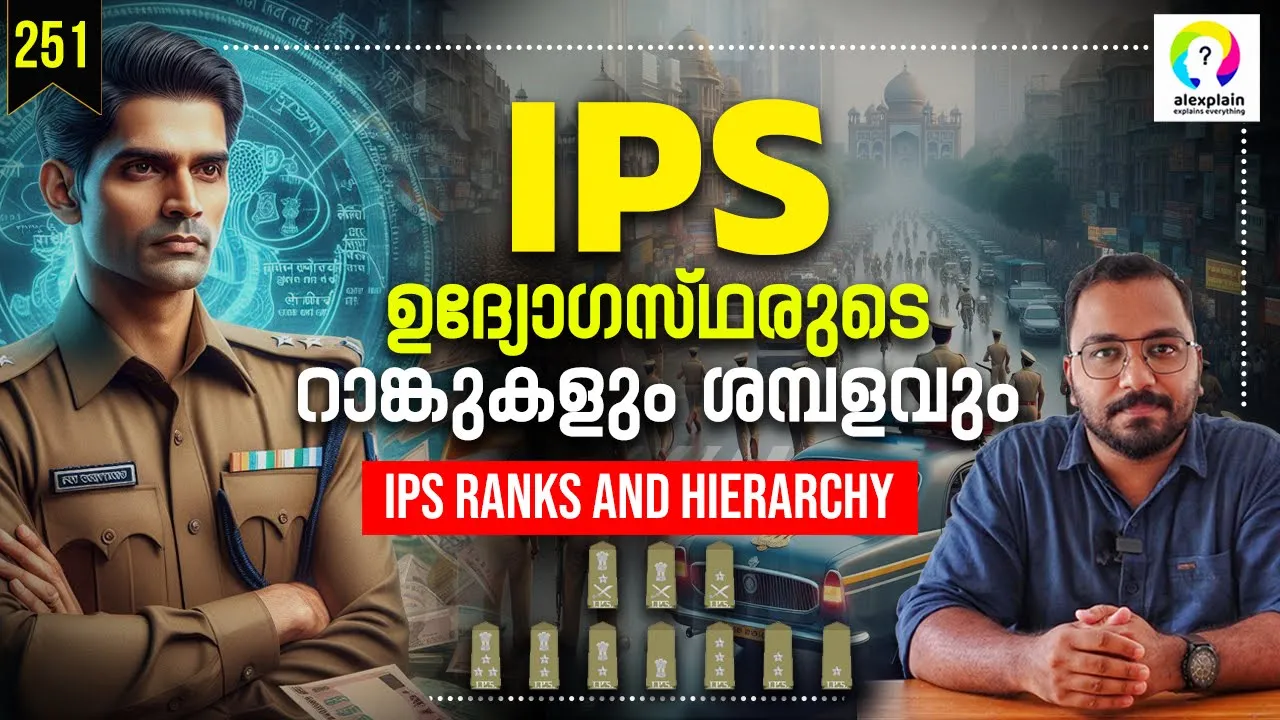


















IPS officers undergo 10 months of training at the National Police Academy followed by 8 months of district-specific training, and are typically allotted to a specific state as their career, where they learn the local language, culture, and traditions to serve effectively. The UPSC Civil Services Examination selects candidates who can be ideal public servants, not just academically brilliant individuals; successful preparation requires strategic focus on approximately 60% of the syllabus, strong time management skills, and the ability to express thoughts within word limits during the 180-minute examination.
IPS Officer Journey: From Failure to Additional DGP | UPSC Insights
Added:Understanding of the UPSC Civil Services Examination (CSE) structure, including its phases (Prelims, Mains, Interview) and the role of the Indian Police Service (IPS).
Basic knowledge of the organizational hierarchy of the Indian Police forces, specifically the rank and responsibilities of an Additional Director General of Police (ADGP).
A foundational overview of Dr. B.R. Ambedkar's social and political philosophy, particularly his concepts of social justice, constitutional morality, and equality.
Fundamental concepts of cybercrime, including common vectors like phishing, identity theft, and the role of the Information Technology (IT) Act in India.
Analysis of police reforms in India, including the Supreme Court directives in the Prakash Singh case and the challenges of modernizing law enforcement.
Advanced study of cyber security frameworks, digital forensics, and national security challenges in the digital age.
Critical evaluation of public policy and administration through the lens of Ambedkarite philosophy and constitutional ethics (relevant for UPSC GS Paper IV).
Case-study analysis of crisis management and law-and-order maintenance strategies employed by senior police officers in diverse socio-economic regions.
63.7K views2.9Klikes52:33Original Release: 2025-02-13
I think that's very interesting now when I look at your profile you are also specialized in cyber crime so I want to understand suppose let's take an example I'm someone who is willing to commit a cyber crime right and let's say I post something that will affect or that will disturb the harmony of the community right something fous and fake news and you know trying to let's say create all these tensions among the community and and those are not true so if I use fake account all this fake name fake email fake phone number do you think police will be able to absolutely find me out absolutely how does that work hello viewers tonight we have one special guest to tonight and he is Mr or in other words IBS sandip Mr sandip dgat and he's from Maharashtra but he got posted Inland since 2001 and since then he has never looked back he has been serving the nland state as IPS officer since 2001 and it's been about 24 years that's right so it's a wonderful moment and and I feel privileged that he's here to talk with us today on many things and I think many things when I say there are things that we would really like to understand how IPS officers work and you know just to mention a few uh he is also the adgp of nland police which is the additional director general of police of nland so I think it's a great privilege and I think you know we need to have this kind of conversation more often with the public as well as our police community and I I feel that this is one of the best moments that we can have like this and also he has worked on deputation with the Central Bureau of Investigation for four years in since 2011 I think there will be a lot of interesting things to talk about and he cracked upsc in 200 in 1998 and and he he got through upsc as an IPS officer and assistant he got posted in nland and that's how we are here but I think he maintains a very lowkey profile so many of us not know him properly but tonight I want to bring him and talk a lot of things that we hardly know about the life and the work of an IPS officer and I think there there's there are many more things to unpack and I can't wait to just hear from you thank you sir joining us for this in this conversation thank you so much it's my privilege to be here to be a part of this show and uh I wish to say uh good evening to you and to all your viewers thank thank you thank you so you came to nland in 2001 uh 2002 2001 yeah okay you correct in 2001 and then we go up for some training right our training academy is at Hyderabad National Police Academy okay so basically the training first 8 months we are in at 10 months we at National Police Academy thereafter it's followed by 8 months of District training MH so uh all all India services and when I say all India Services there are three all India Services okay it's by the upsc uh Indian administrative service I Indian Police Service right these two services are selected through the civil services examination of upsc and the third all- India service is Indian Forest Service the exam is conducted by upsc but it's entirely different examination the selection process so for all all these three Indian all India Services a particular state is allotted as a carer we call call it carer and thereafter once uh state or a Carter is allotted to officer that becomes your kind of permanent Carter you are supposed to uh spend a big time of your entire profession in that state and uh the reason is that the all India Services as it was envisaged in the Constitution and when I say civil services that means it's a civil service it's not a part of the Defense Forces okay like unlike the uh Armed Forces uh you you n and has seen lot of postings of army officers Assam rifle officers Etc right but uh army officers get posted every 2 to 3 years to different locations mhm unlike that the civil services and that to all India service officers uh especially I IPS and uh ifs they get allotted to a particular State we are supposed to uh learn the language of the state get accustomed to the culture understand the society uh the demography the Traditions the Customs since we deal with the public unless uh we learn all those things um I don't think so any officer can do justice to his or her service so I was allerted to nagaland and so I'm here wonderful I think it's wonderful to see someone from Maharashtra you know I was in mahra for like I say six years so it feels wonderful that someone from Mar and I'm in nand now for last 24 years so you've been here for the last 24 years yes how how has your experience been so far the people culture yes absolutely wonderful I must say I've been one of those very privileged officer who has spent uh on field on in within the state um living aside those four years of my deputation to the CBI as you mentioned uh rest of the time I'm in nagaland so I started initially I was posted as sgpo subdivisional police officer in Tuli subdivision in and then I served as additional in zuno for few for a year or so then I was promoted as a superent of police SP in fake district from 2005 to 2008 approximately okay uh I was there for 3 three three and a half years uh thereafter I served in kohima in the police headquarter for a year uh as a staff officer and then I commanded first nap Battalion in chimuka for 3 years years till 2011 and thereafter I went on deputation to government of India for 4 years yeah uh in CBI I was head of the branch for special crime Branch Mumbai then uh anti-corruption unit in nagpur I spent four years and then in 2016 beginning of 2016 I returned to the state and since then now till 2025 I'm continue to be in the C now before we jump into the details of your work and so on I mean let's dwell on in in on this um the process of because you you just in your first attempt you correct upsc I think UPS is of course is a tough exam not meant for everyone so if you can tell us and I think many of our viewers are also aspirants I think that might benefit them as well our youngsters I'll yeah how was your experience like how did you make it in first attempt um see first uh I I don't think so that civil services is a tough examination um it is a exhaustive examination it do need well planned studies and uh your return skills and other things I don't think so especially for the civil services upsc is looking for somebody who is extraordinarily brilliant or extraordinarily you know knowledgeable they're looking for somebody who can be an ideal public servant so civil services examination so basically Services is the important part somebody who is able to be a good public servant somebody upsc feels that uh can deliver the uh the the services intended for the public that's what they're looking for right okay as for me I never been a good student let me confess that um my uh uh my dad uh was in Army he was a conable okay and so I was moving with my dad all over the place wherever he got posted and my dad definitely since he was a Jawan in the Army he he wanted me to be an army officer uh of course I did not fulfill that I came to civil services so uh initially I did my studies in kendri vidyalay KV so wherever my dad was posted I was in KV and from class 6 to class 12th I was in syic school there are institutions Sonic schools okay so I was in senic School Maharashtra for 7 years 6 years I was there and U as I was telling you that I was never a brilliant student per se okay in fact I flanked in class 7 um maths was always a torture for me I was never good at maths and did you come from marati medium uh no KV was a English mediumish medium right uh and uh since my dad was posted all over so in fact U till my class 6 I could not speak proper marati in fact only after going to satara that is my school I learned because of your school environment right yes that's right that's right and uh so I was telling you I I I failed in class 7th um uh those days my school required 40 marks out of 100 to get promoted to the next class and I could get only 32 so and my teacher felt it not good enough to give me eight more grace marks to promote me to class eight okay okay I so I failed quite early in my life and I realized that um faing tasting the failure quite early in life is good it it it teaches you a lot of things uh maybe I was very young of course I was very young but then uh I think that was something changed uh the course of my looking at the things and again in class 7 I did not fail because I did not study not that's not the point I was into reading lot of other stuff okay philosophical Stu Story Books and Comics and all those kind of things so I but what I'm trying to say is uh someone like me who has failed in class 7th can also clear civil say um when I was 22 okay okay you correct when you were 22 yes okay so I want to understand that the lip that you took right from as a as a failing student like you mentioned and the lip that you took what what changed what changed later on uh see after my class 12th uh uh uh my dad had taken voluntary retirement by then and uh he had his own reasons for voluntary retirement because of his own family responsibilities and a lot of other things um so after I came back from school to nagpur I realized that I being the only person in the family I need to take care of now my everything and uh for uh someone like me um realized that the best and the shortest possible way to uh not only do the public service but also achieve the status the position the job security all those things the shortest possible ways through the civil services and uh so uh throughout my graduation I actually studied only for the civil services graduation was basically just in order to qualify okay so that's how and since being a part of the syic school I was anyway preparing myself for the NDA examination which was again being taken by the upsc right so I just continued my preparation after my class 12th and so as soon as my graduation was over uh so when did you realize that you should start preparing for upsc civil as soon as my class 12th was over okay before that it never that before that it was I actually wanted to join Armed Forces Medical College and that's what my dad wanted but I could not do it I mean I cleared the written part uh but SSB I could not make it so I realize that okay maybe I'm not made for the Army so let me now try for the civil services so graduation yes graduation and when I say that it was absolutely a very planned way of studies u i I realized that as I was speaking earlier I realize that they don't want somebody who is uh if I may put it not a PhD in a subject upsc civil services has its own way during my time there used to be for the preliminary exam there used to be one more subject besides the General Studies now of course preliminary examination doesn't have the subject so for my prelims botney was my subject because I did my graduation in Biochemistry bot and chemistry so and for the main examination geography and anthropology were my subjects so I realized that see and I qualified for the for the IPS nobody has ever asked me about botney yeah or geography for that matter of course now since I have you ever applied no yeah uh of course now since I I got nagaland carer my theoretical studies of anthropology has really helped me to understand the society and lot of other things but otherwise for lot of other students those who someone someone takes engineering or someone other so the professional life and the subject that you select in self services is definitely is not correlated so as I was saying it's just a an exam and you need to qualify it you need not study for years and years together and what do you need for qual qualifying is absolutely smart way of studies MH um so honestly I I I did not complete I did not study the entire syllabus I went ah Hadad only with the 60% of studies uh but those 60% of the things that I studied was very very calculated studies makes sense so most of the time I simply analyzed the patterns of the questions that used to appear and then I went ahead with that so I I would be a PL lucky guy I guess I think you know cracking this exam in 20 at 22 years I think you had that Brilliance when you were young also that's that part is there for sure and you really worked hard for sure uh and with a planed strategy see um okay I will not say anything on that but uh besides I believe besides uh studying what is most important is how you perform in those 180 minutes examination absolutely absolutely someone can study for three years years and if he completely he or she completely messes up on those 180 minutes doesn't make sense doesn't make sense the person who is evaluating your paper really doesn't know if s studied for 3 months or 3 years so those time management plus upsc during my time and I believe even now uh used to specify the word limits so you should also be very good in expressing your thoughts both in written totally and U subsequently in personality test so unless you are first well prepared in knowledge well preparedness doesn't mean that 100% knowledge but yes you should know your subject the basics of the subject second you should be able to express your knowledge in a very limited time those are the skills that the absolutely absolutely so uh I actually concentrated more on paper solving even back back then so I think uh the time management along with the word management and I guess I was able to write okay I think makes sense that's I think that's totally I mean totally really really makes sense to me as well although I'm not an aspirant and I was never an aspirant too like coming from a social work and development background like we're more of an activist like we want to do this you know we want to fight against and fight for this rights right so upsc in civil service was never part of my plan as well but it's very interesting to learn that you know the strategy that you were really really explaining I'm sure many of our aspirant will really take away a lot of important things from you so I think what really caught my attention is since you were on deputation right with the CPI right like I really want to understand how did how does CPI work you know like investigation and so on right so see cbii the Central Bureau of Investigation uh two important words are Central and investigation Central me government of India's agency it's a government of India agency but as for the Constitutional scheme of things M the policing the Law and Order and the criminal investigation per se is a State subject and when I say State subject is basically the state government's prerogative the powers and author abolutely so uh at the time of the Inception or the we whenever we adopted the Constitution um the government of India per se did not had any federal investigating agency like in us we have FBI a lot of your viewers would have seen in the movies and FBI Federal Bureau of Investigation but India we did not had anything called as federal police investigation unit mhm so CBI came into existence somewhere in 1964 as a part of purely anti-corruption agency uh for investigating the corruption related charges in the government of India and its uh Ministries departments offices Etc ET in the initial stage in the initial stages yes um CBI into existence as the executive order uh and official name of CBI basically is DSP Delhi special police establishment act so popularly we call it CBI but officially it is called as DSP M and for good number of years uh CBI remained concentrated on investigating only the anti-corruption cases corruption investigation but subsequently as the nature and the character of the offenses and the crimes also changed and and uh uh agency was required to let's say investigate uh mult investigate offenses which are spread in multiple States or multiple jurisdictions or even multiple countries then CBI started taking up or diversifying cases of taking uh the bodily offenses the organized crime uh the bank offenses the the the offenses with International ramifications so it started growing in a way and now CBI by and large has presence in almost all states yeah and they deal with a lot of crimes as well right it does so uh besides so Moto taking cognizance of corruption cases of the government of India and its agencies its Ministries CBI can also be given cases by the Constitutional courts and when I say constitutional courts basically The Honorable Supreme Court and all the high courts correct so any offense which the any of the Constitutional Court feel that it needs to be investigated by CBI for whatever reason maybe for the sensitivity maybe for the intricacies maybe for the difficulty maybe for the multiple jurisdiction so high court can order CBI to take up the case now that you said about you know the so Moto and more sensitive cases you know when there are crimes and cases or anything related to crime and Corruption that occurs in the state let's in the state people don't trust the state police to investigate in a free and fair Manner and people have that mentality that CBI is more efficient and they're more you know into the crime and they will really naap the person behind the crime is it really true that CPA does Justice or because the police system seems at the state level seems to be manipulated by the politicians sometimes uh see uh I'll try to answer that from a point of view that I have served in CBI also and I been a part of State you the right person uh in fact before joining IPS I worked as a dspn CBI for 3 years so worked at the field level also and the CBI and then as the IPS officer I was in deputation for 4 years so I have put in s years in CBI both the sides of the things so see uh investig CBI as a agency is 100% dedicated only for the criminal investigation it doesn't do any other policing Works per se right so right from the junior most functionary Junior most officer in the CBI up to the DOR CBI their only job is to criminal investigation to the criminal investigation so they can 100% focus on the criminal investigation part besides that CBI has its own mechanisms crimin crime manuals very uh standard Protocols of supervision at multiple levels uh right from the SP the head of the branch up to the director those cases which are given to the CBI by the C Courts at times courts also monitor the investigation right but one one very important aspect of cbi's uh good professional record if I may say is the fact that CBI is has its own independent directorate of prosecution so every CBI Branch besides being having the police officers also have the legal officers which try to guide the police officers at every stage of Investigation now right so conviction rate of CBI after the completion of the trial is really good yeah now as compared to the state police for for for for the State Police uh we have all aspects of policing right from the investigation definitely the uh f starts at the police station level that's the first stage of the beginning of the Criminal Justice System MH then we complete the investigation we put up our police report in the form of charge sheet or equital The Honorable court court goes through the evidences the quality of the evidences appreciate the evidences and if the court feels that the allegations which we have leveled and the evidences that we are producing against a particular suspect or accused if the court feels that those are good enough Court convicts a person or acuse the person and then the third stage is once the conviction is there the person is sent to the prison the correctional system so these three aspects the police the investigation the trial by the court and the correctional system by the prison these three aspects constitute the criminal justice system now for for the State Police your question was yes besides the criminal investigation a large part and last time time of the police is spent in the Law and Order mechanisms uh the traffic management the VIP security um uh the managing the festivals managing the CR right uh so on and so forth right so a officer a police officer in the police station of sub inspector or Sho the OC basically the poor officer is running whole day from managing one crisis after the other yeah yeah right so I'll be very very objective in saying that uh nagaland police since um this is my Carter and I've been here for last so many years our officers are really good our police officers are very very good especially terms of Investigation yes uh they do need a little bit of upgrading of the skills uh uh little bit of more training but if they are properly supervised if they are guided properly they have done good uh investigations okay also I can say this not just because that I'm a part of nagaland police uh I'm holding the charge of additional D law and order for last three and a half years and so uh the entire C Department I supervises the case be the special crime cases or the narcotics cases or the Cyber cases and so on so there are cases which were completely blind and officers have been able to solve it so if if you give them that proper time focus and proper supervision officers are able to do it I see um so I think that's the difference between okay okay I think that I think that's very interesting now when I look at your profile you are also specialized in cyber crime so I want to understand suppose let's take an example I'm someone who is willing to commit a cyber crime right and let's say I post something that will affect or that will disrup the harmony of the community right something fallous and fake news and you know trying to let's say create all these tensions among the community and and those are not true so if I use fake account all this fake name fake email fake phone number do you think police will be able to absolutely find me out absolutely how does that work see the one of the biggest misconception about uh a lot of people lot of uh young users those who deal in the information technology right and especially with the uh smartphone and the smart gazet uh uh you know prolification exactly almost anybody and everybody uses the smartphone you just have to get connected to the net and then you can go on but uh this is a fallacious concept that you are Anonymous right no one is Anonymous in reality I I agree irrespective of whatever techn technique you use you use uh VPN or you use any any other fake identity uh there are tools uh of identifying and finding we have been able to identify so many cases in last couple of years in fact you know that's very fearful at the same time that's that gives us hope you know if fearful in the sense if you want to commit such crime it's going to be like police is going to come after you and nap you definitely it's a double- edged te like any any other technology right uh it is also a Double H sword and uh my only advice to all those people who would want to use this technology for wrong purposes please don't do it don't do it please don't do it I think that's a wonderful advice and it's so refreshing to hear from someone who has been you know part of that and so I mean it's it's it's a great it's a great advice thanks for sharing that I mean it really enlightens in a way that you know it it really gives hope to people as well that you know regardless of how people trying to manipulate information and trying to cause all this tension sometimes it's good that if it is reported that that can be resolved and that can be ni yes that that's the key timely reporting right uh I'll tell you we have a special hel line called as 1930 for all the financial st30 1930 okay uh so increasingly nagaland is also seeing lot of cases where the financial frauds are taking place the Cyber scams are taking place uh you may have heard about the concept of the digital arrests and so many other things also so not that nagaland is remained untouched from all these things so um we have dedicated helpline 1930 and we I must say every day we get multiple calls if the offense if the crime is reported on time we are able to block those numbers block the freeze the bank accounts so that the money is you know uh money is frozen before it is taken out true a lot of time people do not know so of course from the police headquarter side also we try to make people aware about all these things but yes as you rightly said timely information is the key wow that's wonderful I'm sure you know learning all this um information I'm sure people can really use make use of 1930 in timely reporting so we have less and people go through less trouble in life precisely yeah that's very important now back to nagan and Nan is of course majorly Christian Community at the same time majorly um let's say tribal Community right and you know I may be wrong but I would say that we don't have we haven't de fully developed when it comes to the idea of the rule of law right right as a tribal as a Naga so I think we are mostly ruled by a customary law so so like we we we don't really bother much about what will our system think if I do this so how is your impression when it comes to that see uh when we say rule of law as a student of uh law and someone who has studied law in a formal manner law has multiple sources One Source can be a formal law a Act passed by the parliament or the legislature M but if you see the Juris Prudence part the law part one very strong source of law is customs you mentioned about the customary law and the customary Traditions so I will not fully agree with you when you say that we do not have the rule of law M we have rule of law but yes rule of law the source of rule of law may be different M makes sense Mak sense totally we we do have the customary laws right for each tribe we do we do of course it may not be codified it may not be written but nevertheless it's a source of law and the societies is governed The Village Life or the community life or the tribal life or the clan life or a family life is governed by the customary law right makes sense and if Society any society for that matter be it uh simple Society a complex society any society if it exists for hundreds and thousands of years there has to be a source of law which governs its conduct y so that was my take on it yes I I I do agree with you on certain level that the modern concept of rule of law as per leted down by the Constitution that is something which has not been percolated completely it's still in transition it's still in transition right and um it may take some time but uh again if I may say the way the state came into existence the circumstances in which the state came into existence um because earlier it was all part of one single state Assam and part so in 1963 when it came into existence and when the state was given a special status in the constitution of India in the form of article 371a uh one very important concept of 371a was 371a sub Clause 2 which says that administration of Criminal Justice as far as customary law so that is something which has been upheld by the Constitution course and also in multiple case laws also upheld by The Honorable Supreme Court of India so customary law in the state is as valid as uh any other law a law passed by the Parliament and subsequently passed by the the State Assembly mhm uh that is one way but yes customary law which derives its source and power from the customs and traditions which are prevalent in the communities which are the tribals uh with the tribal communities the our various tribes uh besides that we have something called called as rules for administration of justice and police in 1937 okay so before uh the country got independent during the British rule these rules for administration of justice and police came into existence which gives the authority to the Village headmen The Village councils the dobashi the JBS but primarily it limits itself to the settling the Civil disputes the land disputes and other things besides giving some minimal power for uh let's say small crimes uh somebody's creating new in the village right right right somebody is disturbing the peace ability in the village so for that fines are prescribed in the rules for administration of justice okay but uh for any other major crime of any other crimes uh ideally the victim should come to the police station M um so that awareness part is taking time to get percolated right of course now uh last year as you would be aware um the earlier criminal laws have been repealed and the it has been replaced by the new criminal laws be it the procedural law we used to have earlier criminal procedure code which has been replaced by bnss now ban naric s earlier we used to have IPC the penal code has been replaced by BNS and earlier we used to have Indian Evidence Act so since last year July uh the new criminal laws have come into existence and I'm pretty sure slowly and steadily since I'm seeing it as an outside objective Observer but also part of the inside Society I'm seeing that the the awareness and the knowledge about uh uh the modern laws the laws passed by the Parliament and by the assembly let's say established laws established laws yes customary law is also an established law sorry okay uh no so uh the the laws are now slowly started it's speculating down makes sense Society is in transition so obviously it will take some time I think that's very clear so now looking at your profile again you you were awarded the governor call medal for anti- Insurgency measures right right so I mean nland police is not just dealing with the Civil civil crimes and whatever it's just it deals with Also let's say Naga nationalist groups right I mean that that is just the elephant in the room we hardly talk about so when such crime are committed how does the police you know deal with that that that see uh you're right uh we had a long armed struggle in nagaland and uh after 9798 when the government of India uh had ceasefire agreements with the the armed groups n armed groups and subsequently more groups came into an agreement we as of now we have five groups which are in agreement with the C5 with the government of India and the ceasefire ground rules are very well lit which says that what the security agencies can do and what the armed groups can do and what they cannot do so all the Seas fire ground rules for any armed group be it NN or uh NN cono or nnr or unification or that the the latest group Mr K Group they have signed an agreement with the government of India and the Seas far ground rules are very very clear on that uh no criminal act activities would be indulged by any member of these groups y right y uh they will not disturb the Peace of the society MH if they are to move from one location to other location with the arms and the entire uniform and other things is a let down procedure on how they are supposed to move if there is any violation of these ground rules either from the security agencies be theam rifle or the nagaland police or the crpf or if there are the violations on the part of the groups which are Naga groups there is a separate Office of the chairman of the cfmg C monitoring group uh which is supposed to then sort out the violations basically but a crime is a crime let me put it this way okay as a police officer I view extortion as extortion forceable extortion as extortion I view abduction forceable abduction as abduction it doesn't matter who commits it it doesn't matter who commits right uh I don't think so any ground rules permit any Naga group of to commit crime in the guys of ceasefire ground M and yes we do get lot of cases reported to the police station and we do take action against them uh over a period of time we have registered many uh cases also if the armed group feel that our actions were um uh not wanted or our actions were disproportionate they will take the matter to the office of the chairman right and uh then we go and we put up our point of view they put up their point of view and but um if somebody comes to the police station or not police station even if somebody gives the information uh in through any Channel that I have been wronged uh there's a crime committed Against Me by anyone it's my mandated duty to register a case and proceed ahead with the investigation right so you know taking this opportunity of your presence here suppose I want to F register an F at the police station right right and the police does not want to register so is does the police Constable have the choice not to register no no no no uh the law is very clear right see when we say firir f means first information report it's just information of a cognizable offense offense if I may just simply put it and the OC the police station officer the Sho the head of the police station uh cannot say no for registration of okay not in the earlier laws till after July 2024 when the new laws have come into existence yes the new laws speak about the OC can if he feels that the information is not correct or uh uh a particular incident needs to be first inquired into before registration of crime so there is a provision for he needs to register a PE something called as preliminary inquiry yes sir but that two only only after obtaining an approval from the DSP the sdpo so OC simply cannot say and that P has to be completed within 7 days and then after those 7 days if he feels that yes Prima there is a case he need to register uh fir fir simply is beginning of a criminal investigation right that yes a crime is reported we are commencing the investigation because only after registering an F the police officer gets the entire authority of investigation and when I say what is the authority recording a statement summoning a person seizing a document seing a particular weapon or whatever it is so those are the legal powers given to the IU wow yeah that's very interesting I think you know this kind of information we hardly hear from people who are actively working on this so it's I think that this is really helpful although the information is very brief now I think I want to come back to understanding the person you are you know the the the philosophy that you believe in life so um as I see your profile again you know you you study edar thoughts right philosophy I mean personally I myself look up to Edgar and and as an Indian I think Edgar is someone I look up to the most right you know the the the work that he has done for us I mean without him we as triple we don't know where we would be had edar was I mean been not there during the during the process of this making of the Constitution and all you know so as a as as as an SD I personally feel grateful that someone in the figure of edar existed who understands the need and and let's say the suffering of the Tribbles you know but I think when I look at the actual dalits out there in Maharashtra in other central part of the country I think it looks like they suffer more than they're more than us so and you grew sometimes you grew up in that environment seeing people suffering you know how how how did how did that shape you as a person right uh thank you for raising this question this something a subject which is close to my heart um you mentioned about you being a St right uh someone from a schedule tribe Community correct um I I come from schedule cast Community u in um we we do have the concept of the uh something called as Untouchable cast so I come from uh Earth o Untouchable cast of course untouchability is offense now as per the Constitution for thew thankfully and um Dr ambedkar Dr beim ambedkar or we very fondly we call him Babas ambedkar true Babas yeah so he was somebody he was he was from my cast but not to put him in a category but okay somebody who had experienced the uh the the Discrimination the cast based discrimination pretty early in his life and that changed his personality uh some um his father was also in Army his father had worked with British Army he got opportunity to study and uh so that was something which drove his entire life and of course uh one of the most educated person he had he had PhD in economy he had a PhD in law and lot of other things he studied in California London and so and so forth and somebody someone like him who had not only experienced the Discrimination in the in the in the society prevalent then that shaped his ideology and the mement for doing something for the historically socially marginalized communities so be the schedule cast we basically schedule cast means all compilation of casts which are put in the schedule to the Constitution all compilation of the tribes which are put in the schedule to the Constitution so that's why we call it schedule cast and schedule tribes right so uh he you're right being the chairman of the drafting Committee of the Constitution uh we give full credit to Dr edar and the entire drafting committee constituent assembly for making those Provisions for not only the sh C but the entire shle tribes in the whole country be it in the form of the uh improving the educational qualification improving the social profiles making the reservation trying to give give a Level Playing Field to each and every individual each and every society of the country which historically were discriminated or marginalized or did not get the opportunities for whatever reason so he he in the form of the chairman of the drafting committee he tried to do something that of Level Playing Field and since you mentioned that you have also studied sociology so I'm sure you appreciate what I'm trying to say much but I I would go beyond uh the entire world uh the most of the country view him as somebody who has drafted who was the chairman of the drafting committee for the Constitution um but I'll tell you you mentioned that I did my postgraduation in ambedkar thought U so I I know I I can't say that I know everything about him he was such a great man his literature he had written hundreds and hundreds of volumes of this a lot of literature on almost all subjects but I would want to say something here that uh as a Minister a cabinet minist in the British government from 19 uh 35 onwards till 1946 he was a minister of Labor so most of the labor laws that you see it was primarily we can give the credit to Dr ambedkar the equal salary to men and women it was Dr ambedkar's idea that the concept of the maternity leave it was Dr ambedkar's idea he was somebody who ensured that the uh the duration for the Factory workers and everything is curtailed so that the people are not discriminated not you know um they are not harassed uh as a minister for energy he was somebody who created the hydroelectricity projects in the form of damodar Valley Corporation in the form of interlinking of the rivers he was way far ahead of this time not only in forms of abut creating a Equitable social justice Equitable so when we speak of the Preble the the concept of the uh the the the fraternity the concept of the Justice Liberty equality yeah um we can go on and on but I have read book on him I mean it was it's written by Dr Shashi T right yes yes one of it's phenomenal and I mean one thing that really touched me was um the amount of struggles that he had to go through yes he has to go through yes and within that struggle you know that's why I I thought that you know for others just to run and compete in a race others had to run with springboard on their shoes but Dr Edgar had to run with carrying five CES of bricks on one hand and another five Cates of braks on the other and he had to run with all the difficulties and challenges discrimination he had to go through you put it very aptly you have put it very aptly I was imagining that and I was I was imagining what a great man he was and um I must say uh if you read the debates of the constituent assembly when the constitution of India was in in the in the making uh he had mentioned about the tribes of nagaland and the tribes of uh the then Assam and then Naga tribes and so he he had uh it's quite interesting to read his thoughts about uh the he used to say tribes of Assam because nagaland did not existed there right right so one one must read his thoughts and views on the tribes of Northeast especially tribes of nagaland and the things and he was very much of the view that uh historically and in terms of other uh social uh indicators uh besides being you know uh creating development the the Customs the Traditions needs to be preserved mhm so uh if you get an opportunity try to read those uh to constituent debates debat I think that I have read some of it not directly reading from the manuscript but referred by you know mention in some books and articles Papers written by some Scholars right it's just very interesting I think you know it just wowed me every time I read it so you you you you're right when you say that a lot of us we do not know we we speak about uh let's say uh positive affirmation concept of the reservation in the educational institutions or the public employment a lot of us really don't know from where does this comes true from where does this the concept of this has emerged so even the idea of a welfare state idea of the welfare state the idea of uh nationalization of the state resources in terms of Industries in terms of lot of other things see he as a chairman of the drafting uh drafting Committee of the Constitution he was way ahead of his times and um wasn't very easy to make this constitution wherein with so much of uh diversity so much of heterogenity in the uh not only naland all over the country to to give a equal Level Playing Field absolutely absolutely I think you know the last thoughts that I want to hear from you in when you look at America they have really got rid of the affirmative action right now they're looking to words more you know they they claim to be equal in society everyone is equal no reservation nothing is required right but I think as far as India is concerned it's still like we we haven't I mean I'm sure we it is our aspiration that we come to a stage where everyone becomes equal and no one needs reservation and special treatment as such right right because we can't go on like this forever and the debate is like reservation kills skills and efficiency even the debate has begun even in India so as someone who follows ambedkar's thoughts how do you view on that when it comes to reservation yeah you yourself mentioned about ambedkar carried 5 kg BS on one hand so I think uh I won't say that things have not changed I can speak from my own personal experience uh my grandfather was just a landless laborer my dad was a okay he got into public employment but he was a constable yeah through the Constitutional uh provisions the opportunities that were presented to me I got those opportunities I tried to study myself I tried to get it somewhere but then how many of people like me right um okay the the idea of the concept of the Merit I think uh if you do not give the opportunities how do you measure Merit exactly right exactly and uh uh we do not have any P per say yard stick for measuring the Merit I don't think so that uh I I I still believe that one of the most fundamental duties of a welfare state is to treat everyone equal yes definitely equal in terms of opportunities that's what our pble also says absolutely equality of opportunities and the skills now how far this positive affirmation the concept of reservation can continue that is for something with the lawmaker need to decide yeah uh in number of case laws by the Supreme Court it has been upheld uh for the OBC Community I'm sure you are aware about the other backward clast Community there is a concept of the creamy layer true now the debate has also gone started whether a concept of creamy ler should be introduced in sc's and STS also true so if a generation has taken benefit of a reservation whether his second generation should take or not right that's something which the law should come up with right but I at the same time I will end this with by saying that yes uh there are still um many many people who who need it absolutely I totally agree with you we need that equality of opportunity and we're not asking for equality of outcome we asking for equality I think you know although we we we take just a brief time to talk about although we talk briefly I think we have touched a lot of important things and I'm so grateful my pleasure for your humility and you know giving us this time to have a conversation it's absolutely my pleasure I love talking to you and um thank you so much thank you so much thank you so much sir thank you so much for coming and we look forward to having you know more conversations in the future yeah whenever if you want and if your viewers are absolutely not b my my conversation I would love to be a part of I'm sure it's quite relatable to us to to me personally as well thank you so much thank you so much
Up Next
123:30
Unraveling Secrets: A Nollywood Tale of Trust and Betrayal
@globalnollywoodtv
4.9K views•2026-04-04

12:54
Triumph of Orthodoxy Icon: Byzantine Art & History Explained
@BenCallan
2.1K views•2024-08-06

9:49
FastAPI vs Flask vs Django: Choosing the Right Python Web Framework
@TechWithTim
302.5K views•2024-05-26

1:42
Game of Thrones Opening Credits: A Cinematic Analysis
@gameofthrones
46.3M views•2011-04-18
Related Study Plans & Knowledge Roadmaps
Structured learning paths in General & Interdisciplinary Studies
general-studies
Elevator Engineering: History, Physics & Cities
01From Hoists to Safety Brakes: The Dawn of Vertical Lift
02Hydraulic vs. Traction: The Engineering Physics of Elevators
03Modern Speed, Safety, and Algorithms
+ 2 more learning modules
12h5 modules
Explore Roadmap
general-studies
Rubber: Material Science, History & Geopolitics
01Origins of Natural Rubber & Mesoamerican History
02The Chemistry of Natural Rubber & Vulcanization
03The Geopolitics of the Rubber Boom & Colonization
+ 2 more learning modules
12h5 modules
Explore Roadmap
general-studies
Containerization: Evolution, Logistics & Trade
01Ancient Trade & Bulk Cargo: Amphorae to Barrels
02The Industrial Revolution & Cardboard Packaging
03The Containerization Revolution: Malcom McLean
+ 2 more learning modules
12h5 modules
Explore Roadmap
general-studies
Textile Tech: Evolution, Labor & Global Impact
01Pre-Industrial Textiles: Handloom & Cottage Industry
02Mechanization: The Spinning Jenny to the Power Loom
03The Factory System & Global Labor Transformation
+ 2 more learning modules
10h5 modules
Explore Roadmap