A retail supply chain encompasses all logistics processes that move products from suppliers of raw goods through manufacturers, wholesalers, and retailers to reach consumers, with effective supply chain management requiring coordination of inventory tracking, shipping strategies, quality control, partner relationships, and most importantly, delivering positive customer experiences that directly impact brand loyalty.
Retail Supply Chain: Definition, Steps, Key Players, and Management
Added:Deep Dive
Basic understanding of retail business models, including the differences between B2B (business-to-business) and B2C (business-to-consumer) transactions.
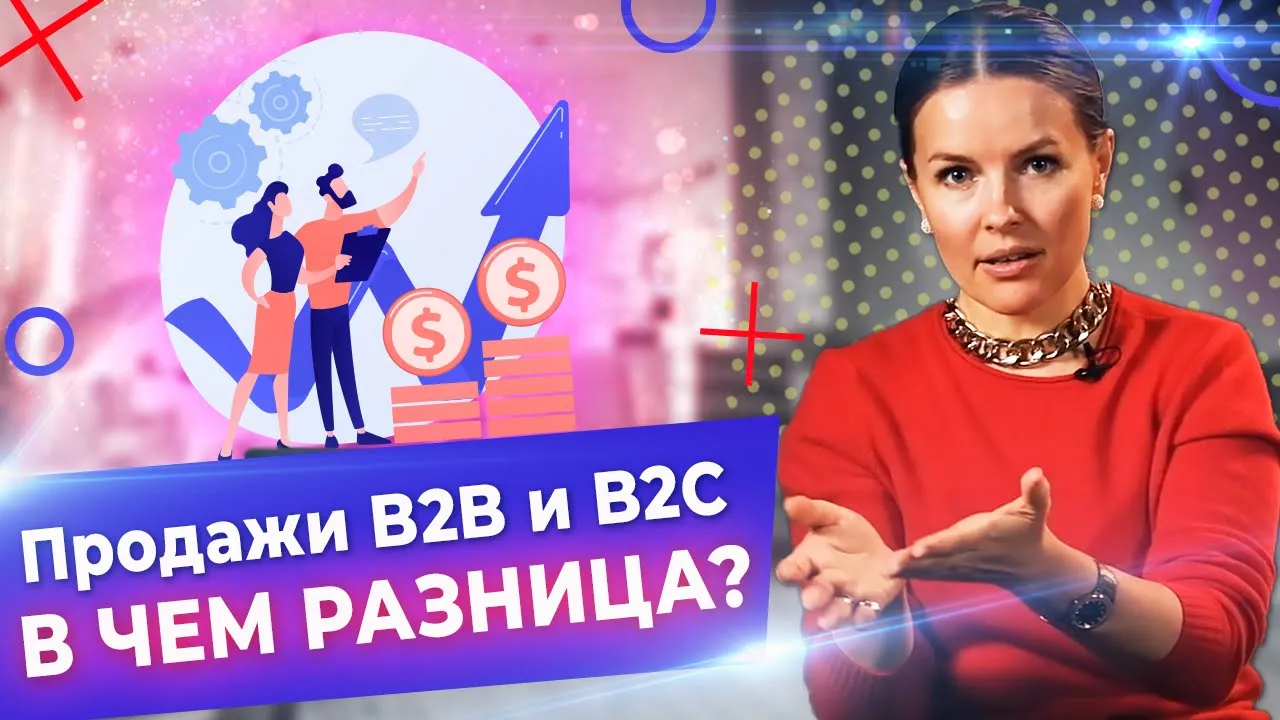
B2B и B2C – что это простыми словами! / Что нужно знать для успешной продажи?
20.7K
B2B (Business-to-Business) - это продажи товаров или услуг другим бизнесам, где покупка осуществляется для обеспечения их операций или получения прибыли, тогда как B2C (Business-to-Consumer) - это продажи конечным потребителям для личного использования. Основные различия включают: 1) в B2B длина сделки может быть как длиннее, так и короче, чем в B2C, в зависимости от продукта и аудитории; 2) в B2B часто один лицо, принимающее решение, а не несколько, как часто думают; 3) в B2C тот, кто ищет товар, часто является лицом, принимающим решение; 4) B2B не обязательно более выгодны, так как крупные клиенты могут заказывать мало; 5) конечный потребитель покупает для себя, а B2B-клиент покупает для бизнеса; 6) B2B-продажи не менее эмоциональны, чем B2C, так как покупатели также имеют свои критерии выбора.
Click to watch →

Amazon 3 in 1 Premium Paid Lecture No 1
769
B2C (Business-to-Consumer) involves sellers offering products directly to individual customers or consumers. The seller's purpose is profit, while the buyer is either a customer (who purchases) or consumer (who uses the product). A customer may not always be the consumer, as products can be gifted. This is also called retail business because individuals can order single units. B2B (Business-to-Business) involves both parties being businesses. The seller makes profit by selling products, while the buyer purchases in bulk to resell elsewhere for profit. Both aim to conduct business and generate revenue. This is also called wholesale business.
Click to watch →

엔비디아 손잡은 네이버, 아시아 AI 클라우드 중심이 된다. / 네이버 vs 카카오, AI 전쟁의 승자는 누가될까? | 이권희 대표
75.4K
B2B (business-to-business) and B2C (business-to-consumer) business models have fundamentally different characteristics. B2B companies typically serve fewer but larger customers with higher contract values, while B2C companies serve many individual consumers with smaller individual transactions. Companies transitioning from B2C to B2B models may face challenges due to different customer acquisition strategies, sales cycles, and revenue recognition patterns.
Click to watch →

「どしたん?話聞こうか?」大学生の履修登録(やらしい時間割)
263.4K
In business terminology, B2B (Business-to-Business) refers to companies that provide goods or services to other businesses, while B2C (Business-to-Consumer) refers to companies that provide goods or services directly to individual consumers.
Click to watch →

كيف تؤسس مشروعا ناجحا 🚀 ملخص كتاب : رائد الأعمال
172.4K
Businesses are categorized as B2B (Business-to-Business) or B2C (Business-to-Consumer). B2B operates between companies, while B2C operates between companies and individual consumers. Companies like Samsung exemplify both models. B2C ideas are virtually unlimited as they address any aspect of human life. B2B segmentation relies on company industry, size, and operations, while B2C segmentation uses demographics, behaviors, and lifestyle. B2B marketing requires direct relationships, correspondence, and personal meetings, while B2C relies on advertising, social media, and mass communication. B2B risks include difficulty validating needs early and reputation concerns, while B2C risks include product errors threatening survival and cash flow problems.
Click to watch →
Deep Dive
Fundamental concepts of logistics, such as inventory control, warehousing, and transportation modes.

Introduction to Logistics
81.1K
Transportation serves as the connecting link between spatially separated organizational units, enabling production and consumption across geographical distances. Transportation utility provides place utility when goods are in locations for consumption. Five transportation modes exist: rail, highway, water, pipeline, and air. Warehousing stores goods between origin and destination while providing inventory status information. Three warehouse types exist: private warehouses (company-owned with better control), public warehouses (hired agencies near ports/marketplaces), and contract warehouses (third-party logistics providers). Warehousing functions include receiving/put-away (unloading, verifying, inspecting, updating records), order picking (retrieving, accumulating, packaging), cross-docking (direct transfer from inbound to outbound docks), and shipping (loading, checking, sorting, packaging). Cross-docking eliminates non-value adding activities like storage and order filling by consolidating shipments from multiple sources for immediate customer delivery.
Click to watch →
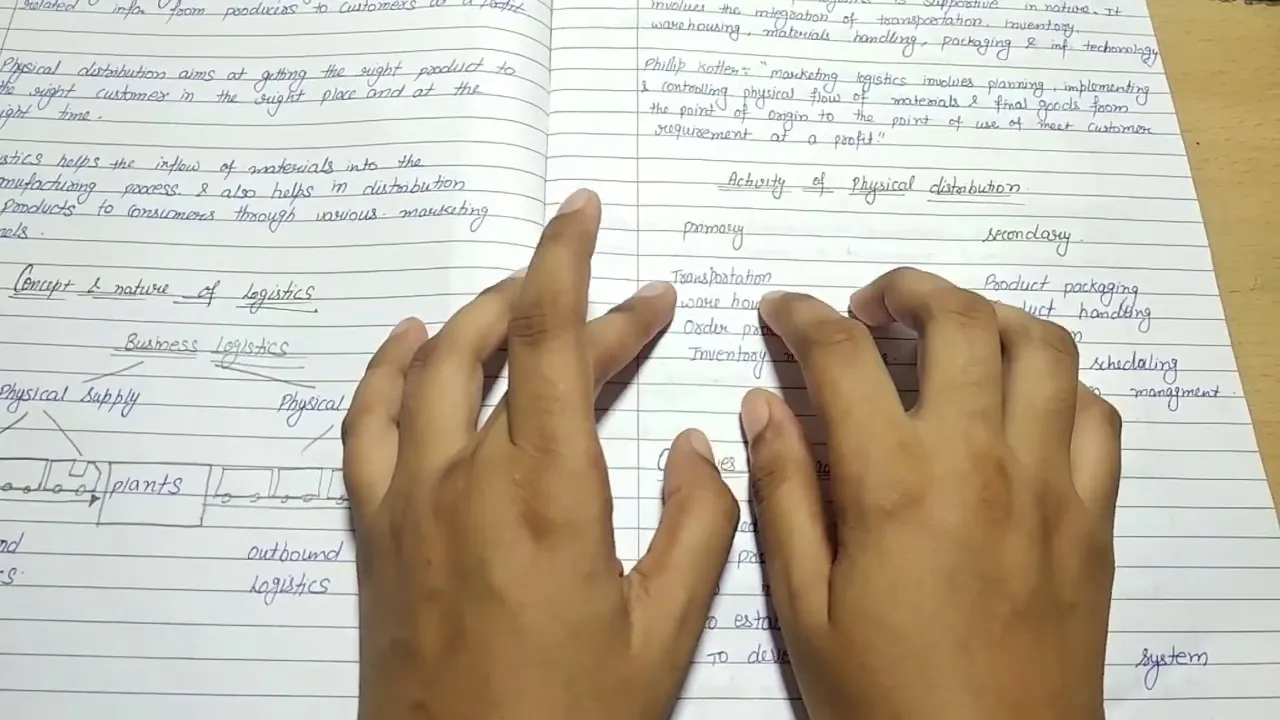
Logistics Management || Marketing Management || B,com, M.com, BBA, MBA, UGC-NET
54.8K
Four primary transportation modes serve different logistics needs: road transport handles medium-distance, moderate-weight shipments efficiently; rail transport moves bulk goods over long domestic distances economically; water transport offers the lowest cost for high-volume, non-perishable international shipments; and air transport provides fastest delivery for time-sensitive, perishable goods. Warehouses create time utility by storing goods until customer demand occurs, maintaining regular supply, protecting against damage, and enabling efficient order fulfillment. Material handling involves moving, protecting, and storing goods at every logistics stage—from procurement through production, storage, transportation, and packaging. Each mode selection balances cost, speed, and product requirements against operational constraints.
Click to watch →

CLASE 01 · ADMINISTRACIÓN LOGÍSTICA Y CONTROL DE INVENTARIOS - (DICIEMBRE 02 - 2025)
136
Logistics administration involves managing the flow of goods and services from origin to final consumer efficiently, with three core objectives: ensuring adequate supply to avoid shortages and excess inventory, minimizing operational costs through economies of scale while avoiding diminishing returns, and improving customer satisfaction through timely delivery. The field rests on three pillars: procurement (sourcing materials), storage (warehousing and inventory management), and distribution (delivery to consumers). Key distinctions include: inventory encompasses all company assets while stock refers specifically to merchandise available for sale; transportation involves movement between points while distribution specifically implies delivering merchandise; and mercadería refers to domestic market products while mercancía pertains to international trade.
Click to watch →

Reta Final SEFAZ CE Pós-Edital: Gestão de suprimentos e logística - Prof. Ricardo Campanario
358
Inventory counting is a physical process requiring actual presence at storage locations. After counting, discrepancies must be compared against accounting records and adjusted accordingly. Inventory serves as a control tool to evaluate organizational effectiveness. Unitization of loads (using pallets and containers) consolidates multiple items into single units for easier handling. Transportation modes include: road (most important in Brazil, flexible, high per-unit cost), rail (high capacity, low cost, limited flexibility), water (weather-dependent, slow, high capacity), air (fastest, most expensive, value-added), pipeline (high initial cost, low operating cost, weather-independent), and information-based (digital delivery). Each mode has distinct characteristics affecting cost, speed, capacity, and flexibility.
Click to watch →

Supply Chain Management Full Course 2025 | Digital Supply Chain Management Tutorial | Simplilearn
2.7K
Logistics manages how goods move and are stored from origin to destination, encompassing transportation, warehousing, information flow, and financial transactions. Five key transportation modes serve different needs: Air transport offers fastest delivery for urgent medical supplies and high-value electronics but is expensive; Sea transport provides cheapest bulk movement for raw materials and automobiles internationally but is slow; Road transport enables flexible local/regional deliveries with door-to-door capability; Rail transport offers cost-effective heavy cargo movement with environmental benefits but limited coverage. Each mode balances speed, cost, and capacity requirements against specific business needs.
Click to watch →
Deep Dive
The concept of a value chain and how products flow from raw material extraction to final consumption.
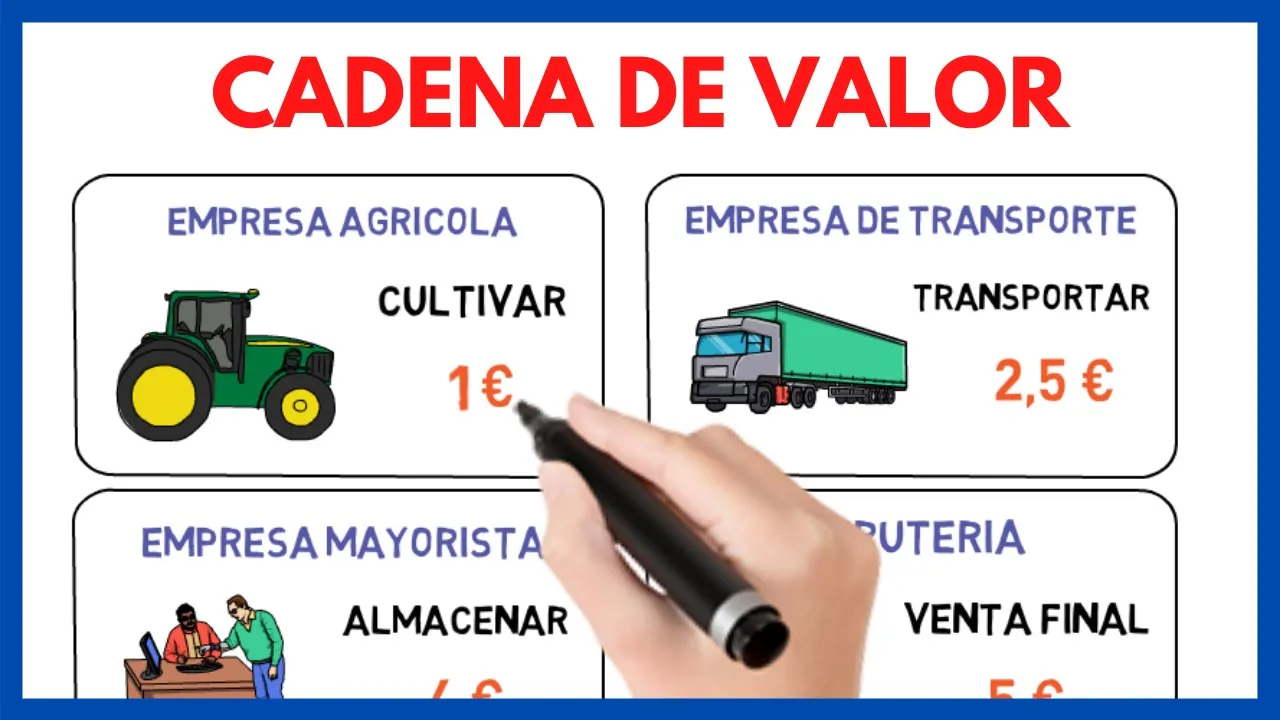
CREACIÓN de VALOR en una EMPRESA | La cadena de valor ✅ Economía de la empresa 02#
125.3K
The value chain is defined as a set of processes carried out by different companies involved in bringing a product from raw material extraction to the point where the finished product reaches the consumer who purchases it. This concept explains why the same product can have different prices at different stages of distribution.
Click to watch →

Typologie des entreprises Pr Abdelouahed MESSAOUDI, Dr SC Gestion
1.2K
A value chain (filière) is the complete sequence of production stages transforming raw materials into finished products. It encompasses all complementary activities from upstream (raw material extraction) to downstream (final distribution). Using fishing and automotive industries as examples, the value chain demonstrates how interconnected activities work together to create value, with each stage using the output of the previous stage as input.
Click to watch →
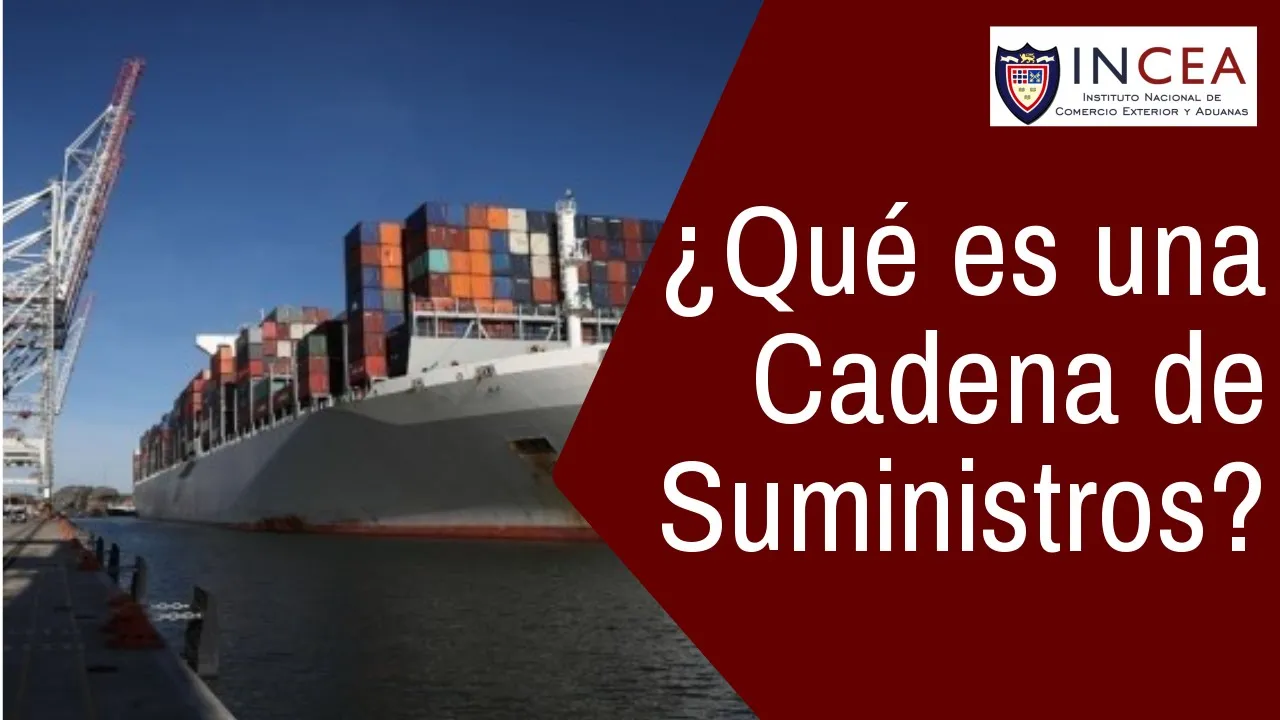
¿Qué es una Cadena de Suministros?
228.4K
A value chain is the sequence of activities through which a product or service is created and delivered to customers. In this process, raw materials or products undergo various transformations that add value at each stage. For example, cacao goes through planting, harvesting, processing, roasting, adding sugar, and being formed into chocolate bars or truffles. Each step adds value to the original material, making it more useful or desirable to consumers.
Click to watch →
Introduction to Organizational Behavior Chapter 1
284.7K
A value chain is a list of activities that result in finished goods or services sold to customers. It begins with the acquisition of inputs (raw materials), continues through the transformation process (sometimes called work in process or WIP), and ends in the production and distribution of products and services to customers. When customers are well served and continue to purchase, the whole process starts again, potentially with new products or product line extensions developed along the way.
Click to watch →

ISTN101 (Chapter 2 )
1.7K
The value chain is the process of transforming raw materials or products into something that has value. Value is defined as adding something more to something that does not have value, making it worth more. For example, raw sugar cane has no value to customers who want juice, but after processing into juice, marketing, and selling in a shop, it gains significant value. The entire process from raw material to finished good represents the value chain.
Click to watch →
Deep Dive
Basic principles of customer relationship management (CRM) and the importance of customer satisfaction in business success.
Customer Relationship Management | Main Components of CRM | Great Learning
39.7K
Customer Relationship Management (CRM) is a comprehensive approach combining methodologies, technologies, and practices for managing customer interactions throughout their relationship with a business. The core objectives are improving customer service relationships, increasing sales, and encouraging client retention. CRM treats every customer interaction as an opportunity to create positive buying experiences, build brand equity, and improve satisfaction. The fundamental principle is that treating customers well during purchases creates loyal customers who contribute to business success through repeat purchases and positive word-of-mouth.
Click to watch →

Salesforce CRM Tutorial For Beginners | Session - 1 | Kalyan IT Hub
164
CRM is crucial for customer satisfaction and business success. The instructor uses the example of a bank customer calling to inquire about their account balance. If the bank executive cannot provide the information properly, the customer will close their account and switch to another bank. This demonstrates that CRM is essential for maintaining customer relationships and ensuring customer satisfaction.
Click to watch →

ZBS04 68-2 week5
640
Customer Relationship Management (CRM) is the process of building and maintaining profitable customer relationships by delivering superior customer value and satisfaction. Customer satisfaction occurs when customers receive more value than they expected. To achieve satisfaction, businesses must manage customer expectations carefully—overpromising leads to disappointment, while underpromising leads to dissatisfaction. The goal is to set realistic expectations that customers can exceed, creating positive experiences that build long-term loyalty.
Click to watch →

ความสำคัญของการจัดการความสัมพันธ์ลูกค้า Importance of Customer Relationship Management
901
CRM creates customer satisfaction by enabling businesses to understand customer needs and provide appropriate products and services, which is the most important outcome for any business.
Click to watch →
What is Customer Relationship Management (CRM) ?
291
Customer Relationship Management (CRM) is defined as the art of managing an organization's relationships with customers and prospective clients through various strategies and techniques to maintain healthy relationships. The core principle is studying customer needs and expectations to provide appropriate solutions. Customer satisfaction has a significant multiplier effect: one satisfied customer brings approximately 10 new customers, while one dissatisfied customer takes away 10 customers. Organizations need CRM to retain existing customers, improve relationships between sales representatives and clients, and ultimately increase revenue and profitability.
Click to watch →
Prerequisite Knowledge
- Concept 01Basic understanding of retail business models, including the differences between B2B (business-to-business) and B2C (business-to-consumer) transactions.
- Concept 02Fundamental concepts of logistics, such as inventory control, warehousing, and transportation modes.
- Concept 03The concept of a value chain and how products flow from raw material extraction to final consumption.
- Concept 04Basic principles of customer relationship management (CRM) and the importance of customer satisfaction in business success.
Subsequent Learning
- Step 01Omnichannel supply chain integration, focusing on bridging physical stores and e-commerce fulfillment channels.
- Step 02Advanced inventory management models, such as Just-In-Time (JIT), Drop-shipping, and Vendor-Managed Inventory (VMI).
- Step 03The application of emerging technologies in logistics, including IoT, RFID tracking, and AI-driven demand forecasting.
- Step 04Sustainable and green supply chain management practices, aiming to minimize environmental impact and optimize circular economy principles.
- Step 05Supply chain risk management and resilience planning to mitigate global disruptions and supply shocks.
Retail Chain Basics
Manage and CX
Retail Chain Basics
0:00Playing Section
- 1
Defines retail supply chain and its core logistics processes.
- 2
Lists key players: suppliers, manufacturers, wholesalers, retailers, customers.
- 3
Explains the flow of goods from raw materials to end users.
Circular Economy and Degrowth Critique of Linear Retail Supply Chains
Traditional retail supply chain management is built on a linear 'take-make-dispose' model optimized for speed, low cost, and continuous consumption. Critics from environmental economics and 'degrowth' movements argue that this relentless focus on hyper-efficiency and rapid delivery—often termed the 'Amazon Effect'—externalizes severe ecological and social costs. It drives overproduction, excessive packaging waste, carbon emissions from global shipping, and the exploitation of warehouse and delivery labor. Instead of optimizing linear flows to maximize sales volume and customer gratification, this counterpoint advocates for 'closed-loop' or circular supply chains. These models prioritize product longevity, repairability, recycling, and localized sourcing, challenging the industry's traditional definition of logistics success and urging a shift from consumerism to stewardship.
Deep Dive
Omnichannel supply chain integration, focusing on bridging physical stores and e-commerce fulfillment channels.

Ep. 11 – O consumo é omnichannel
181
The four main pillars of omni-channel are: (1) Physical stores as product display and experience spaces, (2) Mobile technology enabling anytime access to information, (3) Online experience and e-commerce capabilities, and (4) Understanding and analyzing consumer demand patterns. Omni-channel enables sophisticated demand analysis by tracking customer behavior across all channels. The supply chain transforms by making it an extension of the retail experience, leveraging inventory across all locations. The 'infinite vitrine' concept means customers browsing online should see total available inventory across all locations, not just what's available at a single store. This expands purchasing options exponentially and prevents lost sales when customers cannot find products at their local store.
Click to watch →
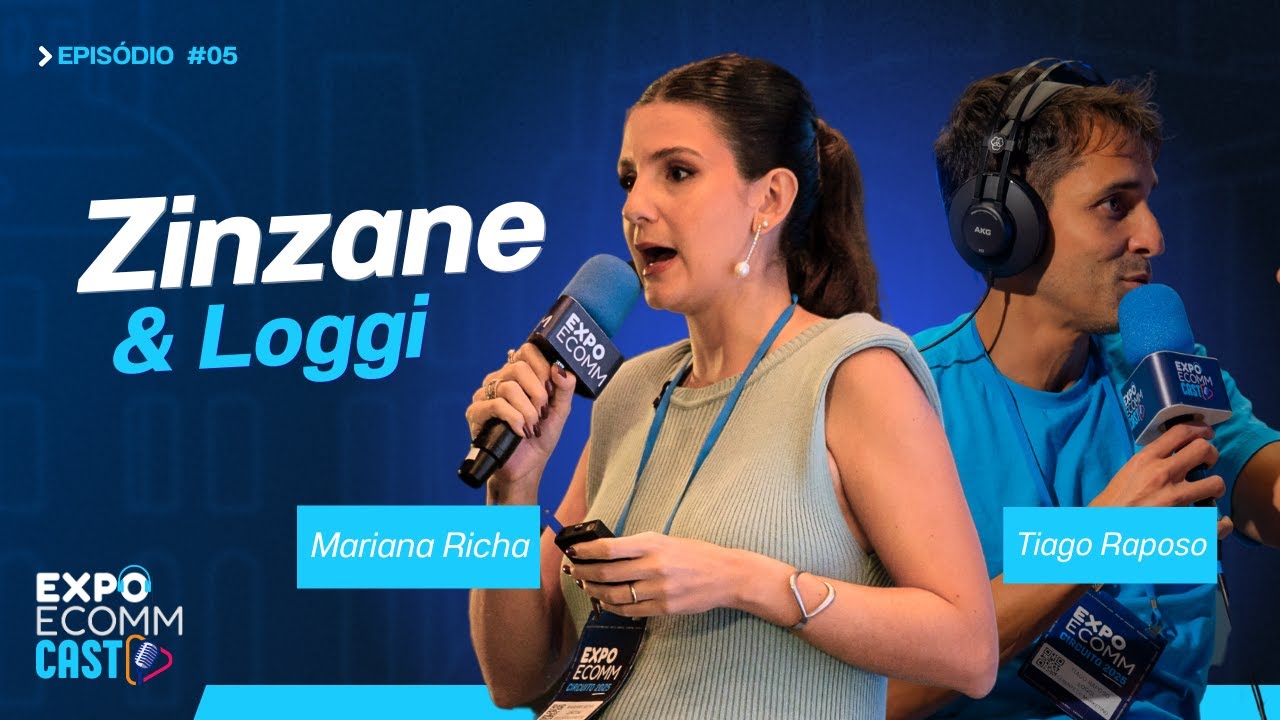
Desafios e Oportunidades do Omnichannel no E-commerce | ExpoEcomm Cast #05 com Mariana Richa
241
Omnichannel retail requires seamless integration between physical stores and e-commerce platforms. A key milestone is using retail stores as distribution hubs, expanding territorial reach beyond centralized warehouses. This approach requires creating warehouse-like operations within each store, including dedicated staff for order fulfillment. Inventory consolidation across all channels allows customers to buy online and pick up in-store, or vice versa. The technical engineering behind consolidating inventory from multiple sources is complex but essential. This integration creates a win-win situation: businesses optimize sales while customers benefit from faster delivery from nearby locations.
Click to watch →

O varejo omnichannel x futuro do ecommerce no Brasil | Webinar Nérus
130
This segment explains omnichannel integration technology that connects physical stores, e-commerce sites, marketplaces, and fulfillment centers. The technology enables real-time inventory synchronization across all channels, allowing customers to purchase through any channel while maintaining consistent product availability. The platform acts as a bridge between physical and digital retail operations, enabling retailers to maintain their physical presence while expanding digital capabilities.
Click to watch →

Omnichannel sem complicação
118
Omnichannel integration connects the entire customer journey, which often begins online and concludes in physical stores. This integration ensures that each retail unit has its own digital presence with controlled, standardized brand representation. The system serves as a bridge between online clicks and in-store purchases, creating a unified customer experience.
Click to watch →

Bastidores da Farmácias São João: digital, dados e pessoas
224
Successful omnichannel integration requires combining physical store experience with online channels. The physical store should function as a 'chiphone store' - a local contact point for customers offering services like 1-hour or 30-minute delivery with high service levels (95-98% satisfaction). This integration should extend beyond simple sales to include social commerce, WhatsApp communication, and full-film experiences, creating a seamless customer journey across all touchpoints.
Click to watch →
Deep Dive
Advanced inventory management models, such as Just-In-Time (JIT), Drop-shipping, and Vendor-Managed Inventory (VMI).
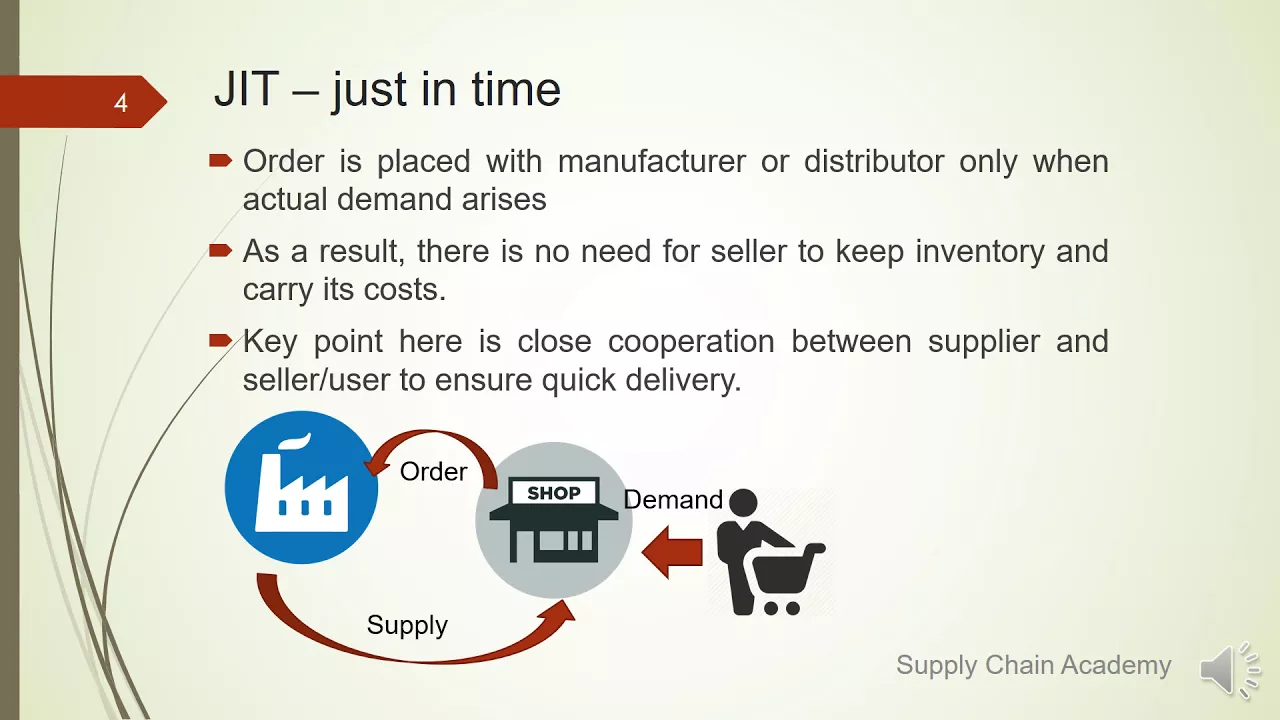
Inventory Management Lesson 3/3 Storage Principles ENG
1.5K
The four main inventory management approaches have distinct characteristics: (1) Consignment presumes payment to suppliers only upon actual sales or usage; (2) VMI leaves all inventory management activities to the manufacturer or distributor for a certain level of payment; (3) Just-in-Time presumes no inventory level, with quick production and supply taking place when demand arises; (4) Drop shipping involves direct shipment of goods from manufacturer or distributor to end users based on requests initiated by sellers or retailers, with retailers earning commissions.
Click to watch →

ERP 정보관리사 물류 1급, 2급 강의 3강 재고관리 (김쌤 요약지로 다시 시작하는 강의)
1.7K
Three primary inventory management models exist: Fixed Order Quantity System (Q System) triggers orders when inventory reaches reorder point (ROP = Lead Time × Daily Demand + Safety Stock), maintaining constant order quantities; Fixed Order Period System (P System) orders at fixed intervals based on current inventory, requiring higher safety stock; Combined Order Quantity and Period System (SS System) combines both approaches to reduce safety stock requirements. Advanced systems include ABC Classification applying the Pareto Principle: A items (5-10% of items, 75% of value) require intensive management, B items (15% of items, 15% of value) moderate management, and C items (80% of items, 10% of value) minimal management. Distribution Requirements Planning (DRP) coordinates multi-echelon supply chains. Vendor Managed Inventory (VMI) allows manufacturers to manage buyer inventory. The Two-Bin System uses two containers where emptying the first triggers use of the second. Key formulas include Reorder Point, Annual Holding Cost, Optimal Order Frequency, and Order Cycle calculations.
Click to watch →

Session 8 - Lean and JIT Operations
161
Just-in-Time (JIT) is a lean manufacturing strategy producing and delivering products just in time to meet customer demand without excessive inventory. Based on producing only what is needed, when needed, and in required quantities, JIT minimizes inventory carrying costs and obsolescence risk, improves efficiency by reducing waste and setup time, and enables faster response to demand changes. JIT requires high quality control as there is little room for error, continuous improvement commitment, and close supplier coordination. Vendor Managed Inventory (VMI) is a lean inventory management system where suppliers monitor inventory levels, forecast demand, and replenish inventory using electronic data interchange (EDI) or automated systems. Benefits include reducing inventory carrying costs, improving accuracy, increasing efficiency, and enhancing customer service. VMI requires close collaboration, trust, transparency, and sophisticated technology systems.
Click to watch →
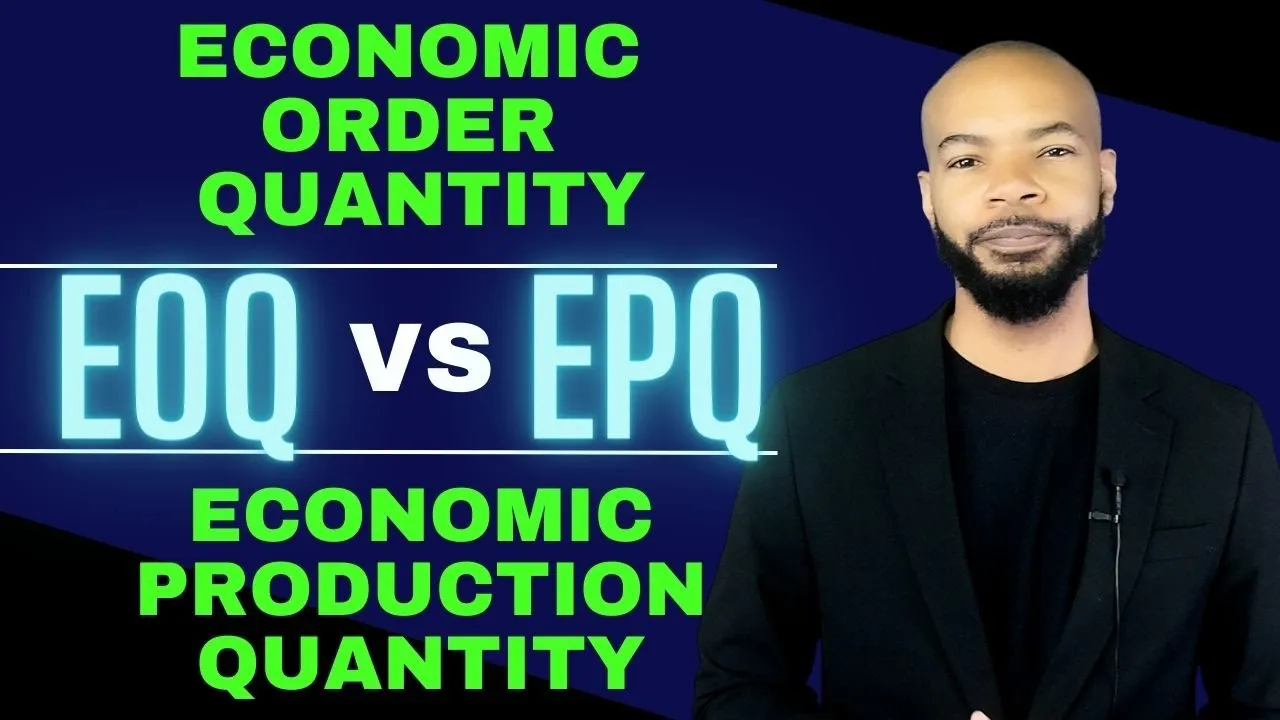
What is EOQ vs EPQ + ABC Analysis, Vendor Managed Inventory, and JIT
55.1K
Modern inventory management leverages supplier-customer collaboration. Vendor Managed Inventory (VMI) places supplier responsibility for inventory management, with customers sharing point-of-sale data to enable automated replenishment. Just-In-Time (JIT) receives inventory only when needed for production or shipping, minimizing holding costs. JIT II extends this relationship further by placing supplier employees onsite at customer distribution centers, creating integrated supply chains with real-time inventory visibility across retail and distribution networks.
Click to watch →
CURSO DE LOGÍSTICA COMPLETO ONLINE - Aula 01 de 07 - CURSO GRATUITO COM POSSIBILIDADE DE CERTIFICADO
197.5K
Vendor Managed Inventory (VMI) is a logistical technique where the supplier manages the inventory levels at the client's location. The supplier monitors consumption and automatically replenishes stock, reducing the client's inventory management burden and ensuring product availability.
Click to watch →
Deep Dive
The application of emerging technologies in logistics, including IoT, RFID tracking, and AI-driven demand forecasting.
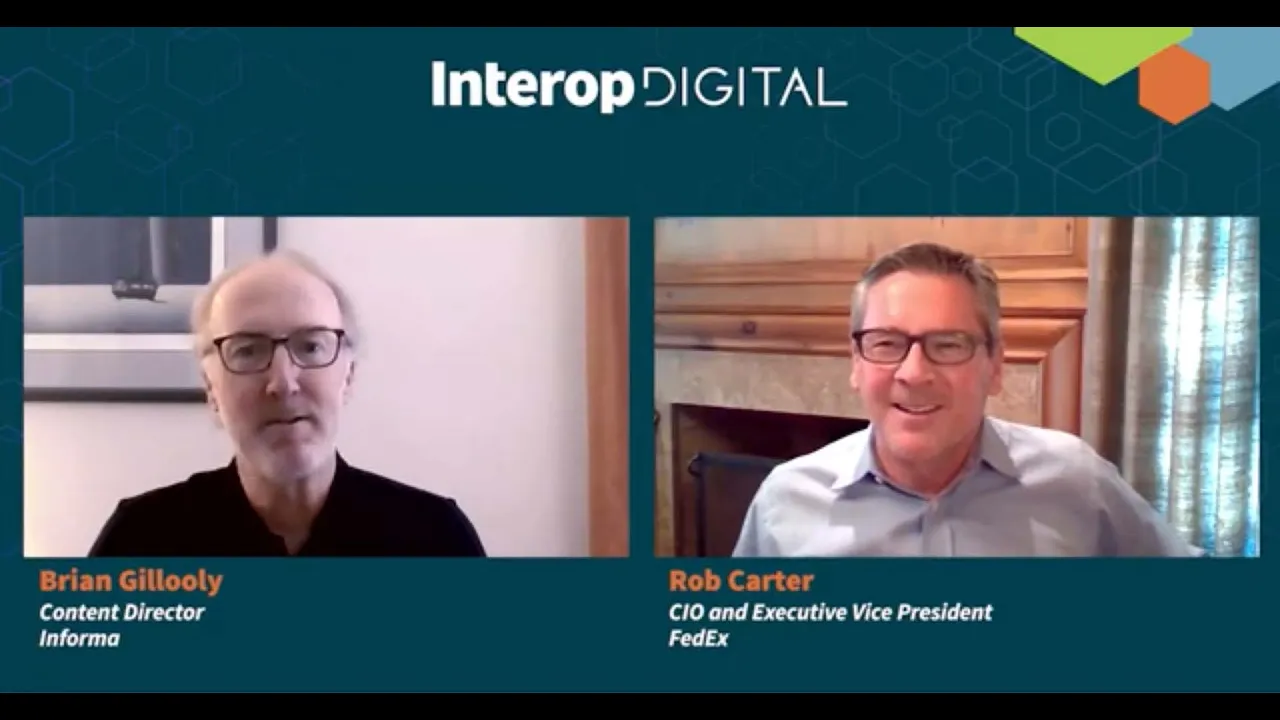
Interop Keynote | Rob Carter, FedEx Corporation
559
FedEx is implementing multiple emerging technologies to transform logistics operations. Internet of Things applications include sensor-based logistics with Bluetooth Low Energy sensors embedded in critical shipments, tracked through all vehicles, aircraft, and facilities. Autonomous solutions include the ROXO delivery bot for same-day neighborhood deliveries and autonomous tuggers for oversized items in facilities. RFID technology is being deployed in freight facilities. For blockchain, FedEx is working on custody chains from manufacture to consumption, extending traditional tracking systems. These technologies demonstrate how modern logistics companies are leveraging emerging tech to improve efficiency, visibility, and authenticity verification.
Click to watch →
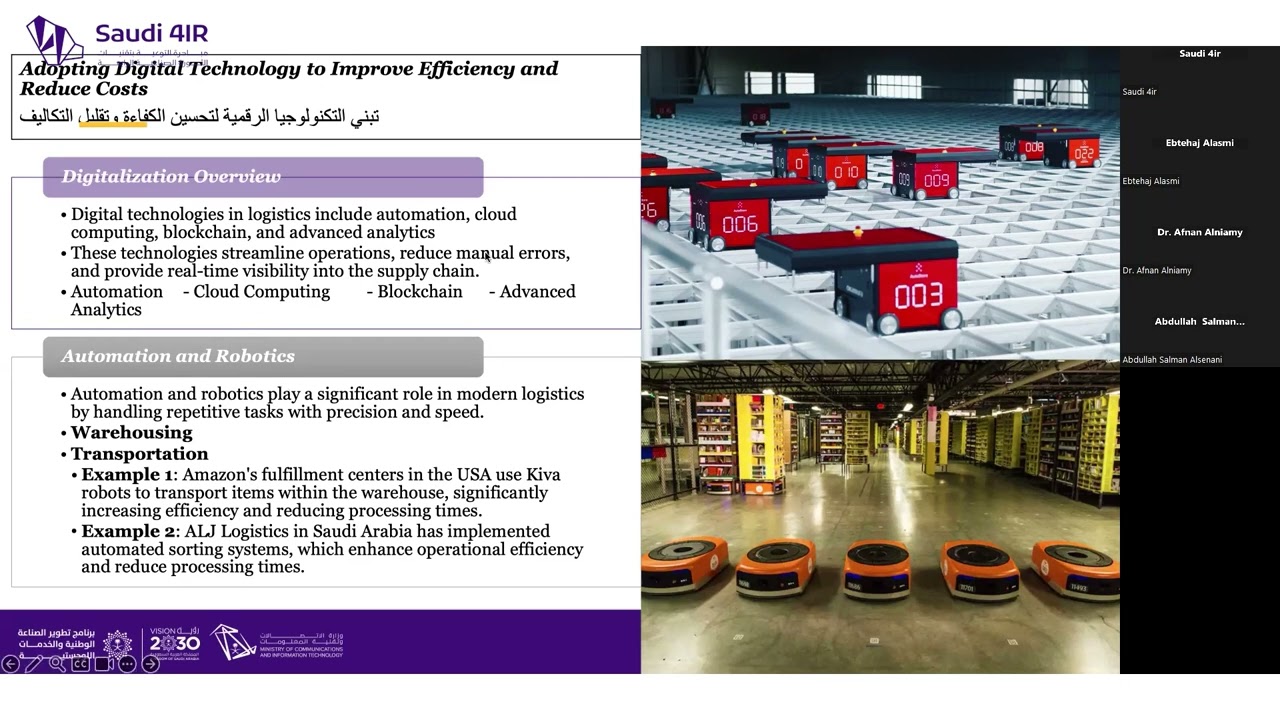
الرقمنة في الخدمات اللوجستية وسلاسل الإمداد الذكية | تنمية_بالتقنية
392
Big data and AI transform logistics through processing massive datasets from GPS, RFID, and social media for optimization. Applications include machine learning algorithms for decision-making, autonomous drones for delivery, and route optimization considering traffic, weather, and constraints. IoT enables real-time tracking and environmental monitoring for sensitive products. Key challenges include data privacy protection and regulatory compliance with laws like Saudi Arabia's Personal Data Protection Law. Case studies include SABIC achieving 15% cost reduction through AI-driven demand forecasting and warehouse automation, and UPS saving 10 million gallons of fuel through ORION route optimization system processing 250 million data points daily.
Click to watch →

IoT in Logistics || Internet Of Things || Domain specific IOT
194
IoT has several key applications in logistics: (1) Real-time tracking allows users to monitor shipments minute-by-minute through location data; (2) Inventory management uses RFID tags and sensors to track goods availability in shops or companies; (3) Vehicle tracking employs GPS technology to locate fleet vehicles anywhere; (4) Predictive maintenance analyzes vehicle data to determine health status and identify needed repairs; (5) Driver behavior monitoring tracks driving patterns, including detecting if drivers are impaired.
Click to watch →
7 Nghề Này Chắc Chắn sẽ "Hốt Bạc" Sau 5 Năm Nữa – HÃY HÀNH ĐỘNG NGAY
405
Artificial Intelligence (AI) and Internet of Things (IoT) technologies are increasingly applied in logistics for tracking and managing goods throughout transportation. IoT sensors monitor cargo conditions during transit, while AI supports demand prediction and route optimization. These technologies enable real-time visibility, improved efficiency, and reduced operational costs. The integration of AI and IoT represents a significant advancement in logistics technology, enabling more sophisticated supply chain management and operational optimization.
Click to watch →

Mejora continua en logística: reduce costos y elimina errores (PHVA, Lean, Kaizen)
167
Emerging technologies are transforming logistics capabilities. Artificial intelligence predicts demand with remarkable accuracy. Internet of Things sensors provide unprecedented visibility into package and vehicle conditions. Drones and autonomous robots are beginning to revolutionize last-mile delivery and warehouse operations. Organizations must stay alert to these developments to remain competitive.
Click to watch →
Deep Dive
Sustainable and green supply chain management practices, aiming to minimize environmental impact and optimize circular economy principles.

Green Supply Chain Management
272
Green supply chain management integrates environmental considerations throughout the entire supply chain process, moving from traditional logistics to comprehensive supply chain management that encompasses inbound and outbound logistics, closed-loop systems, and circular procurement; industrial symbiosis serves as a key strategy for implementing circular economy principles by creating partnerships between companies to share resources, reduce waste, optimize resource use, and generate economic, environmental, and social benefits through collaborative approaches to material and energy flows.
Click to watch →
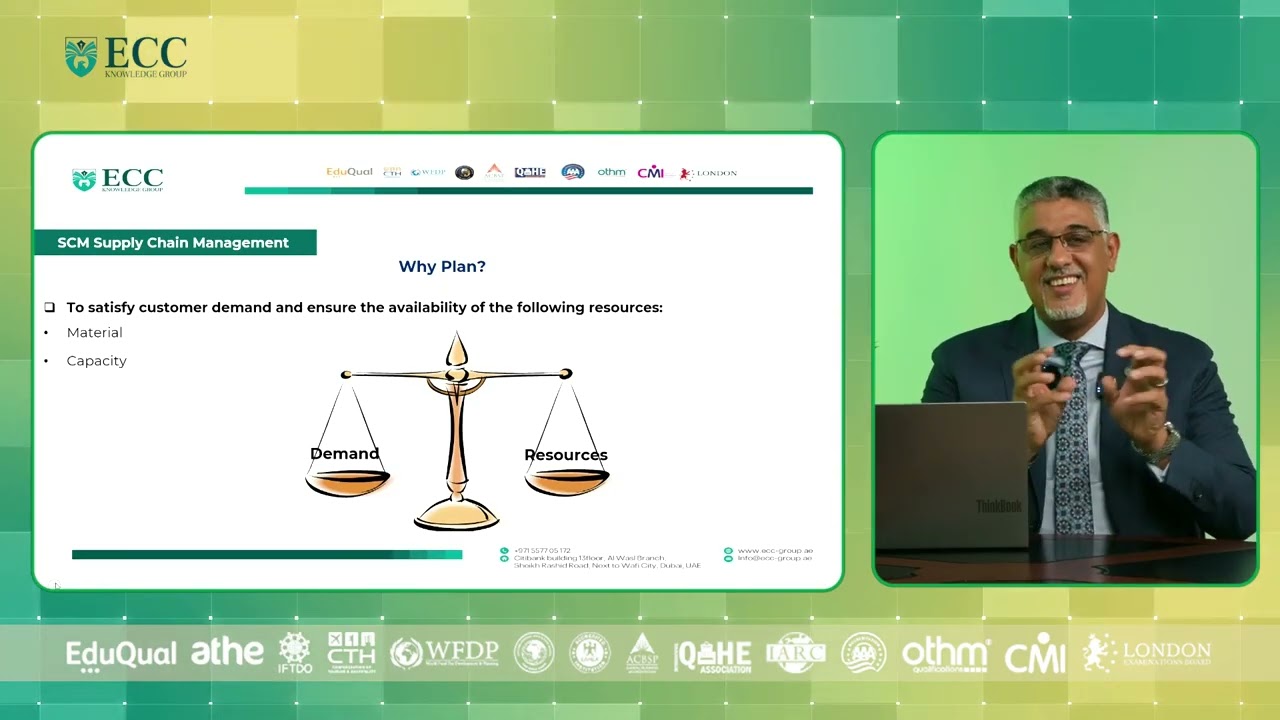
New Webinar Episode | Planning for Sustainable Supply Chain |Dr. Ashraf Abdel Khalek
115
Green Supply Chain Management minimizes environmental impact through eco-friendly design, material selection, and process optimization. Circular Economy principles aim to eliminate waste through design for durability, repairability, and recyclability. Companies can extend product lifespans through repair, refurbishment, and remanufacturing programs. Dark Green Business represents the highest level of environmental commitment, where companies prioritize environmental protection even when not immediately profitable. Environmental Management Systems (EMS) provide structured approaches for managing environmental responsibilities, with ISO 14001 certification demonstrating effective practices. GRI standards provide frameworks for sustainability reporting, used by approximately 7,500 companies worldwide. Effective sustainability requires engagement with all stakeholders including employees, customers, suppliers, communities, and investors.
Click to watch →

Atal FDP Session 10: Sustainable Manufacturing: Circular Economy & Green Technologies.
107
Sustainable supply chain management goals include: minimizing environmental footprint, ensuring ethical labor and fair trade, enabling circularity and traceability, and supporting low-carbon transportation. Strategies include: ESG-oriented supplier evaluation, green procurement, reverse logistics, blockchain traceability, and low-carbon transportation choices. Indian and global initiatives include: Extended Producer Responsibility (EPR) mandates for e-waste, plastic, and batteries, science-based targets, AI and IoT integration, and ESG and corporate sustainable responsibility directives.
Click to watch →
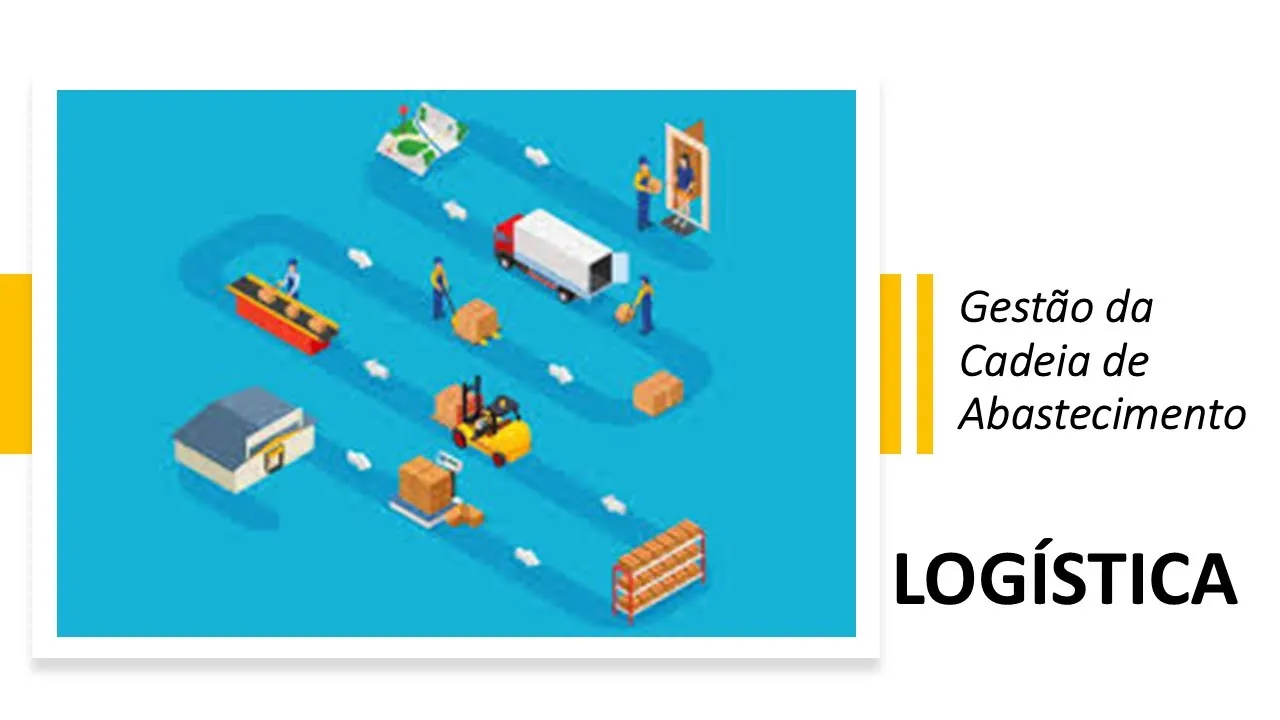
Logística Empresarial GCA SCM Gestão da Cadeia de Suprimentos Abastecimento Supply Chain Management
1K
Sustainable Supply Chain Management minimizes environmental impact while meeting customer needs. Key practices include: (1) Carbon reduction - lowering greenhouse gas emissions from manufacturing, agriculture, and services; (2) Recyclable materials - enabling products to re-enter production cycles as raw materials (e.g., aluminum, glass, plastics); (3) Energy efficiency - using electric vehicles, low-emission equipment, and renewable energy sources. These practices support environmental protection, social responsibility, and long-term operational efficiency.
Click to watch →

Business Intelligence para una Sustainable and Conscious Supply Chain Management
702
Sustainable supply chain management requires: (1) Circular economy principles where consumption does not exceed regeneration capacity, ensuring resources remain available for continued use; (2) Collaboration and balance between economic benefits and environmental/social responsibility; (3) Recognition that supply chains are tools at our service that should benefit humanity without negatively affecting other entities like the environment, natural actors, and social actors.
Click to watch →
Deep Dive
Supply chain risk management and resilience planning to mitigate global disruptions and supply shocks.

L3RN Channel | Episode 51: Supply Chain Risk Management & Resilience
131
Supply chain risk management involves implementing strategies to identify, assess, mitigate, and manage risks throughout the entire supply chain to reduce vulnerability and ensure business continuity, while supply chain resilience refers to an enterprise's capacity to overcome disruptions and transform itself to meet changing stakeholder needs; effective supply chain risk management requires understanding organizational culture, risk appetite, and risk tolerance, along with continuous assessment and proactive measures such as improving supply chain visibility, mapping supply chains, and developing risk response plans to navigate disruptions in today's volatile, uncertain, complex, and ambiguous (VUCA) business environment.
Click to watch →

Resilience in Future Global Supply Chains
236
Supply chain risk is defined as the product of shock and vulnerability, with shocks categorized by magnitude (high vs low) and anticipation possibility (surprise vs anticipatable). The frequency of shocks has increased significantly, with one-to-two week disruptions occurring every two years and one-to-two month disruptions every 3.7 years, potentially costing 45% of annual earnings over a decade. Organizations face vulnerability across seven areas: regulatory, data security, structural, organizational maturity, reputational, operational, and financial. Research with 70+ global supply chain leaders reveals critical gaps: 73% report footprint issues, 98% cite talent and technology shortages, and 90% acknowledge low resilience. Key resilience strategies include increasing critical inventory for strategic items, dual sourcing raw materials, near-shoring/ regionalization, digital planning for end-to-end visibility, digital talent development, and proactive risk monitoring.
Click to watch →

From local to global: Building resilient supply chains
3.9K
Building resilience requires avoiding single geography dependencies through diversified manufacturing footprints and extending risk management to tier-level suppliers. Key strategies include: maintaining detailed data on critical component suppliers for rapid crisis response, shifting from reactive to proactive risk mitigation by predicting potential disruptions, and maintaining safety stocks with capable suppliers. Effective risk management requires understanding the entire supply chain, identifying risk emergence points, having monitoring tools for quick disruption detection, and maintaining constant partner communication. Companies must design supply networks for prediction and response while building in alternates and substitutions for crisis situations.
Click to watch →
IRM Webinar Latest thinking in supply chain risk management Carolyn Williams
572
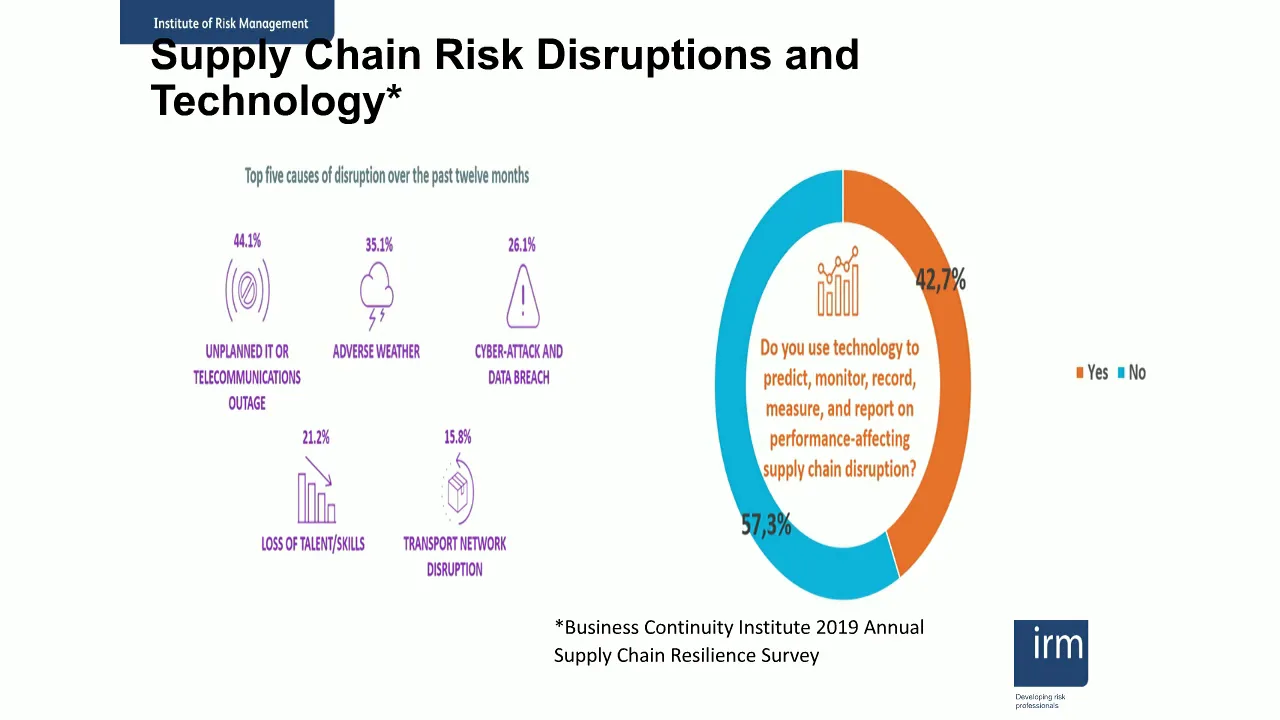
Supply chain resilience requires top management support and compelling ROI justification. Research shows that while overall disruptions fell slightly in 2019, 2% of participants experienced losses exceeding $100 million. Critically, nearly half of all disruptions originated from lower-tier suppliers (Tier 2 and Tier 3), not just Tier 1. The top causes include cyber risk, unplanned IT outages, and adverse weather. Organizations should start risk assessment with their most profitable products to gain executive attention, then quantify risks and implement mitigation actions systematically.
Click to watch →

Cadena de Suministro: Cómo Prevenir el Caos, y Afrontar con Resiliencia y Agilidad la Próxima Crisis
818
Supply chain resilience is the capacity to overcome or adapt to adverse situations. Major disruptions like the 2011 Japan tsunami, Thailand floods, and Russian invasion of Ukraine demonstrated regional impacts, while the pandemic showed global simultaneous disruption. The Ever Given incident blocking the Suez Canal for six days disrupted 12% of global trade. The Just in Time manufacturing concept, developed by Toyota, became vulnerable during the chip shortage crisis. To prepare for future disruptions, companies must establish resilience strategies, develop anticipation skills, and build recovery capacities. According to Gartner, 96% of US retailers planned to invest in agile supply chains and 90% in resilience in 2022.
Click to watch →
Retail Chain Basics
Manage and CX
Retail Chain Basics
0:00- 1
Defines retail supply chain and its core logistics processes.
- 2
Lists key players: suppliers, manufacturers, wholesalers, retailers, customers.
- 3
Explains the flow of goods from raw materials to end users.
Circular Economy and Degrowth Critique of Linear Retail Supply Chains
Traditional retail supply chain management is built on a linear 'take-make-dispose' model optimized for speed, low cost, and continuous consumption. Critics from environmental economics and 'degrowth' movements argue that this relentless focus on hyper-efficiency and rapid delivery—often termed the 'Amazon Effect'—externalizes severe ecological and social costs. It drives overproduction, excessive packaging waste, carbon emissions from global shipping, and the exploitation of warehouse and delivery labor. Instead of optimizing linear flows to maximize sales volume and customer gratification, this counterpoint advocates for 'closed-loop' or circular supply chains. These models prioritize product longevity, repairability, recycling, and localized sourcing, challenging the industry's traditional definition of logistics success and urging a shift from consumerism to stewardship.
Basic understanding of retail business models, including the differences between B2B (business-to-business) and B2C (business-to-consumer) transactions.
Fundamental concepts of logistics, such as inventory control, warehousing, and transportation modes.
The concept of a value chain and how products flow from raw material extraction to final consumption.
Basic principles of customer relationship management (CRM) and the importance of customer satisfaction in business success.
Omnichannel supply chain integration, focusing on bridging physical stores and e-commerce fulfillment channels.
Advanced inventory management models, such as Just-In-Time (JIT), Drop-shipping, and Vendor-Managed Inventory (VMI).
The application of emerging technologies in logistics, including IoT, RFID tracking, and AI-driven demand forecasting.
Sustainable and green supply chain management practices, aiming to minimize environmental impact and optimize circular economy principles.
Supply chain risk management and resilience planning to mitigate global disruptions and supply shocks.
5.2K views37likes3:19@IntermodalLogisticsOriginal Release: 2022-03-18
what is a retail supply chain each supply chain affects each individual differently many types function more behind the scenes but one that's front and center every day is the retail supply chain in fact retail supply chains are likely the first ones the average jane and joe think about when they hear the term that's because the retail supply chain for any company refers to all the logistics processes that lead to products getting into the hands of customers how does a retail supply chain work the key players in a retail supply chain are the suppliers of raw goods and or components the manufacturers who take those raw materials and components and use them to produce goods the wholesalers who purchase products in bulk from the manufacturer the retailers physical or e-commerce who then sell the goods to customers and the customers themselves who shop for and buy those goods and of course the transportation and storage needed to get the products from one step to the next is important as well and also increasingly these days the manufacturer and retailer may be one in the same as more end customers shop direct what is retail supply chain management retail supply chain management is in essence how one navigates the steps of a retail supply chain keeping it moving and making adjustments when necessary that involves the number of activities like keeping track of changes in demand managing inventory creating and executing a shipping strategy quality control maintaining strong partner relationships incorporating freight and logistics technology managing costs and ensuring speedy reliable product delivery customer experience and the retail supply chain a key component of successful retail supply chain management is a positive customer experience or cx ensuring a positive customer experience is vital to maintaining relationships as a recent survey showed 98 percent of shoppers saying the delivery experience greatly affects their brand loyalty and 84 said they're unlikely to shop with the brand again if it's a bad experience to deliver a positive cx visibility into the entirety of the supply chain as well as transparency communication and general availability are important steps this even applies beyond the end customer and to partners like suppliers a bad cx can lead a supplier to end their relationship so companies are adjusting their strategies with a greater focus on customer experience a partnership with an experienced third-party logistics provider like in-tech freight and logistics can be just the ticket to successful retail supply chain management just let us know what you need by calling 317-208 or visiting our website www.intechfreight-logistics.com and hitting the request to quote button please do give us a thumbs up below and subscribe to this channel to get future videos first thanks very much for watching you
Up Next
2:29
Consumer Packaged Goods Industry: Evolution and Key Segments
@primerli
10.8K views•2022-11-22

46:36
Retention Habits of Top DTC Ecommerce Brands Revealed
@SendItPodcast
44K views•2026-03-03

15:23
Decoy Effect: How Pricing Psychology Influences Consumer Spending
@bobinvestsUS
90K views•2026-01-05

17:30
The Planned Obsolescence of Light Bulbs and Tech
@veritasium
25.3M views•2021-03-26
Related Study Plans & Knowledge Roadmaps
Structured learning paths in Business
business
Pop-Up Retail: Strategy, Design & Execution
01Introduction to Pop-Up Retail & Strategic Goal Setting
02Budgeting, Site Selection, and Legal Essentials
03Experiential Retail Design & Visual Merchandising
+ 2 more learning modules
15h5 modules
Explore Roadmap
business
Reg CF: Startup Funding, Marketing & Launch
01Introduction to Equity Crowdfunding & Reg CF
02Platform Selection & Legal Preparation
03Crafting High-Converting Campaign Assets
+ 2 more learning modules
14h5 modules
Explore Roadmap
business
Productized Services: Scaling Solo Freelance
01Foundations of Productized Services
02Packaging and Scope Definition
03Pricing and Subscription Models
+ 2 more learning modules
15h5 modules
Explore Roadmap
business
Gov Procurement: Find, Bid & Win Contracts
01Introduction to Government Procurement & Business Setup
02Small Business Certifications & Set-Asides
03Finding and Analyzing Contract Opportunities
+ 2 more learning modules
14h5 modules
Explore Roadmap