





















Research on Reddit's 'Change My View' subreddit reveals that deductive arguments (logical reasoning from premises to conclusions) are ineffective at changing people's minds, while personal anecdotes and shared experiences are highly effective. This occurs because human reasoning is fundamentally Bayesian rather than deductive—we evaluate different hypotheses about how the world works and update our beliefs based on evidence, rather than starting with fixed foundational beliefs and deriving conclusions. Personal anecdotes help integrate new information into our existing mental models, making them powerful tools for persuasion and belief revision.
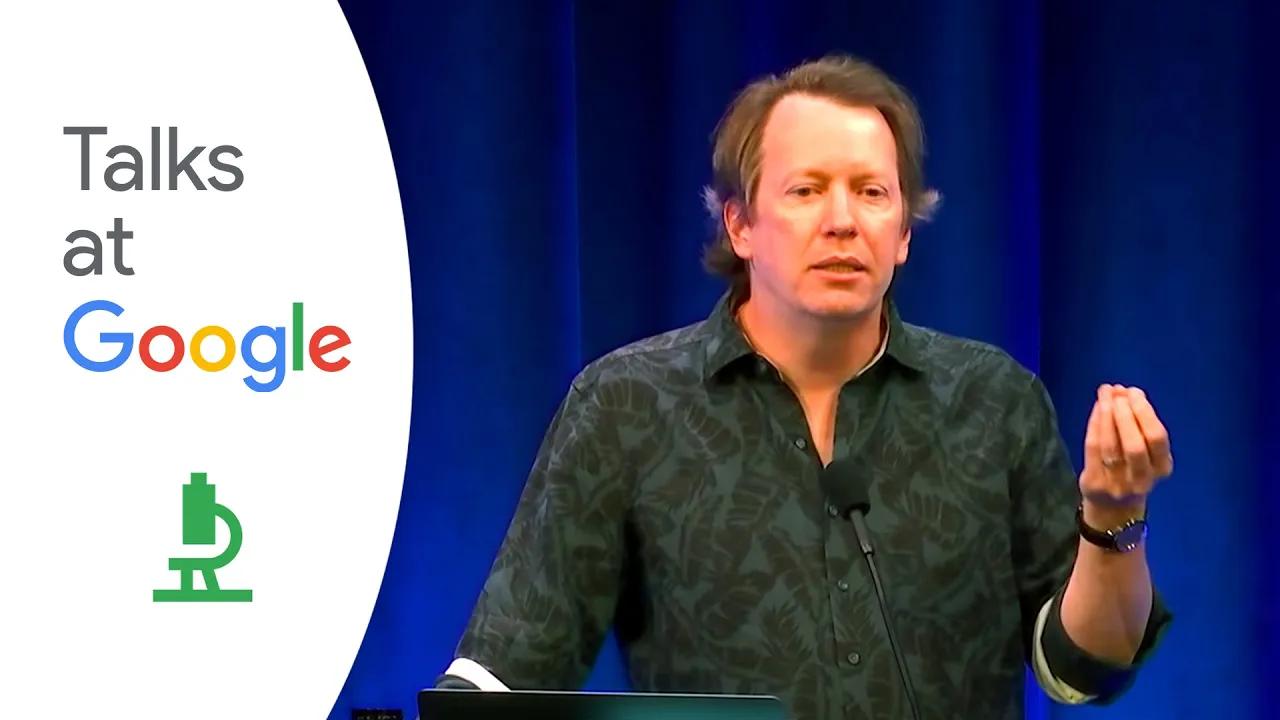
Sean Carroll's Mindscape AMA August 2022: Physics, Society, AI
Added:Basic principles of quantum mechanics, specifically the concept of superposition and the Many-Worlds Interpretation (Everettian formulation).
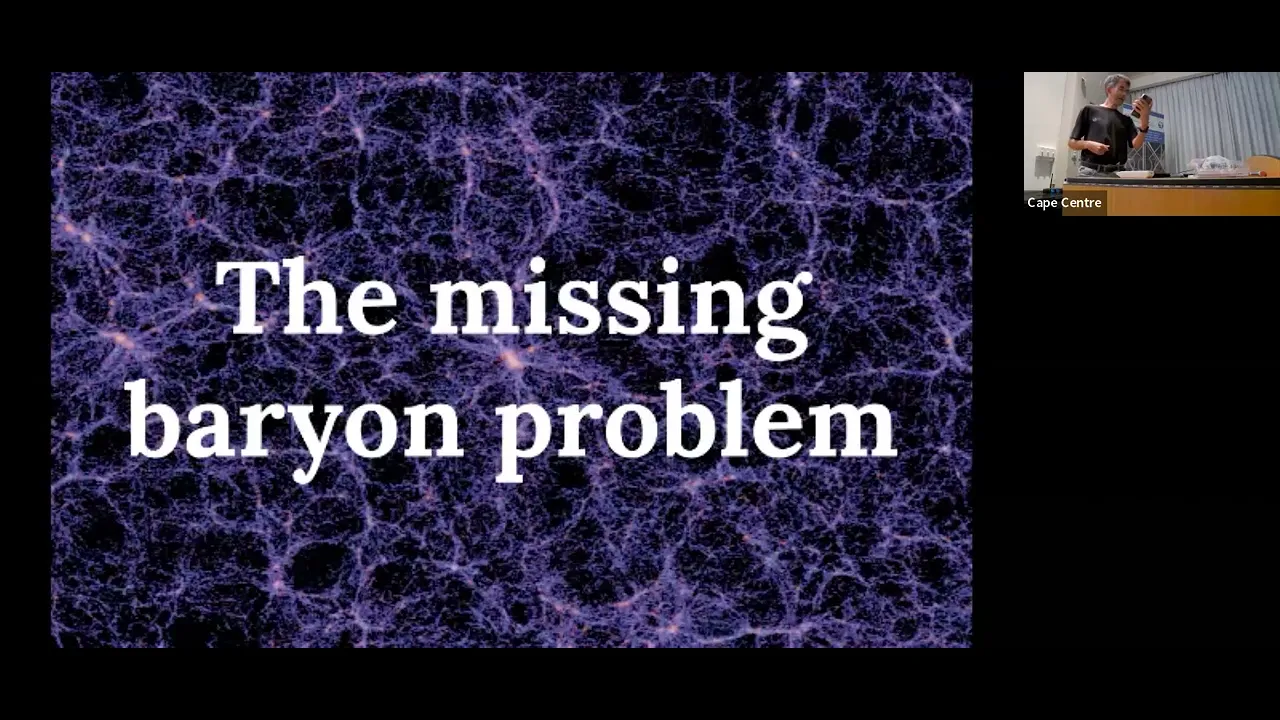
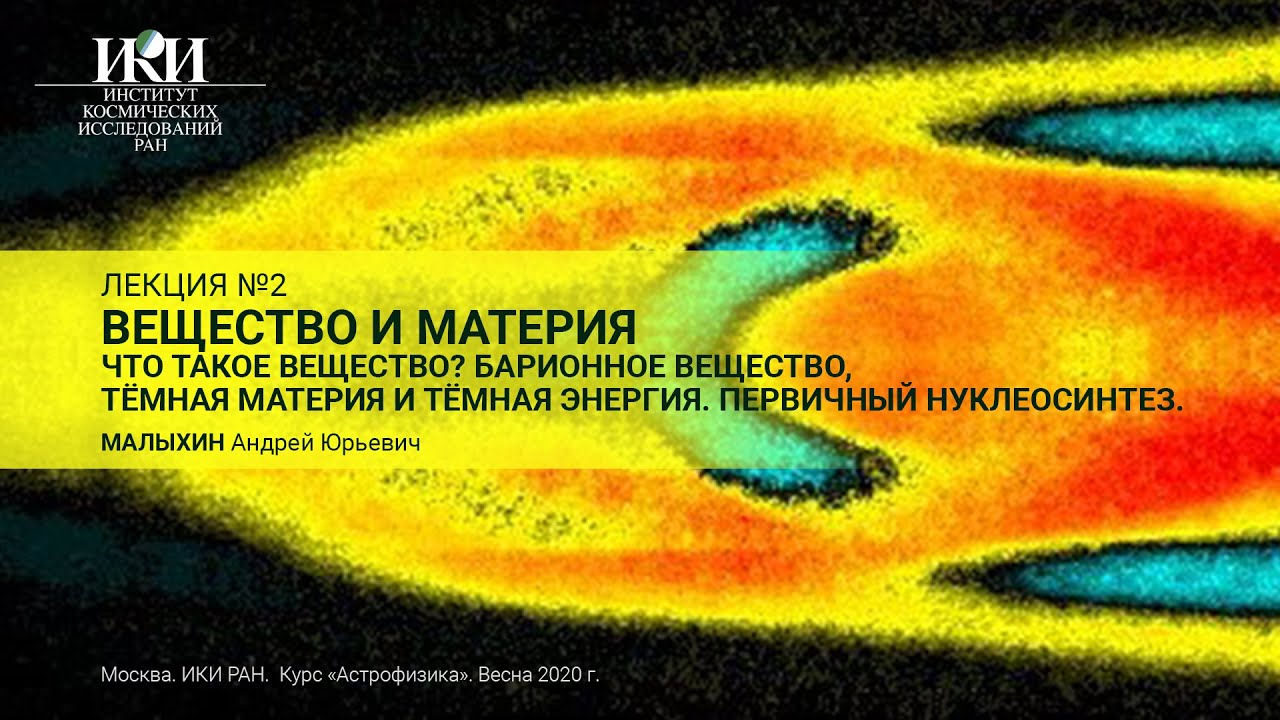
Fundamental cosmological concepts, including the standard model of cosmology and the distinction between baryonic matter, dark matter, and dark energy.
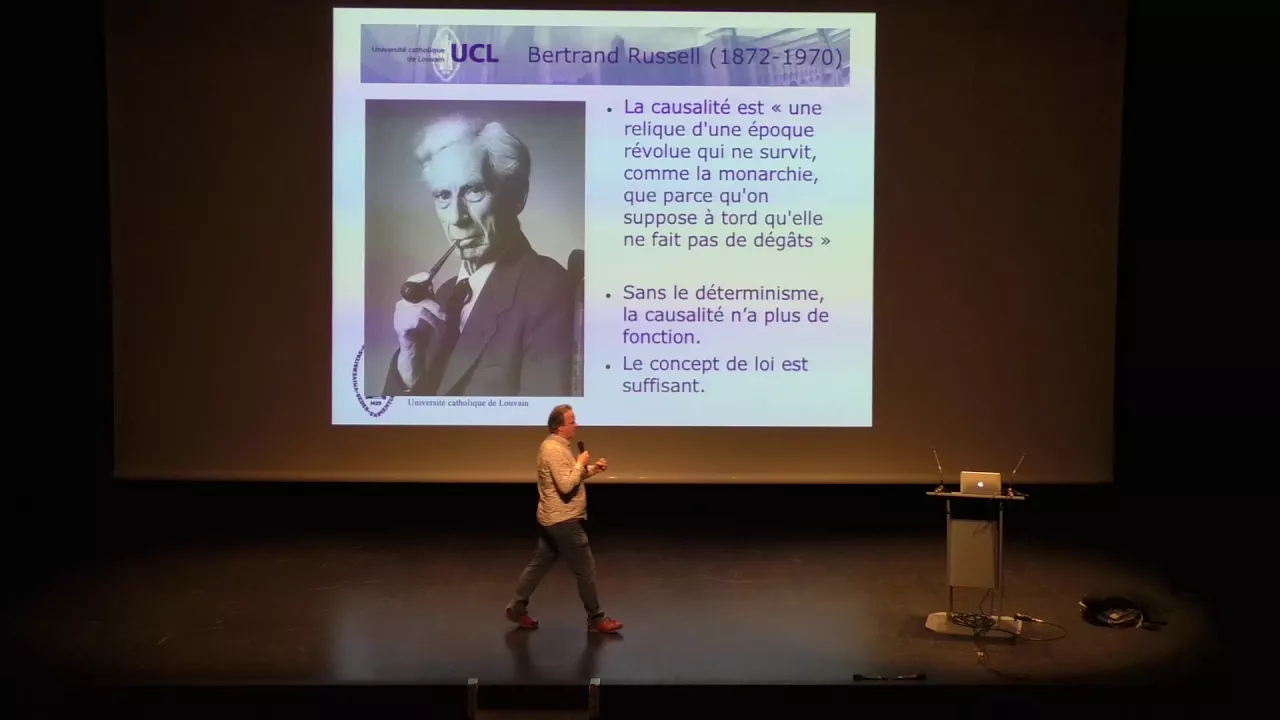
The physical definition of causality and its relationship to the thermodynamic arrow of time and entropy.
Introductory concepts in Artificial Intelligence, including the distinction between Narrow AI and Artificial General Intelligence (AGI).
Advanced studies in quantum foundations, focusing on quantum decoherence and the mathematical framework of wave function branching.
Current astrophysical research on dark matter detection methods and alternative gravitational theories such as Modified Newtonian Dynamics (MOND).
The philosophy of emergence and effective field theories, exploring how classical macroscopic reality emerges from microscopic quantum laws.
AI alignment, ethics, and the societal implications of rapidly advancing neural networks and large language models.
109.9K views768likes3:06:48Original Release: 2022-08-01
hello everyone welcome to the august 2022 ask me anything edition of the mindscape podcast i'm your host sean carroll speaking here from santa fe new mexico where i'm doing one of my occasional visits to the santa fe institute where i'm a fractal faculty member sfi santa fe institute is you know one of the world's most amazing places to just sit and talk and think and do research full of multi-disciplinary people with wonderful ideas who are willing to talk to each other right it's easy to get a bunch of people in a room with different perspectives but here at sfi they specialize in bringing together people who come together for the purpose of talking to people unlike them in whatever they do or whatever they think about so it's a great environment to be in it's also a target rich environment for guests for the mindscape podcast several former guests have been around uh jeffrey west the president ex-president of sfi was one of our very first guests here at mindscape and a couple of potential future guests are also hanging around one former guest who i saw a talk by is simon de deo who i know very well uh simon did a mindscape podcast interview on explanation and what it means but his real day job is social cognition and decision making so what you mean by this is how not just one person but many people interacting with each other come to conclusions making decisions and since i have a rough informal policy of not repeating guests here at mindscape so even though that would be a great thing to talk about i'll just briefly tell you the point of his paper to put some ideas into your head what they did simon and his collaborators was study reddit in particular there's a subreddit called change my view okay so you have people here who have a particular point of view a belief about something and they want other people to try to change their minds about it so you can imagine that some people are coming into this with their minds more or less unchangeable and others are on the brink on the precipice they're not really sure what's going on but what they were able to do was classify kinds of arguments that were presented in the reddit threads and then the great thing about the reason why they did it on reddit is you can quantify whether it worked people will tell you whether or not they have changed their minds on the basis of your argument so they could go through and figure out which kinds of arguments most often worked deductive arguments you know where you have some premises and then you logic your way into a conclusion inductive arguments where you have many examples and draw a generalization of them other things so here's the answer deductive arguments never change people's minds they're terrible they may be anti-change people's minds uh and i think that's not surprising i'm beginning to think that deductive arguments are overrated not at the level of logic where they're rock solid but the level of talking to each other right communicative rationality deductive arguments only work if you buy into the same premises right the deductive arguments say if i have some premises i can draw a conclusion all the work is done by picking the premises the conclusion is usually pretty easy to draw there's obviously in some sense all good mathematical proofs are either inductive or deductive uh but that's a special example that's different than the sort of casual conversation kind of thing we're talking about here what did work on reddit is personal anecdotes experience where you say i was in this kind of situation and i felt this or i saw this i experienced this witnessed this particular piece of evidence those kinds of things did change people's minds and i i suspect i wondered i talked to simon afterward i wonder if it's it's more respectable than it sounds you know if you just say well i had a personal anecdote and that changed someone's mind it sounds like we're not very logical reasoners right we're just swayed by anecdote and stories and we are but there's a sense in which you know we come to our views of the world by abduction by inference to the best explanation which i talked about in the big picture the views we have about the world are not independent of each other it's not that we pick some rock solid foundational beliefs and then deduce truths from that that's just not how human reasoning works nor really should it work that way because again where do your rock solid foundational beliefs come from instead we're bayesians in some sense we consider different hypothetical big picture views of how everything works and we ask what given everything that we know is the best of those possible views and so personal anecdotes i have not actually looked at the data that simon used but it might be a way of saying that people are fitting in different facts about the world into a coherent picture in a way that is a little complex and subtle and shows up as personal anecdotes in those particular reddit discussions i don't know uh the he also looked at les wrong the website and found very similar solutions there so it's not just a particularly localized reddit phenomenon anyway i thought i'd bring that up because of course we're always talking to each other here at mindscape and maybe minds will occasionally change minds usually don't change because people usually are pretty happy with most of their views about the world and it's completely unfair i think to just rate the rate at which people's minds are changing because sometimes people are close to the precipice like we said of changing their minds and other times they're quite comfortable and you want to concentrate on those cases where people's minds are willing to be changed and that might be the result of a whole bunch of hidden things in the past right you don't know that this last little straw that broke the camel's back was really the important one people might be on a journey to changing their minds in a way that you're not aware about but anyway it's still useful to know what kinds of techniques work and let's keep that in mind when we're thinking about how we should change our minds whether we should change our own minds and how we should go about talking to others so with that i will just remind you all what's going on here we're doing the monthly ask me anything episode for mindscape the questions are asked by patreon supporters so you can go to patreon.com sean m carroll join up dollar episode or more if you want join our little community and uh every month i will ask for questions people leave them in a post and i'll pick out the questions i think i have something interesting to say about there's too many can't do them all sorry about that usual apologies but we generally get a very nice wide variety of questions and then i will answer them and the many many thanks to the patreon supporters because they voted to let these ama episodes go public and just be regular episodes of mindscape even though they are supporting them so we appreciate them for that join if you want you don't have to if you don't want to we're all here together anyway so with that let's go [Music] deepti amazuria says the scholarship idea is amazing let me actually this is sean talking now let me let me back up to remind you if you don't know already or if you don't know already that we have a mindscape big picture scholarship that you can contribute to it's being crowdsourced you can go to bold.org scholarships slash mindscape that's bold.org and the idea is we're given money and then we're going to choose one or more winners every year to get ten thousand dollars toward their college education and we're aiming at people who are interested in the big ideas right not necessarily uh practical things there's a lot of doctors and lawyers out there that's great we're aiming at people who are trying to think about physics philosophy biology computer science mathematics trying to figure out the fundamental structure of reality that is the goal and especially if we can contribute to the education of lower income students first-generation students under-represented groups in these fields that would be great to give someone a chance to pursue these slightly impractical kinds of career paths uh is what we're trying to do uh ten thousand dollars a lot of money but it could change somebody's life so anyway uh deepti says what about setting up a scholarship foundation to encourage students to study physics philosophy artificial intelligence etc smart stop start small with a grad student working remotely a few hours a week sorting out applications and sending you the more promising ones for careful scrutiny the foundation can grow later this way you're not at the mercy of an external organization with potential non-constant credibility uh yeah i mean that that's something that kind of sounds like a potentially good idea it also sounds like an enormous amount of work certainly something i would not set a graduate student to doing you know one of the things about being a good advisor is you do not make your graduate students do things that are not furthering their education in some way uh and also i actually think that bold.org is quite credible um i did check them out before embarking on this partnership with them and they seem you know really dedicated to getting 100 of the donations into the pockets of the students and also they do a lot of the work you know i've noticed we have applications for the scholarship already many of the applications are you know they're students who want to get a scholarship that's great but they're completely inappropriate for this scholarship they're not uh tackling the particular kinds of questions that we're aiming at whatsoever so i could you know personally or hire someone to sift through that but bold will do that for me so that's great and and i think it's actually going to be a pretty good uh setup if we become you know really big time then it might change but i i doubt that that will happen you know where we funded our first 10k scholarship and i'm kind of hopeful that we can get another 10k scholarship funded this year and then we'll see what happens next year but i suspect that's the level at which this is going to happen right one or two scholarships per year not a major thing where we're uh changing the lives of hundreds of people that would be great and you never know i'll keep my mind open about that tyrone says you mentioned on your podcast with max tychmark that you would only give 50 credence to the level 2 multiverse eternal inflation plus string theory gives rise to multiple universes with different laws of physics if we remove the string theory aspect and just focus on the idea of multiple universes perhaps with the same laws of physics would your credence be higher if not why is your credence relatively low for a theory that some physicists say is a natural conclusion of inflation plus quantum mechanics well some physicists say lots of things some physicists say that the whole multiverse idea is completely crazy right i don't think that some physicists say is going to push my credences one way or the other unless either all physicists say or the right physicists say you know the physicists who understand this the best and the physicists who understand this the best are not in agreement about it furthermore i'm an expert you know this is what i do for a living so i have my own judgment completely independent of what other physicists say um it's very possible that there is a multiverse this kind of type 2 multiverse where there to me what that means is there are regions connected to our space-time but very very far away outside causal contact with us here in our part of the universe where conditions are different okay that's what i would mean by the type 2 multiverse you can get it via eternal inflation and string theory but maybe there's other ways to get it as well and maybe inflation is correct and or string theory is correct but in a way that doesn't give rise to a multiverse all of these things are very very open even though this is what i do for a living and i think about it and i take the ideas seriously i don't get too caught up in my favorite ideas i don't think that these speculations about times and places where we have no empirical evidence should be given too high credence we should be open-minded about it that's what the 50 credence sort of stands in for it's just a way of saying maybe maybe not and there's no guarantee that even if string theory is right which i'm not sure that it is i'm not sure what my credence on that would be either um string theory can certainly be right without giving rise to this kind of multiverse that's an active question within string theory and i think that's different if people want to ask you know so why is my credence so high in many worlds many worlds is based on the schrodinger equation which has been very very tested that part of the theory is not speculative and once you get into how to get rid of the other worlds it's very hard to do that's the speculative part so to me many worlds are just the default if you believe in the schrodinger equation and wave functions so it's a very different kind of credibility calculation than the many worlds than the from the multiverse of cosmology the type 2 multiverse bob polk says i'm a longtime follower of your work and a sometimes social scientist hooked by you on the curious domain of entropy i've imagined asking several specific questions about how to correct for entropy's elusiveness in the practices of the social and political sciences but for now i simply want to ask more broadly what might be entropy's greatest promises to the day-to-day experiences and practices in our social and political lives more aspirationally how might we one how might we one day use this knowledge to make our macro worlds a little wiser well yeah that's a good but slightly broad and vague question you know entropy is a very very useful concrete concept in physics and what typically happens is that you build up either explicitly or implicitly your knowledge in layers of reality right you can start with the physics level the fundamental physics level uh you can go to some emergent phenomenon where there are coarse-grained descriptions and you have equivalence classes and you can assign macro states which have an entropy and then you have even higher levels of biology and psychology and social sciences and so forth so a priori there doesn't need to be any connection between the entropy that a physicist talks about and the social sciences because you can do social science without knowing about the fundamental microphysics underlying everything now there are two exceptions to that so that was the caveat but there's sort of two loopholes there that are worth exploring one is it is of course interesting to connect the different levels we do think that you can talk about social science without knowing about the standard model of particle physics or even statistical mechanics or thermodynamics but that doesn't mean that your study of the social sciences might not be usefully illuminated by thinking about how fundamental physics works after all social sciences don't violate the fundamental laws of physics there's somehow a pattern that exists within the structures that are governed by the fundamental laws of physics and maybe that can be useful or maybe not i don't actually have a concrete example of it being useful the other way which is probably closer to what you have in mind is to think about studying social systems in ways that the entropy or other related concepts appear directly this is part of what i'm trying to do with my questioning about uh the the physics of democracy right to think about whether or not ideas that we get from physics can be usefully used either directly or just analogically in social science constructions entropy in particular it's not clear that that's going to be a helpful concept because the dynamics that we're interested in are already irreversible if you know what i mean we've already taken into account that human beings burn up fuel and they you know eat and uh metabolize and then radiate higher entropy stuff into the universe that doesn't need to be an extra part of our social science calculation that's already there in what it means to be a human being so you sort of don't need to include it again in some very trivial sense on the other hand if you look at a larger level of sort of structures uh that are formed within human uh societies and conglomerations maybe there are patterns of structure formation that can be usefully illuminated by thinking about what we learn from entropy or statistical mechanics now i realize bob i'm being very very vague here because i don't have any explicit constructions to give you that is true i don't i'm not trying to hide all the good ideas from you here i just want to sort of simultaneously get across some enthusiasm for the idea of trying to see if we can understand how organizations and higher level structures emerge and behave using ideas from physics while at the same time remaining slightly skeptical in the sense that maybe it's not useful you know i don't know i'm not demanding that it's useful or insisting that it is or even giving you an explicit example of where it is i'm just saying maybe it is people should think about that so that's the the state of which i'm in right now sandro stuckey says i much enjoyed the episode with nj enfield but i'm skeptical of the premise that language is good for lawyers and not scientists it suggests that scientists are somehow hyper-rational don't you think effective scientists use the full repertoire of human language to argue persuade tell stories etc for better or worse sure absolutely and i don't think that nick enfield would disagree with that you know part of it is of course it's a great title language is good for lawyers not scientists you know if you come up with that title for your book you're going to use it it's just too good to be resisted but he doesn't mean that you know scientists shouldn't use language or that scientists are somehow perfect reasoners who might be able to communicate in a way that doesn't involve language at all that is not the point the point is that the structures of language and the way that they're used in our brains are naturally adapted to the purposes of persuasion and social contact and those are the kinds of purposes that lawyers need in their everyday life whereas the kinds of purposes that scientists have of precisely and rigorously and unambiguously describing the world in very definite quantitative terms that's just not what language is made for that doesn't mean you can't use it anyway it's all we got that's how we communicate with each other you can modify language you can build on top of it you can construct new notations new vocabulary words new ideas and scientists do that all the time in an effort to try to be more and more clear about what they're saying so of course scientists use language the point is that don't be surprised when the concepts and constructions of natural language don't fit easily and comfortably and effectively with what scientists are trying to do ben suttles says i was listening to a baseball game when my favorite team went down in the 8th inning i turned off the game in disappointment but found out later they came back for a walk-off win in the 9th i was sad to have missed the excitement but then i thought that the act of turning the radio back on to listen might have had some effect that could have interfered with the comeback are there any signals that can conceivably have affected an outcome happening 30 miles away within a 30 minute span baseball outcomes hinge on very minute differences in human movement so i'm wondering if there's any plausible way for my minor action to have slightly tweaked the environment or nervous systems of the players to change the outcome so i think this you know i almost didn't answer this question because the short immediate answer which is probably right is no there is no possible way for your movements or flicking off your radio to have an effect on the baseball game but you know this is the kind of question where maybe you have to think a little bit more carefully so before we give it too much credibility let's just say there's certainly no way that you could know that a certain kind of action in your living room 30 miles away is going to have an effect on what happens in a baseball game okay you can't decide to do something rather than something else in hopes that your team is going to have a comeback in the ninth inning okay so don't worry about your planning this is not going to be relevant there but the question is one of nonlinear dynamics and in some sense in chaos theory i don't want to wed it to chaos theory too explicitly because there are quantitative measures of when things are chaotic and so forth that i don't want to invoke here but there is a question of you know many many things are happening in the world many many little influences and like you say in certain cases a very tiny influence can build up and become something big and so all i'm trying to say here is that you would really have to think about it carefully to be 100 sure or even 99.9999 sure that a certain action a macroscopic person-sized action 30 miles away could not move the effect of a baseball game one way or the other change the twitching of someone's muscle just a little bit or move a bat by a millimeter when it was swinging at the ball can completely change the outcome of a gain that's what non-linearity means why when physicists talk about linear systems they mean a small change leads to a small effect whereas a non-linear system a small change can lead to a large effect okay and there's lots of lots of nonlinearities involved in systems like this i know that eric schwitzgable who is a philosopher has asked you know whether or not small things you can do can lead to potentially infinite changes in the broad future and he suspects that maybe they can i'm highly highly doubtful that that is true in this case in this particular case because whatever i mean the basic reasoning is whatever effect you do even though there are non-linear repercussions they're damped out right you can't even hear what you're doing inside your house but if you're someone is standing out on the lawn right outside so 30 miles away to imagine that that uh impact really travels that far strains my imagination personally i just want to be careful and say i can't guarantee that there couldn't be some tipping point that you could have triggered by that motion i'm going to group together two questions one is by robert ruxin rescue who says when we talk about black holes we have the singularity surrounded by an event horizon the singularity is not visible but for a white hole it seems like the singularity is accessible it doesn't have an event horizon you have access directly to the singularity similarly to how we can look directly at the big bang it behaves like a naked singularity doesn't this contradict the cosmic censorship conjecture and if you were to travel outside of a white hole would you pass both the singularity and some event horizon or just the singularity with no event horizon and then james allen says the laws of physics are time reversible but nothing comes out of a black hole does that mean some massively improbable set of initial conditions could be set up so that you start with a black hole evolve it forward in time and come back come back later to see say to rotating neutron stars so both of these questions are about white holes and there's two very important facts to remember here that will answer most of your questions about white holes one fact is that a white hole is nothing more or less than a black hole run backward in time okay it's not a different kind of thing it's the same exact thing as a black hole except that the singularity then the event horizon are in the past rather than in your future the other thing to remember is as i just hinted at in a black hole the singularity is not a point in space it's a moment in time and in particular it's in the future so when you say a naked singularity neither white holes nor black holes qualify as naked singularities naked singularities are supposed to be singularities that are not surrounded by event horizons at all if you think to yourself is a white hole surrounded by an event horizon well a white hole is just a black hole played backward in time is a black hole surrounded by event horizon yes therefore whitehole is the difference is what is the property that makes it a blackhole event horizon it's that when you cross into it you cannot come out therefore the property that makes a whitehole event horizon is that once you cross out of it you cannot go back in and exactly like the black hole event horizon is in your future the white hole event horizon is in your past a naked singularity on the other hand is not supposed to be a moment in time because a moment of time you know you say uh robert says in in the question you know you can see you can look directly back at the big bang unlike a black hole but in fact in the space-time picture the seeing you're sort of imposing an arrow of time there right you're saying that i can see things in the past but not in the future there are still trajectories that go from your eyeball to the black hole singularity but they just go into the future and then hit the black hole singularity likewise there are trajectories from your eyeball to the white hole singularity they just go back into the past okay a traditional naked singularity is literally a point in space it is not a moment in time it is what we call a time-like singularity which is a funny way of in physics physics speaks saying it's a point in space not a moment in time moments in time are space-like believe it or not points in space are time-like so a naked singularity is one that you could literally travel to visit look at and then go away neither a white hole singularity nor a black hole singularity are like that okay um so it doesn't contradict the cosmic censorship conjecture if you were to travel outside a white hole the singularity is in your past so either you're inside the event horizon uh and then you can sort of you will be in there for as long as you don't pass it best buy it once you pass the event horizon then no signals from let me see let me get this right the the if you pass into the event horizon of a black hole that is like passing out of the event horizon of a white hole but of course you also need to flip your past and your future right so when you're inside the event horizon of a black hole no future of yours escapes from the singularity when you're inside the event horizon of a white hole that means no past of yours failed to hit the singularity all of the signals that you are getting in your light cone come from the singularity of the white hole whereas when you pass outside the event horizon of the white hole now there are some signals that do not come from the white hole singularity and for james's picture yes there are absolutely massively improbable sets of initial conditions you start with a white hole you call it a black hole but it should be a white hole if it's backwards in time and then you start with a white hole you evolve forward in time and you can see two rotating neutron stars or for that matter anything else because the big bang is very much like a white hole and in fact the big bang does evolve into neutron stars and things like that so there you go jeffrey siegel says very interesting conversation with john quigin on the information economy and reasons for market failures one complication or feature that is hard to incorporate into models is the ingenuity of humans for finding unexpected ways to make a short-term profit in the case of the information economy it seems that although rational actors place a high priority on truth and accuracy real humans can place value on parts of the information economy irrespective of absolute truth or accuracy similarly speech is important for communication but truth is not always a priority do models of the information economy include actors who make a profit off of the desire for interaction without considering truth or accuracy of the information well sure yes i mean i'm not an expert on models of the information economy but the little that i know about economics assures me that the models do not imply that the actors are in any way dedicated to truth justice the american way or anything like that the actors in an in an economic model want to make money they are rationally self-interested they are not supposed to be or imagine to be moral in the sense that they would sacrifice themselves for the greater good okay the idea of a market economy one of the ideas of a market economy is that you can get outcomes for a large number of people even if every individual is rationally self-interested this is adam smith's claim yeah and he wasn't nearly the fundamentalist about markets that he is sometimes painted to be he understood that there could be flaws there but he he pointed out that in some cases everyone looking out for themselves can lead to a desirable outcome for everyone because you know if i want to sell you a widget and you want to buy a widget number one i have to set the price so that you can afford it and i'm competitive with with other people who are trying to sell you widgets but also i have an interest in selling you a working widget not one that will fail because if i sell you one that will fail next time you're going to buy from somebody else okay here is where it becomes harder when it comes to information maybe the analogy to a working widget is supposed to be selling you true information but it's not but it's clear that everyone wants a working widget it is not clear that everyone wants true information sometimes people want information that makes them happy right or that flatters their preconceptions or that fits into their pre-existing worldview etc so this is why i think there's sort of a new kind of problem when it comes to the information economy and i don't have any suggestions for solving it i'm just sort of pointing it out i'm by far not the first person to point it out but the criteria for the information that you're buying or requiring being successful what you're looking for is a little bit different than truth right whereas everyone can kind of agree that you know the car runs in the way that it's supposed to when i buy it not everyone agrees on this bit of information is useful or not useful true or false etc so i don't know what to do about that i mean the obviously what we would like is to reward those information providers who provide accurate useful information i'm not quite sure what the best way to do that might be domas says you keep mentioning laplace's demon in your examples however in other cases you said the world is not deterministic excluding many worlds it's probabilistic so was laplace wrong his demon couldn't exist even theoretically well i you know i've written a lot about this and you can you know google determinism uh and by name and see things i've written about it in our actual world okay that is to say in the world of our experience where i say us i mean literally you and me so not the god's eye view or the laplace's demon i view the world that you and i actually live in it is not deterministic full stop that is what quantum mechanics tells us so that's why i get slightly frustrated with people who try to argue against free will on the basis of the world being deterministic it's just that their first premise is completely wrong and sometimes they try to say well but then determinism is only small scale and it's all deterministic on the large scale again completely wrong there can be absolute amplifications of quantum probabilistic outcomes to macroscopic scales okay so there's absolutely a question about whether or not there is a bigger picture there is a god's eye view in which things are deterministic and a many worlds person or for that matter a pilot wave person would say yes there is such a bigger idea so what does this have to do with laplace's demon you know laplace's demon was never supposed to be practical laplace's demon is not even supposed to be something that in principle you could imagine building lapaz's demon is supposed to be a colorful metaphorical way of talking about deterministic evolution that's all it's supposed to be so people talk about you know what does laplace's demon know or how does it think i think they're missing the point the point is that the future is determined if the laws of physics are deterministic that's the entire point and in the pictures we're talking about here it very well might be true for the many worlds the set of worlds altogether might very well be determined that is not accessible to us here mere human beings so i still think the laplace's demon is very useful as what it's supposed to be a metaphorical thought experiment to talk about the implications of determinism but of course you have to always be accurate about whether the world is deterministic or not for real world what we know kinds of purposes uh the world is not deterministic but then again for real world what we know kinds of purposes you were never laplace's demon anyway so i'm not sure what the change is supposed to be given by quantum mechanics peter bamberg says physicists used to hope for a grand unification of all four forces however gravity is distorted space-time whilst the other three are quantum fields these seem to be completely different is there a reason to suppose that a quantum theory of gravity would be sufficiently similar to the quantum field theory of the other three forces that grant unification is the way the universe works put another way is it possible that gravity will remain stink from the distinct from the other three forces even when a quantum theory of gravity is established uh i will repeat my mantra that i often say here in ama episodes and elsewhere any question that has that is phrased of the form is it possible that in physics will usually be answered with yes it is possible that's not really the interesting question we want to have some credences you want to know how reasonable it is to think these things so for one thing just as just for your benefit the phrase grand unification is a technical term within physics that does not refer to gravity grand unification was the attempt to unify the electromagnetic force the weak force and the strong nuclear force it did not include gravity okay that's why stephen hawking joked that they're neither grand or unified nor theories the grand unified theories because they don't include gravity uh that's why when string theory proposed to be a quantum theory of gravity and all the other forces at once they invented the phrase theory of everything to be that it's a step beyond grand unification and you know the answer is we don't know we don't know how it's going to turn out you can't be too confident i don't think one way or the other it is true that gravity is different than the other forces but to say gravity's distorted space-time while the other three are quantum fields is not completely true gravity is also a field classically what we don't know is that you can take that classical theory and just quantize it in the same way that you quantize the other theories as classical theories there are a lot of resemblances between general relativity and the gage theories that we have for the other forces of nature they're based on certain local symmetries they're field theories et cetera et cetera so it's a perfectly reasonable guess that you can group them together but it's also different you know even though there's similarities the similarities are not a hundred percent the fact that gravity is so intimately connected to the nature of space-time is different between gravity and the other forces so maybe it's not the same and as i'd like to point out it's completely reasonable to imagine that in the case of the other forces we just got lucky with this whole idea that you could start with a classical theory and then quantize it there's no guarantee that a particular quantum mechanical model can be reached by starting with a classical theory and quantizing it so that might be the case for gravity that you shouldn't start with a classical general relativity or string theory or anything else quantize it and hope to get the right answer so the answer is we should be thinking we should be open-minded about all these different possibilities you know string theory i keep saying has done a lot of great things there's something that smells right about string theory but it might eventually not be how nature works that's also completely possible so you know the two extremes that think that string theory is obviously right and we should give up on everything else versus the extreme that thinks that string theory has obviously failed and we should not study it anymore i think that both of those are off the mark pretty pretty dramatically schleier says i hope not pronouncing that correctly and your first ama in 2018 you called yourself a believer the technological progress is still in its beginning states can you talk about your reasons for thinking this and whether your confidence has changed as various limits to industrial growth and stability have become more evident more generally the modern era is a highly anomalous brief period in our species long history wouldn't one expect a system to revert back to the norm rather than getting more anomalous i mean yeah this is a good question and when someone like me says something like technological progress is still in its beginning states that's obviously a wild extrapolation that might turn out to be completely wrong but no the last four years have not changed my mind about this particular one and the reason is just because i think the technological progress it's not just a kind of simple-minded extrapolation of rates right i think that's there's no good intellectual reason to say well things have been going for a certain rate for a certain time let's just extrapolate it for the next century or whatever you have to be a little bit more clueful than that you need to think in particular about what kinds of technological progress are possible and to make a very complicated argument very very oversimplified the reason why i think that technological progress is in its beginning states is because it's mostly been based on physics most of our technological progress physics and chemistry i would say uh you know has to do with manipulating matter at a fairly simple level of molecules and atoms and their uh combined kind of materials and states of matter all of the high impact stuff or much of the high impact stuff will be in biology right biology is way more complicated than physics is and we're very not good right now at manipulating it that's why i think that there's still an enormous amount of room to go i mean it's still enormous on room to go in the physics side of things building better computers is it some sense of physics slash engineering problem and there's a lot of room to build better computers quantum computing just being one kind of case but things like synthetic biology and gene editing and stuff like that have just enormous enormous room to grow in so i would not be at all surprised i can't guarantee but i would not be at all surprised if 500 years from now the century in the future of today is thought to be much more technologically rich than the century that we have just experienced we'll see i'll be dead unless biologists cure aging and which may be a case i'll be around rob patro says you recently tweeted about the walk out of the medical students at the university of michigan's white coat ceremony where the university had platformed an anti-abortion speaker you noted that you agree with this form of protest a silent walk out and i completely concur my question is where you think it makes sense to draw a line particularly in the context of academic talks or talks at universities between acceptable protests that should be respected and unacceptable protests that should be protected against for example i think most reasonable people agree that hurling rotten eggs or tomatoes at the speaker would have been unacceptable so this is a great question but i don't necessarily think that there is once and for all a clean cut answer in fact i think that part of the way to go wrong here uh is to oversimplify and try to over clarify very complicated questions it's not to say that you shouldn't be serious about thinking about how to draw the line but you can't be too dogmatic about having drawn the line and then declaring victory and never rethinking what you've just said um so anyway for those of you who don't know what we're talking about here there was a protest at the university of michigan where there was a speaker invited by the university or some department within the university uh to talk to graduating students and the speaker was uh notably anti-abortion and it's a medical school as i recall or at least some yeah medical students and at a time when the right to get an abortion in the united states had just been dramatically undermined the medical students thought that many medical students thought that was not appropriate so they walked out of the speaker's talk and other people have come along what i was responding to on twitter was you know a very reasonable thoughtful point of view which was we need in a democratic society to be able to talk with and have dialogue with people we disagree with we can't just turn our backs on them and walk out and as a statement of you know lofty principle i completely agree with that i very much agree that we need to be able to talk to have dialogues with people we disagree with even people we disagree with by a lot politically but i just don't think that that principle applies here because there wasn't a dialogue going on one person was giving a speech and the other people were supposed to sit quietly okay that's not a dialogue and even though i do think that it is important to have dialogue with people you disagree with protests are also important and i think that you know there's sort of an ideal speech situation where we all come together we all agree to speak reasonably to each other uh over our disagreements and try to overcome them and see where we can find common ground and that kind of situation is what we should aim for but we can also realize that that situation does not always happen and so sometimes other kinds of actions are completely appropriate i think that walking out is one of the most mild and unobjectionable kinds of protests even if you know this the speech that the speaker was given giving was not about abortion but these people in the audience thought that this issue was sufficiently important that they wanted to make a statement and that's what that protest did in a fairly innocuous way so i said on twitter half jokingly that i was giving a talk on quantum mechanics later uh that week and if anyone wanted to come and walk out on it because silently walk out on the speech because i am pro-abortion pro-choice then they were welcome to do that i do not i do not mind i respect their ability to do that now what about other kinds of protests this is rob's question where it's more intrusive uh more disruptive in some sense and you know i think again you have to actually take the circumstances into consideration so let me back up a little bit because i think that there's a general tendency here to hide one's substantive commitments behind procedural arguments right there's the substance are you pro-life or pro-choice and there's the procedure do we talk to each other how do we protest things like that and even the people who said that the protest was wrong said of course if the person talking were like nazi or a eugenicist or something like that a white nationalist then you could walk out and that kind of gives the game away doesn't it because they're saying that in their mind this particular issue the ability for women to choose to get an abortion wasn't that big a deal compared to racism or nazism or whatever and my response is you know to some people it's a very big deal and more generally we can't kind of dance around the question of how big a deal it is there will always be some kinds of disagreement that are so dramatic so important so valuable to people that you can go beyond the ordinary norms of polite speech so there are times i think that would be completely appropriate to disrupt a speaker but i'm just saying that as a matter of principle i think that as a matter of practice that should be very very rare that should be only reserved for the most extreme possibilities in particular in practice at a place like a university um i think that what matters is are the protesters part of the group who is giving the person a platform so in other words if i'm a student at a university and the university as a whole invites a speaker then i think that there's a little bit more room for protest there that's a perfectly legitimate thing to protest hopefully not in a disruptive way because i would always err on the side of letting people talk but you know i could you i would listen to arguments in favor of disruption to see whether or not they were persuasive whereas if some sub group if some you know club or class or whatever on campus wanted to invite a speaker in then i would say that you should almost never you should just essentially never try to disrupt that if you're not a member of that group right you should let other people listen to who they want to listen to even if the people are really bad and whenever i say things like this all the time and people always say yes i agree unless they're really bad and i actually mean it even if they're really bad let people listen to really bad people that's exactly the situation where we should try to fight speech with speech okay but if you're you are being forced as a member of a bigger community to support you know implicitly or explicitly the speech of some person who is really reprehensible then maybe you have a right to be a little bit more disruptive again i know that i'm being fuzzy and vague here that's because i think it is fuzzy and vague i think that it's like it's going to be a case-by-case basis and this desire to come up with the clear bright line ahead of time is what leads to a lot of mistakes i think we should use our judgments i think that's okay that's what politics is like and i think politics is very very important avenish narla says what do you think the tradition of physics can contribute to the study of human society and democracy is it the approach like phenomenology or reductivism the tools like interaction models or flow analysis or the attitude first order understanding versus order one understanding yeah i think all of these things can contribute you know i think two things i think that physicists have a deserved reputation for not taking seriously the intricacies and difficulties and special challenges of other fields okay i know perfectly well physicists have a big bad well-deserved reputation for swanning in and saying ah what you're doing doesn't look that hard let me clean it up and solve it all okay and that's bad and it generally results not from being a physicist but from not affording these other fields of human inquiry the same respect that they afford to physics itself you know it took time to learn to be a physicist right you made mistakes you had to learn a lot you had to figure out what was sensible what was not sensible what the techniques were what the challenges were you should spend that much time trying to learn about other fields as well if you think that you can contribute to them that's that's one side of the coin the other side is nevertheless we should try we should try to have all sorts of interdisciplinary engagement and that consists both of individuals who can talk more than one disciplinary language and also even more importantly actual interactions between people from different disciplines talking to each other so in particular what can what can physics contribute to the study of human society and democracy all the things you mentioned physics physics is really really good at a particular kind of analysis right the spherical cow boiling complicated situations down to very very simplified essences and then solving those essences purely and crisply and cleanly and quantitatively the question is always can you then go back from the simplified model to the messy reality of the world people like galileo were geniuses at doing that were einstein also were really like geniuses at picking out in some complicated situation exactly what the simple important essences were and then extrapolating back and getting true conclusions about the messy real world that's what physics is good at it's much harder to do that in social sciences in human society philosophy and literature all those things okay that's not to say it can't be done that's not to say that it is impossible or not worth trying to do it's just that you have to keep your wits around about you a little bit more carefully and so i think that that kind of analysis that physics is very very good at finding patterns that are universal finding simplified models that give you some insight and things like that might very well be useful in uh study of political science or economics or whatever and there will be circumstances in which that is not the right way to analyze the the situation so i think that i can't tell ahead of time what will end up being the biggest contribution of physics to the human sciences but i'm hopeful slash optimistic that such a contribution will be found james farina says i have a daughter considering a career in anthropology how did you decide to become a scientist were any members of your family scientists did you always believe that you had the ability to become a world-class scientist i started young in my scientific aspirations in elementary school no members of my family were scientists or anywhere close to it so i had no guidance either from family members or from school teachers or anything like that i would just read books and hope for the best so i mean maybe that's good and bad because the idea of wondering whether i had the ability to become a world-class scientist never entered my mind i just wanted to be a scientist so the idea that there was a competition and not that many people got to do it professionally it wasn't something that i knew enough to worry about at the time and i thought that i would have no trouble getting into college etc i didn't know whether i would get into the best colleges i didn't even get to apply because we couldn't afford it uh those anxieties about whether or not i was good enough to be at the world class level didn't come in until i started thinking about graduate school and then you know then you're just always bombarded by the message that this is tough and you may or may not make it and that's just what life is like in between the vast gulf of entering grad school and eventually getting tenured as a professor um but what i tell people always about the ability thing is you can't worry about it too much because there's a number one there are probabilities involved right it's not like you can meet someone and say oh yes you are able to do it and someone else oh you are not right it's just not like that it depends on so many completely unpredictable things not just intrinsic features of the person i've had many people i've known many students struggle at first and then a light bulb goes off and they really get it and they become great scientists and likewise i've had students who i've known students who have been really really talented and yet never quite did it never quite got into the whole actually being a scientist thing there's a big difference between doing well on tests as a young person and being a professional scientist therefore if you love it and you are willing to take the risk just do it don't worry about whether you have the ability or not just see what happens learn the worst thing that can happen is you learn some science and you put it to use in some other career that doesn't seem like such a bad outcome to me anonymous says does the math of physics want time to have a different sign than space would something break if you tried to write it down to hamiltonian in the space time with the metric signature plus plus plus plus so this is referring to the idea that in relativity theory you can think about the difference between space and time in terms of the metric okay the metric is the way that you tell distances along curves in any geometrical construction any manifold a metric is just a distance measure and in space the nice thing about the distances along a curve in space is that whether you move along x or y or z all of those motions add to the total distance of the curve in space time it's not like that if you there's a sign ambiguity that you can choose whichever way you want but if you choose it so that paths in space have a length that adds up as you go x y or z then going in t going in the time direction actually subtracts from your space-time interval the length of the space-time curve that's why going at the speed of light which in relativity is morally equivalent to going an equal amount of space and time has zero interval elapsed and that's why a photon for example experiences no passage of time because for particles that move on time lake or space like paths sorry time like or null pads you can think of the total interval that they traverse as giving you the time that they experience anyway all this is saying that this question is asking could we imagine physics working in a world where all directions of space-time were equivalent where it was plus plus plus plus there were there was that is what we call euclidean signature to the metric rather than a lorentzian one that we have in ordinary uh space time so you can definitely imagine physics working in that kind of construction in fact as a matter of practical reality in quantum field theory we very very often imagine that we're in a euclidean metric space-time we do calculations there and then say okay that implies a certain answer back in the real world so as a mathematical trick it is very very useful in quantum field theory to imagine that we have a space space space space world rather than a time space space based world for the four dimensions that we have now that's a different strategy than the hamiltonian that you're talking about here again for people who don't know what a hamiltonian is number one buy my book the biggest ideas in the universe coming out september 20th we'll tell you what hamiltonian is but it's a way of thinking about the laws of physics that really intrinsically imagines that space-time is sliced into moments of time okay the hamiltonian tells you how you move forward in time so there would still be ways to do physics if all directions of space-time were space-like rather than time-like but you probably wouldn't use the hamiltonian formalism for doing it that's my probably that's my guess i i can only say probably because you never know whether people are very very clever and come up with something which is a euclidean hamiltonian formalism but i don't know of any such thing murray cantor asks a priority question so remember that priority questions are questions where if you label your question priority question for those patreon supporters asking the questions i guarantee i will answer it i will try to answer it i do not guarantee you'll be satisfied with the answer but i will give it a good shot and um the the the trick the catch is that you only get to ask one priority question in your life now i'm not really keeping track here so it's the honor system okay don't ask more than one priority question there's an interesting question i'm sorry murray that i'm delaying your answer but it'll eventually come i wonder about the game theory of this right uh a lot of people ask priority questions right away but i would think at least if i'm just a completely self-interested person doing the game theory of it what i would first try to do is ask the question not labeling it a priority question and then maybe i will answer it i'm using the pronoun i in different senses there but i hope you knew what it meant i would if i were to ask her i would ask the question and see whether the podcast or me would answer it without labeling it priority so then you save your priority question for later and if it doesn't get answered then you can label it priority right as far as i can tell no one does that uh maybe that's just because you're all too good-hearted maybe it's because you're not all very good game theorist i'm not quite sure what the answer is anyway murray's question is i pride myself on being a good bayesian and i apply bayesian nets professionally however a philosophical issue has occurred to me a good bayesian updates beliefs based on evidence doesn't that require that the bayesian has to be 100 confident in the evidence i suppose there are extensions of bayesian theorems to account for this but then you need additional evidence to believe the initial evidence initial evidence yeah and so on have you seen any discussions on how to address this problem i haven't seen discussions on how to address that problem specifically but of course it is a problem but i think that you don't need to go outside the bayesian paradigm to address this what you do have to do is just be honest about all of the quantities appearing in baze's theorem so baze's theorem says you have a prior probability for some theory or some proposition to be true and then to get the posterior probability that is to say the probability that this proposition is true conditionalized on the new data that came in you multiply that prior by the likelihood that that data would be coming in if your proposition were true and then you normalize it so what i think is going on in your question is you have to be very very accurate and honest about those likelihood functions the probability of the data given the theory so let's say that you are you know asking about faster than light propagation of neutrinos for example and you do an experiment and you see the neutrinos are moving faster than the speed of light okay so well if your two theories are neutrinos do move faster than the speed of light or neutrinos do not move faster than the speed of light and you measure them to move faster than the speed of light naively you would say aha with 100 confidence i now know that my theory that they do move faster than the speed of light was the correct one right no that is clearly wrong because you've forgotten that you might have made a mistake and that's very very important so when you do your likelihood function what is the probability that you get this data given the theory you have to take into account the fact that your data collecting procedure or your data interpreting procedure might be wrong right so when murray says doesn't that require the bayesian has to be 100 confidence in the evidence confident in the evidence i would say no it requires that the bayesian needs to be very very accurate and honest about the probability of thinking they've gotten that evidence if the theory was correct now how do you do that i think that's the the deeper question lurking here and as you say as you imply there's no real algorithm for doing that right this is where judgment calls come in you know bayes's theorem is a theorem it's a true fact about how you should update probabilities based on new information if you know everything perfectly but you don't know everything perfectly so putting bayes's theorem to work in the real world requires those little bit of judgment calls bruno teshera says you asked ari kirschenbaum if aliens would be dangerous and he said she said something like no because colonialism is a human thing but i thought his hypothesis would lead him to the opposite conclusion assuming our colonialism comes from natural selection wouldn't aliens also be colonialist and what is your take on this so i didn't remember that uh part of the conversation precisely so i actually went back and looked because i was curious and i think that arik is not saying that colonialism or not even colonialism but sort of he he used the word colonialism but he was referring to as just sort of exploitation of other uh planets and whatever um he wasn't saying that it was an intrinsically human thing he said it was intrinsically located on one planet thing so he wasn't making a statement about the intrinsic natures or or goals of different species us versus them he was just saying it's impractical to be an interplanetary colonialist because the planets are very far away you know and and i think this is even true within the solar system you don't need to even imagine going to um other places but it's really really hard to get resources from other planets right it's e it's very hard to get resources from our planet in particularly uh remote and dangerous locations so to get resources from you know mars or saturn or whatever is very very hard and to get resources from literally planets around other stars is exponentially harder so i think that's all that arik was saying now that's not to say that i agree with him i think that the point he was trying to make was in his judgment it's just not going to be practical to be colonialist in the usual sense when the purported colonies are at interstellar distances from us that may or may not be true i'm not actually sure about this i think it depends on a lot of details we don't know about what interstellar travel will eventually be like but that i think that's why i wouldn't he wasn't trying to draw a distinction between human nature and alien nature in that sense a lama says when measuring the quantum spin of entangled particles how are the axes defined when bob takes his particle to another galaxy how does he determine his orientation so what's going on in the background here is the idea of you know some kind of epr experiment einstein podolski and rosen said imagine that you have two particles that are entangled they were actually by the way einstein pedolsky and rosen dealt with momentum and position they were not dealing with spin but later i think it might have been bell uh john bell who said it's much easier if you just think about spins anyway you could create a state of two particles where they're entangled let's say they are anti-aligned you could they could also be entangled by being aligned but anti-aligned in the sense that if one is spin up the other spin down and vice versa okay then to measure the spins you need to set up a stern gerlock experiment or some other kind of experimental apparatus that is measuring the spin along a well-defined axis and what the questioner correctly asks is how do you define that axis if you're not even on the same planet if you're very very far away well there's two levels of answer to this one is if you're not that far away and we can be careful about what it means to not be that far away you can just do something like bring a gyroscope with you right you can actually keep track of what the axis axes are between your starting point your ending point either by carrying some physical device with conserved angular momentum like a gyroscope or a gyroscope that you don't push on in any preferred direction or maybe you just set up some visual monitoring system right you're literally looking at it in some technologically advanced way just doing the equivalent of what you would do if you were literally in the same room now once you get far enough away general relativity the fact that space-time is curved becomes relevant and it becomes harder to uniquely define what you mean by pointing in the same orientation it's still possible because after all if you take a gyroscope or something like that and if it sort of in curved space-time its axis tilts with respect to some coordinate system well the same thing would happen for your entangled particle right the spinning particle is itself kind of like a little gyroscope so you should be in good shape but by the way when bob actually takes his particle to another galaxy no one cares that it's in another galaxy it's just a thought experiment trying to drive home the fact that the existence of that entanglement does not go away nor as a function of distance nor does the fact that if you measure one you instantly know the outcome that you would get measuring the other one alejandro del rincon says in general public schools are better in rich neighborhoods and worse in poor neighborhoods how is this fair and what would you do to address this issue doesn't this only help perpetuate social inequality yeah it does i think i think this is completely true and is just kind of inarguably evidence that at least here in the united states which is the only place that i really am intimately familiar with we don't care that much about inequality in that sense uh i mean to me i've complained about this i've blogged about this and i'm and i'm not an expert so you shouldn't take my my musings too literally as policy prescriptions but it does seem to me intrinsically incredibly incredibly unfair that people who happen to be born in poor neighborhoods don't get the same kind of education the people who happen to be born in rich neighborhoods get even the most meritocratic uh libertarian who thinks that people get what they deserve you know babies deserve all the same thing right but they don't get all the same thing and so i think this is wildly wildly unfair and i think that we should have a system in the united states where as far as public schools are concerned roughly speaking every public school student should have the same amount of money spent on them in their school system and the way that it happens in the u.s i don't know where you're from or what you know about the system but it's mostly public schools in the u.s are funded through a split of local revenues and state revenues there's a little bit of federal money that comes through but not very much at all and often it's mostly local sometimes it's mostly state it depends on the the specific neighborhoods and things like that and the local revenues are property taxes they're they're not income taxes they're prop their taxes on the value of the property that you own if you're a homeowner or a landlord or whatever which is sort of like the maximally unequal way to do things you know the more property you own the more taxes you pay the better your schools are and that that just seems wildly wrong to me i see no justification for that whatsoever other than the fact that rich people want their kids to get good educations and rich people make the rules in some sense so i think that that would be a very easy way not e it wouldn't be easy because there's a lot that goes into school quality other than amount of money that is spent per student etc but it does seem a very obvious source of inequity to me so i have no better answer to give you than that jim watson says can gravity waves give us insights into the space time between the source and us properties of gravity waves seem to be associated with the source like the black hole merger but are they affected by their travel to us like losing energy or polarizing or whatever uh yeah sure absolutely um losing energy is not a big thing because you know there's not a lot of absorption of gravitational radiation there's not a lot of gravitationally opaque things in the universe and by not a lot i mean essentially none okay because there are not charges in the universe that can be easily pushed around eventually it would happen like it's it's an approximation what i'm saying if you had many many masses that the gravitational waves were passing through they would push those masses around and thereby they would lose energy eventually but as a practical matter that's a completely negligible effect polarization could be affected by the curvature of space-time and things like that but not very much um however i think the reason you don't think about you don't hear about this so much is because it's just much much harder to detect gravitational waves than it is to detect electromagnetic waves as you know you recently won the nobel prize we not we not i kip thorne former mindscape podcast guest recently won the nobel prize for helping to do that and therefore if there's anything you want to know about space time between here and there it's just much better more precise more easy to get detailed information if you look at the light waves the e m waves coming from the source rather than the gravity waves okay now i'm going to combine two questions together one is from michael lacy who says that i sean tweeted the following quote a.i is nowhere close to being conscious or self-aware but it's getting pretty good at faking it and will get even better very quickly that would be transformative although in different ways than honest agi would be unquote so michael is asking how will we know when honest agi has been achieved ai this very good at faking faking it can pass the touring test since that's designed to detect human-like behavior rather than actual intelligence or self-awareness will we ever be able to distinguish between sophisticated ai and self-aware agi without developing equations to define consciousness as an emergent phenomenon and then joy kolbeck says so it turns out that russian chess robots are not only plenty strong enough to break children's fingers but we'll do it to just because the child violated the usual procedure taking his move too quickly do you think we are ready to accept slash trust robot helpers in our homes anytime soon so these are i mean i may or may not be doing the right thing by grouping these two questions together but i think of them as flip sides of the same coin michael is saying okay given that ai is pretty good at faking it how will we ever know when we actually do achieve consciousness in artificial intelligence and joy is saying given that ai is not conscious is is you know not beholden to rules of common sense and morality that human beings are when are we able to accept or trust it um to joy's question first i think it's the easier one do you think we're ready to accept or trust robot helpers in our homes anytime soon yes clearly empirically we are if you have a roomba in your house you are in some sense willing to accept and trust robot helpers it's just a very low capacity kind of robot it's not able to break your fingers um there's no hard and fast line between robots and other kinds of technology right almost all technology certainly cars or microwave ovens or whatever have a lot of computer programming in them as well as a lot of moving parts and have both dangers and benefits and we very happily put up with them and so the point of my tweet that michael referred to is that ai will in some sense become more and more ubiquitous uh the ability to act human-like if you take that to be what we mean by ai in this sense um that it's gonna be there so you know if joy if you're saying are we going to accept it i think yes is clearly the answer should we be well i think it's okay but i do think we need to understand and be cognizant of the dangers you know i think that the story that everyone probably knows is about the russian chess robot that literally moves pieces around but it thought that the child it was playing against was cheating and so it reached out and broke the child's finger which is obviously just bad design on the that particular robot but there's lots of things that can be badly designed even if they're not ai so i don't think that's a problem unique to artificial intelligence to michael's question you know the clear answer is that i don't know okay when honest agi will be achieved and i don't even uh know if it's knowable but what i wanna i mean the point i'll just reiterate sort of the deeper thought behind the tweet which is that it's way easier to fake being human than to be human okay and i think that therefore the worries about super intelligent a.i are perhaps not the most immediate worries we should be worried about there's other worries not that i'm downplaying the potential threats of super intelligent you know vastly powerful ais sure that that's a that's a worry what i do worry about much more short term and obviously are programs that will fool people into thinking that they're human even though they're not that opens up a whole new bag of worms bag of worms can of worms that we haven't thought about that much so it's it's a instance of the fact that our imaginations are highly non-uniform we're very easily to imagine able to imagine things that are like things we experience but with a slight tweak somehow right so perversely it's easier for us to imagine robots or ais that behave humanly than it is the vast spectrum of behaviors in between in in-hume completely non-human and human behaviors right so i think there's just a lot of phase space a lot of design space open for human quasi-human-like behaviors on the part of ais that have not even a semblance of actual intelligence or common sense or values behind them i think that's a much more short-term important issue than super intelligence or agi or anything like that brendan asks i'm curious how ariel and caliban manage to travel across country did you end up flying or driving them uh we flew them and i cannot imagine driving from one coast of the united states to the other with two cats with you know cat box and and food and all that kind of worry together so we flew and it was interesting because you know their brother and sister and they've grown up together they've never been apart but their personalities are different and they have sort of different levels of courage in different circumstances you know if you're vacuuming taliban is the biggest fraidy cat in the world he will hide behind some big object and he will not come out if that vacuum is going whereas ariel will stand up to the vacuum cleaner and in some sense you know she's a little bit more territorial you know she'll protect her ground more than caliban will it's the opposite when they are traveling caliban took it like a champ once we got them into the cat carriers uh you know it is a traumatic thing they have no idea what's going on they they knew that for the past couple days there were noises and weird things going on in their house because the movers were there etc so they were already a little bit freaked out and caliban you know i don't want to project onto him but he seemed to kind of like it he was like looking around and you know he was ready to you know say hi to people and didn't raise a fuss when we were actually in the plane and very soon after getting to the apartment in baltimore he was walking around and you know looking at his new home and figuring out what spaces were going to be his where the sunbeams were et cetera ariel did not take it well at all she was frightened the whole time you know we did everything we could to reassure her but she was just not happy and it's taken her a while to sort of crawl out from her you know dark comfortable places even in the new house in baltimore she's finally doing it now she is adjusting the great thing about cats are is uh short-term memories they do not really linger on in their worries so she's adapting fine now but yeah i could imagine honestly if we only had caliban i could imagine he could be a traveling cat ariel there's no chance that you'd ever be a traveling cat kathy sieger says no proper question this time around but i'd be happy if you could recommend a book a fiction book think of a book you really loved no matter what genre thank you so i always you know i hesitated these kinds of questions i have some you know standard answers to give but i'm very well aware that different kinds of people like different kinds of books you know i'm not a moral objectivist or an aesthetic objectivist either i don't think there's such a thing as the best books that everyone should read so my standard answer if you you know forced me to say what is my favorite book of all time pride and prejudice by jane austen uh i just love reading that book read it over and over again and it's it's clearly you know it's not science fictiony or anything like that but austin was just better than anyone i've ever read at getting all of the little details of human thought exactly right okay and that doesn't mean it's for everybody like if you are into it if you get it it is one of the funniest books you'll ever read it's a page turner uh and it's quite moving in places and the characters are just lovable and hilarious um but if you don't get for example the fact that jane austen very very often speaks in you know even though it's not first person narration she very often speaks in the voice that one of her characters would use okay so she's speaking in the kind of thought process that would belong to one of the characters not to her the author and even sometimes she's speaking sort of in the voice of conventional wisdom even though she doesn't believe in the conventional wisdom so there's an enormous amount of sarcasm and facetiousness and mockery going on teasing in jane austen and sometimes people read it literally and don't get it and they think this is horrible and you know likewise if it's it's slow moving in terms of action scenes if you want to see a lot of chase scenes then uh pride and prejudice is not the thing to read um two more books that i will that i name drop in these circumstances one is the moon is a harsh mistress by robert heinlein science fiction book about a revolution on the moon that was my favorite book as a kid growing up when i was reading all the science fiction stuff i recently reread it and i claim that it holds up 100 still love that book it's it's just rich fully imagined and very very easy to read it's written in a sort of dialect that he made up so that's a tiny tiny barrier to entry right at the start but there's no real difficulty reading it um and the other one is mason and dixon by thomas pension thomas pension famously a living american writer who is uh one of the leader of post-modern literature in the 60s 70s 80s etc mason and dixon is my favorite book by him it's also written in a very thick dialect that does require an enormous amount of effort so compared to the other two books mason and dixon requires an enormous amount of uh commitment on the part of the reader but it totally pays off it is again so well done so rich so hilarious um both intellectually stimulating and kind of goofy and silly and crazy at times and like all pension works you know it's sometimes hard to know who's talking which scene this is in where we are why we're doing it you got to sort of live up live through that push through and i i think the reward is is absolutely there gravity's rainbow is of course pension's most famous book and that is sort of all the difficulties of mason and dixon with the difficult language the difficulty of knowing where you are and what's going on are amplified by a lot in gravity's rainbow and i and i think that gravity's rainbow is actually one of his earlier works um and he was a little bit less good at the human side of things he was a little bit overly intellectualized and there's some very very human moments there in gravity's rainbow but the characters are just much more alive and personable and interesting to me in mason and dixon than they were in gravity's rainbow okay i'm going to group another two questions together one is from eric dovidgee who says how did einstein go from having an intuition about the nature of space and time to actually getting his pencil out and figuring out those field equations in other words can you talk about the methodology of theoretical physicists and sean herbison says what does a theoretical physicist actually do on a day-to-day basis to work on physics i know there are a lot of other things you do teaching getting grants and such but what's the actual physics work look like broadly speaking i'm assuming it involves at least research and some form of equation crunching but i'm curious to get a better picture so obviously the difference between these two questions is one involves me and the other one involves albert einstein which is probably a very large difference but nevertheless there are similarities when it comes to how theoretical physics gets done i mean we can talk about einstein first but it isn't necessarily representative sample because you know it's einstein but einstein was obviously extraordinarily smart uh don't need to tell you that he was not the world's best mathematician he was best mathematician he was really really good at math don't get me wrong but it wasn't his specialty what he was really a genius at was this kind of thought experiment analysis figuring out what was important what was not as we already talked about um so it came to the point in the you know early 20th century where he had figured out special relativity basically many other people have put together pieces of special relativity and einstein's main accomplishment if anything was just to say you don't need this stuff called the ether anymore you can just change your notions of space and time and get all the right answers out what he didn't do at the time 1905 was to say that space and time should be married together to make space time that came two years later by hermann minkowski who was one of einstein's old professors and who was a mathematician and and he had this elegant way of thinking about special relativity in terms of space-time which we now call minkowski space-time and einstein actually didn't like it he thought it was just showing off mathematically a little bit too uh complicated and who needs that we're all physicists right but he was of course thinking about this question of gravity because once you have special relativity once you have this new view of space and time it's kind of like when you have quantum mechanics and you have to go back and all of your classical theories need to be updated to become quantum theories when you have relativity you have to go back and all of your newtonian theories have to may be made relativistic happily electromagnetism was already relativistic electromagnetism was the inspiration for relativity but newtonian gravity was different so fitting gravity into special relativity was an obvious thing to think about and it was the principle of equivalence that really got him going which was exactly his sort of thought experiment genius where he realized that if you didn't know that you were in a gravitational field you couldn't necessarily tell the difference between let's say being in a house on earth with no windows versus being in a spaceship that was accelerating at one g and that means that gravity is universal and that means that gravity if you're einstein it means the gravity is a feature of space-time itself and he thought about that a lot and he he actually i'm not exactly sure how it happened but he came up with the idea that maybe the curvature of space-time the geometry of space-time could be what was going on he didn't know anything about what at that point was the modern view of geometry okay uh that's something that was a specific thing that mathematicians knew about that had been invented by gauss and riemann and their successors in the last half of the 19th century so einstein sort of got the idea that maybe he should catch up and he talked to friends of his marshall grossman in particular was a good friend of his who knew all this fancy rimani and geometry stuff and so he learned it so what what was involved in einstein inventing general relativity you know reading books and papers about romanian geometry was a big part of it uh so first getting the idea that you needed to know riemanni in geometry then learning it and then asking yourself the physics question okay if this is the math behind understanding curve space time how can i turn it into physics so how can i use the mathematical quantities that are defined by riemann etc and relate them to physical quantities like planets moving around the sun in orbits and stuff like that so you need to have the equivalent of mass right because mass is the source of gravity newtonian physics so einstein had to figure out that there was there would be a tensor which we now call the energy momentum tensor or the stress energy tensor that would replace the idea of mass and he had to relate that tensor to something involving the curvature of space-time and there's a lot of trial and error honestly you know he he guessed you know he pushed around symbols he said you know what could fit with what he was still brand new at it so he he didn't hadn't quite absorbed all the intuition and tricks of rimani in geometry but he eventually got there so a lot of it i think besides the studying other people's stuff a lot of it is just pencil and paper you're scribbling equations you're drawing little doodles you're asking yourself what should fit together the math is crystal clear but turning into physics is hard and so for sean herbison you know it's not that different even if you're a modern theoretical physicist if you're a pencil and paper physicist like myself okay so many physicists of course these days use computers to simulate things but there's still a lot of us who are sitting at our pads either ipads or pads of paper and scribbling equations scribbling at the board some of it is exactly you know well i mean all of it is exactly like what einstein did in some sense because remember i mentioned marshall grossman who was einstein's friend and also tutor in rimani in geometry so talking to other people is an important thing it's a great story that i actually mentioned in um the biggest ideas in the universe coming out in a short time because i talk about einstein's equation i derive einstein's equation in some sense for you and so i discuss what all the symbols mean and so forth and you know everyone knew each other like everyone knew that einstein was thinking about gravity he had made proposals along the way you know you write papers updating people on your progress and so he talked to people and in fact david hilbert the famous mathematician invited einstein to go give a series of lectures at gerdagan where hilbert was a professor which einstein did i literally stayed at hilbert's house and guess what they talked about math and physics all the time and as a result hilbert was inspired to think about gravity and curved space-time and he came up with a different way to derive what we now know as einstein's equation and it worked really well in fact we call it the einstein hilbert action he used the action principle the principle of least action to derive einstein's same field equations so talking to people standing at the board scribbling equations sitting by yourself scribbling equations trying to fit together the math and the physics there is a balance between asking the right question and coming up with the techniques to answer that question right and how you do this in either case is kind of mysterious i did i guess the last thing i will say is i did write a series of blog posts on the evolution of a paper uh this was several years ago but one of the first papers that i wrote after coming to caltech was with a graduate student at the time lottie ackerman and mark wise my colleague there and i explained in a series of three blog posts how precisely that paper came to be written and that gives you if you want to look at that um it'll give you a picture of how theoretical physics gets done it started with an idea that lottie had she just had a quest a question um you know how what would happen if inflation happened at different speeds in different directions in the early universe and she asked mark about it and mark was like oh yeah we could probably calculate some predictable observable consequences of this in the microwave background and then they brought me in and i said yeah in fact there's this kind of energy source that would make that happen and there's also you know these tricks to doing the cmb calculations so the three of us collaborated and put that together if you want to check that out cubit says there are quite a few times when you mention that classical mechanics is just a limit of quantum mechanics i wonder how settled this debate is what about the spread of a free object in space that the schrodinger equation predicts but is not seen in our everyday life seems like we need many worlds in order to explain this and it must therefore be highly controversial well we don't need many worlds to explain the classical limit of quantum mechanics you know whenever you're tempted to say we need many worlds to explain something what you really should be asking is are there other models that also explain it and in this case sure there are other models of quantum mechanics that also have the classical limit just as well but you are correct in putting your finger on something tricky and slippery about the classical limit of quantum mechanics it it doesn't seem robust in some sense and this is what schroedinger himself uh struggled with you know he was he was hoping that his equation for the wave function would describe a wave that kind of bundled up and came together and looked particle like a wave packet but it doesn't it does the opposite a free particle in the schrodinger picture will spread out all over the universe so why doesn't the universe quickly become non-classical and look very quantum well there's at least two things going on one is that when the degrees of freedom that we're talking about whatever that is so maybe you're talking about the earth okay the earth has a center of mass and you can talk about its quantum mechanical evolution of the center of mass of the earth but when those degrees of freedom become very very massive like the earth then you can show that the rate at which the wave function spreads out is much much smaller okay heavy objects act more naturally classical than light ones do and the things that we come across in our everyday classical lives are generally very very heavy their wave packet spreading is not very noticeable that's the easy part and that part is traditionally taught in quantum mechanics courses the hard part is you also need to talk about decoherence you need to talk about why wave packets are concentrated in the first place and that is a subtle question having to do with pointer states and decoherence and complicated things like that and and there i think honestly i don't think the story is settled yet there's been heroic work done by people like wojtek zurak and others on the emergence of classicality and why certain states show up in the world but i i think that there's still a little bit of work remaining to be done before everyone agrees on precisely the right story to tell ronald buck says 10 second question other than attending a book signing is there any way to get an autographed copy uh short answer no i mean people do ask this but there just isn't a way and i i keep thinking that maybe we should get there to be away way but i don't want that way to involve me taking a book and packing it up and taking it to the post office so maybe you should be asking the publisher rather than me if the publisher wants to set up some way to that i sign a hundred books and they sell them at some different rate that would be fine with me or some bookstore or something like that but there's no system right now in place for that dan pie says i recently read sam harris's the moral landscape and it occurred to me that there seems to be very little practical difference between his moral objectivism and your moral constructivism despite the radical ontological differences both postulate that there are correct answers to moral questions that reason can help us discover and to persuade others to accept do you find value in harris's approach to morality despite the argument's central is ought problem well i think that you know you're right that there are two different questions to ask what is one is sort of ethical and one is meta-ethical okay so the ethical questions are what do you actually think are the rules are right and wrong are principles of moral behavior the meta-ethical principle the question is why how can we justify those principles why do we think that these certain principles are the right ones to choose and the obvious difference between sam harris and myself is on the meta ethical level i think that the arguments that he puts forward to go from uh the to to do the science of morality as he and other people have called it are extremely unconvincing to me now we might very well end up in the same ethical places i actually don't know i don't know what uh sam would put forward i'm not even sure my own ethical principles are so it's impossible for me to say that someone else has the same ethical principles as myself um but i think that the meta-ethical question is really important here it's certainly not surprising to me that someone can be a moral objectivist and come up with the same exact ethical principles as a moral constructivist because from the moral constructivists point of view there are no objective moral rules right there are just our moral intuitions and we sort of say as a matter of agreement you know let's behave this way and sometimes we disagree and then we throw people in jail or we get in fights or whatever and again as i like to say guess what this is exactly what happens in the world so you shouldn't be surprised whereas to us the moral objectivist is incorrect but they're coming up with some justification because they also have moral intuitions right i've never met a moral objectivist who used logic and reason to come up with moral principles that were wildly at variance with what they wanted the moral principles to be right i don't know of anyone who said like well you know i really think that doing x is bad i don't like it it repulses me but i've used logic to say that it is the right thing and therefore that is how i will act generally moral objectivists end up justifying their moral intuitions just like constructivists do they just don't admit it now i realize that is a highly biased way of putting it but i'm just letting you know what my feelings are i'm not surprised when moral objectivists and moral constructivists tend to agree but i do think that it's important and it matters how you justify these things because there are gray areas there are perfectly legitimate questions to which the answers are not clear and when that's the case how you justify your moral principles is more than just a matter of convenience it can really make a difference because we don't all come into life or even develop into people who have crystal clear perfectly sensible consistent coherent moral systems the development of those systems is an ongoing process and the justification for it matters ratboy.exec says is there a possibility that the ever-reading and cosmological multiverses are actually the same thing meaning could it be that when we conduct a quantum experiment there is a proportion of places in the universe in which the experiment goes one way a proportion in which it goes the other and the apparent collapse of the wave function is really us finding out which of those kinds of places we're in um i mean it's it's possible there are things like that that are true so that are that are on the table as maybe being true let me put it let me put it that way so but let's distinguish there is an absolutely a conceptual difference between the ever-writing and cosmological multiverse they're different kinds of things you know deep down it is possible that in practice they work out to be similar kinds of things but also maybe not there's no necessary connection between them so the ever-ready and multiverse happens in one location when i am doing one experiment one observation of a quantum system that's in a superposition i measure it and different outcomes lead to different universes becoming real there's nothing there about different locations in space far away etc etc whereas the cosmological multiverse is exactly about different locations in space far away different things happening the cosmological multiverse there's no necessary thing that there is repetition okay just because if there's me here in this room that i'm in in santa fe recording an ama the cosmological multiverse even if it's infinite does not imply there's another copy of me or many copies of me similar to me far away maybe the laws of physics are just very different in every one of those infinitely many other universes okay so conceptually they're very different things there was a proposal several years ago um one paper by yasunori nomura another by lenny suskin and raphael busso both of them pointing out that there is a version of complementarity horizon complementarity this is a an idea that susken and others had in the context of black holes that said that if you think about what a black hole is your description of what the black hole is is different for observers who are falling into the black hole versus looking at it from outside okay so from the point of view outside you think according to this principle that the black hole really is just like a membrane at the event horizon there's a set of degrees of freedom scattered across the event to rise and you can count how many they are that's where the entropy of the black hole comes from etcetera etcetera and that's really what it is and all of this stuff that you learned in a general relativity course about how there's nothing at the horizon from the horizon complementarity point of view that's what you would see if you were falling in but it's not how you describe the black hole from far away so it's a way of saying that really all that exists can be summed up from the point of view of an outside observer as living at the horizon of a black hole okay so what does that have to do with the multiverse if you apply that same idea but inside out to cosmology you know we live in a universe that is accelerating so we're approaching a de sitter universe kind of thing that means we have a horizon around us and we are at the center of that horizon and what that might mean maybe who knows this is just a speculation we're not sure about any of this stuff what it might mean is that to us the entire outside world is equivalent to a set of degrees of freedom on our horizon around us cosmologically and that means there's only a finite number of different things that can possibly in principle be happening in the outside world because the entropy of the universe of the horizon around us is finite okay so that's very different than this classical picture where there's an infinite number of things that can happen far away so you take that idea and you combine it with the idea that there are multiple vacuum states that we might be able to live in right in string theory or whatever so multiple local laws of physics that you could temporarily have in the universe and there are transitions between them via quantum tunneling and quantum tunneling means branching of the wave function right going from one quantum state to another one via tunneling so the idea is that in this picture the whole universe the whole multiverse is all contained within one horizon size of a single universe but the quantum state inside that horizon is a superposition of different kinds of vacuum states so in that sense the whole multiverse is right here in some sense that's a very loose sense and it pains me even to say it because multiverses don't have locations like that but the idea is that there's a connection between the ever-ready and cosmological notion of multiverse in that picture but no one knows whether that picture is right certainly again in principle under different kinds of laws of physics you don't need to have any necessary connection between these two ideas kevin says do you have any opinions on working for a few years before applying for a phd in physics versus applying for one immediately after graduating specifically how do universities and professors view potential phd candidates with continuous academic experience versus an interrupted one potentially in a job that isn't very relevant to physics either i think the short answer is it's absolutely possible to do something in between undergrad and grad school other than just continuing on straight into it but it does not help your chances so if you think about applying to grad school as something that has a chance of success you don't know it's not 100 it's not zero percent either in any particular application process you can't ever say that you know this or that will prevent you from going to grad school or get you in or anything like that it's all probabilities okay and my my feeling roughly is that taking time away from academia lowers your probability of success it does not make it zero there's plenty of successful counter examples to that but it doesn't help either the admissions committee for a physics department is not going to look at your resume or cv or whatever your application and say oh yes they spent three years doing computer programming or hiking across europe that's the kind of student we're looking for just i'm not making any moral judgments about whether they should say that but they don't generally say that okay they like the idea that you are devoted to doing nothing but physics that's what they like uh same thing for eventually getting tenure right they like the idea that their junior faculty members are devoted to doing nothing but physics research that's what they like to see and again i'm not making any moral judgments about what they should like but uh my advice all else being equal would be that lowers your chances does it lower your chances so much that you can't get in you know not necessarily that depends on what else is going on on your application but that's the that's the sign of the effect anyway the quintus morvenas says do you like fantasy books movies tv shows and if so are you considering meeting g r r martin there in santa fe uh i do in fact i was a big fan of the game of thrones series up until the last season um no plans to meet gr martin here in santa fe he's not in santa fe right now i don't think because i think he was just in the news for going to san diego comic-con and getting kovid there so i hope hope he's okay hope uh g.r martin gets better very soon because we all want to see those other books paul hardy says i read lawrence krauss's a universe from nothing not sure i'm understanding it i'm not an expert of course but it seems as though instead of proving the universe actually sprung from no thing at all he just changes the definition of nothing i always wonder which is easier to accept stuff came from no thing at all or stuff has always existed so you know i kind of am not that interested in debates about whether people change the definitions of things i don't care what you choose the definition to be just tell me what the definition is and then we can decide what whether that's the question we're interested in so it's certainly true that in books like that they don't really explain why there is something rather than nothing they don't even try i mean a lot of the impact there came from a misappropriation of a quote from frank wilczak former mindscape guest frank was working on bariogenesis the matter anti-matter asymmetry why are there more particles in the universe than antiparticles and he proposed a theory where a symmetric state with equal numbers of particles and antiparticles which of course includes zero would be unstable and so the motto is oh there's something rather than nothing because nothing is unstable but what frank had in mind about something in nothing is just matter particles in the universe versus no matter particles in the universe but empty space without matter particles is not anyone's real idea of nothing uh or the quantum vacuum or whatever you want to call it that's not nothing that's something it's a quantum mechanical state okay so it's still an interesting question i mean that's my point is that what are the interesting questions and what are the answers to them okay so wha how did our universe start um how did it evolve in the state we see now that's a very interesting question i don't think there's any special insights into it in that book but it's something that we don't really know the answer to and would like to know the answer to it is in my mind a completely separate question from why the universe exists at all and i think that there the whole logic of the question is very very different i've written about it if you google why is there something rather than nothing you can find my paper and i tried to make the case that this is the kind of question that might just just might not have an answer okay there is no such thing as the reason why the universe exists that's i think is the most straightforward answer and is that satisfying or not i don't know but never promised you a rose garden no reason why philosophical questions have to have satisfying answers they just have to have true answers stephen noble says what's your belief on the existence of innate mathematical ability is some math just out of reach for most people like how most people would never be able to slam dunk or should we shrink differences in abilities with better education could we shrink differences in abilities um well there's sort of three different questions here and they they have implications that i don't necessarily sign on to so i think it's clear that innate mathematical ability exists you know look i love my cats but i have more innate mathematical ability than them they're very darling but they are not very good at solving differential equations and there's no reason to think that the same thing shouldn't be true for human beings as well i don't think that means that some math is just out of reach for most people and maybe it's harder for some people than others but i don't think there's any barrier any phase transition that certain kinds of math are just out of reach for most people i think that most people just don't try or most people aren't educated uh effectively or whatever if they do get this opinion that they're not very good at math i i don't think that we're very good at sharing the joys of math widely and that's one of the reasons why in the new book series i do all the equations and i'm sure many people aren't going to like it you know they're not going to be interested in it uh you know whenever a new book comes out you instantly get these one paragraph reviews from kirkus and from publishers weekly right and you're hoping to get you know a good review uh and you have no idea they're all anonymous reviews and so the reviews are out for the biggest ideas in the universe and the kirkus reviewer really liked it and the publisher's weekly reviewer really didn't and it's pretty clear the publisher's weekly review or didn't even read the book they just saw there were a lot of equations they're like ah i don't like that and they're going to be people who are like that you know okay i absolutely know that but for the people who maybe are a little bit curious maybe they're willing to put a little bit of an effort you know the goal of the book is to not to force you to read equations but to allow you to understand what these equations say if you want to and i think that almost everybody can do it that's why i wrote the book because if you want to sit down and open your mind and think about it i'm doing my best to let you understand the mathematics behind this and i think that almost everyone can access it now the final question could we shrink differences in abilities with better education uh i mean we can certainly increase everybody's ability whether or not they will shrink or not i don't know the differences will shrink or not i don't know but i think that better education is certainly possible and important and could make everybody better at math i'm all for that peter blankenheim says do you consider yourself strongly emergent weekly emergent a myth or something else so i do not consider myself a myth i also do not consider myself strongly emergent at least not from the elementary particles of which i made because i don't think that there is any strong emergence from elementary particles i think there's an interesting question about whether it can be strong i think that the idea of strong emergence which by the i mean i've talked about it before but if a particular person out there listening doesn't know weak emergence is the idea that you can have some theory of little things right atoms or molecules or whatever and you can put them on a computer and find certain kinds of collective behavior like solidity of a table or liquidity of water or something like that no one thinks that this stuff is violating the fundamental laws of physics it all follows from the localized reductionist interactions between the particles of which it's made strong emergence says that if you have a theory of tiny little pieces and you put that on a computer there are things that will happen in nature that are not predicted that are not compatible with that kind of explanation that there is some new ingredient you need over and above the simple interactions of local pieces atoms or particles or whatever to explain the higher level emergent phenomena so my view is that the existence or not not of strong emergence depends on the two levels you're talking about you know there's a micro or lower level uh a macro or higher level if the micro level has entirely local extremely simple dynamics like we do in particle physics and quantum field theory then there's no room for strong emergence from it unless you think that the micro level is just wrong which i don't okay but if your micro level is like people and your macro level is society okay that's a different kind of comparison between uh you know people make up society that's another possible case of emergence people have interactions with with each other that are not strictly local and certainly people's internal states are not very simple unlike electrons okay so there maybe i could see the possibility that you can that there are things that happen in collective behavior of people that you can't quite capture in any particular simple theory of individual people interacting with each other one-on-one okay i'm not sure that that's true i'm just trying to be open-minded about it i think that it's not as clear in that case as it is the absence of strong emergence in the atoms and particles case so if you think about myself being emergent from atoms and particles that would be weak emergence not strong emergence sunnis mended says given the very real possibility that the us will cease to be a functioning democracy in the near future what if any specific steps are you taking to prepare for what comes next have you thought about fleeing to a different country beefed up emergency preparedness etc um roughly speaking no i've not thought about any of those things you know look even if i think i agree that there is a non-trivial chance that the u.s will cease to be functioning democracy um what does non-trivial mean in this case i don't know but it's enough that whereas 20 years ago i would not have considered the possibility seriously i think that right now you do have to consider the possibility seriously but i think there's a big difference between not being a functioning democracy and riots on the streets and mobs burning down houses okay those are not the same thing there's plenty of monarchies where the actual day-to-day life is pretty simple and straightforward maybe you lack some freedom to get on the internet or say what you want but you still on a day-to-day level live your life um so i'm very you know cognizant of the possibility that that's what happens look if the republican party manages to undermine the way that elections are held and decides that their state legislatures can just make up who they think the winner is no matter what the actual voting outcome was we will have effectively gotten rid of democracy in the united states but i can imagine that for many people life just goes on as usual it would be worse for some people but it would be kind of like republicans are in power the real difference is they will never go out of power once that happens i think that would be terrible but my immediate plan would be to stay here and fight it to fight it you know not using guns and pitchforks but using ideas and and uh persuasion as much as i can to try to get people to appreciate that this is not how things should be and uh maybe things you know there's also the possibility that things are much more dramatically worse and uh more drastic steps will be taken but i don't think that's the most likely outcome right here okay now i'm going to group together a bunch of questions um you'll see what the common topic is eric stromfist says what outstanding questions in cosmology or astrophysics do you expect are likely to be answered by data from the webb space telescope now that it has become operational andrew goldstein says is it possible that jwst's ability to see further back in time and with greater resolution could expand our understanding of quantum mechanics sheldon silliman says my question is about the potential of jwst to advance our knowledge of the quantum world will obtaining information about the relative chemical compositions of early galaxies provide new information relevant to the big bang or inflation models and sam hartzog says i was thrilled to see the first images from jwst that got me thinking about what might be in the realm of space telescopes two or three decades down the road in spherical cow units there's two orders of magnitude between the maximum detectable wavelength of the jwst and the cosmic microwave background wavelength how much juicy scientific goodness do you think we might ring out of the gap between the two so first a footnote uh sheldon sillyman uh asked a question last month and i i guessed that that was a pseudonym but it was not so i i honestly and sincerely apologize sheldon for that i mean obviously from some of the names i've read previously in this ama we do get pseudonyms here and that's perfectly okay but i shouldn't presume that someone's name is a is a pseudonym just because it could have been and i'm sorry about that i i really do apologize sorry um but for these questions you know let me give a sort of big picture answer because there's a lot of similarity here and then i'll try to be a little bit more fine-grained jwst is an amazing instrument that will teach us a lot about science there are plenty of questions in science that are not questions of fundamental physics or the origin of the universe jwst is not meant to tell us about the nature of quantum mechanics the origin of the universe what happened at the big bang or anything like that the two main science goals are the early galaxy formation history of the universe and exoplanets planets around other stars right like we talked about with john johnson recently because jwst is an infrared telescope which means number one it can see sort of glowy light from planets and things like that and number two it can see galaxies in their early formation period because the light from them is redshifted by a lot so an infrared telescope is very helpful there and of course just the resolution of the telescope is is enormously good um so the kind of astrophysics that we're learning about is well described by the standard model of particle physics and general relativity there's almost no reason to think that we will learn about new fundamental physics from jwst and that's okay most interesting physics is not fundamental physics most interesting physics is plenty compatible with the standard model and general relativity and quantum mechanics as we know it okay so it's still really really interesting to think about how galaxies form how stars form uh how black holes form at the center of galaxies how the planets are distributed around stars in our galaxy what the nature of those planets are and their atmospheres all these are really really interesting questions none of them have anything to do with with quantum mechanics at a fundamental level or general relativity or anything like that i mean what i mean by that is of course quantum mechanics and general relativity are involved in them but there's no real chance you could always be surprised but there's no real prospect that you're going to modify our understanding of quantum mechanics or general relativity on the basis of that likewise for the big bang or inflation or whatever there's much better ways to get information about what happened near the big bang than there is jwst because you know telescopes like jwst have narrow relatively narrow fields of view right you're trying to focus in on a galaxy or a cluster of galaxies or something like that most of the interesting information about inflation has to do with the spectrum of perturbations of density in the early universe for which you want to look at the most universe that you possibly can that's why things like wmap and plunk do all sky surveys it's sort of the complement of what something like jwst does and for sam's question about the gap in between jwst's wavelengths and the cmb well yeah there is something called radio telescopes they do that all the time wavelengths longer than infrared are in the get it get to be in the microwave and radio regime and there's a really really nice feature of that regime namely that our atmosphere is largely transparent to it so you can look at it without going into space our atmosphere absorbs infrared light which is causing the greenhouse effect you may have been locally affected by this fact uh very recently that's why to see it you have to put a telescope out there in space but to see radio waves you can just do it right here on earth now you can do it better and more precisely out in space which is why wmap and planck were satellites because if you want to do an all sky survey at a very very low temperature it does help to go to space okay that's what the microwave background uh satellites do but there's very very effective microwave background observations going on here on earth at the south pole in chile and elsewhere you can easily look at small patches of the cmb sky right here on earth no problem likewise the space telescope the hubble space telescope was looking at visible light which does pass through the earth but it's more clear if you're out there in space but if you're down here on earth there's still lots of very very useful interesting visible wavelength astronomy going on okay so we're definitely looking in that gap using good old-fashioned radio telescopes sean miller says if biological systems maintain homeostasis by minimizing the delta between what's expected and what is perceived and this delta is driven by probability distributions tied to vital interests how is this biological computation different from computation that is maintaining homeostasis but is not tied to vital interests to put it another way what is the difference between biological perception and non-biological perception well if i if i'm understanding this question correctly um it's an interesting issue but it's somewhat philosophical i think that at the scientific slash technical level there's no difference between biological perception and non-biological perception in both cases you have detectors in some sense interacting with the rest of the world in a way that conveys information about the outside world to the system doing the detecting the question is what do you do with that information that you've detected and what is the purpose for which you are detecting it and just letting the word purpose seek into you seep into your discussion there is already uh tilting the scales a little bit right when do things have purposes so i don't know if we talked about i think maybe we did but uh the interview with dan dennett here on the podcast touch on a lot of interesting things and one of dan's big ideas is what he calls the intentional stance which is when you assign intent purposes goals to a system okay and his idea and i'm not sure i'm i'm not an expert on this so but i'm just clueing you in on the idea if you want to read more about him become an expert yourself but the idea of someone like dan is look people are physical systems just like robots are or computers or other parts of the world sometimes it is useful and illuminating to talk about these physical systems as if they have intense uh intense in the you know i intend to do this or intend to do that not that they're intense about their intentions i suppose i should say they have intentions um so we talk we take a stance towards something that attributes to it goals purposes intentions whatsoever why well because that gives us insight because it's a useful description it's like why do we attribute temperature or pressure to a fluid even though we could just talk about the individual molecules well because it's a description that gives us information that is useful and can be made to make predictions it can be used to make predictions etc likewise if i say oh that person intends to shoot me that has conveyed very interesting and important information that would be less usefully conveyed by just listing the state of all the neurons in their brains okay and if you think that that's what's going on then you should be asking well when does it become useful to attach intentionality to physical systems that are not biological systems and the answer is i don't know i mean it could in principle be very complicated i mean there's again there's this sort of metaphilosophical question what is going on is there something that is an essence of intentionality or you know biological desire to maintain homeostasis that is different at a deep ontological level then the fact that a thermostat maintains your house at the right temperature and i think that dan dennett and i would say no there's no deep essential difference at the ontological level there but you don't need you're not you don't add anything to a discussion of the thermostat by saying oh it intends or it wants or it desires to keep your house at the right temperature whereas you do get some insight in talking about a complex system like a person in in talking that way so there will be some crossover from one to the other it might be subtle and unclear when you do it that's a good thing to talk about but i think the underlying philosophical question is more or less answered by that kind of attitude andrew jaffe says what are your thoughts on idealism when do you consider when you consider a material explanation for the universe it's difficult to comprehend exactly where our space exists relative to other possible spaces could it in fact be as ideal as may contend much like a dream where the actual space of the dream is in someone else's head in bed i attach almost zero credence to idealism idealism for those out there who have avoided this fortunately in their lives idealism might be opposed to materialism or dualism as a as a theory of the relationship of the mind to the physical world okay a dualist thinks that there is something mind like something world and matter like and they interact somehow a materialist think there's things there's just the physical material world and the mind is sort of an emergent thing that comes out of that whereas an idealist thinks that there's only the mind and the physical world is just a way of mind or minds there's different versions of idealism but a way of mind sort of organizing their thoughts about the world okay and to me that has zero pull as a fundamental view of reality and not for very sophisticated reasons for like the most basic obvious reasons namely it certainly seems like different minds construct more or less the same physical world like my friends don't have different ideas about what the laws of physics are than i do why is that and i'm sure that a good idealist can come up with perfectly reasonable reasons why it's like that but i have an even better reason why namely because there really is a physical world out there and i also think that once you understand the physical world and how it works it's very natural that things like minds would arise within it so i don't really think that uh idealism is in any sense attractive there's plenty of work to be done in understanding materialism and physicalism andreas kelly says what's your favorite movie that doesn't have anything to do with science or science fiction uh well many of my favorite movies have nothing to do with science and science fiction probably my favorite movie is casablanca i know it's not very uh original i'm not being very clever here saying that casablanca and pride and prejudice are my favorite uh stories ever but you know they're they're classics for a reason and i think that uh i these are things i can just go back to over and over again i almost said brazil which is another favorite movie of mine but i realized that that's probably science fiction isn't it it probably counts as science fiction but so let's just go with casablanca i would easily take you know depending on the mood right i would take uh the sting as another example of a movie that i could just watch over and over again michael schillingford says in a naturalistic context there are many sensationalistic claims that frequently draw a lot of attention in science journalism the word illusion is a word frequently tossed out with regard to just about anything we deal with in our daily life whether it be chairs consciousness colors do you think sensational claims and hyper-reductionism vocabulary play a larger role in why some reject naturalism so i'm not 100 sure i i'm appreciating the question here but i think what you're saying is that there are people who claim or are naturalists that is to say they think that there's only one world the natural world there's no extra supernatural world and those people sometimes refer to things that we know and love like chairs consciousness colors as illusions um that is and you're wondering whether or not this uh is overly sensational so i don't it doesn't really affect my feeling about them to think that they're overly sensational i think that people who make those claims are generally just trying their best they're trying to understand how the world works you know someone who works on cosmology and quantum mechanics and relativity i am well aware that doing our best to understand how the world works can lead us to making statements that to someone who hasn't studied these things seem bizarre and way out and sensational right but if we think they're true we should make them anyway so i the charge of overly sensationalizing things is not a very one that i worry about too much now i also don't agree that it makes sense to talk about these things as illusions to me when you say something is an illusion it's a trick it's giving people the impression that something is there when it's really not and i think that things like consciousness and free will and chairs are there they are not illusions okay now i i know what they mean um what they mean is that they don't these things chairs or free will or whatever don't have fundamental essences they really just mean they're emergent that's really what they mean but i don't want to attach the word illusion to emergent things i think immersion things are just as real why because they give us a handle on reality because they help us understand what is going on and make predictions that's the criterion for being real like if you are starving in a desert and you think you see an oasis and it's just an illusion that does not give you a useful handle on reality that will cause you to crawl toward that uh oasis and you would be wrong okay so that's an illusion you're actually being tricked and thinking that it's there is hurting you in your attempts to make it through the day and understand the world whereas chairs and consciousness and colors i think help you get through the world get through the day paul hess says does dark energy deserve to be part of the pie chart of the composition of our universe along with dark matter and baryonic manner it seems very different from the other two forms of matter the amount of it doesn't seem to be conserved as space expands and it doesn't seem to be interchangeable with matter if it turns out to be cosmological constant is it even an energy at all so the answer is yes it is an energy sorry you asked two different versions of the question it does deserve to be part of the pie chart yes it really is an energy in a very very specific sense that sense is we have an equation for the evolution of the universe the friedman equation um derived by uh alexander friedman soon after einstein invented general relativity and the friedman equation so part of general relativity it relates the expansion rate of the universe to the amount of energy in the universe h squared is proportional to rho where h is the hubble parameter and rho is the energy density and if you want to fit the data you better do what general relativity tells you to do which is that into that expression for the energy density you better put matter and radiation and the vacuum energy the dark energy they better all be there okay and the reasons that you're giving uh to maybe be suspicious don't actually really hold up so you say the amount of it doesn't seem to be conserved as space expands true but same thing is true for radiation the energy and radiation goes down as space expands and we still need to count that as energy and then you say it doesn't seem to be interchangeable with matter but that's not true if you believe in inflation or false vacuum states or anything like that there are very straightforward physical mechanisms that convert dark energy into ordinary matter and radiation so yeah by all ways that we have a thinking about what should count as energy dark energy should count bits plus atoms says given that we don't live in anti-descender space why do many scientists believe the adscft correspondence is so important to understanding quantum gravity in other world in other words what provides the hint that adscft may generalize well the way that i like to put it is if in my more cynical moments you know the old story of the drunk guy looking for his keys under the lamp post and a guy tries to help him and says i don't see him anywhere you sure this is where you drop them and he says no i dropped them somewhere else but the light is really good over here so ads cft is the world's brightest lamp post when it comes to quantum gravity the point being that we understand ads cft it's a it's a known model at least in a way that is much much more precise and spelled out than we have models of quantum gravity in other cases so it's not that we have good reason to think that ads cft will generalize we have reasons to hope it will let's put it that way but that's different than a good reason to think it will what we have is the ability to ask questions and answer them and that's just incredibly valuable right you can get wisdom you can learn things about the general way things work by having solvable models even if those solvable models do not extend directly to the real world it's again the spherical cow philosophy and i i would understand and maybe even be sympathetic to people who say that we spend too much time thinking about ads cft because you know physicists get happy when there are equations they can solve right they're less happy when they are struggling with ideas and not sure what equations to put down to paper their happiest when there are equations that they can write down put into different contexts get out solutions and that's the case in ads cft it's not the world okay but what you're hoping is you get some wisdom about how quantum gravity works in this one case where you think you know how quantum gravity works it doesn't seem to make sense to say well i would rather have zero cases where quantum gravity works at least you have this one so i think that it makes absolute sense to put a lot of effort into ads cfd i just don't think that it should be the only thing you put effort into you really need to and many people do try to push beyond into other contexts tyler ogirec says feel free to pass on this question if it's too personal but what drove you and jennifer's decision not to have any children was it the plan from day one just to be the two of you or was this a decision that was reached over time what is older married life without children like older married life you know i i noticed you sneaked the word older in there and i will let you get away with this this time i certainly am older than i used to be i guess uh but older married life without children is awesome i love it and look i love other people having children too so there are personal aspects to questions like this which we can set aside but there are also big picture ethical moral social questions right is there some moral obligation to either have or not have children and i think roughly the answer is no you know i think that there are people who claim that there is but i find their arguments entirely unpersuasive so our decision to not have children was uh something that we always had it was just always our personal preference it was not like either uh something that was forced upon us by circumstance nor was it some kind of big picture moral social stance it's just that neither one of us wanted kids we had other things to do and we're doing them and we're very very very busy doing them and you know having kids is a lot of work and there's a lot of benefits to having kids and a lot of downside and there's a balance and everyone should make that balance individually i don't think there's any obligations big pictures socially either way emmett francis says i finally went back and listened to your first mind chat with philip goff and keith frankish that was a someone else's podcast i did either on youtube or audio with philip goffin and heath frankish about consciousness and so emmett saying one follow-up question could there be a type of consciousness that has no causal influence but still matters in some sense to use a crude metaphor maybe consciousness is more like someone watching a movie the observer has no causal influence over the effects on the screen but over the events on the screen but it still matters that there is someone there doing the observing perhaps well i mean there could be things like that i suppose that sounds nothing at all like the consciousness that i know and love a part of our consciousness is absolutely related to how we act in the world of course you can imagine people who might be paralyzed or somehow disabled to the extent that they cannot act in the world and still be conscious that's right but if you have the ability to act and you are conscious i think that those are related to each other so i'm not sure i mean you can imagine things like what you're suggesting but i'm not sure if it sheds any light or is relevant to the questions that philip and keith and i were talking about which is trying to come to a better understanding of the good old consciousness that we know and love herb berkowitz says there is an earlier controversy about whether the web telescope's name should be changed because of allegations relating to alleged behavior of james webb vis-a-vis members of the gay community nasa decided to leave the name of the telescope unchanged but now the controversy seems to be flaring up again what is your take on this specific dispute so i guess there's the sort of big picture question here and the specific question the specific question being james webb himself the bigger picture question about what do we do when we realize the people who we are honoring by naming things after them are less good people than we thought so about james webb i'm not an expert i'm not a super duper follower of the give and take about people trying to investigate this from what i have read on both sides it seems that he was pretty involved in there was a set of episodes back in i guess the 50s and 60s where gay people were sought out and purged from the federal government or from certain agencies thereof and webb seems to have been not the boss of that but going along with it and abetting it as far as i can tell it's hard to tell sometimes because people were cagey about what they wrote down and so forth um but also you know those telescope never should have been named after james webb that was a bad idea james webb is not a scientist um there is a difference between parenthetically this is a slightly different issue but there's a difference between using a name as just a label or almost a citation right schrodinger erwin schroedinger is uh under current discussion about whether or not he was a pedophile whether or not he liked young girls younger than what we would now consider the age of consent and i don't think there's any reason to rename even if it's all true no reason to rename schrodinger's equation anything else because he didn't invent the equation right it's not like we're honoring him that's not the point of calling it schrodinger's equation we're just mentioning the historical fact that he wrote it down first whereas james webb did not invent this james webb space telescope it was specifically meant to be honoring him but he was not a scientist he was an administrator at nasa and other places and the importance of administrators at nasa and other places is very very high like i do not want to say that it all could have happened without them there's absolutely a role being played there but i preferred it back when telescopes were named after people like hubble and chandra and so forth fermi scientists who are really using this kind of data to understand the world better so i leave it to others to judge the specifics of the biography of james webb but if it is true that he was involved in that kind of behavior then i'm completely in favor of changing the name even if it costs a little bit of money lewis i should say let me before going to lewis's question uh you know one of the points of this is you could say look who cares there are people who are the general public who are interested in the science coming out of jwst they don't know the biography of this guy what difference does it make and the difference it makes is that there are people who are gay or otherwise in various kind of minority groups that have historically been discriminated against who take this as a message and rightfully so the message being we don't care about you or your feelings right and again this is all conditionalized on whether or not you do think that james webb was involved in this but if you do then i think it's pretty clear that you should take action to not let this kind of thing happen and even if it is difficult to rename the telescope it is worth it trying to you know send the message that these people do matter that people who might be different than the standard 1950s nuclear family ideal are nevertheless human beings with the same rights and dignities as everybody else and they haven't always been treated that way and it's important to do what we can to fix that and this if it's possible to do so by things like this then let's do it it wouldn't fix everything obviously but it might be a nice gesture in that direction that we at least are trying to make things better okay louis your final your question gets finally answered louis wawaru says what is a belief you once held that has changed during your adulthood and would you reflect on what it was like if you can for example was it a matter of being wrong or naive the longer-held the most recent if that needs a selector uh yeah i mean i change all sorts of beliefs uh the obvious things to change are scientific beliefs when there's just new data that comes in i used to believe the cosmos constant was zero now i don't uh there's also more you know science-related beliefs but nevertheless judgment calls like i used to be in the crowd that objected to kicking pluto out of the solar system planet club i mean pluto is still in the solar system but now's the dwarf planet not a planet and my argument was that look we made up the word planet right we can make it up to be whatever we want and we can always grandfather in pluto even if we come up with a definition for the word planet that is consistently plied applied uh going forward when we discovered new planets around other star systems that doesn't mean we couldn't just grandfather in pluto and say like it's an honorary planet or something like that but after you know having mike brown on the podcast and reading his book and talking to other people and thinking about it i do get it i get why it was useful to rename it uh to relabel pluto and it's not that pluto changed obviously is that we understood more about what kinds of objects there are in the solar system and elsewhere and you know the argument that i liked the best was from mike brown who said you know look if things like pluto count as planets then he mike would be the greatest planet discoverer of all time because he's found various other dwarf planets out there at the edges of the solar system but they don't those other guys don't really deserve planet status and therefore pluto does not and there is something to be said for scientific consistency on questions like this um that's a very a relatively recent one you know other kinds of non-scientific things i i used to be a moral objectivist i used to think that there was a science of morality and you could derive true statements about right and wrong from is statements about you know evolutionary biology and and what people want to do and things like that and it was just an improved philosophical understanding that let me realize that that was not going to happen wei lee woon says concepts like the block universe arrow of time multiverse have profoundly changed how i view the world for example fully embracing the block universe view could allow one to take a more philosophical view when dealing with life's challenges or personal tragedy in a similar sense do you feel that your deep knowledge of physics has changed your approach to life and more importantly are there concrete examples of how being a theoretical physicist has guided your everyday actions i think the most honest answer here is no i can't think of anything specifically that is a way that i act or feel that would be radically different if i knew less physics i think you know the honest answer if the honest answer to this were yes i would have to be able to come up with an example of some way that i got through life that just wouldn't have been available to me without knowing physics i can't honestly think of that now having said that i'm sure that knowledge of physics has seeped into various beliefs and ways of living that i have in ways that i don't even know about right certainly the biggest one is the absence of god in the world which is related to scientific understanding in various ways and that's why you know with my friends who are scientists and philosophers who don't like talking about god who are atheists right but think that it gets in the way of talking about science when we talk about religion i think that's a mistake because there isn't any other more direct relationship between our scientific understanding and the meaning of life than to decide whether or not god exists you know whether or not god exists is an important question and science bears on that question and so i think we should talk about it on one side or the other i think that non-atheist scientists should also talk about it but anyway i i don't think that you need know a lot of science to become an atheist or to believe that life's purpose is something you generate for yourself rather than being imposed from elsewhere so i don't think there's a very close connection there arnie moskowitz says it is generally agreed that a regular amount of physical exercise is not only essential to maintain health but is believed that increasing the blood flow to the brain will actually improve intellectual output so i'm afraid to ask what is your exercise routine uh i'm not actually up on the evidence one way or the other about physical exercise and intellectual output but it's a very plausible story so i'm not gonna deny it it's it's very believable that you know so there's a joke that went around i'm not even sure if it's a true story or just made up but a graduate student uh was you know kind of pooh-poohing the need for exercise or physical activity and their advisor says what are you a dualist about the mind and the body and they say no i know what i'm definitely just a physical list and then well then the mind comes from the body and then you want to keep your body in good shape and again that's not a scientific hypothesis that has been rigorously tested uh but it makes perfect sense and there is of course some evidence for it so therefore i do think it's important to exercise and i don't do as much as i should but i do try to exercise jennifer my wife is is an exercise um aficionado fanatic i don't know what the right word is a regular she exercises all the time she has a black belt in jiu jitsu and she's never told me that i need to exercise myself but i do exercise myself sometimes and she inspires me to try to do better let's put it that way so i try to actually go to a gym or something like that a couple times a week when you're traveling or when you're moving across country that becomes very very hard there is an app that i found that is kind of fun called seven like the number seven i'm not getting any money from it not advertising it but it's just a simple uh seven minute it's really eight minute exercise routine you can do in your hotel room right there's no weights or equipment involved and so and if you want to you can do it two or three or four times in a row if you're feeling that energetic that's not a lot of exercise obviously less than 10 minutes but getting the blood flowing just a little bit is uh helpful you know i did i have recently switched to standing desks that i can move up and down so i can sit or stand at my desk i like the fact that i can do either one otherwise i would just be sitting down all the time when i am actually at the gym it's just a mismatch of of different things i do some cardio lifting weights various flexibility yoga type things when i'm in the vicinity of a good yoga place i will go to yoga classes also and because sitting down for long periods of time typing at the computer is just not what the human body was meant to do and yoga is almost as if it were invented to make up for the strains you put on your body when you do that kind of thing so i highly recommend it jacob arkhan says in episode 9 on the solo episode and why is there something rather than nothing regarding your early interest and big ideas you said when i forgot by the way yes and we recently just we just were talking about that weren't we in the ama that i mentioned that i wrote a paper on that it is also true that i did a solo podcast on it so if you're more audio friendly than uh text friendly check out the podcast on that anyway jacob says that i said quote when i would fall asleep at night thinking about something that i've read in a cosmology book or whatever at some point my brain would come onto this question of what if i weren't even here what if the universe was not here what then and then that was it no more sleep for me that night that was the kind of thing that kept me up at night that and bigfoot but that's a whole nother story so what's the story about bigfoot jacob asks all right this is how much i appreciate you all out there in patreon and podcast land uh helping me with the uh donations and leading to the amas that i will tell you the bigfoot story which is that we were moving from a tiny apartment to a not very large uh you know suburban house in pennsylvania and i was like eight nine ten something like that at that kind of age okay and uh i had a younger brother and so for the first time in our lives we're gonna get separate bedrooms this was very exciting because we used to you know when we were younger we would just have bunk beds in the same room and as the slightly older brother i get to choose which bedroom i was going to get and there were basically two choices there was a well there were three choices there was a relatively large bedroom relatively small bedroom both upstairs with the other bedrooms but there was also a sort of a den downstairs that could be used as a bedroom okay and the obvious sensible thing would have been to just to go for the larger bedroom upstairs where all the bedrooms were but i thought it would be you know cooler to be far away from everybody else and have my privacy and therefore i went for the den downstairs and converted that into my bedroom and within weeks after we had moved we i think i forget whether we actually went to the movie theater or i just saw it on tv but i saw a documentary i hesitate to call it a documentary but it was about bigfoot uh and it was you know a pretty credulous documentary basically making the case that bigfoot was probably real there was all this grainy footage and reenactments and for my nine-year-old or whatever self that was really scary even though it wasn't meant to be scary he was meant to just be ooh look bigfoot and bigfoot is also just not that scary right but it wasn't you know science fiction or fantasy it was something that was plausibly real and so my subconscious reacted badly to the existence of bigfoot and being alone downstairs in the house all by myself uh on the first floor of our suburban house i could you know look outside and see trees and hear noises that i couldn't recognize and i became afraid that bigfoot was going to be outside now i was even at that age i was perfectly rational enough to know that that was completely silly bigfoot didn't exist and if bigfoot did exist he would not be trundling around the suburbs of philadelphia in pennsylvania nevertheless there's a part of your brain that is not the logical rational part and it i just didn't want to stay downstairs all by myself anymore so i moved back upstairs but of course by that time i lost the good bedroom and so i was stuck for the next whatever years before i graduated until i graduated high school in the smaller bedroom upstairs there's a lesson there of some sort but i'm not exactly sure what it is matt rappaport says recently i was listening to a science podcast that seemed to suggest there are a number of cracks forming in the standard model they cited three findings number one mass of the w boson number two magnetic properties of muons number three excess production of heavier quarks than predicting the standard model do you think that experimental data is beginning to show cracks in the standard model well you know i don't know i think that all these three examples are different i mean there's another one that i think you're not mentioning [Music] i think you're not mentioning it anyway remember i did a solo podcast a little while ago about the muons in particular because you're mentioning one muon experiment the one at fermilab with the magnetic moment there's also an experiment i think at the lhc on the decay of the muons violating flavor universality like while acting differently uh to with respect to different flavors of particles that it's decaying into and i think that those are relatively respectable anomalies so just so you know sort of how to think about these things there are always anomalies you know we do many many experiments if you do 100 experiments you expect to see a 1 in 100 anomaly sometimes right and of course you then begin to study that particular anomaly more closely et cetera et cetera and people get excited and they write papers about what it could be and et cetera et cetera so the very fact that there are anomalies does not by itself make me think that there are cracks in the standard model there always were and always will be anomalies they have to become really really strong for me to get excited about them in the muon case in particular probably the strongest anomaly in the sense of disagreement between theory and experiment seems to be the magnetic moment of the muon in a believable way the w boson mass i'm not that excited about because it's incompatible with other measurements including measurements by the same detector in earlier years and it's based on ten-year-old data et cetera et cetera it could be true could be i mean the people who are doing it are good people good physicists but it's hard to do that and when it doesn't fit in together with other experiments then your your guess is that they're just missing something right it might not be true but that's a guess whereas the the magnetic moment of the muon seems to be pretty solid except then you read the fine print and what you find is that there is a calculation regard with regard to what the magnetic moment of the muon should be that involves qcd the strong interactions which is always very very hard to calculate in and they do the best they can and they get this discrepancy but there is an alternative way of calculating that that makes the discrepancy go away and that you know it's always just the safer bet to think the discrepancy is going to go away eventually some discrepancy will not go away but i don't think that any of these discrepancies are quite strong enough that i would bet at 50 50 that they're going to last but we have to do more experiments collect better data and then we'll know lester sue says one of the questions from your last ama regarding democracy and course correction got me wondering are societies that place more value on stability particularly those with autocratic governments more prone to instability in the long run have you considered this or are you aware of any research considering this and in particular do you think there might be similar physical systems that one can draw useful comparisons with uh so no i've not considered it and i don't know of anyone who's considered that but it seems to be a very difficult question to ask all by itself you know the number of societies that have existed in history is not that large compared to the number of events we see the large hadron collider or something like that and you could try to compare the long-term stability of dictatorships versus democracies but not only is there very little data but there's so many other factors that matter right the democracy in athens is very different than the democracy in rome which is very different than the democracy that the iroquois had which is very different than the democracy we have here in the united states for all sorts of reasons so i would just be skeptical that you could focus in on that one variable and draw any close comparisons jake cornigay says whenever i see a physicist describe what would happen if a person were to fall into a black hole they always talk about spaghettification or how you wouldn't even know you'd cross the event horizon in the case of supermassive black holes i understand simplifying things for the audience but what would really happen to a person entering a black hole in a spacesuit with tidal forces strong enough to pull the person apart near the event horizon kill them by exposure to space as the suit ripped apart or would spaghettification stretch the person in suit together such that the person would live long enough to experience a painful demise from the spaghettification well uh i don't know as sure as the short answer there's an engineering question here about the tactile strength in your spacesuit and things like that which i am completely ignorant about but i do know you know the prediction from classical general relativity of what would happen in the black hole the point of the spaghettification talk is that it doesn't happen near the event horizon that's not where it happens it happens when you approach the singularity if the black hole is small and again the singularity is a point in your future so that's okay you can still approach it you just approach it in time if the singular if the black hole is small the singularity is close all the time and you know as soon as you get to the event horizon you're already close to the event or to the singularity and there can be spaghettification the point of spaghettification is any object is pulled in one direction the direction that is sort of pointing inside the black hole and squeezed in the other two directions so it is differentially torn apart and that happens to both you and your spacesuit equally okay so then there is a question about you know does the spacesuit hold up like if the spacesuit stretches by 20 percent maybe it still maintains its air tightness but if you stretch by 20 i suspect you die right but maybe i don't know maybe your spacesuit is weaker than you are and your your boots fall off before you get stretched so much that you die and therefore you would die from the loss of air i don't know the details what i do know is when you approach the singularity you get stretched that's the spaghettification joss charles says after listening to the wonderful quantum steampunk episode i went and got the book near the end there was a discussion that seemed to connect the uncertainty principle with the second law of thermodynamics am i right that there is a connection between these things and does this mean that there could be a sense in which the uncertainty principle leads to the arrow of time well there's a connection but there's not a necessary or a strong connection let's put it that way i mean the second law of thermodynamics was invented long before quantum mechanics was right boltzmann understood the second law of quantum thermodynamics without knowing anything about the uncertainty principle and usually when we do a textbook explanation of the second law or the kind of explanation like i did in my book from eternity to here it's all perfectly classical there's nothing in there about the uncertainty principle or any other quantum mechanical effect of course the world is quantum the world is not classical so all those discussions are merely approximations to what really happens and i think that the relevant thing to say is that when you are in the regime where quantum effects are important then you can have a relationship between the uncertainty principle and the second law but when you're mixing cream into coffee you're not in that regime there's no importance in quantum effects or the uncertainty principle or anything like that and you know by the way i say this over and over again but the arrow of time is explained it is explained by the definition that we have of entropy from boltzmann and the fact that the entropy in the early universe was low those two things together explain the arrow of time what we don't have explained is why the entropy of the universe was low and i don't see any direct connection between that and the uncertainty principle bart connolly says i have a question about materialism i've noticed that statements made by materialists usually include the word just as in synonym for mere or insignificant yet if you remove that word from such statements as humans are just robots made of chemicals you get a much more profound and even pantheistic statement humans are robots made of chemicals my favorite is of course we are just the universe observing itself which i really prefer to be we are the universe observing itself i'm not throwing proverbial shade on materialists as i often agree with them rather i just think as it were the materialist statements are a lot more positive once you remove that silly word what do you think yeah i'm i'm somewhat sympathetic to this uh i get it you know the the meaning is the same either way you know i always i think back not always i shouldn't say that but julia galliff who was a former podcast guest she had a very good tweet a while back where she says when she's reading news articles and she has sees someone quoted as saying you know professor x admits blank she always in her minds translates admits to says because it's the same substantive content the person made this statement but it's not trying to put some kind of normative or evaluative spin on it and that lets you decide for yourself how to judge the words coming out of someone's mouth and i like that because i've been uh that's been done to me like i've said things like we don't know how the universe began and i'm quoted as saying carol admits that we don't know how the universe began i'm like well it wasn't much of an admission i wasn't you know trying to hide the fact i say that all the time likewise the word just in these sentences isn't adding any extra substance right i think bart you're completely correct you could just take it out and you'd be just as it were as correct but i get why people add it there also because it is a comparison okay so when you say you know human beings are just robots made out of chemicals you're comparing that statement to another possibility namely that human beings are not just robots made out of chemicals like if you're a dualist if you are descartes and you think that human beings have a relationship between an immaterial mind and a material body then human beings are more than robots made out of chemicals okay so the word just is indicating the fact that in the alternative picture there's something extra there and and the materialist is saying no there is nothing extra there of course for different rhetorical purposes in different conversational contexts you may or may not find it useful or helpful or wise to use that word or not tamim m says we come up with dark matter to explain the mass and gravity that is not explainable by stuff we see what if it is just stuff that is behind what we see just planets hiding behind stars or more stars behind very luminous stars so the short answer is you know we would have thought of that the professional astronomers and cosmologists would have thought of that they you know they really try very hard but i'm answering this question for two reasons one is that i do want to emphasize that nobody wants there to be dark matter you know that was it's never like we hope there's dark matter out there let's find reasons to believe in it it is more complicated less simple less uh elegant and compelling to imagine a world with dark matter than a world in which the matter that we already know about explains everything we see so be not much nicer your first guess as a good scientist is always that we should work hard to explain the stuff the observations we make in terms of things we know about and astronomers and cosmologists and physicists do that but they conclude that they can't fit the data by doing that and that's why they are driven to posit dark matter the other thing is that we measure how much dark matter there is etc by looking at stars and galaxies and their dynamics but those are far in a way not the only pieces of evidence that we have in fact the best evidence we have that dark matter is not ordinary matter comes from a combination of cosmological data with the cosmic microwave background big bang nucleosynthesis and so forth big bang nucleosynthesis tells us the rate of expansion of the universe and the amount of ordinary matter in the universe when hydrogen was being converted into helium at early times okay so we know how much ordinary matter there is none of it can be hiding we have measured how much ordinary matter there is from the reaction products of nuclear fusion in the early universe then at the same time using the microwave background and other pieces of data we know the total amount of matter we know how much matter there is from the cmb we know how much ordinary matter there is from bbn big bang nucleosynthesis they do not agree with each other so even if you ignored all of the data from galaxies from clusters from the growth of large-scale structure all of that stuff you would still have to believe in dark matter and you would have to believe that dark matter is not the ordinary baryonic matter hydrogen helium etc that we know and love from our experiments c branch says debates are notoriously won by persuasive speakers with statements that are emotionally satisfying to the audience like i said by the way related to what i said in the intro regardless of the truth of the argument advertising likewise is an attempt to persuade the target audience to buy a product or support a candidate rather than allowing them to make a decision based on facts alone as a self-serving attempt to manipulate the thoughts and behavior of others shouldn't persuasion itself be considered unethical no i do not think that persuasion itself should be considered unethical after all sea branch aren't you by the phrasing of your question trying to persuade us that persuasion should be considered unethical persuasion is just trying to get somebody to believe something to be true right that's what a persuasion means that can be deployed for good or bad reasons and when something can be deployed equally well for good or bad reasons you can't assign it an intrinsic ethical valence as positive or negative persuasion can be used for good reasons as well as for bad reasons i think it is essentially impossible to imagine a world without persuasion you could easily characterize teaching someone math is trying to persuade them that the mathematical theorems are true and that these methods of proof are useful and so forth persuasion can be misused but that doesn't mean that it's somehow ethically bad i mean i could go on with examples but i think you get the point of what i'm saying m masela says your enthusiasm in both tone and cadence and the use of the word stuff in amaze always makes me smile it makes me think of the classic george carlin monologue on this subject were you by any chance a fan of his uh yeah i was absolutely a fan of george carlton not like a super fan i don't have all the albums or whatever but i always enjoyed his take on things i thought he was a both very very funny a great comedian and you know i liked his attitude his perspective on things which you can't separate right i mean comedians have angles they have perspectives on things and and george carlin and mine are very much uh compatible with each other i know the monologue you're thinking about uh what is the point of it um i'm happy to use slightly naughty language here uh the point of it was i'm not gonna get the details right but other people's stuff is their and your is stuff or vice versa i forget what it is but anyway i don't think that my pronunciation or cadence of the word stuff is influenced by that but uh it might be that i just don't know you know it's not always the case that we know why we do things that's why it's what i referenced just earlier about you know what do i change my mind about what impact does being a physicist have on my beliefs these are not things that you can always pinpoint with a lot of precision so maybe tim gianitzos says great podcast with judea pearl you both agree that causation does not exist in fundamental physics because all physical phenomena work in the same way whether being run forward or backward in time i don't understand how this bears on the question if i explain the trajectory of a particle as being caused by a collision it had at a previous time why would you describe this as a convenient shorthand rather than just as a fundamental observation well it in part depends on what you mean by causation and both pearl and i in that case we're thinking of the cause and effect relationships that we observe in the manifest image in the everyday view of the world if you have fundamental physics with very few moving parts and everything is reversible you might think well i can ascribe causality to what happened earlier and then say you know if it happened if something like a collision had not happened that way earlier then the present situation would be different therefore it's going to cause effect relationship but what you find is that the same thing works backwards in time right i can say well because i will in the future have a certain collision if i weren't going to have that collision i must be on a different trajectory now and therefore my trajectory now is caused by that future collision okay if you can say it one way you can say it the other way and therefore whatever you're talking about is not the everyday notion of causality in our everyday notion of causality causes have to precede effects and it's not just a convention right it's not like well we chose it one way or the other there's a reason why that is true we think we have causal influence over events in the future but we don't think we have causal influence over events in the past and that kind of distinction wouldn't be possible at the level of fundamental physics it is crucial at the level of the macroscopic world and therefore we have to explain why jimmy summer says i've recently revisited searle's chinese room thought experiment and it's much more interesting to me now i know about the universality of computation so in my view there's nothing inherently impossible about simulating a human brain and therefore all the phenomenology that comes along with it but i'm still not sure what the correct response to the chinese room is if i might ask what's your best guess at what's going on there so for people who don't know the chinese room thought experiment uh from philosopher john searle says you know imagine a gigantic warehouse full of punch cards and other you know very low-tech things and there is a person who is an english speaker in the house and all the punch cards are relationships and computations that relate to things that can be said in the chinese language so there's an input people put in little other cards that have chinese characters on them and this english-speaking person inside i hope i'm getting it right the description goes through some procedure to relate that card to other cards you know maybe move some cards around has memories or whatever and then spits out some response that is also in chinese and what searle is saying is look the person who is doing that the actual agent that is moving around and shuffling the cards they don't understand chinese right there's something missing in the idea of comprehension of the chinese language in that kind of thought experiment and of course what he means is that you materialists think the human brain really is like that right some some stimulus comes in sensory input and it goes through our brain in some mechanistic algorithmic way and then we spit out a response so he wants to argue against that as being true understanding he wants to say there's more to consciousness and understanding than that and of course there's an extremely obvious response that was made right away which is sure the person inside the chinese room doesn't understand chinese but the room understands chinese and the only thing that the whole thought experiment is doing is trying to make consciousness in a materialistic sense seem silly by intuition pumping on our feelings about computation right you know the human brain has what 85 billion neurons and some trillions of syntax synaptic connections between them and you can say oh yeah just imagine replacing neurons by punch cards in a big room that room would be really really big and the speed at which these computations go is much much faster in the brain than they would be with a little dude moving cards around okay so because it is so far outside our usual experience to us that doesn't seem like a conscious creature but all he's done is do a one-to-one map between what goes on in real people and replace neurons with punch cards and things like that okay so if like me you think there's nothing more going on in the brain than what goes on in the neurons and our other cells and organs and so forth then you have to believe that that room with a little person in it understands chinese and i have no trouble believing that whatsoever so i see no impact in any special way of the thought experiment okay rick antle asks a priority question and he's cheating a little bit because it is long and remember you're supposed to ask short questions but i think that this once because it's a priority question i will uh i will answer it even though it's pretty long so rick says i am part of a small group of accounting scholars who are deeply interested in theories of information and complexity virtually all the accounting scholarship on information relies either explicitly or implicitly on bayesian style analysis while this approach has been fruitful in yielding some qualitative results this lack of crisp quantitative experimental evidence and the lack of a model of information processing call information processing costs has greatly limited our progress in an attempt to come at our issues from a new direction we have been studying quantum information superposition entanglement density matrices etc we are unclear about the relationship between quantum information models and bayesian ones there are two sides to this issue number one does there always exist a bayesian type model with a classical phase space a priori distribution and bayesian updating that it could explain any experimental results that could be explained within a quantum information model and number two if both quantum and bayesian approaches are used to model the same phenomenon does the quantum model imply restrictions on the bayesian model okay so i'm going to have to confess that i'm not quite sure what it what counts as the scope of what you're calling a bayesian model i mean like i've already mentioned bayes's theorem is a theorem it's a theorem about updating a probability distribution and that theorem is a hundred percent just as true in quantum mechanics as it is in classical mechanics now quantum information is a different kind of thing than classical information and basically the way in which it's different is mostly because of entanglement there's other issues you can get into but entanglement says that the information if you have a composite system with subsystems a and b then the information in the system as a whole cannot be localized so that it's the information in a plus the information in b okay that's the big insight in quantum information so for example you can have an entropy entropy is an information theoretic uh quantity if there's an information theoretic version of entropies what i should say it was first a thermodynamic quantity but entropy is telling you how much uncertainty there is in your overall probability distribution a delta function a single point where you know exactly what the probability is that sorry exact with exact certainty what the system is doing has zero entropy whereas if you have a lot of uncertainty it has a large amount of entropy and in classical physics therefore if i have a box of gas if i don't know what any of the gas molecules are doing that's a lot of entropy if i know precisely what all the gas molecules are doing it is zero entropy whereas in quantum mechanics if i have again a bipartite system that is to say a system with two pieces in it a and b i can have the following situation where i know exactly the quantum state of the whole system so the system as a whole has zero entropy but if i divide it up into system a and system b system a and system b separately have a non-zero entropy because they are entangled with each other whereas classically that can't happen because classically if i know in a box of gas the position and velocity of every molecule then i also know the position and velocity of every molecule in every subset of the box okay so there is a difference between quantum and classical information because of entanglement and my guess would be without pers without quite addressing your question but my guess would be that there is zero applicability of quantum information theory to accounting because this crucial property of entanglement just doesn't exist in the macroscopic world where accounting is relevant so unless you're really doing accounting with respect to small quantum entangled systems then i don't think it's going to be of any help whatsoever now is there some analogy is there some way in which quantum information ideas can be helpful in understanding ordinary accounting practices etc you know maybe but i'm a little skeptical there too to be honest i would think that you can do everything with ordinary classical probability theory perfectly well it's possible that i don't understand enough about accounting to give you the right answer there but that would be my guess sid huff says you have on several occasions defended the importance of philosophy in the search for truth particularly regarding cosmology and fundamental physics in the june ama you chastised richard feynman for his dismissal philosophy is useless in this regard can you give us an example or two of ways in which you believe philosophers have contributed to our understanding of either fundamental physics or cosmology yeah i mean i can give you many many examples i mean there's many historical examples we've already talked about einstein inventing general relativity right he was hugely influenced by philosophical ideas by especially by ernst mock and a sort of relational view about the nature of space and things within it boltzmann was very influenced by philosophical ideas obviously niels bohr when he invented complementarity and quantum mechanics hugely influenced by uh philosophical ideas i myself have been influenced by uh philosophical ideas philosophers have done a much better job than physicists at clarifying the issues and the possible solutions to things like the arrow of time problem and the quantum measurement problem you know you can't expect philosophers to invent new correct theories of physics that's not their job they're not very good at it sometimes they try i'm not very impressed with what they do but i'm extremely impressed with how they tell you why your theory of physics is not right it's cheating or it has hidden assumptions in it or it's intellectually inconsistent with other things about other things we know various ways in which you can do better you know physicists as i said in the recent um solo episode about the philosophy of the multiverse physicists are are impatient and sloppy sometimes the multiverse is a an example where i think that most physicists these days are getting it wildly wrong and i don't think that philosophers have really put their effort into getting it right as much as they should so i'm hoping for insight from philosophers in that case but that's what philosophers are really good at they're they're good at clarifying the conceptual underpinnings of things and there are parts of physics that really can benefit from that rue philip says i believe i've heard you say that it's reasonable to think eventually everything will end up in black holes and black holes will eventually evaporate leaving nothing but useless long wavelength radiation what i don't understand is why do we think everything will end up in black holes for example say a star or planet gets ejected from a galaxy and heads into intergalactic space then the space around that object is always expanding away from it couldn't it be possible that everything including black holes will expand away from it forever and leaving it to wait for proton decay um yeah that's possible that's completely possible but it's a tiny fraction i think i think most things will end up in black holes proton decay by the way is not something that we are sure even happens we have good theoretical reason to think it does but we're not absolutely sure we do have equally good theoretical reason to think that even without proton decay something like a planet or or a white dwarf or a neutron star will quantum tunnel into a black hole so even something like that even without proton decay things don't last forever and you can sort of justify that just by thinking about entropy whatever kind of thing you have if you have a planet let's say you can turn that planet into a black hole of equal mass and the entropy will be higher and then that black hole can radiate into radiation and the entropy will be higher still so if there's no conserved quantities or whatever like electric charge that get in the way of a process like that happening if the process increases the entropy of the universe eventually it's probably going to happen so i mean it's a little slightly casual approximate statement when we say everything falls into black holes but it's not doing violence to the ultimate conclusion you draw from this p walder says what do you consider are the reasons for the success of science from the enlightenment to the present day is it in essence a change of mindset to focus on popparian falsifiability kunian paradigm shifts straven's iron rule the preeminence of empirical data collection or something else well uh i don't think it's any of those things because those are all very very after the fact popper kuhn and stevens are all 20th century people or 21st century in case of michael strievens who's a philosophy a philosopher of science but science was pretty successful long before that i do think that there was a shift but you know this is something where this is a job for a real historian of science which is not me but in these cases where you have both the shift in how people act and a shift in how they justify why they are acting it's usually a complicated interplay between those two things rather than a shift in beliefs and then following that a shift in behavior so i think that in the case of science it wasn't that people sat down and said okay let's invent the scientific method and then started doing it they started doing it and then they sat down and said hmm what is this thing that is going on that seems to be so successful empirical measurements hypothesis testing things like that being open-minded about different alternatives rather than trying to use deduction to derive the correct things all these are various sets of ideas that go into the informal procedure that we label the scientific method and uh it all kind of happened uh but it's a mishmash i mean that's that's what history is very often like i think that ultimately if you have to give one single reason why it was successful in terms of people believing this was a good thing to do it's because it worked right this kind of reasoning paid off paid dividends in in terms of a better understanding of the universe and so people began to think deeply about why it was working so well we're still thinking deeply about that we don't completely know the answer okay last question this has been a good long ama hope you're all getting something out of it so for those of you who have stuck around less questions from lucas brombink who says i was super excited to hear you'll be joining johns hopkins as a new faculty member i'm sad to have missed you by a few years but while i was there i studied neuroscience and philosophy with a particular interest in the philosophy of science what type of courses or material do you intend to teach so thanks i'm glad that you're excited i'm excited too you know i will my job title is professor of natural philosophy which i made up i you know there's no no um department of natural philosophy it's just me but in practice what that means is i spend time in both the physics department and the philosophy departments and i'll be teaching in both physics and philosophy and i can teach roughly speaking whatever i want and so i'm going to be teaching a variety of things you know within physics department like you still when you teach a course there still needs to be department for it you can't completely escape the bureaucracy of the university but they're pretty flexible about you know how they uh categorize different courses and things like that at hopkins which is good for me so i'm teaching a first-year seminar on the physics of democracy where you know we talk about how we can use ideas from physics from phase transitions and uh condensed matter systems and complex systems to better understand society and how it self organizes the you know the common thread being that both in physics and in democracy we have emergence right we have collective behavior that is the that is the important connecting tissue there and i'm also teaching an upper level seminar on the topics in the philosophy of physics where we'll talk about the arrow of time and quantum mechanics and the multiverse going forward i certainly hope on the physics side of things to teach more ordinary courses like quantum mechanics or general relativity i also very much would like to teach a physics course on complex systems there's some good textbooks out there i know a little bit about the subject but i want to learn more there's no better way to learn more than to teach courses about it on the philosophy side you know i'm easing into it by teaching stuff that i know very well in the philosophy of physics but going forward i would hope to you know both teach more advanced graduate level seminars in some of these topics when we are able to uh attract even more graduate students in the philosophy of physics and postdocs you know i don't know if it's been uh i know that i've mentioned on twitter i don't know if i mentioned on the postdoc here but janan ismail who is a former mindscape guest and a leading philosopher of physics is also coming to johns hopkins and maybe some other people as well so we'll have a very good group in philosophy of physics and and related ideas so i think that's gonna lead to more people who are interested in those subjects coming to hopkins um so yeah we'll have more advanced subjects on that and then you know ideas like emergence and uh reduction and complexity can also be taught from a philosophical point of view and then what i would really like is to become good enough to teach more standard philosophy courses maybe even you know moral or political philosophy who knows logic uh um ethics you know we don't know i don't i don't know who's who's to say i'm a professor in the department i can think about what is available there and that's what is really really exciting and fun to me there's so many things that i would like to learn and would like to know more about and would like to talk to people about and you know that's what philosophers are good at so i'm looking forward to it so i am also very very excited i'm glad you are lucas i'm glad everyone here has listened to this whole long thing thanks for your support especially the patreon supporters i really do appreciate it thanks for everyone who listens to mindscape and i'll see you next week month slash year bye bye [Music] you
Up Next

5:02
How Gummy Bears Reveal Light Absorption and Reflection
@biophotonicsworld
245.1K views•2008-06-12

4:32
How Tuned Mass Dampers Stop Structures from Shaking
@MinutePhysics
573K views•2018-08-28

98:42
Entropy and Information: The Biggest Ideas in Physics
@seancarroll
236.6K views•2020-08-04

33:44
The Blue LED: A Decade-Long Scientific Challenge Explained
@veritasium
46.5M views•2024-02-08
Related Study Plans & Knowledge Roadmaps
Structured learning paths in Physics
physics
Medical Physics: Imaging, MRI & Radiotherapy
01Foundations of Radiation and Matter Interaction
02X-Ray Imaging and Computed Tomography (CT)
03Magnetic Resonance Imaging (MRI) Physics
+ 3 more learning modules
15h6 modules
Explore Roadmap
physics
Nuclear Physics (Decay, Fission & Reactors)
01Atomic Structure and the Binding Force
02Radioactive Decay and Half-Life
03Nuclear Fission Mechanics and Chain Reactions
+ 2 more learning modules
12h5 modules
Explore Roadmap
physics
Soft Matter (Polymers, Colloids & Rheology)
01Foundations of Soft Matter & Thermal Forces
02Polymer Physics and Macromolecules
03Colloids, Surfactants, and Self-Assembly
+ 2 more learning modules
38h5 modules
Explore Roadmap
physics
Analytical Mechanics: Lagrangian & Hamiltonian
01Mathematical Foundations: Calculus of Variations
02From Newtonian Mechanics to Constraint Dynamics
03The Principle of Least Action & Lagrangian Mechanics
+ 3 more learning modules
28h6 modules
Explore Roadmap