

























Materials absorb all colors of light except their own color, which is transmitted or reflected; for example, red gummy bears appear red because they absorb all colors except red, allowing red light to pass through, while green gummy bears absorb all colors except green.
How Gummy Bears Reveal Light Absorption and Reflection
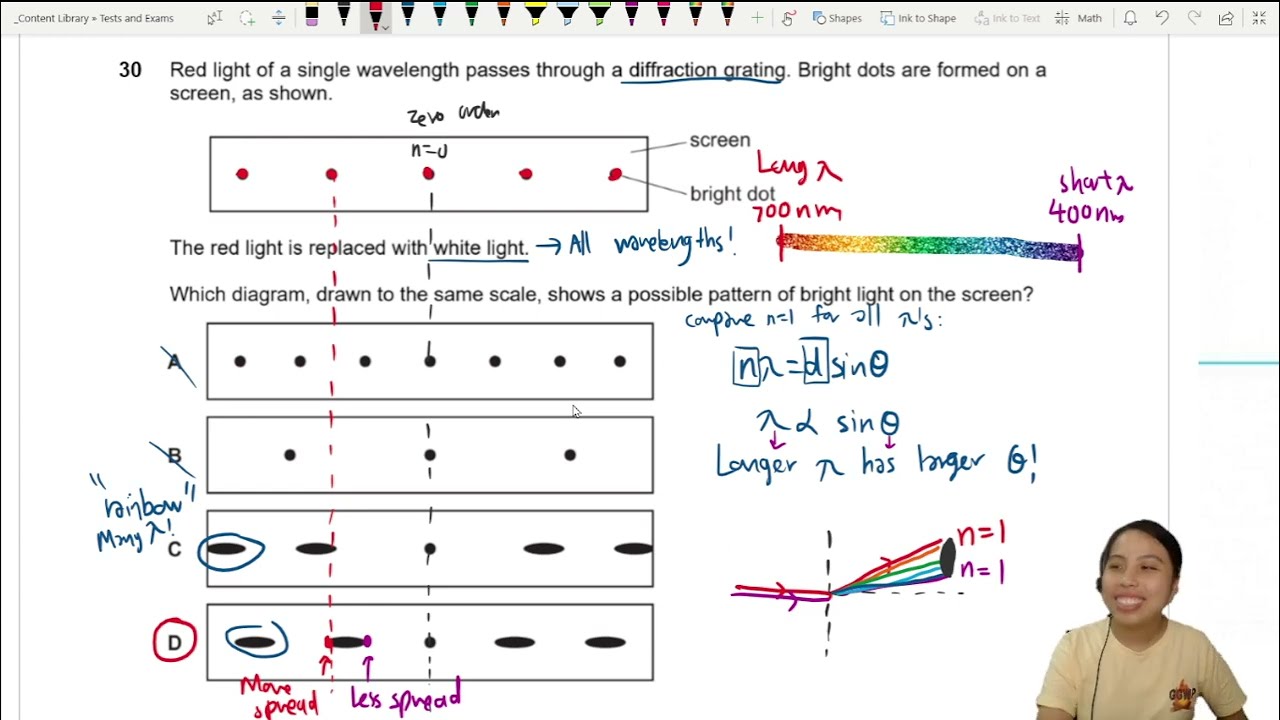
Added:Understanding the visible light spectrum and that white light is composed of multiple wavelengths (colors).
Basic wave-matter interactions, specifically how light travels and what happens when it encounters an obstacle.
The fundamental definitions of reflection (light bouncing off a surface) and absorption (light energy being taken in by a material).
How human eyes perceive color based on which wavelengths of light are reflected back to our eyes versus which are absorbed.
Exploring light refraction and Snell's Law to understand how light bends when passing through translucent mediums like gelatin.
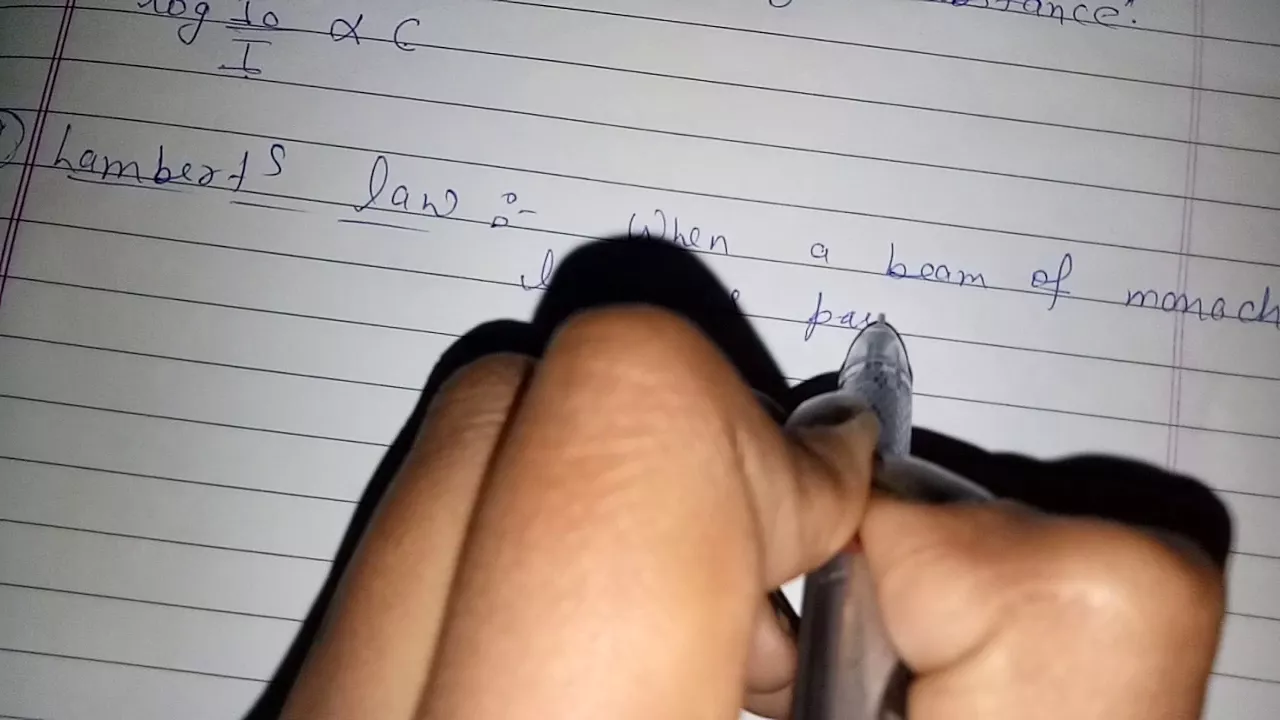
An introduction to the Beer-Lambert Law, which mathematically relates the absorption of light to the properties of the material it is traveling through.
Investigating subtractive color theory to understand how filters, dyes, and paints create colors by absorbing specific wavelengths.
Analyzing real-world applications of selective light absorption, such as photosynthesis in plants, solar panels, and optical fiber communications.
245.1K views740likes5:02Original Release: 2008-06-12
hi I'm Claudia today's demo is about light absorption and we are going to learn about this in a very fun way by using gummy burs and laser pointers the materials that we need are gummy bears gummy worms a flashlight and two laser pointers since we will be handling lasers there's three safety measures that you need to remember first do not look at the L laser beam ever second do not point the laser beam at anybody and third do not point the laser beam at any reflective surfaces such as mirrors or aluminum foil and with that said let's start our activity as you can see I have a line the red gummy bears and the green gummy bears and now I am going to take my red laser pointer and I'm going to shine it through the red gummy bears look what happens oh as you can see the light is passing right through them and exiting on the other side now I'm taking the green laser and I'm going to shine it through the green gummy bears look what happens o as you can see the light is passing right through them and exiting on the other side so now see what happens when I switch the laser pointers now I'm going to take the red one again but now I'm going to shine it through the green gummy burst wo what happened to the light okay so now let's do this with the green laser pointer so I will take this one and I will shine it through the red gummy bears Oho as you can see no light is passing through now I'm going to take my flashlight and I am going to pass the light through the red gummy bears oh as you you can see the light is passing through but the gummy bears actually look red even when this is white light now if I shine this white light through the green gummy bears look what happens the light is passing through but it's actually green okay so what's happening here as we know the white light is composed of all the colors of the rainbow and when we are passing it through the red gummy bears all the colors of the rainbow have been absorbed except for the red part of this white light and the same happens when we light the green gummy be as you can see all the other colors of this white light are been absorbed and then the only light that is passing through is a green one thus what we can understand from this is that the light of the same color of the things that you see will just pass through and all of the other lights will be absorbed to further understand this concept we can use the gummy worms and the white light if we take the white light and we pass it through these gummy worms as you can see the only light that is passing through is the green one at the green part and then at the orange part you can see how orange light is coming at the other end here is a yellow part of this gummy worm and just yellow light is passing through and then for the red one as you can see only the red light is passing through thus the rest of the lights that compose this white light are been absorbed now see what happens when I shine the green laser through my finger as you can see the light is not passing through which means that I am absorbing it now let's do the same with the red laser so I am going to pass it through my finger and as you can see the light is actually passing through I am not absorbing it and now let's do the same but now with the white light and as you can see it's turning like red what's going on here so as you can see I am just letting the red light pass through and this is because inside because of the blood I am pretty much red all the lights of the other colors are absorbed by my finger except for the red one once again I'm Claudia from the interdisciplinary Science Education team here at cbsd thanks for watching
Up Next
17:31
The Science and Engineering of Sound and Microphones
@FilmmakerIQ
169.7K views•2014-08-20

12:53
21cm Hyperfine Transition in Neutral Hydrogen: Radio Astronomy Basics
@AaronRobertParsons
12.4K views•2011-10-13

32:32
NMR Spin Physics I: Zeeman Effect, Resonance Condition & Larmor Frequency
@nptel-indianinstituteofsci8064
2.3K views•2024-01-17

27:14
Entropy and the Second Law of Thermodynamics Explained
@veritasium
27.5M views•2023-07-01
Related Study Plans & Knowledge Roadmaps
Structured learning paths in Physics
physics
Nuclear Physics (Decay, Fission & Reactors)
01Atomic Structure and the Binding Force
02Radioactive Decay and Half-Life
03Nuclear Fission Mechanics and Chain Reactions
+ 2 more learning modules
12h5 modules
Explore Roadmap
physics
Soft Matter (Polymers, Colloids & Rheology)
01Foundations of Soft Matter & Thermal Forces
02Polymer Physics and Macromolecules
03Colloids, Surfactants, and Self-Assembly
+ 2 more learning modules
38h5 modules
Explore Roadmap
physics
Analytical Mechanics: Lagrangian & Hamiltonian
01Mathematical Foundations: Calculus of Variations
02From Newtonian Mechanics to Constraint Dynamics
03The Principle of Least Action & Lagrangian Mechanics
+ 3 more learning modules
28h6 modules
Explore Roadmap
physics
General Relativity (Spacetime & Cosmology)
01Foundations of Relativity: Special Relativity
02The Geometry of Spacetime: Equivalence Principle & Curvature
03Einstein's Field Equations: The Mathematics of Gravity
+ 2 more learning modules
55h5 modules
Explore Roadmap