


























Sound is our brain's response to atmospheric pressure changes created by vibrating objects, forming longitudinal waves with compression and rarefaction that travel through air at the speed of sound; these waves can be characterized by amplitude (wave strength), frequency (cycles per second measured in Hertz), phase (starting point of the wave), harmonic content (whole number multiples of the fundamental frequency that create timbre), and envelope (attack, decay, sustain, release); since human hearing operates on a logarithmic scale spanning approximately 10^13 to 1, sound loudness is measured using decibels (dB), where dB SPL compares sound pressure to the quietest detectable sound (20 micropascals) and dBm compares audio signal power to 1 milliwatt, with key relationships like +3dB doubling signal strength and +10dB increasing it tenfold; microphones convert sound waves into electrical signals through three main technologies: dynamic microphones use electromagnetic induction with a diaphragm and voice coil, ribbon microphones use a thin aluminum ribbon for high-frequency response, and condenser microphones use electrostatic principles with charged plates, each with different directional polar patterns (omnidirectional, cardioid, supercardioid, figure-8) suited for various filmmaking applications.
The Science and Engineering of Sound and Microphones
Added:Hi, John Hess from FilmmakerIQ.com and today we’re going to dive into the science and engineering of sound and microphones.
As vision is our brain’s response to electromagnetic radiation in the form of light waves- sound is our brain’s response to atmospheric pressure changes. Well, we’re not exactly a weather barometer - but the concept is the same.
Let’s imagine a tightly wound string - that of a guitar. When the string is plucked, the string vibrates, pushing the air molecules around it. The push is called compression and it creates a peak of high pressure. Now as the string retracts, we have rarefaction - a trough of low pressure.
This repetition of compression and rarefaction creates what’s called a longitudinal wave or a compression wave - that’s a wave where the molecules are moving in the same direction as the wave itself. It’s worth noting that the molecules pretty much stay in one place, it’s the energy that is moving through the air at the speed of sound.
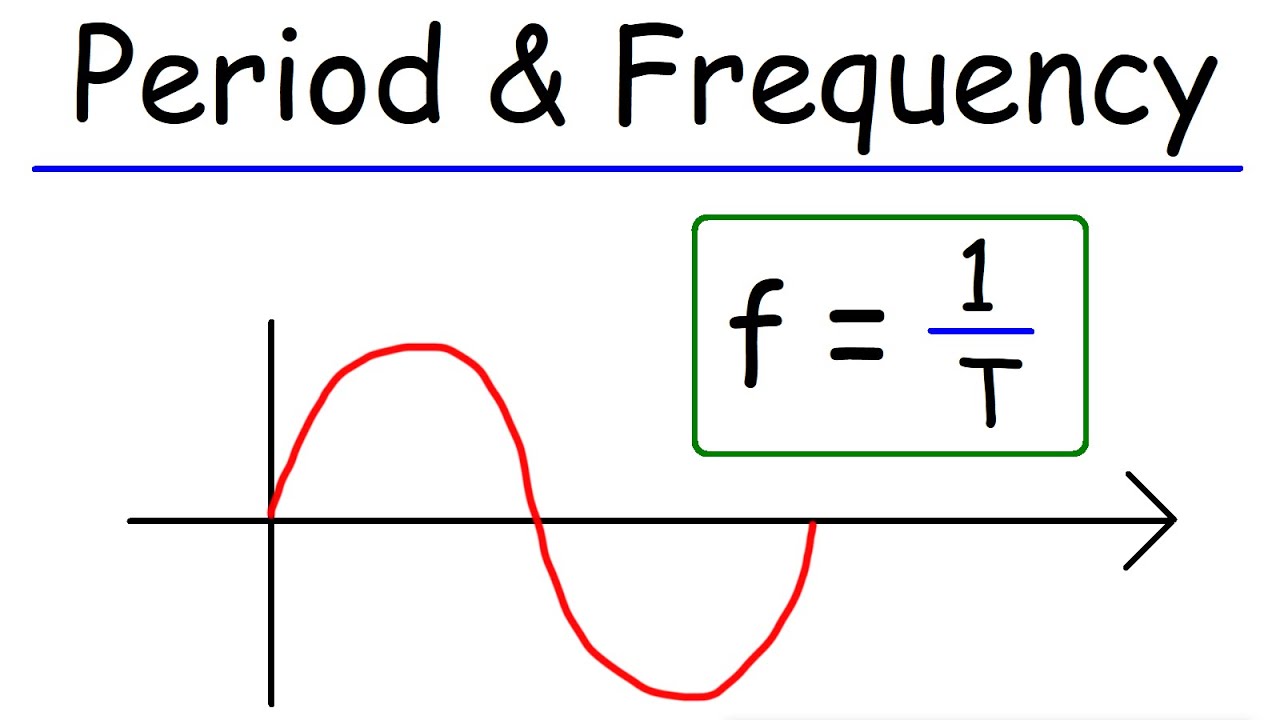
If we plot the changes in air pressure created by the sound wave against time - we get a waveform. Through waveforms we can visualize some key aspects about sound.
The first is amplitude. Amplitude is the strength of the wave itself - The greater the distance from the centerline, the more intense the wave. A common method of describing amplitude is something called RMS - root-mean-square which is a mathematically handy way of determining the average amplitude of a wave.
Then there’s Frequency - the rate of how many cycles of peaks and troughs are in a given period of time. This is most commonly measured in Hertz - or cycles per second.
one hertz is one cycle per second - as we go up in the number of hertz we perceive a rising in pitch. 440 hertz is the standard that musicians use to tune their instruments which corresponds to the A on second space treble clef.
Since a sound wave cycle can begin at any point in the waveform, we have to consider phase - when we record sound, at what point do we pick up the sound wave? This isn’t an issue when dealing with a single wave, but when you combine waves, when using stereo microphones and speakers, waves that are in opposite phase will add together cancel each other out which not what we want.
As we move into more complex waveforms we start dealing with harmonic content and this is what makes music and voice so wonderful. Let’s go back to our string example - let’s say this string vibrates at 440 hz - an A. But it’s also vibrating at higher frequencies - The most basic are whole number multiples of the fundamental frequency, such as 2 which gives us 880 hz this is a whole octave A above the fundamental frequency, Its also vibrating at the third multiple for 1320 hz which is an octave and fifth and E and so on up the multiples of the fundamental frequencies - some of these resonate louder than others and there are some other oddball frequencies thrown in there too and all this is happening every time that string gets plucked. These extra frequencies are called harmonics. Though these harmonics aren’t as loud as the fundamental frequency, they shape and color the sound making it possible to distinguish between two different instruments playing the same pitch say a french horn and a trumpet.
The final aspect of the waveform we need to examine is the envelope. The envelope describes the shape of a sound over time which starts with the attack - the time it takes for a sound to build up to full volume. The decay - how quickly a sound levels off to a sustain after the intial attack, the Sustain - the ongoing sound and finally the release, how quickly the sound decays after the note is released.
Now that we have a basic grasp of what sound is and how to describe it in terms frequency, phase, harmonic content and envelope, lets go back and look at amplitude or loudness - how we measure the strength of sound. The human ear has quite an amazing ability to detect sound waves - capable of an energy range of approximated 10^13 to 1. With such an enormous range, we have to use a logarithmic scale to define loudness when working with audio. Fortunately our ears respond to sound in a logarithmic fashion.
Basically a logarithm of a number is the exponent to which another fixed value, the base, must be raised to produce that number.
So say we want the log of 10 using base 10. 10 to the first power is 10 - so the log is 1. The log of 100 is two because 10 to the second power is one hundred. The log of 1000 is three - and so on. Logs make working with exponential scales easier which is why they’re so useful in this discussion but don’t get too hung up on the math.
The unit used to describe sound loudness is the decibel. Originally implemented by Bell Laboratories to describe signal loss in telephone lines, the decibel - which was formally introduced in 1928, describes the relationship between two different signals as 20 Log (signal strength using root mean square divided by the reference signal strength).
Now notice, the decibel isn’t a measurable unit like a centimeter, it’s a comparison and you always need a reference. For determining loudness of sound pressure, we use the quietest sound that can be detected by average human hearing - this number has been internationally agreed to as 20 x 10-6 pascals or 20 micropascals.
Now we can compare the sound pressure of noisy things to this bare minimum and we can derive a decibel vaues from a soft whisper around 30 dB SPL to freight train at 100 ft from 70dB SPL up to a Jet Takeoff from 200 feet registering at 120 dB SPL. Notice the distance is always notated as sound waves dissipate according the inverse square law.
Safety regulations have risen around these decibel ratings - 85 dB and below you will be fine for 8 hours. Cut that time in half each 3 dB you go up.
But sound pressure level is only one kind of decibel. For filmmakers, we are more likely to encounter decibels in regards to power of the audio signal when carried through and audio system. Here the equation is slightly different. A dBm = 10 log P/Pref - where P is the measured wattage and the reference is 1 milliwatt.
Its really easy to get lost in the science and engineering mathematics but the dBm is the most common expression used in audio equipment and audio workstations. There’s a few concepts that are relatively easy to grasp: Turning up something by 3dB will double the signal strength - but because our ears are so logarithmically sensitive, doubling the strength doesn’t mean double the loudness.
Consequentially Turning down 3dB halves the signal strength which is also not as significant as you might think.
And because we are using log, turning something up by 10 dB means we are actually increasing the signal 10 times. 20 dB means we are increasing the signal 100 times and 30 dB means the signal is boosted 1000 times.
Does the math matter to the working professional? Probably not. As you work in audio you will start to intuitively know what a boost of 3 db gain and 6 db gain sounds like. Just know that there’s a tremendous amount science and engineering behind all of this.
Okay, so how do capture sound waves and turn them into electrical current which we can record?
There are a couple different ways of capturing sound and we’ll cover three of the most common ways for recording.. The simplest is the dynamic microphone. In a dynamic microphone a thin diaphragm is connected to a coil of wire called a voice coil which is precisely suspended over a powerful magnet. As the sound waves strike the diaphragm it cause it to vibrate, moving the voice coil through the magnetic field generated by the magnet which generates a small bit of electricity which is sent down the output leads. This is the audio signal - an electronic representation of the actual sound wave.
The advantages to simple and robust design of the dynamic microphone is they can handle loud sources without much distortion. Unfortunately this makes them weak when trying to capture soft distant sources because the diaphragm needs lot of sound energy to move.
A variation on the dynamic microphone is the ribbon microphone. Instead of using a coil, ribbon microphones use a small strand of very thin 2 microns thick aluminum ribbon. This ribbon is more responsive to high frequencies with the drawback that the ribbon is fragile and prone to tearing. Ribbon microphones are almost exclusively used in the studio, not for location audio.
The final type of microphone commonly used in film is the condenser mic. Condensers use two charged plates, one fixed and one which can move acting like a diaphragm. Unlike dynamic mics, there’s no coil. Instead of using the electromagnetic principle, condensers use the electrostatic principle. The two charged electric plates create what’s called a capacitor.
As sound waves strike the electrically charged diaphragm, it moves in relation to the fixed plate changing its capacitance and generating a very small electric charge which is amplified inside the microphone.
The advantage of condenser mics is their response. Because you’re not moving a coil, condensers can be more responsive in the high frequencies. Because you don’t have any magnets, condenser microphones can be made very small.
Because condensers work with electrically charged plates, that means they require some sort of outside power. Some microphones have the option of an onboard battery while all condensors can utilitzed something called Phantom Power +48v from the audio recording or mixing board.
There’s not one microphone that is perfectly suited for all applications. We’ve already covered three kinds of sound conversion technologies, lets take a brief overview of the kinds of microphones that are used in film and video production and of course we’re just going to scratch the surface on what’s available.
When choosing a microphone, we have to consider the directional response which often times represented by something called a polar pattern. There are a few common types of polar patterns The omnidirectional pattern means the mic is responsive to sound from all directions, you don’t have to be “on axis” to be picked up. These mics are useful for picking up sound in a general area but the draw back is they will pick up all the unwanted sound in the area. An example of this omni directional mic is the RODE Reporter mic which is designed from news interview applications - you don’t have to point it directly at the source, just get it close to speaker.
Directional mics are more picky. The most basic is the Cardioid pattern. Notice how it picks up what’s in front but not behind. An example is the RODE M1 mic, a dynamic microphone that is suited for live performance as it picks up the sound on axis but won’t pick up what’s behind it, like crowd noise or feedback from a speaker. The RODE NT55 is an example of a cardioid condenser which has the option of switching from cardioid to omni-directional.
The NT55 and other large diaphragm condenser mics like the beautiful sound RODE NT-1 are well suited for voice over and other studio recording applications.
More directional are the Hypercardioid and Supercardioid polar pickup patterns -the RODE NTG-2 shotgun microphone is an example of a supercardioid mic which picks up the front and sides and rejects 150 degrees to the rear. This condenser microphone used in conjunction with a boom pole, is great for recording location audio while trying to filter out some of the unwanted ambient sound. For working in even noisier situations you may look to something like the super long RODE NTG8 microphone which is great for noisy outdoor use.
Some condenser and ribbon microphones will feature a figure 8 pickup pattern or bi directional pickup pattern. Mics like the RODE NT2000 can be switched into a bidirectional pattern which is useful for certain musical applications.
There are two other kinds of microphones that have a place in the film and video production world that we haven’t talked. The most common is the lavalier or lapel mic. Mics like the RODE Lavalier and PinMic are small condenser microphones with an omnidirectional pickup pattern that are designed to be placed on the talent to capture sound. They work on proximity and when combined with a wireless transmitter and receiver can offer the most freedom when recording audio. But because of their size and the placement on the body of the talent, lavs won’t have quite the same richness of sound as a shotgun or studio condenser mic.
Another useful type of mic is called the boundary mic. Boundary mics are omnidirectional condenser mics that are positioned flush with a surface that capture sound as it rolls off the flat surface. Boundary mics find a lot of use in stage production.
Between hand held mics, shotgun mics, studio condensers, lavaliers and boundary mics these will be the microphones you will need for the vast majority of situations you will encounter when making films and videos.
Remember sound is a crucial part of the filmmaking process and in some cases, good clean sound is actually more important that a pretty picture. We’ve just scratched the surface of the science of sound and microphone technology but now it’s up to you to research and experiment with recording sound. Go out there and make something great, I’m John Hess and I’ll see you at FilmmakerIQ.com
Up Next

How Does a Compact Disc (CD) Work? Physics of Optical Storage
@AKIOTV
319.6K views•2017-01-08

21cm Hyperfine Transition in Neutral Hydrogen: Radio Astronomy Basics
@AaronRobertParsons
12.4K views•2011-10-13

NMR Spin Physics I: Zeeman Effect, Resonance Condition & Larmor Frequency
@nptel-indianinstituteofsci8064
2.3K views•2024-01-17

Entropy and the Second Law of Thermodynamics Explained
@veritasium
27.5M views•2023-07-01
Related Study Plans & Knowledge Roadmaps
Structured learning paths in Physics