


















![MIGRATION & IMMIGRATION in the 1990s & 2000s [APUSH Review Unit 9 Topic 5] Period 9: 1980-Present](https://i.ytimg.com/vi_webp/mHn9kOMPgRo/maxresdefault.webp)
![Postwar ECONOMIC Prosperity, Causes & Effects [APUSH Review]](https://i.ytimg.com/vi/KZA_004n2To/maxresdefault.jpg)










Americans have been migrating to the Sun Belt since after World War II due to several interconnected factors: the widespread adoption of air conditioning made the region's hot summers more livable, federal government investment in defense and aerospace industries created jobs in cheaper Southern locations with less union presence, the oil boom in Texas provided economic opportunities, tourism flourished due to mild winters, the interstate highway system improved connectivity, Southern governments offered business incentives, and the overall lower cost of living attracted new residents. This migration trend accelerated significantly in the 1970s, with Phoenix growing by 55% during that decade alone, and continues today as 11 of the 15 fastest-growing major U.S. cities are located in the Sun Belt region.
Sun Belt Migration: Post-WWII Economic and Demographic Shifts
Added:This video is about why Americans are moving to the Sun Belt in huge numbers and why this has been the case since right after World War II.
I am making this alongside Grant Hurst, who has a video about why Americans have been leaving the Rust Belt in huge numbers.
Where do you think most of them are ending up?
That’s right, you bloody genius.
In the Sun Belt. Extra credit for you.
But be sure to check out Grant’s video after watching this one, and while you’re over there, you had best subscribe to his terrific channel.
So anyway, yeah, Americans are moving South. In huge numbers.
Between July 2015 and July 2016, Harris County in Texas, where Houston is located, grew an average of 155 people per day.
Maricopa County in Arizona, where Phoenix is located, grew an average of 223 people per day during that same time period.
11 of the 15 fastest growing major cities in the United States are in the region known as the Sun Belt.
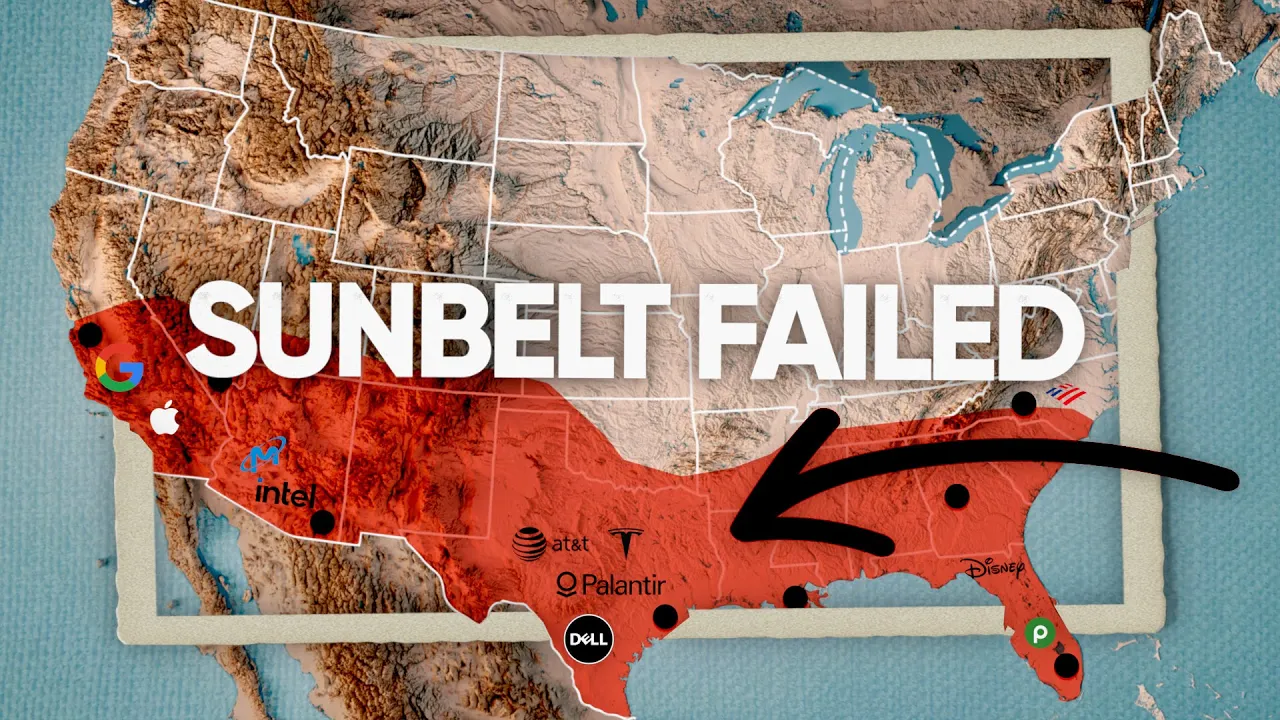
The Sun Belt generally stretches across the entire Southern portion of the United States, including the states of Florida, South Carolina, Georgia, Alabama, Mississippi, Louisiana, Texas, New Mexico, Arizona, Nevada, and California.
It’s definitely an arbitrary definition.
Some geographers label the Sun Belt any part of the United States south of the 36th parallel.
With that definition, you would add the states of Oklahoma, Tennessee, and North Carolina to the region, and the map would look like this.
The Sun Belt is currently known for it’s mild winters, the tourism associated with those mild winters, growing economic opportunities, and its, uh, SUN.
As in it’s always sunny. It’s not always sunny in Philadelphia. It’s always sunny in Phoenix.
Political analyst Kevin Phillips first popularized the term “Sun Belt” in 1969 in his book The Emerging Republican Majority, and the term continues to stick around.
However, as I said before, Americans had been flocking to the South since right after World War II.
But why, Mr.Beat? WHY?!?
First, let’s just get the obvious reason out the way.
Many Americans, especially retiring Americans, just wanted to settle down in a warmer climate.
Winters in the Midwest and Northeast can be brutal.
So why did they wait until after World War II?
Well, this was around the time home air conditioning units became affordable.
Sure, winters in the South can be heaven, but the summers can also be relentless, but after air conditioners became widespread, it was much easier to deal with those 115 degree afternoons in Arizona.
So retirees were flocking down there, but what about those looking for work?
After World War II, there seemed to be plenty of jobs waiting for Americans down in the South.
The federal government spent most of its Cold War money on the defense and aerospace industries of the South, where everything was cheaper compared to the North.
Workers could even be paid less, in part due to there being less labor unions in the South.
The Sun Belt also received much more money than the north from the federal government in terms of military and aerospace spending.
Oil boomed in Texas. Tourism obviously boomed pretty much everywhere in the Sun Belt.
The creation of the interstate highway system in the 1950s opened up once isolated southern regions to the rest of the country.
Southern governments offered incentives for businesses to move there.
Part of the region’s economic growth came from introducing new farming technologies in arid areas.
Speaking of arid, yeah, much of the Sun Belt is pretty dry.
"Not as dry as you, Mr. Beat." Alright, quiet you.
Irrigation from redirecting water can only last for so long, so this remains a serious challenge in the future for the American Southwest in particular.
Oh, and I forgot to mention, the cost of living was much cheaper in many areas of the Sun Belt.
By the 1970s, the Sun Belt was growing at a ridiculously high rate.
In that decade alone, Phoenix grew by 55 percent.
And while there have been the occasional, temporary setbacks ever since, this trend has not slowed down.
Today, the Sun Belt states are where most of the growth occurs.
In 2020, expect those states to be gaining electoral votes.
In 1970, Phoenix was the 20th largest city in the country. Today, it’s the fifth. Impressive, Phoenix.
But while the Sun Belt states keep growing, 8 states actually lost population between 2015 and 2016.
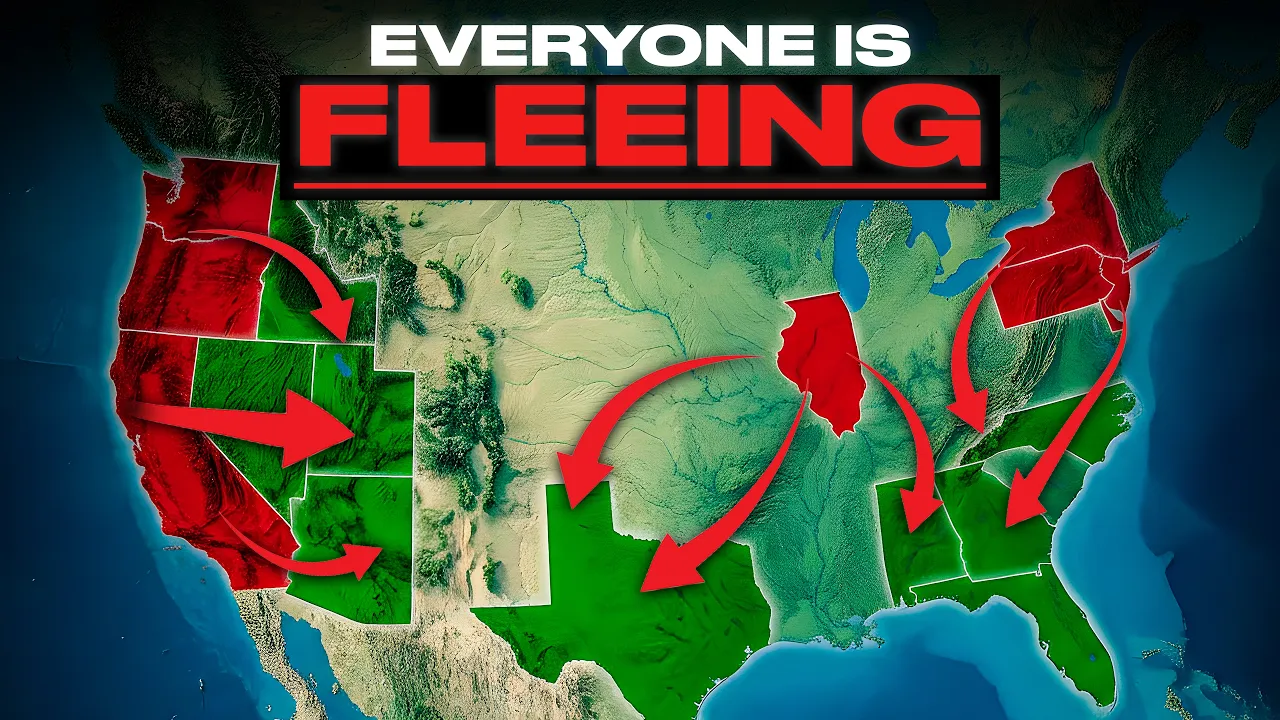
Most of these states are part of the Rust Belt, a region of the country from the Great Lakes to the upper Midwest associated with declining industry.
To find out why so many Americans continue to flee the Rust Belt, check out Grant Hurst’s video on the topic.
And again, please subscribe to his tubular channel while you are over there.
Thanks for watching, thanks to my Patreon supporters you see here, and next week there will be the glorious return of Supreme Court Briefs.
Up Next

Governance Beyond Dunbar's Number: Daniel Schmachtenberger & Lex Fridman
@LexClips
151K views•2021-06-15

Contemporary Sociological Theory: Micro, Macro, Integrative
@NaSESYNC
45.7K views•2016-02-17

How to Analyze Conversations Scientifically | Elizabeth Stokoe | TEDx
@TEDx
1M views•2014-12-04

What is Sociology? The Sociological Perspective Explained
@crashcourse
4.6M views•2017-03-13
Related Study Plans & Knowledge Roadmaps
Structured learning paths in Sociology