


![2026 공인중개사 시험대비 민법 및 민사특별법|채희대 교수|기본강의 2시간 [ebs 공인중개사 랜드하나]](https://i.ytimg.com/vi/pIeVonFuhAw/maxresdefault.jpg)

















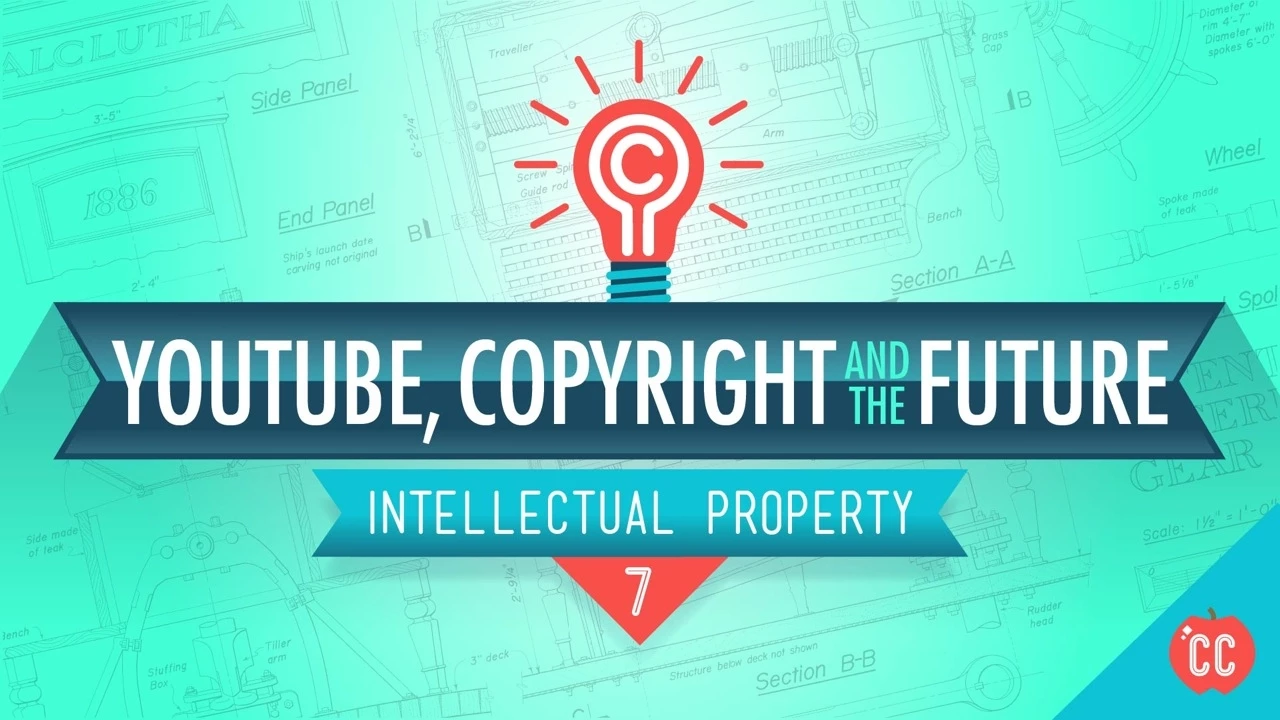
Intellectual Property (IP) is a legal framework that protects nonphysical creations of the mind, including copyrights (protecting creative works like books and music), patents (protecting inventions), and trademarks (protecting brand identifiers), by granting creators exclusive rights to their intellectual efforts for a limited duration, thereby balancing the tension between information's value and its tendency to spread freely through technology.
Intellectual Property Law Explained: Copyright, Patents & Trademarks
Added:The distinction between tangible property (physical goods) and intangible assets (ideas, designs, and creative expressions).
The basic structure of the legal system, specifically how civil laws protect individual rights and regulate business competition.
The foundational economic concept of incentives, specifically how granting temporary monopolies can encourage innovation and creativity.
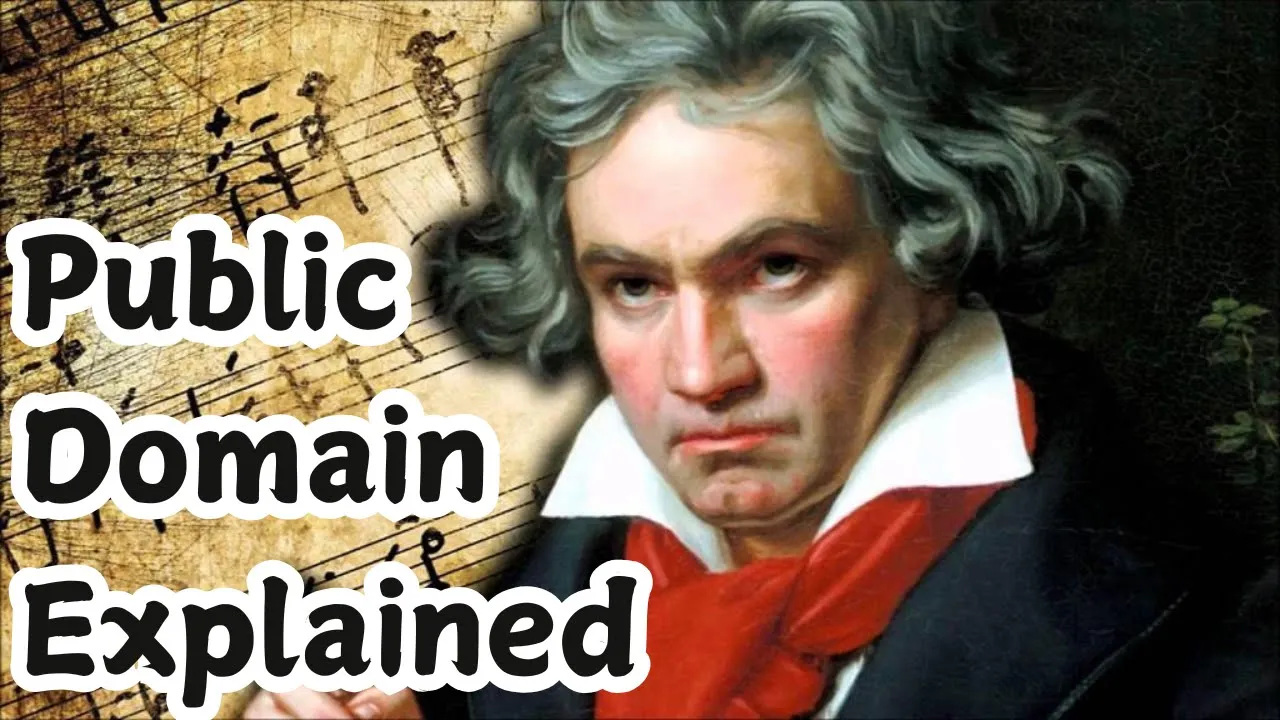
A general understanding of what constitutes 'public domain' and why some works are free for public use.
International Intellectual Property frameworks, such as the Berne Convention, the Madrid System, and the role of the World Intellectual Property Organization (WIPO).
The legal and practical mechanics of IP licensing, including royalty structures, Creative Commons, and open-source software licensing.
The concept of Trade Secrets and Non-Disclosure Agreements (NDAs) as an alternative method of protecting proprietary corporate assets.
Modern challenges in IP law, including digital piracy, the Digital Millennium Copyright Act (DMCA), and the ownership of AI-generated content.
1.1M views16.3Klikes10:10Original Release: 2015-04-23
Hi, I'm Stan Muller. This is Crash Course and today we begin our miniseries on Intellectual Property.
Hey, isn't the entire concept of Intellectual Property illegitimate?
I mean, how can we justify locking up the world of science and arts so corporations, publishing houses and other gatekeepers can control what we know and what we think! Information wants to be free, man!
Hey, me from the past! There's a Stan from the past! This is great!
Stan: Hey! Me from the past! There's a Stan from the past, this is great!
Anyway. I can tell by looking at your vacant and bloodshot eyes that you've been up all night downloading Chumbawumba records over a dialup connection. I remember those days, and I remember desperately trying to cling to any ethos that justified your rampant copyright infringement.
That is if you ever participated in such activities. And even if you had participated in said infringing activities, the statute of limitations has likely run out. I don't even know what LimeWire is!
[Theme Music] I like how this is getting started, because Stan from the past raises some interesting points!
There's a good chance that he, and a lot of you watching this video, might think about aspects of Intellectual Property as outdated and pretty much irrelevant.
Maybe lots of you don't think of it at all!
That line, "Information wants to be free", has been used to argue that current intellectual properly laws are outdated, over-broad and generally awful.
The quotation is attributed to Stewart Brand and he said this to a group of computer programmers in 1984.
"On the one hand Information wants to be expensive, because it's so valuable. The right information in the right place just changes your life.
On the other hand, information wants to be free, because the cost of getting it out is getting lower and lower all the time. So you have these two fighting against each other."
The full quote, which you hardly ever hear, actually spells out the major tension between intellectual property and technology quite well.
And it did it more than 30 years ago, when the digital age was just beginning. As information technology becomes more and more pervasive and important in our day-to-day lives in the information society, information itself becomes exponentially more important and more valuable.
Paradoxically, as our information technology improves, and as our computers and connections get better and faster, and sharing becomes easier, we're less able to control the copying and dissemination of this incredibly valuable information. The law of supply and demand pushes down the information's value. This tension is nothing new.
Technology, especially in the context of copyright law, has always presented challenges.
Socrates's and Plato's 'Phaedrus' bemoaned the advent of books, arguing that they "will implant forgetfulness in [human beings'] souls; they will cease to exercise memory because they rely on that which is written, calling things to remembrance no longer from within themselves, but by means of external marks."
One way that humans have attempted to deal with these new technologies, with varying success, is by passing laws. The scourge of the piano roll was contemplated in the 1909 Copyright Act, the photocopier in 1976, and the Internet was covered in the 1998 Digital Millennium Copyright Act.
But we're going to try to avoid this simplified intellectual property versus technology binary.
The idea that we have to choose between devaluing the fruits of intellectual talent and labor, or devaluing the revolutionary information sharing capacity of our networks, is wrong-headed.
The more interesting and more difficult question is how we can strike a balance; how we can incentivize and promote this revolution in the way we share information, while at the same time incentivizing and promoting the production of creative works and inventions by having respect for the human beings that actually created them.
The difference between today's debates and those that took place 100 years ago is that intellectual property pervades our lives more and more every day.
This is especially true for anyone viewing this video. I know that about 90% of you view Crash Course in a web browser, so consider the layers of IP in this very YouTube page.
A lot of what you're looking at is covered by copyright. This video, for example, is covered as a motion picture work. The website itself is considered a literary work.
The Thought Bubble, the theme song, and the video you watched right before this one, all have copyright protection. The software that streams the video is also a literary work.
The web browser you're using is most likely registered as a computer program, as is the operating system. Lest you Linux weirdos think that you don't have a copyright on your OS: You do. You're just not enforcing it.
Even your comments could be covered by copyright. That haiku you just posted: "Who is this person? What happened to Mr. Green?
Dislike. Unsubscribe."
That's copyright-able! When you agreed to this [image of YouTube user agreement], you granted YouTube a worldwide, perpetual, non-exclusive license to use your content in any way they see fit.
There are also patents in play here. There's proprietary video streaming technology, and many of the components in your computer are patented. But wait! There's more!
YouTube is a registered trademark, and if you saw an ad before this video, there was most likely a trademark in there. This is a trademark and under this sticker is an image of a piece of fruit, also a trademark.
And behind the camera, our most precious and valuable mark, Mark Olsen. Mark Olsen, everybody!
The search algorithm that got you here? That's a trade secret. My appearance in this video, and subsequent marketing of commemorative mugs with my likeness fixed on each one- that implicates my right of publicity.
If you're watching this on an iPhone or an Android, there's a whole other world of copyrights and patents that apply.
When you start to deconstruct it like this, it's dizzying. But despite all this complexity, most of the time the system moves along with a fluidity that sometimes makes it easy to put it out of your mind. Kind of like the internal functioning of your digestive tract.
But it's there. Always there. Gurgling and churning and functioning. Did anybody order lunch?
Now most of this fluidity and seamlessness is borne on the back of hundreds or thousands of lawsuits, many of them against Google, thousands of pages of intricately complex contracts, and hundreds of millions of take down notices.
The point is that none of us, or very few of us, can go about our daily lives without being impacted by intellectual property. It's only when it hits home, like when you receive that cease-and-desist letter from a trademark attorney for opening a restaurant called Burger Queen, or digital rights management software stops you from listening to your iTunes downloads on your Zune.
Maybe your YouTube video gets taken down because of that T-Swizzie song in the background (that's what the kids call Taylor Swift).
Maybe you get a letter from your internet service provider, informing you that someone using your account has downloaded every episode of Game of Thrones and that if it keeps up you may be fined or imprisoned- or beheaded! That's when it flares up.
Flare up! God, are we still on the digestive tract metaphor? Somebody get me a Tums. Tums, by the way, registered trademark of the GlaxoSmithKline group of companies.
Most of us encounter IP only on its borders.
We hear horror stories about the motion picture and recording industry suing grandmothers.
We watch those unskippable FBI messages warning us about the consequences of copyright infringement, or we complain about paying thousands of dollars per pill for medicine.
We tend to encounter intellectual property law in places where we, as users, are basically being told 'no'. And being told 'no' over and over again is irritating, especially when these "no's" don't seem to make any sense. And they're really irritating when they come with threats of fines or imprisonment.
So in this course we're going to focus less on enforcement and the "no's" and more on the part of intellectual property that often says 'yes', 'sometimes', 'maybe', 'it is certain', or even 'ask again later'.
I'm speaking, of course, of the "Liquid filled die agitator containing a die having raised indicia on the facets thereof", registered as patent US 3119621, which you might know as the Magic 8-Ball.
Before we get too far, we should probably define intellectual property. This is going to get pretty abstract, so let's go to the Thought Bubble.
The theoretical definition of intellectual property would begin by saying that it is: "Nonphysical property that stems from, is identified as, and whose value is based on an idea or some ideas."
There has to be some element of novelty; the thing that we describe as intellectual property can't be commonplace, or generally known, in the society where it's created, at the time that it becomes property. You can't claim that you invented the wheel or that you wrote Moby Dick.
Even though the source material for all IP is social -- the inputs are our education, our human interactions, and basically all the sensory data around us that we take in -- the thing that we call 'IP' is the product of us putting together all these social inputs into something that we're gonna call "the idea".
"Only the concrete, tangible, or physical embodiments of the idea are protected by intellectual property law."
The idea has to be fixed into a form and location in which humans have access to it. That could be a novel, or a logo, or a liquid filled die agitator containing a die having raised indicia on the facets thereof.
Thanks, Thought Bubble. So in its purest and best form, IP is the propertization of intellectual effort and talent.
In its most corrupt and worst form, intellectual property can be, and has been used by the propertied and powerful to protect concentrated markets and broken business models.
At its very worst, it can be used a a censorship tool.
Intellectual property differs somewhat from real property like cars or houses because it's limited in duration and scope. For example, copyrights last for the life of the author plus 70 years.
Copyrighted works can be copied under the fair use exception for certain personal or publicly beneficial uses. Let's say a book reviewer quotes long passages of a novel, then pans the book. It's likely the author of the book wouldn't grant permission for this type of use. But we want to encourage informed public discourse. So there's a good chance it would be found to be a fair use.
Patent laws carved out a limited experimental use exception that permits minimal use of a patent for amusement, to satisfy idle curiosity, or for strictly philosophical inquiry.
Again, the patent owner probably wouldn't like this, but the law wants to encourage individual tinkering. Both these limitations exist to serve the primary objective of intellectual property: that's to promote the progress of science and useful arts by increasing our stock of knowledge.
So in this series, we're going to focus on the 3 main branches of intellectual property: copyrights, patents, and trademarks. We won't have time to get into some of the lesser cousins of the family like trade secrets or the right of publicity, but all of these are included under the umbrella of intellectual property.
So in the coming weeks we're going to try to get at some of the nuts and bolt of what intellectual property is, because like it or not, IP is only going to become more and more relevant as our lives become more and more digital.
So regardless of what or how you feel about any aspect of IP, it's probably a good idea to have some basic knowledge of it. It doesn't matter if you're a consumer or a creator of protected content or both. Is understanding IP going to help you?
You may rely on it. See you next week.
Crash Course: Intellectual Property is filmed in the Chad and Stacey Emigholz here in sunny Indianapolis, Indiana, and it's made with the help of all of these nice workers for hire.
If you'd like to help us make Crash Course in a monetary way that doesn't imply any ownership in the final work, you can subscribe at Patreon, a voluntary subscription service where you can support Crash Course and help make it free for everyone forever. You can get great perks, but the greatest perk of all is the satisfaction of spreading knowledge. Right? So thanks for watching.
We'll see you next week.
Up Next
13:17
Copyright Law Basics for Artists Explained
@CrownePrince
88.9K views•2016-01-22
4:27
US Secondary Sanctions Impact on EU Businesses and Blocking Legislation
@Bureauvandijk
1.6K views•2019-03-20
10:00
International IP Law Explained: Berne, Paris & TRIPS
@crashcourse
235.2K views•2015-06-03

24:42
Police Interrogation Tactics: False Confessions & Legal Reform
@LastWeekTonight
7M views•2022-04-18
Related Study Plans & Knowledge Roadmaps
Structured learning paths in Law
law
Self-Defense Law: Imminence & Castle Doctrine
01Foundations of Self-Defense Law
02Imminent Threat & Reasonable Belief
03The Principle of Proportionality
+ 3 more learning modules
12h6 modules
Explore Roadmap
law
Defamation Law: First Amendment & Actual Malice
01Introduction to civil torts and the First Amendment
02Elements of Defamation: Libel and Slander
03Public Figures vs. Private Individuals
+ 2 more learning modules
8h5 modules
Explore Roadmap
law
Hearsay Rule: Trial Evidence & Exceptions
01Introduction to Trial Evidence & Courtroom Basics
02Demystifying Hearsay: The Core Definition
03Non-Hearsay: Exclusions Under FRE 801(d)
+ 3 more learning modules
14h6 modules
Explore Roadmap
law
Medical Malpractice: Law, Liability & Care
01Foundations of Tort Law and Civil Liability
02The Four Elements of Medical Malpractice
03Defining and Proving the Standard of Care
+ 2 more learning modules
12h5 modules
Explore Roadmap