

![Intellectual Property: A First Principles Debate [POLICYbrief]](https://i.ytimg.com/vi_webp/BEV6hWog2Ww/maxresdefault.webp)






![What is Fair Use After the Warhol Case? [RTP Explainer]](https://i.ytimg.com/vi/WD36B2uHUQU/maxresdefault.jpg)









Copyright protection is automatic upon creation of original works, lasting for the creator's lifetime plus 50 years, and you can only copyright tangible expressions, not ideas; derivative works require permission from the copyright owner, while Creative Commons licenses (Attribution, No Derivatives, Non-Commercial, Share Alike, and Public Domain) provide legal frameworks for using others' content, with consequences for infringement ranging from content removal to lawsuits.
Copyright Law Basics for Artists Explained
Added:Understanding the basic distinction between physical property and intellectual property.
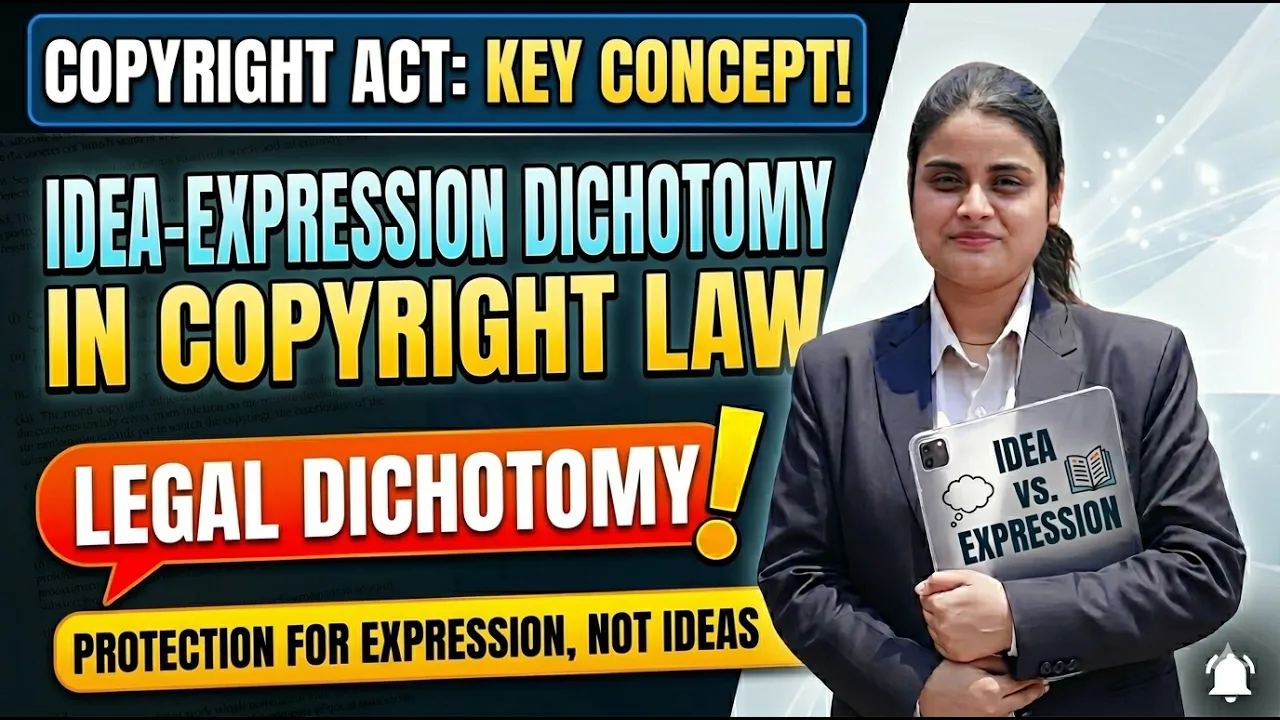
The concept of the 'idea-expression dichotomy'—knowing that copyright protects the expression of an idea, not the idea itself.
Familiarity with standard creative workflows in digital art and animation, including the use of reference materials.
A foundational awareness of what 'licensing' means in a commercial or creative context.
In-depth study of the 'Fair Use' doctrine and its application to parody, commentary, and transformative art.
The practical process of registering visual works with official copyright offices and issuing DMCA takedown notices for infringement.
Understanding contract law basics for artists, specifically 'work-for-hire' agreements and licensing contracts.
Exploring emerging legal challenges for digital artists, such as AI-generated imagery and copyright issues in Web3/NFTs.
88.9K views4.4Klikes13:17Original Release: 2016-01-22
This video is not legal advice. It's just really dang good advice. I'm taking a break from usual episodes to teach you about something I see so many people get wrong, and that's copyright, fair use, public domain, la, all that legal stuff. Now, I made a list of what you need to know, and it turned out to be too much information all at once. So, what I've done is make two videos. Two videos, two for the price of one. The first one is about copyright and licenses like creative commons and public domain. The second one is about fair use. And that video will almost guaranteed have things in it you didn't know. But you need to understand copyright first to understand fair use.
So you might be thinking, well, why should I know any of this? Well, time.
Imagine you spend a few hours, weeks, or even months making fan art only to have the company write you a letter to take it down or else. There, you've wasted a glorious amount of time making something you can't show to anybody now. Money. If you understand copyright and fair use, you know how you can safely use things other people made in your projects and still make money off of them. Or, well, at least you know how much of a risk you're taking when you do that. Defense of your art from thieves and the ability to defend yourself against people or companies who might try to scare you with fake copyright claims. All right, let's begin. Thanks to an international agreement called the Burn Convention, the basics of copyright are the same almost everywhere in the world. If you make an original work of art, music, video, animation, book, even a tiny little sound effect. Whatever it is, you automatically have copyright. You don't need to say you have copyright. You don't need to file paperwork. And you can be any age. But if you put anything in your art that belongs to someone else, music, characters, background art, photos, video footage, doesn't matter what it is, you do not have copyright on the things you took. And if you took any of those things without permission or without the right license or without fair use, then you are stealing and the person or company you stole from can take action against you. Just like if someone steals your stuff, you can take action against them. So nice and simple.
You make something original and as soon as it exists anywhere other than in your head, it's copyrighted. Your copyright lasts for at least your lifetime plus 50 years. In some countries and cases, it's longer. Well, then what happens if I make a fan animation about Simba, a character copyrighted by Disney? The answer is that I don't own Simba, so if Disney wanted to, it could sue me for using its character. And at this point, everybody starts screaming, "Fair use, fair use." fan art is fair use. It's not. In most cases, fan art is not fair use. Even if the fan art is not making money, it is not fair use. Fan art is something called derivative work. In US copyright law, a derivative work is a new piece of art that is heavily based off of one or more things that already exist. Like the main point of my Simba fan art is Simba. It's a derivative work. If you make a remix of a song, that is a derivative work. If you make an animated version of a book, that is a derivative work. If you make an animation to a song, even if everything in your animation is original, your animation is still a derivative work of the song. Those are some basic examples.
The only person who has the right to make derivative works is the person who owns the original copyright. So, if I want to make The Lion King 3: The Roarining, I need to be Disney. If I want to make an animation to the song Ghost by Mystery Skulls, I need to be Mystery Skulls. I need to own the copyright to that thing I want to use.
Now, obviously, we don't own the copyright to most things. So, the way to be able to legally use other people's stuff is to get permission or a license.
If you want to make something without their permission, the way you use their stuff needs to qualify as fair use. See the other video about fair use, which brings us to licensing. There are lots of different kinds of licenses and you can work out your own license agreement with an artist, but the most important thing for you to know about are Creative Commons licenses. These are licenses that let you use someone else's copyrighted content for free without writing to them and asking for permission. If you see one of these licenses attached to a piece of music or art, you can use it. You just need to give credit to the original artist.
Among all of the kinds of licenses, the most dangerous, the ones you need to be careful of, are the no derivatives licenses. Anything with this equals symbol on the license means that you can't use that person's material in your own artwork or videos because you would be creating a derivative work if you did. And the this creative common license doesn't allow derivative works.
It's just a good license to let people download and share things like music for free. The attribution license on the other hand is very safe and very straightforward. Give proper credit to the owner of the thing and you can use it in your artwork even if you are making money. Most of the time I only use music that has this kind of license on it. If there's a non-commercial symbol on the license, that means you have to give credit and you can't make any money on the thing you make with it.
This is another good license to see on music if you're making animations, as long as you're making them for fun and don't plan on selling them or getting any ad revenue. You also might see a share aike symbol on the license. And that means that anything you make with that piece of art has to have the same share alike license on it. So, if I made a video with music that had a share-like license, anyone would be able to download and use pieces of my video as long as they give credit to me and also put a share like license on the thing they made. There's one more license not on this page that you see very rarely, and that is a creative common zero license, also known as public domain. If something is in the public domain, you can take it and use it however you want, even for money without credit. Many of the sound effects I use are things people made and released into the public domain. That's why I don't list them in the credits because I don't have to. So, those are all good licenses to look for if you want to use material legally and not get in trouble for it. And when you are making art or music or videos and you want them to have something other than the automatic complete copyright protection you get, then you need to write what kind of license it has.
Music, art, and video sites usually let you mark something as Creative Commons.
if you want to. Just know that once you publish something under creative common license, you can't revoke it. You can't take it back. So once it's creative common and free for people to use, it stays that way for the rest of your life and the next 50 years, at which point it then becomes public domain. Yep. When a copyright expires on something, it becomes public domain and you can use it however you like without credit. But it takes such a long time for copyright to expire and big companies figure out sneaky ways to extend copyright terms.
So most things aren't public domain. If it was made at least 100 years ago, it's probably public domain, but you should always do research on the thing you're going to use to make sure that it is public domain or it has a license that allows you to use it. Okay, still with me? I want to go over what might happen if you break the rules anyway since it's fun to make animations to cool songs and make fan art. And looking around the internet, clearly a lot of people do it without getting into trouble. So, you can always make things like this, but when you post them, you run the risk that you might get caught. What happens if you get caught? Well, there's a few things that might happen. First of all, nothing.
Most of the time, the copyright holder won't do anything if it's just fan work that isn't making any money. They might remove your art. The copyright owner can use the website you posted it on to file a takedown, and one day your art will be gone, and you'll have an automatic message that exerson or company claimed it. In some cases, your account will end up with a copyright strike and you lose privileges to do things. It's annoying.
If your video is on YouTube, the copyright owner might put ads on your video and make money off of you, but leave your video up. The copyright holder might send a cease and desist letter. This is a formal way to get someone to stop stealing copyrighted works, and it's extremely unlikely that this will happen to you. A cease and desist letter will tell you what you are using that belongs to the company or person and it will tell you to stop making anything with that thing and it will tell you to remove everything you've ever made with that thing in it and to never post it anywhere ever again. Or the letter might tell you you need to pay X amount of money to buy a license that will let you keep making your fan art. If you don't buy the license, then you need to stop making the art. Those are some of the things cease and desist letters will say in them. If you're going to get sued for stealing copyrighted materials, you're probably going to get a cease and desist letter first that will tell you what you need to do to avoid getting sued. Last of all, of course, you could get sued.
again like the cease and desist letter.
This isn't going to happen unless you are hugely popular fan artist that makes a lot of money or you are making merchandise that could be confused with official merchandise or you're doing something that the company just doesn't like and it can't get you to stop any other way than to say we're going to take you to court and sue you. Anyway, you don't take somebody to court. You don't sue them unless they're damaging your profits or your reputation. And that's why most fan art goes happily untouched because most fan art is not for sale. It's just made for fun, which makes it very hard to prove in court that it is damaging the copyright holder. Now, if you are the copyright holder and someone steals your art, you are free to do any of the things that I just mentioned because whoever holds the copyright to something is basically God.
They can do whatever they want. You can decide to take down every single piece of fan art and fanfiction you come across if you want to. It's your copyright. It's totally up to you where you want to draw the line. And that's the basics of copyright and licenses.
Let's do a quick Q&A section. Can I copyright an idea? No. Ideas are not copyrighted. If you tell me your idea for an original animated series, but you don't have any art or anything you've actually done with it, I can take your idea and use it for myself. Then there's nothing you can do to stop me. You can only copyright visible things. not ideas. So, be careful who you share your ideas with if they're really important to you. Why should I register my work if copyright protection is automatic? Aha. So, even though copyright protection is automatic, you can officially register your characters or whatever it is with the US copyright office or the similar office in your country. You will have to register if you want to sue somebody. Even if you don't want to sue anybody right now, but you think maybe it might be an issue later, if you register within 5 years of the date you publish something, it's a lot easier to prove that you are the actual owner of the copyright. It's pretty cheap to register copyright in the US. It's like $35, and you can do it online. After a few months, you'll be able to see your copyright in the public government online record, and you can use that to prove you own something.
When you are, for example, telling YouTube to remove someone's illegal upload of your video or music or whatever, you don't need to be registered with the US Copyright Office to do this, but it helps. What if someone steals my copyrighted content?
It's up to you what you want to do. You can use the website's reporting tools to take it down, but you're going to need to prove that you are the original owner of whatever it is. That's why some professionals register their copyright.
It's easy proof versus having to dig up your original files and show your works in progress. Hey, I'm not joking. I had to prove to YouTube I owned Sinwolf a few years ago and it was completely stupid. But the point is, I could have just shown them the copyright record if I had registered it officially. If I make something for my employer, who owns the copyright? There's a special copyright exception called works made for hire where if you make something for your employer, your employer owns the copyright, not you. That's why Disney owns its characters and not the individual artists who designed them.
This does not apply to independent contractors unless you sign a written agreement saying it's work for hire. So technically, when you pay someone to make fan art for you or whatever kind of art for you, you don't own the copyright unless you have a contract saying you do. If you're an artist and you have to sign one of these contracts, make sure before you sign it that it's written somewhere you'll be able to share samples of your completed work in your portfolio. That's to protect your rights. What about trademarks? That's a topic for another time. What about fair use? Head on over to the Scribble Kibble episode about fair use. There is a link around here somewhere. And if this video is helping you out, saving you money from having to go to college or pay a bunch of legal fees, please feel free to leave a small tip. Don't take it away.
I just want to play.
Up Next

34:51
Fair Use Explained by Legal Experts | Stanford CIS Q&A
@stanfordcis
218.5K views•2011-05-02
4:27
US Secondary Sanctions Impact on EU Businesses and Blocking Legislation
@Bureauvandijk
1.6K views•2019-03-20
5:27
Forensic Phonetics: Speaker Identification in Legal Cases
@nptel-nociitm9240
539 views•2025-03-19

24:42
Police Interrogation Tactics: False Confessions & Legal Reform
@LastWeekTonight
7M views•2022-04-18
Related Study Plans & Knowledge Roadmaps
Structured learning paths in Law
law
Self-Defense Law: Imminence & Castle Doctrine
01Foundations of Self-Defense Law
02Imminent Threat & Reasonable Belief
03The Principle of Proportionality
+ 3 more learning modules
12h6 modules
Explore Roadmap
law
Defamation Law: First Amendment & Actual Malice
01Introduction to civil torts and the First Amendment
02Elements of Defamation: Libel and Slander
03Public Figures vs. Private Individuals
+ 2 more learning modules
8h5 modules
Explore Roadmap
law
Hearsay Rule: Trial Evidence & Exceptions
01Introduction to Trial Evidence & Courtroom Basics
02Demystifying Hearsay: The Core Definition
03Non-Hearsay: Exclusions Under FRE 801(d)
+ 3 more learning modules
14h6 modules
Explore Roadmap
law
Medical Malpractice: Law, Liability & Care
01Foundations of Tort Law and Civil Liability
02The Four Elements of Medical Malpractice
03Defining and Proving the Standard of Care
+ 2 more learning modules
12h5 modules
Explore Roadmap