

























Culture encompasses shared norms, symbols, and languages that bind societies together, yet it exists in multiple forms including low culture (popular culture accessible to most people) and high culture (elite cultural patterns), with subcultures forming distinct segments within societies and counter-cultures actively opposing mainstream values to drive social change; cultural change occurs through invention, discovery, and diffusion, while sociological perspectives like structural functionalism view culture as essential for social cohesion while conflict theory highlights how culture can perpetuate inequality by privileging certain groups over others.
Subcultures and Countercultures: How Culture Shapes Society
Added:The fundamental sociological definition of 'culture', including the distinction between material and non-material culture (norms, values, and beliefs).
An introductory understanding of the three primary sociological perspectives: Structural Functionalism, Conflict Theory, and Symbolic Interactionism.
The concept of socialization and how individuals internalize societal norms and expectations.
Basic concepts of social stratification and class, which underpin classifications like 'high' and 'popular' culture.
The concept of Cultural Hegemony (Antonio Gramsci) and how dominant groups maintain power through cultural institutions.
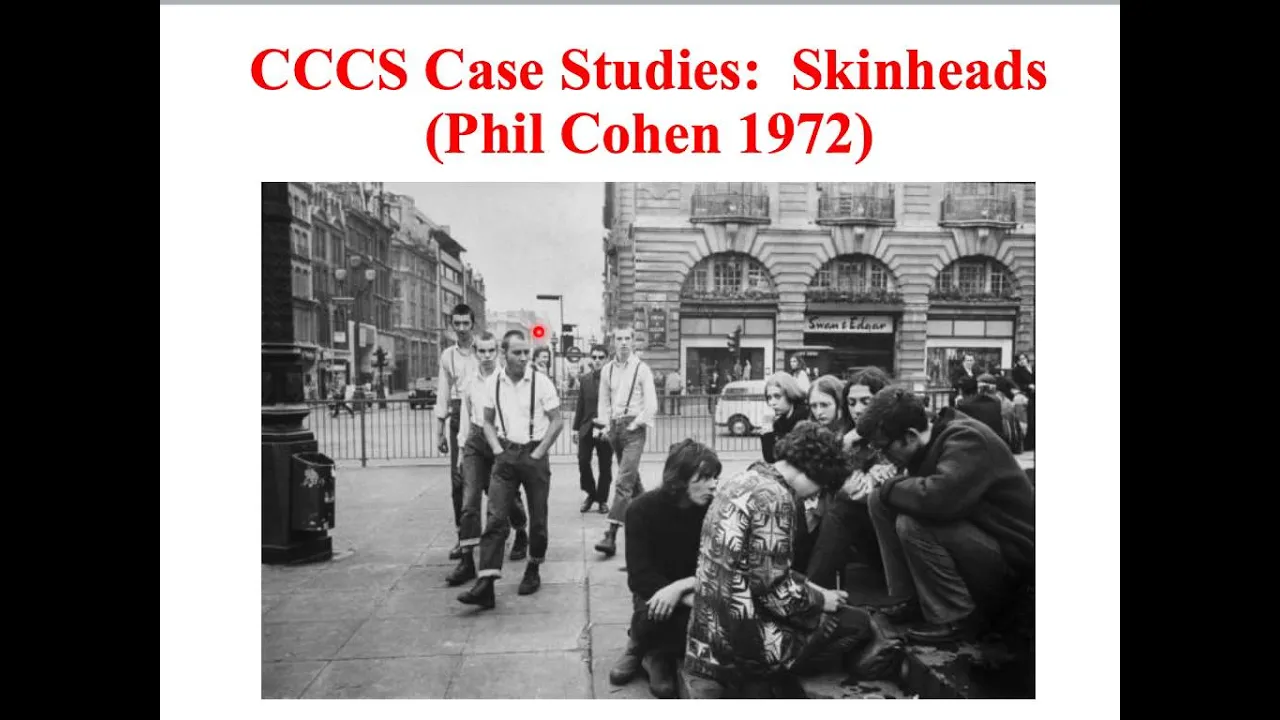
Advanced study of youth subcultures and resistance, focusing on theoretical frameworks like those from the Birmingham School (CCCS).
The processes of cultural appropriation and commodification, analyzing how mainstream markets absorb subcultural styles.
The impact of globalization on local cultures, exploring concepts like cultural imperialism, hybridization, and glocal subcultures.
The relationship between countercultures, deviance, and social control theories (e.g., labeling theory).
1.6M views20.9Klikes9:40Original Release: 2017-05-22
How many cultures are there in the world?
We’ve talked a lot about the things that make a culture a culture – things like norms and symbols and languages.
But we haven’t really discussed how you lump all those little things together and say, yes, these are the things that belong together – these things are culture A, and these other things are culture B.
So, what are the rules of culture?
Well, culture isn’t just about nationality, or the language you speak.
You and another person can live in the same country and speak the same language, and still have totally different cultural backgrounds.
Within a single country, even within a single city, you see lots of different cultures, and each person’s cultural background will be a mishmash of many different influences.
So, there really isn’t – and never will be – a single, agreed-upon number of cultures that exist in the world.
But that doesn’t mean we can’t recognize a culture, and understand cultural patterns and cultural change, and think about how different cultures contribute to the functioning of society.
[Theme Music] Are you more likely to spend your free time at a football game, or at a modern art gallery?
Do you watch NCIS or True Detective?
Do you wear JC Penney or J Crew?
These distinctions – and many more like them – are just one way of distinguishing between cultural patterns, in terms of social class.
Because, yes, Class affects culture, and vice versa.
So one way of looking at culture is by examining distinctions between low culture and high culture.
And OK, yeah, those are kinda gross sounding terms.
But I want to be clear: High culture does not mean better culture.
In fact, so-called low culture is also known as popular culture, which is exactly what it sounds like: Low or popular culture includes the cultural behaviors and ideas that are popular with most people in a society.
High culture, meanwhile, refers to cultural patterns that distinguish a society’s elite.
You can sort of think of low culture versus high culture as the People’s Choice Awards versus the Oscars.
The Hunger Games probably weren’t gonna be winning Best Picture at the Oscars.
But they were massive blockbusters, and the original movie was voted the best movie of 2012 by the People’s Choice Awards.
By contrast, the winner of Best Picture at the Oscars that same year was The Artist, a black and white silent film produced by a French production company.
Very different movies, very different types of culture.
Now, you can also look at how different types of cultural patterns work together.
The Hunger Games and The Artist may appeal to different segments of society, but ultimately, they both fit into mainstream American media culture.
Mainstream culture includes the cultural patterns that are broadly in line with a society’s cultural ideals and values.
And within any society, there are also subcultures – cultural patterns that set apart a segment of a society’s population.
Take, for example, hipsters!
They make up a cultural group that formed around the idea of rejecting what was once considered “cool,” in favor of a different type of cultural expression.
Yeah, your beard and your fixed-gear bike, or your bleach blonde hair and your thick-framed glasses – they’re all part of the material culture that signifies membership in your own specific sub-culture.
But, who decides what’s mainstream and what’s a sub-culture?
I mean, the whole hipster thing has gone pretty mainstream at this point.
Typically, cultural groups with the most power and societal influence get labelled the norm, and people with less power get relegated to sub-groups.
The US is a great example of this.
In large part because of our history as a country of immigrants, the US is often thought of as a “melting pot,” a place where many cultures come together to form a single combined culture.
But how accurate is that?
After all, each subculture is unique – and they don’t necessarily blend together into one big cohesive culture just because we share a country.
And more importantly, some cultures are valued more than others in the US.
For example, everyone gets Christmas off from school, because Christian culture holds a privileged role in American society.
That might not seem fair, if you’re a member of a sub-culture that isn’t folded into mainstream culture.
So, it's not really a melting pot if one flavor is overpowering all the other flavors.
And this brings me to another subject: How we judge other cultures, and subcultures.
Humans are judgmental. We just are.
And we’re extra judgmental when we see someone who acts differently than how we think people should act.
Ethnocentrism is the practice of judging one culture by the standards of another.
In recent decades, there’s been growing recognition that Eurocentrism – or the preference for European cultural patterns – has influenced how history has been recorded, and how we interpret the lives and ways of people from other cultures.
So what if, rather than trying to melt all the cultures into one, we recognize each individual flavor?
One way to do this is by focusing research on cultures that have historically gotten less attention.
For example, afrocentrism is a school of thought that re-centers historical and sociological study on the contributions of Africans and African-Americans.
Another option is expanding and equalizing your focus.
Instead of looking at behavior through the lens of your own culture, you can look at it through the lens of multiculturalism – a perspective that, rather than seeing society as a homogenous culture, recognizes cultural diversity while advocating for equal standing for all cultural traditions.
In this view, America is less a “melting pot” and more like a multicultural society.
Still, the ways in which cultures and subcultures fit together – if at all – can vary, depending on your school of thought as a sociologist.
For example, from a structural functionalist perspective, cultures form to provide order and cohesiveness in a society.
So in that view, a melting pot of cultures is a good thing.
But a conflict theorist might see the interactions of sub-cultures differently.
Prioritizing one sub-culture over another can create social inequalities and disenfranchise those who belong to cultures that are at odds with the mainstream.
It’s hard to encourage individual cultural identities without promoting divisiveness.
In the US at least, it’s a constant struggle.
But sometimes, sub-groups can be more than simply different from mainstream culture – they can be in active opposition to it.
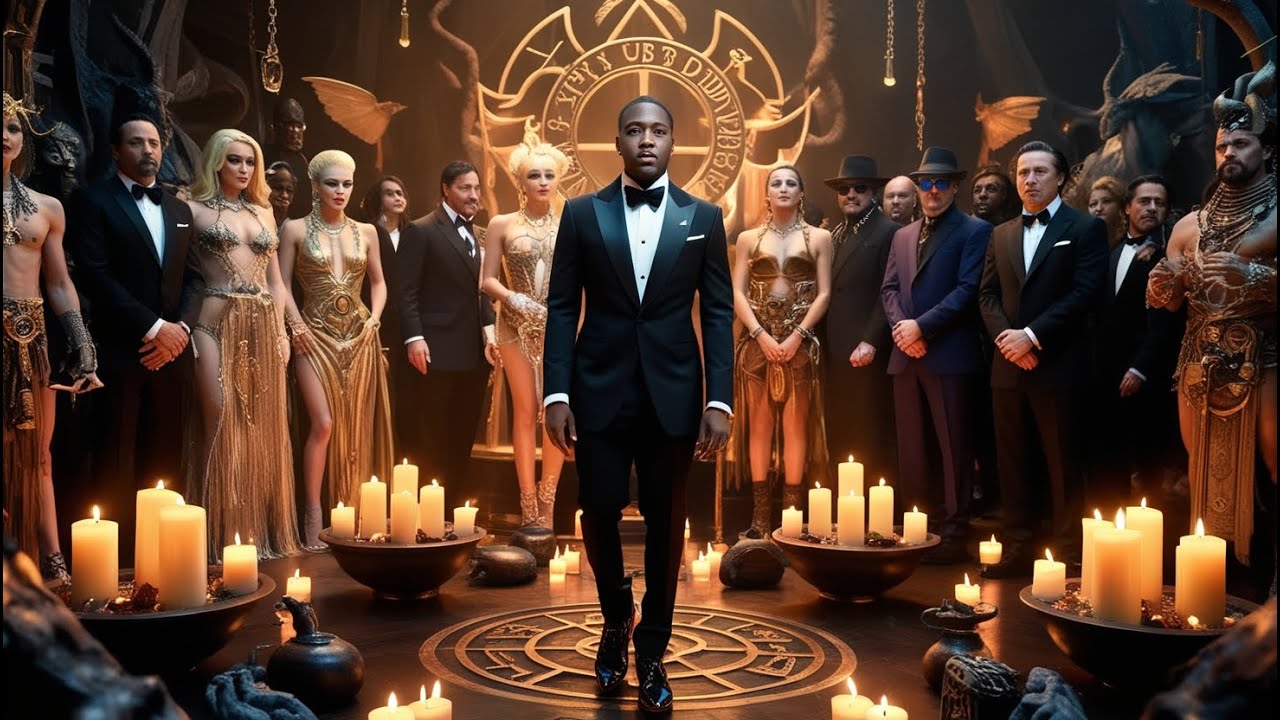
This is what we call a counter-culture.
Counter-cultures push back on mainstream culture in an attempt to change how a society functions.
Let’s go to the Thought Bubble to take a trip back to one of the biggest counter-cultural periods of the 20th century: the 1960s.
In the United States, the 1960s were rife with countercultures.
It was a time of beatniks, and hippies, of protests against the Vietnam war, and of protests for civil rights and women’s liberation.
These movements were often led by young people and were seen as a rebellion against the culture and values of older generations.
This was the era of free love, where people embraced relationships outside of the traditionally heterosexual and monogamous cultural norms.
Drug use – especially the use of psychedelic drugs – was heavily associated with this sub-culture and was celebrated in its popular culture – think Lucy in the Sky with Diamonds or the Beat authors’ books about acid trips.
But this counter-culture was also a push back politically against mainstream culture.
Many cornerstones of the politics of the American left have their origins in the counter-culture of the 1960s: anti-war, pro-environmentalism, pro-civil rights, feminism, LGBTQ equality.
From the Stonewall riots to the Vietnam war protests, ‘60s counter-culture was where many of these issues first reached the public consciousness.
Thanks Thought Bubble!
So, counter-cultures can often act as catalysts for cultural change, especially if they get big enough to gain mainstream support.
But cultures change all the time, with or without the pushback from sub-cultures and counter-cultures.
And different parts of cultures change at different speeds.
Sometimes we have what’s called a cultural lag, where some cultural elements change more slowly than others.
Take how education works, for example.
In the US, we get the summer off from school.
This is a holdover from when this was a more agricultural country, and children needed to take time off during harvest.
Today, there’s no real reason for summer vacation, other than that’s what we’ve always done.
So how does cultural change happen?
Sometimes, people invent new things that change culture.
Cell phones, for example, have revolutionized not just how we make phone calls, but how we socialize and communicate.
And inventions don’t just have to be material.
Ideas, like about money or voting systems, can also be invented and change a culture.
People also discover new things.
When European explorers first discovered tomatoes in Central America in the 1500s and brought them back to Europe, they completely changed the culture of food.
What would pizza be without tomatoes?!
A third cause of cultural change comes from cultural diffusion, which is how cultural traits spread from one culture to another.
Just about everything we think of as classic “American” culture is actually borrowed and transformed from another culture.
Burgers and fries? German and Belgian, respectively.
The American cowboy? An update on the Mexican vaquero.
The ideals of liberty and justice for all enshrined in our founding documents?
Heavily influenced by French philosophers like Rousseau and Voltaire, and British philosophers like Hobbes and Locke, as well as by the Iroquois Confederacy and its ideas of representative democracy.
Whether we’re talking about material culture or symbolic culture, we’re seeing more and more aspects of culture shared across nations and across oceans.
As symbolic interactionists see it, all of society is about the shared reality – the shared culture – that we create.
As borders get thinner, the group of people who share a culture gets larger.
Whether it’s the hot dogs we get from Germany or the jazz and hip hop coming from African traditions, more and more cultures overlap as technology and globalization make our world just a little bit smaller.
And as our society becomes more global, the questions raised by two of our camps of sociology, structural functionalism and conflict theory, become even more pressing.
Are the structural functionalists right?
Does having a shared culture provide points of similarity that encourage cooperation and help societies function?
Or does conflict theory have it right?
Does culture divide us, and benefit some members of society more than others?
In the end, they’re both kind of right.
There will always be different ways of thinking and doing and living within a society – but culture is the tie that binds us together.
Today, we learned about different types of culture, like low culture and high culture.
We looked at different ways of categorizing cultures into sub-cultures.
We contrasted two different ways of looking at cultural diversity: ethno-centrism and multi-culturalism.
We discussed the role of counter cultures and explored how cultural change happens.
And lastly, we looked at a structural functionalist and a conflict theory perspective on what cultures mean for society.
Crash Course Sociology is filmed in the Dr. Cheryl C. Kinney Studio in Missoula, MT, and it's made with the help of all these nice people.
Our Animation Team is Thought Cafe and Crash Course is made with Adobe Creative Cloud.
If you'd like to keep Crash Course free for everyone, forever, you can support the series at Patreon, a crowdfunding platform that allows you to support the content you love.
Speaking of Patreon, we'd like to thank all of our patrons in general, and we'd like to specifically thank our Headmaster of Learning David Cichowski.
Thank you for your support.
Up Next
14:58
Marxist Perspectives on Youth Subcultures | A-Level Sociology (CCCS) | Eduqas
@stevebassett6500
2.2K views•2016-02-26

54:57
Contemporary Sociological Theory: Micro, Macro, Integrative
@NaSESYNC
45.7K views•2016-02-17

11:31
Food Access and Agricultural Revolutions: A Geography Lesson
@crashcourse
117.1K views•2022-02-15
9:41
What is Sociology? The Sociological Perspective Explained
@crashcourse
4.6M views•2017-03-13
Related Study Plans & Knowledge Roadmaps
Structured learning paths in Sociology
sociology
Celebrity Culture: From Hollywood to TikTok
01Foundations of Celebrity Sociology
02The Rise of Micro-Celebrity & Digital Platforms
03Parasocial Relationships & Algorithmic Intimacy
+ 2 more learning modules
12h5 modules
Explore Roadmap
sociology
Hostile Architecture: Space, Power & Control
01Introduction to the Sociology of Space
02Social Control and Surveillance in the City
03Hostile Architecture and Defensive Design
+ 2 more learning modules
12h5 modules
Explore Roadmap
sociology
Loneliness Epidemic: Third Places & Isolation
01Foundations of Social Capital and Community Cohesion
02The Death of Third Places and Urban Space Erosion
03The Privatization of Leisure and Atomization
+ 2 more learning modules
12h5 modules
Explore Roadmap
sociology
Sociology of Tourism: Gaze, Power & Heritage
01Foundations of the Sociology of Travel and Leisure
02John Urry and the 'Tourist Gaze'
03Staged Authenticity and Cultural Commodification
+ 2 more learning modules
14h5 modules
Explore Roadmap