





![Por qué LIGAR ya NO SIRVE para nada [La CRISIS Relacional]](https://i.ytimg.com/vi/xTJ1lEWqBN0/sddefault.jpg?v=69b9de7a)











![[알릴레오 북's 89회] 우리는 설계되지 않았다 / 다윈 지능 - 최재천 편](https://i.ytimg.com/vi_webp/OsOzbRm4PBM/maxresdefault.webp)




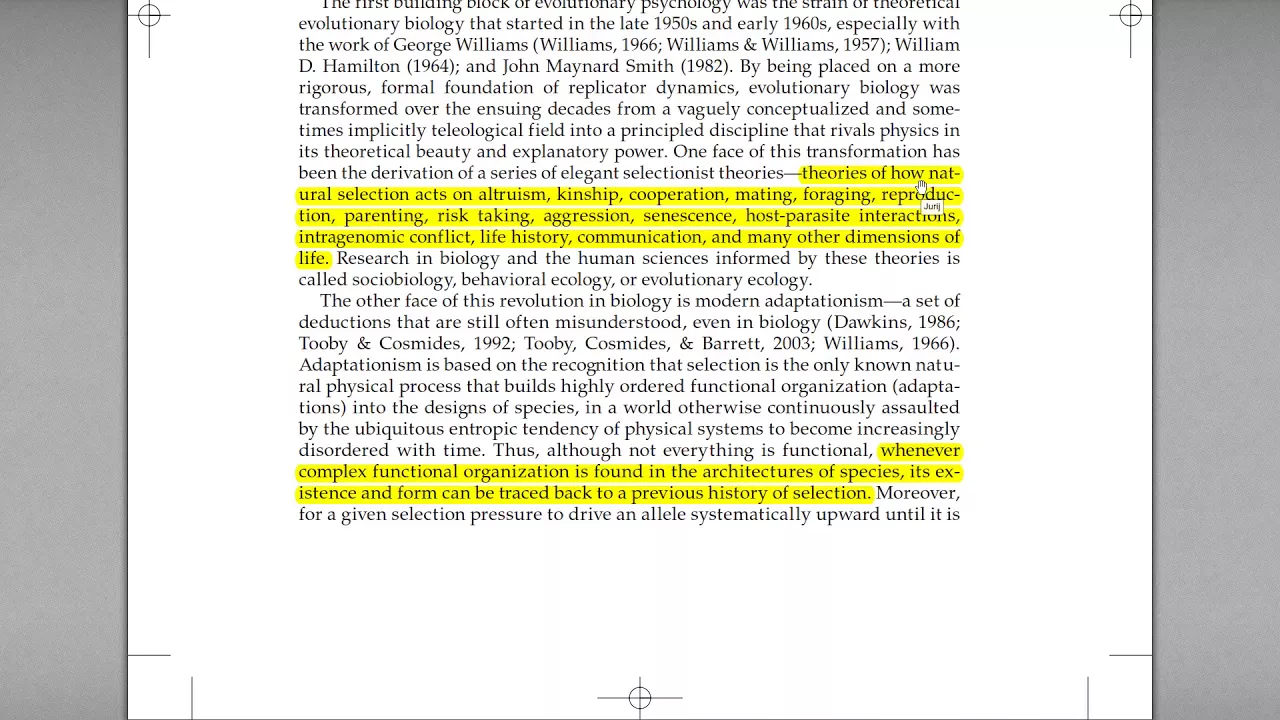

Women are biologically twice as valuable for reproduction as men because they are only fertile for a few days each cycle and release only one egg per cycle, while men are fertile all the time and release millions of sperm; research by biologist Jason Wilder found that mitochondrial DNA (inherited through mothers) contains twice as much genetic variation as Y chromosomes (inherited through fathers), indicating that historically women have been twice as likely to reproduce as men, with two-thirds of humanity's genetic diversity coming from women and only one-third from men.
Evolutionary Biology: The Reproductive Gender Imbalance Explained
Added:Anisogamy: The biological definition of male and female based on gamete size and energy investment (microgametes vs. macrogametes).
Principles of Natural and Sexual Selection: Understanding how traits are selected based on survival versus mating success.
Parental Investment Theory: Robert Trivers' foundational theory regarding how unequal parental investment influences mating behavior and competition.
Basic Evolutionary Genetics: Familiarity with how alleles are passed down, sex-determination systems, and how selection acts on gene pools.
Intragenomic Conflict: Studying genetic conflicts of interest between maternal and paternal genes, such as genomic imprinting.
Operational Sex Ratio (OSR) Dynamics: How ecological factors shift the ratio of sexually active males to receptive females, altering mating systems like polygyny and polyandry.
Evolutionary Medicine: Analyzing how biological reproductive trade-offs impact modern human health, immune function, and sex-specific disease susceptibility.
Evolutionary Psychology and Behavioral Ecology: Exploring how biological reproductive imbalances shape complex social structures, human mate choice, and parenting behaviors.
163.2K views6.6Klikes14:28Original Release: 2019-12-27
in this video I'm going to explain the privilege that women have when it comes to dating and how throughout history women have been twice as likely to reproduce as men first I want to show you this footage it's a woman from Brazil who's going to explain the gender imbalance when it comes to dating and reproduction who gets more attention from the opposite gender do you think men or women more attention yeah what would you say is the hardest part of dating as a man its if you had to guess for men yeah for man well my culture I think in what sort of way in the way there is way trying to do it oh I see she's absolutely right except that she thinks that it's something different and unique to Brazil but what she's talking about is applicable and basically every human culture and has been that way throughout history when it comes to reproducing women are more valuable than men that is just a fact this is not the result of feminism or any kind of cultural ideology this is just biological reality if most of humanity was wiped out and there was just a small handful of survivors on some desert island somewhere and we wanted to repopulate the human race you better hope that most of those survivors are women female reproduction is very very slow women are only fertile for a couple of days in their cycle whereas men are fertile all the time each cycle a woman just releases one egg that's it just one egg whereas men are releasing millions of sperm what's more when it comes to the appropriate age to reproduce women have a very small window where it's viable for them to get pregnant whereas men can have children well into their old age so if you have 100 women on an island and just one man that's okay you can make 100 babies but if you have 100 men on the island and just one woman you can just make one baby when it comes to reproductive value there is no equality between the genders women are more valuable that is a biological fact now remember that because that's going to be important later in this video when I explain how this biological reality is impacting on our current cultural context when it comes to the dating market now you've probably heard it said that we have twice as many female ancestors as we do male ancestors when you first hear that it doesn't really make like intuitive sense you think well to produce me I needed my mom I needed my dad that's one woman that's one man surely that's true for everybody so how can we possibly have more female ancestors than we have male ancestors my apologies if you've already looked into this and you already know this information but I'm just gonna take a short amount of time right now to explain why this is still true even though it doesn't seem to make sense for anybody who doesn't quite get it yet so this notion that we have twice as many female ancestors as we do male ancestors is based on the research of a biologist by the name of Jason Wilder what he did was examine the amount of genetic variability the y chromosome the chromosome that is inherited by men solely from their fathers he also looked into the genetic variability on mitochondrial DNA which is inherited by both genders solely through the mother once they had all the data the researchers compared the two to find out how much variation there was Why should there be any variation at all well that comes down to two different factors one rate of mutation and two the size of population of reproducing individuals when you factor out the differences caused by mutation what you're left with is an indicator of the different size of population within their respective reproducing pools essentially what they found when looking at genetic variation is that the mitochondrial DNA the one passed down through mother's contained twice as much genetic variation as what was found on the y chromosome the one passed down by males and that's how they arrived at the explanation that we have twice as many female ancestors as we do male ancestors or another way of putting it is that historically women have been twice as likely to reproduce as men if we take things from a purely biological perspective and say that the purpose of life is to reproduce and pass on your genes then you could say that women have twice the privilege of men so if you want to see your family line continue that's the only thing that you care about is that your genes get passed on to each new generation you better pray for daughters historically speaking they are twice as likely as any sons that you have to give you grandchildren to illustrate this I made a simple pie chart representing all of humanity's gene pool as you can see two-thirds of the total contribution to humanity's collective genetic diversity comes from women and only 1/3 from men another way of thinking about it is that if you meet a stranger you are twice as likely to have a male ancestor in common than a female ancestor think about the conquerors like Genghis Khan who have so many children there was a study done in 2003 using the same Y chromosome tracking method and they found that 16 million men across the planet were descended from Genghis Khan 16 million at the time that was half a percent of the total world population or one in 200 now if you still don't quite understand this and you want to research I'll put a link down below where you can follow up but how do we interpret this data what does it all mean well it means that lots of men don't reproduce some men are having lots of children but others are not having any in the next part of this video I'm going to explain how this came to be how is it that women are twice as likely to reproduce as men and why this is still culturally relevant today but before we go on I want to tell you about my latest adults-only bonus content what to do if your girlfriend prefers first toy to you I discuss whether or not it's a good idea to buy your girlfriend story the dangers the benefits I explain why you should never use two fingers on a woman I talk about the female ism why some women struggle to achieve it and how toys can be used to unlock that and the potential benefits to you this is the kind of topic that I can't cover on YouTube because certain topics around so even just using certain words gets media monetized but all of my more explicit content is released on patreon so go ahead and sign up it's just $5 a month and you get access to it all ok so back to the topic here is when we leave the realms of demonstrable provable facts and we wander into the territory of speculation you should know that I don't have concrete proof about what I'm about to say it is speculation and deduction on my part and I'm more than happy to be corrected if you guys in the comments section think of reasons why what I'm saying is nonsense or you can point me to some research which disproves my theories I'm more than happy to be corrected so what is the reason why we have twice as many female ancestors well the first reason is infidelity DNA tests were not available for 99.9% of human history and so while mothers always knew that the child was theirs there was no paternity certainty for men from an evolutionary psychology perspective emotions like jealousy possessiveness behaviors like mate guarding all point to a conclusion that things like infidelity and cheating are not a recent phenomena even back in caveman days men wanted to sleep with lots of women just like they do today and back in caveman days women wanted to sleep with the highest status male just like they do today so even back when we're hunters and gatherers you might have men and women pairing off in some kind of monogamous arrangement but if the man is high-value enough that he can get away with it he's gonna sneak off from the side and impregnate other women for their part women wanting the superior genetics of the top status males will have to them for father their children and lie to their partners because they don't want to be left alone they still want his resources now there's no real way to know for sure how common this is we can speculate but we don't really know but what I'm saying is that genetic inequality from male to women must be at least partly accounted for by infidelity but the biggest reason I believe that we have more female ancestors than we have male ancestors is because of polygamy or the practice of one man taking multiple wives multiple partners this wasn't cheating this was a culturally approved social convention where the top guy was naturally going to have multiple women as partners you can imagine it the big kahuna the big chief of the tribe has got lots of wives that's his reward for being on top our current culture is largely monogamous that is true but it would be foolish to assume that just because it's true now it has been true for all of human evolution or that we have evolved specifically to be monogamous it's interesting to note that none of our closest relatives none of the other great ape species practice monogamy with orangutangs males live a solitary life they might meet a fertile woman make love to her stick around for a couple of days but then he just resumes his solitary life chimpanzees have a brutal dog-eat-dog style of mating where all of the men viciously and aggressively compete with each other to make with the women often the dominant chimp wins whereas their close cousins the bonobos are the opposite they're the make love not war monkey species they're highly promiscuous polyamorous they're just having each other all the time it's not even just for mating they just do it too socially bond with each other then lastly you've got the gorillas who have a polygamous system of mating where only the silverback gorilla mates with the women he has his own harem if you're really looking for one of our closest relatives who is legitimately monogamous you have to go all the way to a Gibbon which is pretty far from humans so it's a bit of a stretch so I believe that polygamy a man having multiple partners goes a long way to explain the Jeanette inequality between the genders but I want to remind you that even though I believe that polygamy has a large role it was a big contributing factor in all of this we don't really know with any degree of certainty what the mating habits of ancient man was so it would be disingenuous to present any of this as fact now for me personally I don't believe that ancient man was exclusively polygamous I know that there are some people who believe that but I don't believe that the research supports it one reason is that I think that if we lived in exclusively polygamous societies the ratio in terms of differences between male and female ancestors would be much much larger I also think that our to course would be smaller like gorillas you see killer tissue and sperm production are both extremely intensive to maintain which is why gorillas have small technicals because they're not competing with other men in a sperm war they're not all injecting the sperm into the girls wood hoping to get her pregnant they're just beating off all the other men physically so they don't need to worry about that they can get away with having small balls from a biological point of view it just doesn't make sense to give gorillas giant eels they don't need them the species that do need them are like the chimps and the bonobo is because they're all ejaculating inside the woman and you need to have a large volume of sperm just to play the odds to hope that your your sperm gets in there and does the deed but gorillas don't need to do that that energy is better spent on muscle development so they can physically fight off the competition what you find with humanity course is that they're kind of medium-sized they're not as small as gorillas they're also not as big as chimps or bonobos there are other reasons why I don't believe that humans were exclusively polygamous but I won't go into all of them in my mind the best model that we have for understanding ancient human mating habits was probably a serial monogamy changing partners every decade or so with some infidelity and polygamy occasionally sprinkled in however I do believe that that changed after the invention of Agriculture then you saw a sharp increase in polygamy because you saw power consolidated in the hands of just a few men that's when you see the invention of private property things like money and you move away from this cooperative style of hunter gathering in a community kind of living what this does is create a culture is exacerbating this idea of winner-takes-all where a few men are big winners and then lots of men complete losers there was an article I found that explains that somewhere between 4,000 and 8,000 years after the invention of agriculture there was a sharp increase in genetic inequality the gender imbalance suddenly took a really really huge spike check out this graph you can see that the number of women reproducing continues a steady rise but there is a massive dip when it comes to men so I speculate that this was a time in history where most human cultures were polygamous and this is the result of Agriculture so they were polygamous they were highly polygamous and eventually as a cultural institution it largely gave away to monogamy because that was more socially robust and strong and that has lasted until the systems that we have today but there was a time where basically everybody was polygamist that's what I think it seems to me that enough gender imbalance could have occurred in that period to sufficiently explain the difference in ratio that we have between the genders that we see in the human gene pool today again just reminder that this is speculation this is theory and this is just how I interpret the data so what is the cultural implication for all of this well the historical context is clear as a man you can win big or you can lose big that is true now and it was probably true throughout history as a man it is not safe to assume that you're going to be able to successfully find a partner and reproduce that is not guaranteed not at all if history serves as any indicator if you are below average then you're likely to get left behind so what do you do with that information well you get to work you cannot afford to be complacent if only the top tier of men are going to be successful enough to be able to reproduce then you need to become one of those top tier men that is the only game in town women are valuable because biologically reproduction for them is rare and precious you are not valuable not yet but you can make yourself valuable that's what you should do remember if you want to hear more from me go and check out my bonus content what to do if your girlfriend prefers her joy to you you
Up Next
1:49
Terence McKenna: Psilocybin, Consciousness & Reality
@DanitFriedman
22.7K views•2024-10-26

12:54
Triumph of Orthodoxy Icon: Byzantine Art & History Explained
@BenCallan
2.1K views•2024-08-06

9:49
FastAPI vs Flask vs Django: Choosing the Right Python Web Framework
@TechWithTim
302.5K views•2024-05-26

1:42
Game of Thrones Opening Credits: A Cinematic Analysis
@gameofthrones
46.3M views•2011-04-18
Related Study Plans & Knowledge Roadmaps
Structured learning paths in General & Interdisciplinary Studies
general-studies
Elevator Engineering: History, Physics & Cities
01From Hoists to Safety Brakes: The Dawn of Vertical Lift
02Hydraulic vs. Traction: The Engineering Physics of Elevators
03Modern Speed, Safety, and Algorithms
+ 2 more learning modules
12h5 modules
Explore Roadmap
general-studies
Rubber: Material Science, History & Geopolitics
01Origins of Natural Rubber & Mesoamerican History
02The Chemistry of Natural Rubber & Vulcanization
03The Geopolitics of the Rubber Boom & Colonization
+ 2 more learning modules
12h5 modules
Explore Roadmap
general-studies
Containerization: Evolution, Logistics & Trade
01Ancient Trade & Bulk Cargo: Amphorae to Barrels
02The Industrial Revolution & Cardboard Packaging
03The Containerization Revolution: Malcom McLean
+ 2 more learning modules
12h5 modules
Explore Roadmap
general-studies
Textile Tech: Evolution, Labor & Global Impact
01Pre-Industrial Textiles: Handloom & Cottage Industry
02Mechanization: The Spinning Jenny to the Power Loom
03The Factory System & Global Labor Transformation
+ 2 more learning modules
10h5 modules
Explore Roadmap