























![[10º Simpósio] Palestra especial Dênis Rodrigues: O Guia de Uso de Tela para crianças e adolescentes](https://i.ytimg.com/vi/SwAb3HXlsZI/maxresdefault.jpg)
Teenagers use social media primarily for maintaining existing friendships and social connections rather than for networking or meeting new people; they engage in similar social behaviors (gossiping, flirting, hanging out) as previous generations but through digital platforms, which introduces unique challenges around persistence, replicability, scalability, and searchability that educators must understand to effectively support student learning.
Teen Social Media Use: Implications for Learning & Education
Added:Familiarity with the digital divide and basic concepts of digital inequality beyond simple internet access.
Understanding of fundamental adolescent development theories, particularly regarding peer socialization and identity formation.
Introduction to media literacy and how digital media platforms shape information consumption.
Basic awareness of current social media platforms and their primary functions (e.g., algorithms, feeds, and networking features).
In-depth analysis of 'networked publics' and the four structural affordances of digital media: persistence, visibility, spreadability, and searchability.
Application of critical digital pedagogy to design inclusive and engaging learning environments.
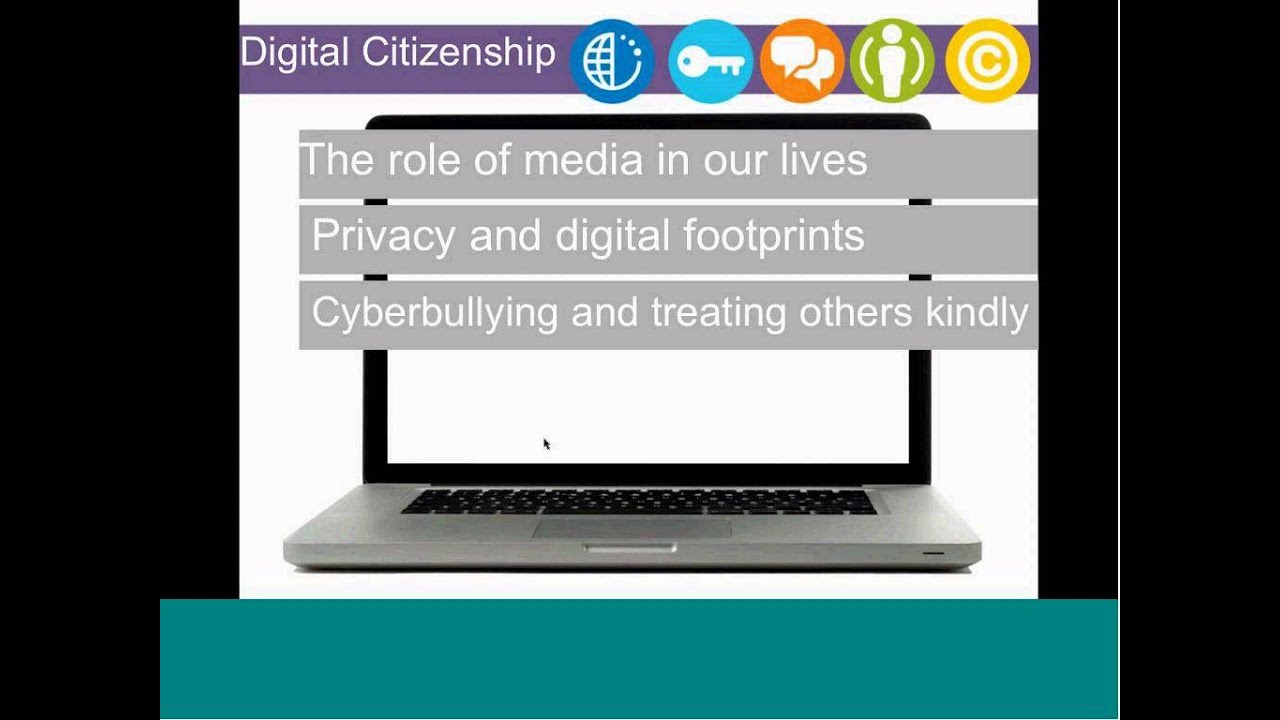
Development of educational policies and digital citizenship curricula that address cyberbullying, privacy, and digital footprint management.
Advanced study of algorithmic literacy and how platform architecture influences teen behavioral psychology and information ecosystems.
12.2K views48likes40:41Original Release: 2009-05-12
Good afternoon! Let's get this.
All right, so first thank you all for being patient and listening to me while you're trying to eat. I know that's a really tricky thing to do. So hopefully I will at least entertain you and make it worth your while. So my talk to today is based on a set up research that I have been doing for the last four years looking at how young people are using different forms of social media. But I should note that this is not a research talk. So for those of you who are looking for a more research talk, I can give you lots of papers, academic articles, etc., but this is not that.
So there's no methodology section. There's no detailed results. It's much more of what the implications are for this.
Let's do this manually.
Where are we? All right there we go.
So I've been asked to talk about today's teenagers and what teenagers are doing.
Particularly high school teenagers. And the reason why is of course this is the next generation of students. So how do we prepare for them? How do we think about it? And I'm gonna talk primarily about American culture and American teenagers. Because that's the focus of a lot of my research lately. But of course we can talk about international dynamics later on in the Q & A if you want. The thing to know, and many of you know this at sort of a deep level, is that teens today are growing up in a world where social media is everywhere and shaping what's going on for them. Now that doesn't necessarily mean they have access to the particular forms of social media. That does not necessarily mean that they themselves are engaged with it. But it's very much shaping the environment around them and the ways in which they have to deal with it. And there's different ways to respond to this.
The first kind of response that you tend to hear is a response of panic or fear. The idea of every new genre of social media means that the sky is falling and it's time to run around and warn of all the terrible things that are coming with this form of social media. And of course the nice thing about this is that it happens in cycles. And at the moment the old fogies start adopting the technologies young people use. Everybody starts to calm down. So I kind of love watching these cycles. It's like I get excited. It's like adults are on Facebook. No more moral panic stories please.
And for the most part that tends to be true. We've moved onto new genres of media and new possible terrible things that will happen.
There's another sort of way of dealing with this other than running around with the chicken with your head cut off.
And that's to think that oh my gosh, everything is changing.
The world's changing. We gotta live right. It's changing everywhere.
More and more change is imminent. And this sort of creates an interesting tension that of course adults come around and go, back in my day, things were so different. And of course mind you it was always better back then. And the thing is that this too is sort of exasperated and much more extravagant notion of what's going on than is actually happening. So my interest is sort of saying, what new fangled technologies, with all of what's going on, what is really happening? What is new? What is different? And what is frankly just the same and slightly different? So I try to get at that level. So today's teens for the most part, you should know, are basically interested in the same things that the previous generations teens were interested in. They're more interested in their friends than they are their lessons.
This is not new. They are not necessarily excited about those who hold power over them. This is also not that new.
They still gossip. They still flirt. They still joke around. They still hang out.
They still do all of the things that you don't want them to do. This is not new.
The underlying dynamics of teen culture just simply have not changed. And what has changed is that there's new technologies in which these things are happening. And it has shaped the way that we think about it.
The way in which we're seeing this play out. The visibility of teen culture and all sorts of interesting ways. So my goal is to talk about those inflection points.
The points at which the change occurs and the implications it has for learning.
But to focus primarily on the fact that we have to take teen culture as a sort of guaranteed way of thinking about the world that in many ways hasn't changed so much. So I'm gonna begin by talking about the every day social. I know a lot of are really interested in much more of the academic learning side of things, but I think that the social elements are really, really critical here. I think you need to understand the social in order to think about how to go more broad than that. And I want to talk about what it is that teens are doing. I want to give you a structure for ways of thinking about the shifts and how it's re-shaping different parts of every day life.
And I want to go ahead and talk about some of the implications for learning. But I'm gonna focus a lot of this talk on social network sites. And I'm gonna use that as a case study because frankly they are still the most significant new change that's been happening.
I'm waiting for this talk to all change to being about mobile. It's coming, but it's not there yet and I'm deeply frustrated about that, but there will be changes happening.
It's also of course the earlier technologies that change things over and over again.
But I'm gonna use social network sites and the key case study.
All right, first things first, you'll hear that what I'm saying is social network sites.
I'm not saying social king sites, I'm saying social network sites.
Why? The key thing to know about these social network sites is that they're not about networking. It's actually primarily the adults engagement with these sites that's about networking. Business networking, personal networking, sex.
That's not what teenagers are doing. The press might give you that impression, but for the most part, what teens are doing, is that they're going there to hang out with their friends.
And if you look at the list of people that they connect with and communicate with it's their friends from school. It's their friends from after school activities.
It's their friends from summer camp. Their friends from church. And once in awhile the really cool band that they think is awesome. But it's not actually about meeting all sorts of new people, even peers. As we often have this sort of assumption that obviously they're coming to meet all these people. They're engaging with all these people. We should help them network better. Find new people. They're not interested in it.
They're not interested in meeting people through these sites. They're interested in hanging out with people that they know.
Now MySpace and Facebook are the two dominant ones in the United States.
So were gonna talk about what's going on with them and the different types of sites like them.
So the first thing to know is that there are a set of properties or features that are relevant to our discussion. And in particular I want to talk about four of them that are really critical. The first of which is the profile.
The way to think about the profile is that it is an opportunity to write yourself into being online. When you walk into this room you come equipped conveniently with a body. It's really useful. You can decorate it.
You can decorate it to signal to all these people different information about yourself.
What you're interested in. You could have shown up today wearing your pajamas. I haven't seen any pajamas floating around today. I think that's interesting. You've made certain decisions about how to present yourself in a particular environment. The same goes on for these profiles. The way of writing yourself into being online, of creating a form of a digital body and that using this to express yourself. And part of it is that when you're online, you're kind of boring, you're an IP address. That is not very interesting. People are not that interested in a series of numbers unless they're at MIT, which numbers are really working well for everyone.
But for the most part that's not what goes on. So the thing that happens with the social network sites is that you get this moment of self expression. How do you go about expressing who you are?
One of the keys to note for MySpace in particular since many of you are probably more familiar with Facebook than MySpace is that that hideous decoration, that didn't happen because of MySpace, it happened because of an error in the code.
It was because when you were filling out a text box, kids quickly learn that they can put the bold tag in and a little bit of Javascript and a little bit of CSS and all sorts of new kinds of scripting code. And they brought back the blink tag. They brought it back in full force by putting the information in the forms. Because they wanted the opportunity for self expression.
MySpace didn't support it, but they actually did something good, they didn't stop it.
And that's a really interesting difference. MySpace has a lot more of creative self expression components of it than Facebook. Although Facebook is doing a pretty good job of catching up and returning equally gaudy pages to us, they just happen to be white.
The things you know also about a social network site profile is that there's information that you're required to give to the system and there's information that you want to display to your friends.
And they don't necessarily align in convenient ways. I can guarantee you that she is not ninety-five years old and she is not from Christmas Island. Nor does she or any single one of her friends actually think so. They just don't want the system to know who they are. And I think that's a really interesting question of when and where do people put inaccurate information in for what purposes.
Ok, so one of the ways to frame this in something that you're familiar with is that this is a lot like bedroom culture. This is a lot like creating these intricate ways of expressing yourself on your walls at home.
This is similar to decorating your lockers back in school before it was a fire hazard to do so.
And it's a way of saying who you are and expressing it to the people around you.
And it includes a lot of the similar kinds of collage culture. A lot of the like let me put a picture of a celebrity because I think they're really great. But again for all the media attention given to the terrible, terrible things that are going on, I found it very interesting that the number one hero across all of MySpace was Jesus. There's a lot of religious self expression that goes on here. So we hear one side of it, but there's a lot more going on here.
Second key feature, this is the list of friends.
And of course the term of friends is usually problematic. We've all sorts of complaints. You can't possibly have nine thousand friends, etc., etc. Well the publicly articulated list of friends is not necessarily the same as your closest and dearest.
There are all sorts of different reasons as to why you will connect people.
You will connect with people because you actually like them. Because you share a community with them. You go to school with them. Because it's rude to say no.
Which is a really good and interesting and common reason except when it's your parents where it's perfectly acceptable to say no. But you have all these motivations and incentives for listing friends. What friends turn into is your intended and expected audience within the space. So when you look at somebody's profile, look at who their list of friends are and interestingly on all of these sites you can see the friends in one way or another. Those friends are who they think they're speaking to. And you know what, if those friends are all people of the same age, you as an adult are probably not wanted there.
When it's mixed age you've got a different dynamic going on. So that's important to realize. The other thing is that there's three really clear clusters of friending practices. People who have thirty, forty, fifty friends these are people who are connecting with the people that they talk to regularly. They're sort of closer friends. The next you have a couple of hundred. These are the people that are connecting with everybody that's at their school.
Everybody they know and have a sort of affiliation with. Then there are the collectors that are in the nine thousands, etc., etc. Interestingly most teens are not collectors. It's politicians and adults who collect.
I'm not quite sure we want to mesh the two together and what that sort of means.
Now of course friending is really political and really, really awkward.
And so this is a quote and I'll read for the people in the center of the room who can't see it or at least the key point. As a kid you used to use your birthday party guest list to leverage in the playground. If you let me play, I'll invite you to my birthday party. Today is the MySpace top eight. It's the new dangling carrot for gaining superficial acceptance. Taking someone off of your eight is a new passive aggressive power play when someone [ expletive ] you off.
Think about that. You are asked on MySpace to list your best and bestest friends in order and negotiate whether or not you accept someone as a friend. That's really awkward.
And really uncomfortable and you have to figure out how to deal with it. And it creates social dramas. And because these are the same people that they know offline as online, major social dramas ensue. All right, next section. We have comments. Also known as the wall.
Also known as testimonials on previous sites. And these public comments, mind you, important note here, adults and teenagers use this space fundamentality differently. Teenagers don't just say happy birthday.
Adults, that seems to be the only thing you can say on a wall. Teenagers actually have conversations. But the complaint constantly is that those conversations have no meaning.
They basically boil down to yo, what's up? Not much, how are you?
Good! What are you doing? Nothing! Back and forth all day long.
And you keep going, how can this be communication? Now I would encourage you to all listen to the conversations that happen in the hallway here. And I think you'll find that they boil down to about the same level of depth.
And what that is is that's a form of social grooming. I like you.
I like you too. We're friends. Yes, we're friends. And on and on it goes.
Now the assumption is what would you put this out there?
Part of is that you want to be seen having friends. I mean imagine if we went into the hallway and everybody was standing there by themselves. That would be really odd. So instead you go up and start a conversation about how great weather is today.
Isn't this lovely. And it's a way of sort of marking your relations and the social structure. Becomes a really critical behavioral marker.
So the thing is when you look at what young people are doing here, read it in that light. Don't read it as supposed to be deep communication. The thing is that they know private messages are where you have deep conversations. They use this for the public structures. The next key feature that's really emerged in recent years and actually since I finished my field work, is what on Facebook is called the News Feed. It's been mimicked by MySpace.
It's also the core of something called micro blogging. And through this there's this constant stream of what your friends have eaten for lunch.
You get all sorts of details of what's going on. Now of course there is a little bit more depth to some of this. Because what you see on Facebook may not be the same as what you see on similar sites like Twitter. But I think it's really critical to see that this is a way of keeping up with the peripheral awareness of all the people around you. Again, if you can't see each other. You can't see raising each others eyebrows in sort of a collective space. Having this peripheral awareness becomes really significant. Now I want to note that this practice is akin to Twitter, which many of you are using in unbelievable record form today. But many of you think that this must be what young people are doing. Uh, Uh, the average age on Twitter is thirty-one. You are actually more of the average population than the teenagers are. They're not engaged here. And they're not engaging anytime soon. Now, think about that for a moment.
Just because you've adopted a new form of social media, doesn't mean young people do or ever will. Because one of weird things in terms of going backwards, it's easy to take something and make it cool with college kids and older people pick it up, but when they old folks pick it up, do the young people want to later on.
I don't think so. There's one exception to this for those who have been obsessing this week over the Ashton Kutcher and CNN battle, it is possible that we can get into younger folks primarily through celebrities. Not because their teachers are using it, but because the celebrities are.
And so if Shaq keeps posting details about his weird life, you might start to see younger folks getting there. Already I'm watching twenty somethings kick in that are coming through the celebrities and are engaging with these spaces fundamentality differently.
But do note that when the twenty somethings are coming in through the celebrities, they are not using it to post detailed links with hashtags to events that they're collectively a part of. So the behaviors you're having on these sites look a lot different than what goes on with the younger folks.
So why are they here? What are they doing with it? How can we make sense it?
Again, for those in the middle, if you're not on MySpace you don't exist.
Everyone says get a Facebook. You need to get one. What they're doing here is they're being a part of a social cohort. Having friends matters. Being a part of the social world matters. And they feel that deep pressure to be wherever their friends were.
This is also not new. I grew up being super pressured to go to the mall.
And it was really problematic when mom wouldn't let me. The same dynamics happen here where it's like this is the cool place to hang out. Now this doesn't mean that the online is necessarily better than the offline. You know when I ask people if they could choose between hanging out with their friends offline or online they were unanimously said, they would much rather hang out offline. But the fact is that all too often they weren't allowed to.
For those in the middle, my mom doesn't let me out of the house very often. So that's pretty much all I do is I sit on MySpace. I did my field work in seventeen different sites in this country. I heard this consistently over and over again. I'm not allowed out of the house. I can't get anywhere.
There's no public transit. I don't have any free time.
My mom is scared of the outdoor world. I didn't care what they explanation was or like why. There was a ton of them. But it boiled down to a lack of mobility.
And the thing is is that if you can't get with your friends in person why not get together online. And that's where you see some really different dynamics. Adults explanations are usually slightly different. Which is I don't have time because I'm supposed to be with the family.
Or I'm supposed to be doing work, but I spend all day on Facebook.
So there's sort of a guilt factor to this for adults that young people don't necessarily have. At the end of the day what these sites boil down to is a public space where people can hang out. A great place to coordinate information. To share all sorts of photos and media.
And there's a lot of ways in which you can think about that as public space.
And if you think about what my generation or your generation did when you gather with your friends in public space there's a lot of parallels here. And at the same time these spaces aren't quite like the public spaces that we're sort of traditionally accustomed to.
These networked publics have slightly different features and functions to them.
I want to sort of highlight some of the differences and why they matter. The first is persistence and this is a critical one to think about. What you say sticks around for a long, long time.
This is really great when you want asynchronous conversations. This is not as amusing when the things that you wrote when you were thirteen on Usenet are still around.
And so you have to deal with what this means when we deal with persistence.
And what does it mean that you're seeing a group of people growing up where they assume things are persistent. And they're making accommodations for the fact that they are persistent. Next key factor to this, is replicability. You can copy and paste things from one place to another. Can you tell the difference between the original and the duplicate? Often the answer is no.
Now this is really great because you can actually store a conversation, but it's also the primary form of bullying. I take an aimed conversation that I think is really funny. I broadcast it to MySpace and will ignore the fact that I altered it.
We still made Brian look like an idiot in the process.
One of the ways in which we negotiate these spaces is to deal with the replicability of it.
The deal with it difficulty as things replicate you can't necessarily control them.
DRM is not the solution to this. And the question is how do you deal with an environment where you assume that things can basically have a whole new form of hearsay. And that hearsay takes on a whole new set of meanings when you're talking online. Next critical feature is scalability.
It's a really interesting idea that what you say can be reached by millions of people. The fact is most of you who have tried barely get an audience of ten. Things don't necessarily scale because they can. Much to most politicians chagrin who would try to use social media. Now that said, what does scale is often the most embarrassing and heartbreaking and humiliating content ever. I don't think that kid with light saber who's making a video had any intention of that getting everywhere. Based on the reports that he's still in therapy I would argue probably not. But that scale because it was humiliating and his friends thought it was funny. And it became humiliating not just to the people who knew him, but the people further and further. Now, I normally think about all the negative things that scale, I'm actually very proud of the internet this week.
Because for the first time in awhile I saw the scaling of something that was actually heartwarming. For those who didn't see the Brit's Got Talent, Susan Boyle phenomenon, I definitely recommend looking this up.
It's like, oh, even actually show Simon Cowell look like idiot while this other woman is actually impressing everybody else. It was a great a moment. But usually what scales is not so positive. The next key feature is search-ability.
My mother would have loved the ability to just scream [ inaudible ] or find into the ether and figure out where I would run off to with my friends. She couldn't.
I'm extremely thankful for this. But the fact is you become searchable now online by all sorts of people. And usually it's the people who hold power over you that like to search for you. So it's your parents. It's the law enforcement. It's the college admissions officer.
Who decides that they are just going to rapidly search. And that's an interesting dynamic.
What does it mean that we are searchable and we are searchable out of context at all sorts of moments.
How do we contend with this? The next one that's becoming more and more common because of the mobile phone is delocatability.
Nicely put with parentheses in the academic way to point out that with mobile phones, with our laptops we can be anywhere.
And this is great. I got a mobile phone so that my mom didn't know that I had not gone back to my dorm room at eleven o'clock at night. This was sort of way of letting my freedom happen through mobility. But at the same time my mobile phone now knows everywhere in which I am. And there's all sorts of interesting GPS technologies coming down the line that's really gonna mess with this property. And what it means that you are findable, but then there's all sorts of questions about how findable. And how do we deal with that?
And how do we battle this? So this is gonna be a much more complicated and future property coming in. So there's also dynamics that fall out of these.
The first is invisible audiences. And this is something that young people are constantly contending with online. I have this audience out here. You're looking. You're nodding. You're pretending to pay attention to me. That's the dynamic we set up here. But there's also a camera back there. I have no idea who's at the other end of that camera. I have no idea who's going to watch this video, in what context.
If it's remixed and modified in all sorts of different ways.
And how do I adjust for that audience. I can adjust for you because I assume you're interested in a certain set of things. I assume that you at least can understand English.
I assume that I say Facebook and you can nod along and know what I mean.
But that's all the assumptions I that I make are dependent on the audience in which I'm presenting to.
Can I make those same assumptions to the person at the other end of the camera? Can I make the same assumptions to the person at the other end of the camera ten years from now? Probably not.
So how do you actually contend with invisible audiences? How do you make sense of it?
The fact of the matter is most of the time we don't. We play ostrich. We hope it will all go away.
And everything will be fine. Or we try to convey to other people what we think our audience is. And this is one of the constant tensions within these spaces.
And something that young people have to deal with as part of their participation.
The next key feature that we have to deal with is collapsed contexts. And collapsed contexts are really challenging because we assume a consistent level of context in our interactions.
How we behave. We assume that this is a conference where you have a certain set of protocols of what's acceptable or not.
I welcome each and everyone of you to get up on your table and start dancing.
I think it would be funny. That's not the context here and it's not likely that that's gonna happen on a regular basis. And that's a really interesting trick in all of this.
Because even with these same people that you might be hanging out with it might be ok to get up in a bar and start dancing on the table and have some fun because it's a different set of rules there. Now collapsed contexts are not new, but the thing that's really interesting about them is that they're primarily dealt with by celebrities and journalists and people that are much, usually at much more attention than the everyday average person. And so the example I like to give in all of this is Stokely Carmichael who was a civil rights activist in the 1960's spent a lot of time giving very different talks to very different audiences. He would go and speak before DC politicians using a very quote, unquote proper, posh, white way of speaking. And then he would go and speak before southern black congregations using a much more rolling pastoral style of speech that in the 1960's terrified a white society. The result of which is that in 1968 he was forced to go on television and radio. There was no neutral voice. There was no way to be simultaneously understood to both audiences. And he had to deal with a collapsed contexts. He made a decision. He kept with the black style of speaking and to this day we see black power as anti-white. Young people are faced with the same sort of dynamic. They have to deal with the collapsed contexts. And the more that they live with an environment that is aligned with all the other contexts the safer it is. If you were from an educated family with a certain level of expectations, you're not gonna be participating online in a way that might be offensive to college admission officers. But I received a phone call from an Ivy League college admissions officer one day, early in the stuff of MySpace, and they wanted to accept a young man who was living in the south central in LA. And he had written a college essay about how he didn't want to live in gangs anymore and all sorts of information about wanting to get out of gangs. And they went to his MySpace and they saw all of this detail with gang symbols, with all sorts of things propping up the gangs. And they assumed he was lying.
And I was like, he's not lying, he's gotta survive everyday in that school.
And he's gonna write all of that gang information because he's gotta survive every day there. If he comes to your school he's gonna be far enough away from it that he's gonna be a different game. So how do we interpret peoples participation online in their context. Not necessarily in ours.
Next key feature is the fact that public and private are doing all sorts of weird twisted things right now. It's very much these destabilized in current society. And we're not quite sure what those things mean anyhow.
And I'm not saying that this is even just a matter of the online versus the offline.
And I want to dive deep into this and give you a quote that I think is really interesting.
For those in the middle, my mom always used the excuse about the internet being public when she defends herself.
It's not like I do anything to be ashamed of, but a girl needs her privacy.
This highlights the fact that these terms are not quite working.
And when I drilled deep into this and started talking to young people about public and private I found something consistently interesting. When I asked young people if home was private, the answer was a resounding no.
For most adults home is sort of quintessential private even when they have to deal with other things. Where they can't necessarily walk around naked because they have kids.
Even when you can't do whatever you want, there's a sense that this is a private space.
For a lot of young people it's one of the most public spaces they have to deal with because they're constantly lacking control and a sense that they can actually do whatever they want in that space. And what you hear from young people is that control is key factor here. Control is where you get privacy.
And control is one of the things that a lot of the social network sites and other spaces come up with.
So I think thinking about how public and private are being disrupted is really critical.
Now if you've listened to me you've heard that I'm collapsing MySpace and Facebook all over the time. And I want to actually highlight this My guess is that most of you are on Facebook and a few of you are on MySpace although I don't entirely know that.
And the general assumption in the public is that MySpace is dead and Facebook has replaced it.
This is patently untrue. But it's a much more complicated picture. Because when we're talking about youth. We're talking about these sites there are really interesting and really scary divisions going on between these two sites. Then I say scary because we think of the internet as this great equalizer. This place where everybody comes together. And that's not necessarily what's happening.
I'm gonna give you two different quotes and then I'll sort of dive into it.
My school is divided into the honors kids, (I think that's self explanatory), the good not-so-honors kids, wangstas, (they pretend to be tough and black when you live in suburban Westchester you can't claim much hood), the latinos and hispanics (they tend to bond together even though they could fit into any other groups) and the emo kids (whose lives are always filled with woe). Well we were all on MySpace with their own little social networks, but when Facebook opened up it's doors to high school, guess who moved and guess who stayed behind. The first two groups were the first to go and then the wangstas split, half of them on Facebook and the rest on MySpace. I shifted with the rest of my school to Facebook and it became the place where the honors kids got together and discussed how they were procrastinating over the next AP exam.
The higher casts of high school moved to Facebook. It was more cultured and less cheesy. The lower class were content to stick to MySpace.
Any high school student who has a Facebook will tell you that MySpace users are more likely to be barely educated and obnoxious. Like Peet's is more cultured than Starbucks and jazz is more cultured bubblegum pop, and like Macs are more cultured than PC's, Facebook is of a cooler caliber than MySpace. I want to bring this up because you hear this kind of language constantly as a condescending way of looking at MySpace.
One that you hear in the press as well.
And you will hear rhetoric when you talk to young people about the aesthetics of these two sites and what those mean.
You'll hear young people talk about MySpace as sort of bling and hip and cool. And then you'll hear it talked about as gaudy and ghetto and gosh. You'll hear Facebook talked about as like elegant and minimalist and beautiful. And you'll hear about it as boring and what do you do there and I don't understand it. And that division is really interesting for those of you in the more education type environment. You'll notice that this division sounds a lot like what we've heard of jocks and burn outs.
This is the same sort of divisions that you saw Penny Eckert map out in the 1980's in a beautiful way. Where it's not to say that all of the kids were jocks or all of the kids were burn outs, but these two in a way of segmenting things actually created an environment within the school. And what I found running around the United States was that in every single school you would have a division between these two sites. They'd be balanced in different ways, but they would be balanced along class lines.
Even when I go into Beverly Hills High where you can't really argue that many people are properly working class. Now class is really messy here in the United States.
And I can't say that I've figured out a good expressing it, but what that division looks like has a lot of the parallels to what we've heard before. Now why does this matter?
Why should I care? These are natural segregations. People always separate this way. Well this is tremendously costly. Especially for an institution like a college. Because when you assume that everybody's on Facebook, you make a lot of assumptions about what their past is like. And you reinforce a lot of automatic divisions within society and engaging people that way.
I talk to kids who are saying when they went to college they didn't even know how to interact with these people because all of these people were on Facebook and back when they were in high school and they were talking to all of their future classmates and they weren't and they felt written out from day one. We already have a replication of inequality on college campuses. What does it mean that it's actually playing out in the social media realm as well. And how do we think about it and deal with these dynamics because they are real everyday. And what does it mean as professors that we have opted into Facebook and made that our primary space when a lot of kids are actually on MySpace for all sorts of personal reasons.
I didn't do a quantitative analysis of this. The thing that's been interesting since I put a rather controversial essay about this, a lot of people have and it comes out pretty consistently across race. Pretty consistently along parent socioeconomic status markers. Pretty consistently along immigration patterns.
This division is very real and it's very costly if we actually reinforce it at the college level. All right, now these are not the only sites that are going on here. Not the only spaces. Mobile is coming.
But frankly we don't even know what's gonna happen with mobile so I'm not gonna dive into there.
The main reason is that carriers are the biggest barrier for any innovation in this space.
And so we've got a lot of people text messaging, but we have a lot of mixed uses to what's really going on and we are not seeing true social practices from the young folk. It requires a whole set of cluster effects to get to everybody engaged. I was hoping that would happen at some level with the iPhone.
But the economy sort of bottomed out and we didn't see it. The only place where you've seen collective action around a single phone, actually there's two places, one is the Blackberry, but they're not exactly the most social population in the world.
And the second is around the Sidekick, which most again a lot of the press didn't pay attention to. Because in a lot of urban regions in this country you've entire cohorts who are on the Sidekick and oh my gosh are their IM practices out of this world.
It's just really intense to watch. So let's sort of come in and talk about what this means for learning. How do we think about it? How do we think about engaging with these spaces in a learning context? I want to make it very clear that sociality has learning implications. I mean a lot of you understand this, but I feel the need to reiterate this. Youth engage with one another to work out boundaries, to understand norms, to understand how society works. We think that sociality is just sort of this secondary thing that kids do that we should stop at all levels.
The fact is is that you actually need those skills to understand the social world in everyday professional lives. And it's really critical that we help young people understand how to socialize. Understand work out norms. Understand how to work out power. Because learning that is really critical to engaging in professional environments. And we often just take this for granted as something that will happen naturally when it actually has to be worked through. And it's one of the things Dalton Connelly has been doing a lot of thinking about how young people from less privileged backgrounds are not taught to challenge authority to interact with adults on other such ways. And there's something really critical here in terms of education issue of how do you get young people to engage with adults if they are from lower socioeconomic backgrounds? Because that's a lot of how things work out moving forward. So we can not write out sociality and we actually should encourage it and think about ways in which we can support it. Of course there are ways are also learning to learn, which is really critical.
This is a young girl basically asking please tell me why pre calculus is important at all to me. And her teacher responded on her MySpace. You're not learning this stuff because you need it everyday as an adult. The reason that studying these things pre-calculus, Shakespeare, whatever, is it helps you get good at learning how to learn. And that you will definitely have to use for the rest of your life. And we know this as educators. But how do we encourage this and how we use social media to engage when we can't engage otherwise.
Often we can't have these conversations in the classroom, especially in high school where things are so regulated. So I don't want to write off these different kinds of social bits.
There's still of course how do you bring these things into the classroom? And this is a lot of what the conversation that I've heard, at least today, has been about. And many of you are deeply invested and engaged in this and I don't want to preach to the choir on this. But I want to make one thing very, very clear, just because youth are using a form of social media doesn't mean that it can fit into the classroom. It needs to be thought through pedagogically and you all need to figure out how it's being used in everyday life before figuring out how you can use it in the classroom.
One of the biggest problems bringing social network sites in the classroom, I have been, it's been painful to me to watch some of this happen, is that social network sites are all built around the notion of friending. They're all built around the notion of this network. And you make a lot of assumptions about who wants to actually friend one another.
The fact is is that outside of the classroom, not all of your students get along.
Not all of your students ever want to talk with one another.
So when you bring it into the classroom you actually highlight and have to deal with those friend dynamics. And the fact that there's bullying going on in your classroom outside of your classroom. There's all these ways in which people are struggling with one another in there. And you're bringing it into the classroom. Bringing it into the education environment and forcing them to deal with this. Well they're never gonna bring it up to you.
And that's really, really tricky. Social network sites aren't just the place for young people to socialize, but they're the place where they work out all sorts of social structures within their schools. And unless you're gonna actually deal with that, you should probably not be using Facebook and MySpace in the classroom.
At least for directed pedagogical purposes. Because it can be really tricky. Helping them figure out how to use these sites, completely valid, but really think twice before you bring that into the environment. Now that said, there's different kinds of social media that becomes really relevant and especially things that have to do with information. And I think that's really critical to see how some of this has been changing around information. And it's not just about the social. First we all know the search has been changing.
Anybody who's a librarian here knows and has been dealing with it all sorts of ways. I'm just not gonna go there and say, guess what search is changing. Young people are searching online far more than they're searching in the library and we have to think about how to support that. But they're also sharing differently. They're sharing information in a world of bits. They make copies.
They pass it on. They modify it. They do whatever they want. And they're leveraging the social media to connect friends and peers always. But of course most of what they share might be more like gossip than anything that we necessarily we want to support in the classroom. But they are sharing links and references, but it may not be with the things you necessarily want.
Of course there's a mistake that adults often make is that just because they're sharing that they're sharing this using the same tools. Young people are not using Delicious.
Young people are not using these formal tools for sharing. They're sharing through Aim. They're sharing through their MySpace's and Facebook. They're sharing through word of mouth.
And so just because you're familiar with these tools that really help and support sharing doesn't mean that young people are necessarily engaged with them. And that's a really tricky thing because you have to actually help them understand these tools. In the same vein, most of them live and breathe open systems, like Wikipedia. You're hard pressed to find a teen who doesn't know Wikipedia. But very few of them have ever been taught about how the systems work. They don't understand it except for the fact that if they select all they can write in stupid things and it's really funny. But they don't understand history. They don't understand what goes on. And part of it is a failure of the high schools. The high schools have been consistently telling them that Wikipedia is bad, don't you ever use it.
As opposed to giving them some sort of structure for understanding that this is a first system that allows us to understand how information is produced at every level.
And if you actually allow people to think critically about this site you'd realize how amazing this is as a collection of knowledge. And you get to see how the biases are baked in. But that's not being taught either. In the same way young people are producing their own content. They're remixing all the time.
But they don't have a critical thinking, a framework around remix, around user generated content. They're just doing it. Their experience the collapse of consumption and production, but they don't know how to think about it. And I say this because most folks think that these digital natives are so much wiser and more intelligent than us adults. And this drives me crazy. Because the thing is that aside from the fact that there's all sorts of inequalities going on of access and meaning of all this, they maybe using it, but they're not using it the same way adults are using it.
They're using it for their own purposes, and they're completely valid purposes, but we project a lot of assumptions onto them. Saying that they must be these experts in all of these technologies because they're using them all the time. But the fact is that we have a critical thinking around them that they don't necessarily have. Now that doesn't mean that our ideas are better, but we have to think about how we provide a certain kind of scaffolding to help young people think about these. In a way in which we engage it so that we are the teachers that allow the critical thinking. We are the people that help empower them to do what they're already doing and make sense of it in a broader world.
And I say this because before we do, rather than just assuming that young folks pick up technology and that before we do and therefore they're inherently better, we have to figure out ways in which we have a much more sophisticated way of thinking about this. And we need to understand what's going in and we need to do it in a way that we can engage with them directly. This does not mean reject what they're doing, but it also means don't fetishize it. Because what they're doing is not necessarily the bestest thing in the whole wide world. And I think that's where we have the amazing opportunity to engage with young people. We can open up a dialogue and think that's one of the most critical things we need to do. We start by talking to youth about what they're doing and why they're doing it. We make sense of what's going on there.
We ask them to teach us about the technology. They'll show us a set of uses that are fundamentality different than the ones you will adopt by your own volition.
And you start to make sense of that. And then we start to have a conversation where we start to share what it is that we know. The fact is that we worked through a lot sociality. We've worked through a lot of information. Far more than young people have.
But they've worked through this technology in their own forms and there's a dialogue.
So when I think about what the disruption of this social media is, I'd highlight that I think the biggest disruption that this technology is introducing is that it's making us rethink what are position of power is as adults.
It's making us really rethink how we have to relate to something. We aren't necessarily able to come in and tell them what's going on. We have to open up a dialogue and in that dialogue we'll learn about this new technology. And they can help understand what's going on with the world. But the more that we assume us and them, digital natives, digital immigrants, the more we create the generational divides that cost us every day.
Thank you very much!
{ applause }
Up Next

92:38
Multicultural Algorithms on TikTok: Australia Case Study
@usydslc
312 views•2024-10-02
54:57
Contemporary Sociological Theory: Micro, Macro, Integrative
@NaSESYNC
45.7K views•2016-02-17
19:23
How to Analyze Conversations Scientifically | Elizabeth Stokoe | TEDx
@TEDx
1M views•2014-12-04
9:41
What is Sociology? The Sociological Perspective Explained
@crashcourse
4.6M views•2017-03-13
Related Study Plans & Knowledge Roadmaps
Structured learning paths in Sociology
sociology
Celebrity Culture: From Hollywood to TikTok
01Foundations of Celebrity Sociology
02The Rise of Micro-Celebrity & Digital Platforms
03Parasocial Relationships & Algorithmic Intimacy
+ 2 more learning modules
12h5 modules
Explore Roadmap
sociology
Hostile Architecture: Space, Power & Control
01Introduction to the Sociology of Space
02Social Control and Surveillance in the City
03Hostile Architecture and Defensive Design
+ 2 more learning modules
12h5 modules
Explore Roadmap
sociology
Loneliness Epidemic: Third Places & Isolation
01Foundations of Social Capital and Community Cohesion
02The Death of Third Places and Urban Space Erosion
03The Privatization of Leisure and Atomization
+ 2 more learning modules
12h5 modules
Explore Roadmap
sociology
Sociology of Tourism: Gaze, Power & Heritage
01Foundations of the Sociology of Travel and Leisure
02John Urry and the 'Tourist Gaze'
03Staged Authenticity and Cultural Commodification
+ 2 more learning modules
14h5 modules
Explore Roadmap