























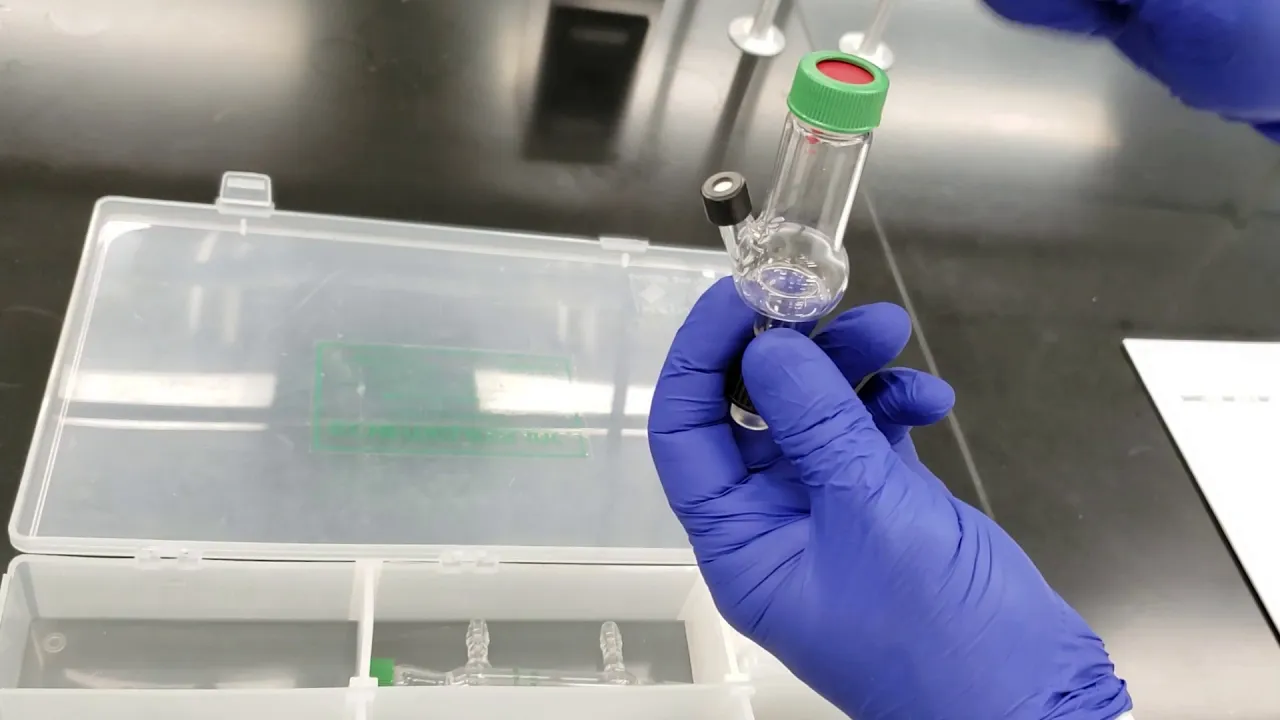


This video introduces essential chemistry laboratory equipment including beakers (for reactions and transport), graduated cylinders (for measuring liquid volumes by reading the meniscus), test tubes (for small-scale reactions), Erlenmeyer flasks (for mixing and reactions), Buchner flasks and funnels (for vacuum filtration), filter funnels (for gravity filtration), spatulas and stirring rods (for handling solids and mixing), pipettes (for transferring small liquid amounts), burettes (for titrations), volumetric flasks (for preparing standard solutions), separatory funnels (for liquid-liquid extraction), dropping funnels (for controlled reagent addition), mortars and pestles (for crushing solids), round-bottom flasks (for organic reactions), reflux condensers (for heating reactions without losing solvent), clamps and stands (for securing glassware), filter paper (for filtration), watch glasses (for weighing solids), evaporating dishes (for drying solids), melting point tubes (for determining melting points), NMR tubes (for spectroscopy), hot plates with magnetic stirrers (for heating and mixing), and balances (for weighing solids with taring). Proper use of this equipment ensures safety and accuracy in laboratory work.
Common Laboratory Glassware and Equipment: A Comprehensive Overview
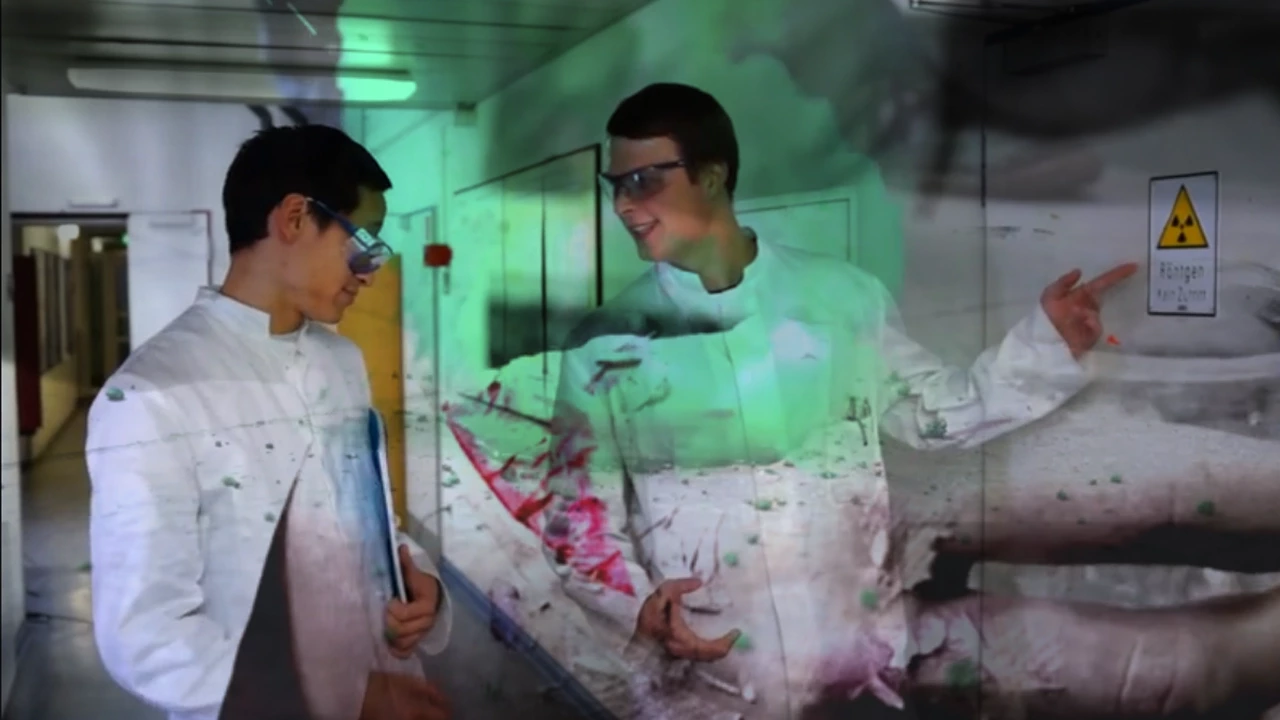
Added:If we are going to learn how to do chemistry, the first thing we need to do is learn a little bit about all of the equipment in the laboratory. We are probably familiar with the way that chemistry labs are portrayed in movies, cartoons, and horrible stock images, but not surprisingly a real chemistry lab does not look very much like this. Instead, a chemistry laboratory will typically look something like this. So let’s familiarize ourselves with the instruments we will be using on a regular basis. First off, if we are going to do chemistry we are going to have to use lots of glassware. Let’s start with one of the more familiar items. These are beakers. There is a range of beaker sizes available, ranging from as small as 5 milliliters, to as large as several liters, and there are different situations in which these different sizes would be desirable. Most often, we tend to use beakers between around 10 to 400 milliliters.
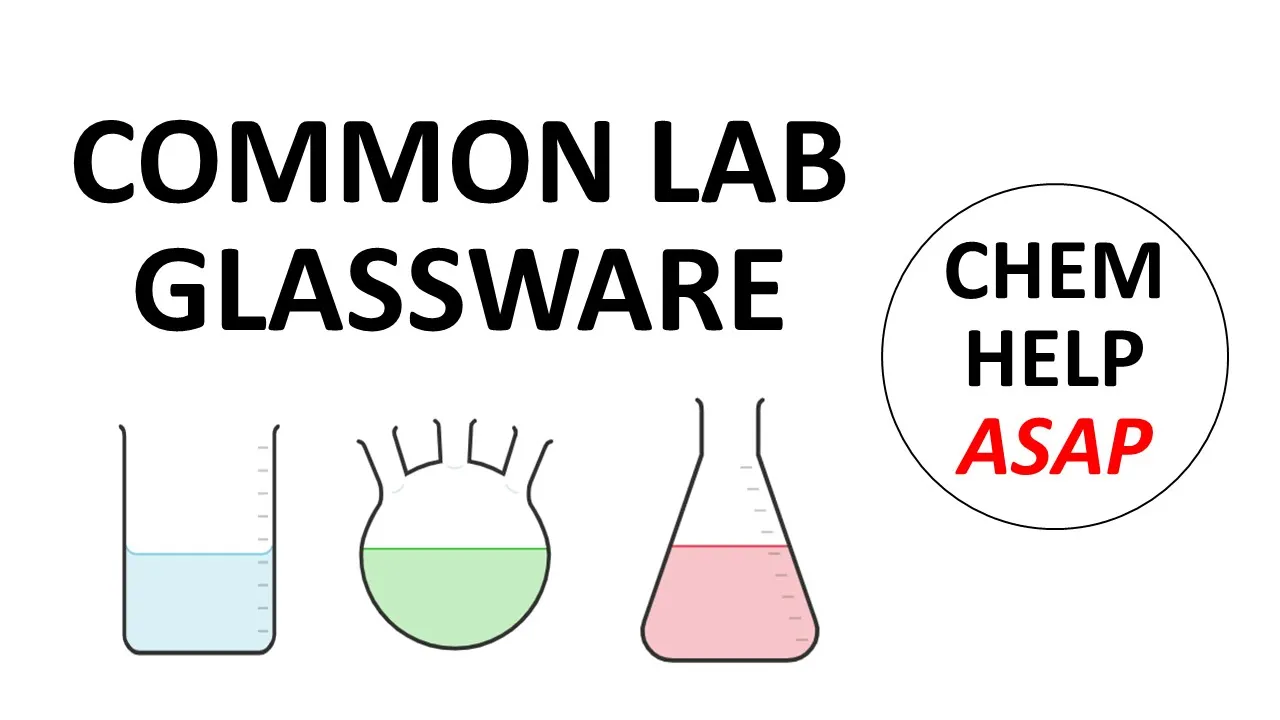
Beakers have many uses. Reactions can be conducted in them. They can be used to transport solutions and solvents. Or they can be used as water baths, meaning we can suspend some other vessel in the beaker in order to control its temperature. Always be aware of what you are using a beaker for and use the appropriately sized beaker for the job. The measurements on the sides are great for estimating the volume, but we do not carry out actual measurements of volume using beakers, we have glassware that is more accurate for measuring volumes when necessary.
Speaking of measuring volumes, next up we have the graduated cylinder. A graduated cylinder is used to measure the volume of a liquid. These also range quite a bit in size. Be aware that they are tall, so you may at some point accidently knock one over. In order to avoid this, always place them down where you can see them or where less movement is occurring. We should also be aware that when taking measurements with a graduated cylinder, we will always read from the bottom of this concave meniscus. This word refers to the way the liquid climbs a little bit up the edges, and to avoid ambiguity, we will take readings from this position here.
Next we have test tubes, test tube racks, and test tube holders. A test tube is a very small reaction vessel, which is nice to use when observing obvious visible changes in the reaction. They don’t stand up by themselves so be sure to place them a test tube rack so they don’t roll away.
A test tube holder, like this one, can be used to hold a test tube above the flame of a Bunsen burner, or suspend it in a water bath. Get comfortable holding one of these before heating it and be sure to have one that fits the size of test tube you are using.
Next let’s check out another recognizable piece of glassware, the Erlenmeyer flask. A conical, or Erlenmeyer flask looks like this. These are typically used for mixing reagents together and conducting a reaction. Again, they come in various sizes, and the measurements on the sides are quite imprecise, so they shouldn’t be used when accuracy is necessary.
The tapered edges leading to the small opening at the top prevent spilling, and they also make these flasks ideal for clamping, which is something we will commonly want to do. If the mixture needs to be manually stirred, you can manipulate them with less fear of the solution escaping which is why these are typically preferred for running reactions over beakers.
Next we have the indispensable Buchner flask, or filter flask. These are very similar to the Erlenmeyer flask, it is simply that the Buchner flask has a side arm which is used when conducting vacuum filtration, which we will discuss in another tutorial. Avoid using these for anything other than filtrations as the side arm opening can cause the liquid to escape.
With the Buchner flask covered, let’s check out the Buchner funnel and accompanying rubber adaptor. The Buchner funnel is also used when conducting vacuum filtrations.
These sit in the Buchner flask and are typically made of ceramic, but plastic ones are sometimes used. For a better seal, we tend to use the rubber adaptor. These aren’t all that stable so be sure to clamp the flask first before assembling the filtration setup.
Next let’s examine the filter funnel. For gravity filtrations, we use this kind of funnel.
Either cotton wool or a folded piece of filter paper can be used for gravity filtrations, which will also be properly demonstrated later.
To finish off the funnels, let’s check out the powder funnel. When wanting to add powder to a flask, which could be a drying agent, or any solid reagent, sometimes it is much easier to use a powder funnel.These can be placed on top of a flask, and a solid can be added easily.
These typically are not made of glass so they are easily distinguishable from the other funnels.
Be sure to check and see if it is clean before using it and clean it afterwards.
Next we have the spatula. When picking up solids, we will use a spatula. Some are curved, some are flat, and they usually bend if necessary, but be gentle whenever possible.
Similarly we have the stirring rod. When wanting to briefly stir something, a stirring rod is the best option. Do not get this confused with a thermometer, and be careful when putting these down as they do roll away. Then we get to the pipette. For adding small amounts of liquid, we use a pipette. Using a pipette bulb, a liquid can be taken up and put somewhere else. Simply squeeze, place into the liquid, release the bulb to draw the liquid into the pipette, and then transfer it to the new vessel.
Next up we have the burette. These are commonly used with titrations. Like a graduated cylinder, it has these gradations for measuring volume, but unlike a graduated cylinder they are inverted, so that you can measure how much volume is being added to some other vessel.
A more thorough demonstration of this instrument will be shown when we conduct a titration.
Then there is the volumetric flask. When making standard solutions, we use a volumetric flask.
Much like the volumetric pipette, a single line indicates the exact volume of this flask. Because of the long necks, these can be knocked over, so like the graduated cylinders, be careful where you place them. Also check which cap you have, as some fit nicely but others are deceptive. When using these to make solutions, be extra careful once you reach the neck, as this will fill up much more rapidly than the bulb, as it is so narrow. Moving along, we find the separatory funnel, which we learned about when going over extraction in the organic chemistry series. For separating two immiscible liquids, we will use a separatory funnel, sometimes abbreviated as a sep funnel.
When using these, make sure you have the correct size cap so that nothing spills when inverted.
Sep funnels require a ring clamp, so make sure that the size of your ring clamp is appropriate, as if too small the funnel will be unstable, but if too big, it will not hold the funnel at all.
We will notice that the separatory funnel has a valve for releasing liquid.
Sometimes the valve comes assembled, and sometimes they need to be assembled. We will talk more about this apparatus when we perform an extraction. Now this is called a dropping funnel. A dropping funnel looks very similar to a sep funnel, but they have this separate arm and a ground glass joint. These joints become important when conducting reactions under nitrogen or argon atmosphere with air-sensitive reagents and products. They are used to control the addition of a liquid to a reaction, and the arm keeps the pressure constant, so the addition is smooth and continuous. If there is no need for the ground glass joint, a sep funnel will often suffice as a dropping funnel, but it is good to know what this is if you come across one.
Next we find the mortar and pestle. If you need to crush up some solid material into a powder, you’d use a mortar and pestle. These are pretty simple, you simply put the material in the mortar, and crush it with the pestle. These are usually ceramic and quite heavy, and they are fun to use.
Now we get to that ubiquitous piece of glassware for the organic chemist, the round-bottom flask.
As we will come to see, for more serious reactions, we will use a round-bottom flask.
There are many sizes, and they almost always have at least one ground glass joint in them.
The roundness allows for better heat distribution and stirring, where the joints allow for easy fitting with other glassware. Since they don’t stand on their own, we will use a cork ring to hold them up, which must be of an appropriate size.
If securing to a solid support, be sure to clamp them around the ground glass joint area as this is where the glass is the toughest. To be clear, this goes for all glassware, the ground glass joint is the thickest part and should be the area clamped whenever possible.
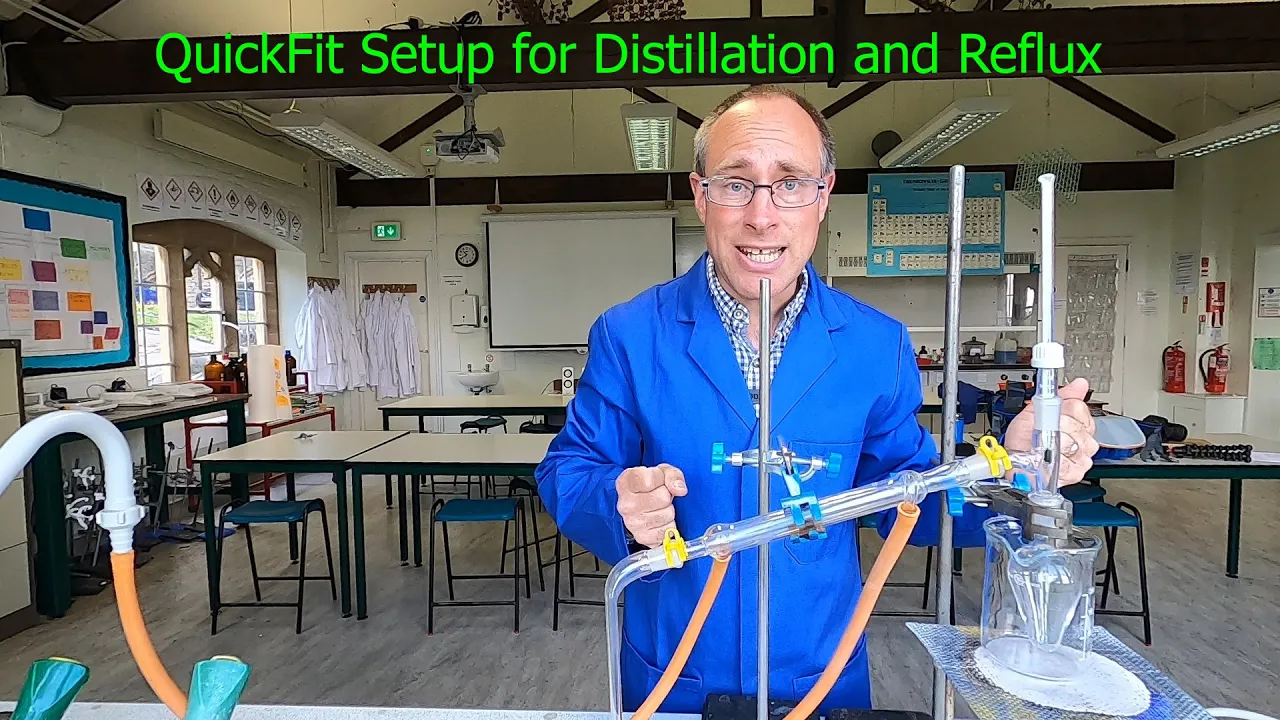
Moving along, this is a reflux condenser. When we want to boil a liquid, but don’t want to lose any of the volume, we will use a reflux condenser. These can look very different from one another, but they are all used the same way. They are essentially a tube with a jacket, although some are just a tube, but these are less reliable. The glass jacket is filled with water through these side arms which cools the environment in the tube, allowing for the gas to condense and drip back into the solution. In this way, the liquid is always boiling, but never escapes the reaction vessel. Tubes are attached to the arms here, with water flowing in from the bottom and out the top through a separate tube. It is very important to mention, that we must never block the top of the condenser with anything, as this will cause the pressure to build up, which could result in an accident. A more thorough demonstration of this apparatus will be conducted later.
Here we have some clamps and a clamp stand, something we’ve already seen a few times by now. As you have likely gathered, these are used to hold up glassware and keep them locked in place. When using these, be careful with the weight distribution as we don’t want the clamp stand to topple over. The base may jut out in one direction more than another, so don’t overload one side when possible. Clamps themselves are very adjustable with several screws, and there are a few different styles in terms of precisely how they grip the glassware. Familiarize yourself with these as we should know what kind of clamp will work best with a particular piece of glassware.
Now here, this lovely instrument is a column. We use these when performing column chromatography.
They are essentially big, long, glass tubes with a valve at the bottom.
Some have a ground glass joint at the top, and some have solvent reservoirs. Some have a frit at the bottom, which is a porous material, and some don’t. We will learn how to assemble and use one of these in a later tutorial, but for now we know what they look like.
Now getting to some of the smaller accoutrements, this is filter paper. Filter paper comes in various sizes and gradings depending on the size of the particles you are filtering.
Generally speaking, a finer grading will filter a solution more slowly.
Filter paper will be used for the Buchner filtration setup but can also be used for gravity filtrations, which we will perform later in the series.
Filter paper can also be used to passively dry solids as they tend to absorb liquids.
Now this is a watch glass. A watch glass is just a simple piece of glassware that can be used to hold and weigh an amount of solid. They wobble a bit, so be gentle with them.
Similarly, this is an evaporating dish. Sometimes you may need to let a wet solid sit and dry.
We can use an evaporating dish for this. They are typically ceramic and have high edges.
Now this little thing is a melting point tube. When performing melting point determination, you need a melting point tube. These look like little capillaries but they are in fact sealed at one end. They are very thin and small so make sure you have an area where you can safely place them.
Solid is added to the open end, and the tube can be placed in any melting point apparatus when measuring the melting point of a compound. In the same vein, here is an NMR tube and cap.
When you need to obtain an NMR spectrum, this is the tube we will use, and here is the cap we use. Simply make a rather concentrated solution of the compound you’d like to run, add it to the tube with a pipette, and then cap it. This is now ready for the spectrometer.
Now let’s head over to the fume hood. We will tend to run reactions in here, so many instruments will live inside the hood. This is a combination hot plate and magnetic stirrer.
As one would guess, this piece of equipment can both heat and stir your reaction. One dial will control the heat, and the other will control the rotational speed of the magnetic stir bar.
The heating may need to be calibrated as the dial may not be totally accurate.
Some have a plug for an external thermometer to be used so keep an eye out for that. As for the stirrer, a small Teflon stir bar can be placed in the solution and the contents of the reaction flask will be mixed, like so. The stirring can get quite aggressive, so be sure to clamp up the vessel to stop it from possibly falling over.
Another indispensable piece of equipment is the scale, or balance. Scales are used to weigh the mass of solids accurately. Be sure to tare the scale with any vessel you are weighing.
What this means is that whatever will hold the solid, we can place it on the balance and zero the mass, so that the measurement we take correlates precisely with the solid that is added.
Make sure to avoid pouring or scooping the solid onto the vessel while it is on the scales, as any residual material may cause the expensive scales to break or malfunction. Take the vessel off the scale each time you want to add or remove solid from the vessel you are using.
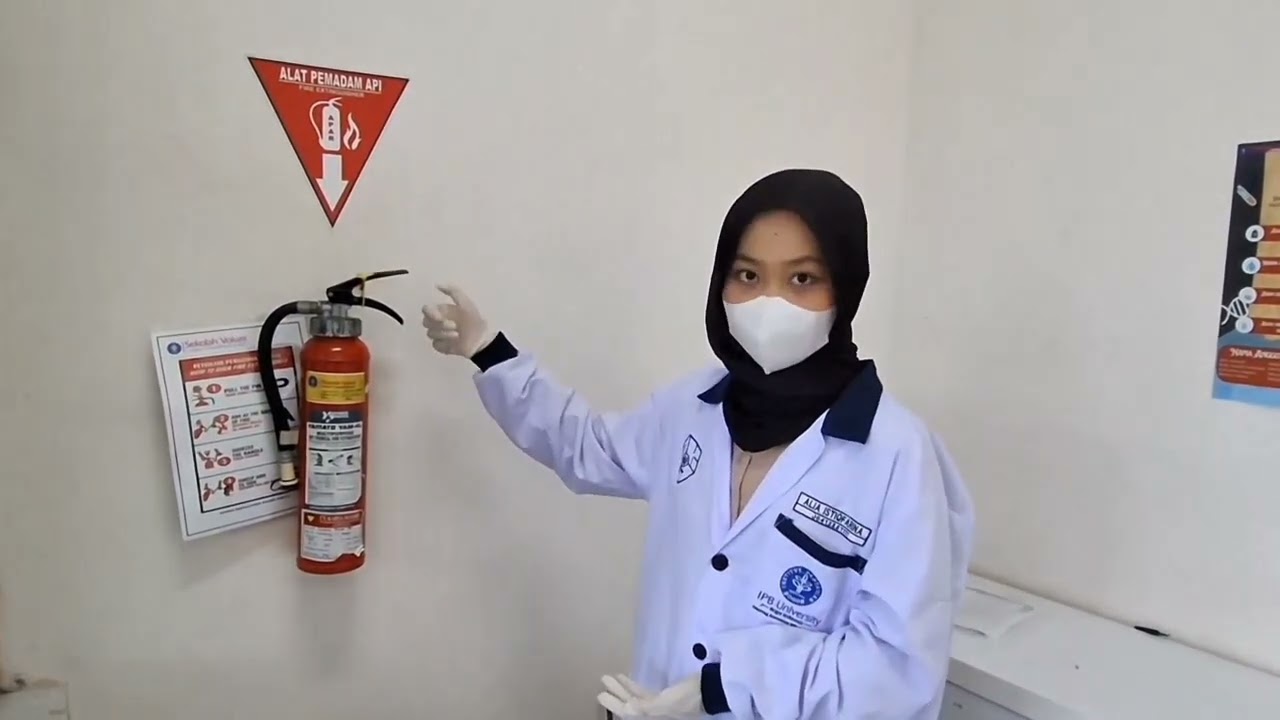
And that wraps up an introduction to the equipment you are most likely to use in the chemistry laboratory. Knowing how to use this equipment properly is the best way to stay safe while doing chemistry, in addition to becoming familiar with any eye wash or shower stations, and appropriate disposal containers. These will be specific to your lab, so be sure to pay attention when instructed on how to use these by your own instructor. But with this basic information understood, let’s move forward and start learning some simple techniques.
Up Next
The Art of Laboratory Glassblowing: Crafting Condensers in the UK
@AlecSteele
1.9M views•2023-03-31

Walking in the City: Urban Rituals and the Flâneur in Contemporary India
@PSBTIndia
1.9K views•2016-08-02
History of Psychology: From Plato to Behaviorism & Cognitive Science
@ProfessorDaveExplains
347.7K views•2021-11-15

Game of Thrones Opening Credits: A Cinematic Analysis
@gameofthrones
46.3M views•2011-04-18
Related Study Plans & Knowledge Roadmaps
Structured learning paths in General & Interdisciplinary Studies