




![[REPASO UNFV] - Lenguaje](https://i.ytimg.com/vi/tvSD3d5EUX8/maxresdefault.jpg)
















Grammatical case is a linguistic feature used in many languages (such as German, Latin, Arabic, and Russian) to mark the grammatical function of nouns, pronouns, and related words in relation to verbs, allowing speakers to identify who is performing an action (subject) and who is receiving it (object) without relying solely on word order; languages can be classified into nominative-accusative systems (where subjects and experiencers share the same case marking while objects differ) or ergative-absolutive systems (where objects and experiencers share the same marking while subjects differ), and case systems typically follow a hierarchy where languages with more complex cases tend to have all simpler cases present, though they can lose case distinctions over time through processes like syncretism and word order reliance.
Grammatical Case: Definition, Types & Examples in Linguistics
Added:what does this sentence mean well if you're a speaker of English this should be simple and unambiguous for you to answer the girl is looking at the dog and processing the information of her eyes as an image but how do we know the girl is the one who sees the dog and not the dog who sees the girl this is a fundamental distinction found in all languages and in English we can show this with the order we put the words in to reverse the meaning we just move the dog to before the verb and the girl to after it now the dog is doing the seeing to the girl we term the doer of the sentence the subject and the receiver of the verb the object the default order in English is subject object checked verb and this is how we determine what's going on in the sentence now let's look at an example in Latin in Latin words don't have to be in specific places like they do in English the default is subject object verb but this can be changed at the speaker's will so how do we know who's doing the verb to whom in the example on screen an English speaker might look at the words and use their order to say that the girl sees the dog but a Latin speaker would instantly know this is not the case how well let's look at the sentence with the opposite meaning notice how the endings of the nouns change this is a feature of Latin and many other languages called case cases are used to show the function of nouns pronouns or related words in relation to the verb they're found in many languages across the world and are generally associated with synthetic languages there are all sorts of possible cases in the Latin example we saw perhaps the two most common the nominative and the accusative the nominative is used to Mark a verb's subject and it's usually the basic dictionary form of a noun in many languages there is no special marking for the nominative the accusative is used to show the object of a verb it's usually marked on the noun but some languages such as German may only show it on additional elements such as an article other cases are the genitive marking possession and relationship the dative marking an indirect object of a ver verb the instrumental marking a tool used to do something the locative for a location the ablative for movement away from something the lative or allative for movement towards something the comitative for a companion or accompanyment of subject the vocative for addressing someone or something directly and the benefactive for something which receives the benefit or use of the action without being directly involved there are actually many more cases I haven't discussed often with ever more specific meanings or appearing only in a few languages however I will also briefly mention the ergative and the absolutive languages can generally be classified in their typology by the way they treat the arguments of a sentence you're likely most familiar with nominative accusative languages where the subject of a transitive verb and the experiencer of an intransitive verb are treated the same way but differently to the object of a transitive verb in languages with case the subject and experiencer use the nominative case while the object uses the accusative however there are also ergative absolutive languages where the object and the experiencer are treated the same and the subject is treated differently in these languages there aren't nominative and accusative cases but rather the ergative and absolutive with the ergative used for transitive subject and the absolutive for the transitive object and the experiencer there are also tripartite languages where each type of argument is treated separately and the cases are the ergative accusative and a special intransitive case other types of language do exist but I won't go any further into the subject in this video as these are the main cases you're likely to encounter languages can have basically any number of cases from two as in old French to many the says language of Caucasian Russia is renowned for its high number of cases it's often quoted as having 64 although different analyses have brought up various figures as you may have spotted from the examples in this video not all cases occur with equal frequency by far the most common is the nominative followed by an accusative oblique or ergative and in fact we can extend this tendency into what's known as the case hierarchy if a language has a case further down this list it's very likely to have all the cases above it of course as with most rules in linguistics this is more a tendency there are plenty of languages which somewhat break this hierarchy by skipping cases but in general it tends to apply in a lot of languages other sentence elements change in addition to the main noun this is called agreement for instance German changes adjectives and demonstratives to match number gender and case in some languages like Latin the agreement markers are the same as the main case markers while in others like German different markers are [Music] used another process is suffix al Arma this is when a noun which is already marked for case usually the genitive takes additional marking to agree with the noun it's modifying for instance in this example from the ancient Middle Eastern language arashan we see the genitive form of Hali taking the dative plural suffix to agree with its possess shy paast marking often occurs in conjunction with other marking especially in systems with very few cases where not all roles are covered by the cases alone or where confusion may arise if Case markers are the same an example is word order which may still be important even if Cas is present generally the more affixed marking the words of a language take the less important word order is however most languages need at least some structure and it's extremely uncommon to see completely free syntax prepositions or post positions collectively known as ad positions also frequently occur with case in some languages there's special treatment of a word when used with an adposition such as having a special adpositional case this occurs in Irish and in Scottish GIC where most prepositions require use of a prepositional case which is not used independently adpositions are actually very closely connected to cases as this is where they come from let's imagine a language I'm not going to use a real language to explain this next section because language is very messy but the concept's the same this language starts off having very little inflection but a very strict word order to convey locational information it uses prepositions like to in from and with as time passes these prepositions one by one might get more connected in speech to their nouns until eventually they stick on as affixes interestingly it's way more common for them to stick to the end of words as suffixes rather than the front even if they were originally preposition S one potential reason for this is that people want to prioritize the important information when they speak and get it out first this information is usually the content of the sentence rather than the grammatical bits like ad positions sticking it together imagine you're telling someone to meet you in a bakery if you don't have long you're much more likely just to say Bakery than you are to say in so let's let our prepositions become suffixes now we have a basic case system if you want to create more meanings than are supplied by the case markers it's quite common to use prepositions which usually takes certain cases if a preposition is used with a declined noun often enough it might once again fuse onto the noun as time passes words change and case markers might erode down such that these newer suffixes are no longer identifiable as being related to the suffix they came from particularly if a language has a lot of cases it can be difficult to distinguish between case suffixes and post positions generally an AIX will be phonologically dependent on the word it's attached to meaning it's susceptible to processes of sound change BAS based on the main word whereas separate words usually remain independent as time passes and sounds change and erode it's likely that affixes will slowly disappear in some languages this is counteracted by creation of new affixes such as that of new cases as previously mentioned in other languages however inflection can gradually be lost until it's completely gone and speakers have to rely on new strategies to convey their meanings such as with use of AD positions this delivers us back to our initial State and the cycle is free to begin again with new ad positions refusing to create new case markers until they erode back to nothing often though this process goes through intermediate stages such as what's known as syncretism this is when multiple case mark markers take the same form if this happens on a small scale with just a few markers syncretizing it's usually possible to distinguish the different meanings through context but if more forms merge it becomes harder and this is where a partial Reliance on adpositions may arise if we look at the inflection of a first declen noun in Latin such as feina we can see that several cases use the same suffix generally these syncretisms will differ between the singular and plural and it's generally possible to use contextual Clues to figure out which form is meant without many additional prepositions if we look back to Proto italic the ancestor of Latin we see that most of these forms were originally completely discreet but later processes of sound change caused the forms to merge now if we look at a German noun we see a far higher degree of syncretism in the example on screen all distinction between the cases has been lost and speakers will rely on agreement with other elements to distinguish meaning if we look at photo Germanic the ancestor of German spoken over 2,000 years ago we see that most of the original forms were distinct some cases have also already been Lo lost by merging with others with time the remaining distinctions in the language will probably disappear and it'll become more analytic this is already happening with the genitive case being replaced by the dative in colloquial speech and in many dialects photog Germanic which we just saw is also the ancestor of English obviously we don't make all these distinctions in our language today although we did in the past Old English which was spoken around 1 to 1 and a half thousand years ago had retained five of the six protog Germanic cases although by the end of the period the instrumental had been lost leaving only four there was a certain amount of syncretism but it varied between declension classes by Middle English there was a lot more syncretism and only a few very weak suffixes remaining the dative case disappeared during this period along with the accusative leaving just the nominative and the genitive in Modern English this has become a dichotomy between the possessive and the non-possessive the possessive is no longer a true genitive case suffix instead being a CTIC able to attach to whole noun phrases rather than just individual nouns slightly more has been retained in english's pronouns which distinguish three main cases nominative oblique and genitive or subjective objective and possessive as they're sometimes called this is the only place in Modern English where subjects and objects are still distinguished the oblique is the result of the merger between the accusative and dative cases of the older languages the distinction can also be observed in the interrogative pronoun who although the oblique form whom is relatively rare in more casual speech [Music] [Music]
Up Next
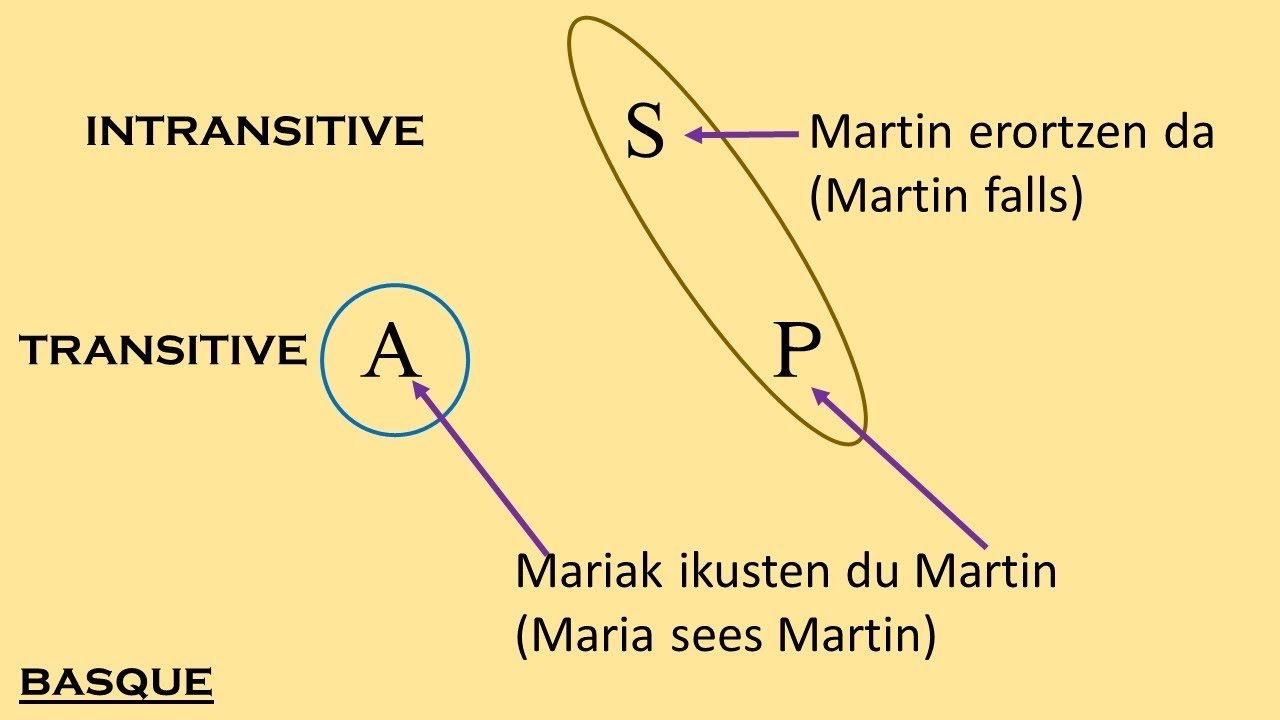
Morphosyntactic Alignment: Understanding Ergativity
@learningrarelanguages1497
4.2K views•2023-01-15
Constraint Interaction in Optimality Theory: Epenthesis & Deletion
@Vidyamitra
180 views•2018-08-20
Conlang Morphology Tutorial: Morphemes, Affixes & Alignment
@LexisLang
2.6K views•2025-08-01

Accent Expert Explains U.S. Regional Dialects | Part 1
@WIRED
9.3M views•2021-01-21
Related Study Plans & Knowledge Roadmaps
Structured learning paths in Linguistics