

















Amazonian indigenous peoples like the Machiguenga and Gnawa have fundamentally different cultural frameworks for understanding psychoactive plants, with Machiguenga focusing on bitter, toxic compounds as 'poisons' that expel illness-causing microscopic worms, while Gnawa prioritize fragrant, visually distinctive plants that attract beneficial spirits and repel harmful ones; these cultural differences reflect broader philosophical distinctions about the nature of mind, body, and spirit, where Machiguenga view plants as 'teachers' transmitting information across cell membranes and between organisms, and where the same substance (ayahuasca) can serve vastly different purposes depending on cultural context.
Ayahuasca & Amazonian Shamanism: Substance, Soul, and Sensation
Added:Introduction to Animism and Indigenous Ontologies: Understanding how non-Western societies attribute agency, spirit, and personhood to non-human entities like plants and animals.
Foundations of Shamanic Practices: Familiarity with the role of the shaman (or curandero) as a spiritual mediator, healer, and navigator of altered states of consciousness.
Basic Ethnopharmacology: A foundational understanding of how natural psychoactive compounds (such as DMT, harmine, and nicotine) interact with the human nervous system.
The Principle of Cultural Relativism: The anthropological approach of evaluating cultural practices and beliefs within their own context, rather than through a Western lens.
Globalization and the Impact of Ayahuasca Tourism: Analyzing the ethical, economic, and cultural consequences of the global commodification of traditional Amazonian ceremonies.
Psychedelic Science and Clinical Psychotherapy: Exploring how modern Western medicine and psychiatry are researching traditional plant medicines for treating PTSD, depression, and addiction.
Ecological Conservation and Biopiracy: Investigating the sustainability of harvesting sacred plants and the legal/ethical debates surrounding the intellectual property rights of indigenous knowledge.
Neuroanthropology of Altered States: Studying how cultural frameworks and brain chemistry interact to shape deep spiritual, sensory, and hallucinatory experiences.
264 views10likes58:33Original Release: 2018-07-04
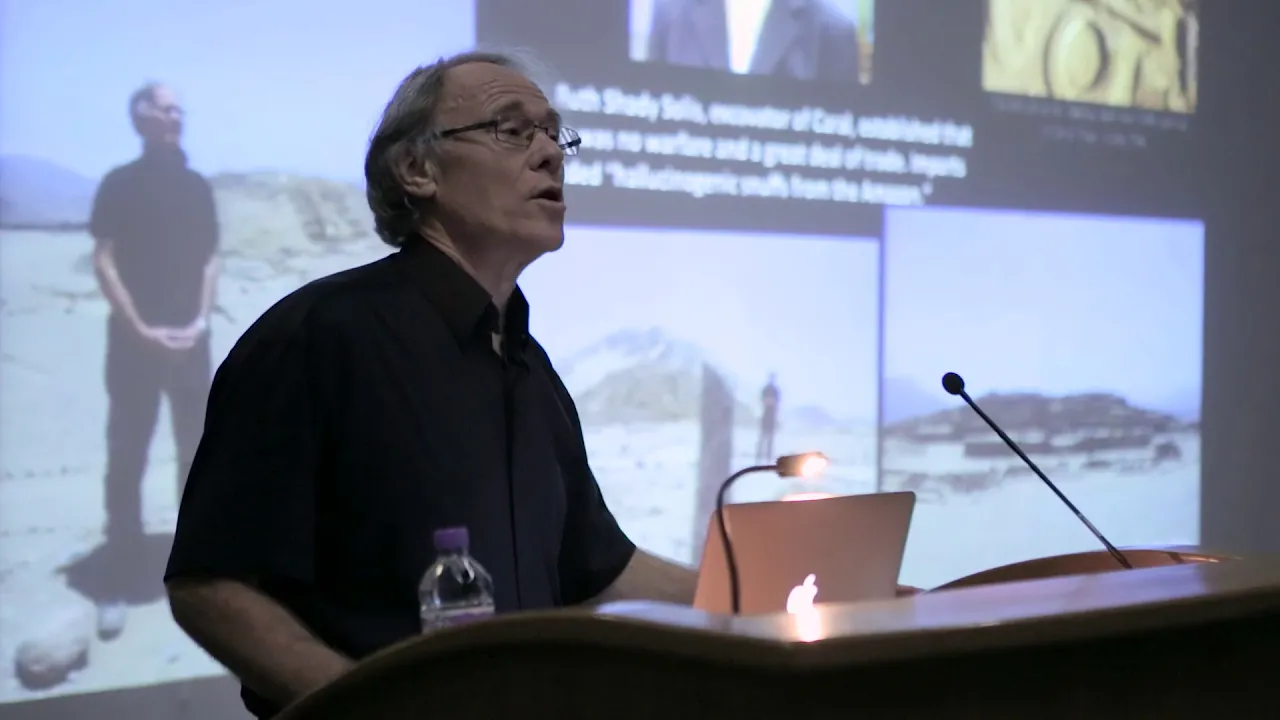
and and it's just such an honor to be here you know this morning listening to Dennis McKenna and Lisa habla de Luna and monolith tourists speaking and these were the people that I was reading when I was an undergraduate and young graduate student reading about all this stuff and to finally meet all of them in one place it's just remarkable so thank you and for all the people organize it so as an anthropologist I'm an anthropologist too like a Virginian and one of the things that we do is you often questions that you think you already know the answer you pose them again and again because every time sometimes you surprise yourself by the things that you learn and so I was I was looking at the tropical night with a old friend of mine watching a friend mine Moreno and in maccha Ginga there's this grammatical distinction like like in French or Spanish you have masculine and feminine nouns well in much again ger they have that same distinction but it's between animate and inanimate things but the way they consider animate inanimate inanimate is not the way we do because most plants are not animate and yet most animals are and then other things like stars moon are and it's so it seems that the anima see has more to do with locomotion willful willful locomotion so most plants aren't animate because they can't walk and so on and so I was thinking about this and we were we've done some tobacco snuff when I was thinking so I asked him so Moreno why is it that you treat stars and the moon and the Sun as animate things and he said well because they have bodies and I thought about it and it it struck me as being a bit strange because of course we talk about stars and moons and planets as being celestial bodies but that's not what we mean when we call something a celestial body we're talking about it as being up as being as being a physical object I said what do you mean they have bodies well they're people they have human bodies so what when he called them celestial body when he called them bodies he wasn't saying that they're inert mass like when we say celestial bodies were referring to their inert matter of the thing what he was saying when he called them bodies is that they're human beings they have human bodies and that they're NRC comes from their human nature and so in a context like this if we looked up in the Stars and the moon and someone asked us from this world but why do you call them adamant we'd probably say because they have souls but what he said was that they have human bodies and so this idea that these concepts of body and soul are very fluid among these peoples and so on the other side of the coin I was asking well certain plants have souls most plants don't have souls because they don't have human bodies there they don't walk around but some certain plants have souls and I know ayahuasca Ragman see all these psychoactive plants have souls so I said well what tell me about plants that have souls and it was a surprise again asking the same question you get surprising interest which plants have souls and the first two things that came out of his mouth were not what I was expecting he said well capella has a soul here are corrupt ends it's this horrible you know this spiny plant it's got this if you cut down the tree it's got this battery acid for a it's like the the sap is a battery acid it can make you go blind it's got these explosively to his'n fruits that that can throw the fruit when they when they ripen they can throw the fruit a hundred feet that some people call it dynamite tree cause it makes this huge explosion is this really aggressive plan and he said well katawa has a soul what why is Kitana so well if you try and cut it down and you're not careful it'll go into your eye and make you blind and in the second example he gave was bamboo the bamboo that they used to make arrows and I said well why is that of us so well if you make arrows when your wife is pregnant then the the sharpness and the caustic fur there's sort of like these little irritating hairs on the bamboo it'll make your son it'll make your your child bleed and you could lose your baby so so when when I asked them which plants have souls he chose to focus on plants that had really noxus noxious spiritual and cool properties and so so this is sort of what everyone's talking about my fear is that Castro that he seems to be the word of the day so he has this there's no pointer is there he has this this article called he talks about ethnography as being a process of controlled equivocation which means that when you encounter concepts among indigenous people that that shock your own conception of those concepts it makes you stop and reconsider what are the philosophical implications of the terms you're using when they're being used in a different way and so in maccha ginga the the word for soul can be used for a soul of a human being or a spirit but when they in the animate form I is animate oh is inanimate like masculine from them but when they talk about plants OCD like I said many plants are not do not are not anime they don't have souls it's only certain noxious plants and psychoactive plants vessels when they say OCD of a planet they can be talking about the pith of a plant or the or the heartwood in a tree it's called OCD and also when you make any kind of medicinal preparation whether it's psychoactive or just medicinal they'll say you put the leaves in the water and you boil it and the water turns green or red the water changes of color and that's because the soul of the plant has infused the decoction the potion and then when you drink that Cohen the soul in the water then infuses your muscles and bones and blood with that so their concept of the spirit of a planet is a approaches what we would call the pharmacologically active principle and they also refer with what when they're talking about shamanistic plants ayahuasca book Mansi and so on they talk about the soul of the plant is being like a leader like oak Dean coming would be like the leader or the chief and I'm going to talk about this a bit later but with tobacco there's a it's it's not it's not it's it's by coincidence but it just so happens that the word for soul heating is very similar to the word for his tobacco he said it's a linguistic coincidence and they talked about this as well that Rocko he said a is the soul of the shaman he transmits on you when you take tobacco with the ship with us with a shaman the tobacco is setting transmits his soul ect to you so that the soul is transmitted through this physical substance and these are examples of how how these indigenous concepts about what constitutes the body what concepts of soul they're very different than what our Western philosophical tradition is based on it so you know going back to the cart cogito ergo sum the cart divided the substances in the universe into three types there's rests extensa those things that exist extended through space material things there is rest kargh attends which are the mental things which would be mine and so on and then God is a separate category infinite the rest in Vinita and we see when the words that we use to describe psychoactive plants fall into these different categories whether you know most of them psychedelics I thought over that Colusa genetic psychoactive mind-altering they emphasize the mental states narcotic is emphasized the physical state and then entheogen emphasizes the godliness of these plants the matcha gator won't have any of this their word for psychoactive plants is just kept you got it which means basically poison that which intoxicates and the term kept you gotti much inga is an agglutinative language so there's you have these you have these word roots that then add on multiple meanings as they get different ethics and stuff it's a biga this root in the middle of that kip you gotta keep you got needs poison now tonight but it really means to return to go back and come to the same place to spin on an axis there far by extension to feel dizzy or nauseous because you feel like you're spinning therefore to intoxicate or become intoxicated and then poisonous intoxicating it should say and psychoactive something's and so their concept of what we would call a psychoactive plant is a very physical thing it's intoxicating they don't just they don't distinguish between the physical effects and the mental effects or the spiritual effects it's all one thing medicines and especially the plants are poisons and it's through this intoxication of the body that you we can't get away from our our concepts we you intoxicate the body to release the soul but for them it's all one thing and so in this in this and this talk I want to I want to present a number of ethnographic examples and at the botanical examples of how these people understand the mind / body effects of these plants and in the end reflect on how we can think about these things in new ways and so just a quick lesson in geography this is you know here we are here we are you know Peru we've been talking about up here you keep those doing from way down in southern Peru down on the board of Bolivia and Brazil mano National Park and it's a region it's a national park but it has a very large indigenous population and a very rich and sort of tragic history it was originally populated by the the TOI Yeti and the Moscow Pierrot people but they were essentially wiped out in the rubber at the turn of the century by the rubber barons by Fitzcarraldo and all these other people then ishani cos and Minoan peoples and the Piro and that much came to fill this demographic void left by the the rubber tappers everyone everyone anyone who's seen wearing hats ogz wonderful film Fitzcarraldo this is the isthmus of its corral this right here he took his boat across the Machado river into the headwaters of the mano River in 1894 and so this is the this is the living legacy of its cardo and so the main to indigenous groups in in the money part when I first started working with Omachi ginga there Arawak and speaking peoples they wear these Cushman's they're sort of tall and thin and then and they it they sort of filled in the demographic void left by the these people who are wiped out in the 1920s and so and then the knowing people's then now at people's who moved in from sort of Peru's River region Brazil from the north and they just basically the mattina migrated from the South the Pearl Owens took to the north until they ran into each other and they they were at war with each other for the whole 20th century and so because I have a little bit more time than unusual talks I'm gonna try to present some of some of the stuff that I've done before some of you may have seen this but just to give the background of the research and so my thesis research was basically I was doing a comparative study have these two groups of people living in the same environment they're you know 40 20 30 miles from each other and yet they they were at war with each other so they didn't really interact much except by shooting arrows at each other so I was interested in saying well how do they you know you have these two cultures different language different language families how do they understand the forest how do the use of plants and what I found was that sensory perception medicinal plants and shamanic plants and sensory perception the taste the odor the texture smell this was all very important in how they understood the how they selected the plants wise it's plant medicine because it's bitter because it's a stringent because it has a fragrant odor because it smells like a peccary because it's got spines those sensory properties were very important understanding how the plant works and how the how it how it how it how they understand the etiology this plant works because it enters the body and does these things and so this took me into the world of sensory anthropology which is an an area of subfield of anthropology that explores the cultural variations we think of sense as being five sentences you know but I had an encounter with this of how different cultures perceive this how different cultures categorize the senses when I was in the forest collecting plants with this buddy of mine Douglas you he's an ecologist from Harvard was from Harvard now he's it here in England at East Anglia University and so Marino my old buddy Marino he scraped this bark of this tree and it smelled exactly like a fart it was horrible it was a lure a sea that smells they call it Palo them yet it smelled exactly like a fart and he gives it to me I smell it I go oh man I got to show this to Douglas so I said I said hey Douglas I put the thing under his nose I said listen to this and Doug goes Shepherd even taking too much ayahuasca it's like your senses about and all crossed you're telling to me to listen to the smell I had been taking too much ayahuasca but actually what was going on is that I gotten so used to speaking marching and speaking language all this time that I was using their vocabulary and what happens in maccha Ginga is when you say smell this the word that you use is actually listen to this odor because munching the language divides the senses into two main categories there's Nia the verb root Nia which means to see to recognize to know and I'll talk later about the shamanic kind of seeing true sing which is nee-san o means truth so this is like a complex where that means true scene and then all the other senses hearing feeling and smelling tasting come under this verb cama which means the basic is to hear then by extension to understand to obey but also when you when you've just eaten the meal and you say I'm full you say Kim akka I feel it in my stomach and then by when you say again it's a gluten lens Anka is the is the verb this award route for smoke gas vapor odor language anything that's invisible that's in a gaseous painting so kim myung cadency means list of literacy listened to or to hear the odor or the vapor of something so that was my experience with how you your cable goes nader native and so when i was working with working with the much eating and then our healers and collecting plants what I really wanted for every plant I wanted to know not only what the plant is the botany of it and what it's used for but what sense property does the plant have why is this plant of Medicine and they were very effective at telling me why this was it was very interesting and then I I sort of compared you know I had a robust sample of munching of plants 740 collections 538 collections among the Gnawa and when you look at this graph this is much Inga yellow now a blue you can see that for the matching a taste and then irritation which would be pungency things Acosta City chemical irritation were very important not very much for the now for the matching Inga for the now a visual spines visual things report in color in the Lester for the matching and both of them odor very important so you could see that there was a very different cultural approach to medicinal plants in the two cultures one of them you know the matcha Ginga really focused on bitter plants the most of all the plants that I collected the single most common chemical sensory property given from a disciplines was bitterness 22 percent of all plants that I collected among watching you they said the property is bitter when you add bitterness plus chemical irritation cost isset e pungency in all forty-nine percent basically half of the plants that they use they're selecting for these powerful astringent bitter toxic kind of compounds that they're looking for and and this has to do with the way they understand illness they consider illness to be these nice microscopic worms they call in so many just like they would call earthworms or intestinal worm to these and these are different worms these are teeny tiny little worms you can't see them they're sort of like our concept of microbes and these worms get into your body and you have to put these poisonous caustic astringent toxic bitter things to kill or hurt they say that the the worm feels just like if you take a bitter plant it hurts you it makes you feel bad it makes you feel sick if you take the Chili Peppers it makes you it makes you recoil from the pain it says illnesses are the same way the little worms you you put something bitter it makes them feel bad it makes you feel sick you put something caustic or just pungent it hurts them and they and you get the metal body so basically it's like an allopathic model of efficacy where where where you you in order to cure the ills of the body you poison it with these toxic plants that expel the illness and in this idea that the the okay this thing got to OCD when you boil a medicinal plant in water the soul of the plant infuses the water and then your body so that the soul of the plant is inseparable from the pharmacological properties when I compared it to the Gnawa system of medicine it was couldn't have been more different as I said visual cues were responsible for 33% the third of their plants were visually motivated had spines it has colorful leaf and you know less than 5% of their plants or bitter and when you look at the in you know the matcha Ginga ingests a full 33 percent of their medicines are ingested so they know what they taste like but now less than 5% of their medicine just they don't know what they taste like is they never ingested why don't they ingest them well for them the Gnawa say that the illness comes from the plant so you're walking in the forest you go by this fining plant and the spiny plant has a spirit owner that is a wasp and you're walking by minding your business and that wasp attacks you for no reason just like a wasp attacks you there's no reason they just want to attack you because they're aggressive and you get sick and the only way to heal yourself and it causes these there's a bunch of different wasp plants and each one causes they cause inflammation that cause pain they cause bleeding and each plan each illness each wasp illness is associated with a specific wasp plant and so you have to find the right wasp plant to treat the wasp illness and you apply that plant externally and they say it's like a it's like a they say it's like a like a a magnet because the plant is the same the illness comes from the plant so if you got heart pain caused by this specific wasp of medicine you put the plant you make a warm clasp or you put it outside and it draws the illness the wasp out of your body by virtue of like treats like right like a magnet and then the vapor coming off your body is that spirit going back to the forest and so they have a concept of medicine as poison but it's a very different concept of medicine poison because the medicine and the illness are exactly the same thing and so you treat the illness by kid taking a small dose of that poison and putting on the outside and that's why you don't ingest the plant if you would ingest the plant you'd be ingesting the illness and this most of their medicines are applied externally and in less than 4% are ingested it's like so this is very very homeopathic sort of like treats like illness model am i doing with time I know everyone wants to get to the loosen ins I'm getting there I just want to give some of the cultural background so as I said both in in both groups odor is very important for medicines and especially for the now they have this whole category of fragrant medicines they're very preoccupied with bodily odors they want to disguise unpleasant body odors and the worst smell of all is the smell of these thinking corpse rates there are people who have died and weren't buried properly and they become these zombie wraiths walking to the force and they smell like rotten flesh is supposed to be the worst smell in existence and so they use these they use there's there's there's probably two or three dozen fragrant plants they put in these armbands they use vanilla they use they use this wild basil scutellaria they use a bunch of fragrant they use a bunch of fragrant air a sea flowers and they put them in their arms and it's both to attract pasanga in the peruvian amazon is love magic it's what you use to attract lovers and so it's it's like a sauna but for them it's not just about attracting lovers it's about keeping away these these illness causing spirits like the corpse rates and the other spirits of that cause don't they say that if you if you when someone kills an animal and they're burning the fur do you have to burn the fur off before you cook the animal and that fur that burnt first smell can go up into your nose and down into your stomach and make you sit and so to treat it you need to get plants that imitate that burnt first smell and you put them on your belly and pull it out and during the ayahuasca ceremony the Gnawa smell wild basil in order to bring these pleasant spirits because but by wearing these fragrant perfumes in their arms they're imitating there's these spirit beings called the Shobha who live in the forest and they are frake their bodies are fragrant without having to use any kind of perfumes there's fragrant beings and so by by using these fragrant plants they're imitating the this fragrant bodies of the Shobha and this goes there's a lot of we're not wearing our Wilbur the son of Johannes will work with tobacco shop especially he's written a paper about the pneumatic illness concept how all for the Amazon you find this concept of illness as being these pathogenic bad smells and then therapeutic agents will be will bring positive positive you know good smells counteract bad smells and that's how you get healing and as I said in in much Inga ANCA it means odor of vapor smoke mist and language you hear an odor and there's a number of illnesses that they say they say in the in the early rainy season you get this mist that comes out of the sky that brings down the accumulated illnesses and it brings those illnesses to earth and yellow vapor in the sky is this it's this it's this sort of coloration the sky gets in the late rainy season and it when it rains after that they say that brings illness into the water if you think about it late sorry late dry season so at the very end of the dry season the skies full of particles and the ground of course is full of accumulated feces and then when with the first rains that all that accumulated feces goes into one I say right after the first rains you start getting sick and they say it's this this this yellow vapour and the sky comes down in attendances in in Peru there's this concept of cudapah in Amazonia cudapah means vengeful spirits it's a it's a spirit revenge it comes from I think from a catch a word that means to exchange to pay back and in munching and they call it with us at the agency which means when you hunt an animal with a very strong odor like a male animal with a scent gland when you kill the animal the animal spirit comes back as that odor and attacks your children and so so for example a hunter goes out and he kills a monkey a woolly monkey a male woolly monkey the big crock of the big male winged monkey and their Willie Mike has this strong male sort of scent odor from from that like the male scent glands that animals have and the the animal spirit comes back as that odor and the young baby will smell that odor and get sick will cry will have rashes will get diarrhea and so what the woman does is she takes all of these odorous plans leaves and peedee peedee which I'll talk about a little bit and this whole concoction of plants and every every day for about the first few months of the kid's life she bathes the baby three months three times a day with these odors plants to create like an odorous force field of fragrant odors to protect them from all these malignant odors that come in from the forest okay now is the part everyone wants to hear about hallucinates we're there so ayahuasca you know the Quechua word ayahuasca the vine of the soul there's all these anomalies matching you get right to the point this stuff is called vomiting medicine common ugly common and kaki to vomit humpy medicine and they consider it to be kept be gaudy poisonous toxic and of course kept be shitty now these days the matcha Ganga mix the banister Aptus with psychotria like everybody else but they did not use psychotria as an admixture until very recently they seemed to have had a iwasa for some time because they have they have more than seven different cultivars and they say that before they learned about psychotria they they drank it alone well not alone they drank ayahuasca mixed with other things so they seem to have gotten ayahuasca vine and the psychotria grows there they just didn't how to use it and so they mixed banisteriopsis vine for about eight to ten hours it's a much longer boiling process they say they reduce it to a honey-like consistency and they would mix it with different plants like phyto Nia Alba Venus with geocanvas pepper G which are ornamental plants you can find in any florist probably in England and they said well it's the it's got these pretty veins on the leaves and that those are the things that come into the visions and the coloration of the leaves that affects the vision so this could be what they call doctrine of signatures you know just a symbolic association or who knows if any wants to go out and see if there's any psychoactive things in these plants and nowadays and and the funny thing is these days they'll add these things to the the psychotria ayahuasca mixture sometimes just sort of a member remembrance of old times but they say that making it with psychotria is much more efficient we're and they happened to boil it for eight to ten hours you've got you boil it in four hours and they learn the curious thing is they learn psychotria grew there but they didn't how to use it they learned it from the same watching inca guide who brought them Protestant missionaries so he brought Protestant missionaries in ayahuasca at the same time and so when they were first contacted in the 1960s dispatching a guide who was bringing the product missionary said hey you go you guys think I was you don't know about this stuff and so they call it to this state autobahn mocchi because not the leaf itself it grows there but the knowledge came from this Alabama River my genius but the curious thing is I've collected the hell out of this thing collected it all I can and it is not various it is consistently every time I come up with various they say that's the same that's a little Baba she but that's the back guru Baba she that's the stuff that Shapiro used we don't use that that's bad stuff and make you see bats and snakes and all these bad things they say we use this other thing and it's like I've collected them dozens of times you lay them in the herbarium and every time it's various it's bad it's hard to bat or snake Buddha bum ba sheets are they bad or snake psychotria and the one that they use is this thing that I haven't been able identify yet so it's a slightly different variety it's in the Chicago Field Museum if someone can tell me what it is I so talking about the sensory world around ayahuasca use one thing let's just play a little bit of this I hope it works [Music] this is a one strained violin to call it a musical bow I think in the Amazon and you can hear people so is the ayahuasca now I can't turn it off oops so the ayahuasca comes on they will play these big all fees and the word Peggle fee pegye is the root for transformation and so that they only means the instrument of transformation and they say that it speaks the language of these invisible spirits called the Sun God eating sanka means clean like clean water but also invisible so transparent lucid clean and they say that when you play when you play the peg won't be beautifully it's come at being that it has a beautiful odor or a beautiful vapor that emerges from it and it draws the this it draws the spirits from the forest with that beautiful ode or a beautiful vapor beautiful language and they and and and it's sort of it calls the spirits and that's what that's how the songs come you take ayahuasca and while you're waiting for the song the spirits to come who bring the songs you play that they go up me and that's what draws them to you that's their language and it's just it's sort of hypnotic let's listen to a little bit more I love it see if I can get it going I won't go anyway and then going back to this idea of true seeing the verb nae means to see Sano is this is this is this root means true so next time I forgot si means true singing and the way you obtained true seeing is you have to take Iowa ayahuasca in the absolute darkness and this there's there's a related word Ness Sanka coffie Sanka deeply like I said Sanka Deepti are the invisible spirits of the forest when you look in the clear water you say miss sang got that nice oncotic you're seeing through clear water so the word is this root Csonka means both it means transparent invisible but also clean and pure like looking into a mirror looking through water and so when the month when the ayahuasca when the matching I take ayahuasca they do it always in the rainy season and they always do it in complete heart you can have even a flashlight or a watch anything that's gonna make any light because they say and they they go through they go through the entire village Hamlet area and they put out every single fire like they dumped water on the fire it's the only time they put out all the fires because they want any spark of light because they say any spark of light could burn your soul and it gets in the way of true singing and so the way you obtain true seeing is by blocking out ordinary sight completely you can't see anything pitch dark it's in the rainy season and you take ayahuasca to open up your your open up your eyes to the true seeing now the Gnawa is going back to the Gnawa they weren't cut like I said they were at war with the mechina for the whole 20th century they were finally contacted in 1985 half the population died it was a very traumatic event shale oil was prospecting in the region loggers came in and they they were contacted there was no health care and half the population died of colds and whooping cough and other things between the nineteen eighty-five contact and went in 1990 I worked with him in 1996 prior to that contact they did not have a ayahuasca at all they didn't know about the vine or the sight coach or anything they used this Paul Linea which I collected but can never get a fertile sample I don't know what it is some kind of Paul Linea they call it C Bowl which means a stringent it's a very stringent plan and they say they would take it and and they said it wouldn't have really clear visions but you sort of see spirits you see things but it was highly highly toxic and if you ate any cut yet there's really talk about death if you a weird kind of fish or peccary or tapir anything a little bit different you eat with this you get these huge lesions on your body skin lesions there's this one guy who walks around with this huge rash it's like a giant it's not like my nice but it looks like a huge blush mona - thing on his whole leg and they say because before contact he took this Paul Linea and they need some kind of catfish once they got ayahuasca the the the yummy Gnawa shaman who devote the yama now a man who sort of negotiated he could speak enough of their language he negotiated their contact the outside world he was a shaman he introduced them to ayahuasca in 1985 and there's a film about this called I think it's called a shamans apprentice about the initiation of the now ahead men by the our leader and it was his way of sort of taking dominance over the group and now they have become complete fanatics of ayahuasca they take ayahuasca when I was there in 1996 they took it every day you couldn't find ayahuasca for miles and miles around the forest they just took it every single day and they they used the wild species the menthe you can use the cultivate stage they use a wild species it's much weaker when my much younger friend took it with us it's like drinking Masato so it's not really very strong it's more it creates sort of mild or state of inebriation so that they can they can sing their songs when when my munching a buddy made his ayahuasca but now I couldn't sing like that stuffs too strong I can't sing we want to be able to sing and and their healing songs it's interesting they have these really amazing healing songs that are their couplets they're like the poetic couplets improvised what couplets of two statements that are sort of similar that that have internal rhymes and and as they go through these couplets these these these these sort of conceptually rhyming couplets in their songs when they're treating things like fevers for example they'll sing out to guns and motors and helicopters and gasoline chainsaws they sing to all of these objects from Western culture that are hot and have these strong smells and they say that's what causes malaria and colds all these new illnesses they didn't have before that are associate with very high fevers they say they come from these hot objects that white people have bought and so in their shamanistic rituals they will sing poetic couplets to these hot objects and they the idea is that they sing to these objects and they gather them together and then they'll blow their cooling breath on them they're cooling fragrant breath to to dispel the heat and heal the illness and so once again the idea is that well white people illnesses homeopathy come from white people objects so to heal those white people illnesses we need to we need to call together the the sort of the spirits of these white people objects and then and then dispel them and there's and these these these they can be these incredibly beautiful poems that they sang is a translation that I did at one of the songs whose illness is this the flaming illness of lightning it's hot fire burns it's white smoke it's boiling fever the owners of metal the white people from downriver the metal people are burning the metal knives are burning the smell of hot steel what strange people are these their illness goes to the far reaches the headwaters of the Snake River none can escape the fever how will we put out this fire and so they repeat these couplets and then at the end of it he'll call together the fragrant cooling spirits and dispel these things so neither of these people really used ayahuasca as we know it until very recently what did they use before well for the much again that it's tobacco that's the true shamans substance not ayahuasca ayahuasca comes more recently and as and it hurts it hurts and the the the the the property of IO of tobacco that they that they appreciate is Copsey Copsey is what they used to describe Chili Peppers or things like like really strong smelling strong smelling dr. Bronner's soap they say is khat see because it's got this strong sort of camp for odor and tobacco is coxy cocktail just means painful we call it we say oh it's it's hot it's a chili pepper it's spicy its pungent they get right down to the point it's painful and so the much as if Jenny was mentioning the much eating a word for shaman is just City tobacco we all member P got even before the meeting pika to spend the turn to be intoxicated so said if the gathers means the one intoxicated by tobacco that's the word for shamans so there's this direct association they use different forms snuff is this tobacco paste which is it's ayahuasca and tobacco boiled together for hours until it turns into this horribly bitter black paste and again the idea is they make this sort of folk etymologies they see ect the shamans soul ect is his City he said ECT they make this poetic association that the words aren't related etymological but they they see the similarity that reinforces their idea that when when a master shaman takes his tobacco paste he will he will eat his tobacco paste he'll swallow it and then he'll regurgitate it and kiss his apprentice and past the the regurgitate tobacco to his apprentices mouth which the apprentice then swallows and I say I've seen them do this and they say he's passing his soul his tobacco his soul so he swallows the tobacco he puts it into his body deep in his body then regurgitate sit and sends it to his apprentice and transfers a little like it's like it's like a little piece of his soul like a seed they take a little piece of his soul a seed from his soul and plants it in your soul through the tobacco the substance and when you take tobacco snuff the idea is that the stronger the more painful the more Copsey the more pungent the snuff the more powerful the shamans soul is and when when a shaman blows tobacco either just during the day or during ayahuasca ceremony by blowing tobacco into you that substance that tobacco that taught that toxic substance transmits the shamans soul to you so again the idea that the soul can have a physical form that can enter the body can leave the body can go into other bodies now the most powerful shamanic the most powerful toxic substance among the mechina is Brooke Mencius Ravi Olins they call it high APPA or sada or they just call it kappa gatta because it is the most toxic thing in their pharmacopoeia it's considered the most toxic one of the most dangerous things but also one of the most important things it's used for shamanic initiation when a young shaman decides to go down that path they'll give him a three or four-day dose of luke Muncey let him wander in the forest for a couple days and there he'll make this contact with the spirits the small little people's spirits and then when he comes back and takes ayahuasca or she in the old days there were female shamans and my theory is that the arrival of ayahuasca brought this sort of mestizo more mail or a nutrition today they're not female matcha Ganga shamans but in the old days when it was just tobacco without psychotria ayahuasca that socotra tobacco in with Mansi there was an equal number of male and female shaman's they sort of gone by the wayside I don't understand why that happened anyway they say that when when anyone takes rook Mencia you'll hear in the in the head in the head water sucking it's not thunder it's not lightning it's the special sound of those portals opening up whenever anyone takes you can listen for it and when we hear that sound someone's taken Brooke Brooke Nancy somewhere and they say it's a special sound they should point out to me and they say it's not thunder it's not an animal it's the special sound sucking of the of the portal opening for the person to go in the other world but in addition to this to this shamanic use to sort of open the portals of communication with the spirit beings it's also used for extreme illnesses like a snake bite or a really bad fall from a tree real severe illness they will take Bruggeman see to put the person into a state of coma like like medically induced coma and when the shaman takes Brooke Mencia or ayahuasca the initiates they go to special places in the forest and it's a really interesting thing because these specialty you can see there's a there's like a little clearing around this tree and it's actually an ant plant symbiosis my buddy Doug the ecologist was fascinating as he works with ant plants and viruses and it's an ant plant symbiosis between this plant called cordia nodosa and these these ant species and they create the ants will sort of clear the area around this tree and in exchange the tree gives them little nodes where they can make houses and so the the plant has this little these little structures called domain where the plants answer them so the marching you are aware of this ant plant symbiosis but they say and you can see the little little cleared area around they say when you take rook Mencia or ayahuasca you come here this becomes a huge village where the spirits live and that's where they go to get new varieties of crops manioc varieties they get new rides and medicinal plants they say the spirits give them these new varieties and they take them and plant in their garden and I've I've met one shaman who says I brought back four and my master brought back seven and we still haven't went to the forest took this stuff and came back with a new variety of mania also when they're in this village clearing this invisible invisible spirit clearing village they will negotiate with the owners of the hunting Apple he said the hunting animals are their pets like like we have dogs and cats and chickens well they their hunting animal their pets are peccaries and kurosawa-san always game on so though they'll say they'll they'll do deals with these spirits and the spirits say well I'll let you have some of my chickens which are their core Salazar or other birds or I'll let you have my my my pigs which are there you know the peccaries and so they'll negotiate with these spirit and during this process they say you create a spirit twin so when the shaman prepares ayahuasca or book Mencia in this world they have a spirit twin who's doing it at the same time they both prepare at the same time and they switch places so rogue Mencia like I said it's used for shamanic initiation but also it's a very important that it's no plant for extreme illnesses and this is a friend of mine Jaime I met him was just a young boy and and then I came back and he was a hunchback what happened you Jaime well he fell out of a tree who's hunting monkeys kind of the tree monkey was dead grabbing on to the branch and it rained and he slipped and fell out of the tree and broke his back in five or six places and they came and they they got him and they brought him back very carefully to the village in a mat and the shaman of the village gave him a huge dose of Brook Mencia and he said he was out for a week and when he woke up the shaman said how you feel it hurts another dose another week woke up how you feeling it's a little better but it's or it's another dose and so he put him he was in a state of coma of medically induced coma for a month and you know atropine in Brookman c has attribute it reduces swelling scopolamine is a anesthetic it's a it's a it's an amnesiac so it sort of kills pain and he says that during this time he was taken to this faraway City and there's all these medical doctors around them and there was this woman with a saw he eat seen people soldering like it like when they when they take their vote to be fixed not salting welding a Becky Becky call on that Thank You Becky and says it was just like those guys who well with the pecky Becky called us that the boat tails on and they were slaughtering my mind they were welding my spine back together and after a month of being in this state of coma his his bones fused obviously he's a hunchback but he's alive you know and they said no if we take him out on the boat he would have died this so so Brooke Matthew literally saved his life and it put him in a state of physiological coma for long enough for his bones to weld together and now he has he has basically a normal life no Western medicine all just just Brooke Nancy so they really believe that this when people get bitten by a snake I have a really severe illness this is the last resort but there's the other side I've written an article called the path of day of light the path of day and night in a recent book and it came from this this is a Shapiro Shapiro fabric that I bought in Pucallpa and it's called the name on the back of the of the artwork is the path of day at night and camino de da de la noche and it shows a red snake and a black snake intertwined with the leaves of Romancing doesn't show the flower but the leaves are very clearly growing along the body of the snake and so even you know after the Amazon this plant is considered to be a very powerful plant but also very dangerous and so this young man Thomas he was the brightest young man in the village he went off to study and put the Maldonado in the locals in a local city he wanted to become a nurse sunny patio like that like a like a nurse health practitioner but it was such a culture shock being in puerto maldonado he wasn't prepared academically and ended up coming home he couldn't fit is his degree and he sort of came home disgraced he started having psychological problems and he started using to--a as an escapee start taking it away all the time he was taking every week every week every week and finally he just turned up dead one day and they said yet the toy I just took him away so they're there while they respect it greatly and they resort to it to solve very serious health problems and they know they're very aware of the doses it's like you know crazy they take out the pith scrape out the pith and boil it like a mint distill it in the leaf and steam and say this much one night this much of the of the tiger of the above of the stem not much a week that much one night that much three days one week one month forever so it's you got to be very careful with this stuff don't try this at home as they say another solanaceous plant loaded with tropane alkaloids is bran fell Zia which has been mentioned before in they call it Chitty Sun angle and improving Amazon and the much again go use this for hunting in fact the main use that the marking a gift for ayahuasca isn't healing it's for hunting they take ayahuasca during the rainy season to become good hunters because most of their hunting is on the racism and so bran fell Zia is is one of their main hunting plants and it the reason they call it chitosan angle improved chitti I think means cold in Quechua and when you take it it gives you this feeling of cold and tingling like like pins and needles in your in your fingers and toes and they say that you know the hunter will take a big dose of this so much that you can't even walk it's painful to walk you get this like tingling sensation and you'll you'll be sort of out of it for 3-4 hours eight hours yet you can have dreams it's it's somewhat psychoactive but not nearly like burn fel Zia and when it's done that tingling sensation that the needle pricking sensation they say that's the spirit of the harpy eagle which enters your body and makes you a great hunter and so they're there there are three or four species folk species they recognize and you know some are good for monkey hunting other for fishing and but there's one species that no one's ever showed me because they say it's super dangerous because it makes you such a good hunter that you turn into a Jaguar and and and you can't use this plant so I haven't little collected because no one to everyone's too afraid to collect it another hunting plant that was mentioned someone mentioned this cuando yo yo you mentioned it funny or parasitic ax that it's basically like a vine rug man SIA it's very similar it looks very much they call it the vine bruggman see it's like a vine nightshade and it's super super toxic they say they don't give it to people they give it to dogs they'll take a dog and they'll get you can see this is a video still from from that movie spirit hunters but you can see little bits of peppery fur spines I hope they call them they're like a little peppery fur and so what they do is they take they'll take the scent gland from a peccary they'll take the skin of a peccary and they'll take these narcotic plants and they'll mix them together and pour them down the nostril of the dog and the dog will be in a stupor for hours or days but in prints this and theirs they use plants that smell they said there's certain plants they say oh this smells like peccary there smells like tapir well this is a plant that the tapir eats and I put those plants that have smells that are associated at the animals mix them with narcotics and them given the dogs to print in the dog sensory system that odor so that they can go hunting for them now the most interesting I think the most interesting in the least studied plant in all of this is is Cypress which was mentioned in passing peedee peedee in the Peruvian Amazon and the might even call it a bank aqui and Cypress is the family of papyrus it's the same family that the Egyptians make paper from if you look through the pharmacological literature out the world it's one of the least used medicinal families in the entire world has nothing it's got nothing going for it no alkaloids nothing it's just pulp for paper and yet the matcha Ginga and everybody in the Peruvian Brazilian they all indigenous peoples use this thing it's it's like the ginseng it's a panacea there's variety there's all these multiple varieties there's for childbirth to have to have children not to have children for headache to cure insanity if you take this one it causes insanity you can get rid of bad dreams it cures wounds and snakebites you can become a good singer a good weaver a good hunter better fishermen bickering spouses take it to stop bickering there's even a special when they call sarado Banky Soldado is his soldier in in spanish so not a lengthy soldier the DPD is still that you can go through military checkpoints without being searched cuz it calms you down so you think this has got to be pure superstition right this plant with no activity at all and it's and no alkaloids and yet these volumes well it turns out that the wild version of PD PD has flowers I did some research called the Gaian in in Indiana extensive wild period periods in the states cattle ranchers hate them because they've got small amounts there's an end of fight there's a fungal in the fight that's from the cloud except tasty family the same family is rye or about the same families LSD infects the wild plants in very small quantities apparently it helps them defend themselves against other worse things but when cattle eat a bunch of this stuff they'll get drunk and fall down and break their legs or drown and so the the Crowder ranchers in Texas hate this stuff because there there's a thing called cattle staggers cattle eat the stuff and they get sick and they can die well if you look at the cultivated sedge is used by the matching inga there's no flour left and they the word for matching the munching a word is avanthika machines this little it's this little button and that button is fungal endophyte so what what the indigenous people the amazon have done is they have they have taken this naturally-occurring Fingal fungal into fights forgot containing fungal into fights and they've through cultivation and and planting they don't plant the seeds they plant the roots through cloning basically they've upped the levels of these fungal endophyte to the point where there's no there's no flour left this plant cannot reproduce itself you can't identify things in their barren because there's no flour left so they've upped the level of fungal fungal into fights to the point where there's no flowers and there's loaded with over about alkalis if you think about what the ER lot alkaloids do why did why did Hoffman discover about alkaloids they were trying to make the pill because forgot alkaloids organism causes abortions or baptism causes gangrene because it causes vasoconstriction it causes hallucinations if you look at these things control it for now fertility you know affecting the contractions of the uterus headache vasoconstriction we use a got as a migraine is a migraine you cure curing or causing insanity bad dreams wounds and snakebites if you get bitten by snake and put a got on it it contracts your blood vessels so the venom doesn't go into your veins so all of these uses are completely understandable once you figure out that this thing is loaded with ergot and so I'm coming towards the end of my time and my talk and so I mean you've seen how you know looking at the much again go versus the now uh there's these plants in their environment the plants have the part that the chemicals they have and yet they're from they're different they're very different cultural positions the matching in the now have approached their pharmacopoeia in completely different ways in the sense of you know machi can go for the bitter things the toxic things that now go for the fragrant things independent and the things with with visual cues to them and so from what what f jenny was saying about cultural construction I think I'm sort of paraphrasing here but there's an article by Viveiros de Castro where he talked about substances and he basically is saying it's not the substance it's the relations that they create so that you know tobacco for the indigenous shamans of the Amazon it's not the tobacco the nicotine in it it's the religious the relations it creates between shamans human relations or spiritual relations and so and you can see and if you go to like the world ayahuasca diaspora where you've got you've got people taking it you've got the sort of bit not least small the traditional mentally small that Luis Eduardo Luna has worked on so importantly you've got these ayahuasca religions in Brazil and this sort of tourism industry it's the same substance and yet the uses are completely different so do the substances matter at all an anthropologist coming from a cultural construction but they know matter but yet we know those of you who are chemists and botanist the substances do matter because the reason psychoactive plants are psychoactive is because they contain these substances whose three-dimensional structure mimics neurotransmitters the difference between scopolamine atropine there are two tropane alkaloids they're the same thing the only thing that's different is their three-dimensional shape their chirality so and they have different effects because of their different shapes so so how can we put together this view of well culture matters culture changes the context of these things and yet the substances matter as well and thinking about from the very beginning of the talk for the matcha Ginga and other amazone people's there is no difference between mind and body they're the same thing so how do we avoid falling into the Cartesian trap of always separating mind from body and I found this I came across this really curious article by this Brazilian botanist chemist named Otto Gottlieb it's a really obscure little article but I read it and it got me thinking and he says because we tend to think of alkaloids and polyphenols and all these things as plant defenses like you know the plants defend themselves from predators by creating these alkaloids and these polyphenols so that things don't eat them he says though if you look at this look at the life the cycle of plants and how these things function originally he says their original function was not attraction defense or any other ecological function but his membrane construction that these that these that these molecules are involved first and foremost they were they were there were things that could go across membranes cell membranes and then from there because they can communicate some membrane they end up influencing the morphology of the creatures and then up to the sort of bio geographical level evolutionary level and so he goes on to say that considering the way they're constructed low-mass polarity chirality he says what these things really started out as messengers of information across cell membranes first and foremost and then through evolutionary processes you know natural selection things that were effective deterrents to predators or they could cause diarrhea to help disperse the seeds whatever that comes secondarily but prime but these that these bioactive molecules communicate information so how can we think about this taking into account he's a biochemist but picking them out into culture we can think about these chemicals these psychoactive chemicals or other active biological cables they start out communicating membrane to membrane within one organism and then they're capable of communicating among multiple organisms between plants and animals and then from there to the biosphere level and then thinking about it from your personal level so these these substances they first work at the intercellular level within your own neurological system then they enter the interpersonal level between human beings and then to the interdimensional level between beings of different levels and of course none of this is new to the mythologies that that Luis Eduardo worked with and everyone you know they're talking about the relation to the aquatic realm the terrestrial Elm the celestial realm different words for the same thing and you know the the concept that Luis Eduardo came up with so long ago the concept of plants as teachers when you think about it this way this is not a metaphor because these substances are literally transmitting information across cell walls across organisms across you know in ecological systems between people and between spirit beings and so just to close it out I'm at the very end of my time here there's a French philosopher called merleau-ponty who his approach to getting beyond cartesian dichotomies is through phenomenology so that you don't think about body and mind as being separate he says if you get angry at someone the traditional sort of philosophical ways like there's an anger thing that goes off on your brain you get angry your mind gets angry and then you express that anger by shaking and screaming he says but no anger is the expression you're angry react your body's angry reaction is anger itself that you can't separate body - oh we're late Ponte looks at how how if you if you take the phenomenological approach to sensation rather than the sense comes in it sets off a neural thing and then it fires a response you if you look at it as a sort of a synergistic whole you can look at mine body it's one single interacting thing and you know looking at how the machi Ginga and the now in other people understand plants you see there's a holistic way the the the the physiological property the chemo sensory properties of plants that taste the smell the odor the the texture that encompasses all of these things that cut across the boundaries between soul mind body spirit and and so I've sort of looked at sensation as a way of cutting between idea the ideal world and the material world and so with that I say keep it safe keep it coming and keep it cut see thank you you
Up Next
9:07
Anthropology of Taste: Identity, Culture & The Physiology of Taste
@foodieeyes
4K views•2019-07-16

26:41
Sensory Ethnography Explained by Sarah Pink | Research Methods
@NCRMUK
26.1K views•2015-03-27

4:45
Proxemics Explained: The Study of Personal Space
@Vox
536K views•2016-07-05

10:38
Psychology of Internet Trolling and Pranks Explained
@AzzyLand
10.7M views•2017-12-20
Related Study Plans & Knowledge Roadmaps
Structured learning paths in Anthropology
anthropology
Sensory Anthropology (Culture & Perception)
01Foundations of Sensory Anthropology
02Soundscapes and Acoustic Ecology
03Smellscapes and the Anthropology of Odor
+ 3 more learning modules
14h6 modules
Explore Roadmap
anthropology
Space Anthropology: Analogs, Culture & Habitats
01Foundations of Space Anthropology & Cosmic Imaginaries
02Extreme Isolation & Micro-Societies in Orbit
03Space Analog Habitats & Earth-Based Simulations
+ 2 more learning modules
15h5 modules
Explore Roadmap
anthropology
Legal Anthropology: Customary Law & Pluralism
01Foundations of Legal Anthropology and Social Justice
02Legal Pluralism: Coexisting Legal Systems
03Customary Law and Indigenous Dispute Resolution
+ 2 more learning modules
15h5 modules
Explore Roadmap
anthropology
Global Tourism: Gaze, Authenticity & Heritage
01Introduction to the Sociology of Tourism
02The 'Tourist Gaze' (John Urry)
03Staged Authenticity in Tourism
+ 3 more learning modules
14h6 modules
Explore Roadmap