


![[ FÍSICA FREE ] - 6ta ASESORIA DE FISICA | CURSO VIRTUAL DE FISICA 👉😍🌿](https://i.ytimg.com/vi/e5hcP04A6eI/sddefault.jpg?v=6744eb9a)






![Choose Your Hard vs. Stay How You Are [E182]](https://i.ytimg.com/vi/cNy9dqjo3xs/maxresdefault.jpg)


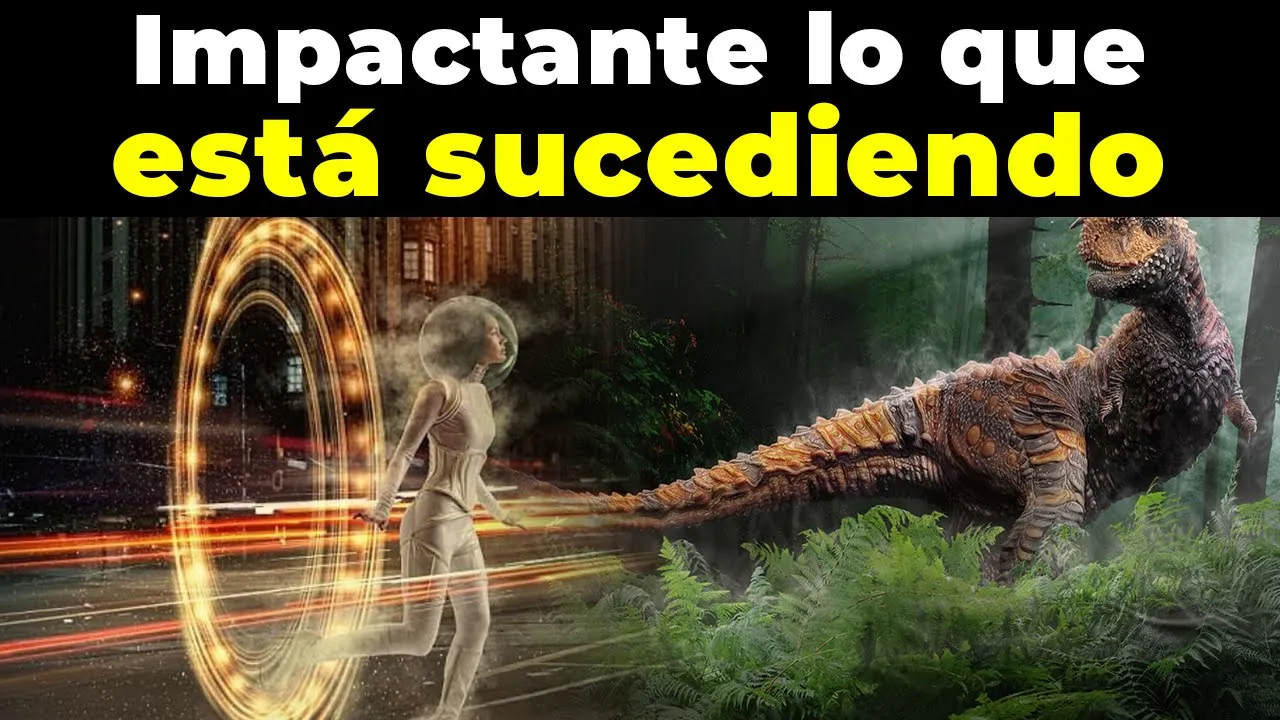









Time is not a universal constant but a relative dimension that varies based on motion and gravity, as revealed by Einstein's relativity theory; while time travel into the future is possible through time dilation (demonstrated by atomic clock experiments), time travel into the past remains theoretically possible but paradoxical, potentially requiring parallel universes to resolve logical contradictions like the grandfather paradox.
Time Travel, Determinism, and Relativity: Jim Al-Khalili (2011)
Added:Basic understanding of classical Newtonian mechanics, specifically the traditional concept of absolute space and time.
The fundamental postulate of Special Relativity, particularly that the speed of light in a vacuum is constant for all observers.
The conceptual definition of spacetime as a four-dimensional continuum merging three-dimensional space and one-dimensional time.
Philosophical determinism, or the idea that all events, including human actions, are ultimately determined by causes external to the will.
Advanced implications of General Relativity, such as gravitational time dilation, black holes, and Einstein-Rosen bridges (wormholes).
Logical and physical paradoxes of time travel, including the Grandfather Paradox, the Bootstrap Paradox, and the Novikov self-consistency principle.
The relationship between thermodynamics, the arrow of time, and entropy (why time flows forward).
The mathematical concept of Closed Timelike Curves (CTCs) in general relativity and how quantum mechanics might resolve time travel contradictions.
234.7K views1.7Klikes50:16Original Release: 2013-02-26
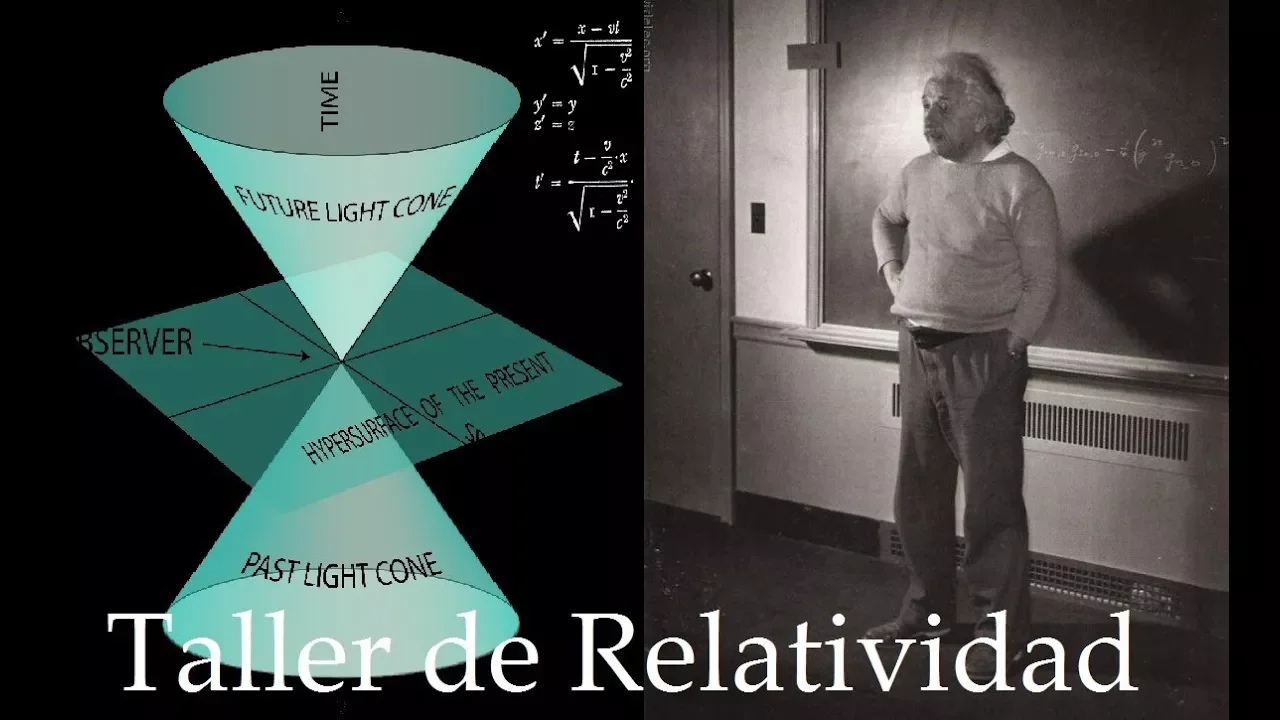
so please welcome Jim alal excellent thanks very much for that well good afternoon everyone so a bit of uh a bit of hard science to entertain you for the next uh 34 of an hour or so this is a talk which uh I guess I've given over the years to uh a range of age groups and and uh coming up this morning I sort of have a whole array of PowerPoint files where which I look over and swap things around try and keep things nice and fresh um so the nature of time is something that as has been debated by scientists theologians philosophers great minds over the past few Millennia um what is time how fast does it flow one wag I think one said time goes by at the rate of 1 second every second is a bloody stupid thing to say of course and you can't measure something against itself um but our our sort of Common Sense view of time is is one in which it's one that we inherited from Isaac Newton basically it's one in which we have we imagine there's this Cosmic clock that ticks by the the the seconds minutes the hours the days the years at the same rate for everyone and we know our subjective view of how fast time goes by is not something we can always trust if you enjoy this lecture it'll go by quickly if you're bored it'll drag I mean you know we know that um but but we sort of assume there is this time some Cosmic time that goes by at at the same rate for everyone we also now know that of course that view of time is flawed that view of time as separate from space and our universe is not the way we see things now in in modern physics we I also want to touch upon the issue since I'm going to be talking about time the past and the future I want to touch on the issue of determinism the idea that um if in principle we could know the position and state of motion of all the bits the building blocks of the universe we know all the force between all the particles the atoms and the particles that make up the atoms if we knew what everything was doing and where everything was in the universe at a given moment in time then this view of time that we inherited from Newton tells us that we should in principle be able to compute how the future will evolve that's what I mean by deterministic Universe it's what we call the the Newtonian Clockwork universe and of course since we our bodies are only you know our brains are made of of atoms particles physical entities subject to the same laws of of nature as anything else then in principle knowing the future means knowing what our actions will be in the future so determinism tends to suggest and this is a deep philosophical issue I don't want to get into too deeply but determinism suggests that uh the future is pre-ordained that we have no no free will well this was compounded I guess in the by the turn of the 20th century when uh Einstein developed his his his theories of Relativity um in Newtonian mechanics we have the idea that fixing the initial conditions say in a game of pool will will will tell us how how uh we will know we be able to compute how the future will evolve now of course we know now there's something called Chaos Theory which I won't talk about you be leave to know um in this lecture um which suggests that we can never know to sort of infinite accuracy exactly where every ball is so that we can crank the handle of the equations to work out what's happening in the future because it's just impossible you know the slightest change in temperature or humidity or a grain of dust somewhere would eventually magnify and alter the future this is what's called The Butterfly Effect but it doesn't rule out this notion of determinism that in principle were we able to know then the future is fixed in 1905 Einstein published a number of papers which revolutionized physics he uh proved that theoretically that atoms exist he he described the nature of light as being made of particles but most famously he came up with his special theory of relativity now for most people nons scientist when you say what do you know about relativity Theory oh eal mc^2 you know a lot of people know what the E and the m and the C stand for but actually eal MC s is boring it's it was even an afterthought as far as Einstein was concerned it didn't even appear in his first paper on the electrodynamics of moving bodies in 1905 what was really profound about Einstein's special theory of relativity is that it gives us this new uh Vision picture of space and time Einstein said that you there isn't this Cosmic clock that goes by at the same rate for everyone space isn't just the stage on which things happen space and time are part of the fabric the structure of the universe itself which means we have to some extent some control over space and time or indeed we have different perspectives different views on distances in space and and intervals durations of time well what does this mean it it leads to this notion of What's called the block Universe now we know we live in three dimensions of space right I can move forwards backwards left right up and down all solid objects in our universe we know we say they're three-dimensional we know what that means um and then there's time we can you can think of it even before Einstein we can think of time as a fourth dimension if you want to Define an event something has happened you have to say where it happened and when it happened if you want to know everything about it so there are sort of four numbers the X Y and Zed coordinates these are the 3D coordinates that fix its position and space then you have time well Einstein said you can't separate space and time as set of three numbers and one number time is almost like another axis so you need to talk about four-dimensional space time now we can't imagine what four dimensions looks like our brains are only three-dimensional and so what we do is throw away one of the dimensions of space imagine our space is flat it's sort of we're sort of cardboard cutout you know just you know flat picture on the screen and so what I've got here is a is a block Universe it's a 3D block meant to signify the whole universe the whole of space but space is just this flat surface because I've sort of thrown away the third dimension because then I can use it as a Time axis okay so that's the whole of space and time creeps along for us along this axis so you can imagine a cross-section through this universe which is our now this this moment and that now slice is moving along from left to right the high now and now is the past in front of us is the future and a point on the now is our here and now okay this is a very useful way of solving problems in physics certainly where Einstein's theory of relativity becomes important I'll say when when uh where we might want to use that um but what it suggests is is something even more dramatic even more Bleak in a way than Newton's Clockwork Universe because in Newton's Universe you say okay the future's fixed is pre-ordained you know what's you know fate as it were but it hasn't happened there it's yet to unfold even if we could in principle predict what would unfold in Einstein's block Universe the future is just as real as the past everything is Frozen static what sort of view well we could never have this view of the universe this is like a picture outp outside of space and time this is the view that God has h i i i say that sometimes just in case you know people say oh well that would be the view that God has um so does this really mean that you know the future is there it's happening you know that our present moment is no more special than any moment in the past any moment in the future well Einstein believed that but it's a very um extreme view to have it's not really necessary to view all the future as fixed in in this deterministic way it does suggest that the future is predetermined but it's not the whole story We tend to use relativity Theory we do things called we draw space time diagrams and we we we solve problems about uh different observers moving at different speeds relative to each other uh and and measuring time according to each of them so those sort of Tricks uh this is like this is like the block Universe picture um but I've only got one distance axis and one time axis for physicists it's very useful but for the rest of the world we would like to know what does it tell us about the nature of reality you know is there such a thing as fate do I am I really responsible for my actions I mean does it matter what I if I think I'm doing something according to my own free will am I really following just a pre-ordained path into the future that I'd have been able to predict if I had a computer powerful enough well the thing about Einstein's theory of relativity is that it gives us this new picture of time it tells us something about how time flows what Einstein discovered in 1905 is that as objects move close to the speed of light strange things happen so if you strap a clock to a rocket and have the rocket fly past at say 99% the speed of light if you could track it as it goes by you would see the clock ticking by the seconds more slowly than an identical clock that you have on Earth time is running slower on board the rocket if you were on board the rocket you could say well all motion is relative relativity and it's actually the Earth that's hurling at 99% speed of light in the opposite direction and indeed what you would see is the earth clops running slower but this is more than just an optical illusion time really runs at different rates according to different observers how fast they're moving you can slow time down when you go very fast this leads to something um an uh famous uh example in in in relativity Theory called the twins Paradox the idea is that you know you have two twins and they're always in physics by the way they're always called Alice and Bob It's A and B because that's physicist are very imaginative in that way if ever you have you need a third Observer it's always Carol so imagine Alice has the rocket and she can fly off close to the speed of light and zip around the Galaxy whereas Bob's a bit of a coward and he stays on Earth um if she travels close to the speed of light and I don't want to get into the the technical details here of the fact that you know it should be a symmetric view one way or the other this is an assignment I set to my undergraduate students to to to resolve but you know bear with me if Alice travels around for what she would regard as one year so she will have aged one year before she returns to earth the computer on board the rocket uh will will will tell her that one year has gone by she feels perfectly normal she doesn't feel her time has been going faster or slower when she returns to earth she could find that 10 years have gone gone by on Earth and Bob her twin is now N9 years older than her because she's aged just one year and there's nothing special about the one year and 10 years difference it depends on how fast she's going how close you can nudge towards closer to the speed of light she could come back after just a week of traveling around and a thousand years a million years have gone by on Earth by slowing time down you see this gives us a means of getting to the Future in a sense this is time travel so is time travel possible I can answer the first part of that question because it turns out time travel into the future and into the past are two different things time travel into the future is possible but it doesn't necessarily mean that the future is out there waiting for Alice that the future's already sort of unfolded and she's getting to that future all that's happening here is that she's moving out of Bob and Earth's time frame and fast forward into the future she's getting to the Future before everyone else less time has gone by for her now you might argue well that's not so different to suspended animation you know or you fall asleep and you think you've only been asleep for 10 minutes and two hours have gone by but her time really has slowed down she really has time traveled into the future and it is not just some uh theory that some bofin Einstein and others have come up with we know this happens it's been proven time and time again experimenters back in the early 7s s got two atomic clocks and synchronized them and put one on board an aircraft and flew it around the world and then compared them again and they saw that there was a tiny difference now the aircraft doesn't go anywhere near the speed of light but the time difference was enough that that they could so such that they could measure a tiny fractions of a second difference between them and it agreed entirely with Einstein's theory of relativity now I'm missing part of the story here because there's another way that we can slow time down in 1915 Einstein completed an even greater Theory the general theory of relativity so the first one the 1905 one was called the special Theory it was special because it was seen as sort of a only part of the story only part of this larger more exotic theory in general relativity Einstein explains about how not only have 4D space and time space time but how space time curves and it curves due to gravity so basically he's he's um done another one on Newton whereas Newton had this idea of space and time being separate and Einstein said no they have to be combined now he's attacked Newton's law of gravity Newton was the guy sitting under the apple tree and the Apple falls on his head and he thinks ah Things Fall okay people know that Things Fall New Newton what he said was there's this invisible force like a rubber band that that pulls all masses together the Apple forc to the Earth for the same reason that the Earth is kept in orbit around the sun Einstein went further Einstein said that gravity is not you don't have to think of it as a as an invisible force between objects there's a deeper geometrical explanation it's about how space space time in fact is curved and you know there are lots of examples in popular science books about space time being like a sheet of rubber uh that has a dent in it where there's a mass and other objects fall roll into the dents that's exactly the way objects move under the influence of a gravitational field but what's interesting here is that what gravity also does is slow time down in the same way that traveling close to the speed of light slows time down so does gravity and whereas when you travel close to the speed of light there's always that um sort of confusion well hang on a minute what's really slowing down if Alice and Bob Alice could say Bob went off the Earth went off in the opposite direction and came back why is it Alice is the one who whose clocks have run slow and she's gone to the Future and not Bob the technical detail is is is in the fact that Alice has had to speed up and slow down she's simulating the effect of GRA gravity you know when you speed up on you know say on a on a plane about to take off on the runway and you feel the G Force G for Gravity acceleration does the same thing as gravity it slows time down literally so here's a nice example if my watch is running slow as I'm sort of holding it down by my side I could lift it up into the air so that it's slightly further away from Earth's gravitational pull and that will speed it up it would run a bit faster now of course in practice I'd have to hold my arm up in the air for billions and billions of years you know just to make up a second it's it's it's probably more sensible to buy a new watch but that really does happen time really albeit for tiny FR per seconds time really will run slower the closer it is to the Earth time on the surface of the Sun runs slower than it does on the surface of the Earth because Sun's more massive time out in space where there's no gravity can run faster than it does on Earth GPS satellites the fact anyone who's used GPS in their car or in their smartphone is making use of the fact that you know we understand how time slows down the satellites in orbit around the Earth have their clocks running slightly slower than ours because they're moving relative to us but at the same time their clocks should be running faster than hours because they don't feel gravity they're in free fall around the earth and the computers that that work out you know time very accurately in order to to locate positions on on the surface of the Earth very accurately have to take into account the fact that you've got the satellite clocks running slower because of special relativity the idea of you know get close to the speed of light and clocks run slower but at the same time they would run faster because of general relativity because they're not feeling any gravity and those two effects are in competition but they don't cancel each other out which one wins depends on how high an orbit the satellite is and hence how fast it's moving you have to take this into account otherwise we would never be able to locate our positions to within the few meters that we start to we we've become accustomed to these days okay so we can toast slow time down we can travel into the future we can slow time down through powerful gravitational fields much more than we can on Earth this is a famous picture of the Crab Nebula it's a cloud of dust and gas thousands of light years away but still in our galaxy uh and and this is the central heart of the nebula and what you see there's these two spots here ignore the one on the right but the one on the left is the center of this nebula it's actually the remnant of a supernova a star that's run out of its nuclear Fuel and exploded and a lot of its material that's left over collapses under its own weight and forms this very dense object called a neutron star now Stars even bigger than the one that created the Crab Nebula when they collapse their gravity is so strong that they will collapse into a black hole black holes are simply dead stars and they are predicted by Einstein's theory of relativity even though at the time he didn't really believe they existed well they do exist we're almost certain of it we see their signature out in in space when we look through our telescopes and they provide us with a possible means of building a time machine which I'll come to at the end of my lecture okay determinism the idea of the future being predetermined and pre-ordained because of Relativity got a bit of a wakeup call in the 1920s quantum mechanics is the other great theory of 20th century physics and whereas general relativity Einstein's second theory which describes essentially the whole universe how gravity affects the nature of space and time itself from general relativity GRE out the field of cosmology and prediction of the big bang and so on quantum mechanics on the other hand is the theory of the very tiny the theory of the cobic world and it's much weirder than relativity Theory believe me it's it's to do with cats in boxes being getting alive at the same time my my favorite um picture of what quantum mechanics is about is the Quantum skier ridiculous as far as we're concerned there he is you know he's fine but somehow somehow he's gone through past that that tree on both sides that's what things down at the quantum level really do and no one has a has a common sense sensible way of explaining how that happens well I'm not going to talk about I will say is that quantum mechanics rescues us from this Bleak determinism because down at the level of atoms even something like an when an atomic nucleus will radioactively Decay when it's going to spit out an alpha particle is something subject to the laws of chance and probability statistically if we have trillions and trillions of atoms we can work out something called their halflife how long does it take before half the atoms are going to spit out alpha particles and Decay but you look at one individual atom and you can't tell not because our theories aren't clever enough but because nature herself hasn't decided yet when this is going to happen quantum mechanics gives us back indeterminism so our future is not decided oh question mark where it shouldn't be um okay even nature hasn't decided what's going to happen next it means that even with the most powerful computers once we have to take into account that down at the very Basics the building blocks things haven't decided what's going to happen next that means the future is open it means we we've rescued in a sense we've rescued Free Will different philosophers argue about whether this is actually true or not the American philosopher Daniel dennet I think would argue quantum mechanics doesn't rescue Free Will so so so it's still actually a topic of of debate I mean I'm not I don't want to make this sound as though 1920s quantum mechanics and suddenly okay we have free will we are responsible for our actions there is still a big um discussion going on okay but so that's opened up the future and I've said well we can travel to the future but we're not really going to the Future that's already there we're just sort of getting there faster than everyone else that's not real time travel real time travel is if we could go back to the past and the same way we could say real Trav time travel would be if someone from the future that pre-exists came back to visit us they are traveling to their past so can we travel back in time well as it happens Einstein's general theory of relativity the theory about gravity curving SpaceTime and slowing time down and so on the theory that predicts black holes the theory that gave us the Big Bang also tells us that according to the math time travel into the past should also be possible it allows it things called closed Tim like curves despite that most physicists I think if were if you ask certain and put money on it they would say time travel into the past it can't be possible not ruled out because their theories or the mathematics or the equations tell them but because it doesn't make sense because it leads to paradoxes so what I'd like to do is give you two examples of time travel paradoxes just to show you how weird stupid things would be if we were really able to travel back in time now that doesn't stop us from you know enjoying time travel uh stories and films and so on but let's try and force the Paradox okay I'm assuming most people in the audience are o with the Terminator films but just in case for those sados who haven't seen any I should point out you should um and I'll just quickly run you through the basic premise of the first of the Terminator films Ary here is the Android from the future sent to our time 1980s when the film was made by the machines that rule the future now the machines are in this battle against the rebel humans the the humans are led by John Connor he's he's the good guy machines can't catch him in their time in the future so they send the Terminator back to the past to kill John Connor's mother before she's given birth to him because if she doesn't give birth to him he would never have been born in the first place they change the future it's another take on what's famously called the grandfather Paradox well this being a Hollywood film of course um Anie fails to kill John Connor's mother Linda hamilt this being a Hollywood film John Connor sends his best mate back into the past to protect his mother and if you remember the film he does much better than protect her he gets her pregnant and she gives birth to John Connor so his best mate is also his dad and it's all very silly but it's it's good fun okay where's the Paradox well I'm going to force a paradox what if bear with me here the machines do capture John Connor but for some strange reason they decide not to kill him they send him back in the past to kill his own mother okay this is the take on the grandfather Paradox if you kill your own mother in the original one it's you have to kill your grandfather before he's met your grandmother before she's given birth to your mother before and I've always wondered why you have to skip a generation why you have to kill the male kill your own mother and be done with it it's a cleaner scientific experiment so John Connor is given some kill your mother serum a brainwash him and he goes back to the past and encounters his mother what happens as he shoots her dead you know does he sort of Fade Out of existence does he suddenly disappear that he was never there in the first place he you know he will she's dead he was never born so he wasn't there this this is the Paradox you see of course you know the police come to investigate who is the murderer well it wasn't John Conor perfect Alibi never born in the first place you can't argue with that but of course he was nevern born in the first place he never would have grown up and gone back in time and killed her so she survived and gave birth to him and he grew up and he went back and killed her so he wasn't born so he didn't kill her so he was born and so on Standard Time Travel Paradox well despite that there are physicists serious physicists who work in in in in relativity Theory who would argue that that you know they trust the maths and they say relativity Theory says time travel to the past is possible there must be a way out of the Paradox the quickest solution is to say that John can't kill his mother because there he is clearly he must fail in his attempt to kill her because she did give birth to him there he is standing trying to kill her as proof that she gave birth to him killing his mother would lead to what they would call an inconsistent solution and that's and that's that's his imaginative uh turn of phrase um but it's not very satisfying is it again it's it starts to play with this issue of Free Will why would John fa John Connor fail to kill his mother what if the machines pull him back to their time you know say why did he fail well they'd say well okay maybe you know he comes to his senses at the last minute maybe uh the trigger on the gun gets stuck maybe he's just a lousy shot you know and every time he shoots his mother does a back some assault out of the way and Linda Hamilton was pretty fit in that film I should add um in both senses but it say it doesn't matter he must fail because there he is what if the machines pull him back dose him up and kill your mother serum extensive shooting lessons you know lots of lots of weapons that he can call upon is he going to fail every time he tries to kill her somehow it's back to it's now in your face determinism you know whereas we talk about is the future pre-ordained and and you know do we have free will well now the future is fixed in the same way that the past is fixed because they're linked together you know he he knows as he's trying to shoot her well I'm I'm I'm aiming it but something's going to go wrong I know it is because clearly I must fail because I'm here well there is another way of getting round the Paradox and in my mind it's the only way that rescues the possibility of time travel into the past and that is that our universe is not the the only one there are parallel universes now there are plenty of reasons within modern physics to argue that parallel universes might exist we have not a shred of evidence that they really do but they're very handy parallel universes would would remove What's called the uh anthropic problem the anthropic principle the fact that you know our everything has been so specially designed for us to be here what how could you know all the laws of nature tweak perfectly for us to be here well if there are parallel universes then we just happen to be in the universe that was right for us to evolve in and ask the question how come we're here there are many other universes where we didn't evolve parallel universes are very useful in explaining some of the weirdness of quantum mechanics here it helps us because it would suggest that when you travel back in time you hook up your here and now to the Past inevitably that past will be not the past of your own Universe there were some very serious scientific papers looking into this and so John Connor when he travels back into the past he slides into a parallel universe one very similar to his own in that Universe he can kill his mother all that happens is that he would then never be born in that Universe while his own original mother carries on living healthily in the original universe so parallel universes remove the Paradox as long as you buy into parallel universes let me give you another quick uh time travel Paradox the Mona Lisa Paradox let's let's imagine Lardo D Vinci has just finished his great work of art and he's decided to take a break and pursue his other great love which is science and inventing things let's say along with all the pulley and leevers and screws and mechanisms invented he's figured out how to build a time machine and he hammers away in his shed building a time time machine when it's finally complete he goes to bed that night rather concerned about how he's going to test it out you know clever guy he knows there are time travel paradoxes well imagine he goes down to the shed the next morning and to his surprise he sees the time machine has been activated in the Pod is an item actually it's a painting and he quickly realizes this is a painting that's been sent to him from the future it's a painting of woman with the same facial bone structure as his Mona Lisa the same long dark hair but without her famous enigmatic smile and he realizes quickly it's her ugly twin sister Mona lot whom he's been avoiding having to paint for some time now but he's got the sets you see so and there's a note there from the future Leonardo saying here the painting of the mo a lot as proof that the time machine works I sent this to you on such and such a day at such and such a time in the future there are two par paradoxes here one of them is a bit like the the Terminator Paradox you see um it's it's about this the future being pre-ordained Leonardo D Vinci knows that one day he will become that future Leonardo da Vinci who put the the uh the painting in the uh uh in the Time Capsule what if he thinks no I want to keep it I've got I've got the set now I'd like to keep both what's what's the worst that can happen is a Time Lord going to come and say you're going to rip the Fabrics of space and time you have to put it in it's a paradox he has to put it in because he does the future is fixed he does become that future Leonardo okay we've I've sort of covered that in the last Paradox so let's say Leonardo D Vinci puts the the monot painting in the time machine sends it back to the past at the otted time goes on into the future quite relieved that he only has in his possession now the Mona Lisa painting and that rather strange episode is in his past there's still another Paradox you see at a certain time in leard D Vinci's life he had in his possession the Mona lot painting but at no point did he ever paint it he found it in a time machine kept it for a while put it back in the time machine here's this wonderful work of art that's caught in a Time Loop that was never actually created at all there's something called a biling Paradox again the only way out of these paradoxes is to subscribe to this notion that that um parallel universes exist because then you could have two leonardos the Leonardo in the future who sends back the the the painting that he painted slides back to our Leonardo in our universe and there he can keep it time travel into the past seems to require parallel realities otherwise it leads to paradoxes that we can't explain and yet Einstein's general theory of relativity says nothing about parallel universes but it does say that time travel into the past should be possible well how would we go about building a time machine um the the best current ideas go back to Carl Sean's uh uh novel contact which is now obviously some years ago now made into film starring Jody Foster caran being being a practicing scientist himself uh when he was writing the story uh contact about how we make contact with an alien civilization he was looking for a means within physics to have a sort of a a shortcut through space time that didn't invoke some nonsense to do with dilithium crystals and so um he sent the manuscript to to another physicist in California Kip Thorne who developed this idea of what we call a wormhole see Kip Thor was an expert on black holes and from what we know about black holes the theory of black holes is that you know they have an event horizon let's see I think yes okay a black hole has an event horizon which is the the the sort of the point of no return if you get too close and you go beyond the Event Horizon you're sucked in and you go all the way down to the center The Singularity a lot of work has gone into black hole research we' we've seen signatures of black holes out in space because of the way they affect other stuff around them like nearby stars or nearby debris and how it's sucked in you don't see the black hole itself of course by definition um but we're not sure exactly what the inside of a black hole would look like and it's not clear whether the inside of a black hole is a is a point a singularity so fall get squashed down to zero size or is it some sort of a Gateway that would lead to a different SpaceTime so Kip Thorne played with this idea for Carl Sean's story he said if you could link two black holes and and monkey around with the maths so that you remove the event Horizons so you allow it sort a two-way travel and it's stable you create what's called a traversible wormhole car San was very happy about this he could use this idea for uh his story and he did uh as a means of short circuiting two distant points in space how does he do this well we know imagine our space is a sheets of paper I'm throwing away one of the dimensions now shortest distance between two points is a straight line A and B but if you were able to bend the paper you could imagine an even shorter distance between A and B that would involve jumping out of the paper this is what we could imagine the curvature of our universe or our space time could be like or just think of it as our space being curved but we can't imagine it we've we've got two Dimensions here and then when you curve the two Dimensions we can imagine it cuz that's that's turned it into curvature in a third dimension we can hold that picture in our heads but take a volume and curve it what does that mean we can't okay but so it's like this only one dimension more and it gives us a shortcut well Kip Thorne and his collaborators soon after he had provided this advice to Carl Sean for his novel they realized that of course shortcuts in space should also mean shortcuts in time so a wormhole wouldn't only join two different points in space It should also be able to join two different points in time and hence act as a time machine led to all sorts of uh wonderful uh stories and and and movies and programs about entering a wormhole or a Stargate or whatever and going sort of from one Universe to the other or from one part of one Universe to another part of the same universe a different space and time or just going back and forwards in in in into the past if time travel were possible therefore this is how we would make a time machine build a wormhole easy enough um mitaku the um American physicist uh has has written about this about how how you would create a wormhole and how you would turn a wormhole into a machine I want to give you just in case I haven't induced a headache completely I see I had the countdown is that 8 minutes okay I I I do want to give enough time for questions so I'll go through this very quickly so guaranteed to give you a headache remember Alice and Bob Alice is the one who flies off in the rocket closest speed of light she comes back to Earth less time has gone by for her she's you know she's come back in the future what if she and Bob both have one end of a wormhole so this is what you'd see the Wormhole mouth the other mouth of the Wormhole is out of our space just like in the folded paper the the the the the tube throat of the Wormhole is not something in our space so actually the other end of it is over in the rocket that's where Alice is in the rocket he can see her Through the Wormhole shortcut and of course she can see him from her end if she were to travel around the Galaxy close to the speed of light when she comes back to Earth let's say one year has gone by for her 10 years has gone by for Bob The Wormhole is now provided a fixed tunnel between those two time frames so it becomes a time machine that can take you backwards and forwards he can go nine years into the future she can go nine years into the past if it's that way around so you might got confused now so wormholes would allow the possibility of time travel into the past current scientific thinking is still not clear a on whether wormholes even exist in principle mathematically they they you know we think they exist but then mathematically we think time Trav to the past is possible no one knows whether there's a loophole in Einstein's theory of relativity that needs to be closed to rule out wormholes and and and and time travel into the past it would seem as though we are looking for a new Theory and a lot of physicists would say it's a it's a theory of what's called quantum gravity so it's linking together these two Mo important ideas in 20th century physics quantum mechanics the theory of the very small and relativity the theory of the very large it seems if we were able to mesh those two together we we we might be able to have a better understanding of the nature of time itself well how close are we I would argue not very close at all Steven Hawking thinks otherwise he thinks we're very close to um The Final Answer String Theory or M Theory there's lots of other candidates there's brain Theory there's Loop con some gravity as far as I'm concerned they're just clever mathematical tricks at the moment a scientific theory is one that is testable scientific theory is one where we can do experiments to verify or not we don't even know what sort of experiments even though some physicists at the Large Hadron Collider uh think they may have a way of testing I don't think it's clear yet whether we would know uh which of these is right if indeed any of them are right it would be nice to know in my lifetime whe time travel into the into the past is possible whether parallel universes really exist or not and answering some of those questions in the meantime we can enjoy time travel uh stories but whether we will ever be able to to build a time machine I think is another matter entirely thank you very much thank you and and I see from the uh the the clock that's counting down I have five minutes uh so I'm I'm happy to take questions for for the next five minutes yes I think you have to come to the microphone yes sorry I think my head just exploded but wow no it's fantastic um given oams Razer that the the simplest explanation is probably the best if um paradoxes lead us to assume that there must be therefore parallel universes um how about you can't travel back in in time at all is that possibly the better Theory than parallel universe absolutely I think I think that's probably yeah I'm I'm trying to entertain you I'm trying to open up possibility that it might be possible but actually know if push comes to shove I would rather rule out time travel to the Past along with parallel universes any day yeah H that answer might make my question sort of invalid I was just going to ask if time travels the past is possible what would you how would you answer like the firmy Paradox of time travel you know where are they ah okay um yeah so this is the the idea that if time travel into the past is possible then surely some future um generation scientists would have figured out how to build a time machine and they should have visited us and be among us today maybe that's what UFOs are um there lots of ways of explaining that first of all it may well be that uh you know that they're among us but they just keep a low profile um Only The Nutters see them um um but actually know the the the the proper answer is that if time travel into the past were possible and you you know and you you sort of hook up different times you can only travel back the earliest time you can travel back to is the moment the time machine is switched on that's the earliest point in time that you can hook to so you can't can't build a time machine that will take you back to the age of the dinosaurs now if there was some naturally occurring time machine because of the weirdness of space time from the early universe that's waiting out there for us to go through maybe but if you make build a time machine tomorrow the earliest we can ever travel back in time from the future is back to tomorrow so all that if we don't see time travelers from the future all that tells us is no one's built a time machine yet yeah can I can ask how you define a year if um I'm looking about Alice traveling around if we I thought we Define a year by the amount of time it takes the Earth to go around the Sun so if the Earth has gone around the Sun 10 times it has gone around some 10 times so surely Alice has just been away for a year in the same well sorry for 10 years how are you defining Alice's year what you do is you say there are different definitions of time according to your frame of reference so if you're on Earth and not moving you that's that's a year what Alice will see is you know the time going by and she will she what she will see is the earth going around the Sun much much more you know more slowly well the whole the whole um solar system is zipping away from her but if you could focus on the solar system as it moves away or towards her she goes and comes back she'll see the earth going around there so much more so said well in my frame of reference now the Earth has slowed down completely and and uh you know so for her one year has gone by but on on Earth they will see her time slowing down it's it's all down to your frame of reference no one is right or wrong we we would argue you know we're used to the Earth spending a year going around the Sun that's what defines a year and anything else be D but that's that's just from our perspective you're not nodding very well listen no it's true I mean the idea of of different perspectives about space and time is something it takes a while in a in a proper course and special relativity to understand it's a bit like saying you know look at a box uh and and I see a side on view and I see my my um my face rectangular uh you see my face all squashed up because of your perspective we see shapes in space differently because of our different perspectives and points of view well relativities like that only have to think about space and time all together if you're moving fast relative to each other you see distances and times differently so you'll see lengths shorter and you see times different ly and it's only when you combine space and time together in this beautiful block universe that we can all agree it's a matter of perspective but but the math starts to get a bit more complicated that's why so many people have published um papers Pro I mean I get I get the papers quite regularly you know from you know uh from nas it's very sweet I have proved Einstein's theory of relativity wrong with nothing more than gcsc maths and this is my you know 30 years of of research and and it's just [ __ ] I mean it's it's you know was the nicest phrase of one he said I have proved that reality is orthogonal to the speed of light I keep them in a box they're nice so so yeah I mean there is the explanation but it's not one which which is is you know you could be readily convinced by just with a few sentences I'm sorry yeah I I think unfortunately we're out of time that's going to be the last question I'm so sorry ask me later I'm I'm around oh yeah no the last question is okay was that was I I think we're at but there is a chance to ask later on so absolutely have a nice round of applause ladies and Gentlemen please very nicely done than [Applause] [Music] [Music]
Up Next
74:28
Exploring Time as an Illusion: Relativity and the Block Universe
@Actualspace78
234.3K views•2024-12-13

12:53
21cm Hyperfine Transition in Neutral Hydrogen: Radio Astronomy Basics
@AaronRobertParsons
12.4K views•2011-10-13

32:32
NMR Spin Physics I: Zeeman Effect, Resonance Condition & Larmor Frequency
@nptel-indianinstituteofsci8064
2.3K views•2024-01-17

27:14
Entropy and the Second Law of Thermodynamics Explained
@veritasium
27.5M views•2023-07-01
Related Study Plans & Knowledge Roadmaps
Structured learning paths in Physics
physics
Nuclear Physics (Decay, Fission & Reactors)
01Atomic Structure and the Binding Force
02Radioactive Decay and Half-Life
03Nuclear Fission Mechanics and Chain Reactions
+ 2 more learning modules
12h5 modules
Explore Roadmap
physics
Soft Matter (Polymers, Colloids & Rheology)
01Foundations of Soft Matter & Thermal Forces
02Polymer Physics and Macromolecules
03Colloids, Surfactants, and Self-Assembly
+ 2 more learning modules
38h5 modules
Explore Roadmap
physics
Analytical Mechanics: Lagrangian & Hamiltonian
01Mathematical Foundations: Calculus of Variations
02From Newtonian Mechanics to Constraint Dynamics
03The Principle of Least Action & Lagrangian Mechanics
+ 3 more learning modules
28h6 modules
Explore Roadmap
physics
General Relativity (Spacetime & Cosmology)
01Foundations of Relativity: Special Relativity
02The Geometry of Spacetime: Equivalence Principle & Curvature
03Einstein's Field Equations: The Mathematics of Gravity
+ 2 more learning modules
55h5 modules
Explore Roadmap