























Pay transparency—sharing salary information openly within organizations—reduces workplace conflicts, increases employee fairness perception, and improves performance, as demonstrated by research showing that when employees know how their pay compares to peers, they feel less underpaid, are more engaged, and are less likely to quit; conversely, pay secrecy perpetuates discrimination (such as the 23% gender wage gap versus 11% in transparent federal government positions) and creates information asymmetry that allows employers to exploit employees during negotiations.
The Business Case for Pay Transparency: Benefits and Downside Risks
Added:Understanding basic compensation structures, including how salary bands, market rates, and total rewards packages are determined by HR.
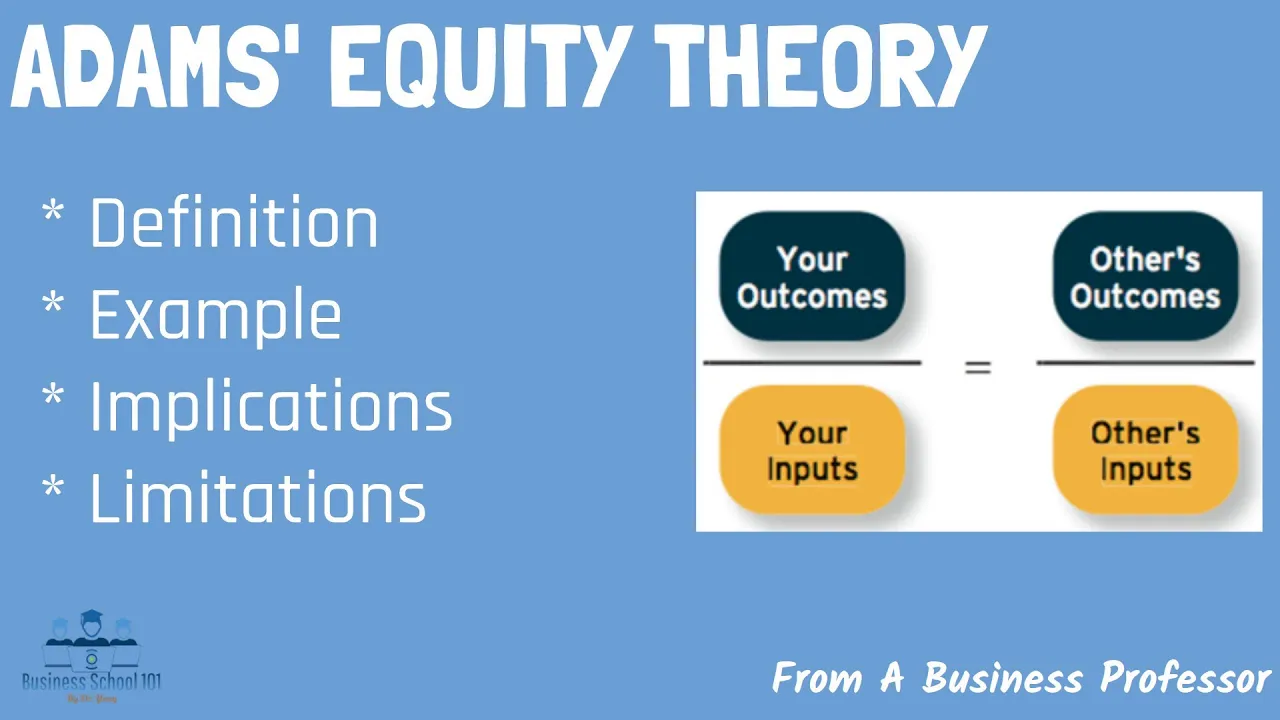
Adams' Equity Theory of motivation, which explains how employees evaluate workplace fairness by comparing their inputs and outcomes to those of peers.
The historical context of corporate pay secrecy policies and the traditional business arguments for keeping salary data confidential.
An overview of systemic wage inequality, including the gender and racial pay gaps, and how compensation bias occurs in hiring and promotion.
Change management frameworks for transitioning a legacy organization from absolute pay secrecy to tiered or complete pay transparency.
Compliance with evolving global pay transparency legislation, such as regional salary disclosure mandates and equal pay reporting laws.
Conflict resolution and communication strategies for managers addressing employee friction, jealousy, or perceived inequities post-disclosure.
Designing formulaic and objective compensation algorithms that eliminate bias and stand up to public scrutiny.
212.7K views2.9Klikes7:30Original Release: 2016-10-11
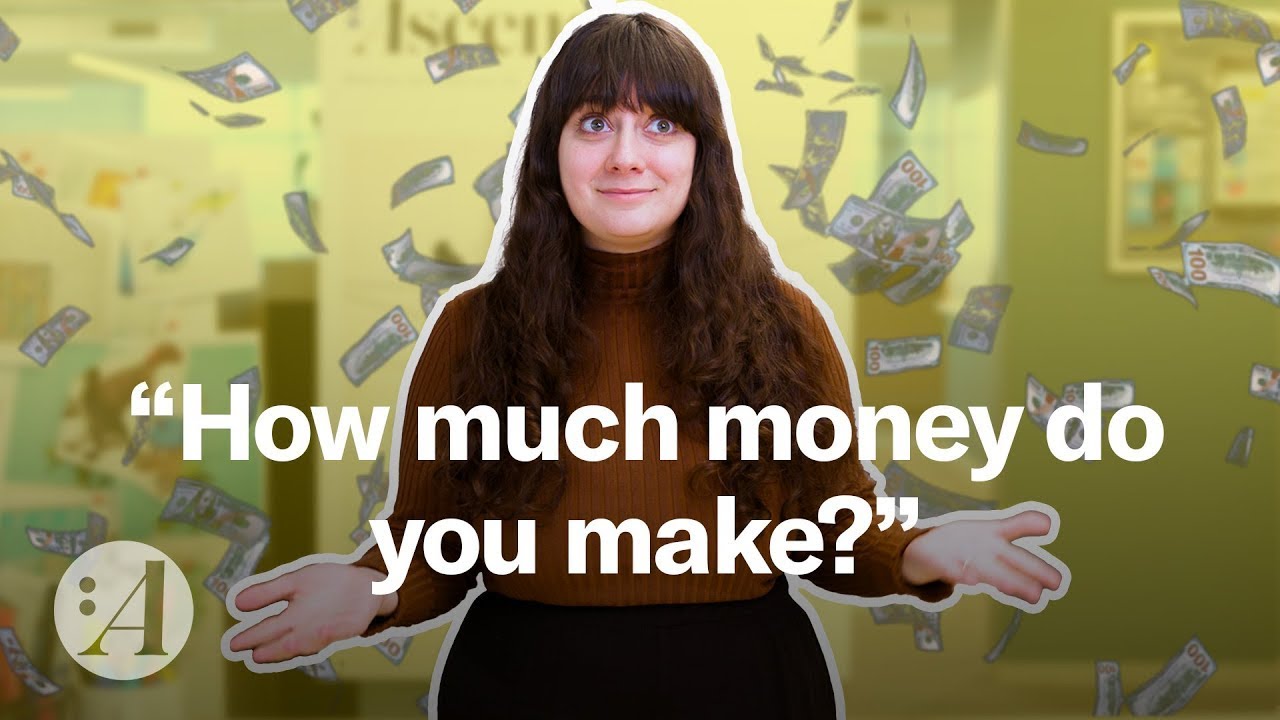
How much do you get paid?
Don't answer that out loud.
But put a number in your head.
Now: How much do you think the person sitting next to you gets paid?
Again, don't answer out loud.
(Laughter) At work, how much do you think the person sitting in the cubicle or the desk next to you gets paid?
Do you know?
Should you know?
Notice, it's a little uncomfortable for me to even ask you those questions.
But admit it -- you kind of want to know.
Most of us are uncomfortable with the idea of broadcasting our salary.
We're not supposed to tell our neighbors, and we're definitely not supposed to tell our office neighbors.
The assumed reason is that if everybody knew what everybody got paid, then all hell would break loose.
There'd be arguments, there'd be fights, there might even be a few people who quit.
But what if secrecy is actually the reason for all that strife?
And what would happen if we removed that secrecy?
What if openness actually increased the sense of fairness and collaboration inside a company?
What would happen if we had total pay transparency?
For the past several years, I've been studying the corporate and entrepreneurial leaders who question the conventional wisdom about how to run a company.
And the question of pay keeps coming up.
And the answers keep surprising.
It turns out that pay transparency -- sharing salaries openly across a company -- makes for a better workplace for both the employee and for the organization.
When people don't know how their pay compares to their peers', they're more likely to feel underpaid and maybe even discriminated against.
Do you want to work at a place that tolerates the idea that you feel underpaid or discriminated against?
But keeping salaries secret does exactly that, and it's a practice as old as it is common, despite the fact that in the United States, the law protects an employee's right to discuss their pay.
In one famous example from decades ago, the management of Vanity Fair magazine actually circulated a memo entitled: "Forbidding Discussion Among Employees of Salary Received."
"Forbidding" discussion among employees of salary received.
Now that memo didn't sit well with everybody.
New York literary figures Dorothy Parker, Robert Benchley and Robert Sherwood, all writers in the Algonquin Round Table, decided to stand up for transparency and showed up for work the next day with their salary written on signs hanging from their neck.
(Laughter) Imagine showing up for work with your salary just written across your chest for all to see.
But why would a company even want to discourage salary discussions?
Why do some people go along with it, while others revolt against it?
It turns out that in addition to the assumed reasons, pay secrecy is actually a way to save a lot of money.
You see, keeping salaries secret leads to what economists call "information asymmetry."
This is a situation where, in a negotiation, one party has loads more information than the other.
And in hiring or promotion or annual raise discussions, an employer can use that secrecy to save a lot of money.
Imagine how much better you could negotiate for a raise if you knew everybody's salary.
Economists warn that information asymmetry can cause markets to go awry.
Someone leaves a pay stub on the copier, and suddenly everybody is shouting at each other.
In fact, they even warn that information asymmetry can lead to a total market failure.
And I think we're almost there.
Here's why: first, most employees have no idea how their pay compares to their peers'.
In a 2015 survey of 70,000 employees, two-thirds of everyone who is paid at the market rate said that they felt they were underpaid.
And of everybody who felt that they were underpaid, 60 percent said that they intended to quit, regardless of where they were -- underpaid, overpaid or right at the market rate.
If you were part of this survey, what would you say?
Are you underpaid?
Well, wait -- how do you even know, because you're not allowed to talk about it?
Next, information asymmetry, pay secrecy, makes it easier to ignore the discrimination that's already present in the market today.
In a 2011 report from the Institute for Women's Policy Research, the gender wage gap between men and women was 23 percent.
This is where that 77 cents on the dollar comes from.
But in the Federal Government, where salaries are pinned to certain levels and everybody knows what those levels are, the gender wage gap shrinks to 11 percent -- and this is before controlling for any of the factors that economists argue over whether or not to control for.
If we really want to close the gender wage gap, maybe we should start by opening up the payroll.
If this is what total market failure looks like, then openness remains the only way to ensure fairness.
Now, I realize that letting people know what you make might feel uncomfortable, but isn't it less uncomfortable than always wondering if you're being discriminated against, or if your wife or your daughter or your sister is being paid unfairly?
Openness remains the best way to ensure fairness, and pay transparency does that.
That's why entrepreneurial leaders and corporate leaders have been experimenting with sharing salaries for years.
Like Dane Atkinson.
Dane is a serial entrepreneur who started many companies in a pay secrecy condition and even used that condition to pay two equally qualified people dramatically different salaries, depending on how well they could negotiate.
And Dane saw the strife that happened as a result of this.
So when he started his newest company, SumAll, he committed to salary transparency from the beginning.
And the results have been amazing.
And in study after study, when people know how they're being paid and how that pay compares to their peers', they're more likely to work hard to improve their performance, more likely to be engaged, and they're less likely to quit.
That's why Dane's not alone.
From technology start-ups like Buffer, to the tens of thousands of employees at Whole Foods, where not only is your salary available for everyone to see, but the performance data for the store and for your department is available on the company intranet for all to see.
Now, pay transparency takes a lot of forms.
It's not one size fits all.
Some post their salaries for all to see.
Some only keep it inside the company.
Some post the formula for calculating pay, and others post the pay levels and affix everybody to that level.
So you don't have to make signs for all of your employees to wear around the office.
And you don't have to be the only one wearing a sign that you made at home.
But we can all take greater steps towards pay transparency.
For those of you that have the authority to move forward towards transparency: it's time to move forward.
And for those of you that don't have that authority: it's time to stand up for your right to.
So how much do you get paid?
And how does that compare to the people you work with?
You should know.
And so should they.
Thank you.
(Applause)
Up Next
25:12
Basel Accords Explained: Origins & Framework | Banking Regulation
@danielkwasnitschka9114
96.4K views•2020-04-16

46:36
Retention Habits of Top DTC Ecommerce Brands Revealed
@SendItPodcast
44K views•2026-03-03

4:46
How the Shipping Container Revolutionized Global Trade
@TEDEd
619.7K views•2012-03-12

17:30
The Planned Obsolescence of Light Bulbs and Tech
@veritasium
25.3M views•2021-03-26
Related Study Plans & Knowledge Roadmaps
Structured learning paths in Business
business
Pop-Up Retail: Strategy, Design & Execution
01Introduction to Pop-Up Retail & Strategic Goal Setting
02Budgeting, Site Selection, and Legal Essentials
03Experiential Retail Design & Visual Merchandising
+ 2 more learning modules
15h5 modules
Explore Roadmap
business
Reg CF: Startup Funding, Marketing & Launch
01Introduction to Equity Crowdfunding & Reg CF
02Platform Selection & Legal Preparation
03Crafting High-Converting Campaign Assets
+ 2 more learning modules
14h5 modules
Explore Roadmap
business
Productized Services: Scaling Solo Freelance
01Foundations of Productized Services
02Packaging and Scope Definition
03Pricing and Subscription Models
+ 2 more learning modules
15h5 modules
Explore Roadmap
business
Gov Procurement: Find, Bid & Win Contracts
01Introduction to Government Procurement & Business Setup
02Small Business Certifications & Set-Asides
03Finding and Analyzing Contract Opportunities
+ 2 more learning modules
14h5 modules
Explore Roadmap