
![[KSSM/SPM] Tingkatan 4 Prinsip Perakaunan - Bab 1 : Pengenalan Kepada Perakaunan (Part 2)](https://i.ytimg.com/vi/H_JM1AUbIU4/maxresdefault.jpg)




















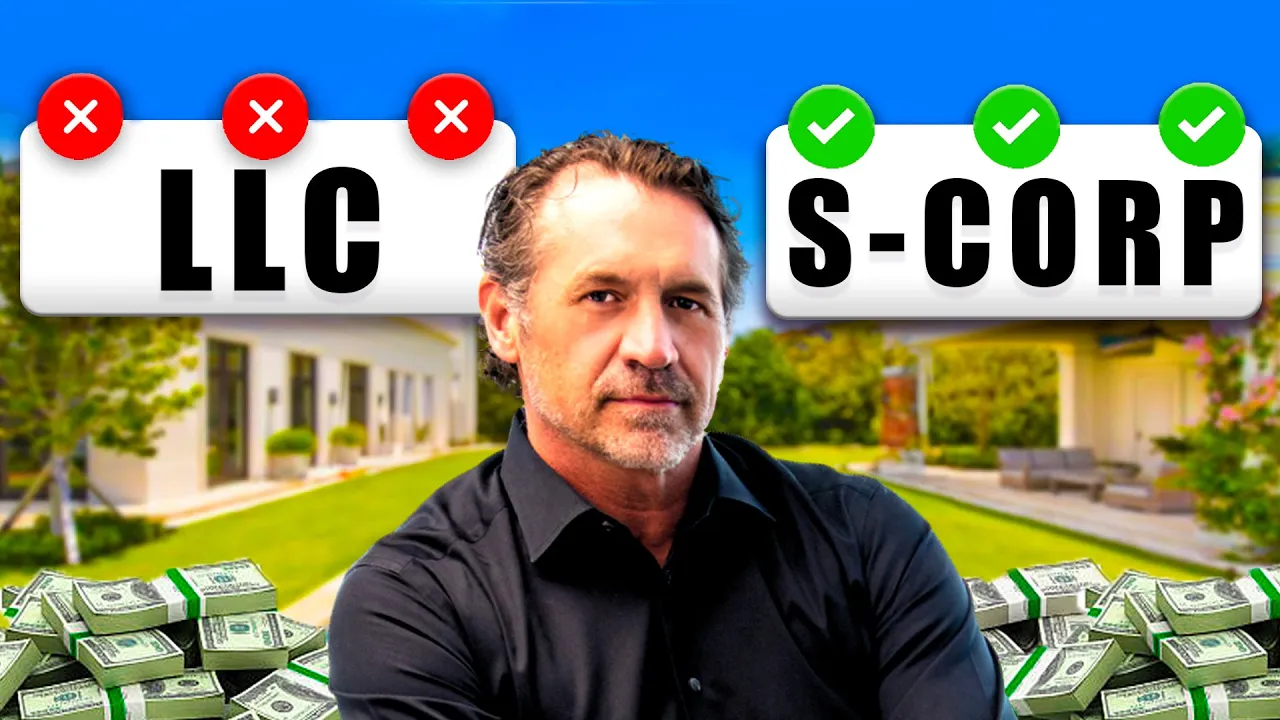
An LLC is a legal entity that provides personal asset protection, while an S-Corp is a tax classification that can be elected by an LLC; the real decision is whether to keep the default tax treatment of an LLC (taxed as sole proprietorship or partnership) or elect S-Corp status, which can save money by dividing income into W-2 compensation (subject to payroll tax) and distributions (not subject to Social Security/Medicare tax), but requires proper setup including Form 2553 filing, payroll processing, and reasonable compensation determination.
LLC vs. S-Corp: Choosing Your Business Structure
Added:Basic understanding of business legal entities, such as Sole Proprietorships and Partnerships.
The concept of limited liability protection and how it separates personal assets from business liabilities.
Fundamentals of pass-through taxation versus corporate-level double taxation.
The definition and components of self-employment tax (FICA: Social Security and Medicare).
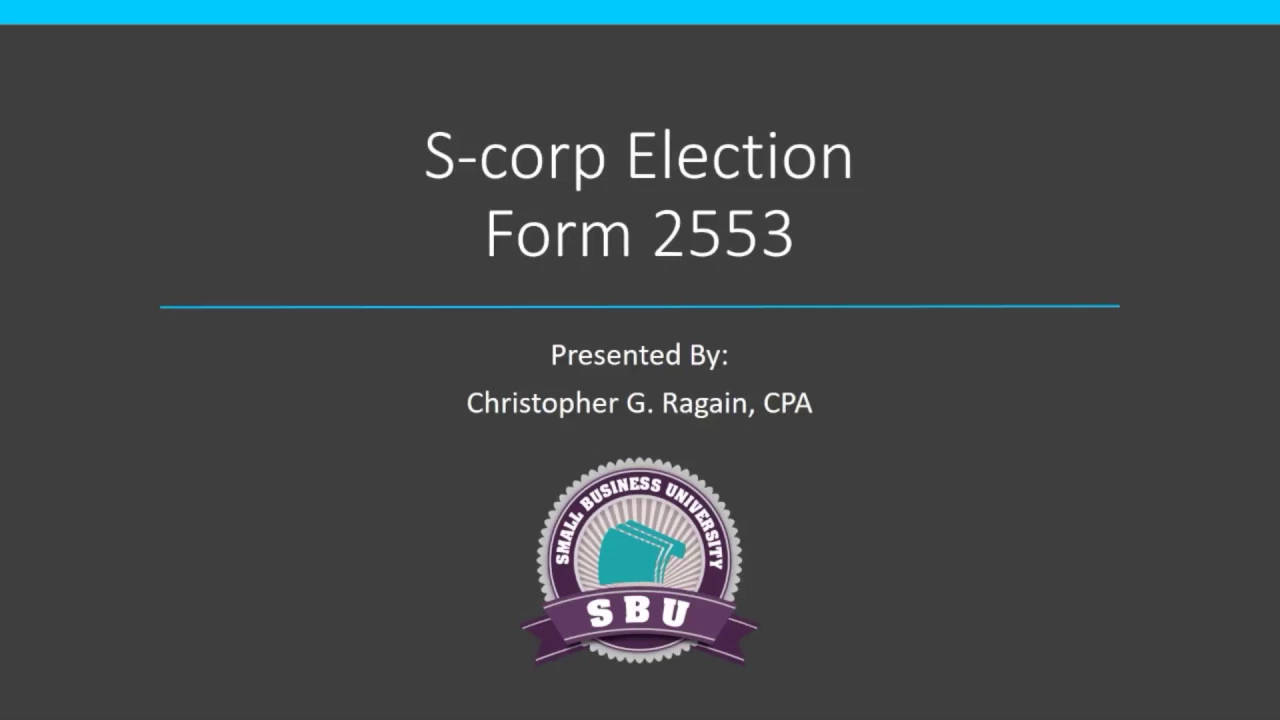
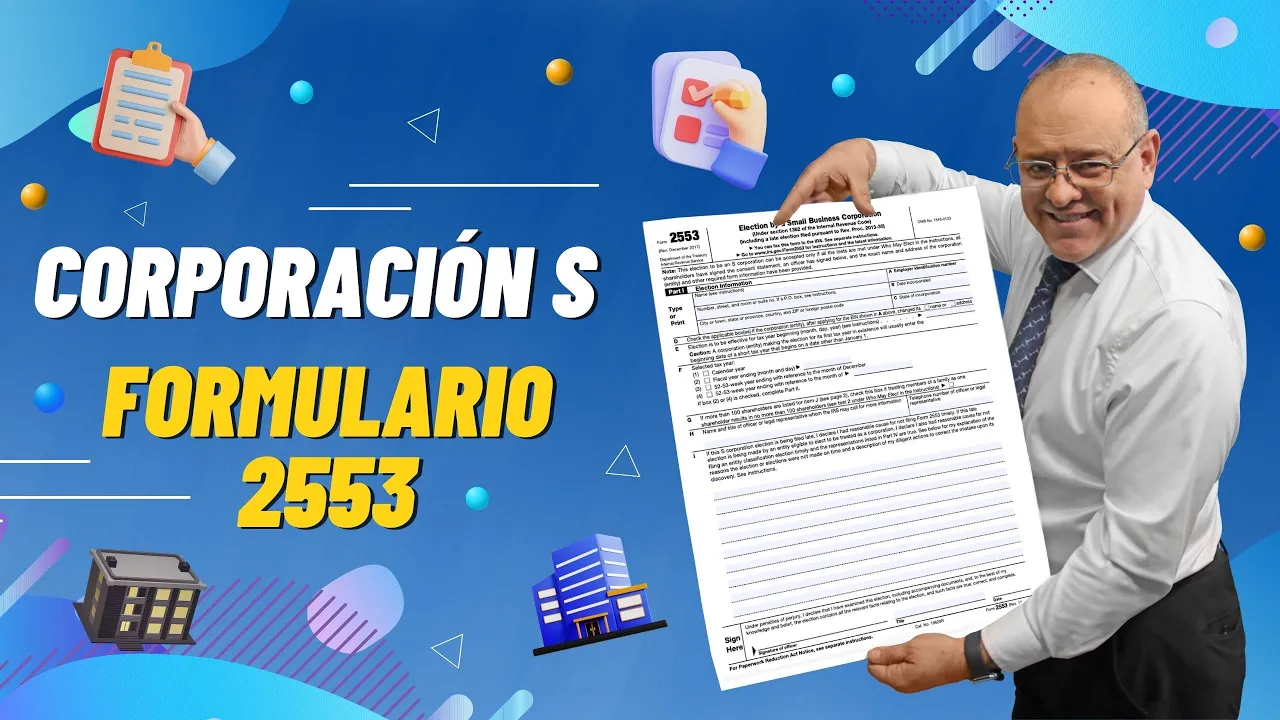
How to file IRS Form 2553 to officially elect S-Corporation tax status for an LLC.
IRS rules regarding 'Reasonable Compensation' (salary vs. distributions) for S-Corp owners.
Setting up and managing corporate payroll systems for shareholder-employees.
The compliance and ongoing operational requirements of an S-Corp, including annual reports and corporate minutes.
101.4K views4.7Klikes8:43Original Release: 2025-12-22
You've been told you have to pick LLC or escorp. That's wrong. You can have both at the same time, and a lot of business owners should, but it only works if you understand what each one does and why they're not comparable to begin with.
And I'm Jasmine Deluchi. I'm a tax attorney, CPA, and enrolled agent. I got my first tax license as an enrolled agent in high school because I love tax law. And now I break down what the law actually says. By the end of this video, you'll know exactly how to structure your business the right way. I'll break down what each structure actually is, when escorp status saves money and when it doesn't, and how to properly set up an escorp if it's the right fit. Let's start by answering the question that nobody asks. What are we actually comparing? Okay? Because when people say an LLC or an escorp, they're comparing a legal entity to a tax entity, which is like asking whether you should buy a house or paint it. An LLC or a limited liability company is a legal entity. You form it with your state to protect your personal assets from your business liabilities. If your business gets sued, that protection should help keep your personal assets safe. That's what an LLC does, right? It is a legal shield, not a tax entity. This is the same category as corporations or inc, PLLC's, professional corporations, professional associations, limited partnerships, limited liability partnerships. These are all legal entities created under state law. None of those are tax entities. Now, depending on the legal entity that you choose, your tax options change, right? For example, a corporation can only be taxed in one of two ways. As a CC Corp or if it qualifies and elects, as an S corp. But the great thing about an LLC is that it can be taxed as every type of tax entity. A sole proprietorship, a partnership, an S corp, or even as a CC corp, all depending on how it's structured and what election you make.
And that flexibility is one of the reasons LLC's are so popular, right?
Right? So, when people ask an LLC or an S corp, what they're really asking is, should I form an LLC? And if so, should I then elect SC Corp tax treatment for it? In other words, the real question isn't LLC versus S Corp., it's whether to keep the default tax treatment of an LLC or change it. Because by default, an LLC with one owner is taxed as a sole proprietorship, and an LLC with two or more owners is taxed as a partnership.
So the real decision is do you stay with the tax entity default or do you elect to be taxed as an S corporation instead?
And that is exactly why so many small businesses end up with both an LLC that is taxed as an S corporation. It can give you the best of both worlds. The legal protection of an LLC and the tax advantages of an S corp. So now that you know that an LLC and an S corp aren't opposites, right? Let's talk about what actually changes tax- wise. This is where the escorp hype usually starts and it's also where most of the misinformation online completely falls apart. If you are taxed as a sole proprietorship or a partnership, all of your business profit is treated as self-employment income subject to social security tax and Medicare tax if you materially participate in the business.
But as an escorp, you divide your income into W2 reasonable compensation that is subject to that same tax, but then the distributions are not subject to social security or Medicare tax. Staying a sle proprietorship seems to always be painted as a bad thing online, but there are two important caveats most people miss. Okay, first, if you don't materially participate in the business or if your income isn't subject to self-employment tax in the first place, then switching to an escorp won't save you a dime. Second, escorps can also create tax problems like disallowed losses or even a second layer of tax, which typically happens when you have third party debt on the balance sheet.
So, as a general rule, escorps work best for businesses that don't carry outside debt higher than what's in their business bank account. But for this video, we'll focus on the difference in self-employment tax. Here's what you need to remember. The income tax is the same in both entities. The only change is whether the income is also subject to social security and Medicare tax. Okay?
We call it self-employment tax when it's paid by a sole proprietorship or partnership, and we call it payroll tax when it's paid through a corporation.
All right? We've covered how the tax rules change, but rules don't mean much until you see the dollars. So, let's look at the part everyone cares about, which is the math, and break down exactly how an escorp can save you money and when it doesn't. So, let's say your business earns $200,000 in net taxable income as a sle proprietorship or default single member LLC. Okay? All $200,000 is subject to self-employment tax. That's 15.3% on the first portion up to the Social Security wage base, about $168,000 for 2025, and 2.9% Medicare tax on the rest. Compare that to an S corporation where you're required to pay yourself reasonable compensation, the salary you'd pay someone else to do your job, and then take out the rest as distributions. So, if this $200,000 taxable income business were a physician's practice, I'd say an S corporation may not make any sense.
Okay? And that's usually because physicians usually earn around $200,000 or more, meaning the profit and reasonable compensation are roughly the same. There's no room for distributions, so there's no tax savings. But if that same $200,000 business is, say, a small administrative services firm where the owner manages a team of employees handling client calls, that's different.
In that case, reasonable compensation might only be $100,000, leaving another $100,000 as distributions. Those distributions are still subject to income tax. Okay? but not to social security and Medicare tax. And that's roughly $10,000 in annual tax savings just for making one election. And that's the heart of the escorp advantage. Okay?
You are not changing what you earn or even the income tax rates, just how it's divided between salary and distributions. And only the distributions receive the tax benefit.
Of course, that comes with more compliance, payroll filings and extra business tax return, and bookkeeping that includes a balance sheet. And usually compliance costs money with accountants. Okay? So, you want to factor that in. But for many profitable small businesses, the savings outweigh the extra cost and complexity. So, now that you've seen the math and how the savings actually work, let's talk about the part most people get wrong. Okay?
How to elect and run an S corporation, because this is where most taxpayers make the mistakes that the IRS loves to penalize. So, before you change anything, be sure you're ready. Okay?
Once your business becomes a corporation, removing assets from that corporation, even without selling them, can trigger a taxable event. is important to make sure it is the right move before doing it. So, step one, create a legal entity, right? Often an LLC, but you could also choose a regular corporation since both options can elect to be treated as an S corporation for federal income tax purposes. Step two, evaluate your profits, right? Is there going to be a profit? Is that profit significantly higher than your reasonable compensation based on what you do for the business? If there is no difference between those numbers, there is no tax savings. Step three, file form 2553 with the IRS. This is how you officially elect as corporation status.
It looks simple, okay, but many people make mistakes on this step. The IRS takes a very long time to accept and reject this election. And by the time you find out if it's rejected, it is often past the deadline to fix it. So, you want to get it right the first time.
Step four, set up payroll. Okay, this part is non-negotiable. Once you are an S corporation, you are both the owner and an employee. You must run payroll if you work for the business, okay?
Withhold taxes and file quarterly payroll returns. You should use a payroll provider like Gust or ADP.
Personally, I'm against DIY payroll, okay? Because the penalties are extremely high, even for the smallest missteps. And step five, determine a reasonable salary, okay? Look at what someone in your role earns in your industry. The legal definition for reasonable compensation based on the Treasury regulations is only such amount as would ordinarily be paid for like services by like enterprises under like circumstances. Okay, this is of course subjective, but it is not a free-for-all. You would want to research and have rationale behind the salary that you choose in order to meet the definition because the IRS has a long list of cases where they reclassify distributions as wages and hit taxpayers with back taxes and penalties. And step six, file form 1120S every year. Okay, this is your SC corporation tax return.
It is due March 15th or if extended September 15th. You should also check state compliance requirements based on where your business operates. You would file once you have an active business even if there is no profit. Here's the bottom line. An LLC protects you. An escorp can save you money, but only if you structure it correctly and only if the numbers make sense. And if you want more clear, practical breakdowns of tax law from a tax attorney who actually practices tax, subscribe. It helps me know that you want more in-depth videos, and I'll even go into parts of the code that the internet constantly gets wrong.
Up Next

8:35
Selecting the Best Business Entity: LLC vs S-Corp vs C-Corp
@youcanreachj8332
283K views•2014-05-26
46:36
Retention Habits of Top DTC Ecommerce Brands Revealed
@SendItPodcast
44K views•2026-03-03

15:23
Decoy Effect: How Pricing Psychology Influences Consumer Spending
@bobinvestsUS
90K views•2026-01-05

17:30
The Planned Obsolescence of Light Bulbs and Tech
@veritasium
25.3M views•2021-03-26
Related Study Plans & Knowledge Roadmaps
Structured learning paths in Business
business
Pop-Up Retail: Strategy, Design & Execution
01Introduction to Pop-Up Retail & Strategic Goal Setting
02Budgeting, Site Selection, and Legal Essentials
03Experiential Retail Design & Visual Merchandising
+ 2 more learning modules
15h5 modules
Explore Roadmap
business
Reg CF: Startup Funding, Marketing & Launch
01Introduction to Equity Crowdfunding & Reg CF
02Platform Selection & Legal Preparation
03Crafting High-Converting Campaign Assets
+ 2 more learning modules
14h5 modules
Explore Roadmap
business
Productized Services: Scaling Solo Freelance
01Foundations of Productized Services
02Packaging and Scope Definition
03Pricing and Subscription Models
+ 2 more learning modules
15h5 modules
Explore Roadmap
business
Gov Procurement: Find, Bid & Win Contracts
01Introduction to Government Procurement & Business Setup
02Small Business Certifications & Set-Asides
03Finding and Analyzing Contract Opportunities
+ 2 more learning modules
14h5 modules
Explore Roadmap