







![[공전무] 2018년 부동산학개론 고급이론 3-14](https://i.ytimg.com/vi/NDt-ocr08Qo/maxresdefault.jpg)

![[테마53] 기타지대이론, 경제지대, 준지대, 감동한(한용호), 부동산학개론, 공인중개사시험대비](https://i.ytimg.com/vi/kIBoHPpnE64/maxresdefault.jpg)

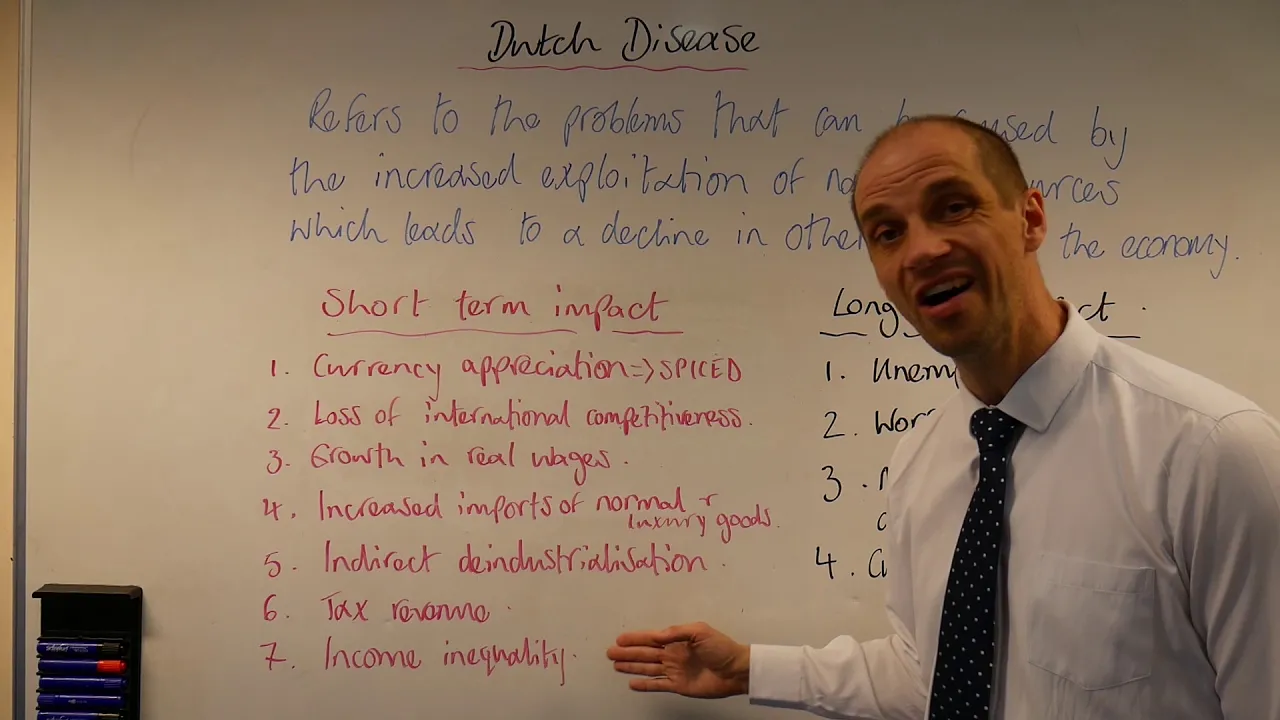




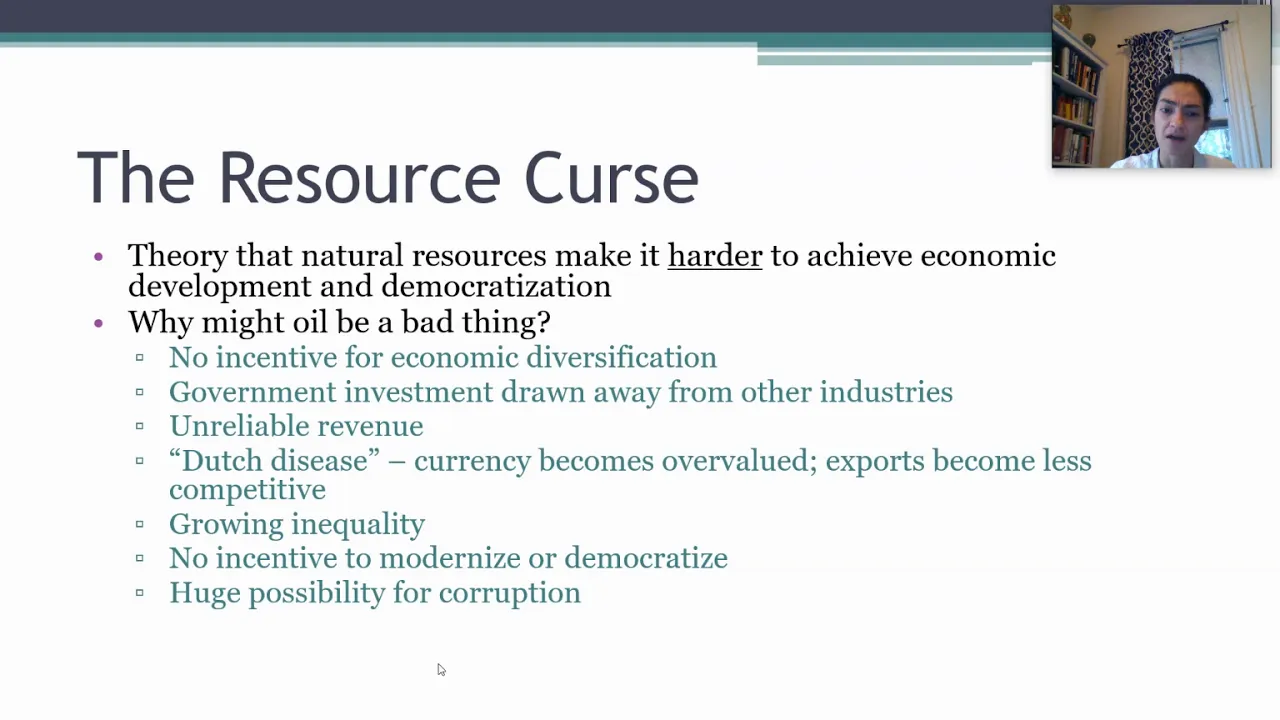








A rentier state is a political economy where a government receives substantial external rents (such as oil revenues, foreign aid, or remittances) that constitute a large proportion of total government revenues, leading to reduced taxation, weakened democratic institutions, and limited economic diversification; this occurs because the state no longer depends on society for revenue and thus has less incentive to be accountable, while citizens become less demanding of political participation, creating a cycle of underdevelopment despite resource wealth.
Political Economy of Natural Resources & Rentier States | Lecture 2
Added:Basic principles of political economy, particularly how state revenue generation (taxation) influences government accountability and state-society relations.
Fundamental concepts of governance, institutional strength, and the distinction between democratic and authoritarian regimes.
An introductory understanding of international trade, global commodity markets, and the economic concept of economic rent.
The macroeconomic mechanics of the 'Dutch Disease' and its impact on non-resource sectors of an economy.
Policy solutions and institutional designs to mitigate the resource curse, such as Sovereign Wealth Funds (SWFs) and the Extractive Industries Transparency Initiative (EITI).
Comparative case studies of resource-rich nations, contrasting failed rentier states (e.g., Venezuela, Angola) with successful resource managers (e.g., Norway, Botswana).
The political economy of the green energy transition and its implications for the stability of traditional petrostates.
123 views2likes1:41:14Original Release: 2023-12-01
badlu and uh with the uh University um of University and of course to have such a prominent group of um uh colleagues who join this class I am um I'm representing more a political part political science part of this course and I'll tell you a bit of my um uh background um and how I came to this topic uh as you know the post-soviet states they opened up to the foreign investments including aeran um and in the 90s throughout 90s I was very actively involved in advising and Consulting oil companies Major Oil Corporation corporations which were B based in the country and um it of course uh brought me to a new experience and new experience was you know knowing how the oil corporations work in the countries uh with energy resources I even was uh the advisor to Unico during this famous uh pipeline uh notorious pipeline project which was going from Afghanistan Pakistan and further and uh um but the more you observe what's happening in the country the more you start to realize that indeed the availability of the oil resources it's not so straightforward I mean it it is not necessarily uh uh the blessing uh so it was quite empirical the interest which was coming I uh also was a national coordinator of human development report of undp in 96 where we already put the question of what is the influence of the oil resources on the political system on the development of the major development indicators and Civil Society for instance so that was the first public report where we tried to see the effect of the oil resources on the social economic and political structures but then gradually you start to realize that um actually it's a very deep um mechanism of um which prevents the country from from making a breakthrough in development of all these structures which I just mentioned and what is this mechanism one um of the ways or why one of the theoretical framework which tries to explain mainly three major questions why uh the O driven uh States economies are not the fastest growing uh economies second why there is in some of them or in many of them you have a uh high level of inequality poverty the most important and uh the third one while most of them are tending to be authoritarian uh states with with extremely centralized uh structure so uh today we um today we will speak about rener States series and uh rentier States um if you look at this picture and the picture is basically only one uh region covering only one region which rentier states Theory cover it's the Arab states and I think the literature which I uh uh sort of uh left you uh in the um uh file folder is also about Arab states if you look at them you will see there there are four oil reach States and they look very similar I mean those who uh visited those States probably can identify them but they're extremely similar and it it says a lot about the uh nature of economy and nature of state it says about modernization but rather a very peculiar type of modernization rather a shallow modernization It also says about the essence of power the architecture tells you about the essence of power you know this um oil States usually compete who will build the highest tower and one of them as you know so there are four um capitals here uh one is Abu Dhabi Doha um Dubai and Kuwait City um uh by the way um the St Andrews University uh started a very interesting project on uh how how architecture um reflects the uh pecularities of the oil Rich States um that might be the one of the topics uh which you might get get interested in um we will start with definitions uh they will move to characteristics or indicators of the ren States uh we will overview types then we'll speak about implications so rankia State theories is a pol political economy Theory which seeks to explain State Society relations in states that generate a large proportion of their income from externally derived unproductively earned payments that's the sort of quite popular definition by gray but the rents is not something new the concept of rent um was used and is very often uh quoted by Adam SMI by Adam Smith in his famous um book in 1776 18th century where he says that RS are different from earned income basically income which is earned with hard labor is one thing and rent is something else um moreover in early 20th century Europe Europe uh the uh concept of rent was uh used uh in the for the very popular um theories of rentier capitalism where the uh the fact that European uh states were giving loans uh to the Nevel non-developed States was uh used for description of uh imperialism form of imperialism just making them dependent on um uh the European States but uh the uh ranti States uh theory in a sense which we are going to discuss and which is used and uh widely spread today to uh describe the uh the developments in the oil Rich States uh were uh laid the the foundation of that theory was laid by kusin mavi um in 1965 uh he developed a modern concept of RTI estate on the case study of Iranian economy and IR Iranian politics we will move then to the uh Revival of this Theory again in the 80s by bebla and Lani they uh took on this Theory by Hussein mavi and adopt adjusted them to the Arab states the cases of Arab states then later in the 90s the ren States theory was um um uh applied to subsaharan Africa and uh then to Latin America the and we will uh also touch on post Soviet R states which the auth the many authors in this area they argue that this is a specific category of the uh renting States um okay so uh as I already mentioned rents they differ from wages which are labored for it's an income based on ownership of land resources and um as Ricardo used to say the rent is effect never cause of high value of product um income derived from the gift of nature that's another uh definition of uh um rent by Marshall um in 1920 but it also one should not confuse at uh the term of rents in an rentier in economy and social science in social science it uh acquired some sort of negative connotation because rentierism was in sharp contrast with the entrepreneur who was sort of dynamic Innovative and um highly productive while rener is getting his um uh income in a nonproductive way uh so uh when we start seeing what has mavi done so he gave basically three major uh Concepts rener states are those who received on a regular basis substantial amount of external rate we will see that after a while the uh Ren estate Theory will be developed as all the theories PR estate Theory also didn't uh just stop at one point it was developing and it was critically assessed and reviewed so that point of external rent by now is already reviewed and uh critically assessed and it's uh their authors when we come to them they say it's not just external but also internal rents um external rents these are rentals paid by individual concern or governments to individual concerns or governments of the given country all revenues have nothing to do with the domestic economy that's very important because that explains this connection between and the question which MAV was asking why the oil rich countries are not the countries with the fastest growing economy and uh he demonstrated on the uh not this one this one on on this little table to show that there is no effect whatsoever or connection uh between the domestic economy and external rent look for instance he shows you the um the Iran's uh oil production and compare is uh in 10 years we see it more than two times increase and the local expenditure which includes wages salaries payments to local contractors purchase of local supplies are actually decreasing uh the same thing uh the same almost the same um dependence uh correlation is in the Middle East three times increase of production and look how little it affects Ed the local economies um we will uh I will take you back uh to them uh the uh the idea about rtier States and uh rtier State theories and the regions uh which I just mentioned by showing you the this um uh table or graph of oil dependent um economy States and you can see that the first 10 of them they comprise all three regions basically it's Latin America or four regions Latin America Arab states a it's uh South uh subsaharan Africa and it's post Soviet States aeran is included and there are usually two major um indicators for oil dependence it's the experts the energy shares in export and energy shares in GDP so the next is the share of GDP of the oil and you can see that again uh there is Big countries which most of which are sort of included in this chart as well um so uh as I said M was asking question why um the inflow of oil resources did not lead to fastest growing economy and he uh comes with the idea that the weight of external rents percentage of O revenues of total government revenues of Foreign Exchange earnings uh play a key role uh what were the uh major changes which led to this emergence of the ran estate well in 1950 56 he argues there was nationalization of oil in Iran and also nationalization of su Canal governments appropriated large shares of rents which were previously acred to the oil company um so governments and state become a major actor in economy oil res resources allow the government to run large public expenditure programs without resulting to taxation they don't need to tax Society anymore the government as I said becomes important factor of economy and re relations of the oil industry with local economy re is realized via expenditure which uh he argues is not enough to stimulate growth uh so most importantly this uh the oil resources uh ACR directly to State removes urgency of development uh move it okay so what is important um what is important is a reaction or response from the rest of economy so whether these rent is used for productive or nonproductive labor whether it's used for import of consumption only then it doesn't touch the rest of economy as a result of this rents it creates a dangerous situation when there is a mutation of prosperity by public expenditure projects in a few cities which masks basically Mas grades the uh the true uh situation of economy and you know Iran at that point was not the prosperous country like uh the same way as the Arab states later so there was a quite serious um large section of society in poverty education was underfunded um mahdavi says that in those years the education of Iran did not even reach the education of Japan one C Century of the 19th century so uh in spite of this beautiful um performing effect of the big expenditure projects there was a technological and economic backwardness so he concludes that per capita income is not an indicator of assessment of development performance of the countries for instance he was saying weit had the highest but uh income come per capita but it it is behind many other accounts um on many other accounts um let me show you the uh graphs quite old tables uh which he used to demonstrate the effect of oil so you can see he considers that there are two periods in Iranian oil uh development in irano development of State role of State he says that one um basically normal um uh dependence is seen on before 50s particular 55 it's one period and the other period is a very sharp increase of oil revenues of Iranian government and he says that's where the problem starts when uh the before this Revenue was going to the oil companies but after nationalization the government uh becomes in control and it g this wind uh wind windfall I think of yeah what's uh of the um of the oil revenues uh come to the uh acru directly to Iranian government and then the second uh quite interesting um slide which shows the uh other white typical dynamic in the oil reach States uh and rer effect it's when import value starts at the same 55 look at the number the 55 uh it starts the import uh tremendously grows and uh grows much quicker first of all than before as compared to experts value that's what we see actually in most of the oil Rich States um and these seem to be an objective mechanism or dependence which uh mahavi noticed in observed in his analysis so um this second the revision of the theory or Revival of the theory uh was in connection with the boom of the 70s in Middle East and the authors um of this r wiped the of rentier states the blav and Lani they explained that the events in the Middle East at that time creation of a PEC Arab Oil Embargo fall of sha overan it pushed 10 times rise of oil prices so it was three in the 70s to 35 in the 80s so this push of the oil prices caused the oil Revenue windfall which in turn caused a need to categorize the effect which oil had on rooll of state and economic behavior so rer economy they say is where there there are four major uh indicators of Ren economy it's where the rent R situations predominate so basically there are no pure rents all or R economy uh because uh every economy has an element of rent of elements of R economy uh the economy uh should rely on substantial external rents to be called Durante estate and only a few are engaged in generation of rents or wealth while majority are just waiting for distribution or UT utilization um the government is the principal recipient of Brands so these are the major um uh indicators and at the same time um they were speaking about impact of R economy which had both on uh rer mentality rer sort of rer social effect and also the uh effect uh on the role of State in the Arab world so rer economy uh they say leads to rer mentality and it's because of the break within work reward connection reward is not related to work but to a chance this reward rent is not related to work but it is related to a chance or an opportunity um so prevalence of R economy they argue affects role of State in the Arab world so that gives rise to the RS states which are depending on external rents oil revenues constitute 90% of a budget and 95% of experts only two or 3% are involved in production of rent and oil revenues acur directly to the state government state is a principal actor who distributes rent among population here we come to one of the major things which made me involved in this topic in time its connection with a democracy it goes through this uh cut of the connections between State and populace state or government Exist by definition should exist at the expense of the taxation um here we have the those the state or those who represent and the state Elite um which is not dependent on the populace because it doesn't need taxation it gets a lot of um uh resources uh external at the expense of the external rents so this is um the famous expression no taxation nor representation uh explains the connection of the rtia states and democracy or let's say the absence of democracy because that turns into it um uh deprives the government or state of the incentive to be accountable for the populace and on the other hand people become less demanding for political participation um so it's a sort of double uh double-edged sort of phenomenon uh budget turns into an expenditure program uh you probably read that which I left in the folder um well he brings the example of Kuwait there was um usually um this uh Kuwait for instance um improved health and educ tion programs but unfortunately government contracts are still uh being um Royal favors so there is no such a thing as rule of law in a liberal uh understanding uh but um they're they're free the those who control rents they are free in distributing or uh direct the expenditure programs in the way which would support status quo status quo or the political uh Power uh the other effect is that the rer in rtia States the public service and private interest become really merged so as usual there is no uh working in practice provision of conflict of interests for instance in aeran but our professor uh iadu probably will speak about that most probably in details the conflict of interest is in uh on paper but in practice it doesn't work and also government is a major employer of the country so it leads to a bloated um bloated uh bureaucracy sector or government sector uh because everyone basically wants to work for the government because it's the only place where you have some sort of security and besides that you have also access to the resources um so other actors business and Merchants they benefit from laws favoring Nationals I compared as compared to foreigners and that's the um another mechanism uh which uh blavy uh brings as the mechanism of the rtia state for instance when um the um the Arab states adopt the laws which require uh you have a national of that country as a mediator as an agent so that also creates additional opportunities for rents uh through the government manipulation of Regulation right and uh you probably read about this alaf uh category of agents in the uh Arab states let me just um uh is it the last one or there is Tim yes this is last one I will the other one uh but it takes a bit time so if if you want to have a small break or if you want to continue like yeah a bit Yeah I think you might guys uh maybe have some comments or something else if you have any but we'll have to make a little break because the second part is just coming um uh did you find the reading uh or um it was okay don't see them if somebody wants to speak can open um un unmute the microphone actually I told Al very interesting to know about like their entire States and general I didn't never heard about this yes rtier States it's quite popular yeah and very um popular framework for uh explaining the resource curse and uh the uh the uh effect which uh um oil resources um have on the um economic political and social structure and Via yes we have uh here yes I am here yes maybe gbad can can contribute some while we are waiting for the second part thank you so much Lea for your uh excellent presentation I want to say that uh there is the direct link between the renter State and uh the political governance of the countries the empiric study shows that in Rich research countries uh we have almost aoran countries except of the Norway Norway is different example but most scholar argu that by Norway except because the democra institution develop it in Norway before discover the O and gas uh reserves and when uh the oil and the gas reserves discover in other countries and then country bur of the rent state in this case the oil ining uh The Establishment and the Democratic institution yes absolutely yes thank you so much for for your um clarification and specification and um it seems our second part is ready so I would attract your attention um to the um um classification by Beav overti States in two categories um now he speaks about two types of Ry Estates one is first grade or full rente estate it's when it has its rents or income from the uh external oil revenues oil revenues and uh the other uh kind of um although the this is not the um the uh table which I'm showing it now it will be the next but the second um uh degree uh rener States or semi rener states are those whose substantial external rents are coming from either remittances or foreign aid but this will be particularly developed in the next stage of their R estate Theory um we will come to that later so Beav continued his argument that uh the uh the government manipulation um by the regulations it's second order Rance for instance uh the uh real estate and stock market speculation land speculation so domestically uh the government starts to also reproduce the logic of rents so instead of investing in the productive sector or real sector of economy it gets involved in more rep reproduction of the rentier based economies or schemes so um basically the rtia state is hierarchy of the various rtier of the levels of various l r relationship rather than development of the re real sector of economy and that's all because of the renting mentality that's because of the um uh connection which develops between the rent and the state and the role which state starts to play so uh there are two Jack to positions uh rer economy and productive economy which was said are not related and very often rtier economy actually create disincentives to productive economy and also in the Arab states there is a justos between the foreigners foreign labor and Nationals Nationals Nationals usually are involved in renchy economy why uh foreigners in productive activities but it's not everywhere for instance in in post Soviet State it's a bit weaker expressed and um we'll come to that probably in our future lectures so as I said there are semi- rener states too and they're uh they they display the same signs of rener U Behavior but there are called location rents for instance there are some countries receive huge Aid per capita exactly because they're located in strategically important places for instance he brings the example of um Egypt which was getting enormous aid from the Soviet Union not because of the war or not because of something else but only because of this strategic location and then after that Egypt was getting the highest per capita aid from the United States among other countries there so the other countries gets their rents for being the transit States and I already mentioned work remittances and uh the the uh other mechanisms like subsidies for instance or welfare doctrines um okay then uh we come to the next stage of development of igny Estates so Lani suggests the other uh typology of States uh not rentier and semi- rentier but allocation and production State depending on the role and the function of State he says what does the nature of state income effect first of all survival of State there were many weak countries which Arab states which were created in the colonial period uh and probably most of them would not survive if not their oil revenues it also affects the degree of centralization and Trend to authoritarian rule the state income the rent uh the the nature of the state income as well as basic rules of political life in the country so he makes rather direct connection of the ran Ranier State uh to the political uh shape of that state the ran economy in political shape um he however says that R states are not necessarily oil exporting countries uh some important flows of income with rent component does not ACR directly to the state so he's critically revising the previous assumptions by mavi um on the example of Iran uh but he says yeah that uh it's essential that the rent is earned BR um we will see that even this um uh even this um provision will be reviewed in the 2010s by other authors so he says that the source of rent is important not the nature uh expert is important more than production so it frees the state from Raising income domestically and he calls that state exoteric based on the external Revenue which acrs directly to State and as a based on domestic revenue and Taxation and he basically concludes that there might be depending on the function of State there might be two kinds of State renier allocation State the function of the state is just allocating the income it gets from the rest of the world and strengthening of economy is not NE necessary for existence and expansion of the state um production States income is based on domestic income real state of economy and taxes um he considers that these categories allocation state which basically gets the rents and allocates usually through expenditure programs um and versus production state which which is based on taxation which is based on the real sector of economy he thinks that he considers that this can be a good tool which can be applied throughout our world but also Beyond oil now we come to the third um stage of the development of the rental estate Theory um Adil Malik from Oxford in 2017 um uh wrote the article rethinking the rent estate Theory and his major argument is that we should look broader to the effect of rents Beyond oil because a very similar behavior and um um development are this played in the other states which do not own huge resources so he considers that rents include foreign aid remittances and also government manipulation of the economy Reliance on which also leads to underdevelopment many eills of the region bloated State unemployment weak structure weak private sector limited political iCal education uh their evolution they are all rooted in economic structure which is heavily reliant on external windfalls whether derived from oil Aid or remittances uh regulatory rents um also are including them they result from Market subversion and they are particularly important so he concludes that Middle East resource curs can simply be viewed as part of broader rent curse um so major revisions of his approach is that o revenues are complemented by rents from eight remittances and government regulations rents which are not externally generated only lead lead to the r estate they're domestically uh generated too which is quite a departure from the previous Classics of the rentier state um Theory so um for instance the restrictive policy policies applied to privilege business connected to regime so the the whole legislation is adopted or modified to favor in of the regime or the elite which owns resources um and the recycle external rents they are not used only to buy local loyalties because that's what happens when the government uh gets the uh reach uh the the revenues huge revenues um instead of being dependent on the society through taxation they actually buy Society they buy Society by the expenditure programs Weare programs by selective distribution of these rents according to their political interest so it's one way connection when the state or government is buying off political support So Malik says it's not just domestic it's also external uh they buy loyalty also abroad and I think um Professor iadu has a excellent knowledge of that part also and he will tell you in details about that in the following uh lectures here um Malik says that there are in spite of the fact that there are three types of various economies in Middle East and North Africa region all of them display the um features of the renti Estates these are not um identical economies they all have different degrees of natural resources of the real state of economy but for instance he he he speaks about three types of economy Capital Surplus oil exporting those who use rents to provide generous welfare and that went to um and the that led to Rapid absorption of oil rents through government consumption led to stable autocracies labor market distortions patronage um and high dependence on resource R the second type of uh countries are capital deficient and labor abundant so they have modest resource rents per capita let's say um under 40% of uh G&P and deployed rents to start industrialization but they failed oil rents are com and they failed in spite of the fact that oil rents are not dominating the uh uh GDP or expert but they felt because they're combined with regulatory rents which we just spoke about that the rents which are derived through manipulation of economy which leads to rent seeking weak private sector and greater resistance to reforms and at last we have resource pool countries but which has another uh source of rents it's foreign a and worker remittances as well as regulations so Morocco Tunisia Jordan not have large uh energy resources they're open they're open to liberalization and reforms but don't but uh enough not to disrupt status quo still the old the reforms and political opening is limited um EXA ly because they have the phenomenon of the rente estate so in the second oil boom there was already Innovation uh to prevent the um the um rer State effect and that was a creation of the SE Sovereign wealth fund uh but in fact it didn't change the rent dependent model of development the creation of The Sovereign funds because there was the other effect uh which made the institutions of checks and balances very weak which made the process nontransparent because this Sovereign wealth fund uh which uh you see two oil wounds 1970s and 1990s and that's when the the wealth funds were being created so the these Sovereign wealth funds they were not created along with the political institutions which would provide transparency and accountability and other things so they they didn't change substantially but you may have different information and I'll be happy to hear your impression also um public expenditures accelerated that's another effect which um it had and um in spite of some diversification Sovereign wealth funds continue to be directed to the white elephant projects I don't know if you know the experience white elephant projects it's the uh very glossy big expensive project but but projects but with a little meaning for the economy it's more for demonstration effects um the non oil rents Malik argues mimic the oil rents and shape adverse political economy so he considers that foreign aid is a geopolitical rent which can replace replicate the resource Cur symptoms [Music] um U so as I said you know he basically um uh this is more or less the uh conclusion um that internal authoritarian structures are enhanced both by external and internal rents Aid and remittances play significant role in M major Arab states from Lebanon to Egypt and internal rates rents are generated through government manipulation of economy connecting the business class to political order and that's where the two come together the government and business and very often the the country is run uh as a big business and there was actually a very good article by don't remember now but it was about uh whether the uh aeran is run as a state Oil Company um so it's very hard he continues um um so this little graph shows that the connection between the oil price and remittances what he says that everything is connected in the region and remittances also if you look at this graph of the oil prize and the remittances they're basically they're more or less relevant to the fluctuations of the oil price so it shows how interconnected are rents in the region and a region more or less is driven by the a very similar um uh Trends so as I said the um we will probably close soon because we will need time for uh discussions um as I said the uh in the 90s the uh R estate theory was extrapolated or applied to Africa and then later to South America each region has its own Prof found uh effects of the rtia states um Africa for instance is distinguished by the high level of poverty and inequality if you look at the dependence uh oil dependence you will see Sudan Gabon equatorial um gin and um basically um go Brazil and then if we look to the uh we'll look at the level of inequality the gene coefficient is enormous particularly you look at Gabon it's huge and uh Angola so poverty is practically the characteristic of every African country um in South America the uh three countries which can be called Ren States based on the oil revenues and the energy dependence are Venezuela bivia and Ecuador and if you look at the percentage of experts Venezuela which is usually on the top pages due to the Persistence of the regime and stability uh the social issues um particularly um the scholars are now interested in how the rents are affecting the oil rents how are they affecting the foreign policy or nationalism of Venezuelan leader Chavez um as you know has shown quite prom minent um nationalist um behavior in the last few years and um uh some authors find a direct correlation between the oil price and um amount of rent which Venezuela uh achieves um a direct correlation between uh the these factors and the nationalism which is exposed by Venezuela leaders we are coming to the conclusion of our review to the very specific category of RTI States soal Post Soviet RTI States why is it specific because it combines two structural uh pecularities one of them is the Soviet legacies institutional legacies right after 70 years of totalitarian regime authoritarian State um you have quite serious legacies institutional legacies in the form of uh centralized government you know underdeveloped institutions of checks and balances and others and also the effect of the rentier economy so it's uh double curse what Ana franki uh with her coth the double curse resource income and autocracy so these post Soviet Over States they all categorized by they combine large resources low diversification of economy autocratic presidentialism neopatrimonial structures lack of political interest of society which led to specific post-soviet variety of uh um reny reason and for instance Frank Compares aeran and Kazakhstan finds a lot in common she considers the main Soviet Legacy Neo neopatrimonialism so it's basically vertical and horizontal um network of connections of personal and bureaucratic relations so it's basically a merger bureaucratic and personal relation s and um uh that directs the distribution of rents so it's not the uh the rents only um strengthen the patronage system and the pre uh let me show you the next one okay so um it's very provisional sort of table but you can see that it's not just Central Asia States Russia also displays the C uh characteristics of the ranti states but we we can speak about it um in the other um lectures and seminars so you can see that they share quite High um share of GDP and sharing experts aaban here is a ro record high 95 share of experts we don't have usbekistan here um which would be quite um you know uh prominent too um but um to uh the major structural or institutional uh similarities between a and Kazakhstan is that Elite has almost absolute power in oil and gas contracts or Parliament doesn't have a a force um civil society's very weak political opposition doesn't have any effect so all the institutions are more or less neutralized um and uh that's why Elite which represents the State or the government uh they have the uh control over the oil and gas contracts they have permanent corrupt and rent seeking Elite and they get support through rent allocation in the uh Society they distribute the um rent in a way that will uh strengthen their own power um so um the other from my point of view it's very interesting why in the Soviet States Post Soviet states there is lack of concern with distribution of welfare [Music] um I I think uh Professor iadu can also um kind of comment on that uh because in principle we are coming from the um welfare states right the state was Distributing uh resources among population in a sort of relatively equal manner so there should be some um uh consistency yes if we have these legacies but there is lack of concern with distribution of welfare and um of course um and distribution of rents is nontransparent so conclusions of on these particular type of rtier states is that rentierism and Soviet legacies they enhance each other autocratic and neopatrimonial regimes strengthen rentierism and there is a high level of oil revenues which make autocratic power more stable so here I would like to stop uh we may take questions or if there are no questions we can move to the Practical part of our uh sort of seminar so what do you think okay so included the question in the chat box ah yes I see it I see it let me uh let me see okay um yes um the mineral resource countries uh well there is a difference which was um explained last time I think by uh Professor I he was speaking about difference between the oil and gas resources and other mining Industries um the author bring the example of the gold in Spain uh few centuries ago which had a very similar effect [Music] um uh Professor I would you like to comment on the because I think it's related to your last um your your leure topic would you like to comment on that the first but of this no I don't hear hello no apparently you don't have anything right okay so um I don't yeah hello just just unmute uh I want to say that last time we discussed the differences between the mineral uh and the mining sector and the hydrocarbon sector uh I explain uh the main differences in the context of the legal regime most of the hydrocarbon sector based on the production sharing agreement they involve the companies uh for the exploration uh with certain share and the government also distribute uh the profit oil between State and the companies but the most of the mining sector the legal regime based on the conens agreement and it's impossible to find the production sharing agreement in the mining sector uh in the investment context uh the hydrocarbon sector require more investment because they require more mod technology they require additional also construction of the pipeline because the mining software is not uh necessary the pipeline you can send your uh the minerals uh by the rail bo uh but in in the hydrocarbon sector it's totally different infrastructure modeling technology and plus the pipeline and also requir the additional investment uh for the sending the oil and the gas products to the World Market and another uh differences uh the mining sector uh you can explore uh in the small scale and Artisan uh field but in hydrocarbon sector is totally different it's a big fields most time the offshore and the sometime in in in the also on Shore and uh this I mean it's the main diff main differences between the mining sector and the hydrocarbon sector three main differences hello uh sorry my question was basically around the renter economy like uh um we heard about how the renter economy is largely in the oil and gas uh resource countries so I'm I wanted to ask uh is it also applicable to countries where uh there are like mineral resources and not purely oil and gas uh I'm not I wasn't kind of I mean I know the basic difference between the oil and gas and mineral resources but the concept on the renter economy maybe maybe I might not sound okay with that because yeah it's applicable uh it's the same station if if for example the Chile one of the uh the strong uh dependence uh economy from the minerals uh also we can uh call this countries like the renter state but it's applicable if the country receive more revenue from the mining sector also country became the rental State even country receive more revenue from transition uh income uh from the transportation of the oil and the gas for example the Belarus also we can call as a renter state is it is it correct yeah yeah case of belus is special because uh rents are coming from the cheap uh energy resources arriving from Russia and then re sold um in the other countries so that's where the rent comes from and also through distribution in the country practically for free so it's a very um sort of peculiar that's why rent rente estate theory is quite broad because it may include other countries you just need the um the definition the understanding what's the the the it's nonproductive income basically it's nonproductive income is the mineral resources are the mineral resources and rent from it if if there are a few um mineral I think mining and mineral uh other mineral resources involve much greater labor force in production of that so it's a productive labor in a sense which is involved human labor in the mining uh resources than for instance oil and gas I mean we need to look at the first of all whether it's U productive or nonproductive sector and whether this income uh is constituting the uh majority is predominant in your uh GDP or expert um sort of value as as as well as the budget Revenue if the budget strongly depend on the r it it doesn't matter rank coming from uh oil and the gas sector or uh mining sector or uh transportation of the oil and the gas and other resources through the country if the share of the rent uh high in the budget review we can present this country like the rer uh there were many other questions one of them was also SATA asked um about how it's different from the concept of shared inheritance of future Generations fund the thing is that I gave you just the basic idea but the specificities of the mechanism of how Works in practice will come up in the near in the other lectures and the specific case studies uh which will uh we work because it's a broader context for instance um as I said a future generation fund um the difference is that fut future generation fund was created in Norway while Sovereign wealth fund was created in Arab states and the conditions political conditions are totally different because in Norway this fund exists in the well-developed um system of the institutions of checks and balances and it's impossible to monopolize uh this fund and to make arbitrary decisions it's not possible to get the control of this fund by the side of the small group of elite um and use it uh arbitrarily uh for the sort of sake of um you know of strengthening your political regime or political power in Arab states this uh sovereign wealth funds come in the country where there are no political institutions which would provide for the accountability which would provide for checks and balances which would balance the power of the royalty or the state well in our report in 19 95 which I led as a uh National coordinator of human development report the First theme which was observable already in the by 95 it's a huge asymmetry between the state and Society State and the societal formations uh because state was tremendously um uh empowered and strengthened by the enormous Investments uh bonuses coming from the oil company while the Civil Society was not getting any there was no distribution which would empower the Civil Society so one of the um for instance structural imbalances it this huge uh discrepancy and that's why the uh wealth um uh the wealth funds um in Arab states cannot basically break through this chain of the uh um institutional stagnation that's why they can't go out of it um I'll give you another example as one of the leader of the green movement back home we were when we just opened the um the doors to the oil companies oil corporations the greens had the very convincing concept of freezing the uh oil resources for the future generations and uh develop the uh uh instead the valuable fishery and uh similar Industries but of course there was so much pressure from the international corporations and also the interest from the domestic Elite because this is a serious strategic uh asset it's a serious strategic asset so there are many sort of tradeoffs and um obstacles to the things uh which you can a good question Charlie about Timor Lee Timor Le is a special case of course it has a lot of intricacies and nuances and of course they are in teer States they are in States but um you know the framework of our but I hope very much that you will contribute to this uh to today's lecture by bringing because I will show you the question which I have and we I'm afraid we have to move to further um um resour State uh Yokai um the ren State and resource Cur State resource curse is uh one type A type or um R state is a broader uh category so resource curse is part of it specifically um uh which is related to the oil and gas resources um not the ones uh as we mentioned remittances or foreign aid um or other sources of Rands I would like har mechanism be considered rent uh agriculture is productive sector of economy so you can't consider it I don't think I don't consider it's um yeah I don't consider it's um rent um it's a productive sector of economy yes do you agree Dr um guu that um large scale highly mechanized agriculture can be uh with few workers considered to be rent but it's yeah I am completely agree and uh the one of the main one of the main uh the goals of the uh management of oil and the gas Revenue in the research rich countries uh diversify of the economy that's why by in the context of the agriculture uh it makes sense uh to invest money in in the countries where they have the really good the Agriculture and the other uh manufacturing sector for the development of the non oil and the gas sector I would like to uh go to the discussion um we don't have much time of Frid right uh how much time kazal do we have is kazal here maybe not um yeah how much time do we have for discussion um I am not sure is it at two hours oh okay so we I don't know still have yeah yes if it's a two hours yes half an hour okay good so uh we're now coming to the Practical part and I have a question for uh you uh which of the approaches or types of their RTI Estates best describe the case or state you are from it's probably joai Yokai uh it's particularly to you um or you familiar with uh for instance and I give you a few options rent state or semien State uh allocation or production State non oilbased R state or post Soviet R state if you could uh just um uh explain uh if you consider that this category um described best the case of your country or the country you studied or your country you know of um that will be good and let me divide you into groups now I need to find how to do everything and choosers oops grps okay create breakout rooms um two how many of us and not 10 right so five 15 maybe we should give 20 minutes last time it was not enough what you think 20 minutes um randomly assign one two did you guys get to the rooms yeah and we started right so we will assemble back in a minutes so Lea now everyone in their group so they cannot hear you from here uh you need to join in one of the group maybe uh maybe you could just announce that they will have 20 minutes to discuss okay yes I will do yeah thank you do you hear me yes I think I missed the question by Somaya sediki approach for estimating the regular rent I'm not sure I understand the question may maybe she meant measuring how to measure it or estimate it which which creation suaya sikaya is there any approach for estimating the regat rent for example in the yeah she she means uh the measuring the reg measuring uhhuh do you know how to measure inside of the budget Revenue you can uh divided uh the incomes into different group M and if income uh coming from uh non for example oil sector non gas sector it's not including the renter uh Revenue but if income coming directly for example transfer from the soft us to the state budget and the transfer from the pp and other companies to the state budget should include the uh the uh rent renter uh Revenue I I overlook that question I think the rest we more or less answered okay hello hello how would you know that the time has gone it shows right they can see and also if you click on the breakout rooms at the left side it's right duration for example now 15 58 can you see um I still have time 15 minutes 47 I think I uh pushed something else I have empty empty rooms empty rooms have to what did I push I'm afraid something wrong uh no I don't think so it's um is anyone from the first group ready um yeah I can share uh I don't know if we were group one or two uh but I'll I'll just read the the notes that we made uh there were four of us in the group um I've worked and lived in tee for a long time and and teor leeste is a renter state but our situation is not exactly the same as the the countries that were described because we uh basically had awareness when we created our Sovereign wealth fund and our legal system we were aware of a lot of the problems that were talked about and tried to take steps to to prevent them some of which worked some of which didn't uh Senor is from Turkey and she said that turkey is in transformation that autocracy is increasing and they have strong taxation system everybody has to pay taxes saswati is from India and she described India as an allocation production State uh we may not come under the rentier state as we have a taxation system and largely depend on local production we are politically engaged and are able to demand for transparency and accountability even though the space is shrinking fast as and Lala is from azerbijan and she said we are a rentier state which has huge amount of oil and gas which is also exported to other countries a non oilbased rener state in my opinion is a state with external Economic Policy which is closed for Import and Export of goods such as South Korea so those were the four of us in our group oh fantastic that's good um uh we can elaborate on that after but now let's give the floor to the second group and who will speak on the second group do we have second group well yes we we do just get who going to speak okay uh seems like maybe yeah I will try so we only have uh three people so I'm from bore and then we have a suia from Iran and then we have a por from Iraq from where from turkey turkey is fromy what is this turkey or turkey oh turkey turkey okay yeah so yeah I can start from tury tury he said government a lot salaries and production so H doesn't have a minor resources and then Iran Iran is more yeah for turkey so he doesn't really no it's not a raner state but he doesn't sure that is a location of production state or what kind of t b and then Iran is R lot of oil I guess and burmer we have also oil and has a lot of Natural Resources Prett much depend on the uh this the gas export revenue and also forign eight so we bomber is Ria State thank you okay great um so we have quite a wide variety of uh rent Estates here um except for turkey right and uh which else was not India Turkey um um and um this seems to be quite convincing uh the your analysis that there they have the um features of the RTI States uh before we uh move further I wanted to ask um I think uh one of you Somaya I think asked the question which I noticed quite late it's about the approach which allows to determine what I think is the governmental rent um uh in the regulatory rent sorry in the um in the the GNP right um I think you actually meant how can one measure right and uh Professor iadl uh just mentioned that one of the way to measure it it's to see uh what is the exact contribution of each sectors um but probably Professor iadl can tell it in more in more details could you please elaborate on that a bit more Professor badl how can one measure the regular to rent in um uh thank you uh uh think this question coming from let me take one more time uh somay somay thank you so muchay for your excellent questions and we are going to talk about how uh the measuring the regulator R uh but I I want to say in general generally if you take the budget uh as you know the budget uh divided into two parts expenditure and the revenue part if Revenue part uh we can also divide it into two group and one of resources uh rent uh revenues and another one non resources rent revenues in this case we can calculate how many uh Revenue revenues are coming from the uh resource but it's also divided into two group The done direct payment and the direct payment most countries for example the countries uh who is also operated uh the Wes fond uh they transfer every year money from the oil and the gas v f to the state budget for example in the the kazakstan in aan every year there is the transfer from the state oil fund of the state budget it is including the direct payment direct uh renter payment additionally uh there is also another payment coming from the companies are operated in the country they also paid uh the some taxes from the uh operation and exploration in the oil and the gas field for example in aan the BP paid profit uh tax but also it's including the uh renter uh revenues plus PP paid uh the some royalty and the state oil fund also PID the royalty to the state budget all of them are including the the rent payment to the state budget our calculation based on the company's payment and also State oil or gas fond transfer to the state budget thank you so much um I think we can uh probably this issue will be clarified more uh with the develop the lectures and I also wanted to tell you that I forgot to greet you from the room which is named after M kovski um in St Anthony's College in Oxford um they did it to uh sort of to honor uh the oil businessman and opposition leader so they gave a name to the meeting Hall where I'm talking from uh which is in a very good spirit in a spe Spirit relevant Spirit to our Consortium of the scholars in Exile um I also want to tell you that you already have to think about the topics of your essays which you will have to submit by the end of the um our course um so uh Professor IU I think if you start to think about um what do you think uh for the next um lecture or the other or two more weeks to give two more weeks to think about the topics of the essays um so you should keep it in mind that we will uh need it um what else uh thank you very much it seems that uh you understood quite well the concept based on your replies um and um I promise we'll speak more in details about this in our future uh lectures if you have any questions or something was left unclear you can always contact us uh via this um sort of system send a message or you know just contact us um and you don't forget to check your um folders uh where you have the literature for the next week and um the presentations please upload them when you want um so I wanted to thank you very much for your very interesting contributions for your participation it was a great pleasure thank you Professor IU for your very valuable contribution and HZ of course for your such a um important guidance um as in this sort of process so uh uh have a good week yes and hope to see you uh soon Leila thank you so much I just want to remind to everyone something about the time issue uh so there is a some sort of uh difference next week because uh USA so Eastern Time Zone don't change winter term next week but in Europe it will change so only for next week uh in Eastern Time Zone there will be one hour uh the class will start one hour late so uh it's going to be same time zone like uh three in sets and 10 a.m. in EST just for the next week just for the next week yeah thank you so much for your understanding and for your understanding and you can also use this uh time converter thank you and thanone thank you yeah bye good day thank you yeah bye bye Lea you can download the shared notes uh participants uh put their input uh from the breakout rooms to the shared notes okay let me see okay I found it okay can download it thanks so much yeah welcome thank you too thank you okay I found it and uh and what do I do next it's now here I see it so what's next there is up and at the right side uh there is a two u r a two two arrows right export import export yes and what do I do with them just push them then you click on uh you can choose the plain text and it's going to download your computer okay fantastic yeah it's downloaded on my computer and then what do I do with that uh I don't know it's the students uh outcomes about the breakout rooms discussions ah they already shared in here yeah but it's just one group uh I think the second group also put some of their um ah it's just probably the format is very strange okay it's drag so I I have to do something it's notepad it's a notepad format for some reasons probably yes okay anyway thank you so much you're welcome for everything yeah so until next week
Up Next

40:54
CFA Level II Economics: Economic Growth & Investment Decisions
@analystprep
30.2K views•2021-08-12

5:07
Impact of Yuan in Indo-Russian Trade Amid Sanctions
@WION
261.9K views•2022-07-01
10:33
Behavioral Economics Explained: Rationality, Nudges, and Risk
@crashcourse
1.1M views•2016-03-12

113:18
The Age of Easy Money: Fed & Inflation | Full Documentary
@frontline
21.2M views•2023-03-15
Related Study Plans & Knowledge Roadmaps
Structured learning paths in Economics
economics
Sovereign Debt: Defaults, IMF & Restructuring
01Introduction to Sovereign Debt & Government Bonds
02Debt Sustainability & Credit Ratings
03Anatomy and History of Debt Crises
+ 2 more learning modules
12h5 modules
Explore Roadmap
economics
Market Design: Matching Theory & Gale-Shapley
01Introduction to Market Design and Price-Free Markets
02Two-Sided Matching & The Gale-Shapley Algorithm
03School Choice Systems and Mechanism Design
+ 2 more learning modules
10h5 modules
Explore Roadmap
economics
Impossible Trinity: Forex, Capital & Policy
01Introduction to Monetary Policy and Central Banking
02Exchange Rates and International Capital Flows
03The Mundell-Fleming Model
+ 2 more learning modules
8h5 modules
Explore Roadmap
economics
Healthcare Economics: Market Failures & Systems
01Introduction to Healthcare Markets and Market Failure
02Asymmetric Information and Adverse Selection
03Moral Hazard and Insurance Design
+ 2 more learning modules
12h5 modules
Explore Roadmap