
















The anthropology of the senses, coined by David Howes in 1991, is an interdisciplinary field that examines how the senses are culturally constructed rather than biologically given, advocating for sensory ethnography as a methodological approach that replaces traditional participant observation with participant sensation to understand how different cultures engage with and construct their sensoriums across time and space.
Anthropology of the Senses: Sensory Studies & Ethnography
Added:Foundations of Ethnographic Research: Understanding qualitative methodology, participant observation, and the traditional goals of cultural anthropology.
Cultural Relativism and Perception: The concept that sensory experiences, classifications, and interpretations are culturally constructed rather than purely biological.
The Critique of Ocularcentrism: Awareness of the historical Western intellectual bias that privileges vision over the other senses, such as hearing, touch, and smell.
Sensory Jurisprudence: Exploring how sensory biases impact legal frameworks, courtrooms, evidence assessment, and the pursuit of justice.
Methodologies in Sensory Ethnography: Practical techniques for conducting fieldwork that actively documents and analyzes soundscapes, olfactory landscapes, and tactile environments.
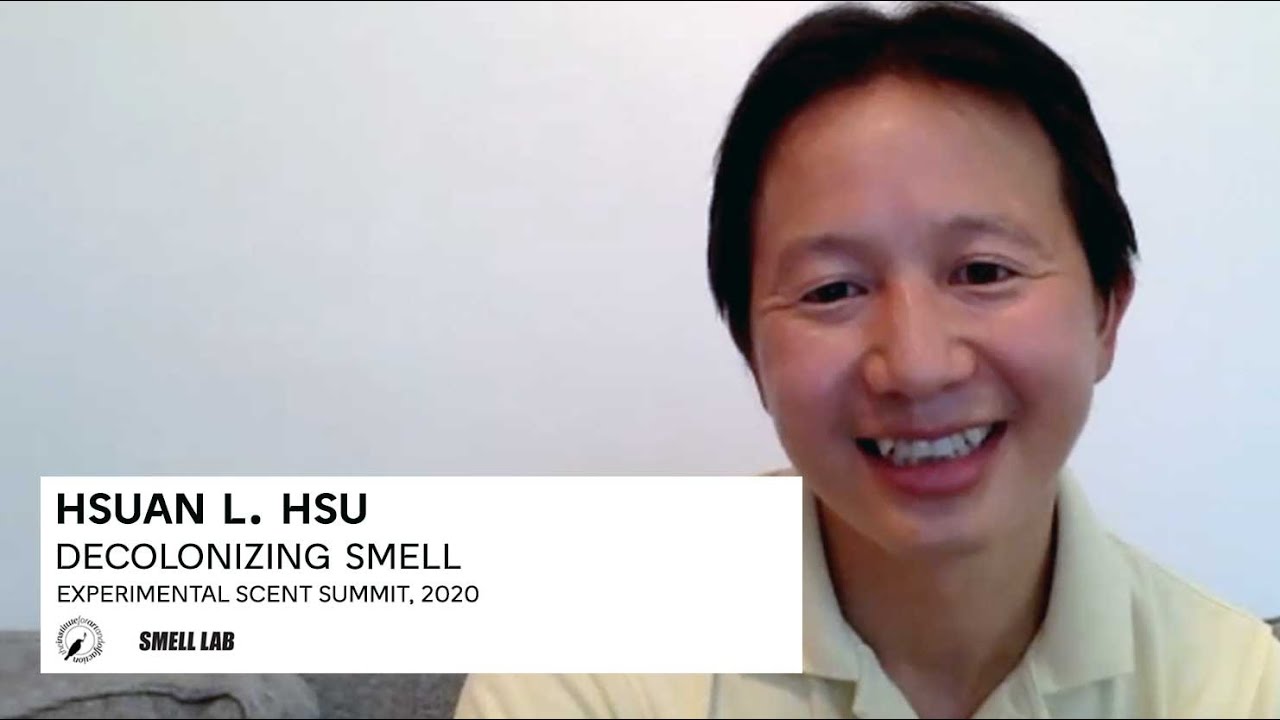
Decolonizing the Senses: Investigating how imperialism imposed sensory hierarchies and studying alternative, non-Western sensory epistemologies.
Sensory Design and Material Culture: Applying sensory anthropology to fields like museum curation, urban planning, architecture, and technology design.
2K views37likes33:12Original Release: 2025-04-25
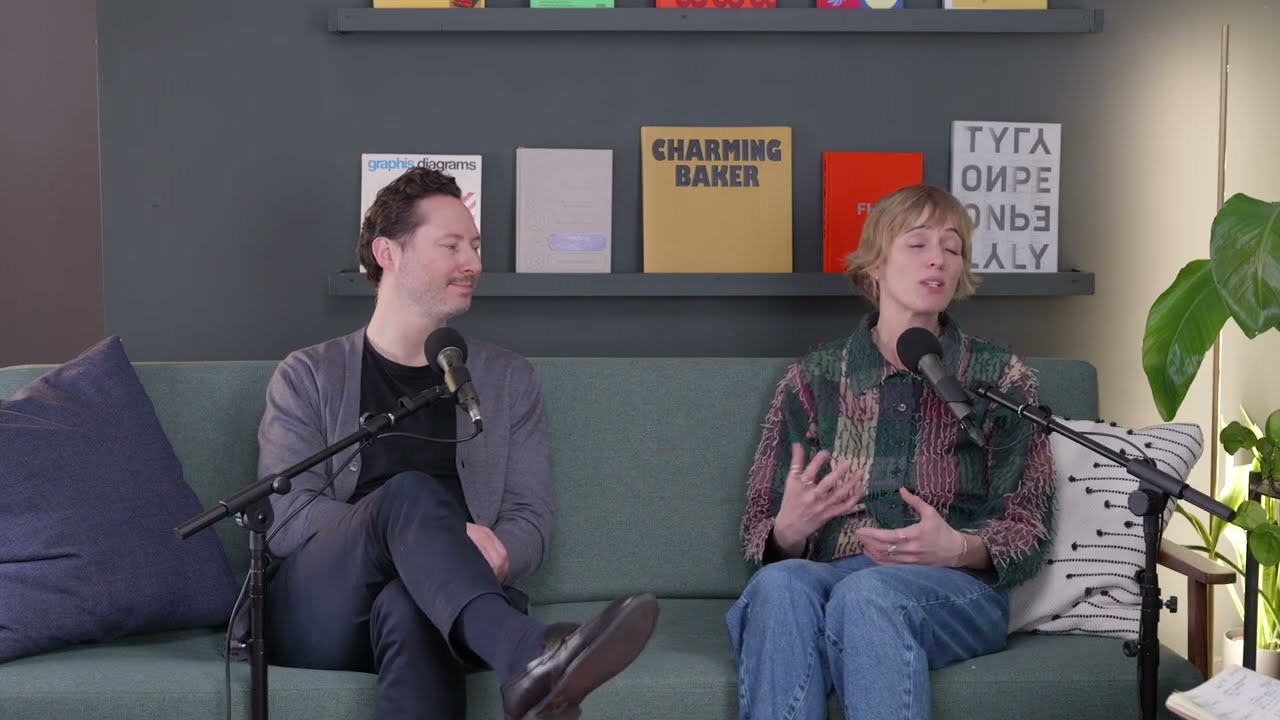
[Music] Hi and welcome to Ethnographic Imagination Basil, a series on reimagining the world from the mundane.
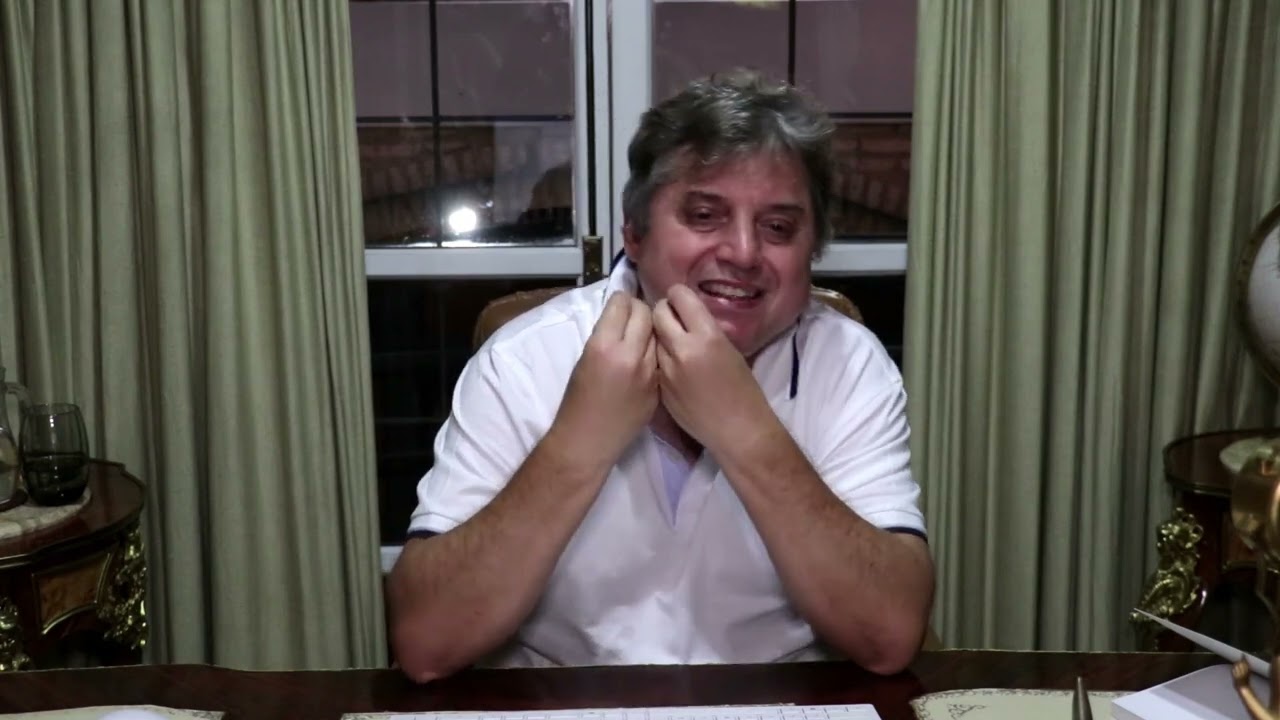
My name is George Pomeu and this episode is on sensing the engagement of perception across time and space. Our guest is David House whose scholarly work has made the senses central to anthropology and social theory. So stay with us for a conversation on how attending to and engaging our senses may reveal a world [Music] otherwise. David House is professor of anthropology at Concordia University in Montreal, Canada. His research and teaching cover widely fields such as the anthropology of the senses and sensory ethnography, consumption and material culture, art and aesthetics, as well as law and legal anthropology. He's author of numerous books including monographs such as ways of sensing understanding the senses in society co-authored with constance in 2014 and the sensory studies manifesto tracking the sensorial revolution in the art and human sciences published in 2022.
He's also editor of numerous essay collections on the senses including the empire of the senses and the six sense reader as well as essay collections on cross-cultural consumption law and popular culture. Today we shall focus our conversation in particular on two of his monographs, Sensual Relations: Engaging the Senses in Culture and Social Theory, published in 2003, and Sensorial Investigations: A History of the Senses in Anthropology, Psychology, and Law, published in 2023. David, thank you so much for accepting our um invite. We are really happy to have you here in Basil. It is a pleasure to be here in Basil. Thank you.
What does anthropology have to offer by way of engaging and making sense of the senses? And what does an anthropology of the senses look like? What does it do?
The anthropology of the senses is a a term I coined in 1991. Um, but it wasn't just me. The senses were in the air at the time. Paul Stler in 1989 had published the taste of ethnographic things, the senses in anthropology. And so what I did in 1991 was compile a source book and it consisted of chapters by Stevenfeld, the great ethnomusicologist Valentine Daniel, a piece on uh the pulse as an icon in SEA medicine uh and also a chapter by Walter called the shifting sensorium. So what the study of the senses involves from an anthropological perspective is first of all the recognition that the senses are made not given. It's not just a question of opening your eyes. There are ways of seeing, there are ways of hearing, ways of smelling and these are all inculcated in us through culture. And so it's that idea the senses are made not given but also it's the idea of taking a cultural approach to the study of the senses and a sensory approach to the study of culture. So it's it's both a theory and a method and what we have sought to do is to liberate the study of the senses from the discipline of psychology. We feel that you know psychologists confine you in a laboratory and they're anxious to individuate the senses and they're concerned with the interiorization of the senses. We are interested in socializing them and the idea that you know perception doesn't just go on in some secret grotto in the head. It's a public activity. And maybe just to dwell on that a bit, um to culturalize the senses and to think against the psychological approach to the senses presupposes also not assuming that the sensorium the division of the senses in a particular is a universal thing and to show how in any particular context it is being constructed. I I think that that's that's a very important notion. In fact, Walter Wong in that piece, the shifting sensorium, uh referred to the sensorium as the entire perceptual apparatus as an operational complex. So he wasn't starting with the idea of the five senses. Okay? Nor were we. Uh you know there some cultures recognize more than five, others fewer. Uh what is the six sense is another fascinating question.
Uh and so this idea of the sensorium as an operational complex shifts the attention from the divisions to the interaction and above all the idea that you know senses vary uh site has it always been the noblest the most informative of the senses and is that the case in all cultures or can we find different cultural aberrations cultural constructions of the senses? So if that means um taking a cultural approach to the senses, I wonder now about the other uh side of the coin that you mentioned.
What does it mean bringing the senses to the study of the cult of culture? Yeah.
Well, this is beautifully captured by um a term that is very much in use today, sensory ethnography. And you know, sensory ethnography, there are varying definitions, but I prefer the one by France Lapdant. and he stated that the experience of ethnographic fieldwork is an experience of sharing in the sensible theage sibl um we observe we listen we speak with others we partake of their cuisine and we try to feel along with them what they experience and make sense of that experience that last little bit is mine but but this is idea of of you know sensing along along with others as the methodology and sensory ethnography involves that. Uh it involves really you know honing your senses trying to construct another sensoria within your own own being uh that is attuned to the the waiting and the interplay of the senses in another culture. So that's what sensory ethnography is. And maybe I can just mention in 2023 a book came out, the Routlledge International Handbook of Sensory Ethnography.
Brilliant book, 400 pages long, edited by Philip Vanini. And it really, you know, brings out very well um through its you many different contributors all of the varieties that are involved in sensing cultures nowaday. Right. So many of you who were invested in this um sensory ethnography as a as a different kind of approach to social life to cultural life and so on I imagine also had to face um how one disenters an otherwise wellestablished methodology in the social sciences. I'm thinking participant observation that for grounds by default site. Yeah. I mean that word observation is very telling. Can you observe a smell? No. You know observation is a visual disciplining of the senses. And so in place of participant observation I mean we have great respect for that methodology. It it involves you know participating in life working alongside people and studying you know their practices from you know an engaged perspective. But we substitute participant sensation. Okay.
So the idea is that you do all those things that are involved in participant observation plus you are leading with your senses. You are sort of focusing on the sensory dimensions of everything you do from from work to ritual to economics you know exchange and so forth. Uh it's that extra element that is involved. And so participant sensation or sensory ethnography is the name that we give to it. Is there something distinct about how one teaches uh anthropologists let's say but also other social scientists? You are teaching in a department that is both anthropology and sociology.
um sensory ethnography, how does one become attuned to this sort of multi-ensorial engagement uh with with with life and how is it different from what has been done so far in more classic methodological sort of approaches. Okay, that's a a very interesting question because u you know in some ways what I was doing in 1991 and subsequently was reacting against writing culture.
Writing culture was a very influential book published in 1986 edited by James Clifford and George Marcus and it proposed that textualization was the end of anthropology. You know what does the ethnographer do? They write. Okay. And so there was this focus on on writing.
Um and it was anthropologists experimenting with their their styles of writing. Okay. So anthropology became a way of writing. Um what we wanted to do in reaction to that textualization um was bring on a certain sensualization uh and so our concern is with sensing cultures instead of writing them. Um and that involves cultivating this capacity to be of two sensoria. You have to both be able to assess your own sensory biases, you know, vision or touch or what have you. um and try and work out the biases in the culture that you're studying. Now to accomplish that uh attunement is very challenging and I think that it's telling that for example one of the first and still the best sensory ethnographers is Steve Feld an ethnomusicologist therefore attuned to hearing and really you know being concerned with what he came to call acmology which was you know an epistemology grounded in listening and describing that in wonderful detail. So already because he wasn't a visual anthropologist, no offense, okay, to people that do visual anthropology, but because he was approaching it from a different angle, he had the sensibility.
In my own case, um it has to do with smell. Uh my first research in Papua New Guinea was funded by um the fragrance foundation. I couldn't get a grant from any respectable sort of scientific organization. And so I turned to them and they thought because all of their studies to date had been psychological that this idea of an anthropology and history of smell would be interesting.
So smell is my entree and again I'm I'm not a visual anthropologist. I guess I'm an alactory anthropologist but more than that uh you know we are concerned with the relations among the senses. So it's no one sense that should be allowed to take dominance. You do say somewhere in another interview that you came to the anthropology of the senses or to build the anthropology of the senses by following your nose um as it were and uh I think that one of the early publications was a co-edited collection on aroma. Yes. Um aroma actually it arose out of that fragrance foundation grant uh with constants cultural historian and my colleague Anthony Sinnate um a sociologist. So aroma um was a history, anthropology and sociology of smell. Now again you know only psychologists and perfumemers studied smell but we were interested not just in perfumes but the full gamut of odors some not so nice u and you know really being attuned to all of them. And uh that was what was unique. That's what the fragrance foundation saw in our work as a potential opening. Um and so you know that's how we we began. So it was really you know that that multi-disiplinary book on smell back in 1994 that started us on this path. And on that note, and thinking about smell and your funding from the fragrance foundation, this is also what took you to Melanesia and a lot of what's at the core of sensual relations, the book, is your ethnographic work um in Melanesia in more specifically into societies in Papa Newu Guinea. Yes. Yes. Tell us more about that. Well, I mean that was such a wonderful opportunity. the the fragrance foundation effectively funded uh my trip uh and I took with me various smell cards that I did some old factory you know investigations but what that book is sensual relations it comes out in 2003 it's actually a rewrite of my doctoral thesis which I defended in 1992 and it was in 1990 that I was in Papua New Guinea um so the book consists of uh you know a first part which is one of which part chapters is called taking leave of our senses. That was my critique of textualism. Then the second one is coming to our senses which was all about this turn that I discerned within anthropology of people like Katherine Girtz, people like Robert Dejarlay. Katherine Girtz wrote culture in the senses. Deéja wrote um sensory biographies. Uh this new kind of attunement. So the first part is theoretical. The middle part um was ethnographic. It was a comparative study of the sensory orders of two papuanuguini societies. Uh one in the Masim region, trumping grounds of Malinosowski and Rio Fortune uh and also uh the middle sepic. Uh and I was comparing these are both oral societies, but how might they live the senses differently? And I arrived at all kinds of really quite interesting conclusions about you know how the senses are combined and recombined in different formations in those two societies. The last part goes theoretical again.
There's one chapter on Freud and one chapter on Marx. In the chapter on Freud, I argue that he had a nasal complex. um he foisted all kinds of complexes on us and I was able to analyze his nasal complex which resulted in some very bizarre theorizing. In the case of Marx, Markx wrote, you know, the forming of the five senses is the labor of you know the entire history of humanity. So he historicized the senses.
He didn't do the empirical research, didn't do the historical research to really nail it. Um but there's that idea uh of you know a materialist history of the senses which I've acted on and then also he had a very severe problem with boils and arguably this influenced his theorizing as well. He described himself as a carbuncle on the ass of capitalism and that was very sort of interesting description. So uh you know what it was was I was trying to turn this theory I was trying to find in in psychoanalysis and also in um Marxist theory you know well what's the sensory dimensions of it and then I turned the lens on those two theorists as well and a lot of that critique is was driven by your ethnographic work in Melanesia the encountering of different configurations of things but I wanted to dwell a bit on the history part a history of the senses as you you call it with marks Because the fact that different cultural contexts construct the sensorium differently is something relatively I would say easy for someone to imagine and to to accept. But then how do we historicize the senses? Um the same would apply for how do we historicize culture? Something that anthropologists have long been interested in. uh and maybe even thinking of the history of colonialism for example, can it be told as a history of sense the census and sensory reform? I think absolutely in in in some very important ways and uh you know first of all how do you do a history of the senses like you know smells and sounds they vanish in the same moment that they are perceived. uh but we developed constants especially a technique of what we called sensing between the lines. So instead of reading between the lines we would try to sense between the lines. So constants analyzed uh you know the chronicles of the Spanish concistadors looking or piercing all of the stereotypes and derogatory remarks to work out the sensory order of the Inca Empire. Um that was sensing between the lines. Um also you know when you have the material remains of a a society there's a whole do domain of sensory archaeology now the archaeologists also attempting to reconstruct the past sensoria not just you know collect things very very interesting you know development in that regard so I think you can and you must historicize the senses and in that regard you know colonialism with its great drives for deodorization and individuation and so forth is fascinating territory for the application of this and uh there is a developing literature not as not as in-depth as it could be yet but I have great hopes for it. I mean it it sounds fascinating as elusive as a sensory archive might be the idea of sensing between the lines and how to train ourselves to engage archives in that multiensorial way. Um, you mentioned the sensory archaeology. We talked previously about the anthropology of the senses, about sensory ethnography.
Growingly, you're also talking about sensory studies. Sensory studies, right?
The study of the senses. What does this mean? How is it different from everything we've mentioned? Okay. So, sensory studies is a term that I coined together with Michael Bull um, and Paul Gilroy and Doug Khan. We were the co-founders of the journal senses and society. So the introductory essay is called introducing sensory studies and what we were trying to do that's in 2006 is theorize what had been going on. So there had been a sensory turn in anthropology, a sensory turn in history and also in geography and sociology and all of those were you know fairly developed already by that point. So the idea is this is involves a kind of disciplining of the senses, disciplining of the sensorium and each of those disciplinary fields of inquiry we argued you know build and become sensory studies but there was also another dimension to it. You know by that time there were many interdisciplinary fields that were quite well defined. Visual culture okay auditory culture or sound studies taste cultures and so forth. And so these interdisciplinary fields which divide up the sensorium along sensory lines are also captured by that term sensory studies. Now I must say that we borrowed that term. There was already a journal of sensory studies out there. It was run by chemists uh who called themselves sensory professionals and they're responsible for you know all of the artificial flavors and so forth that are out there. They they just have a purely chemical approach to the senses.
We didn't think they were making very good use of the term sensory studies. We liked it because it sounded like cultural studies and so we appropriated it. And I've often wondered, you know, because now sensory studies is very, very expansive. What they think when they look up sensory studies on Google and they find all these anthropologists, you know, with no credentials in chemistry whatsoever going on about sensory studies.
One of the the things probably I don't know how many people know about your work is that you also have studied law and legal anthropology and you come from a legal background and have also been teaching law I think at McGill right for quite a while and I was wondering how you reconcile your interest in law with all the contributions you have brought to towards an anthropology of the senses. In other words, how could we think the relationship between law and legal systems and um legal plurality um and so on and the sensorium? Yeah. I mean it's a it's a I I lead a double life. Okay. I teach anthropology um by at night at Concordia and I teach law by day at McGill. So Jacqueline Hyde or something. Um and uh how do you you know bring them together? Uh but actually I discovered and we had a grant to explore this. The senses are everywhere in law from that figure of justice with the blindfold and the scales and the sword to uh you know a hearing. Okay. Why is you know a judicial proceeding called a hearing? Um there are all kinds of things in the laws of evidence that have fascinating dimensions. you know, an eyewitness is worth 10 times an ear witness. Okay? So, there's an interesting evaluation going on that way. But also things like uh pollution, like environmental concerns, environmental law, it's concerned with the senses. Um and uh you know also uh as we've discovered um many conflicts in contemporary multicultural society have to do with things that are regarded as unsightly or smelly uh or too loud by the dominant society. So there's a struggle over the senses that's going on and often these you know play out in in human rights tribunals and so forth about wearing the hijab for example uh about an ethnic restaurant and people don't like the smells uh and about the call for prayer uh these are all flash points of legal controversy which have a sensory dimension to them and therefore we have been working on a kind of legal anthropology a legal sensory we call it sensory legal studies. Okay, there's a very well-known field sociolegal studies and we've developed this idea of a sensory legal studies to try and get at that. Um so I think you know the opportunities are are huge for approaching law just as we already approach psychology from a sensory angle. Um you know why the blindfold?
Okay, why the blindfold? What is it signifying? What's it doing? Why are the ears not covered? Okay.
There's an old phrase audiarum partum uh hear both sides that's the fundamental you know rule of court procedure and so hence you know the eyes are dispensable in some ways but not the ears it's interesting the way you describe the establishment of legal systems in a way also sounds as if they're normalizing or producing certain kind of normativities of perception in the production of knowledge evidence argument um and so on. And one wonders then can we think of alternative engagements with the law or alternative um sensorial engagements that might also subvert this normative legal establishments. You're absolutely right.
You know the normalization of perception in the law of evidence for example and all of the strictctures that uh we are subjected to in in law uh in terms of noise bylaws and this kind of thing you know that all has to do with precisely you know uh normalizing a given range of perception and don't step outside of it or you know you're committing an offense. Um and so how might one destabilize that? Well, uh, we're we're trying. Okay. One of the things that we're doing right now, we have a a project, um, called sensitive material, and it's about indigenous artifacts in Canadian museums. These artifacts like drums and masks and so forth are considered persons and animate in their cultures of origin. They like their senses sort of soothed. So, a smudge ceremony, a chanting, uh all sorts of other ways in which the senses of these they're not objects, they're beings are, you know, soothed is is very important.
Um and then the question becomes, you know, these objects, they're not objects, are both sensible. Okay, they have sensory attributes. They are attributed sentience in their um cultures of origin. Well, what about then their legal personality? Okay, if they are persons, might they have a legal personality? Do artifacts have rights? Now, artifacts are things. So, you might think there's no opening within the Western legal tradition, but at the insistence of a whole range of indigenous cultures, that's been changing. And we're just beginning to explore some legal precedents that can give substance to that idea of artifacts as having a spiritual, a sensorial and a legal personality.
Rivers, for example, Exactly. The mountains and forests. Yes. Okay. So, all of these ideas of personhood, of sentient personhood come from without the western tradition. We couldn't have gotten there on our own devices. Okay.
But you know the the Maui in New Zealand uh and then the various groups that we're working with in Canada with respect to artifacts are all lobbying for this expansion of the notion of personhood which I think is fundamentally tied to sentience and uh how can those expansions be accommodated is the first question. That's where my legal training comes in. I'm not just going to say, "Oh, you must, you know, I don't think that's going to help." But I want to show how within the law there are these little glimmers of hope, you know, for doing that. And I think the idea of the self-determination of artifacts would in turn help the self-determination of indigenous peoples. Um, because nobody is better positioned than them to interpret the will of artifacts. And so this could create, you know, another whole domain of practice within law.
I think what is so interesting like listening to you talk about both the anthropology of the senses and sensory studies more broadly is that on the one hand this is about an effort to pursue a deeper understanding of bodies personhood um social life in general. On the other hand, it is not just an effort to understand but also an effort to transform to act upon the world in which we live and that we try to. So I don't know if you would want to call it a political aspect or an ethical aspect um to to the knowledge production that that um we're dealing with. But I wanted to just bring in quickly um a short quote from the book sensorial investigations where you say this book is about crossing disciplines crossing cultures and historical periods and crossing the senses to see what will out call it crosseyed if you wish but as I hope to show blurring vision by interweaving the wisdom of the senses of other cultures and other historical periods can help sharpen one's sense of what doing justice entails. And I wondered about that, the relationship between not if not a political sort of um effort in in in anthropology of the senses, but a certain kind of relationship between the senses on the one hand and justice on the other. Yeah. I mean, I can only say I'm I'm just at the beginning. That's that's sort of the closing one of the closing lines of that book. And so, it's really this is my project now. And I want to look at well what does this idea of a sense of justice mean? Okay, concretely. What is a sense of justice?
And all of these endeavors, all of these pursuits are indeed it's not just to study the world but it's to transform it. And so in the area of of law I remember a quote from Vickenstein, ethics and aesthetics are one. And that aesthetics is sense experience and ethics. There is an ethics of sense experience. And so that leads into, you know, a a rethinking of of law and of justice um from that aesthetic perspective. Can justice be beautiful?
Uh you know, and and you know, but more than that, you know, how can we how can we experience justice through our senses? And there are so many reforms of society that need to be accomplished such as color your color color barriers and so forth being overcome um that I think it's a very you know rich and productive field and so uh this is more and more where I'm tending okay with some of the research projects I've applied for now uh to deepening that idea of aesthetics and so just as an example there's the law work there's also a a project we're just wrapping up called explorations in sensory design.
And in that project, what we were doing was using sensory ethnography to study the ambiencece of various public spaces and come up with suggestions for how those spaces could be reformed to make them more sensorally inclusive instead of exclusive um and in that way enhance public participation. Uh so uh I don't think designers will listen to us. they want to just you know sort of follow their own lights. Um but we want to offer that because you know ethnography that's I think one of the chief exports of of anthropology. uh you know other disciplines turn to anthropology, sociology, marketing you know turn to anthropology because they see something in this method and I think ethnography and in this particular sensory ethnography you know is a vehicle um for the transformation of approaches in other disciplines and and above all what sensory invol ethnography involves is sensing along with others. Okay. So it's not just the designer in their studio in isolation dreaming up solutions, okay?
It's always that element of interaction.
Uh and really, you know, that's what anthropology, I think, has to to to to offer. So I want to liberate designers from design studios. I want to liberate psychologists from their psychology laboratories. I want them to follow the senses in everyday life. um and just you know sort of sample the richness of sensory experience there is. And it is per perhaps in these crossings as you call them crossings between disciplines, crossings between public life and scholarly work um between legal scholars, designers, architects and anthropologist that one can begin thinking about an anthropology of the senses that pushes at the limits of the possible and imagines perhaps society um otherwise. Well, I think that ethnographic imagination that's what it is. You know, it's crossing borders. I come from Quebec. In Quebec, you're always crossing that English French border all the time. I'm interested in crossing disciplines like law and anthropology. And I think it's in crossing that, you know, new vistas open up as you know, we've been finding in our pursuit of anthropology. David, we thank you so much for this very inspiring conversation. You leave us with a lot to think about and uh for that we are most grateful. My pleasure.
[Music]
Up Next
107:45
Sensory Anthropology in Asia: Senses and Social Life | Keynote
@wsmip-uj
591 views•2023-04-19

26:41
Sensory Ethnography Explained by Sarah Pink | Research Methods
@NCRMUK
26.1K views•2015-03-27
4:45
Proxemics Explained: The Study of Personal Space
@Vox
536K views•2016-07-05
10:38
Psychology of Internet Trolling and Pranks Explained
@AzzyLand
10.7M views•2017-12-20
Related Study Plans & Knowledge Roadmaps
Structured learning paths in Anthropology
anthropology
Sensory Anthropology (Culture & Perception)
01Foundations of Sensory Anthropology
02Soundscapes and Acoustic Ecology
03Smellscapes and the Anthropology of Odor
+ 3 more learning modules
14h6 modules
Explore Roadmap
anthropology
Space Anthropology: Analogs, Culture & Habitats
01Foundations of Space Anthropology & Cosmic Imaginaries
02Extreme Isolation & Micro-Societies in Orbit
03Space Analog Habitats & Earth-Based Simulations
+ 2 more learning modules
15h5 modules
Explore Roadmap
anthropology
Legal Anthropology: Customary Law & Pluralism
01Foundations of Legal Anthropology and Social Justice
02Legal Pluralism: Coexisting Legal Systems
03Customary Law and Indigenous Dispute Resolution
+ 2 more learning modules
15h5 modules
Explore Roadmap
anthropology
Global Tourism: Gaze, Authenticity & Heritage
01Introduction to the Sociology of Tourism
02The 'Tourist Gaze' (John Urry)
03Staged Authenticity in Tourism
+ 3 more learning modules
14h6 modules
Explore Roadmap