










![The SECRET Formula To Writing STUNNING Ultra-Modern Chord Progressions [Harmony]](https://i.ytimg.com/vi/6N1KRVJXh80/hqdefault.jpg)


![ODESZA - The Last Goodbye [Ableton Sound Design and Composition Tutorial]](https://i.ytimg.com/vi/0eINUpvKoaM/sddefault.jpg)


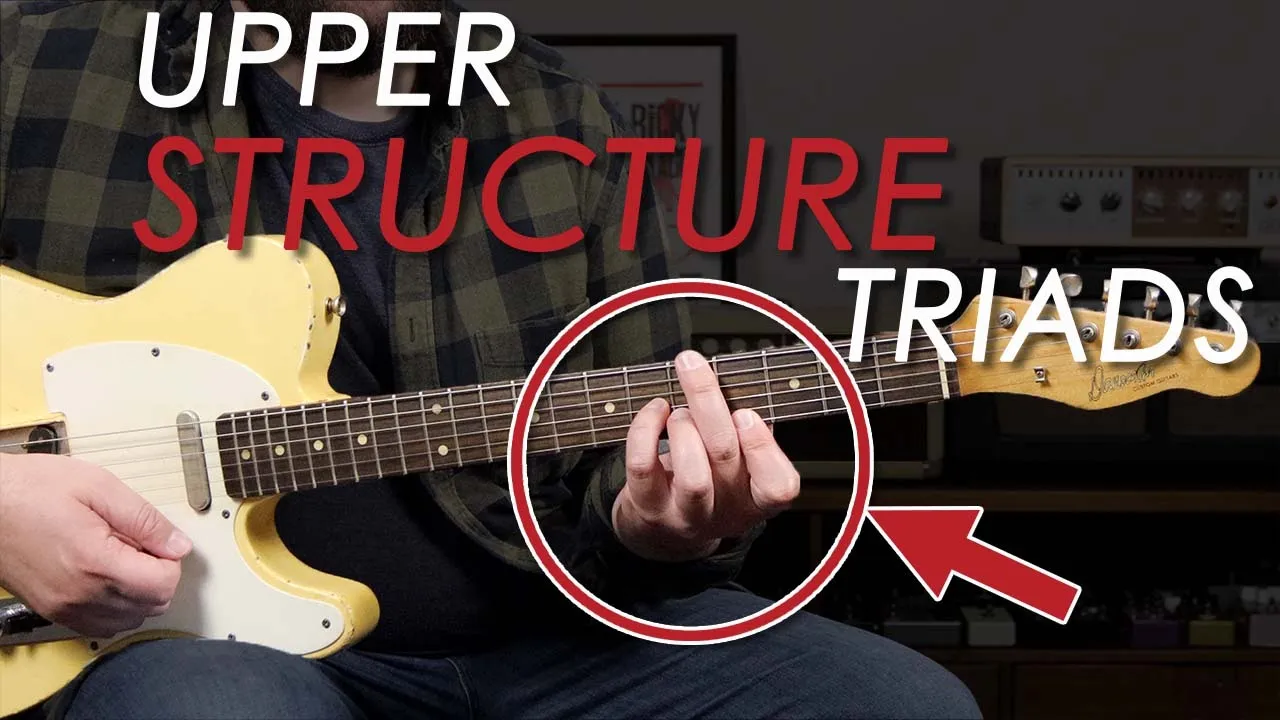

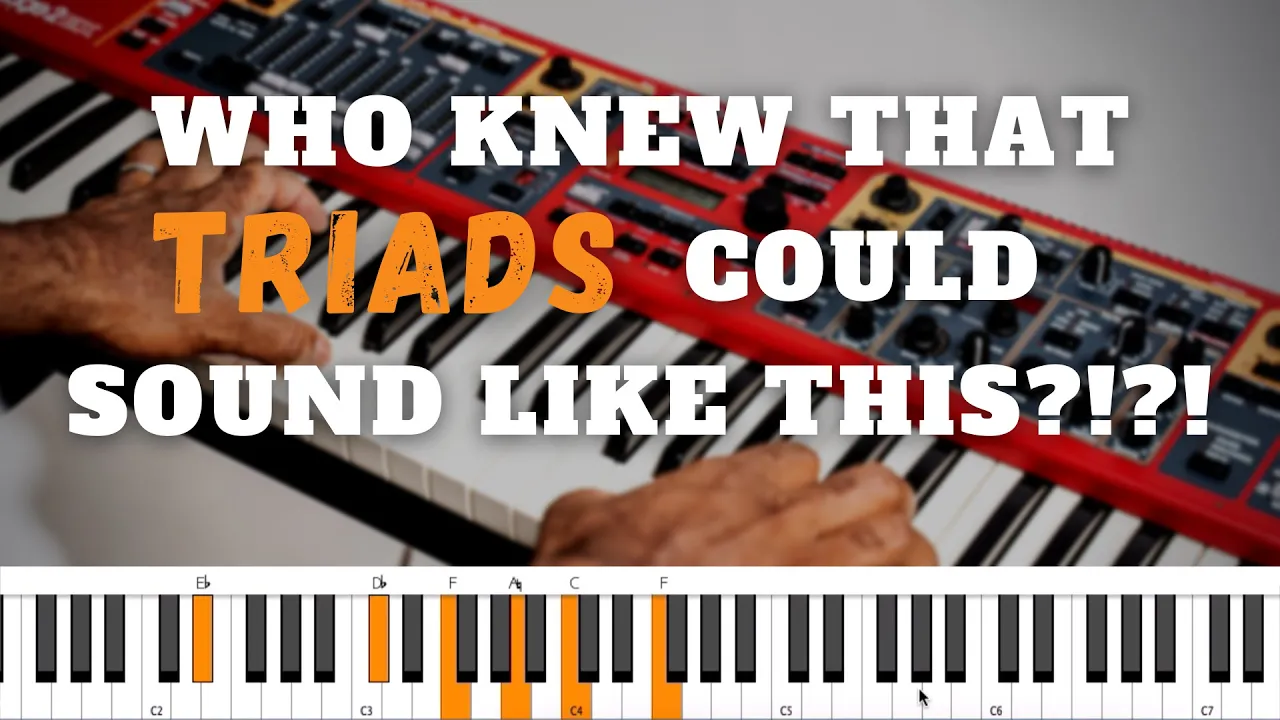
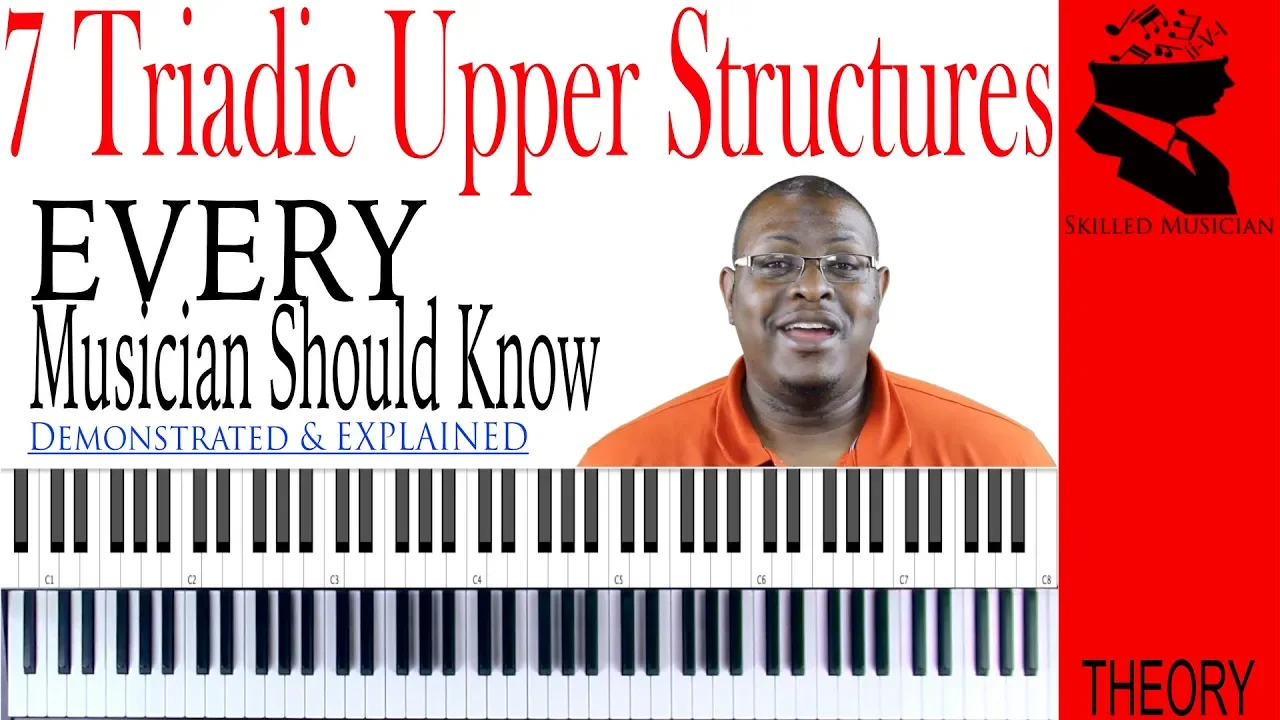


Upper structure triads are three-note chords built on top of dominant seventh chord shells (root, third, fifth, seventh), providing an efficient way to add extended tensions like flat 9, sharp 11, and flat 13 without memorizing complex tension combinations; there are seven primary types (minor/major triads built on flatted 2nd, 2nd, flatted 3rd, flatted 5th, flatted 6th, and natural 6th) that work over dominant seventh chords, and they are applied by voicing chords downward from the melody note, typically used selectively in arrangements rather than excessively throughout a piece.
Upper Structure Triads: Advanced Chord Voicings Tutorial
Added:Solid understanding of major, minor, diminished, and augmented triads, including their inversions.
Familiarity with the construction and harmonic function of dominant 7th chords, specifically the role of the 3rd and 7th (the tritone).
Basic comprehension of chord extensions (9ths, 11ths, 13ths) and alterations (b9, #9, #11, b13).
Experience with foundational jazz piano voicings, such as shell voicings or basic rootless A and B form voicings.
Applying upper structure voicings smoothly within standard jazz progressions, particularly the major and minor II-V-I.
Developing voice-leading techniques to connect upper structures fluidly from one chord to the next in a sequence.
Exploring upper structure triads over other chord qualities, including Major 7th, Minor 7th, and half-diminished chords.
Using upper structure triad shapes as a framework for melodic improvisation and soloing over dominant chords.
38K views906likes20:44Original Release: 2016-05-12
[Music] hello and welcome to hang with Willie episode 6 I am your host Willie mayette and today we are going to be working on upper structure Triads all right so what is an upper structure Triad well first of all let's take a look at just a basic shell of Accord here so basic dominant 7th chord this is just your basic block chord uh C7 chord root third fifth and 7th okay so now when we're looking at that chord we have to know like okay the root the third the fifth and the seventh we got to know those notes of the chords and then from there we want to start adding in tensions right like things like flat n sharp 11 you know maybe the seventh or maybe the 13th and a lot of times to have to think about those other tensions um and add them in it's a little bit more confusing so it's a lot easier just to think in terms of another chord built on top of that C7 chord so all an upper structure Triad is it is a Triad a three note chord built on top of your original uh uh dominant seventh chord so here's an upper structure Triad here's your C7 chord and then you have a D major Triad uh in the right hand okay now typically what happens is when you're playing these upper structured Triads the left hand is going to take out like that fifth maybe even the third as well you might even do um just the root and 7th or the root3 and 7th the exercises that I'm going to show you today we're going to use the uh root3 and 7th um now uh okay so and in the right hand I'm just playing that Tri it and a lot of times that Tri it in the right hand is going to be in some type of an inversion usually not root position but when I say usually not root position I'm not saying that it's never in root position okay it's just that a lot of times we want to move outside of that root position because it helps us to get away from the tertial aspect of the chord right tertial meaning built in thirds all right so like when we do something like this you can see it's all thirds thirds thirds or something like this you start to get fourths in there right and it do something a little bit uh a little bit a little bit of a different sound all right so anyway there are seven different types of uper structure Triads that work over dominant seventh chords before I get into them the question you might have is well do you have oper structure Triads from minor chords or for major chords yes you could do like a uh a D major chord over a major 7th chord and that gives you a major 7th with a sharp 11 uh on a minor chord you could do like a D Minor up here and this gives you the 9 11 and six all right but when we're talking upper structured Triads a lot of times in my mind at least I'm thinking dominant seventh chords okay because that's where you end up uh finding the most upper structure Triads that you can use one of those reasons is that on a dominant seventh chord you could throw in almost any note right the only note that's a real a void note is the major 7eventh even the sus 4 you can kind of get away with throwing that in there from time to time as well like doing you know doing that kind of stuff like all right so anyway um so let's take a look at the music here so like I said there are seven different upper structure Triads I want to go through each of the seven with you right now and I also want to show you how you can start to apply them to a song okay all right so the first one is a uh Minor triad built on the flatted second okay so the flatted second would be d flat or C sharp okay so what I've done here is I uh put this in first inversion okay so I have uh my third and my flat 13 and my flat n in the chord okay so the whole chord is is here is a C7 flat n flat 13 so we have root 3 flatted 7th thirdd flatted uh 13th and then my flatted nth now again can I do this absolutely I could play root position but I'm just showing you different inversions here okay so there's that first chord C7 flat 9 flat 13 all right let's take a look at uh the next one here this next one is a C7 sharp 11 and this is a D major Triad okay so a major Triad built on the second this gives me 9 sharp 11 133 I end up using this upper structure Triad quite a bit all right is a very popular one right the next one is a major Triad built on the flatted third okay so now we can also do A Minor triad built on a flatted third as well okay I didn't put that in here all right so this one gives me what gives me my fifth all right actually you know let me do this this is the way I'm playing right here so I repl the seventh down here okay so it gives me my root3 7 sharp 9 and five if I did a minor try it give me Shar 9 sharp 11 okay so there's that or there's that okay all right so now moving on four more here a major Triad built on the flatted fifth okay so flatted 5 g flat major Triad okay this is a a popular one as well this gives me flat n sharp 11 okay so real nice sound there the next one is a Minor triad built on the flatted fifth okay so if I make that a minor then that gives me my 13th there okay and then my sharp 11 and flat N9 and when I said that there's seven of these really you could say that there's there's eight right because we could do that uh the major and also the minor built on the uh flatted third okay so anyway this is another cool one right here right so flat 9 sharp 11 in different here whether you're going to play the seventh double the seventh or add in the 13th now this next one is very popular this is Major Triad built on the flatted sixth and notice that you end up getting the top note here is the C okay so this is an A flat major Triad okay so you get sharp 9 flat 13 next one which is also very popular is a major Triad built on the six and this gives me my third 13th and flat n okay so let's go through all of those again so we have built on the built on the uh uh flatted second Minor triad built on the flatted second major Triad built on the second major or minor Triad built on the flatted third okay nothing is going to be built on the third for you know because you get that b natural in there and also nothing on the fourth because that sus okay this would be fine if if you leave out the third down here you could use this as a sus4 chord voicing okay uh built on the flatted fifth either a major or minor Triad we don't build anything on the fifth because of that b natural we could say like oh we could do a minor but at that point we're only getting the the ninth in there so it's really not giving us much of attention all right but all right uh built on the flatted sixth built on the major six we don't do anything on the flatted 7th because again that's sus4 sound but if you wanted to use it for a sus four chord you can do that and then we're definitely not going to build anything on the major 7th because well we got the major 7th in there okay so flatted second Minor triad on flatted second major Triad on the second major or minor Triad on the flatted third uh major or minor Triad on the flatted fifth major Triad on the flatted sixth major Triad on the uh major 6th okay on the natural six all right so now now that you have all of these Triads that you can practice how do you use them all right well remember that you always voice a chord down from the melody okay now I have an example here of the Days of Wine and Roses so okay so F major 7 down to E flat 7 to D7 just playing chord shells down here just root 7th that's it for right now okay [Music] so okay so uh pretty simple so now what I need to know is I can either do this one of a couple of ways the first way is I can go into this all of these here and I could say all right so A Minor triad built on the flatted on this flatted second it works if the if the melody note is a flat is the flatted second if it's the third or if it's the flatted um uh 13th okay so any one of those notes so if so basically if I have a Melody note of an e well then I can do that chord voicing or if I have a Melody note of a C sharp or d flat I could do this chord voicing or what of an A flat I could do that chord voicing it just would depend on what in inv verion of that chord I'm going to play all right take a look at the next one here so this again would be flat 2 uh third or flatted 6 uh the major Triad built on the second this is 2 sharp 11 or 13 so if I have the 2 the sharp 11th or the 13th in the melody then I can use this one so let's take a look at this example here now we're really only going to use this on dominant chords for right now and where it really works well is when the Melody note kind of has a a moment of pause so I'm not going to do anything on these notes cuz they're kind of moving a little bit fast in here so I'm just going to do so but I'm going to use this as an opportunity right here this D7 chord as an opportunity to do an upper structure Triad now I said that there were two ways one way like I said you can go through all of those eight different chords seven different chords and figure out what notes you know uh the the Triads um uh pick from the scale okay so like again Triad built on the second you have the second the sharp four and the and the six okay so obviously this chord right here this is what D so that is my what it's the melody and it's also the root of the chord so I got to figure out what Triad uh has the root of the chord in it now one way in which I could do this is I could just build a Triad down from this note okay so I could say all right well I could build like what like a B flat major Triad from here right I could also do like what maybe a b Minor triad okay but the B Minor triad this is a a b Minor triad built uh A Minor triad built on the uh on the six right and we really didn't have that did we so we have a major Triad built on a six but we really didn't do a I'm sorry major Triad built on a six right here but we didn't really do a Minor triad built on a sixth let's go back to C and we'll see why A Minor triad built on a sixth really doesn't give me much does it gives me the third the 13th and the root these upper structure Triads we're trying to get more than just you know a nine or a 13 we're trying to get some alteration of those tensions a sharp nine a flat n a flat 13 a sharp 11 so back to my D7 if I do a major Triad built on the flatted six what do I have here now I have a D7 with a sharp n a flat 13 and the root now what about this next one this is the the flatted seventh what Triad could I make here well I could do a Minor triad built on a right but again just gives me my nine and fifth you know not not nothing uh real special that but what about a major Triad built on the flatted fifth on a flat okay or in sharp 11 however you want to look at that gives me flat n sharp 11 and then flat 7 so now check this out I wrote this out for you move this up so here on the on the F major I'm just playing the third the sixth and the seventh and then the melody note and I just if you can hold that melon note down great and then I just go down to the E flat 7 roote 7 3 and 13 check this out so you see I'm just playing root 37 here in the left hand and I do this upper structure Triad so this is the upper structure Triad built on the flatted sixth upper structure Triad built on the flatted fifth and if I want to I could play this um this left hand again here as well all right I could like play this again uh with the with those chords so um [Music] okay so that upper Str upper structure Triad gives me a really cool sound and the reason that the upper structure Triad is so useful is that I don't have to do a lot of heavy lifting in my brain and trying to think like oh what tensions am I going to put with this I could just build a Triad down from down from that note now let's say I want to do something like that maybe right even on here building on on the E flat okay so I'm on my third all right well what options do I have I can maybe do a minor Tri it on c yeah does it's okay you know I could do so you're going to notice that some of them are not going to work all that well now what you could do is go into here go into these chords and figure out which each one of these are all right so again like I said like let's take this one C7 with the flat n and the Shar 11 so flat 9 sharp 11 flat 7 okay flat 9 sharp 11 1 you'll notice that none of them here really have the third in them do they okay there's this one the Minor triad built on the where am I here the Minor triad right here so Minor triad built on the flatted second so if I went right over here and I tried doing A Minor triad built on the flatted second you know but but sometimes the tension is going to be too [Music] much but this is where you play around with it you use your ears a bit and you explore a little bit now upper structure Triads you don't have to use them a lot like you see how like in this line right here all I had to do is just use it right here on that D7 and it sounds really good in fact a lot of times better off to not use them a lot just use them in specific areas this again is just one of those techniques that you can use in your arranging okay remember that arranging techniques you never want to use one arranging technique over and over and over again in a song you're really a an arrangement of a song is going to be a multitude of different techniques that you put together right and then it creates that Arrangement all right so in other words uh so in here you might uh we might end up doing some kind of like you know do some kind of like diminished approach thing here like uh get away with that yeah we could probably do something do like some kind of diminish thing in here so I'm just hitting diminish chords I'm hitting diminish chords on on these three notes right here I'm building down building down making a g diminish a diminished and then C diminished so that's an interesting sound uh let's see can I yeah yes I can do like a drop two voicing so ah ah there we go there we [Music] go so obviously got to practice it and work it out but you know you get the idea that so now there's uh here I'm playing like this uh like kind of open Sound and chord voicing over here I was throwing in some diminished stuff over over here I'm using my upper structure Triads so the idea is that I'm not using the same technique over and over again all right so anyway what I want you to practice is uh if you're a member of piano with Willie download this music and try working through these upper structure Triads now I am going to be doing a lesson on upper structure Triads specifically that will be coming out in the next few weeks but you could get started with it by downloading this music and starting to take a look at these upper upper structure Triads and see how you can bring them into standards that you know okay so look for dominant 7th chords and look for a Melody note that's going to hang on a dominant 7th CHT like a half note or a whole note and then see if you can use these upper structure Triads all right so anyway that's it uh I will see you next Thursday in next Thursday's hangout all right take care [Music]
Up Next
41:14
Mastering Chord Progressions: Piano Techniques & Tips
@PianoteOfficial
187.6K views•2017-10-11

12:54
Triumph of Orthodoxy Icon: Byzantine Art & History Explained
@BenCallan
2.1K views•2024-08-06

9:49
FastAPI vs Flask vs Django: Choosing the Right Python Web Framework
@TechWithTim
302.5K views•2024-05-26

1:42
Game of Thrones Opening Credits: A Cinematic Analysis
@gameofthrones
46.3M views•2011-04-18
Related Study Plans & Knowledge Roadmaps
Structured learning paths in General & Interdisciplinary Studies
general-studies
Elevator Engineering: History, Physics & Cities
01From Hoists to Safety Brakes: The Dawn of Vertical Lift
02Hydraulic vs. Traction: The Engineering Physics of Elevators
03Modern Speed, Safety, and Algorithms
+ 2 more learning modules
12h5 modules
Explore Roadmap
general-studies
Rubber: Material Science, History & Geopolitics
01Origins of Natural Rubber & Mesoamerican History
02The Chemistry of Natural Rubber & Vulcanization
03The Geopolitics of the Rubber Boom & Colonization
+ 2 more learning modules
12h5 modules
Explore Roadmap
general-studies
Containerization: Evolution, Logistics & Trade
01Ancient Trade & Bulk Cargo: Amphorae to Barrels
02The Industrial Revolution & Cardboard Packaging
03The Containerization Revolution: Malcom McLean
+ 2 more learning modules
12h5 modules
Explore Roadmap
general-studies
Textile Tech: Evolution, Labor & Global Impact
01Pre-Industrial Textiles: Handloom & Cottage Industry
02Mechanization: The Spinning Jenny to the Power Loom
03The Factory System & Global Labor Transformation
+ 2 more learning modules
10h5 modules
Explore Roadmap