
















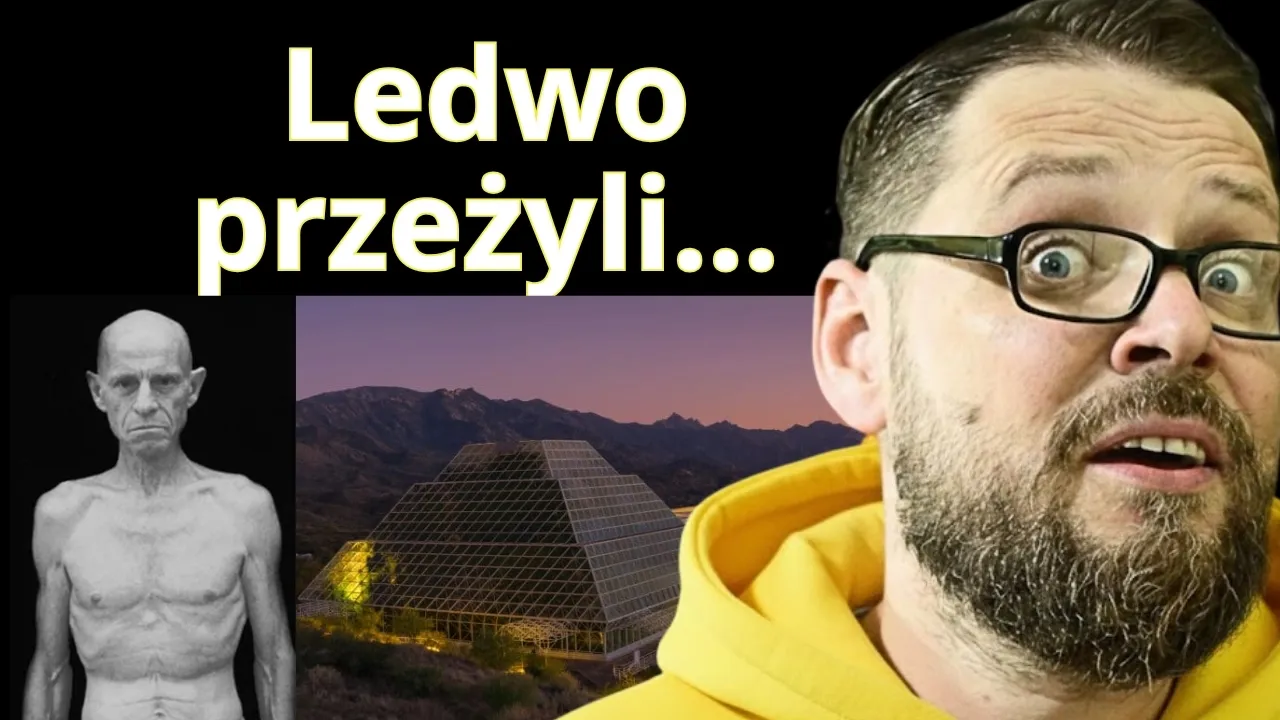





Biosphere 2, a 3.14-acre closed ecosystem built in the Arizona desert, was designed to replicate Earth's environments (including rainforest, ocean, and desert) as a prototype for space colonization; however, during the 1991-1993 experiment where eight researchers lived inside for two years, oxygen levels dropped dramatically due to unexpected factors like active soil microbes consuming oxygen and uncured concrete undergoing chemical reactions, revealing how difficult it is to accurately replicate Earth's complex ecological balance in controlled environments.
Exploring Biosphere 2: A $200M Experiment in Closed Ecosystems
Added:Basic principles of biogeochemical cycles (carbon, nitrogen, and oxygen cycles) and how they maintain atmospheric balance.
The concept of closed vs. open thermodynamic systems, specifically how matter is recycled while energy flows through.
Fundamentals of photosynthesis and cellular respiration, and how these processes balance gas exchange in an ecosystem.
An understanding of food webs, trophic levels, and biome classification (e.g., rainforests, deserts, oceans).
Advanced design of Controlled Ecological Life Support Systems (CELSS) for long-duration space missions and colonization of Mars or the Moon.
The study of concrete carbonation and soil microbiology's impact on atmospheric composition in sealed environments.
Synthetic ecology and ecosystem engineering, focusing on how to construct stable, artificial ecosystems from scratch.
The psychological and sociological impacts of long-term isolation on small crews in confined environments (ICE dynamics).
7.4M views307.4Klikes16:09Original Release: 2020-07-30
[Music] we are about to explore the largest and arguably most ambitious structure ever created as an attempt to replicate earth what you're looking at right now is a 3.14 acre closed ecosystem that amongst many other things has its own rainforest ocean and lungs its inventors called it biosphere 2 with biosphere 1 being planet earth the main purpose of biosphere 2 was initially to create a prototype for colonizing space and in 1991 eight researchers actually committed two years of their lives living inside of this closed experiment to understand if it could work if you're like us you're probably wondering why you haven't heard about this place earlier what happened to the experiments and do they still use it today well for our first adventure properly back into filming this summer we decided to go to the arizona desert where it's located to find out [Music] if you're watching this video on the day we posted it today is seekers day seekers day is an annual tradition we're launching to celebrate the start of yes theory back in the summer of 2015. as a part of that and after endless requests we are bringing back all of the best-selling items from seekdiscomfort.com and made all of them accessible for 30 off only for the next 48 hours we'll only be doing this once a year on select designs so if you've ever thought about buying seek discomfort but haven't yet now would be an amazing time however secret day isn't only about celebrating the start of yes theory it's also about celebrating our community and a few months ago we had actually tried to create a drive-in graduation ceremony for some of the graduates in our community that didn't get one this year but since that idea got cancelled we decided to invite one of the incredibly inspiring graduates that i got to talk to with her older sisters of resume symphony a 17 year old high school graduate from east la who's demonstrated incredible drive in the pursuit of her dreams despite a really tough upbringing which we'll get into later on in the video and when we called her two days before leaving asking if she'd be interested to go on this unusual adventure with us she was excited but before leaving and before meeting in person everyone going on this trip went to do a precautionary coronavirus test and we had another one scheduled for when we got back over here you can't tell but i'm smiling we got tested today right yes so we're good yeah yeah how are you doing i just want to say how inspired i am by you and your story and just like the love that you guys share wow thank you so much there's been like really really tough times this past year for us specifically for symphony i mean imagine trying to like get out of high school and get into college not only during a pandemic but also she was like houseless for a while because our mom was going through a lot of difficult things she literally submitted her college applications in like motel rooms because she didn't have anywhere else to stay every time we kind of felt like just even like a little down your guys's videos are just like so uplifting and have this like really beautiful and positive energy we are approaching the entrance of biosphere 2.
[Music] hi this is uh ammar from yes theory what are we rolling into right now [Music] so biosphere 2 is essentially a small scale earth in a building it has a rain forest an ocean a desert underneath all that biology is two acres of technology that run it all overall it was a success and i think the thing that they came out of is that they learned how much we don't know about earth like how hard it is to replicate earth so we should probably take care of it did they ever like have rain in there so we and we'll make it rain in there today too so we can make it rain we're gonna make it rain [Music] is this it that's your territory [Music] this is supposed to simulate the the ocean environment like there's a full marine biology existing in there how crazy must have been living here for two years not never leaving outside i'd be down to something like that of course you will oh absolutely what are the odds that you can cliff jump that's funny because i knew you were gonna ask me that i he tomorrow is gonna ask me to cliff jump [Applause] what [Applause] this is like an absolute architectural marvel it's so amazing how novel everything is for symphony she's never been to a rainforest she's never left the country so like everything to her is so new which is just beautiful to watch we're in the middle of the rain now this is so cool it is actually raining indoors right [Music] this way you can taste the crops of the lamb this is biosphere banana basket banana in the rain it's just interesting to think about this existing to replicate the earth's environment that we could potentially bring to other planets the atmosphere that was in here was the atmosphere that stayed in here for those two years so that was one of the main problems they actually had inside is that about 500 days in their oxygen levels plummeted and they had no idea why this led to them having to pump oxygen inside biosphere 2 an adjustment they initially tried to keep a secret but when it leaked to the public it resulted in conspiracy and scrutiny from the media there is a potential problem at the biosphere near oracle calling the entire operation dishonest and a failure from its initial goal of not taking anything in from the outside world the story is quite complex and there's actually a documentary made about this entire thing but a lot of people don't know however is that despite its past biosphere 2 still flourishes today is owned by the university of arizona and is the home of countless ground-breaking experiments to study and better understand our ecosystem did they ever find out why they did so two reasons they brought in soil that was had a lot of microbes in it and it was really active so it used up a lot of that oxygen and then there's a lot of concrete in here right all of this is fake rock it's all concrete and they didn't let the concrete cure for long enough so there was a chemical reaction happening there those are the kind of things that if you're thinking about going to another planet gotta figure that stuff out so this is the original uh dining room and kitchen this is where they live and this is their apartment [Music] so this is our landscape evolution observatory leo it's our flagship research project and it's a massive free massive hill slope that they're doing all kinds of landscape research on how's the soil looking it's great healthy good the three slopes are good to get out of my face [Music] follow me are you freaking out over the ground all right we're walking through the desert i've been filming and observing in here for about 27 years only had a couple of beds haven't seen him though seems like any time i try to look at them everything goes to darkness so how much of this space is underground about two acres the visually stimulating stuff is up there but the real complicated science is all down here [Music] so this is the lung it's essentially what kept the biosphere from exploding air needed to go to expand when it got warm and contract when it got cool if they didn't have a place for it to go to expand and contract it would have blown out the windows so they built this so above you is about 40 000 pounds that is completely held up by air pressure that's the only thing she's not propped by anything nope she's about to open the door which is gonna change the air pressure in here and we're gonna notice the rubber move a little bit oh it's free it's going down it's lowering [Music] wow 40 000 40 000 pounds wait hold it and see how much it's changing look stand next to it oh it's going up that is the biggest thing i've ever moved we actually have the world's largest experimental ocean there's no other tank in the world that's this big that you can do scientific research in wow this is massive this is so cool we never let people swim in here unless they're research staff so have you never snorkeled before no oh my god walk you through it girl you ready [Music] we left biosphere 2 feeling incredibly grateful for the unique experience we got to share alongside symphony and at this point as we were leaving the facility we thought our adventure was over but after getting back to our hotel and getting to know more about symphony we realized that there was a lot more to her story than we had originally thought symphony has such a bright future ahead of you an art oh thank you all right i've only seen like three or four pieces i can't even imagine like you're saying you're making a mural yeah i'd love to see more that perspective on life didn't necessarily come easy i want to explore that more and capture a part of that story because i feel there is so many people out there that will be inspired by just your perseverance and just who we are as a human and i can't i mean i want to inspire people you know like how someone will see the arts and think like well if they could go through that and be okay then like i could do you know and not only be okay but like thrive and like heal from that as a collective unit together and i think that's really cautious there was a period of time in my life where you know my mother and her ex-boyfriend weren't exactly getting along me and my mom found ourselves sleeping in the car and consistently i'd have to like brush my teeth and get ready in the school bathroom we would sleep on people's floors sometimes or couches um and you know whether that was like family every time someone was like screaming or you know when my back hurt because the floors were really hard but coming to realize that like this this isn't this isn't just my story there's there's other people at school who've gone through the exact same thing it really could have been so much worse but it wasn't because of like this lovely energy that like my sisters would give us and it was very powerful and it was like this battery it was kind of like well this is a story something i could make some art about or write a poem about i i just can't wait to to watch the journey unfold of you and your art and how much that's going to inspire people the way you've navigated the pain and the trauma in your life right like you're not letting it build up inside of you and you're already are expressing through what you're creating it's a new phase it's a new chapter and you're going to have your own space soon you're gonna feel so free and i'm so excited for you that you've made it through all of that craziness to the point where you're going to one of the best colleges in the us basically what's your dream symphony oh my and there's too many to count yes that's exactly the right answer we were so moved by symphony story that on our way back to la the next morning we decided to organize something very special for her we have a three-part gift for you this is part one oh blick that's right yes thank you guys the third part is this is what we're most excited about because of you we decided to start a new tradition in yes theory so we decided to launch the seek discomfort scholars program and we would love to give you a ten thousand dollar scholarship for the next four years to support you through any expenses anything you want to get your goods i really appreciate it you deserve it it's really amazing because i'm i was a little shaky on um you know college and and how like the prices were bumped up and this is like this is more than enough so much more than i could have asked should i hold it [Applause] [Music] up [Applause] seek discomfort has now become the fuel allowing yes theory to grow and scale its positive impact on the world in the past few months alone thanks to you seek discomfort was able to donate a quarter of a million meals to food banks all over america raised over forty thousand dollars to various black lives matter organizations and contributed eighty thousand dollars in funding for dreamers and our community all of this is only possible because of you so thank you for having our backs and being a part of the past five years with us here's to many more you
Up Next

17:54
ISS Expedition 74 Change of Command Ceremony | NASA
@NASA
135.9K views•2026-01-12

26:22
Walking in the City: Urban Rituals and the Flâneur in Contemporary India
@PSBTIndia
1.9K views•2016-08-02

9:49
FastAPI vs Flask vs Django: Choosing the Right Python Web Framework
@TechWithTim
302.5K views•2024-05-26

1:42
Game of Thrones Opening Credits: A Cinematic Analysis
@gameofthrones
46.3M views•2011-04-18
Related Study Plans & Knowledge Roadmaps
Structured learning paths in General & Interdisciplinary Studies
general-studies
Artificial Light: History, Tech & Human Impact
01The Pre-Electric Era: Fire, Oil, and Gas Lighting
02The Incandescent Revolution and Grid Electrification
03Gas Discharge and Fluorescent Illumination
+ 3 more learning modules
14h6 modules
Explore Roadmap
general-studies
Elevator Engineering: History, Physics & Cities
01From Hoists to Safety Brakes: The Dawn of Vertical Lift
02Hydraulic vs. Traction: The Engineering Physics of Elevators
03Modern Speed, Safety, and Algorithms
+ 2 more learning modules
12h5 modules
Explore Roadmap
general-studies
Rubber: Material Science, History & Geopolitics
01Origins of Natural Rubber & Mesoamerican History
02The Chemistry of Natural Rubber & Vulcanization
03The Geopolitics of the Rubber Boom & Colonization
+ 2 more learning modules
12h5 modules
Explore Roadmap
general-studies
Containerization: Evolution, Logistics & Trade
01Ancient Trade & Bulk Cargo: Amphorae to Barrels
02The Industrial Revolution & Cardboard Packaging
03The Containerization Revolution: Malcom McLean
+ 2 more learning modules
12h5 modules
Explore Roadmap