

















Cell cycle regulation controls the orderly progression through four phases (G1, S, G2, M) via cyclin-dependent kinases (CDKs) and their regulatory partners called cyclins; CDKs are serine-threonine kinases that become activated when bound to specific cyclins, forming complexes that drive cell cycle transitions, while CDK inhibitors like p27 prevent excessive division by blocking kinase activity; when these regulatory mechanisms fail, cells undergo uncontrolled division leading to cancer.
Cell Cycle Regulation: Key Roles of CDKs and Cyclins
Added:Understanding the basic stages of the cell cycle (G1, S, G2, and M phases) and the overall purpose of mitotic cell division.
Fundamental knowledge of protein structure and function, particularly how enzymes (kinases) catalyze reactions through phosphorylation.
The concept of DNA replication and the significance of maintaining genomic integrity during cell division.
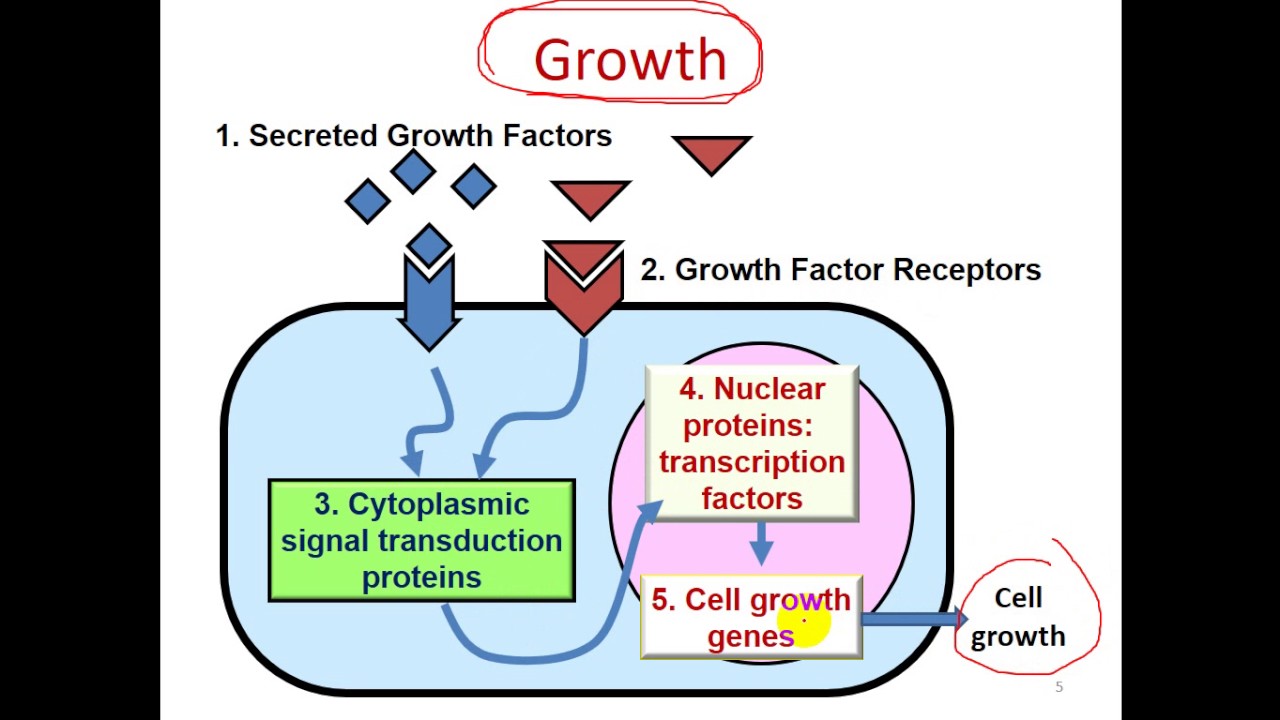
A basic understanding of cellular homeostasis and how cells interpret external signals like growth factors.
In-depth study of specific tumor suppressor proteins, such as p53 and Retinoblastoma (Rb), and how they interact with CDKs.
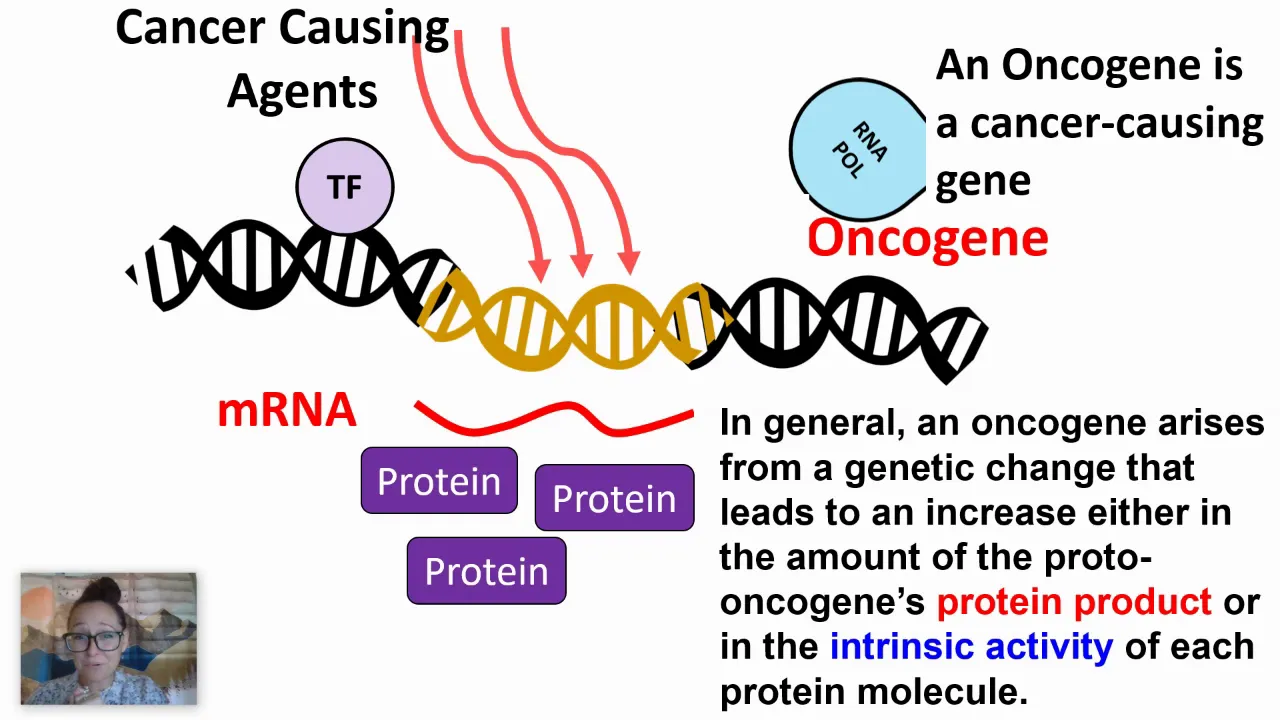
Exploration of proto-oncogenes and oncogenes, and the specific genetic mutations that lead to aberrant cell cycle progression.
The biochemical pathways of apoptosis (programmed cell death) triggered when cell cycle checkpoints detect irreparable DNA damage.
Modern clinical applications and cancer therapeutics, such as FDA-approved CDK4/6 inhibitors used in targeted cancer therapy.
67.5K views47likes4:12Original Release: 2023-11-14
Hi viewers. Today, we will discuss cell cycle regulation.
We'll start with the basic phases of the cell cycle, the factors involved in regulating the cell cycle and the checkpoints.
Then we will move to the significance of CDKs and cyclines in controlling the cell cycle.
You all must have heard about cancers.
It is one of the major therapeutic challenges in health care.
Do you know what's common among all cancerous cells?
Even normal cells do divide, but how are they different from cancerous cells?
Confused? We are here to help.
Let's begin with understanding how a healthy cell undergoes division.
A typical cell cycle is divided into four major phases.
They are: G1 phase, S phase, G2 phase, M phase.
The G1 phase will start the accumulation of 20 00:01:01,160 --> 00:01:03:100 metabolites that are used in the M 21 00:01:03:100 --> 00:01:06,200 or mitotic phase of the cell cycle.
At the start of each cell phase, cell cyclins get released and help in programming various cellular events and help in cell division as well.
You must be wondering what these cyclins are, and why they are called so.
They are called so because they have a cyclic box structure, and their concentrations vary cyclically.
Cell cyclin is regulated by various cell-dependent kinase (CDKs) factors involving the role of co-enzymes.
CDKs get activated upon binding with cyclins.
CDKs are usually low molecular weight, and range from 34 to 40 kDa.
The CDK has an affinity and binds with the specific receptors on the cyclins, and forms the CDK-cyclin complex.
The CDK alone is less active than the CDK-cyclin complex, which forms a more active and stable protein.
The CDK will usually bind with the serine-threonine and phosphorylate them.
Hence, it is also called a serene-threonine kinase.
The cell cycles get inhibited by various processes, like phosphorylation and CDK inhibitors.
The inhibitors will bind with the CDK-cyclin complex and inhibit the kinase activity when the cycle has synthesized enough cellular material.
P27 proteins regulate the inhibition of kinase in humans.
Now, let's learn about a few CDKs involved in the cell cycle during various phases.
The CDK and cyclin pairing is specific and it works at a particular phase of the cell cycle, thereby making the cell cycle regulation, giving a specific outcome in every phase of the cycle.
The correlation of cell cycle and cyclin-CDK complex is as follows.
The cell cycle regulation is not just the inhibition of cell division.
Instead, it controls every aspect of the initiation of cell divisions as well.
This means that both the transition from one cell division phase to the other, and the restriction to a particular phase for a certain period are impacted.
Now, we know what is common in every type of cancerous cell.
It's the uncontrolled division ability of cells which leads to cancer.
Any one or many regulatory checkpoints in the cell division process are affected in such cases.
Such uncontrolled division is also accompanied by skipping certain processes of the cell division event, such as the formation and arrangement of the cell cycle.
So in this video, we have learned all about the basic aspects of cell division and regulatory mechanisms.
We also understood what happens when these regulatory mechanisms are not functioning properly. 92 00:03:57,230 --> 00:04:00:160 We hope that the video was helpful to you. 93 00:04:00:160 --> 00:04:02,000 Thanks for watching.
Up Next
6:43
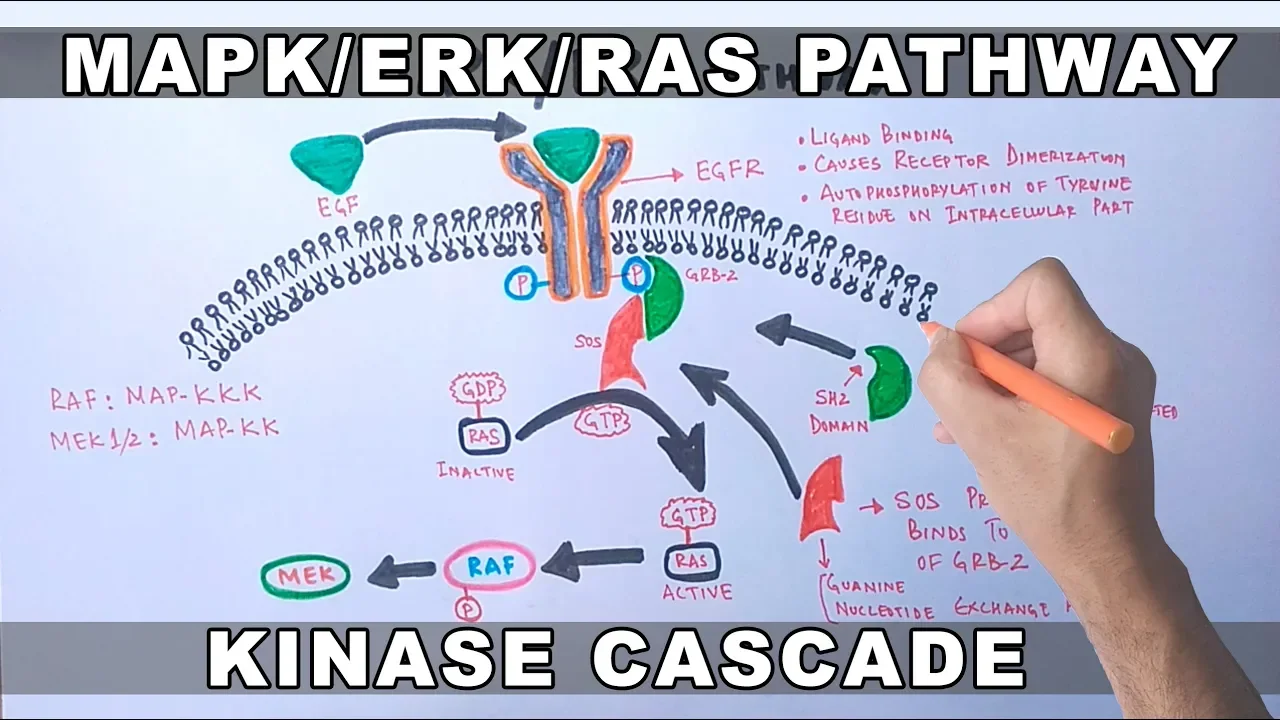
MAPK/ERK Signaling Pathway Explained: Ras-Raf-MEK-ERK Cascade
@hussainbiology
207.5K views•2018-07-09
50:12
Bacterial Communication: Quorum Sensing and Biofilm Formation Explained
@JHUAAP
12.6K views•2011-06-28

5:35
Enteric Nervous System Explained: The Gut's Brain | Neurobiology Lecture
@alumniu6029
438 views•2018-09-12
7:08
Bacteriophages: Earth's Deadliest Killers and Future Antibiotics
@kurzgesagt
34.6M views•2018-05-13
Related Study Plans & Knowledge Roadmaps
Structured learning paths in Biology
biology
RNAi: Biogenesis, RISC & Gene Silencing
01Molecular Biology Foundations: DNA to Protein
02Introduction to RNA Interference (RNAi)
03Molecular Biogenesis of miRNA and siRNA
+ 2 more learning modules
10h5 modules
Explore Roadmap
biology
Mycorrhizae: Signaling, Biophysics & Ecology
01Foundations of Mycorrhizal Symbiosis
02Molecular Signaling and Root Colonization
03Biophysics and Bioenergetics of Nutrient Exchange
+ 1 more learning modules
11h4 modules
Explore Roadmap
biology
Circadian Clocks: TTFL, SCN & Periphery
01Foundations of Molecular Biology & Gene Expression
02Introduction to Chronobiology and Actograms
03The Core TTFL: Molecular Architecture of the Clock
+ 3 more learning modules
14h6 modules
Explore Roadmap
biology
Population Genetics: Math, Drift & Selection
01Genetic & Probability Foundations
02The Hardy-Weinberg Principle and Baseline Models
03Mathematical Modeling of Natural Selection
+ 3 more learning modules
18h6 modules
Explore Roadmap