






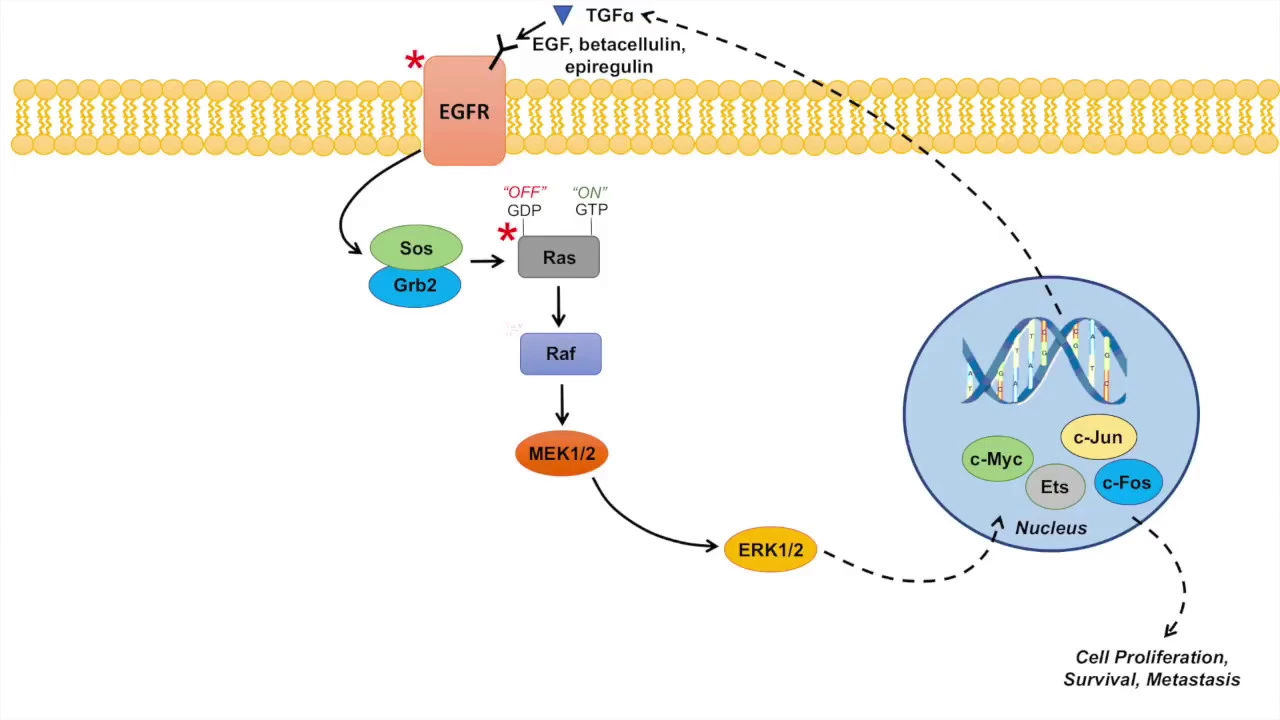

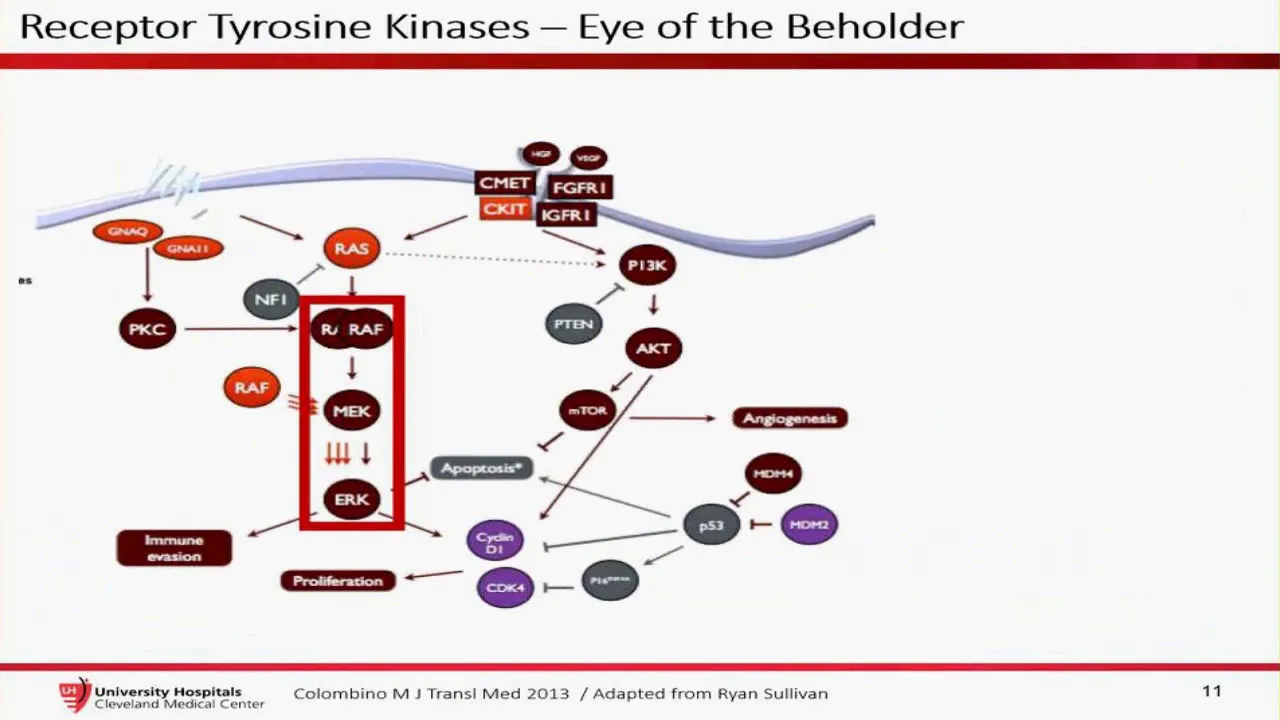








The MAPK/ERK pathway (Ras-Raf-MEK-ERK pathway) is a kinase cascade that transmits signals from cell surface receptors to the nucleus, where ERK activates transcription factors like c-Fos, c-Jun, and c-Myc to regulate gene expression; the pathway begins when EGF binds to EGFR, triggering receptor dimerization and autophosphorylation, followed by recruitment of GRB2 and SOS, which activates Ras, then sequentially activates Raf, MEK, and finally ERK, with signal termination achieved through negative feedback mechanisms involving S6 kinase and GAP proteins that hydrolyze GTP to GDP.
MAPK/ERK Signaling Pathway Explained: Ras-Raf-MEK-ERK Cascade
Added:Understanding the structure and activation mechanism of Receptor Tyrosine Kinases (RTKs), specifically ligand-induced dimerization and autophosphorylation.
The biochemical principles of protein phosphorylation, including the opposing roles of protein kinases and phosphatases.
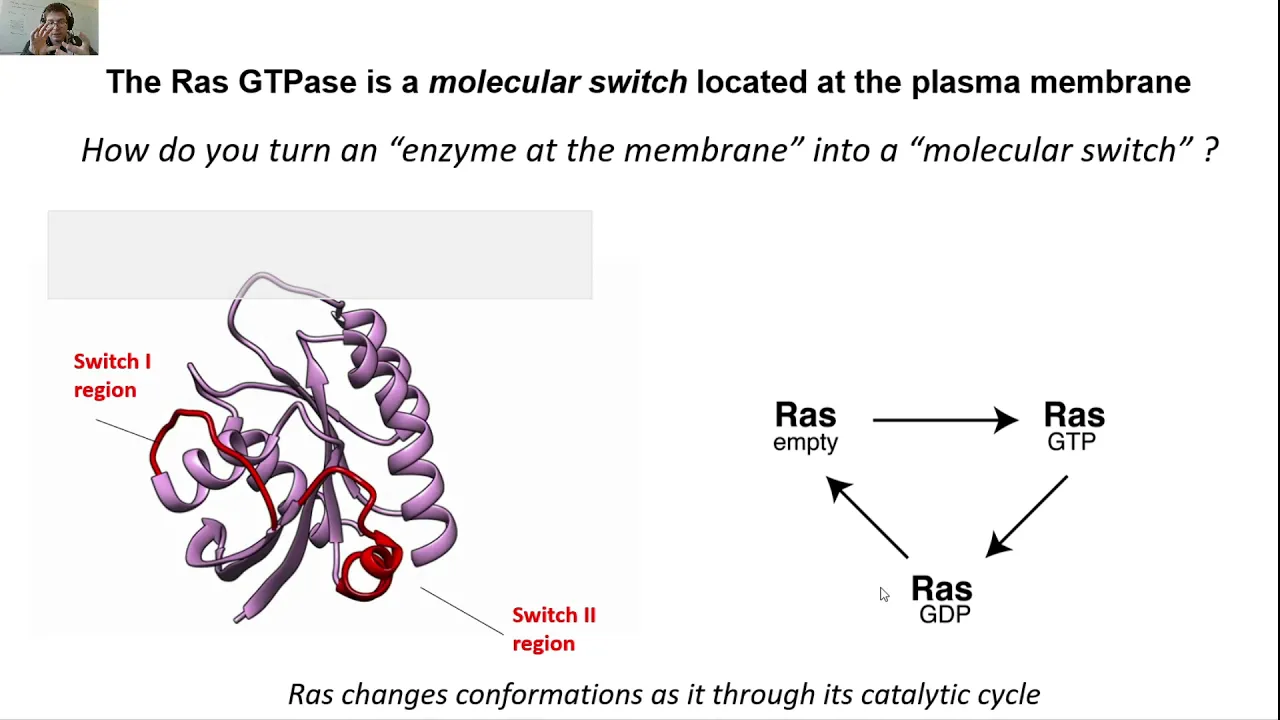
The function of small monomeric GTPases (such as Ras) as molecular switches regulated by GEFs (Guanine Nucleotide Exchange Factors) and GAPs (GTPase Activating Proteins).
Basic eukaryotic cell biology, specifically how external signals alter gene expression via transcription factors in the nucleus.
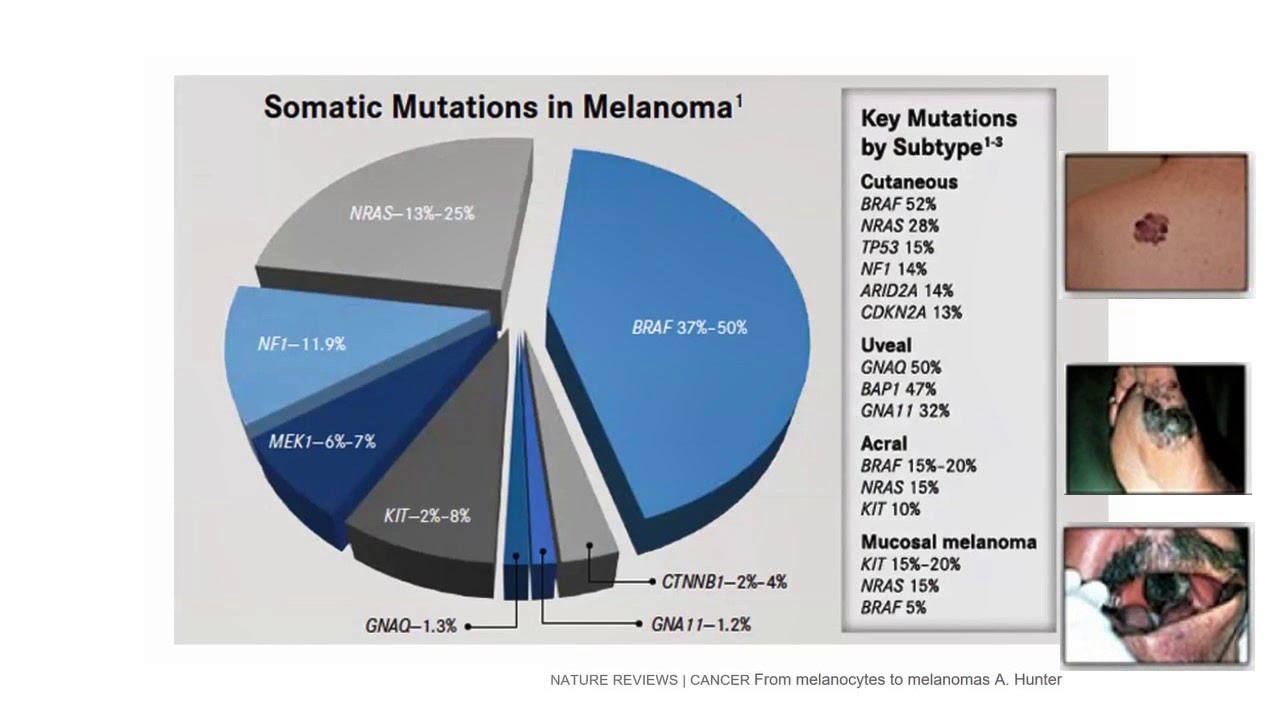
The role of aberrant MAPK/ERK signaling in oncogenesis, particularly mutations in KRAS and BRAF (e.g., BRAF V600E in melanoma).
Pharmacological inhibition of the cascade, focusing on targeted cancer therapeutics like BRAF inhibitors (e.g., vemurafenib) and MEK inhibitors.
Crosstalk between the MAPK/ERK pathway and parallel survival pathways, such as the PI3K/Akt/mTOR signaling network.
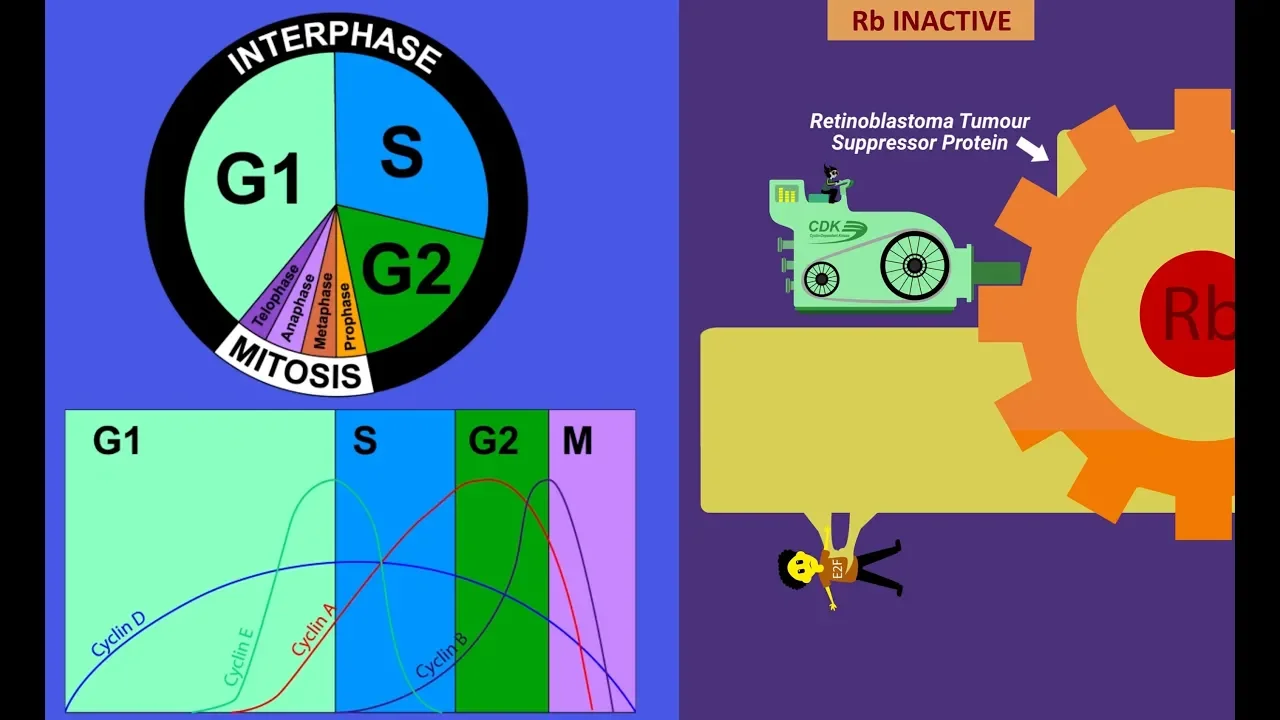
Detailed cellular outcomes of ERK activation, including its direct regulation of the cell cycle machinery (e.g., Cyclin D synthesis and G1/S transition).
Feedback regulation mechanisms, such as the induction of Dual-Specificity Phosphatases (DUSPs) and Sprouty proteins that terminate the signal.
207.5K views4.9Klikes6:43Original Release: 2018-07-09
in the previous video we discussed about the MAPK pathway in C elegans if you want to watch that video first you can click the link from I button or you can find it in the description now in this video we'll be discussing about MAPK or Yeerk pathway in mamillus first of all let's see what are the signaling molecules in this pathway and general overview op MAPK pathway the signaling molecule or we can say an ligand in this pathways EGF there is the epidermal growth factor and Pinal regulatory protein in this pathway is ERG or you can say mapk from which this pathway gets its name the ERG stands for extracellular signal regulated kinase and mapk is acronym for mitogen-activated protein kinase the ER KR MAPK molecule will act as a switch for various transcription factors which we will see later on in this video the mapk or Yeerk pathway is also known as map kinase pathway since it activates a cascade a kinase cascade through signaling now let's see this pathway in detail in the cell membrane we have got EGFR protein that's the epidermal growth factor receptor it's just like article receptor with two monomers as shown in the figure then on the outside of the cell we have got a signaling molecule in the form of EGF that's epidermal growth factor to initiate the signal this EGF binds to the EGF receptor which causes the dimerization of receptor due to auto phosphorylation of tyrosine residues on the intracellular part of receptor as you can see in this diagram then after that the receptor dimerization will now signal the molecules in the cell and the first molecule to be recruited is the adapter molecule GRP to the grb-2 protein has sh2 domain as shown in the figure and this grb-2 protein will talk to the phosphorylated tyrosine through its sh2 domain and gets activated then this activated grb-2 molecule now recruits another molecule polar the SOS son of salmon less this SOS gets attached to the sh3 domain of grb-2 just beneath the SS to domain remember the SS molecule because it's one of the essential molecules in this pathway it is the county nucleotide exchange factor because this molecule has capability to replace GDP per GDP it replaces GDP from inactive molecule and makes them active man it binds the GTP molecule but the target molecule simply we can say gdp is replace it and gtps attached' by this SOS protein or you can say SS molecule here in this case this SOS acts on ras molecule which has gtp bound as shown in the diagram so it's in inactive form but this SOS replaces the gdp molecule with GTP on ras thus rendering this Ras molecule in its active form now from here the kinase cascade kicks in from here the activated ras postulates the raf molecule the raf is also named as ma p triple k there is the map kinase kinase kinase furthermore this postulated Reb molecule in turn postulates and activates the M ek molecule the m EK is also named as ma p double k that's map kinase kinase and finally immediate targets and possibilities the final molecule that is the ER k12 also named and as map kinase a single kinase now this molecule is the outcome knob kinase cascade and this ER key or ma pika molecule will now act on different transcription factors and regulate their function the ER k12 has two target sites either it targets the cytoplasmic substrates or it directly gets into the nucleus and targets the transcription factors it depends upon the type of signal which transcription factor is to be targeted first of all let's see the targets in cytoplasm we see there are two important inscription petals that are acted upon by MAPK molecule that includes c pause and c-jun the mapk dimerizes both these petals see pause plus C June and the dimer acid molecule is now called as activator protein one from here this AP one gets into the nucleus while it binds to the DNA molecule on its ap one motive and initiates the transcription another cytoplasm target op MAPK is the RSK that's ribosomal s6 kinase the mapk activates the p90 form of our sk just remember it it is the p90 form of our sk which includes s6 protein the activated s6 molecule has two different functions first of all it negatively regulates the SS molecule that means it inactivates the SS protein in the pathway and the other function op s6 is to regulate the transcription factors while it gets into the nucleus and regulates the creb transcription factor or CREB transcription factor now let's see which transcription factor is directly activated by MAPK in the nucleus we see there is a one essential molecule one essential transcription factor which is totally activated by MAPK told you that is the m.i.c molecule this myc molecule is activated by MAPK molecule so this is how the MAPK molecule regulates multiple transcription patrols depending upon the type of signal but still the question is how the signal is stored since it has to be stopped somewhere the Essex molecule has already stated that it negatively regulates the SS molecule we know the SS mole could activate the res molecule in the pathway so if this SOS molecule is made inactive the cascade will cease to exist this is one way to stop the signal but not only this but there's another molecule called G AP molecule which hydrolyzes the gtp toyotas GDP form thus rendering the RAS molecule in its inactive state the former state thereby stopping the kinase cascade also this illustrates us how the MAPK signal is regulated so this was all about ERG or MAPK signaling I hope you liked the video if you liked it give it a thumb up and made sure to subscribe this channel thanks
Up Next

28:31
Cell Cycle Control: An Introduction by David O. Morgan | UCSF
@scicommlab
43.5K views•2010-06-03

50:12
Bacterial Communication: Quorum Sensing and Biofilm Formation Explained
@JHUAAP
12.6K views•2011-06-28
3:29
Autophagy and Mitophagy: Pathway and Mechanisms Explained
@hussainbiology
102.1K views•2020-03-11

7:08
Bacteriophages: Earth's Deadliest Killers and Future Antibiotics
@kurzgesagt
34.6M views•2018-05-13
Related Study Plans & Knowledge Roadmaps
Structured learning paths in Biology
biology
RNAi: Biogenesis, RISC & Gene Silencing
01Molecular Biology Foundations: DNA to Protein
02Introduction to RNA Interference (RNAi)
03Molecular Biogenesis of miRNA and siRNA
+ 2 more learning modules
10h5 modules
Explore Roadmap
biology
Mycorrhizae: Signaling, Biophysics & Ecology
01Foundations of Mycorrhizal Symbiosis
02Molecular Signaling and Root Colonization
03Biophysics and Bioenergetics of Nutrient Exchange
+ 1 more learning modules
11h4 modules
Explore Roadmap
biology
Circadian Clocks: TTFL, SCN & Periphery
01Foundations of Molecular Biology & Gene Expression
02Introduction to Chronobiology and Actograms
03The Core TTFL: Molecular Architecture of the Clock
+ 3 more learning modules
14h6 modules
Explore Roadmap
biology
Population Genetics: Math, Drift & Selection
01Genetic & Probability Foundations
02The Hardy-Weinberg Principle and Baseline Models
03Mathematical Modeling of Natural Selection
+ 3 more learning modules
18h6 modules
Explore Roadmap