












![Kryminalistyka: Alphonse Bertillon i antropometria [Inna Historia] | NIEDIEGETYCZNE](https://i.ytimg.com/vi_webp/MntHfwVq7rs/maxresdefault.webp)







Victorian detectives solved crimes using primitive but effective forensic methods including magnifying glasses, measuring tapes, plaster casting, and blood spatter analysis, while relying heavily on observation, intuition, and physical evidence such as fingerprints, clothing traces, and soil samples to uncover truth when witnesses were unreliable and confessions were rare.
Victorian Forensics: The Birth of Modern Crime-Solving Methods
Added:An understanding of the Victorian Era's social history, particularly rapid urbanization and the establishment of early police forces like Scotland Yard.
Basic knowledge of 19th-century scientific developments, specifically the transition toward empirical observation and the scientific method.
Familiarity with traditional, non-scientific methods of criminal investigation, such as relying solely on eyewitness testimonies and confessions.
A foundational grasp of basic biology and chemistry, particularly how substances interact with the human body (poisoning) and the uniqueness of human physical traits.
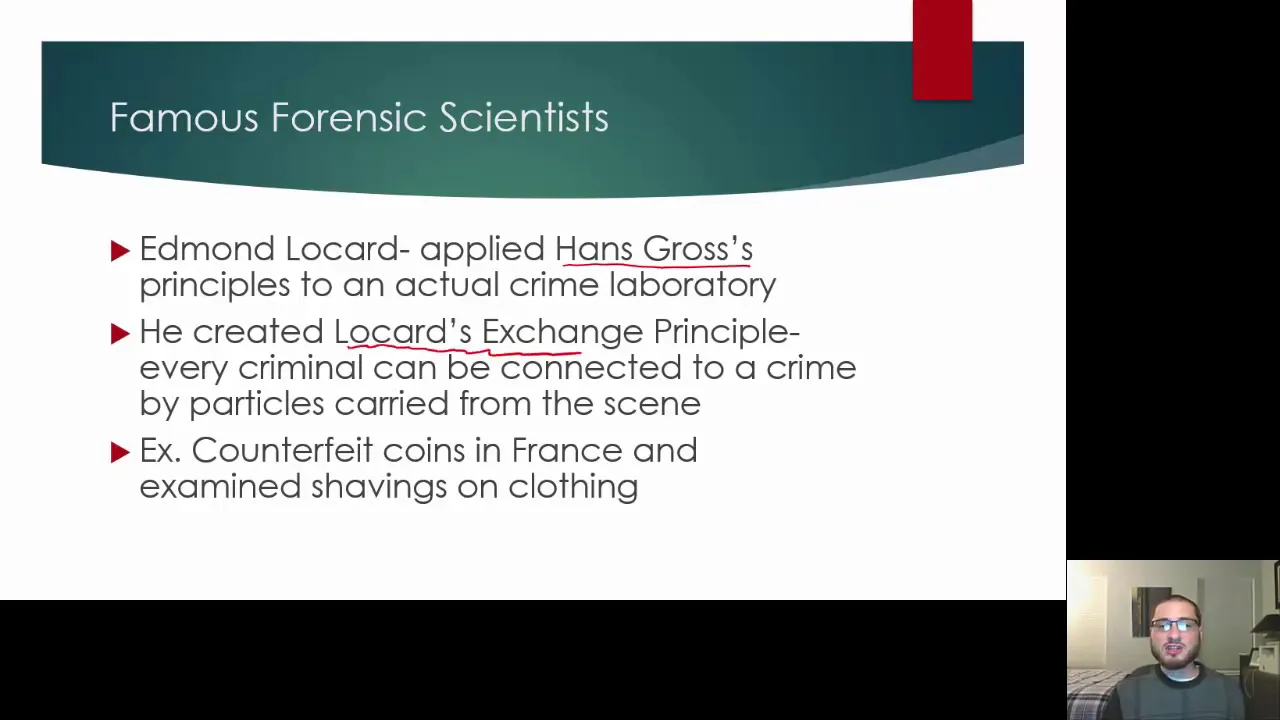
The study of Locard's Exchange Principle, a cornerstone of modern forensic science established in the early 20th century.
The evolution of identification methods from anthropometry (Bertillonage) and basic fingerprinting to modern DNA profiling.
Advanced forensic chemistry and toxicology, specifically how modern spectrometry and chromatography are used to identify trace poisons and drugs.
The introduction and evolution of forensic pathology and psychological profiling in modern criminal investigations.
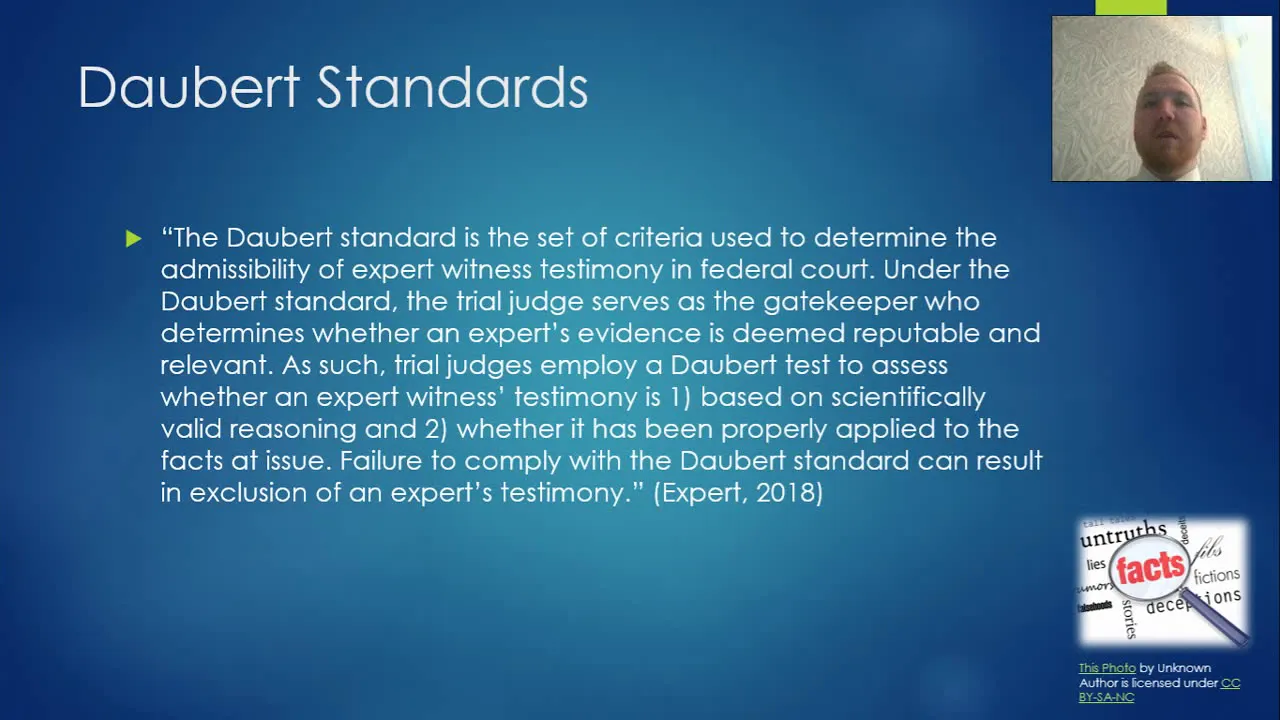
The legal standards for the admissibility of scientific evidence in courtrooms, such as the Daubert and Frye standards.
1.2K views66likes1:40:00Original Release: 2025-09-05
Welcome to the world of Victorian forensics, where crimes were solved long before fingerprints, DNA, or modern technology.
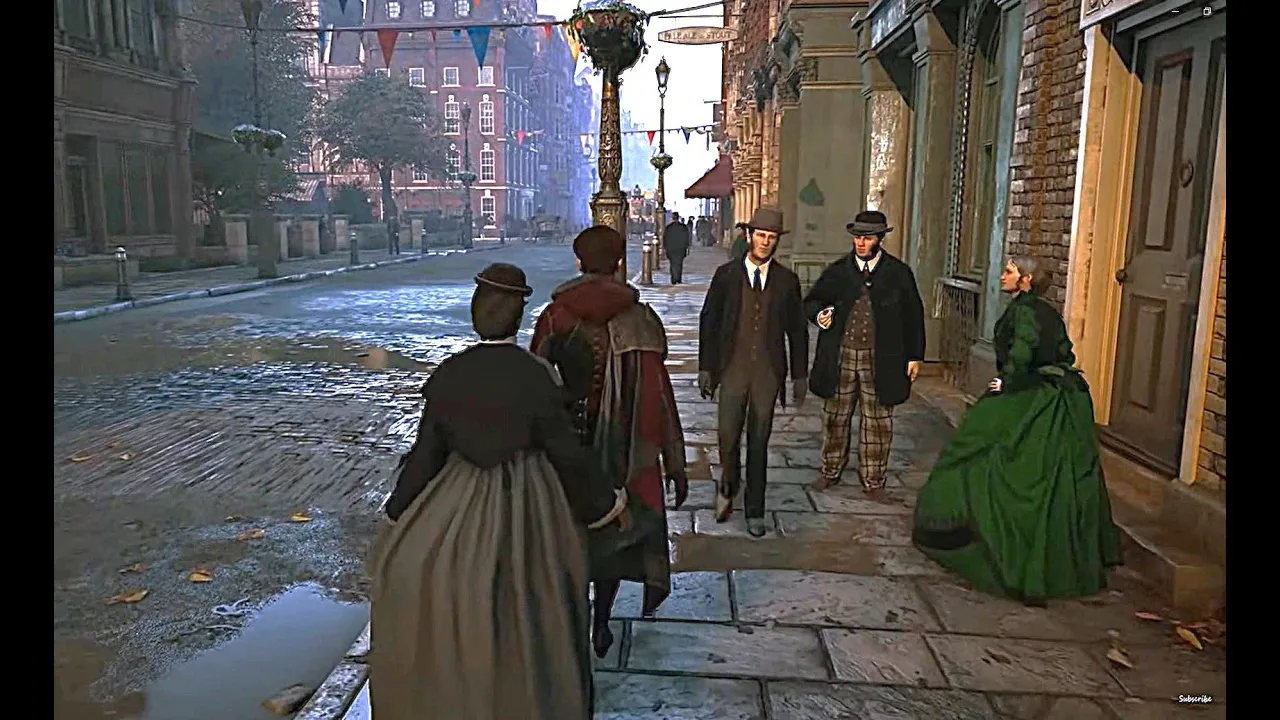
Based on true events, this story follows the real methods used by detectives who relied on observation, intuition, and the traces people left behind. It was early, unrefined, but remarkably effective. This is how murder met its match in the age of top hats and tea. If you enjoy falling asleep to stories where justice was pursued in the most unexpected ways, hit that like button and subscribe for more delightfully drowsy mysteries. This episode is part of our Victorian series, a charming collection of bedtime stories exploring the most bizarre and beautiful sides of 19th century life. Tell us in the comments where you're listening from and what time it is, because there's something oddly comforting about knowing we're all dozing off to tales of murder, mud, and very determined men in waste coats. Now, dim the lights, get cozy, and let yourself drift into a world where forensics was messy, brilliant, and just beginning. You knew it was going to be a bad day the moment you stepped in the puddle. Not just a puddle, a warm one. That tells you two things immediately. One, you're standing in horsep. Two, you've arrived precisely where you're needed. Welcome to Camden.
The sun hasn't risen yet, but the fog has. Thick enough to chew. And there's a man on the ground. Dead, of course.
Wearing one shoe and an expression that says his night ended worse than yours.
You tug your coat tighter, more for show than warmth. You've always liked the way it flares behind you, just enough to make people take you seriously. After all, nobody gives respect to a detective who shivers. Not that they gave you much respect to begin with. You weren't born into it. The badge, the pipe, the growling orders. You were a butcher's apprentice once, good with a knife, better with silence. Then one day, someone murdered the butcher's wife and blamed the boy with the blood on his apron. That would be you. You didn't do it. But you watch them try to prove that you did. watched them bungle the evidence, misplace the knife, misquote your words, and missed the fact that the real killer was limping and smelled of licorice. You spotted him and said nothing. You let them fumble their way to you, then pointed a finger back with such cold precision, they had no choice but to listen. Turns out that's all it takes to become a detective. A little blood, a little patience, and the ability to make very important people feel very, very stupid. Now you're the one standing at the crime scene, arms crossed, boots damp, already calculating what's wrong. The victim, a man in his 40s, or what's left of them, is lying half in, half out of a butcher's delivery cart. There's a deep gash along his throat, but no blood in the cart, which means he wasn't killed there, which also means someone put him in the cart after the fact, probably not out of kindness. The constable on duty, whose name you've already forgotten, is busy taking down the names of witnesses who are clearly lying. One claims she saw a shadow wearing a cape. Another insists the killer had glowing red eyes. One particularly damp man offers you a sausage roll and says he has murder dreams if you're interested in that sort of thing. This is what you deal with every day, madness in the mud. But this case feels different. For one, there's the shoe one missing. Who kills a man, steals a single boot, and then neatly places his hat back on his chest? For two, the mouth. The victim's tongue is blue, which could mean poison or bad dental hygiene, both equally fatal in this city. You kneel beside the corpse, flick your pocket watch open, and mark the time. The watch was a gift from a man you once falsely arrested. He gave it to you after the real killer was found. said you were the only bastard who listened when nobody else would. You thanked him. He thanked you. Then he died of syphilis two weeks later.
Nothing lasts. You fish a cloth from your coat and lift the man's hand. Still warm. Rigger hasn't set in. No rings. No calluses. A city man. You check his pockets. Matches. A theater stub and a letter signed only L. A clue or just love. Doesn't matter. You'll find out.
You always do. But this time you're not alone. Because across the street, watching from behind the curtains of a boarded up apothecary, is someone who doesn't belong. You clock the silhouette instantly. Wrong height, wrong stance, wrong kind of stillness. And you know in that moment, this isn't just a murder.
This is something bigger, something new, something forensic.
In the early decades of Victorian policing, solving a murder was a bit like playing chess on a table with no pieces, no board, and half the players blindfolded. You had instinct, you had luck, and you had a notebook that was more decorative than useful if your pen snapped in the rain, which it often did.
Before forensic science, a murder investigation involved asking the nearest housemaid what she saw, glancing briefly at the body, and then hoping the killer helpfully confessed on their own.
If they didn't, justice was largely theoretical. The Metropolitan Police, established in 1829 by Sir Robert Peele, was still in its awkward teenage years during the mid 1800s.
Detectives were a newer, more controversial invention. Most people didn't like them. They wore plain clothes, carried no official identification, and hung around crime scenes asking nosy questions, which made them indistinguishable from burglars.
Because frankly, a lot of them used to be. There were no lab coats, no fingerprints, no blood typing, no crime scene tape. If someone walked through a pool of blood because they were curious about the dead man's hat, well, too bad.
That was now evidence. One mainstream historical fact. It wasn't until 1902 that a fingerprint was first used to convict someone in a British courtroom.
And that was over a stolen box of billiard balls, not a body. If you were murdered in 1855, your best hope was that the killer had bad aim, dropped their own calling card, and tripped into a constable on the way out. Detectives were left to rely on pure observation, intuition, and in many cases, brute charm, which is to say half of them were winging it, and the other half were faking it better.
And yet something was beginning to shift. By the late 1800s, pioneering minds were starting to ask dangerous questions. What if evidence could speak?
What if a blood stain had a direction?
What if fingerprints weren't just smudges, but signatures? And so, detectives began to carry a few more items, a magnifying glass, a length of measuring tape, a suspiciously collapsible spy glass, small things perhaps, but revolutionary in the right hands. This was the birth of the forensic toolkit. Not quite a laboratory, but no longer just a hunch and a prayer.
And for detectives like you, standing ankle deep in rainwater, staring at a corpse with a blue tongue and a missing boot, that toolkit became the difference between guessing and knowing. You rise, wipe your hands on a handkerchief you're definitely going to burn later, and reach for your satchel. Cuz now it's time to do what you do best. Unpack the tools. Find the story the corpse can't tell. And hope to hell you brought enough chalk. You've crouched beside a lot of bodies. This one's still warm, which is a nice change. At least you won't have to guess what stage of decomposition he's in based on the smell of his socks. You reach for your satchel. It's standard issue if you define standard as held together with stubbornness and string. Inside is everything you need to make sense of a crime scene or at least to pretend you're trying. You start with a magnifying glass. It's not flashy. It's scratched, sure, but it does the job.
Lets you catch the fibers, prints, scuff marks, and the occasional surprise hair that shouldn't be there.
You scan the inside of the cart. A faint smear on the handle catches your attention. Could be blood, could be lunch. Next, the measuring tape. Yours is linen. Cheap. It stretches just far enough to give a general idea of what happened where. You measure the distance between the body's outstretched arm and the edge of the cart. Not because the number means anything yet, but because someone's bound to ask. You jot it all down in your notebook, which is half full of details and half full of observations that only make sense to you. Boot scrape under wheel well, loose thread and lapel, left pocket inside out. You've learned to write everything.
The useful bits only reveal themselves in hindsight. You've also brought your casting tin, plaster, and water for impressions if the weather holds. You don't use it often, but when a bootprint's clear, it can be the difference between a hunch and a courtroom exhibit. There's one just beyond the cart now, angled strangely.
You'll try a cast later, assuming no one tramples it first. Some detectives carry a spy glass. You're not sure it's necessary, but it's handy if you're watching someone from across the street or trying to look like you belong to a higher pay grade. You glance back at the constable. He's still working through a list of witnesses who know nothing, saw everything, and can't agree on whether the killer had a beard, a hat, or a limp. Meanwhile, your tools don't lie.
They don't exaggerate, and they don't change their story halfway through. You pack up quietly. This isn't about drama.
It's about process. You've seen enough scenes like this to know the devil's not always in the details, but he does tend to leave footprints. The Victorian detectives toolkit was less state-of-the-art and more state of barely functional. But for the time, it was revolutionary. Forget fingerprint scanners and blacklight flashlights. If you were a detective in the 1850s, your most advanced piece of technology was a magnifying glass. a marvel of optical engineering that let you inspect bootprints, fibers, or the vague outline of a guilty conscience.
One mainstream historical fact, detectives often carried measuring tape, not for precise forensic mapping, but to record distances between clues for courtroom diagrams. These illustrations were handdrawn, wildly interpretive, and usually looked like a drunk spider's map of regret. Still, they helped. Plaster casting was cutting edge and also deeply annoying. Detectives would try to capture bootprints or tool marks using homemade mixtures that took forever to set and frequently cracked during transport. Rain, mud, children, all sworn enemies of early impression evidence. Spy glasses, usually collapsible, were a gentleman's tool, which naturally made them popular among detectives trying to maintain an air of sophistication while spying on chimney sweeps. And of course, no toolkit was complete without a notebook. Detectives scribbled everything: times, witness statements, suspicious details, suspicious smells, and occasionally lunch orders. But the most powerful tool a Victorian detective carried wasn't in the bag at all. It was their reputation.
Without modern databases, detectives relied on public trust, whispered tips, and the kind of local knowledge that only came from years of stalking alleyways and memorizing the faces of every drunk thief and liar in a 10-mi radius. Some carried disguises, a spare coat, a tattered hat to pass unnoticed in different neighborhoods. This was crimesolving as scavenger hunt. And every tool, no matter how crude, was a step toward what we now call forensic science. They weren't dusting for prints yet, but they were watching, measuring, sketching. And they were starting to ask, "What if we stop guessing and start proving?" The crowd's thinning now. The body's been carted off, and your plaster cast miraculously survived.
But in your notebook, you've just written something you didn't expect. It wasn't the blood or the smear or even the shoe. It was the print, one smudged fingerprint, left behind on a glossy pane of glass, waiting to ruin someone's life.
You spot it while stepping away from a witness who just claimed the killer vanished into fog. Dramatic, but unlikely. A faint smear on the inside panel of the cart. almost nothing, but not quite. You lean in, the angle's right, the light hits it, and there they are. Ridges, loops, a partial whirl. The kind of accidental detail no one notices unless they're looking for it, and you're always looking for it. Could be from the undertaker or a curious onlooker. London's full of people who leave their mark and walk away. But this one, this feels placed intentional even.
You press a scrap of clean paper against the glass and transfer what you can.
It's not perfect. Nothing ever is. But it's enough to ask a question. You've heard the whispers about fingerprints, classification systems, real identification.
Most at the yard roll their eyes. Too modern, too technical. You're not sure you believe in it yet, but someone touched that cart, and now they've left a piece of themselves behind.
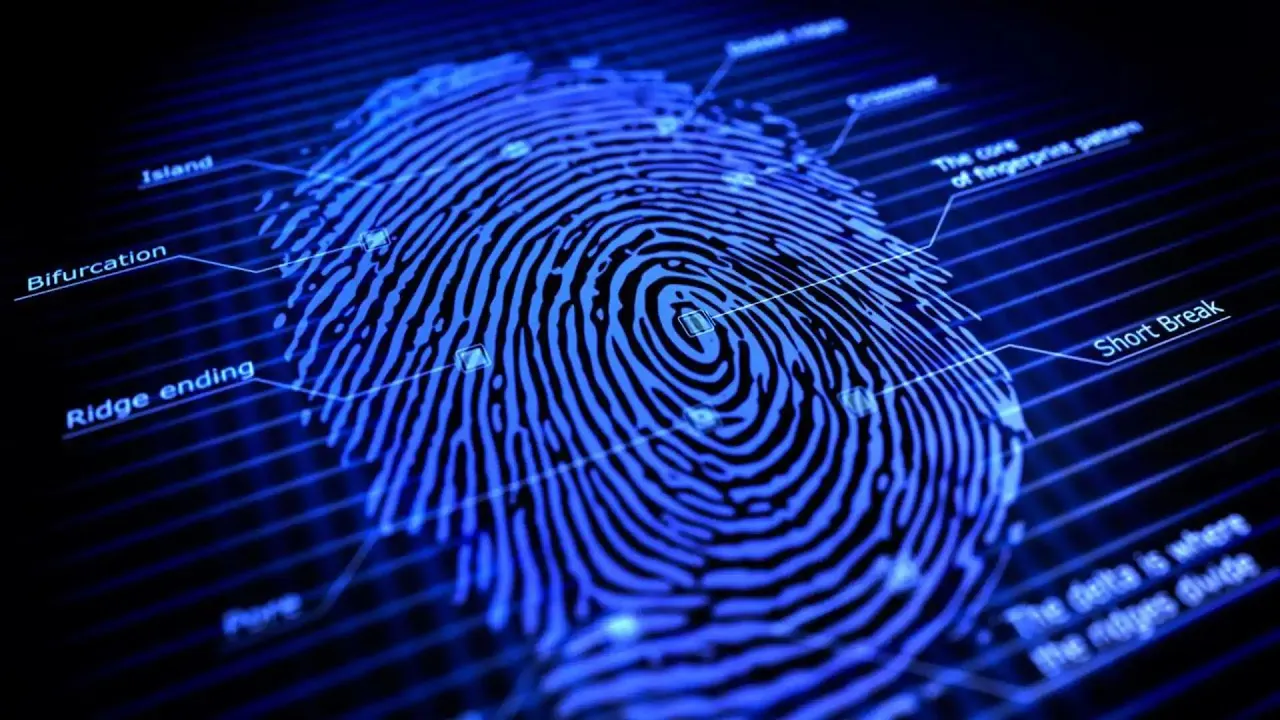
Fingerprints had been around forever, of course, on pottery, on parchment, and most definitely on every piece of evidence ever touched by a nervous Victorian thief. But for most of the 19th century, they were seen as incidental, smudges me nothing more. The idea that fingerprints could be used as a method of identification was proposed as early as 1788 by German anatomist Johan Meer, who pointed out that no two were exactly alike. Fascinating, yes, but not especially useful when most people were still suspicious of bathtubs and thought criminal psychology was just a bad mood. It wasn't until the late 1800s that things began to change. In 1880, a Scottish physician named Doctor Henry FS published a paper in Nature suggesting that fingerprints could be collected from crime scenes and compared scientifically.
He even wrote to Scotany Yard about it.
They politely declined. Too new, too technical, and frankly the average inspector was already struggling with paperwork, let alone whirls and loops.
Then came Sir Francis Golton, cousin of Charles Darwin and a man who believed in measuring everything. In the 1890s, Golton published studies categorizing fingerprint patterns into types, arches, loops, whirls, and argued for their uniqueness and permanence. His work laid the groundwork for modern fingerprint classification.
Still, police departments were slow to adopt it. It lacked the drama of a good interrogation and required more patience than most investigators were paid to possess. That all changed in 1902 with the conviction of Harry Jackson. A man arrested for stealing a case of billyard balls from a London house. Not jewelry, not gold, billiard balls. But he'd left a fingerprint on the freshly painted windowsill. And detectives eager to try this new method compared it to Jackson's prints on file. It matched. It stuck.
and it held up in court.
Jackson became the first person in the UK convicted on fingerprint evidence and the scientific floodgates quietly opened. Historians still argue whether fingerprinting took hold because it was effective or simply because it was easier to teach than handwriting analysis and made detectives look modern. Either way, it marked the beginning of a new kind of investigation, one that relied less on confessions and more on skin. You seal the envelope and slide it into your coat pocket. The fingerprint is safe for now.
Across the alley, a constable is photographing the cart. Slow exposure, careful setup, his lens fogging slightly in the damp morning air. The body may be gone, but the scene remains. And for the first time, you wonder, "What else could a camera catch?" before the story fades.
You've learned not to get sentimental when the body's taken away. If you get weepy every time a corpse leaves in a cart, you won't last long in this line of work. And you've outlasted better men with stronger stomachs and worse shoes.
So, you stay behind, watch the scene clear out. The baker's apprentice, who saw everything, is now pretending to rearrange bread loaves across the street. The constable is asking the butcher questions that make it sound like he committed the crime. And the photographer, bless him, is setting up his tripod like he's about to capture a royal christristening. You know how this goes. 15 minutes to arrange the frame, 10 more for the plate to warm, and then he'll take a picture so blurred, so poorly lit, and so underwhelming that half the yard will be squinting at it like it's a magic eye puzzle. But you let him do it anyway because the camera, unlike every witness you've spoken to today, doesn't embellish. It doesn't claim the killer had glowing red eyes or vanished in a puff of brimstone. It doesn't change its story halfway through or conveniently forget key details between lunch and tea. It just documents. The shutter clicks. The photographer exhales like he's just solved the crime himself. You resist the urge to clap. The photograph won't capture much. Maybe the outline of the cart, the curve of the blood stain, the faint smear you noticed earlier that everyone else walked past. But it'll still be more reliable than the man who claimed the killer was hovering. You don't trust the camera. Not entirely.
It's too slow, too delicate, too proud of itself. But it never lies. And in this job, that's rarer than you'd like to admit. Victorian detectives didn't have digital cameras, flashbulbs, or cloud storage. They had long exposure plates, awkward tripods, and the eternal hope that no one moved during the photograph, especially the corpse. But they did have one major advantage, the Victorian obsession with cataloging everything. By the mid 1800s, photography had begun creeping into criminal investigations, mostly in the form of mug shots. France led the charge with Alons Bertion who pioneered standardized criminal portraits, front and side views, neutral expression, consistent measurements. It was less about art and more about creating a visual record no suspect could weasle out of. In Britain, however, things moved slower. Forensic photography didn't truly arrive until late in the century. Even then, it wasn't used to document crime scenes at first. It was used to photograph criminals after arrest. The idea of preserving the scene itself just as it was found was novel and for many unnecessary.
But a few forwardthinking detectives and pathologists began pushing for it. Among them was Alfred Swain Taylor, a pioneer in forensic medicine who in 1865 wrote that photographs could provide more accurate evidence than any drawing or oral description. It was a radical idea at the time. suggesting the camera might know more than the coroner. The most famous and grizzliest surviving image from Victorian crime scenes is the 1888 photo of Mary Jane Kelly, final victim of Jack the Ripper. The image was taken in her room at Miller's Court, and it's unsettling even by modern standards. But its purpose wasn't sensationalism.
It was documentation. A grim snapshot of a crime that couldn't be explained in words.
Still, the public fascination with photographs blurred the line between forensics and spectacle. Crime scene images were sometimes leaked to newspapers or displayed in rogues galleries for entertainment. Inquests occasionally displayed postmortem images to juries, often with little warning.
And then there was the bizarre case of optography, a shortlived theory that a murder victim's eyes could retain the last image they saw, like a photographic plate. It was tested poorly and quickly discarded when it became clear that retinas aren't magic. But the belief remained. The camera didn't lie. It didn't blink. It didn't forget details because it found them upsetting or inconvenient. Even if the image was grainy, even if it was slow, it was there, permanent, neutral, silent. And in an era when witnesses were unreliable and scenes were often contaminated before the ink on the constable's notes dried, that silence became one of the most valuable tools in a detective's arsenal. You light a match and scan the cobblestones again, not for footprints this time. There's a spatter pattern beneath the cart. Wide arc, low angle, almost missed it in the shadow of the wheel. The camera caught the shape, but you're starting to wonder what the blood itself might be trying to say. You spot it just as your foot is about to land on it. A splatter dried mostly dark brown just under the cart's wheelbase. Not a pool. More like a flick. A gesture. Like the victim tried to point to his killer and the blood made it halfway. You kneel down, careful not to let your coat drag.
You've already got one dry cleaner in London who refuses to take your garments for ethical reasons. You tilt your head and trace the ark. Wide, angled, low to the ground. It's the kind of stain that suggests movement, not drama, not passion, just direction. Most constables wouldn't look twice. Most coroners would call it atmosphere and step around it.
But you've been at this long enough to know better. Blood doesn't care about your feelings. It doesn't lie, doesn't panic, doesn't tell you the killer was tall, smelled like onions, and ran west.
It just falls according to physics.
Every time you scrape a sample with a corner of a matchbox, wrap it in paper, and tuck it into your coat. You'll get it to the analyst later, assuming he's sober in town, and not currently arguing with his third wife about arsenic storage. No one else at the scene has noticed the stain. They're still arguing about shoe sizes and footprints as if blood hasn't been quietly solving crimes since before any of them learned to read.
You look at the dark smear again just before you leave. It's messy, ugly, honest, and you trust it more than any man in uniform. Long before blood could be typed, traced, or DNA tested, it was still whispering clues to those who knew how to listen. Unfortunately, in the Victorian era, very few investigators spoke fluent hemoglobin. For most of the 19th century, blood at a crime scene was treated as an inconvenience. A thing to be mopped up, stepped over, or occasionally pointed to by panicked witnesses. If a pool of it happened to match the location of a wound, well, that was a lucky guess. Enter the early forensic minds. One of the first to take blood seriously was Alfred Swain Taylor, the same pioneering toxicologist who advocated for photography and proper autopsies. Taylor understood that blood could be more than just proof someone had a bad day. It could be evidence. He performed experiments to distinguish between human and animal blood using microscopy to identify red cells and assess clotting. He also published images of blood droplets, handdrawn, of course. to demonstrate how they might change depending on how they fell. But this was decades before blood spatter analysis became a formal discipline. In Victorian England, there were no laser grids, no luminal sprays, no black lights revealing hidden crime scenes like a parlor trick gone wrong.
Everything was done by eye and often by guesswork. One of the few tools available was the guakum test which could detect hemoglobin in a sample.
Unfortunately, it also reacted to rust, fruit juice, and sometimes optimism.
False positives were common. Still, it was a start.
The most famous early example of blood helping solve a case came in 1856 when a man named Thomas Smith was tried for poisoning his mistress. Taylor testified that her bodily fluids contained arsenic, but more importantly, that the blood evidence aligned with the timing of her death. It was enough to sway the jury temporarily.
The conviction was later overturned, but the case helped push the courts to accept scientific testimony related to bodily fluids, including blood. More often, however, blood evidence was used circumstantially. A bloody handprint, a stained collar, a trail leading out the back door. These details were valuable not because they proved anything definitively, but because they suggested motion, struggle, sequence, and occasionally guilt. By the end of the Victorian era, blood had earned a place in the forensic toolkit. Not yet understood, not always trusted, but no longer ignored. It didn't need to scream to be heard. It just needed someone willing to read the stains. The analyst isn't in. Of course he isn't. You leave the sample anyway with a note. Figure out if this is blood or jam or both.
You're not holding your breath. Because in this city, the stains on the floor aren't the only thing trying to kill people. Half the murderers come through the front door, disguised as husbands, doctors, nor tea. You've learned not to trust a well- set table. The richer the fabric on the tablecloth, the more likely someone's been slipping toxins into the gravy. It's the quiet ones, the dainty ones, the ones with perfect handwriting and lemon biscuits that do the real damage. You've never seen a single murderer wearing an apron who wasn't also an enthusiastic hostess, which is why you're staring at the teacup in front of you like it's a loaded pistol. The victim didn't scream, didn't stagger into the street. He just sat there, made a polite comment about the jam, and slid silently to the floor before anyone noticed something was wrong.
The widow's account is calm, soothing, almost rehearsed.
He must have had a weak constitution, she says, folding a napkin with terrifying precision. Always sensitive to spices. You make a note of that.
Spices rarely cause internal bleeding.
You ask if he was in good health. Oh yes, she says, apart from his stomach and nerves and lungs and some dizziness and the fainting.
She offers you a second cup of tea. You decline. Instead, you pocket the spoon.
It's light, clean, ordinary, just like the last one. But if you've learned anything in this job, it's that arsenic doesn't need to shout. It just needs a cup, a splash of milk, and someone nearby who smiles too much. Poison was the murder weapon of choice for many Victorians. Not because it was dramatic, but because it was tidy. No blood, no struggle, and no need to lift anything heavier than a sugar bowl. And arsenic was everywhere. It was sold freely in shops used in household cleaning products, rat poison, cosmetics, and even wallpaper dyes. In fact, you could walk into any apothecary and buy enough arsenic to kill your husband, your neighbor, and most of the church choir, all without raising a single eyebrow.
Symptoms of arsenic poisoning were helpfully vague. Vomiting, stomach cramps, confusion, fatigue. To the average Victorian doctor, that looked suspiciously like being a Victorian.
It wasn't until scientists like James Marsh and Alfred Swain Taylor entered the scene that poisoners started having a harder time getting away with it.
In 1836, James Marsh developed the Marsh test, a method that could detect minute traces of arsenic in human tissue. It involved converting arsenic into a gas and then igniting it, which sounds absurdly dangerous and was, but also brilliant. If a silver mirror-l like deposit appeared inside the test tube, Arsenic was present. Suddenly, murderers couldn't hide behind a fainting spell and a well-timed inheritance. Alfred Swain Taylor, often considered the father of British forensic toxicology, pushed even further. He testified in dozens of trials, published groundbreaking research, and infamously warned that English households were absolutely saturated with poison. He wasn't exaggerating. Newspapers soon picked up the theme, running headlines like, "The tea that turned to death, murder in the marmalade, widows brew kills again." Some cases became infamous, like that of Sarah Dazzley, the female Blue Beard, who poisoned at least two husbands and a child before finally being caught. She claimed she was merely unlucky in love. The jury disagreed.
Despite the advancements in toxicology, poison remained a difficult crime to prove. Without eyewitnesses or a solid motive, many cases came down to circumstantial evidence. And whether the court believed the analyst more than the defendant's wellrehearsed tears, still the Martian Taylor tests gave investigators something new. Proof.
Cold, scientific, unpleasantly flammable proof. And that changed everything. No longer could death be written off as a nervous complaint or bad digestion. Not when a spoon, a cup, or a slice of toast could carry the evidence all the way to the gallows.
You wrap the spoon in brown paper and make your exit, stepping past the potted ferns and into the daylight like a man who's just declined dessert for the last time. Next stop, a shack behind the local hospital. The walls are thin, the windows don't shut, but inside lies the only person in this case who has nothing left to hide. Time to cut him open and ask what the tea didn't say. The building isn't much to look at.
Technically, it's part of the hospital, though no one inside the hospital will admit that. It's out back behind the stables beside the wood pile. Close enough to drag a body far enough that no one eating lunch has to smell it. The door caks when you push it open. Of course, it does. The place smells like carbolic acid, wet sawdust, and whatever was in the last person's stomach. You step inside, careful where you put your boots. There's no official line of death on the floor, but your nose usually knows where it starts. The pathologist is already waiting. He's wearing an apron and a frown. He always looks disappointed at the corpse, at the weather, at his career choices. You like him. He rarely talks. The body's laid out on a table that may or may not have previously hosted soup preparation. The lighting is bad. The instruments are dull and someone's propped open a window with a copy of the illustrated London news. Science in action. You nod at the doctor and stand back. He begins the examination, notes the bruising, the tongue, the stomach lining. He makes noises at each stage, the kind of quiet, puzzled noises that suggest the cause of death was something both ordinary and irritating. Poison, most likely, he says. Stomach contents are suspicious.
You agree? they usually are. He offers to show you the liver, but you decline.
You've learned to pick your battles.
Instead, you jot down what matters. Time of death, possible substance, any signs of trauma. It's not much. Not yet. But it's something the tea drinkers can't argue with. Autopsies aren't glamorous.
They're not dramatic. Most of them don't even answer the question you came in asking. But when they work, they say the one thing no suspect ever does.
exactly what happened.
Autopsies in the Victorian era were less clinical and more controlled chaos conducted near a window. In the early part of the 19th century, postmortems were often conducted in makeshift rooms, stables, pantries, converted coal sheds, anywhere with a table and decent light.
Sterilization wasn't widely understood until the 1860s, and even then, clean often meant rinsing the blade in whiskey and wiping it on an apron. Despite these conditions, autopsies were critical to early forensic investigations, particularly in suspected poisoning cases. Victorian pathologists like the legendary Alfred Swain Taylor used dissections to examine internal organs for signs of trauma, inflammation, or chemical damage.
The stomach contents, liver, and kidneys were of special interest as they often retain traces of whatever had killed the victim, be it arsenic, strick nine, or Victorian cooking. Many coroners were also surgeons or physicians, but not always. In rural areas, the local undertaker, butcher, or whoever had the steadiest hand might be called upon to open a body. There was no formal qualification required until the Coroners Act of 1887, and even after that, enforcement was inconsistent.
Postmortems were sometimes public.
Inquests were often held in pubs or ins with the body laid out in the next room while jurors popped in between pints. It was not unusual for curious onlookers to gather outside, hoping to catch a glimpse of the dissection, or at least hear about it over drinks. Still, for all its messiness, the autopsy was one of the few moments in a case where speculation gave way to anatomy. Was the victim struck, strangled, suffocated?
Was there water in the lungs or bile in the stomach? Did the tongue show signs of swelling? Did the liver shine like glass, a common sign of arsenic? These weren't philosophical questions. They were physical ones. And though the setting was crude, and the tools were far from sterile, the autopsy gave investigators the closest thing to an honest witness, the body itself. It didn't always tell you who did it, but it usually told you how, and sometimes that was enough to point the way. You leave the hut with your coat button tight and your notes in your hand. The cause of death is clear. The stomach told the truth, but out of the corner of your eye, you catch sight of something in the window. A photograph pinned to a bulletin board. A man's face staring.
You've seen that face before, just not on anyone alive. And it's just a hallway, a back corridor with peeling paint and a bulletin board that never gets updated. You've walked past it a dozen times without looking twice. But today you stop because there's a face staring back at you. Seia toned, eyes slightly offc center, hair flattened in a way only nervousness or police supervision can achieve. You've seen that face before, not in person, in posture, in the way a man leans on a rail or doesn't meet your eye. There's something in the angle of the jaw that sparks recognition. The sort of detail most people ignore, but your brain files under, watch this one. You lean closer.
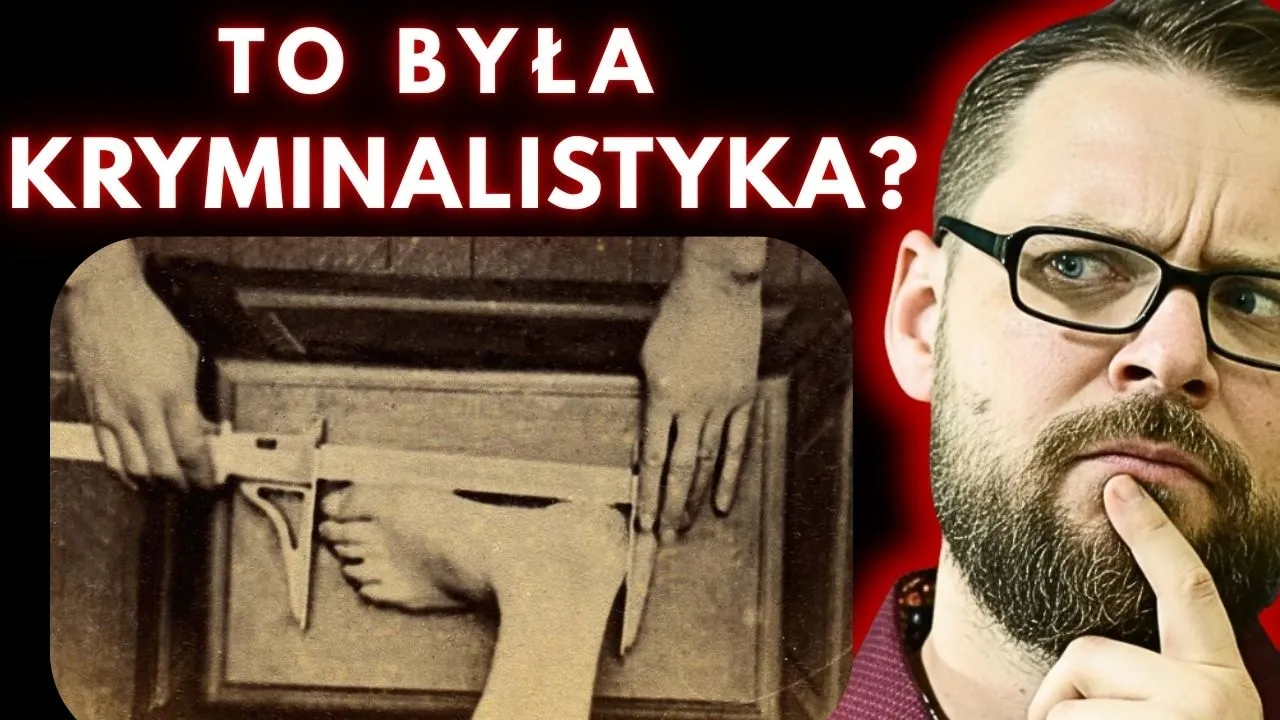
The image is barely usable, faded, grainy, possibly haunted. But it has a name. He wasn't on your list. He wasn't even supposed to be in this part of the city. But here he is, tacked to a corkboard between a wanted poster and a dentist's advertisement. And suddenly, your case has a face. You take the photo down, fold it carefully, slide it into your coat. The others in the yard still laugh about the mugshot project. Too many pictures. too few faces worth remembering. But you've always liked the idea that memory can be outsourced. That even when you forget a name, a photograph might still remember it for you. And right now, this one's doing a better job than anyone you've questioned all week. The mugsh shot. That stiff, unsmiling photograph of a suspect, may seem like a modern invention, but it has its roots planted firmly in Victorian soil. Before photographs, criminals were identified by description alone. Height, weight, eye color, scars, tattoos. The problem, everyone was average height, had brown hair, and mysteriously lost their facial scars as soon as they crossed city lines. Enter Alons Bertion, a French police officer who in the 1880s developed a revolutionary system of criminal identification.
It combined anthropometry, precise body measurements with standardized photographs, full face and profile, neutral background, same posture, his logic. If the body was unique, so was the face. Bertilion's rogues gallery system was soon adopted by Scotland Yard, albeit with some reluctance. Early British mug shots were wildly inconsistent. Poor lighting, blurred edges, crooked angles, and suspects who looked like they were midsneeze.
Still, it was a start. Detectives began organizing photos by crime type, burglars, pickpockets, poisoners, creating visual cataloges of repeat offenders. It became easier to track criminals across burers, and suspects could be matched to prior convictions without relying on vague witness descriptions or gut instinct. Sometimes the galleries were open to the public.
In cities like Liverpool and Manchester, printed compilations of known thieves were displayed at police stations, occasionally with nicknames like Sticky Tom, Limping Alf, or the Biscuit Phantom. Not everyone was impressed.
Some judges argued that showing juries a defendant's prior mugshot biased them unfairly. Others claimed photographs were too easily faked or misinterpreted.
And in early days, that wasn't far off.
But as photography improved, so did the value of the mugshot. By the end of the 19th century, it had become standard procedure in most British cities. And for detectives, it offered something rare. A visual memory that didn't fade.
You could forget name. You could misplace a case file. But a photograph, even a terrible one, had a way of lingering. a way of reappearing at just the right moment on just the wrong wall, staring at you from a bulletin board behind a door you nearly didn't open.
You tuck the photo deeper into your coat. You've got a name now, a face, a reason to start asking better questions.
But as you pass the evidence room, something else catches your eye. The victim's clothes, mud stained, blood spattered, torn in all the wrong places.
And inside the pocket, a scrap of fabric that doesn't match anything he was wearing. Time to let the clothing speak.
You've long since learned that corpses don't talk, but they're often dressed by people who do. The victim's clothes are spread across a table in the evidence room, laid out like he was about to be judged for style as well as cause of death. He wouldn't win any prizes. The trousers are muddy. The waist coat's missing a button. And the shirt collar looks like it lost a fight with a set of teeth. Yours, possibly.
But it's the coat that stops you. Heavy wool. Slightly expensive. Too expensive if you believe the widow's story that he only ever wore handme-downs and humility. The lining is torn at the shoulder. Inside the pocket, you find something unexpected. A swatch of silk, pale green, clean. doesn't match a single thing he was wearing. You hold it to the light, embroidered edge, handstitched, probably cut from a sleeve, someone else's sleeve. And just like that, your silent victim gets a conversation piece. Clothing's funny that way. It's not just about what they wore. It's about who dressed them, who pulled at the buttons, who tore the sleeve in a hurry, or on purpose. People like to think lies are told with words, but you've made a career out of finding them in seams, in stitching, and in the things people swore they never touched.
Victorian detectives didn't have DNA.
But they had buttons, blood stains, and a very good eye for when someone's trousers told a different story than their mouth. Clothing was often the most consistent piece of evidence on a body because it was physical, traceable, and stubbornly unwilling to lie. If a man was strangled, his collar showed it. If he fought back, his sleeves knew it. If someone staged a scene, the tailor usually disagreed.
In the 19th century, most garments were handsewn or custom altered, which meant you could sometimes trace a jacket not just to a shop, but to a specific tailor. Detectives would question seamstresses, cobblers, and laundry workers to determine whether clothing had been altered recently or belonged to someone entirely different. Fabric type mattered, too. A silk handkerchief out of place could suggest a mistress. A working man in an upperass waist coat might raise questions about stolen identities or stolen wardrobes.
In one 1875 case, a man accused of murder claimed to have never met the victim. But detectives found fibers from the victim's scarf sewn into the lining of the suspect's coat, likely transferred during a scuffle. That scarf and its distinctive color were became a central piece of evidence. Stains were equally revealing. Before Luminol, detectives used magnifying glasses and sharp eyes to identify blood, paint, ink, or grease. The direction of a tear or the location of a splash could help reconstruct an event. Was the attack from behind? Did the blood flow downward or spray outward? Then there was laundry. Clothes sent out for washing were often tagged or marked with initials, allowing detectives to trace them through household staff or laundry shops. If someone tried to dispose of bloody garments by passing them off as just very dirty, it wasn't unusual for aist to blow the case wide open by saying, "That's not Mr. Fielding's shirt. His cuffs are never stitched like that. In short, clothing became a kind of silent witness, especially valuable in a society obsessed with appearances.
The wrong material, the wrong fit, or a tear in the wrong place could unravel an alibi faster than any confession.
Because in Victorian England, people dressed for the part, and sometimes the part was murder. You slip the silk scrap into an envelope and make a note to visit the widow again. This time with sharper questions and less tea. But before you reach the door, a young constable stops you. There's a witness, he says. Says he saw everything. You raise an eyebrow. You've heard that before. Witnesses don't always lie. But they do tend to get creative. He's already waiting when you arrive. Sitting upright in the station lobby like he's about to receive a medal. Hat polished, boots spotless, confidence radiating off him like he's the lead in a play only he auditioned for. You know the type.
Volunteers information before he's asked. Introduces himself with a full name, two middle initials, and a vague reference to knowing people in parliament. You take him into the interview room before the constables start betting on how many minutes it'll take before he mentions the Freemasons.
I saw everything, he announces like a man unveiling a painting. Excellent. You love these. He says the suspect was tall or short with either a limp or an air of mystery, possibly had a hat or maybe a cloak or both. Definitely walked like someone who had somewhere to be unless it was more of a float. He's sure it was around 10:00 or dawn or possibly Tuesday. You don't interrupt. You've got the kind of face people feel safe lying to. He gestures a lot. uses phrases like keen observer and uncanny instincts.
Refers to himself in the third person at least once. You write down what you can, though you'll probably burn it later for warmth. By the time he's finished, you're no close to the truth. But you do know what he had for lunch and that he once shared a railway compartment with a baronet's nephew. allegedly. You thank him, shake his hand, offer the appropriate noises of encouragement, then you leave, tear out the page of notes, and file it under narrative fiction. Because while it's true that every witness sees something, some of them see it with their eyes closed, and a flare for the dramatic.
Victorian detectives had many tools at their disposal. spy glasses, magnifying glasses, occasionally even science. But few things were as unreliable or as frustrating as the eyewitness. In theory, witnesses were invaluable. They placed people at scenes. They described clothing, time frames, behavior, but in practice, they were messy, inconsistent, and occasionally unhinged. The problem wasn't always deception. Sometimes it was enthusiasm. Murder cases attracted attention. People wanted to help or be noticed or insert themselves into something important. It wasn't unusual for multiple witnesses to contradict each other within the same inquest, often while insisting they saw the same event. One 1863 case in Manchester involved five witnesses describing the same suspect with entirely different builds, hair colors, and outfits. One claimed the man was singing. Another said he had no mouth. Detectives learned to sort witnesses into categories.
Genuine but limited. I heard a noise at two but didn't look. Helpful but confused. It was dark and he might have been carrying a loaf of bread. Eager dramatists. He turned into smoke and flew away. Courts too became wary of unreliable accounts. Judges began instructing juries not to place too much weight on memory alone, especially as cases became more dependent on forensic detail.
The problem extended beyond civilians.
Even constable could give conflicting accounts, especially when the scene was chaotic or public pressure was high.
Some detectives began treating eyewitness statements as starting points, not conclusions. But there were also darker motivations. Some witnesses fabricated entire accounts out of spite, revenge, or to frame someone. False accusations were common in domestic disputes, feuds, or business rivalries.
Detectives had to weigh not only the accuracy of a witness's memory, but their motives. And then, of course, there were the media influenced witnesses, people who'd read the newspaper reports and remembered seeing something shortly afterward. Headlines could shape testimony before a word was ever spoken in court. Still, no matter how flawed, witnesses weren't discarded entirely. A sharp detective knew how to read between the lines to spot the hesitation, the inconsistency, the little details that either cracked a lie wide open or supported a truth too plain to invent. Because while the body told you how and the scene told you when, only the witness could on rare miraculous occasion tell you who, you shut the file and make a mental note to ignore all future testimony that includes the words floated or glowed.
But just as you settle back at your desk, a constable slides you a note, the alibi's in, and someone's lying boldly, badly, possibly fatally. You've seen a lot of lies in your day. Some shouted, some whispered, a few written in lipstick on broken mirrors. But this one, this one's dressed up in its Sunday best and folded with creases so crisp they could slice your fingers. A constable hands you the letter like it's a sacred text. You take it without ceremony. It claims your suspect was at his cousin's house during the murder.
The cousin is predictably traveling. No address, no witnesses, possibly imaginary.
The letter is dated, signed, and smothered in cologne strong enough to mask guilt or a body. You unfold it slowly, partly for effect. The ink is neat, too neat. The kind of handwriting no one uses unless they're either proposing marriage or trying not to hang. There it is. The looped Y that doesn't match his last note. The crossed T that suddenly forgot where the crossbar goes. The signature that looks like it was forged by a man holding the pen in his non-dominant foot. It's beautiful. A masterpiece of self-inccrimination. You almost want to frame it. You turn it over. Nothing on the back. Shame. Sometimes they forget and sign twice. You slip it into an envelope with a smirk. Because the body may have bled. The widow may have lied.
But this letter, this letter is trying too hard not to sweat. Victorian detectives didn't have CCTV. They didn't have call logs or credit card receipts.
What they had were alibis and more importantly the lies tucked inside them.
The art of the alibi was alive and well.
In the 1800s, suspects would claim to be at church, the theater, their aunt's cottage, or anywhere that required a witness who'd suddenly fallen ill, moved away, or died tragically just before the inquest. The more elaborate the story, the more likely it was stitched together after the murder. That's where documents came in. Letters, receipts, notes, and timestamped telegrams were used to prove presence or absence. But they also became fertile ground for forgeries.
Victorian detectives began noticing that some letters arrived too quickly. Some receipts were printed before the store opened. Some cousins oddly didn't exist, which led to one of the era's quietly brilliant tools, handwriting analysis.
This wasn't about graphology or personality traits. This was forensic observation comparing stroke patterns, pressure, slant, spacing, and letter shapes. The tiniest inconsistency could expose a forgery. One of the earliest high-profile examples was in the 1874 Teachorn case, where a man claiming to be the long-lost heir to a fortune was exposed in part through inconsistent signatures and handwriting mismatches.
Police departments began retaining samples of known criminals writing signatures, letters, and even ransom notes. Experts could then compare documents side by side, identifying false alibis, altered wills, or forged love letters written under juress.
Sometimes the documents gave away more than just a lie. They revealed motive, a suspiciously timed letter from a suddenly affectionate husband, a quickly altered ledger in a business dispute, a suicide note with a suspiciously hopeful tone. Every penstroke was a potential confession. And while Victorian courts were slow to admit handwriting analysis as science, detectives learned to trust what their eyes saw on the page, especially when the ink contradicted the voice speaking in court. Because in the end, a liar might talk their way out of a room, but they almost never talk their way out of what they wrote down. You close the folder and slide the forge letter into evidence. The case is turning. Lies are unraveling. The alibis collapsing faster than a drunk vicor on cobblestones. But just as you're getting ready to tie it all together, word arrives from the pathologist. The bones are speaking now, and apparently they've got a disagreement with the time of death. You weren't expecting a letter from the pathologist. He's not the writing type. He's the sort who grunts a tea and names his scalpels. But the note reads, "Skeletons ready. Bring your sense of wonder. You arrive to find the remains laid out like an anatomy lesson or a very aggressive jigsaw puzzle." The pathologist is beaming, which is always worrying. Cracked ribs, he says. Old leg fracture. And based on decomposition, your corpse died two weeks before it was supposed to. You nod. Smile. Try not to visibly rewrite your entire theory in real time. Someone lied again. The corpse, however, is cooperating beautifully. You've interviewed 12 witnesses, read four forged alibis, and listened to one man describe the suspect as glowing. But these bones, they're the first ones who've told you the truth.
Victorian forensic science had its limits. But bones bones were consistent.
They didn't decompose as quickly. They didn't weep, shout, or faint during questioning, and they didn't bluff.
By the mid-9th century, medical examiners were beginning to use skeletal evidence in serious investigations, especially in cases of long dead bodies, missing persons, and burials where a murder was never reported. Bones could reveal age based on development and wear. Sex via pelvic shape and skull features. Cause of trauma, knife, blunt force, or yes, overenthusiastic Victorian medicine, time since death, based on decay, environment, and soft tissue loss. A good pathologist could estimate how long a body had been dead within a window. Of course, this became particularly important in poisoning cases where soft tissue had decomposed or when someone was found long after being declared on holiday. One famous case involved a woman whose body was discovered years after her disappearance buried in a garden behind a boarding house. Her skeleton revealed a broken hyoid bone often associated with strangulation, something no one had suspected at the time. Bones were also used to disprove witness statements. If a suspect claimed the victim walked away unharmed, a fractured femur might disagree. If a confession claimed a quick death, but the ribs showed repeated blows, it suggested something more methodical and more damning. In some cases, partial skeletons were all that remained. Detectives would bring in anatomists, surgeons, or even local grave robbers with a strong opinion to identify which bones were human and which were just dinner scraps tossed in with the dead. Of course, mistakes were made. Sometimes animal bones were misidentified as human, and sometimes, due to the sheer novelty of the field, examiners made confident pronouncements based on nothing more than Victorian bravado and a sixpence microscope.
Still, bone evidence became a quiet revolution in forensic science. It wasn't flashy. It wasn't dramatic, but it was durable, truthful, and utterly unimpressed by lies. You jot down the new time of death, scratch out half your suspect list, and wonder how many more surprises your victim is planning to leave behind. The cler arrives with an armload of records, receipts, travel logs, a suspicious hotel ledger covered in gravy. The kind of paper trail someone left behind on purpose. Now you just have to figure out why. You've been handed a stack of receipts thick enough to qualify as light armor. There's a hotel ledger with your suspect's name scribbled in three different spellings, a rail ticket that somehow dates after his own alibi, and a bakery bill for enough meat pies to raise suspicions and cholesterol. It's a mess. But it's a deliberate mess. This isn't evidence.
It's a scrapbook made by someone panicking in cursive. You flip through it all, one eyebrow slowly migrating north. He's left just enough of a trail to look innocent, which is exactly how you know he isn't. In an era before phone records, CCTV, or Google searches, Victorian detectives hunted people the old-fashioned way through scraps of paper, faded ledgers, and receipts tucked where guilt hoped no one would check. Travel was tracked by railway tickets, often torn at boarding, but stubs were sometimes saved. Hotel registries signed with varying levels of sobriety and truthfulness.
Tavern ledgers, mail logs, laundry records, gas bills, and more. These weren't digital breadcrumbs. They were handwritten ink stains left behind by people who assumed no one would ever read them. And to be fair, most people didn't, but detectives did. A suspect claiming to be in Dover might forget they bought a pie in White Chapel at 2:15 p.m. Or forget that the hotel they claimed to stay in had been closed for fumigation that week, or more commonly, forget that their handwriting was appallingly distinctive. Forged entries were common. Some men signed their own name twice on the same day at different ins. Others invented aliases, not realizing that inkeepers routinely described their guests in side notes like, "Paid late, suspicious cough, smelled of gin and guilt." Police would sometimes visit railway stations, asking conductors and ticket clerks if they remembered a particular traveler. If a station agent said, "I recall him." Odd coat muttered about arsenic. That counted as a solid lead. Still, not all trails led somewhere. Some suspects deliberately left misleading records, fake travel plans, planted receipts, even letters mailed to themselves in advance, postmarked from convenient locations. A few went so far as to bribe hotel staff to sign them in retroactively. It worked just often enough to be worth the attempt. But as forensic work improved with better handwriting analysis, time of death estimates, and cross- refferencing of ledgers, paper trails stopped being easy escapes. They became traps. And the clever the forgery, the more spectacular the collapse when someone caught the lie. You shut the ledger, brush off the receipt dust, and decide meat pies may be the most incriminating food in London. Still, it's not over. The suspect may have covered his tracks in ink, but the soles of his boots, that's where the real trail begins. And soil is a terrible liar. The suspect's boots are clean. Not actually clean, just suspiciously wiped clean. The kind of clean that screams, "I've definitely been somewhere I shouldn't, and now I'm pretending I haven't." You've seen it before. usually from men who insist they just happened to be out walking near a murder scene, wearing shoes that suddenly look like they were licked by angels. But the heel, the heel tells the truth. A thin smear of clay, pale, fine grained, not local. And tucked between the sole and the leather welt is a shard of something dark soot, cinder, garden ash. You grab a small tin from your satchel. It's labeled definitely not tobacco because you've learned that colleagues are far less likely to steal your evidence if they think it tastes terrible.
The cler stares at you while you scrape the dirt like you're performing a magic trick. You aren't. You're just following the trail the suspect tried badly ki to clean off. It doesn't take long because unlike suspects, soil doesn't lie, ash doesn't travel for fun, and bootprints don't forget where they've been. In the late Victorian era, detectives began paying attention to something previously reserved for gardeners and chimney sweeps. Dirt. Specifically, how different kinds of soil, ash, and sediment could link a suspect to a crime scene. Sometimes more convincingly than any human witness could. This wasn't yet formal forensic geology that wouldn't appear until the 20th century. But sharp detectives knew how to read the ground.
They noticed the difference between London clay and country soil, the telltale flexcks of coal ash from a specific type of fireplace, the red dust from a brick works district found on coat cuffs, and most of all, the mud on boots that shouldn't be there. Police often track suspects using nothing but footprints. In wet or muddy conditions, a clear tread could be matched to a specific pair of shoes, especially if that shoe had distinctive wear, a missing nail, or an unusual pattern. In one 1890 case in Yorkshire, a man denied ever visiting a murder site. But Prince at the scene matched his left boot perfectly, right down to a stone embedded in the sole. That stone was still stuck in place during questioning. In cities, industrial dust and ash played a role. If someone claimed they hadn't been near a coal plant but showed up with soot on their collar, investigators took note. Ashes in cuffs, powder in seams, even grime in hair could suggest a lie. Some detectives even collected soil samples from murder scenes and compared them under basic microscopes. Not to analyze the minerals, but to match the color, texture, and debris. If a victim had ash on their clothes and the suspect had matching soot on their cuffs, it raised eyebrows. If they had no reason to share dust, it raised handcuffs. While these techniques weren't always formally documented, they were quietly trusted, especially by detectives who'd learned to listen to the little details. Because paper can be forged, people can be coached. But dirt, dirt's impartial.
Dirt remembers everything. You bag the boot scrapings and send them to the analyst, mostly as a courtesy. You already know what they'll say. The mud matches, the soot matches, and unless your suspect has a perfectly reasonable explanation for gardening in three different counties on the same day, he's done. Now all that's left is to tie the threads. Blood, boots, bones, lies, laundry, and one very smug detective.
Time to close the file. Time to crack the case. It doesn't unravel. It snaps.
Clean and sudden like a bad lie under cross-examination. You're sitting at your desk when it happens. Cup of tea in one hand, the forged letter in the other. You're not even trying to solve anything at this point. Just rereading out of spite. And there it is. A time signature that doesn't match the postmark. A rail ticket stamped hours after the suspect supposedly left town.
A bakery receipt from a shop that only opens on Sundays. And this murder happened on a Tuesday. You stare at the paper, blink twice, and laugh out loud.
The constables assume you finally lost it. But no, you've gained it. You open the folder, lay everything out. The photograph, the boots, the forged letter, the poison, the soil, the silk scrap from a woman's sleeve that didn't match the widow's wardrobe. You pin it all to the board. Connect the dots with string. Not because you need to, but because you enjoy the theatrical flourish. And just like that, the case solves itself. Not because someone confessed, not because anyone helped, but because evidence is patient and eventually liars run out of ink. For all its chaos, confusion, and cold dust, Victorian forensic science made one thing clear by the end of the century.
You could lie. But your body, your boots, your biscuit crumbs, and your poorly disguised poison, they wouldn't lie with you. Victorian detectives, armed with nothing but notebooks, tweezers, and occasionally sober pathologists, learned to solve murders, not with drama, but with a splash of blood, a stain on a sleeve, a footprint in clay, a misspelled signature, a spoonful of arsenic lightly stirred. And while they didn't have DNA, lumininal, or ballistics, they did have time, observation, and the kind of deep, stubborn skepticism that made them dangerous to anyone who thought charm could outrun the truth. Cases were cracked by, matching handwriting under candle light, spotting soot in coat cuffs, comparing mud under shoes, testing stomach contents with flame and fumes, identifying poison in a China teacup while someone sobbed theatrically nearby.
These detectives weren't perfect. They didn't always get it right. But when they did, it was because they looked past the performance and trusted the evidence. No matter how small, grimy, or inconvenient. By the dawn of the 20th century, forensic science had become more formalized. Fingerprint databases were expanding. Toxicology was taken seriously. Pathology was evolving from back alley surgery into medical science.
But the groundwork was laid here in the alleys, tea rooms, and crime scenes of the Victorian era by people who learned that murder leaves souvenirs. Sometimes it's a drop of blood. Sometimes it's ash in a coat pocket. Sometimes it's a bootprint that doesn't match the weather report. And sometimes it's just the overwhelming weight of too many little lies strung together like bad laundry on a windy day. And now, as the last forged alibi is folded and the constable's lantern flickers against a wall of mismatched receipts, I hope this peculiar stroll through Victorian forensics lingers, like a clue hiding in plain sight. You followed footprints, ink trails, and enough contradictory witness statements to cross-examine a ghost. But now it's time to rest. The evidence is bagged, the boots are off, and for tonight, the case is finally quiet. If you're still awake, congratulations.
You've made it through another evening inside history's most suspicious investigation in a waste coat. Hit subscribe so we can reopen another strange case file tomorrow night. And as you drift, the soft crackle of the fire will carry you deeper, far from soot, lies, and stiff collars, and into sleep.
Up Next
12:24
Victorian Forensic Science: A History of Crime Solving
@WeirdHistory
452.9K views•2021-08-29

20:08
Hollywood Fantasy Orchestrator RPG Expansion Pack Tutorial Walkthrough
@HighResolutionJapan
1.1K views•2024-03-08

9:49
FastAPI vs Flask vs Django: Choosing the Right Python Web Framework
@TechWithTim
302.5K views•2024-05-26

1:42
Game of Thrones Opening Credits: A Cinematic Analysis
@gameofthrones
46.3M views•2011-04-18
Related Study Plans & Knowledge Roadmaps
Structured learning paths in General & Interdisciplinary Studies
general-studies
Containerization: Evolution, Logistics & Trade
01Ancient Trade & Bulk Cargo: Amphorae to Barrels
02The Industrial Revolution & Cardboard Packaging
03The Containerization Revolution: Malcom McLean
+ 2 more learning modules
12h5 modules
Explore Roadmap
general-studies
Textile Tech: Evolution, Labor & Global Impact
01Pre-Industrial Textiles: Handloom & Cottage Industry
02Mechanization: The Spinning Jenny to the Power Loom
03The Factory System & Global Labor Transformation
+ 2 more learning modules
10h5 modules
Explore Roadmap
general-studies
Pharmacology: Botany, Patents & Biopiracy
01Foundations of Ethnobotany & Traditional Medicine
02The Birth of Synthetic Chemistry: Aspirin & Penicillin
03The Battle Against Malaria: Quinine to Artemisinin
+ 3 more learning modules
12h6 modules
Explore Roadmap
general-studies
Writing Surfaces: Papyrus, Parchment & Paper
01Ancient Foundations: Clay, Stone, and Egyptian Papyrus
02Parchment, Vellum, and the Rise of the Codex
03The Chinese Rag Paper Revolution and the Silk Road
+ 3 more learning modules
9h6 modules
Explore Roadmap