





![Stakeholders in Commercial Organisations | [ ICSE Commercial Studies Class 10 ] | ICSE Chapter 1](https://i.ytimg.com/vi/koR_yZ6CD2k/maxresdefault.jpg)









When businesses face ethical crises, leaders must balance competing stakeholder interests (investors, employees, customers) using ethical frameworks like stakeholder analysis, the utilitarian test, family test, newspaper test, and mentor test; historical examples such as Johnson & Johnson's 1982 Tylenol crisis demonstrate that prioritizing customer safety over short-term financial losses can ultimately protect the company's reputation and long-term success.
Ethical Dilemmas in Business: The Burger Crisis Case Study
Added:Fundamental Normative Ethical Theories: A basic understanding of utilitarianism, deontology, and virtue ethics as foundations for decision-making.
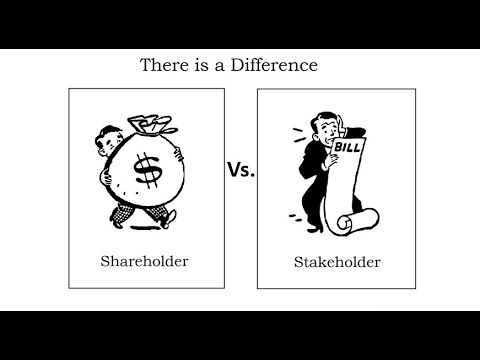
Stakeholder vs. Shareholder Theory: Understanding the debate over whether a corporation's primary duty is to its owners or the broader community.
Introduction to Crisis Management: Knowing the basic phases of a business crisis, including prevention, response, and recovery.
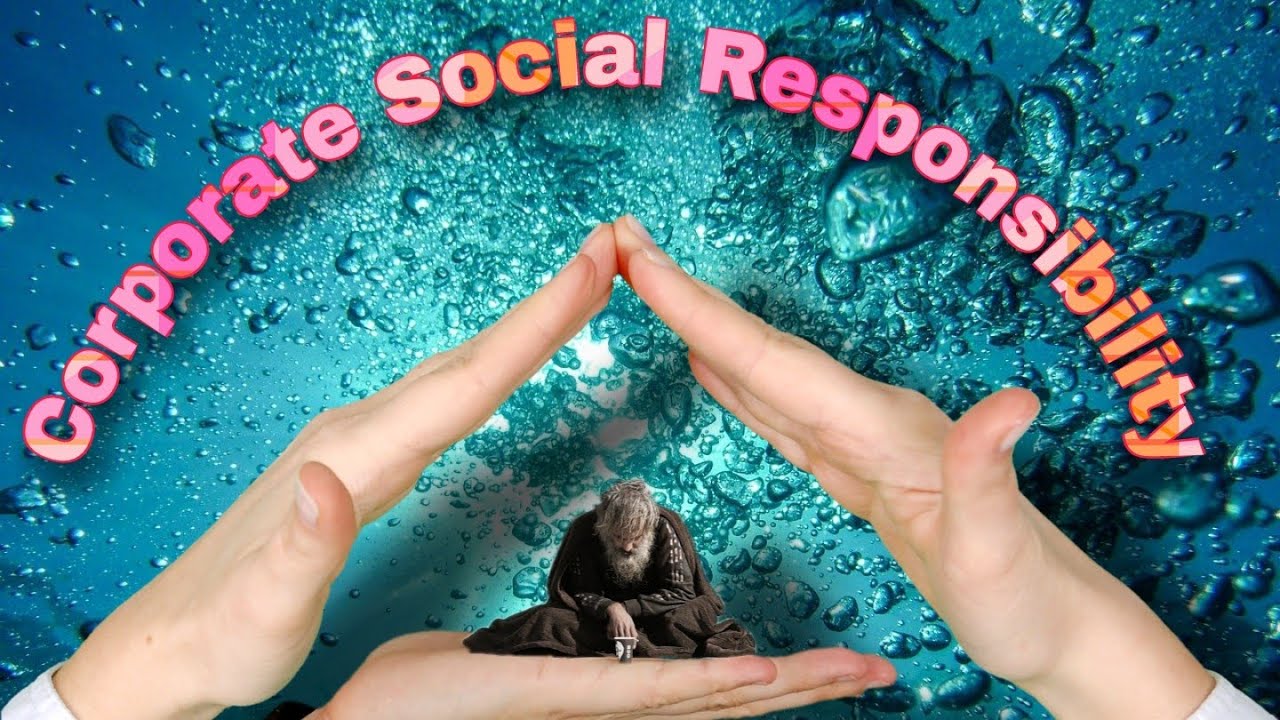
Corporate Social Responsibility (CSR): Familiarity with how businesses integrate social and environmental concerns into their operations.
Advanced Crisis Communication Strategies: Developing skills in public relations, brand reputation repair, and transparent stakeholder communication during a scandal.
Designing Compliance and Whistleblower Programs: Learning how to build organizational structures that encourage ethical behavior and internal reporting.
Comparative Corporate Scandals: Analyzing other famous ethical failures (e.g., the Ford Pinto case, Chipotle food safety crisis) to evaluate different management responses.
Ethical Leadership and Corporate Culture: Exploring how leadership styles and organizational culture influence systemic ethical decision-making.
2.5M views64.4Klikes5:45Original Release: 2020-07-28
A few years ago, you founded a company that manufactures meatless burgers.
Your product is now sold in stores worldwide.
But you’ve recently received awful news: three unrelated people in one city died after eating your burgers.
The police concluded that a criminal targeted your brand, injecting poison into your product in at least two grocery stores.
The culprit used an ultrafine instrument that left no trace on the packaging, making it impossible to determine which products were compromised.
Your burgers were immediately removed from the two stores where the victims bought them.
The deaths are headline news, the killer is still at large, and sales have plummeted.
You must quickly develop a strategy to deal with the crisis.
Your team comes up with three options: 1. Do nothing.
2. Pull the products from grocery stores citywide and destroy them.
Or 3. Pull and destroy the product worldwide.
Which do you choose?
Your company lawyer explains that a recall is not required by law because the criminal is fully responsible.
She recommends the first option— doing nothing— because recalling the product could look like an admission of fault.
But is that the most ethical strategy?
To gauge the ethicality of each choice, you could perform a “stakeholder analysis.” This would allow you to weigh the interests of some key stakeholders— investors, employees, and customers— against one another.
With the first option your advisors project that the crisis will eventually blow over.
Sales will then improve but probably stay below prior levels because of damage to the brand.
As a result, you’ll have to lay off some employees, and investors will suffer minor losses.
But more customers could die if the killer poisoned packages elsewhere.
The second option is expensive in the short-term and will require greater employee layoffs and additional financial loss to investors.
But this option is safer for customers in the city and could create enough trust that sales will eventually rebound.
The third option is the most expensive in the short-term and will require significant employee layoffs and investor losses.
Though you have no evidence that these crimes are an international threat, this option provides the greatest customer protection.
Given the conflict between the interests of your customers versus those of your investors and employees, which strategy is the most ethical?
To make this decision, you could consider these tests: First is the Utilitarian Test: Utilitarianism is a philosophy concerned with maximizing the greatest amount of good for the greatest number of people.
What would be the impact of each option on these terms?
Second is the Family Test: How would you feel explaining your decision to your family?
Third is the Newspaper Test: how would you feel reading about it on the front page of the local newspaper?
And finally, you could use the Mentor Test: If someone you admire were making this decision, what would they do?
Johnson & Johnson CEO James Burke faced a similar challenge in 1982 after a criminal added the poison cyanide to bottles of Tylenol in Chicago.
Seven people died and sales dropped.
Industry analysts said the company was done for.
In response, Burke decided to pull Tylenol from all shelves worldwide, citing customer safety as the company’s highest priority.
Johnson & Johnson recalled and destroyed an estimated 32 million bottles of Tylenol valued at 250 million in today’s dollars.
1.5 million of the recalled bottles were tested and 3 of them— all from the Chicago area— were found to contain cyanide.
Burke’s decision helped the company regain the trust of its customers, and product sales rebounded within a year.
Prompted by the Tylenol murders, Johnson & Johnson became a leader in developing tamper-resistant packaging and the government instituted stricter regulations.
The killer, meanwhile, was never caught.
Burke’s decision prevented further deaths from the initial poisoning, but the federal government investigated hundreds of copycat tampering incidents involving other products in the following weeks.
Could these have been prevented with a different response?
Was Burke acting in the interest of the public or of his company?
Was this good ethics or good marketing?
As with all ethical dilemmas, this has no clear right or wrong answer.
And for your meatless burger empire, the choice remains yours.
Up Next

7:34
Creating a Risk Matrix: Impact and Likelihood Assessment Guide
@optimizedriskmanagement867
2.7K views•2021-11-06
46:36
Retention Habits of Top DTC Ecommerce Brands Revealed
@SendItPodcast
44K views•2026-03-03

4:46
How the Shipping Container Revolutionized Global Trade
@TEDEd
619.7K views•2012-03-12

17:30
The Planned Obsolescence of Light Bulbs and Tech
@veritasium
25.3M views•2021-03-26
Related Study Plans & Knowledge Roadmaps
Structured learning paths in Business
business
Pop-Up Retail: Strategy, Design & Execution
01Introduction to Pop-Up Retail & Strategic Goal Setting
02Budgeting, Site Selection, and Legal Essentials
03Experiential Retail Design & Visual Merchandising
+ 2 more learning modules
15h5 modules
Explore Roadmap
business
Reg CF: Startup Funding, Marketing & Launch
01Introduction to Equity Crowdfunding & Reg CF
02Platform Selection & Legal Preparation
03Crafting High-Converting Campaign Assets
+ 2 more learning modules
14h5 modules
Explore Roadmap
business
Productized Services: Scaling Solo Freelance
01Foundations of Productized Services
02Packaging and Scope Definition
03Pricing and Subscription Models
+ 2 more learning modules
15h5 modules
Explore Roadmap
business
Gov Procurement: Find, Bid & Win Contracts
01Introduction to Government Procurement & Business Setup
02Small Business Certifications & Set-Asides
03Finding and Analyzing Contract Opportunities
+ 2 more learning modules
14h5 modules
Explore Roadmap