










![টিস্যু ও টিস্যুতন্ত্র পর্ব ১ (Tissue and Tissue Structure Part 1) | Sabiha Tasnim Nishy [2017]](https://i.ytimg.com/vi/AT5SJeQrwsc/maxresdefault.jpg)



![[손해평가사 1차시험] 3과목 원예 재배학](https://i.ytimg.com/vi/eNv7t5miH_Y/maxresdefault.jpg)


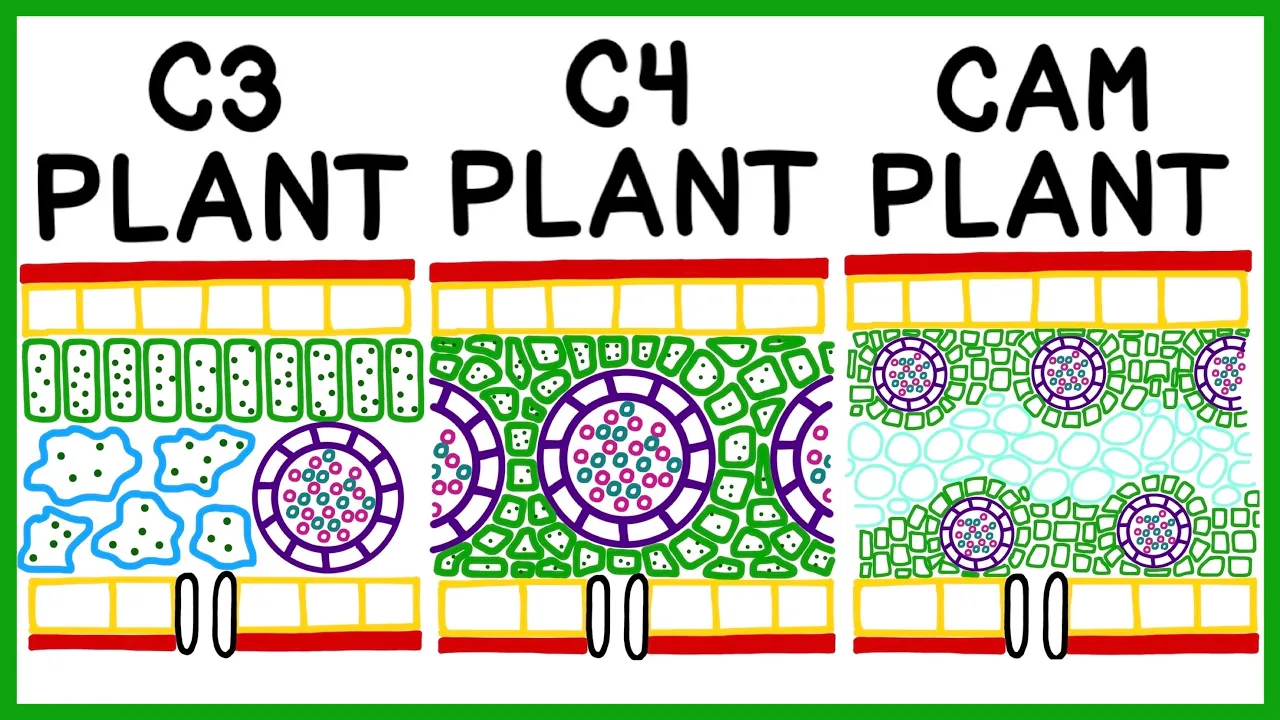

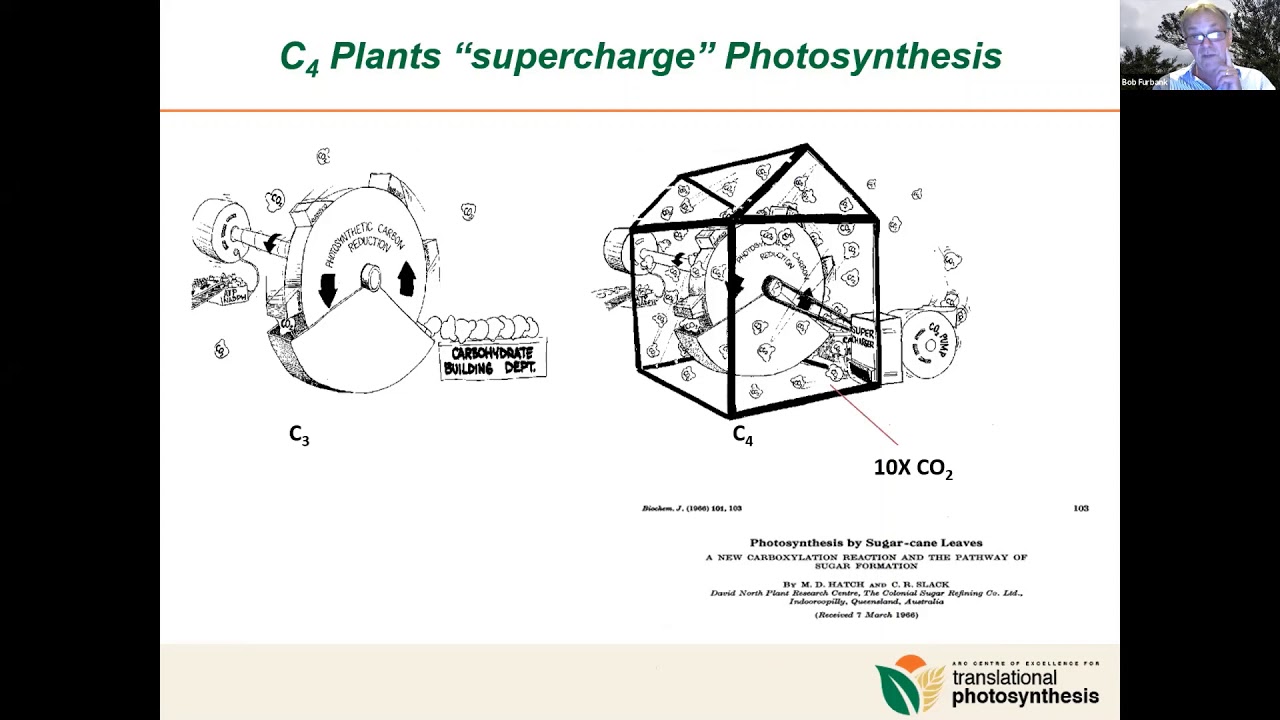


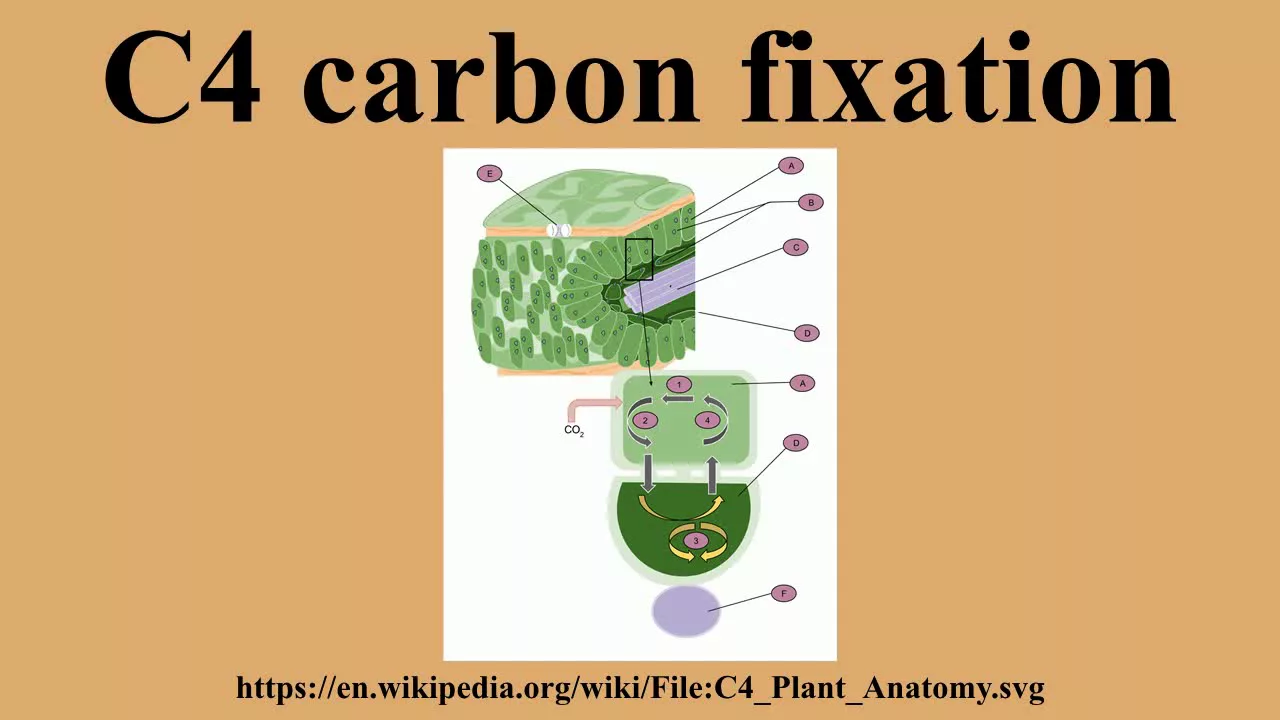


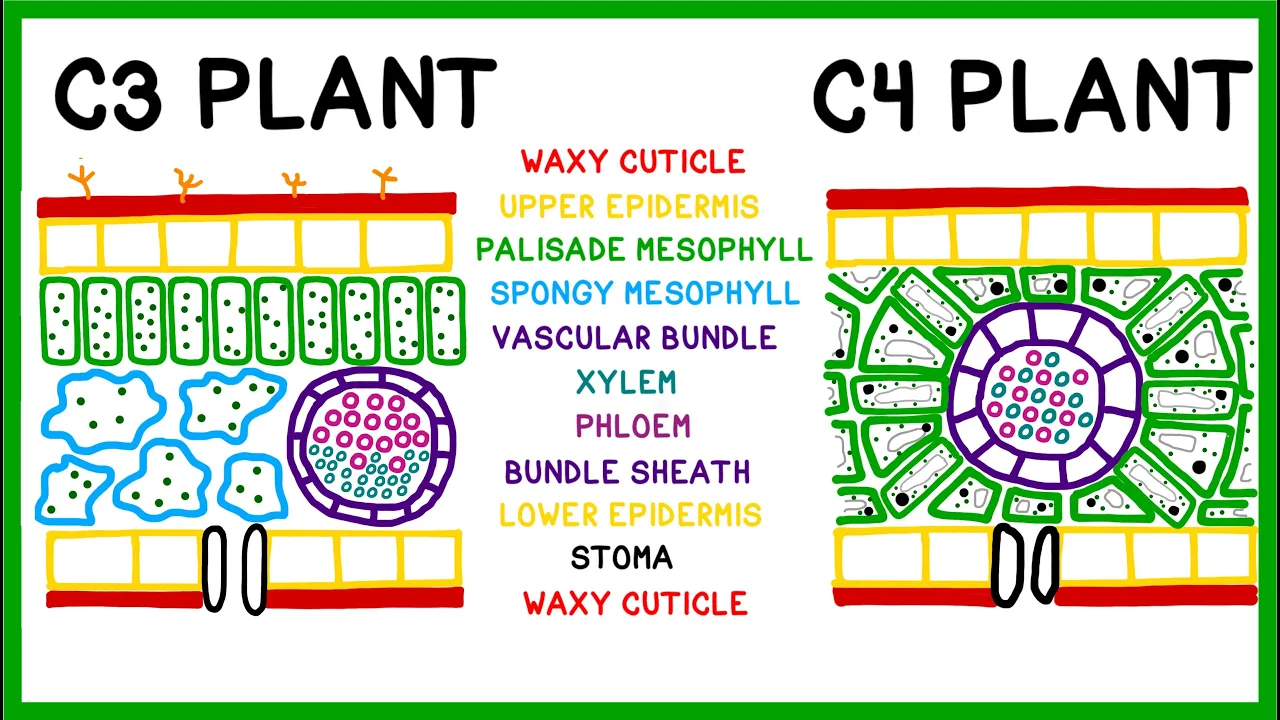
C4 plants (approximately 5% of all plants, including sugar cane, corn, millet, and switch grass) have evolved specialized anatomical adaptations to thrive in hot, dry tropical environments where stomata close during the day. These plants possess two distinct layers of closely fitting cells around vascular bundles: mesophyll cells containing chloroplasts with grana (for light-dependent reactions) and bundle sheath cells with chloroplasts lacking grana. This anatomical arrangement prevents photorespiration by isolating bundle sheath cells from atmospheric oxygen while concentrating CO2 through a two-stage carbon fixation process. In mesophyll cells, PEP carboxylase fixes CO2 into a four-carbon compound (malate), which is then transported to bundle sheath cells where the C3 cycle produces glucose. This spatial separation of light-dependent and light-independent reactions across two cell types allows C4 plants to maintain high photosynthetic efficiency even under conditions that would cause significant photorespiration in C3 plants.
C4 Plants: Adaptations & Photorespiration Prevention
Added:welcome to biology Made Easy in this lesson we are discussing C4 plants we will discuss examples of sea4 plants the habitat anatomical characteristics and adaptic significance of C4 plants C4 plants includes 5% of all plants now examples we have sugar cane corn or maze millet so switch grass and these examples you can see they are all monocots they habitats in the tropics where there's high temperature high light intensities dry conditions in such environment stomata will close during the day to reduce transpiration to conserve water and once stata is closed carbon dioxide cannot go in oxygen cannot come out during the day and se4 plants in such environmental conditions have anatomical characteristics that enables the plant to live and photosynthesize successfully so the anatomy is more of the leaf so here is transverse section of a leaf we have the cuticle upper epidermis the Palisade you have spongy cells and typical of C4 plants we have two distinct close fitting cells around the vascular bundle so this is what I have drawn here this a vascular bundle you have this Clos fitting cells around the vascular bundle and this close fitting cells is called bundle sheath and you have an outer close fitting cells which are misop cells and they are close fitting and and form a kind of a shift so you have an outer ring of Clos fitting cells and an inner ring of Clos fitting cells and you see the outer ring of close fitting cells are exposed to air because atmospheric air comes in here and fills these intercellular spaces and the misil cells are so much exposed to the atmospheric air but look at the inner ring that that is the bundle sheath they are not exposed to air at all and very close fithing cells now these two ring of close fitting cells around the vascular tissue have chloroplasts in them and the chloroplast are said to be dimorphic because the chloroplast in the mopy cells have Gran and the chloroplast in the bundle sheath have no Grana it's a Grana as we you see so if you compare the anatomy of the leaf of a seafall plant it will be very different from a C3 plant well C3 plants can also have bundle sheath with chloroplast but not the mopile sheet and the palate cells are quite close together the air spaces in the mopi layer are not so huge as in the sea4 Plant leave Anatomy the next thing we want to discuss is that what is the Adaptive significance of sea4 plants why these two rings of close fitting cells around the vascular region the adapting significance of C4 plants as we said during high temperature highl intensities and dry conditions the stomata will close during the day and you know during the day for photosynthesis takes place because the light is there light dependent reactions will go on and light independent reactions also go on but if the stomat are closed then it means carbon dioxide can't get in oxygen that is produced during photosynthesis can't also come out and such conditions the oxygen concentration will build up and when the oxygen concentration builds up photorespiration will will take place we discussed photo respiration in our last lesson photorespiration takes place in these kind of conditions producing phosphoglycolate and glycolate which is toxic so this conditions in C3 plants it happens but not in C4 plants C4 plants the conditions will be this high temperature light conditions dry conditions and yet photorespiration will not take place photo synthesis will take place and produce a lot of glucose and then C4 plants have adaptation to reduce oxygen concentration to prevent photorespiration and this is how it's done in the bundle sheet oxygen concentrations are reduced to prevent photorespiration air is cut off completely from the bundle sheath because of its thick close fitting cells that will not allow air to pass through air will not move from the vascular bundles into the bundle sheet because there's no air in the vascular bandles T so no air comes here so no oxygen is completely reduced or cut off to prevent Pho respiration one then another way to prevent photo respiration in the bundle sheet is the absence of Grana in the chloroplast you know when Grana is available is there there will be photo phosphorilation to produce ATP nadph and oxygen but then there is no Grana in the chloroplast of the bundle sheet so no oxygen is produced from photo phosphorilation that is this point then the last point to cut off photo respiration the bundle she is that the bundle sheet cells they have rubisco you know rubisco ribose by phosphate carilas it has that enzyme and rubisco has a very high affinity for oxygen to oxygenate ribulose B phosphate to form phosphoglycolate and glycol but even though this the bundle she have the enzyme rubisco photorespiration will not take place here because the oxygen concentration is very low air and that c of photorespiration that is this one the enzyme Risco does not have enough oxygen to make Rios by phosphate oxygen rate to form phosphoglycolate by photorespiration so respiration is prevented in C4 plants in the bundle of sheep now how is photo respiration reduced to the minimum in the misil the mopile cells also are Clos even though they are exposed to air you have a lot of air here the cells will not allow air to diffuse in any air that gets in should dissolve in the moisture on the surface of the cell wall so carbon dioxide dissolves and forms carbonic acid that diffuses into these misil cells so the misil cells also have a way of reducing the amount of oxygen that comes in because of the close fitting cells that is it then this misop cells as we said has chloroplast that have Gran and so these misop cells undergo photo phosphorilation to produce ATP nadph and oxy good but even though the oxygen is produced in there it does not undergo photorespiration because the mopile cells do not have much ribulose by phosphate carboxilate this enzyme these misal cells rather have the enzyme called pep carboxilate pep means phosphor inol pyate so pep phoso pyate carbosil that's the enzyme in the m cells instead of having Risco so the misop cells under goes photo phosphorilation to produce ATP and they produce oxygen but the cells do not have enough rubisco to allow photorespiration to go on the cells have pep carilas they have the enzyme pep carilas and pep carilas does not have much affinity for oxygen so even though f so phosphorilation goes on here because it has Grana and it produces oxygen there is no Risco to attach the oxygen to ribulose B phosphate to undergo photo respiration to form glycol so these are the ways by which the misop cells also reduce photo phosphation one by not allowing air to get through easily you have to dissolve two it has Grana to undergo photo phosphorilation to produce ATP nadph and oxygen but even though it produces the oxygen it doesn't have much rubisco to do photorespiration but it has the enzyme pep carboxilate that does not have affinity for oxygen so this is how photo respiration is reduced or cut from the misil cells too so the sea4 plants have ad ation to reduce oxygen concentration and prevent photo respiration we've explained the sea4 plants also are adapted to increase carbon dioxide concentration and increase photosynthesis by fixing carbon dioxide twice so carbon dioxide concentration is high in the bundle sheet because carbon dioxide is first of all fixed here into a compound called malet a C4 compound and the C4 compound is pushed into the bundle sheet where C3 reactions go on to produce a lot of photosynthesis so the plants are adapted to increase carbon dioxide for photosynthesis because the carbon dioxide is fixed twice one the first time in the misop cells carbon dioxide is fixed into a carbon B compound Mallet and then the Mallet is pushed into the bundle sheet and carbon dioxide is fixed again into a three carbon compound glycer 3 phosphate and then photosynthesis goes on as C3 cycle so C4 plants are adapted to do one cycle of photosynthesis in two cells if you look at what is happening one cycle of photosynthesis takes place in these two cells once so I have drawn these two cells here this is the mopi cell this is the bundle sheet cells this mis bundle sheet here and in the misi cells light dependent reactions go on here light comes in here water is broken down fsis carbon dioxide as carbonic acid diffuses in here here there's Grana so photo phosphorilation takes place that's the light dependent reactions take place here to form ATP nadph and oxygen light dependent reactions takes place in the misop cells and also carbonization also takes place to form malet here then in the bundle sheath no light dependent reaction take place in the bundle sheath only light independent reactions take place here to form glycerate 3 phosphate so in the bundle sheet only C3 cycle goes on here so you see in C4 plants one photosynthesis cycle is divided into two as it where in the misop cells light dependent reaction plus some fixing of carbon dioxide in the bundle sheet solely light independent reactions to form glucose here in our next lesson we'll look at the process of C4 the pathway how substances are formed and the reactions in the our next lesson the detail of what is happening here but you see how neat plants in very dry conditions are able to survive and produce a lot of food because of the adaptations that we have talked about here so we meet in our next lesson if this lesson have been useful give us your likes and kindly subscribe thank you very much bye-bye
Up Next
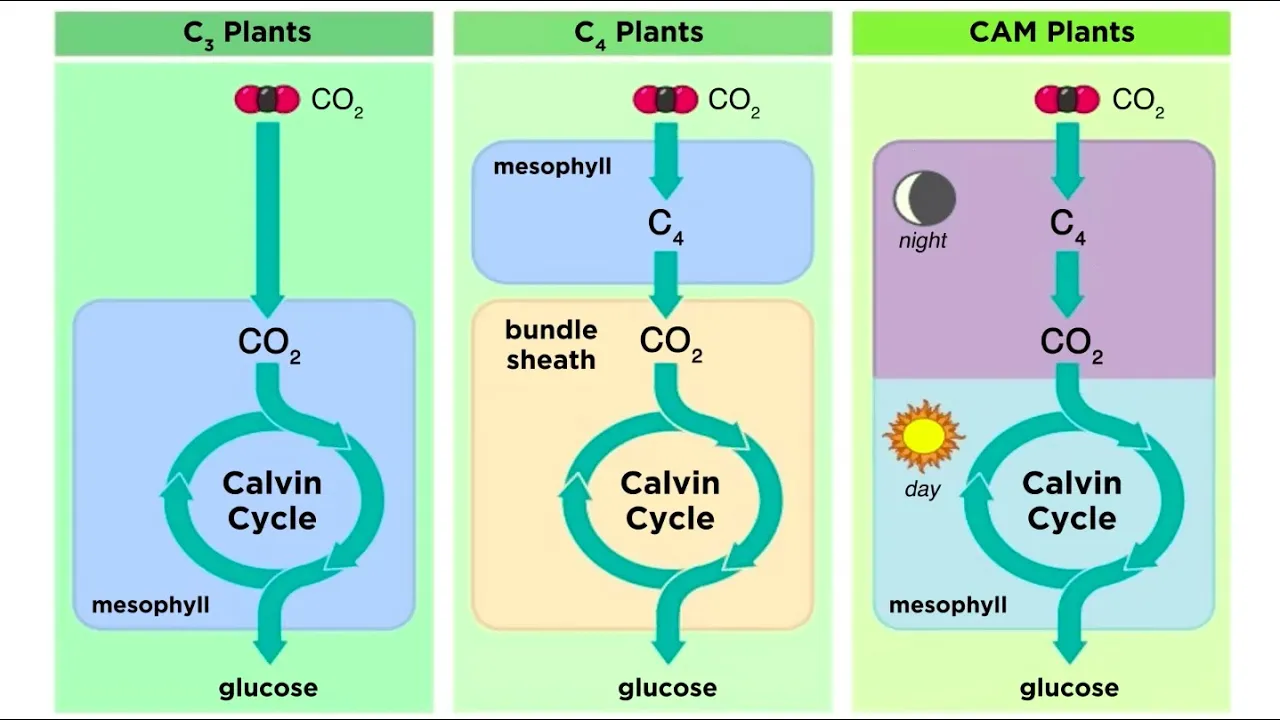
Photosynthesis in Plants: C3, C4, and CAM Pathways Explained
@ProfessorDaveExplains
485.4K views•2021-04-07

Bacterial Communication: Quorum Sensing and Biofilm Formation Explained
@JHUAAP
12.6K views•2011-06-28

Enteric Nervous System Explained: The Gut's Brain | Neurobiology Lecture
@alumniu6029
438 views•2018-09-12

Bacteriophages: Earth's Deadliest Killers and Future Antibiotics
@kurzgesagt
34.6M views•2018-05-13
Related Study Plans & Knowledge Roadmaps
Structured learning paths in Biology