





![Why Finnish Is One of The EASIEST Language [7 Reasons]](https://i.ytimg.com/vi_webp/jTKBfy8OHzw/maxresdefault.webp)










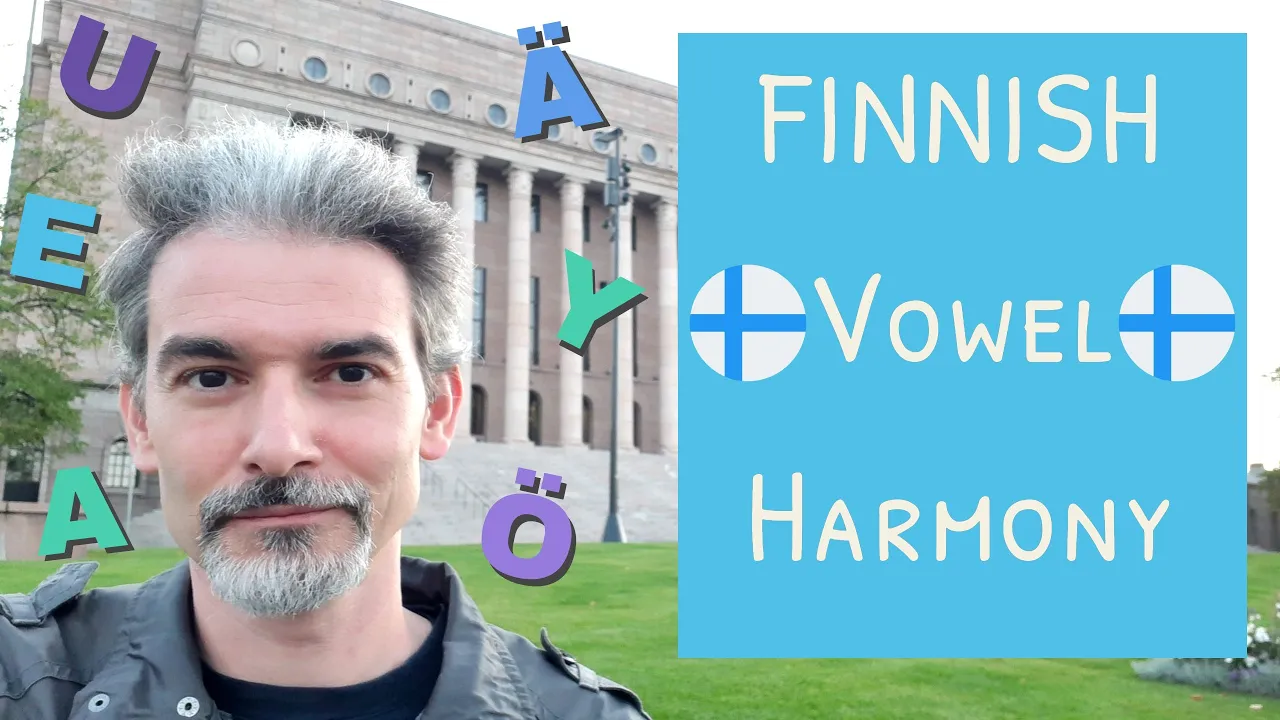














Finnish vowel harmony is a phonological rule that divides vowels into three groups—back vowels (ah, oh), front vowels (a, uh), and neutral vowels (ee, e)—and dictates that back vowels cannot mix with front vowels within the same word, while neutral vowels can freely combine with either; this principle governs case suffix selection, verb conjugation, and question formation, with exceptions primarily found in loanwords from Greek or Latin.
Finnish Vowel Harmony Explained: A Complete Guide
Added:Familiarity with the Finnish alphabet, specifically the pronunciation of its eight distinct vowels (A, O, U, Ä, Ö, Y, E, I).
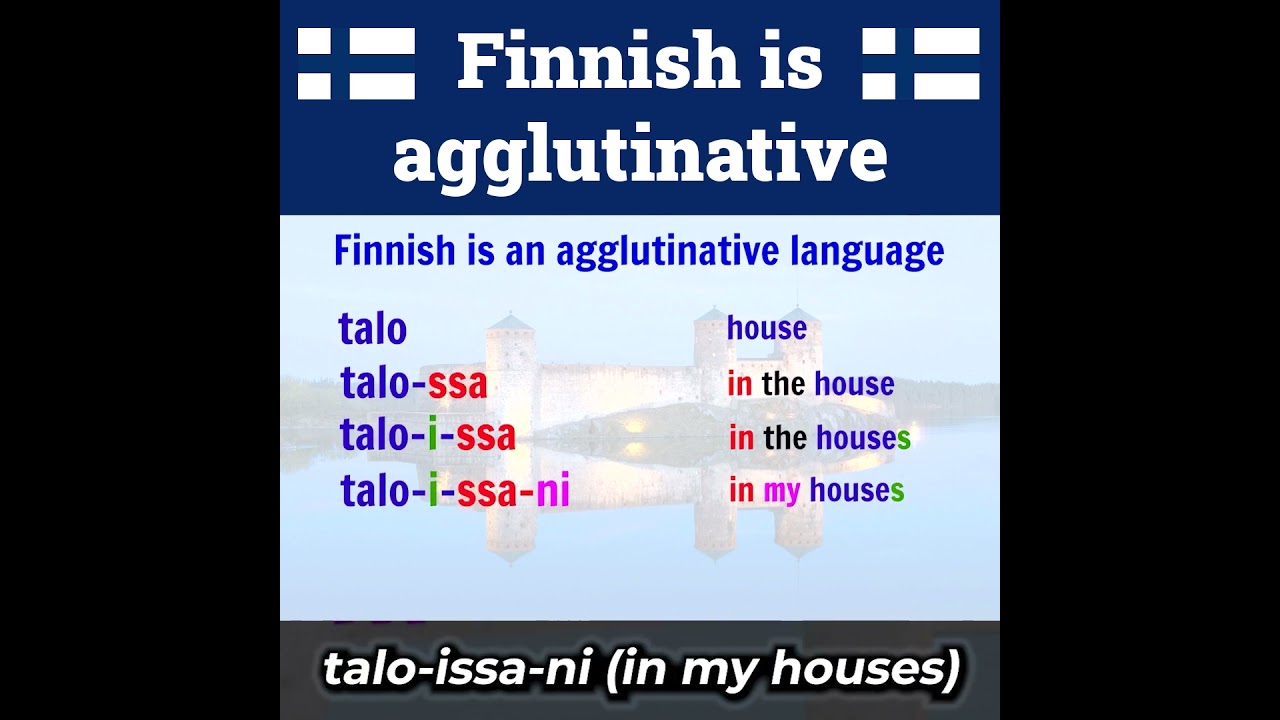
Understanding the basic concept of agglutination, specifically how suffixes are appended to word roots in Finnish.
Fundamental knowledge of basic phonetic terms, such as front vowels, back vowels, and neutral vowels.
Awareness of how word stems can change when suffixes are added (basic stem vs. dictionary form).
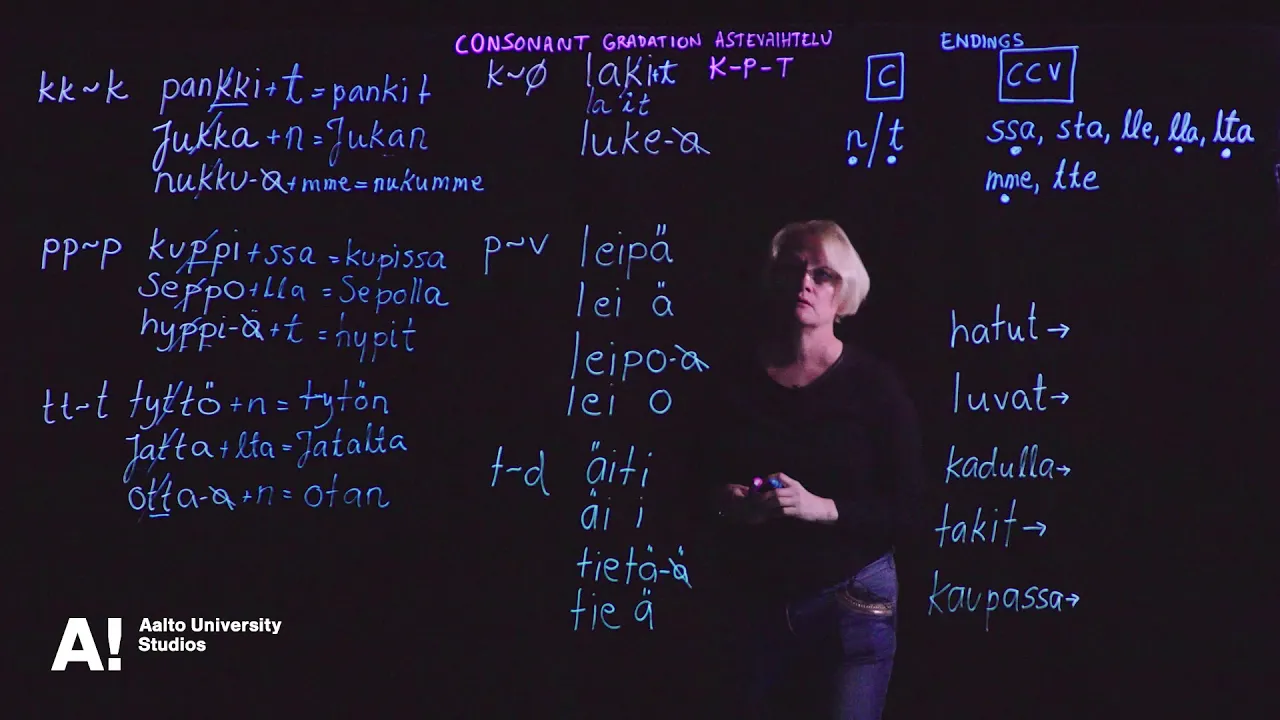
Consonant Gradation (astevaihtelu), which is the other primary morphophonemic system governing Finnish word stem changes.
How vowel harmony applies to Finnish compound words (yhdyssanat), where each component maintains its own harmony.
Systematic application of vowel harmony to the 15 Finnish noun cases (e.g., choosing between -ssa/-ssä, -lla/-llä, -ta/-tä).
Verb conjugation paradigms and selecting the correct personal endings (e.g., -vat vs. -vät) based on stem harmony.
Analyzing phonetic adaptations and spelling choices of foreign loanwords and colloquial slang in modern Finnish.
33.5K views760likes17:25Original Release: 2021-04-11
hello and welcome to finnish with anna you'll learn finnish here in short palatable lessons with a native speaker in this lesson our topic is vowel harmony in finnish vocalic harmony but before i start the lesson i wanted to let you know that i have added some new worksheets and printables on my website www.finishwithanna.com i have been asked to provide more materials on cases so i made a cases worksheet that has 19 pages of exercises on cases plus all the answers that is now available as well as new vegetables flashcards also you can always pop in on my website to see what i am working on at the moment with that said let's begin this lesson vowel harmony might sound like a difficult topic but actually it's a rather simple principle that guides the use of vowels in finnish the vowels in finnish can be divided into three groups back vowels which are pronounced towards the back of the mouth these vowels are ah then there are front vowels it'll call it which are pronounced towards the front of the mouth these are a uh and the third group is neutral vowels neutrality focalit which are pronounced in the middle of the mouth these are ee e let's say the vowels together ah oh [Music] e here are the rules of vowel harmony as i said they are actually rather simple firstly back vowels don't mix with front vowels so they don't appear together in the same word however they can appear together in compound words when two words are combined into one here are a few examples winter plus night becomes winter night little or small plus girl becomes meaning little girl evening plus cave walk becomes il takavelu meaning evening walk thirdly neutral vowels are free agents and can mix with both front and back vowels and they can also appear on their own here i have some examples contains a back vowel and a neutral vowel e de ti contains the neutral vowel e mother contains the front vowel ah and the neutral vowel e nadi mis contains the neutral vowels e and e to wish contains the back vowels or and are and the neutral vowel e [Music] light contains the front vowel and the neutral vowel e let's say these words he great you may have been wondering how you can know which suffix to choose with those cases that have both an option with r and an option with a vowel harmony helps there if the word has a back vowel or o choose the suffix that contains ah for example talo a house contains two back vowels are and or so we choose the r option for example in inescvi yuna train contains back vowels o and are so in other seven we say contains back vowels o and o so we choose the suffix with ah for example if the word has a front vowel or only neutral vowels e and e the suffix is the one that contains ah for example paiva de has the front vowel ah so we choose the ah suffix and odessive is miss has only neutral vowels so again we choose the ah suffix in has two front vowels so we choose the ah suffix in inescvi to usa let's say this word talo yuna ulta nice the same rule applies to verbs in third person plural they i have three verbs here you are drink sure eat and fieda take something somewhere the verb yoda contains back vowels the verb sure contains front vowels and the verb vieda contains neutral vowels in its personal forms only verbs that contain a back vowel get the suffix containing ah in third person plural here the verb yuada contains back vowels o and o so it gets the r suffix in third person plural hey you avat they drink the verb suada contains front vowels so it gets the suffix with ah resurvat they eat the third verb vieda contains only neutral vowels in its personal forms so it too gets the suffix with ah heavyevat they take this rule also applies to the suffix when forming a question out of a verb to learn how to form questions in finnish check out my questions kusumuxet video the link should be on the screen now if the verb has a back vowel the suffix is ko and otherwise the suffix is here are a few examples is he or she going to call me has a verb soita that contains back vowels o and ah so the suffix is ko the same goes for osatkola can you sing the verb osata contains the back vowels or and are so the suffix is again ko is he or she going to stop buying a grocery store or a shop contains the front vowel ah so now the suffix is ke viejko han lapset paivagotten is he or she going to take the kids to the daycare or kindergarten via contains only neutral vowels so again the suffix is let's say this together mina you one foreign a no great there are exceptions to every rule of course the most notable exception to the rule of front vowels and back vowels not mixing is loanwords especially those that are based on greek or latin you can see from the colors i've used here that all these words contain both front and back vowels a higher synth it is also important to note that with compound words you only consider the latter word when conjugating them in cases makes paivakote meaning daycare or kindergarten the latter word koti contains a back vowel o so we choose the suffix with ah in in meaning afternoon the latter word paiva contains the front vowel ah so we choose the suffix with a il mottori makes mo tie meaning motorway or freeway the latter word tie contains only neutral vowels so we choose the suffix with a motto in additive let's say this together olympia is it conductor psychology a nice that was it for today if you enjoy my videos please consider subscribing to my channel and visiting my website too thanks for
Up Next

21:51
Finnish Grammar Explained: All 15 Cases Overview
@Finnish.As.A.Foreign.Language
23.6K views•2023-10-02
36:52
Constraint Interaction in Optimality Theory: Epenthesis & Deletion
@Vidyamitra
180 views•2018-08-20

8:59
Forensic Linguistics: How Language Solves Crimes | PBS
@pbsstoried
1M views•2024-01-25

21:32
Accent Expert Explains U.S. Regional Dialects | Part 1
@WIRED
9.3M views•2021-01-21
Related Study Plans & Knowledge Roadmaps
Structured learning paths in Linguistics
linguistics
Optimality Theory: Tableaux & Constraints
01Phonological Basics: Sounds, Syllables & Rules
02Foundations of Optimality Theory: GEN, CON, and EVAL
03The Constraint Inventory: Markedness vs. Faithfulness
+ 2 more learning modules
15h5 modules
Explore Roadmap
linguistics
Morphosyntactic Alignment: S, A & P Systems
01Foundations of Syntax: Transitivity and Arguments
02The Linguistic Variables: Mapping S, A, and P
03Nominative-Accusative Alignment
+ 3 more learning modules
12h6 modules
Explore Roadmap
linguistics
Analyzing Sign Language: Phonology & Syntax
01Foundations of Sign Language Linguistics
02Phonology: The Five Parameters of a Sign
03Morphology: Word Formation and Classifiers
+ 2 more learning modules
14h5 modules
Explore Roadmap
linguistics
Pragmatics: Speech Acts, Grice & Politeness
01Introduction to Pragmatics: Meaning in Context
02Grice’s Cooperative Principle & Implicature
03Speech Act Theory
+ 2 more learning modules
14h5 modules
Explore Roadmap