



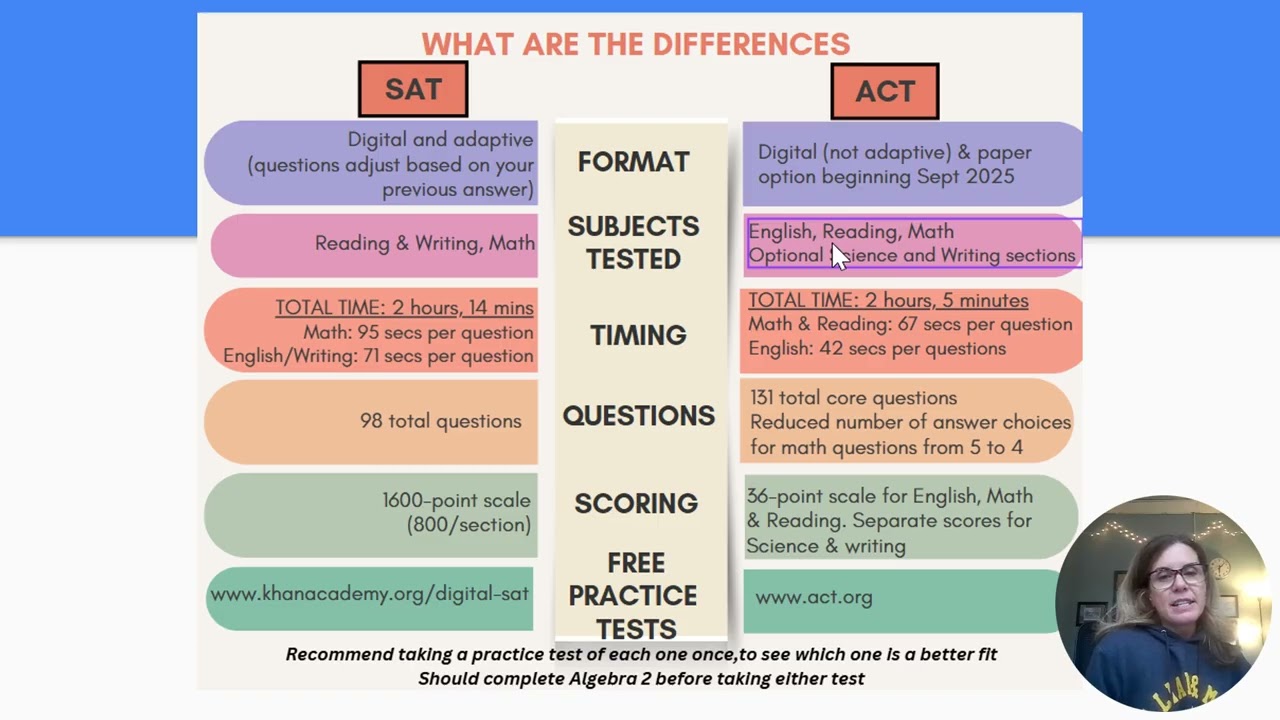


































The SAT, originally created by psychologist Carl Brigham as an intelligence test during World War I, has evolved into a college admissions tool that increasingly measures family wealth and educational opportunity rather than pure cognitive ability. Research by Stanford's Raj Chetty shows that students from families earning over $200,000 score an average of 1150 on the SAT, while those from families earning under $20,000 score around 890. This creates a cycle where wealthier students gain access to more selective colleges, which in turn leads to higher lifetime earnings, perpetuating intergenerational inequality. The College Board redesigned the SAT in 2016 to better measure college preparedness rather than innate intelligence, but the test continues to reflect and reinforce existing socioeconomic disparities in American education.
What the SAT Really Measures: Bias, Wealth, and College Access
Added:These 50 cards represent every person who took the SAT college entrance exam in 2017.
In America, this score -- this ranking of students -- is hugely important.
Elite schools like Yale or Harvard select the large majority of their students from this pile -- the top 1 percent of test takers.
And it's not just super elite schools.
A public flagship state school, like the University of Georgia, admits most of its students from this pile.
And even a less selective school, like Wichita State University, admits most of its students from this pile.
All three of these ranges are higher than the average score.
This why people pay lots of money to train for the test with companies like Princeton Review, Kaplan, and PrepScholar.
A slightly higher score can make a big difference.
That’s also why some really rich people got caught paying lots of money to help their kids cheat on the test.
"Dozens of coaches, actors, and CEOs..." "Felicity Huffman accused of paying $15,000 to have someone either take the exam for their child, or to correct their child's answers afterward.." Your place in this ranking can have a huge impact on what opportunities come your way.
So it’s worth asking... what exactly does the SAT measure?
What does this score actually say about you?
To answer this question, we have to start with this man: Carl Brigham.
He was a young psychologist during World War I who was obsessed with measuring human intelligence.
He would devise puzzles for soldiers that supposedly measured their intelligence by testing whether they could decode symbols, draw missing parts of a picture, or even complete maze.
He concluded that white people of English, Scottish, and Dutch descent were smartest.
At the very bottom were black people and recent immigrants from Poland and Italy.
He ignored the fact that some test takers didn't speak English.
So answering a question like "How many are 60 guns and 5 guns" could be difficult.
He ignored how some people were barred from receiving an adequate education.
Which meant some puzzles, like this one, could be quite challenging.
He just assumed the scores reflected the innate intelligence of different races.
And because of this, he wrote that black people were so much less intelligent that America should worry about "racial admixture" which would "incorporate the negro into our racial stock" -- and "taint" the population.
After World War I, Brigham wrote a new test to measure the intelligence of prospective college students.
He included word and number puzzles, like: Pick the three words below that are most related: Chops, liver, round, fore-quarter, rump, sirloin.
Yeah, I don't know, either.
Anyway, Brigham's exam was called the Scholastic Aptitude Test.
The SAT.
The SAT wasn't very popular at first.
In 1941, just 10,000 people took the exam.
That was just 1 percent of high school seniors.
Most colleges just didn't need it.
They didn't have that many applicants, partially because less than 10 percent of people Americans went to college.
So they could spend more time with each application.
And many elite schools administered their own entrance exams.
Then, World War II ended.
Millions of troops returned to the US.
And there was a new benefit white veterans could take advantage of: the GI Bill — which helped them pay for college.
And college enrollment skyrocketed.
All of a sudden, colleges had way more applications to sort through.
And they needed a tool to help them figure out who to accept.
So they started requiring the SAT, which gave them some numerical way to rank applicants.
Meanwhile, the College Board recognized that Americans didn't love the idea of an "intelligence test" determining their future.
So they started saying their exam measured college preparedness.
And every few years, they proved it -- by saying their exam, along with high school grades, were a good predictor of how well students do in college.
They still do this.
For example, here's that analysis from this year.
It shows that high school GPA alone gets us about halfway to predicting college GPA.
But the College Board sold schools on this next part: If we consider SAT scores along with high school GPA, this prediction can get a bit better.
And colleges bought into this rebranding, and started asking for SAT scores.
In 1941, just 10,000 students took the SAT.
By 1950, 80,000 students took the exam.
By 1960, 800,000 students took the SAT.
By the next decade, it rose to a million.. Now, more than 2 million students take the exam each year.
And as the competition for college ramped up, the applications got stronger.
In 1982, the average high school graduate completed Algebra or maybe Algebra 2.
By 2004, the average student was closer to Trigonometry.
Also, more students had extracurriculars on their applications.
In 1992, just 19 percent of high school students were leaders in an extracurricular activity.
Just 12 years later, in 2004, that number doubled.
As the competition got stiffer, students started applying to way more schools.
In 1967, about 40 percent of students applied to more than two schools.
Now, it's more than 80 percent of students.
And a decent chunk of them apply to more than 6 schools.
All of this overwhelmed admissions offices.
So they started to rely even more on the SATs.
In 1993, 46 percent of schools gave "considerable importance" to SAT scores.
By 2005, it was 59 percent.
But looming over the increasing weight of this number, was this other thing the SAT seemed to measure.
Wealth.
It's apparent in the data.
Here's a chart of the average SAT scores by family income.
Students whose families earn less than $20,000 score around 890 -- way below average.
And as we move up the income brackets, students score higher and higher.
The wealthiest students -- whose parents earn more than $200,000 -- score an average of 1150.
Now, defenders of the SAT have often said there's nothing wrong with the test itself.
They say this score is just reflecting the inequality in America.
And that's not wrong.
We can follow that logic up the chain.
We can start with America's highly unequal neighborhoods.
Schools in poor neighborhoods are more likely to be under-resourced.
And students from more affluent neighborhoods and schools tend to score higher on the SAT.
In turn, students with better SAT scores go to more selective colleges.
And this system is a cycle.
When Stanford researcher Raj Chetty and his colleagues tracked people born in the early-1980s, he found that these people -- who went to the most selective colleges -- -- had parents who earned, on average, $171,000 a year.
The parents of these people, who went to selective public colleges, earned $87,000.
And those who attended community colleges had parents who earned $67,000 a year.
And through this system, that wealth was passed on.
Chetty and his colleagues found that students who graduated from these elite colleges earned, on average, $82,500 a year by their early-30s.
Those who went to a selective public college earned half that -- $41,600.
And those who went to a community college were at about $30,000.
But Chetty and his colleagues found that, if low-income student gets the opportunity to attend a more selective school, they're able to graduate -- and earn just as much money as their classmates.
In 2016, the College Board redesigned the SAT.
The old test tried to trip up test-takers -- for example, asking about the meaning of obscure words like "acrimonious."
The new one tries to test what you've learned in school -- to try to make it less of an intelligence test.
For example, it'll show you a sentence like: The jungle has an intense clustering of bugs.
And then ask: What does "intense" most nearly mean?
Emotional Concentrated Brilliant Determined Still, your SAT score measures how well you'll do in college, to a degree.
It also measures where you grew up -- and what opportunities you had.
But it’s also a tool that keeps this inequality machine going.
College Board president David Coleman sees this happening.
He recently wrote: "We need a far humbler view of the SAT.
They should never be more than one factor in an admissions decision.
Low scores should never be a veto on a student’s life."
The SAT was created in the pursuit of precision.
An effort to measure what we're capable of -- to predict what we can do.
What we might do.
What we've forgotten is that, often, that can't be untangled from where we've been, what we've been through, and what we’ve been given.
Up Next

Where Black Families Reach the American Dream: Economic Mobility Study Reveals Key Factors
@CNBC
433.3K views•2022-02-23

Triumph of Orthodoxy Icon: Byzantine Art & History Explained
@BenCallan
2.1K views•2024-08-06

The Trajan Typeface: How One Font Dominated Movie Posters for 25 Years
@Vox
736.4K views•2018-06-28

Game of Thrones Opening Credits: A Cinematic Analysis
@gameofthrones
46.3M views•2011-04-18
Related Study Plans & Knowledge Roadmaps
Structured learning paths in General & Interdisciplinary Studies