









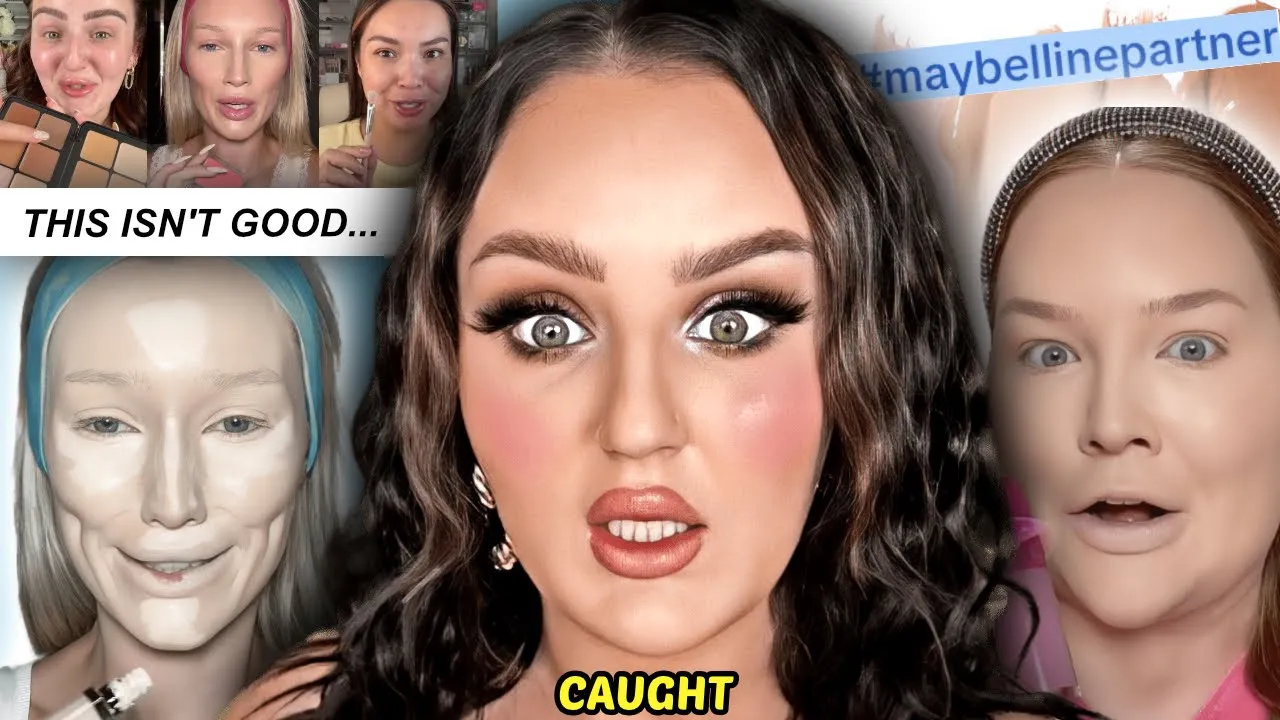
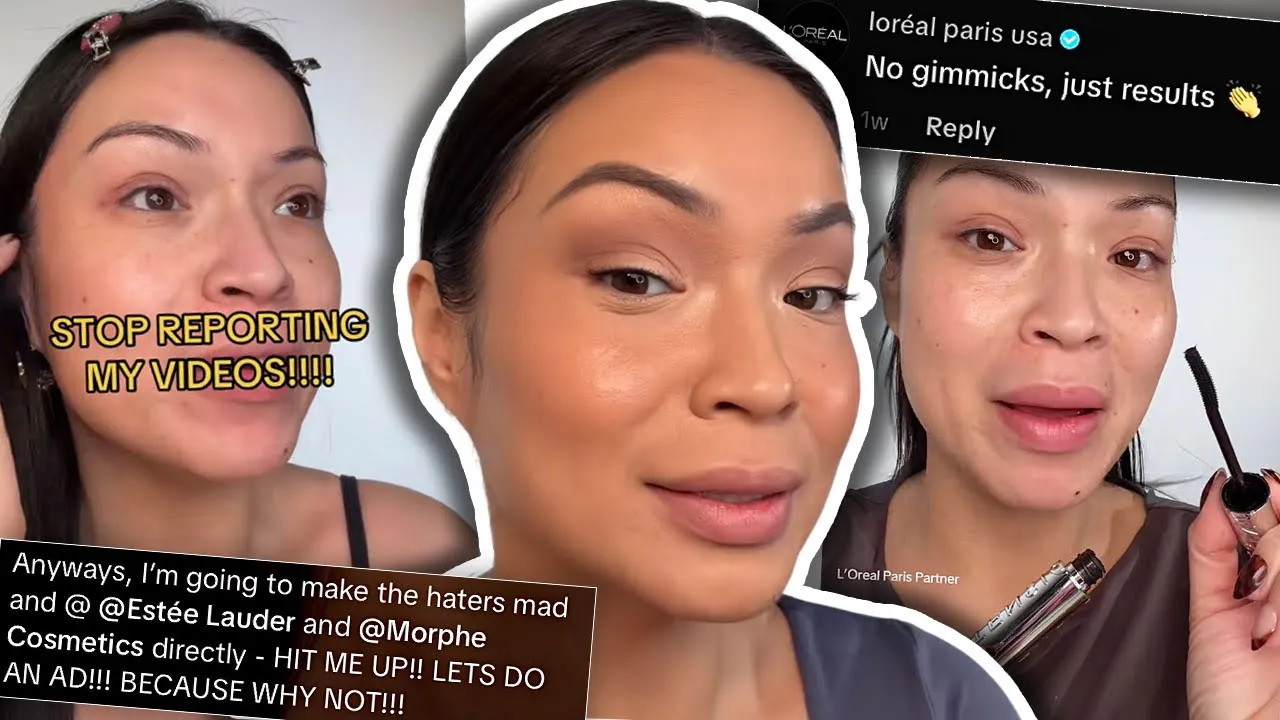


The beauty industry frequently experiences legal disputes over brand names and intellectual property, as demonstrated by Anastasia Beverly Hills' lawsuit against Billion Dollar Beauty over her book title 'Raising Brows, My Story of Building a Billion Dollar Beauty Empire,' which allegedly infringes on existing trademarks and affects search engine optimization. This case illustrates how brand names can become legally protected intellectual property, and how even book titles can be subject to trademark litigation when they closely resemble existing brand names. The video also explores how brands like e.l.f. Cosmetics are adapting their public personas to align with current social media trends, and how companies like Ulta Beauty are implementing marketplace models to expand product offerings while maintaining quality control through invitation-only brand vetting processes.
Beauty Industry Legal Battles and Brand Strategies | Weekly News Analysis
Added:This is my friend Anastasia. She is the brow revolution queen. Oh, do I have tea for you this week? And it is a brand new lawsuit having to do with Anastasia Beverly Hills. Here's more tea. They're not just suing Anastasia. They're suing Oprah Winfrey. If you've been around for a while, you know that I keep my eye on Halo Beauty, which is the vitamin / supplement company that was founded by Tati Westbrook and surrendered to her co-founder. His name is Clark Swanson. I started snooping over on their Instagram to see what was going on over there, like how popular are they? Is anybody interested in this trim vitamin? Like how are they doing? What what's happening? And I found some odd things. That's what I meant to say. I found something odd and I want to share it with you. So, that's what we're going to do. And you can tell me whether you think this is odd or not.
So, what look would you like today? Oh, definitely natural. I'm not a makeup person. So, that?
Hello, my friend. Welcome back to What's Up in Makeup, where we talk about everything that happened across the beauty space all in one place. On the side of me right now are all of the topics that we're going to be talking about today. And I encourage you to peruse them and decide which stories you're most interested in. Timestamps are down below in case you would like to skip around a little bit or my favorite part is watch the whole thing. It's a great show. Got lots of interesting things to talk to you about today. But before we do, I need to take just a moment to thank this week's sponsor. If you're like me, some days you just do not want to cover your face in foundation and concealer. You just don't want that makeup look because skin is in. You just want just a little zhuzhing, a little something to make you look a little more put together. And that's where our sponsor for today's show comes in, Typology. Typology is all about enhancing the skin you're in without overdoing it. And that's because it's not makeup, it's skin care. Right now, you are seeing the before.
And this is after. And it was super super easy. Let me show you how I did it. First, we're going to start with their nine-ingredient moisturizer mixed with the glow drops. In this combo, you're getting hyaluronic acid for hydrating and vitamin C for brightening.
And look how pretty that is. Next up, we are going to focus on the details. And y'all have heard me raving about Typology's tinted brow gel. It is the perfect amount of color with an easy-to-use tiny little spoolie that doesn't make a mess when you use it. And it has a high concentration of peptides, so it strengthens your brows and stimulates growth at the same time while making you look super cute. Now, it's time for their serum mascara. Same thing, you're going to get a little length, a little volume, and also those high concentration peptides and castor oil to strengthen your lashes over time.
And finally, we're hydrating our lips and giving a little bit of color with their tinted lip oil. I do like to take just a little bit of this and pop it on my cheeks as well to give that natural monochromatic flush. It's not sticky or heavy, so it's a great easy dual-purpose product. And we're hydrating while we're glowing, so that's amazing for us. And that's my quick running errands but still cute routine in natural light.
Proof that you do not need a full face to feel put together because skin is in and Typology makes it so easy to embrace that. If you would like to try out Typology for yourself, you can get one of these for free. This is a full-size 10-ingredient body moisturizer. And it is free for you if you spend $40 or more on their site using my link. But the kicker is, it only lasts for 1 week after this video goes live. Seriously, stop using 10 products to make it look like you're not wearing anything.
Typology is my favorite way to let my skin just do its thing and I know that you're going to love it, too. And with that, my friend, it is now time for What's Up in Makeup.
Oh, do I have tea for you this week? And it is a brand new lawsuit having to do with Anastasia Beverly Hills. And this drama goes way, way back. And I have the full story for you because I downloaded the lawsuit and I looked through it and it is it's wild. But before I tell you about the lawsuit, we need some background. And I've a question for you.
Would you purchase a book written by Anastasia Soare, the founder of Anastasia Beverly Hills? If you're not sure, here's the hook published about the book. It says, "Whether you're building a business, reinventing yourself, or navigating the unknown, Anastasia's journey will challenge you to dream bigger, take bold steps, and believe in yourself even when others don't."
Are you intrigued? Yes? No? Maybe? Let me know in the comments. But this is the twist. There is a big twist in this because Anastasia herself is being sued over this book, specifically the title of the book. The company Billion Dollar Beauty has filed a trademark lawsuit in the US District Court for the Central District of California. And again, it has to do with the title because Billion Dollar Beauty owns the trademarks to Raising Brows, Billion Dollar Beauty, and Billion Dollar Brows. And if you look at the title, two of those things are in Anastasia's title. One of them is, you know, might be able to be connected. But two of them are directly in the title of Anastasia's book. Now, everything I'm about to tell you is alleged. It is directly from the side of Billion Dollar Beauty from their lawsuit. So, disclaimer. Again, it's all alleged, everything I'm about to tell you. This is what the lawsuit says.
Apparently, ABH and Billion Dollar Beauty go way, way back to the early 2000s when the founder and owner of Billion Dollar Beauty, her name is Natalie Payne, was a customer at Anastasia's brow salon, where she got her start with her salon in Beverly Hills. Now, sometime around 2005, Claudia Soare, aka Norvina, I'm going to be calling her Norvina throughout this, but this is Anastasia's daughter, she met with Natalie and was like, "Hey, I really like this product that you have.
We don't have anything in our line.
Would you want to do some kind of licensing or collab deal with us so that we can sell your brow product in our salon." The product was called Brow Boost and it was an eyebrow conditioning product. And at that point, they didn't have anything like that in their salons.
So, Natalie sends over the samples of the product. Norvina loves them and she decides to set up a meeting with Natalie to talk about things. They're talking about a co-branded product potentially.
And they talked about allegedly the formulation and marketing and worldwide distribution of this product at the ABH offices. So, then Norvina presents this to her mom, Anastasia. And Anastasia squashed it. She was like, "Absolutely not. This is a direct competitor to us and I don't want to do this." And Norvina allegedly tried to convince her mom, "No, this is a great idea." And her mom was like, "Absolutely not. This is our competition." So, in that, if all of this happened, then we know that Anastasia is familiar with Billion Dollar Brows and has been for a very long time. So, the question is, was the naming of her book nefarious or was it a coincidence because she's naming her book brow things. It's about a brow, you know, it's brow stuff. So, she's just naming her book after brow stuff. That's the question. Was it intentional or not?
Well, here is the evidence presented. Of course, we have the title of the book, Raising Brows, My Story of Building a Billion Dollar Beauty Empire. So, we've got the trademarks owned by Billion Dollar Beauty. The Raising Brows is one of their products. And also, Billion Dollar Beauty is the name of their company. What's interesting is it goes beyond the actual title and using the trademarked words within the title. They say that their biggest beef is the promotion of this book and how it's affecting their brand. That essentially, the title of this book is hijacking the search engine optimization or SEO of Billion Dollar Beauty and pushing them down in search and suppressing their business due to this title. So, they're acclaiming that it's actually hurting their business that she named her book this. And they do have a law specifically called trademark dilution, which is exactly what Billion Dollar Beauty is alleging. They're also suing for trademark infringement, false designation of origin {slash} unfair competition, and unfair competition and false advertising. But in that, here's more tea. They're not just suing Anastasia. They're suing Oprah Winfrey.
This is my friend Anastasia. She is the brow revolution queen, the queen of brows. And she's written a book called Raising Brows. And it really is about helping you understand how to start from scratch building a billion dollar business. That is what you did. Yes.
Yes. Yes, Oprah Winfrey. They're suing her. Also, Oprah Daily LLC, which used to be O Magazine, as well as Random House LLC, and Ulta Beauty. Billion Dollar Beauty is suing them for promoting the alleged infringing product, aka the book. Here is a quote directly from the lawsuit. It says, "Beginning in or about September 2025, defendants began advertising for a live event entitled Raising Brows Live Event: Building Your Dream to a Billion-Dollar Brand to be held on October 23rd, 2025 with defendant Oprah." Oprah made this Instagram post in collaboration with Anastasia in order to promote the book.
This was posted to Anastasia's account, also Oprah's account, which has 22.4 million followers, as well as the Oprah Daily account, which adds another 3.4 million followers to this reach. So, now Oprah is being sued for promoting this book. It does look like people like Kim Kardashian, Jennifer Lopez, RuPaul, Artemis Patrick from Sephora, and Kesha Steel- Steelman from Ulta, they gave endorsements for the book, but that since they're they don't seem to be actively promoting the book, they're not named in the lawsuit. Ulta Beauty also did a collaboration giveaway. This is where it gets even more complicated. So, that's why they're named was because of this giveaway that they did in collaboration with the book. So, speaking of this giveaway, let's do a metaphor. Okay, so the book title, imagine, is like baking the cake, right?
Then we have the things added to the cake, maybe it's like chocolate chips or it's nuts or whatever, that's the promotion of the book. Are you ready for the icing on the cake? Because this is freaking wild, right? All right, so check out this picture directly from the lawsuit. This is exhibit N. It says, "Defendant Anastasia Beverly Hills, in advertising a gift with purchase, this was part of the Ulta thing, for their infringing product, the book, with a limited edition shade of their brow wiz, which is nearly identical in product packaging, color, size, purpose, effect, and design to the plaintiff's Raising Brow Pen." So, what they're saying is that not only did she copy the title, she copied for giveaway to go along with the Raising Brows book, the Raising Brows pen by Billion Dollar Brows.
Was that intentional? I mean, look at it. It's It's This was a very what the moment for me.
It was like, "Wha- Is Could this be a coincidence?" I guess possibly, but that's wild. That is wild. And of course, Billion Dollar Beauty is saying that all of this was deliberate, that they purposely used Billion Dollar Beauty's trademarks to cause confusion, mistake, and deception.
So, the question is at this point, what does Billion Dollar Beauty want? Because when you have a lawsuit, usually there's something that you're requesting from the court. This is what they want.
First, they want the court to make Anastasia stop selling or promoting any products that copy their brow pen. They want them to destroy all of the books and stop all the ads. Then, they want Anastasia to pay for damages and profits that from that they made from the copies. And after that, they want Anastasia to fix any confusion she caused with corrective advertising and cover Billion Dollar Beauty's legal fees. That's all.
Nothing major.
So, what do you think of all of this? Do you think that Billion Dollar Beauty has a case? Let me know in the comment section down below. And if you are interested in Anastasia's book, it's supposed to launch on October 21st. So, we'll see what happens next. If you've been around for a while, you know that I keep my eye on Halo Beauty, which is the vitamin/supplement company that was founded by Tati Westbrook and surrendered to her co-founder, his name is Clark Swanson. Back when Tati surrendered the brand to Clark, I predicted that Halo could not survive without Tati. And now a year later, I admit that I was wrong. Halo Beauty does still exist. Uh they did do a merger with a beauty brand called Tru En Luscious back in December. But since then, there really hasn't been a whole lot going on with Halo Beauty until a couple weeks ago when we talked about that they had put up an Instagram story about two products that were releasing soon. The first one has released, it's called Trim, and it is a weight loss supplement. The second one is a vaginal health supplement. We don't know much about it yet. But because I'm a nosy I started snooping over on their Instagram to see what was going on over there, like how popular are they? Is anybody interested in this Trim vitamin? Like, how are they doing? What What's happening? And I found some odd things. That's what I'm going to say. I found something odd, and I want to share it with you. So, that's what we're going to do. And you can tell me whether you think this is odd or not.
This is a post from October 16th, and it has 77 likes and no comments. And I thought that was kind of interesting because that's a decent amount of likes.
It is very hard to get your brand out there on Instagram. So, 77 likes, it's, you know, respectable, but no comments.
Okay, fair. Then I was wondering, who are these people that are liking this post? Who's interested in this product?
And I found something that I wanted to share with you. If you look at it, the vast majority of the people liking this post don't follow Halo Beauty. And in fact, they don't follow anyone. And a lot of them don't have any followers either or any posts. It's like 0 0 with no posts.
That's suspicious. So, I clicked and I clicked and I clicked, and every once in a while I would find someone who did follow Halo, who did have followers, who seemed to be engaged on Instagram, but it was very few of them. But that wasn't enough for me because, you know, I like data. So, I had to get the numbers. All right, here are the numbers. In case you like data, too, remember it's 77 people liked this particular post. 12 of them were private accounts, so I couldn't tell if they were following Halo Beauty or not. Then there were 13 public accounts that were following Halo Beauty. A whopping 47 of these accounts were not following Halo and were not following anybody.
There were three accounts that had been shut down for whatever reason. When I clicked on their name and opened it up, it said that this account had been suspended. And my favorite group though is these two guys. They were following a small number of people, but not Halo.
These two accounts really made me giggle because I would like to introduce you to Hazel Gomez and Madeline Elliott, who um it seems like Hazel and Madeline might not be fans of Halo Beauty. I don't know. You tell me what you think. It's just speculation. I don't know Hazel or Madeline, but I don't know. And the thing was, almost every post that I clicked on that had more than just a few likes on it was like this, where the vast majority of the likes were from people that had pretty much inactive accounts. I mean, if you're using Instagram, don't you think you would be following somebody or at least following Halo Beauty? Like, how did they even find this account to like it? You know what I'm saying? The most alarming post to me was the announcement of Trim. So, the announcement of Trim, which is the weight loss supplement, has 924 likes and no comments at the time when I was looking at this. I don't know if there are any now. It does seem like it is a very similar pattern as what I saw with the one with 77 likes. We also have this person named Piper Garcia, this guy named Aurora Mitchell, and this guy named Elena Perry, which are the same as the guys from before. They have a few people that they're following, but they're not following Halo Beauty. And the vast majority of the accounts that I clicked on that liked this post did not follow Halo Beauty, did not follow anyone, and had no followers themselves or maybe had one follower. Anyway, I'm pointing this out because I did find this interesting, and I thought you would find it interesting. I am not going to verbally draw any conclusions.
I'm going to let you do that.
But as always, I would love to know what you think in the comments. We've been talking recently about how e.l.f.
Cosmetics is changing their persona publicly. It seems like they kind of flipped a switch, and now they are presenting themselves with a different personality as a brand as they have been for the past 10 or so years. So, they used to be known as a very women-first, women-empowerment kind of brand. They have lifted up women with disabilities, sexual assault of survivors, women in the workplace, and and they had the the Too Many Dicks campaign where they said that essentially the message was that there were more men named Richard in boardrooms than there are women in boardrooms. When companies started getting rid of their diversity, equity, and inclusion initiatives, e.l.f. was extremely vocal about how diversity, equity, and inclusion was a reason why they have been so successful because when you have voices of varied opinions and varied perspectives, it can only help the brand grow and do better, and that is an asset to have diversity, not some weird thing that other companies are trying to make it be. And because of that, a lot of their customers have loved them for being this vocal. But not so much recently. Back in May, they came out with a One Trick Pony campaign, which was kind of poking fun at political correctness. And then in August, many fans were absolutely outraged when they hired Matt Rife for a campaign. He is a comedian who has spoken down about his female fans and also joked about domestic violence in a Netflix special. So, they had that and then last week we talked about how they had that debacle with that giant primer they were trying to sell where customers were feeling like they had a bait and switch. And then Elf was coming back with like a hey bestie kind of message enter our giveaway. Just not taking those feelings at all into thought, you know, just just hey bestie-ing their way out of their customers being genuinely upset, feeling like they were tricked into buying a 0.8 oz primer instead of the 40 oz primer that they thought they were buying. This is beside the point that, you know, who needs a 40 oz primer, but there were people that that genuinely wanted it and thought they were buying it, but then they felt like they were tricked into buying the smaller version. Elf kind of laughed it off, at least publicly. Well, this week their CEO, his name is Tarang Amin, he did an interview with Fast Company talking directly about a lot of this stuff. And when I saw that this article existed, I was really interested to read it because Tarang Amin is the person who has been in charge of Elf as the CEO since Elf turned the corner and became the powerhouse brand they are today. It is Tarang Amin's leadership that has gotten them to this point. So, what did he have to say about all this? I'd been wondering, now I was about to find out.
So, the article doesn't just talk about Matt Rife and all of that stuff. It also talks about the price increases that they did back in May and their August refusal to provide shareholders with a financial outlook for the fiscal year ending in March of 2026. And then it goes into the Matt Rife campaign, which is I think what probably what's most relevant to you if you're watching this video. So, regarding Matt specifically, Tarang said, quote, "In this one-time post, we clearly missed the mark. We are all about delighting our community. This did not delight our entire community and for that we apologize. I personally take that seriously."
Okay, fine. But what I'm wondering and what a lot of people are wondering is if they took that seriously, why is the campaign still up? Why is it still visible on their Instagram, on their TikTok, and their YouTube channel if they take those concerns seriously? I don't know if it was a contractual thing with Matt. Maybe there's something legally that they can't take it down.
So, that's the first part. Then the interviewer were smart. They asked about staying edgy. And this is what Tarang said, "We clearly missed the mark on this one. Let's learn from it, but don't lose our mojo. Don't become scared.
Don't become safe." And it was with that that I realized that Tarang Amin seems to be on board with this rebranding of Elf. Don't become scared. Don't become safe. In that moment, I wondered, is Tarang scared? Is he scared of this new direction? Because this is totally different than what he's done to grow this brand since 2014. But I can see why people are advising him of this. I can see why Elf is taking that turn because if you look at social media and the companies and the influencers that are popular, it's the rage-baity ones. It's the ones that do edgy and don't apologize for it. I'm thinking Mikayla Nogueira. I'm thinking James Charles.
I'm thinking Jeffree Star. These people are still extremely popular even though they're known to be shady or horrible in their own individual ways. People still love them. And I can see why that would be confusing for someone who built their brand on morality and lifting people up.
But in the end, Tarang has to make his shareholders happy and he's it looks like from this statement that he's trusting in that process. By the way, side note, I found this really interesting, this little personal side note. I realized that Jeffree Star has me blocked on TikTok.
No idea why with my less than 11,000 followers over there, Jeffree Star has me blocked. Super, super weird. Doesn't have me blocked on Instagram. I don't know. But okay. Anyway, point is a lot of these big influencers are being rewarded with views and followers for being jerks. And I think that the team of at Elf sees that and that's why they're making that choice to change that persona. And it just makes me sad.
I wish that they would just stick by their guns, but I can kind of see why not because they have to chase the money in the end because they are a business.
They're not people, they're a business.
So, it just it just makes me sad and I guess we'll just have to wait and see what happens next. The next piece I want to talk to you about is important in order to get rid of any confusion if you see this headline because it is confusing. The headline is Unilever sells Kate Somerville to Rare Beauty Brands. And initially, you may think, okay, Rare Beauty Brands. That must be Selena Gomez Rare Beauty. Maybe she's turning Rare Beauty into an incubator brand, a conglomerate kind of like the way that Elf now owns Naturium and Rhode Beauty and all of that. Like maybe she's doing that. No. Rare Beauty Brands is completely and totally separate from Rare Beauty by Selena Gomez. Rare Beauty Brands owns three companies right now, at least according to their website.
They own Patchology. They own a company called Dr. Dana. Apparently, it was founded by Dr. Dana Stern who is a board-certified dermatologist and a nail specialist. And they also own a company called dot.dot.dash, which is a spin-off of Patchology. So, it's that company, not Selena Gomez, that has now acquired Kate Somerville, which used to be this huge skincare brand. I'm thinking ExfoliKate was like a huge name in the skincare industry. And we haven't really heard much about Kate Somerville recently and Unilever has been whispering about how they want to offload some of these brands. So, I imagine that that's why it changed hands and now Rare Beauty Brands is going to have to try to bring life back into Kate Somerville. Along with buying the brand, they also gain ownership over the brand's clinic on Melrose Place in Los Angeles. Kate Somerville was founded in 2004 and according to reports, they have struggled to stand out in the crowded skincare market. So, we'll have to see if Rare Beauty Brands can bring them back. I do not think anybody can deny that Amazon changed the online shopping game forever. It's debatable whether it was for the better or for the worse, but it definitely changed things. And there are companies that are looking at the way that Amazon does things and trying to use that same model in order to benefit their companies. The first company I think of off the top of my head is Walmart where you can go on Walmart's website and you can buy things from sellers similar to the way you can buy things from sellers on Amazon. Well, Ulta Beauty has now set up the UB Marketplace, which is a similar format but different. I want to tell you about it because one of the biggest attractions to Amazon is kind of what I remember being the big attraction to shopping malls back in the day was that you could get so many more things all in one location. You can just go to one place and get all the things. Department stores, all of that. Amazon makes it easy to buy so many things all in one shipment. That's the draw. And when it comes down to it, a single retailer can only stock so much stuff. A Ulta store can only have so many things in it. And Ulta can only be responsible in their warehouses for so many products. But opening up an online marketplace allows the ability for Ulta to earn profit off of products that they are not shipping out directly themselves. They are calling it a quote thoughtfully curated marketplace dedicated to beauty and wellness. Lauren Brindley, she is the chief mark merchandising and digital officer at Ulta Beauty. She said in a press release, quote, "UB Marketplace allows us to deliver more newness, faster entry into emerging subcategories and trends, and a deeper category authority while keeping the to more brands and for brands, this means access to Ulta Beauty customers.
But what seems to be different about Ulta Beauty versus some of these other platforms is that it's invitation only.
Ulta is vetting every single brand that comes in through the UB Marketplace to make sure that they are a legitimate brand, that they are a brand that's going to keep up with customer service, and that they're not going to get any kind of bull because a customer has a bad experience with one of these marketplaces. They're like vetting every single person. You have to apply as a brand in order to be a part of the UB Marketplace and then you have to be approved. And I personally think that's very, very smart because I have heard of people buying things off of Walmart's website or buying things off of Amazon and it turns out to be fakes or it turns out to be not shipped correctly or broken and then having trouble with returns and all of that. Ulta's learning from those mistakes and trying to fix them from the jump. Josh Friedman is the senior vice president of digital and e-commerce at Ulta and he stated, quote, "Invite only became the only way that we could stand behind the experience and make sure we had great brands with great products that take care of our great guests. You can obviously ask for an invitation, cannot just click a button, sign a form, and start selling on ulta.com. And that helps us control any risk of distributorship or reseller, but also make sure that we've got the right product and sellers that we can trust."
So, this is also where it's different.
You can't just go on the UB Marketplace and shop it. There's no button, there's no tab, there's there's none of that.
The UB Marketplace products that are being shipped from these people outside of Ulta are just with all of the rest of the products. If you want to find them, you're going to sort by new on the Ulta website and that's where those are going to show up along with all mixed in with the products that are being sold by Ulta through in store and online.
Everything's mixed up. Here's how you find out whether it's UB Marketplace or not. There is a teeny tiny little disclaimer underneath the product that says that it's being fulfilled by a UB Marketplace seller. Some of the brands that have become UB Marketplace sellers are companies like Amazing Cosmetics, Blink Ink, Blue Lagoon Skin Care, Inked by Danny, OG, Sara Happ, Tie Mo Beauty, which I know from TikTok, and White Lotus Beauty are all now in the UB Marketplace. And there are rumors that Sephora is looking to do the exact same thing. So, again, love to know your thoughts in the comments. What do you think about this? Are you sketched out?
Do you think this is cool? Are you ready for it, not ready for it? Let me know.
We've had so many sad stories about black-owned beauty brands recently that I wanted to share with you a happy one about The Lip Bar, owned and founded by Melissa Butler, who I look up to tremendously. Melissa did an interview with Beauty Independent and it was a really great interview. I definitely recommend you read the whole thing, but here are some highlights that I wanted to share with you about how she's continued to grow The Lip Bar in face of so many challenges like the fact that they are sold at Target. And we all know that Target has been boycotted by a lot of The Lip Bar's customers and that has been really hard on them. And what the article reveals is that even though they have lost sales through Target, their sales for the year are expected to be up 40%. When speaking about their growth, Melissa told Beauty Independent that resilience to its willingness to change has been their superpower and why they have been able to grow in and through tough markets. Because The Lip Bar isn't just available at Target, they're actually in 2,000 stores nationwide including CVS and Walmart as well as being available on Amazon. They said Amazon is a huge place where they sell The Lip Bar products. Melissa stated, "We have really been able to double down on our community. We've been able to double down on our profitability and we've been able to double down in terms of curating products that have allowed us to not only stay afloat, but frankly to grow." The Lip Bar actually rolled out in Target in 2018 before they started doing the diversity, equity, and inclusion initiatives. And what that means in practicality is that Target started making in 2020 the effort to find more high-quality brands from black-owned businesses, indigenous-owned businesses, Asian-owned businesses, LGBTQ+ owned businesses, minorities, just just giving them a shot to be in Target, seeking those brands out instead of just willy-nilly, just, you know, letting people come to them like they they did the effort to try to find these really high-quality brands and bring them into Target. Well, Melissa Butler and The Lip Bar were in there 2 years before that. So, when Melissa heard about them pulling back on their diversity, equity, and inclusion initiatives, she was really concerned for good reason. This is what she says about it. "My initial reaction was to FaceTime with the Target team to understand what does this mean for my business? What does this mean for Target's policy? How would this ultimately impact my business and my customers? It sucks because what we were told very immediately is that Target is still showing up for its communities.
Nothing has changed." What's really interesting is that she stated that nothing has changed in her relationship with Target and her brand's relationship with Target. Everything's exactly the same. And she says that part of the reason why they're growing so hard is because of social media and the way that they promote their products on social media and Melissa being a very vocal face of the brand. Another key value she highlights is just being honest with her customers about what's going on. She says in the interview, "I'm a very honest person. I say things that sometimes people don't want to hear. I can be a little controversial, but I don't shy away from that, especially if I think it will positively impact the community. People have responded to that honestly because beauty used to be from a place of pure vanity. When you can come through with a perspective that's raw and honest, the customer will reward you for that." I definitely, like I said, I highly recommend reading the entire interview. It will be linked down below. We're going to switch gears hard to an advertisement that was put out by The Ordinary this past week. And I usually put ads in the lighthearted story of the week because usually they're fun and uplifting and, you know, they kind of give us a little bit of joy at the end of the show. Oh, this one is not. This one's actually kind of scary and it's almost Halloween, so it makes sense, but it's creepy, dude. I'm going to show it to you, but if you're sensitive to like creepy you probably want to fast forward the story.
Again, timestamps are down below because it's it's creepy, but it's got a great message and that's why I want to share it with you. The I campaign centers around what they're calling the periodic fable. You know how beauty brands are constantly using marketing terms that don't really mean anything in order to sell products and they trick customers into buying crap they don't need by throwing these buzzwords around that are not regulated and they don't legitimately don't really mean anything.
And this is so on brand for The Ordinary and that's one thing I love because a lot of times when brands are acquired, like The Ordinary and Deciem, their parent company, were acquired by Estee Lauder, right? And one of the things that Brandon, who was the founder of The Ordinary, I have a full docu-series, two-part docu-series on Brandon Truaxe and the growth of The Ordinary. Um one thing we learned through that is that Brandon was all about transparency of ingredients. He was actually the driving force behind, in my opinion, from what I saw, from brands even talking about ingredients in their marketing. Talking about niacinamide and hyaluronic acid, nobody talked about that stuff before The Ordinary and The Ordinary trusted customers to respect the science and to understand that it doesn't have to be expensive in order to be efficacious, in order to work well, in order to be valuable. It doesn't have to cost a lot of money and that's how The Ordinary just took over this market of low-cost ingredient-focused skin care. So, this ad is totally on brand with what Brandon had seemed to have wanted for The Ordinary. He passed away many years ago.
Again, that full story is in the docu-series. I'll link it down below for you. So, that made me really happy, but this commercial, y'all, is so freaking creepy. Are you ready for it? Are you ready for it? Here it is.
Begin.
[Music] Poreless.
Poreless.
Wrinkle-erasing.
Wrinkle-erasing.
Secret.
Secret. Fast-freezing.
Fast-freezing.
External use.
EXTERNAL USE.
PRECIOUS.
BEAUTY.
BEAUTY.
BEAUTY.
What's really cool about this is that you can go over to their website and I'll link it down below and they actually have the periodic fable on their website and you can browse across it and you can click on the individual elements and it tells you more about why that term is why it doesn't mean anything and you can scroll, you don't have to click out and click in over it. You can just scroll through them and read them all and learn about all these terms that legitimately don't mean anything. Amy Bay is the VP at The Ordinary and she said in a press release, "Consumers have the right to know exactly what they're purchasing, but also what words and phrases are ultimately nothing more than marketing tactics." And if you can't tell, I absolutely freaking love this. I think it's amazing. I love this education and speaking of that, they're also releasing a book that's called The Ordinary Ingredients and it's on pre-order now.
Again, it's linked down below if you'd like to check it out and and basically it's it's an educational book for customers about skin care ingredients and what they actually do. The official launch date of the book is October 22nd.
So, if you want it, it's linked below.
Go check it out. My friends, we have made it to the product report and I wanted to share with you a product that I got in PR from Angie Nuke Fists Singe Beauty and this is the Paisley Hoot palette. It is what is on my eyes today.
I very much enjoyed using it today. I used these guys in the middle here. I also used a little bit of the shade jumpsuit in the corner and a little bit of the shade bougie that's down in the bottom. Very much enjoyed using that. I also used the lip liner. This one is in the shade brazen birch. That is all the tone on my lips with a little bit of lip gloss and very much enjoyed it. This is so cute. This is a little bag. I'm pretty sure that they're selling this on their website, but it's so cute. You can put lip liners or whatever you want in it. It says evocative on it and it's just kind of adorable that's got a little strap on it. I've never had a cosmetic bag like this with a little strap and that kind of goes with Angie.
She's very much into her handbags, so I love that for her and I love that she made that. Let me go ahead and swatch a couple of these for you just so you can see what the textures are like.
[Music] Okay, this is the middle two rows just so you can get an idea of what's happening here. And I really like how my eye look came out today. By the way, I am still very much enjoying both my Tati Beauty brushes as well as my Nikki La Rose brushes from BK Beauty. I use them interchangeably. I'm still loving the same brushes that I was loving last time I talked to you. I will tell you though, I have not washed them yet. Isn't that terrible? I just I've been busy. I got stuff going on.
I need to wash them though. Hopefully I'll have them washed by next week and I can tell you like if anything changed after I wash them. My favorite brush is still from the Nikki La Rose set. I don't know if this is available individually, but if you can get your hands on this brush, it is seriously game changing for my eyeshadow. This is the SN 20. What's great about this is these little prickles up here. So when you dip it into your shadow, you get that blend already working for you before you even start moving the brush because it applies it so lightly. And the more you push, the more bristles you're interacting with. So it blends it seamlessly. I freaking love this brush.
As far as the Tati brushes, my favorite ones that I've been using over and over again are the SP5 brush, the flat big shader brush. This is great for matte shadows all over the lid. Then the ES4 brush, which is wonderful for blending in the crease. And speaking of that, I use that in conjunction with the SP6 brush. This one I draw a line of a deep color in my crease like that. And then I flick it up and out to kind of blend it a little and then I blend it in with this guy, the one I just told you about, the ES4. Love love love using those together. I've also been using for my lower lash line the ES6 brush. Really enjoying that. And then for highlighting, loving the SP4 brush. And for concealer, loving the EX4 brush.
That's very very similar if not almost exactly the same to the Rose and Ben version. I find them to be identical. So it doesn't really matter which one, whether you get the Rose and Ben or the Tati Beauty one. They're both phenomenal for blending out concealer. So I just wanted to update you on these because you all keep asking me for an update and what I what I'm thinking about them now that I've used them for a while. Those are my most used and most loved brushes from those two sets. On to new product releases and new brand launches. So I've got two brand new brand launches. I've got one brand that is now moving into makeup and one brand that's relaunching.
Let's start with Grimes. And Grimes, when I think of her, I think of Elon Musk's ex, which is not fair to her because that is not all of who she is.
She is a Canadian musician, singer, songwriter, and record producer. And according to the internet, her music tends to have a science fiction and or a feminist theme. So she is now launched as a co-founder a makeup line called Hylur Beauty. The brand is targeting the fashionable gamer and it has futuristic branding. Their first product is a multichrome pigmented Nebu Balm lip color. It is $30. It is available exclusively via the brand's website and it is available in two shades. I want to play for you the promo video from their Instagram. It is super cool.
It's just a dream.
[Music] I can still feel it.
I can hear it's nebular whispering to me.
The deep we return.
A call.
[Music] Square.
Circle.
Square.
Circle.
Square.
Circle.
Square.
Circle.
Square. Circle.
[Music] [Applause] Hylur.
[Applause] [Music] Start your journey.
They hope to expand beyond makeup. They want to do skin care. They want to do fragrance and they're also talking about collabing with different gaming companies. But one thing that was really cool that I read is that they have completely sworn off AI for anything.
The co-creative director, his name is Brian Hun. He said about AI usage, I am vehemently against it. It will delegitimize what we do. I also think AI is a cheap escape and I'm not working on a cheap brand. And I love that. Very well done. The next brand is connected to some iconic products, the Smashbox Photo Finish Primer, the Stila eyeshadow in Kitten. Yeah, the person who made those made her own makeup brand. She is an immigrant from El Salvador and her name is Esme Mansilla. And being from El Salvador and being an immigrant is part of the brand story for Libertad Vida. It did launch in February, but they just launched lip and eye products. It's so interesting when a product becomes iconic, it's easy to forget that there was a whole team that made this thing be iconic. People that will never get their flowers for what they made. And I think that's really cool that she's going off on her own and making a whole new line of products with that experience behind her. The last new brand is called Talons. And I've never seen a brand quite like this. Maybe it exists somewhere that I've just never seen it, but this is really cool to me. It is specifically marketed toward people with bigger hands. It seems like that the target marketing specifically is toward men, but anybody with bigger nail beds.
The nails are wider, flatter, shorter, reusable, and built to last two to five days. And they can be taken off, they can be reused just like any other press-on nails. Their website says, whether selecting your fit for the night, turning heads at a festival, or elevating everyday style, Talons are more about modern masculinity redefined.
Nail finishes include matte, metallic, and statement looks. They are a little pricey though. Each set will run you $28 to $52 depending on the style. And finally, I know you all have been waiting for Kim Kardashian's makeup brand to come back. It is coming back.
The rebranded Skims Beauty is on its way next year. When talking to Alex Cooper on October 15th on the Call Her Daddy podcast, Kim said, quote, "The one thing I'm super excited about is Skims Beauty.
That is coming next and that is going to be so major." Kim confirmed that Skims Beauty, the collection will also have fragrance and makeup and all of the things, whatever that means. There's also, she said, going to be a nod to some old favorites from her original KKW Beauty line including the lip liners.
She said on the podcast, "We are going to bring back what works and we are going to make it so major and so great."
So we shall see. Few product releases that caught my eye this week, Refy has a very weird lip product they're launching this week. Is it cool? Is it unnecessary? Is it innovative? I don't know. But this is what it is. It is called lipstick. They say it is a tug-free design, a soft teardrop-shaped flocked tip, and a cooling rollerball for a smooth sensory glide. A custom click release mechanism delivers the product while the sculpted teardrop shape hugs the curves of your lips for a defined seamless finish. They say it delivers bold full coverage, lightweight, long-wearing, nourishing color with a satin finish that moves effortlessly with you. It is available in six evolved nude tones that glide on like a balm and wear like a pigment-rich lipstick. I will give them credit, it is different. Another thing that stood out to me is I've never seen Tree Hut do a collaboration before. They have never done one before until now. They are now doing a branded collaboration with the Peanuts characters. It is a full body care line with the Peanuts branding. The vanilla scent, there is a shea sugar scrub, a moisturizing shave oil, a foaming wash, and a whipped body butter along with a tropical fruity scented Woodstock glow shea sugar scrub. It is launching exclusively at Ulta Beauty online and in stores. Then we have Harry's, you know, the men's shaving grooming. I think they tried to reach to women for a while, but they're they mostly say that it's for men. I don't know. But anyway, this goes along with that male branding. I just don't like when things are gendered at all. Like if it works for everybody, let's just make it all Why does everything have to be gendered?
I don't know. I don't get it. Just use what you like, use what works for you.
But they've released three scents. And the scents are meant to be bold in presence, layered in detail, and built to last. According to the brand, the collection combines premium fragrance craftsmanship with elevated design details such as a weighted aluminum cap, a frosted glass bottle, and satin accents. So there are three scents. The first one, Moonrise, has notes of saffron flower, ginger, a heart of iris, jasmine, and olibanum. It's frankincense. It's just another name for frankincense. And a base of dry musk, cashmeran, cashmeran, cashmeran, and tonka bean.
The second fragrance is called Cowboy Classic. I don't know. Man man, me man, ME WANT FRAGRANCE.
THAT'S WHAT IT sounds like to me. Okay, so anyway, bergamot, pink pepper, and cypress cypriol, heart of cedarwood, amber, and tonka bean, and finishes with bold musk, leather, and patchouli. Man.
And Kin is the third one. It's an opening with bright notes of blackcurrant, lychee, and grapefruit moving into a heart of musk, iris, and geranium and settling into cashmere wood, dry amber, and cedar. So, those have recently launched. And finally, I want to talk about the Sephora sale. It is coming very soon. The dates are October 31st through November 11th. It is the typical sale that happens twice a year. We have 30% off Sephora collection for the entire sale. We have 20% off for Rouge members for the entire sale. And then VIB and Beauty Insiders get let in on all of that on November 4th with VIB getting 15% and with Insiders getting 10%. And for our lighthearted story of the week, I legit could not find anything. That was That was weird.
Usually, I could find things. Could not find anything. So, in my time as I'm editing, I'm going to look for something.
And we'll see what I find. Here it is.
So, what look would you like today? Oh, definitely natural. I'm not a makeup person. So, like that.
Okay, so that's not very natural. But, what do you like about it? I won't use glitter, really like eyeliner, or overline lips. I don't like that. So, not like the inspo pic at all then?
>> I just like the airbrushed skin. Do whatever. Just natural. What are you putting on now? It's a bit of primer.
So, it's not too much, yeah?
Ooh, is this foundation now? Yes. I hope it's light coverage. It is.
>> Natural? Natural. Yeah. But, you're covering my blemishes here. Is this concealer? Yep. Concealer is full coverage, but I want like a light coverage. Yep, it's just to lighten the under eye a bit. It feels natural, right?
>> Yes, absolutely. What's that? It's powder. Oh, doesn't powder make it like more cakey? Like, I want it natural.
Make sure the blush is not too like bright.
>> It's not too bright. Ooh, is that eyeshadow? Ooh, it's primer. What color is the primer? Beige.
So, I'm going in with some soft natural browns.
>> Ooh, how soft?
So, I hope the eyebrows are, you know, looking natural.
>> Ooh, I feel like you went outside the line. No.
>> Like keep it in. Keep it like natural.
So, what do you think of the look?
It is very natural.
>> Maybe too natural. Like, are my lips this thin?
I want to look more glam though, like more done up. Like like a professional.
I feel like I need more coverage though, like it's too natural. Do you think you can add a bit more of everything?
And that, my friend, was what's up in makeup this week. Thank you so, so much for watching. And of course, as always, thank you to the What's Up in Makeup Facebook hunters. Their name is scrolling below me. Thank you for all of your submissions this week. I appreciate you so, so much. Our live chat today will Hello, editing Jen. It is very late at night and I just realized that I have to cancel chat tomorrow. And something came up, but we'll be back for live chat next week.
Thank you for understanding. Speaking of that, if you're not already subscribed, I don't know which Why Why aren't you subscribed? How many of my videos have you watched at this point? Don't You You're here. So, you should subscribe cuz it makes me look cool and my numbers go up.
And also, it makes it more convenient for you to find my videos if you're looking for them. So, that's a thing as well. So, subscribe if you would like to. If not, that's okay, too. I'm not the boss of you. I'm not your mom. You do what you want. But, I would love if you would subscribe. Speaking of that, and one thing I would also love is if you want to hang out a little longer, YouTube should be recommending a couple videos for you over here. The bottom one's going to be last week's episode of What's Up in Makeup in case you missed it. And then the top one's going to be a video that YouTube thinks you're going to like based on what you've been watching recently. But, if you've got to go, I get that. It's no problem. Thank you for hanging out as long as you did.
And mad love to you. I will see you in a video very, very soon.
Bye.
[Music]
Up Next

Windmill Economics & CO2 Mitigation: A Critical Analysis
@ideacity
314.5K views•2018-02-05
Web3 Social Decentralization: Farcaster Co-Founder on Crypto Social Networks
@levychain
1.5K views•2022-10-18

Decoy Effect: How Pricing Psychology Influences Consumer Spending
@bobinvestsUS
90K views•2026-01-05

The Planned Obsolescence of Light Bulbs and Tech
@veritasium
25.3M views•2021-03-26
Related Study Plans & Knowledge Roadmaps
Structured learning paths in Business