
















Windmills are economically ineffective for addressing climate change because they abate less than 0.3% of global CO2 emissions over their 20-year lifetime, costing billions while producing negligible temperature impact (0.000007°C), making them 50 times more costly than simply adapting to natural warming; additionally, wind power requires spinning reserve fossil fuel capacity that negates potential CO2 savings and causes environmental harm through bird and bat fatalities.
Windmill Economics & CO2 Mitigation: A Critical Analysis
Added:Basic principles of levelized cost of electricity (LCOE) and energy generation economics.
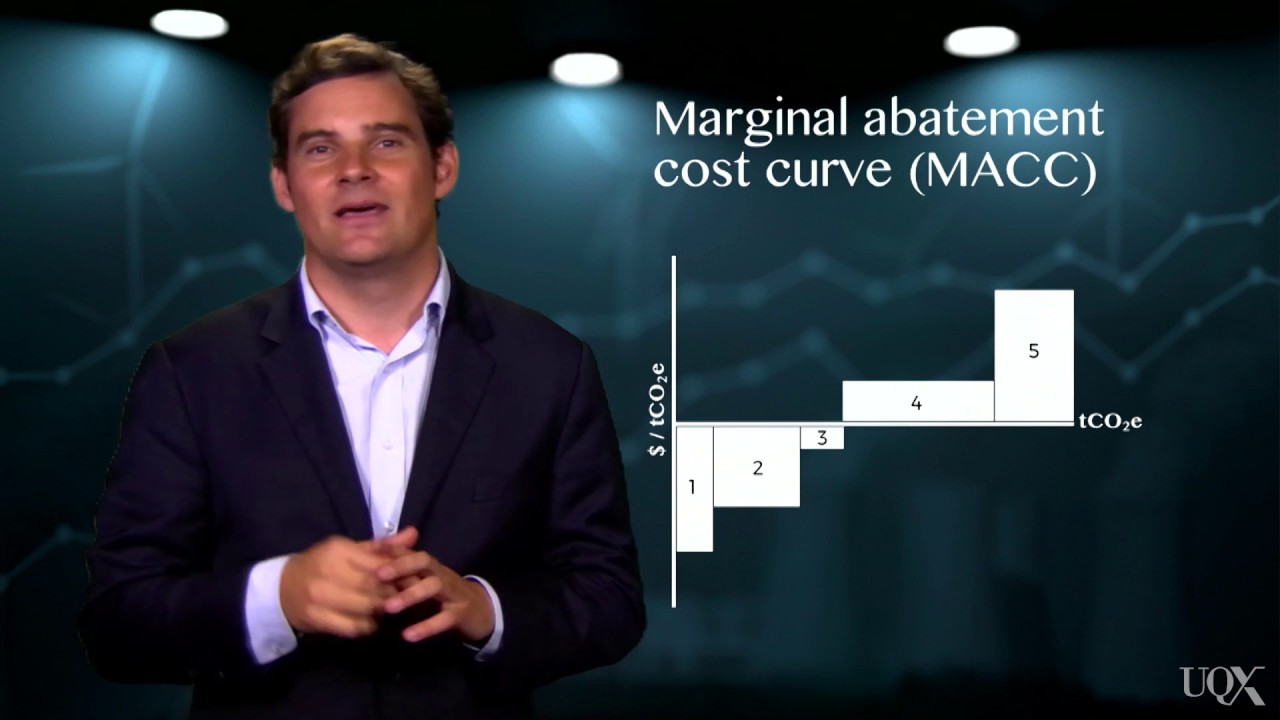
The concept of carbon abatement costs and how marginal abatement cost curves (MACC) are used to evaluate environmental policies.
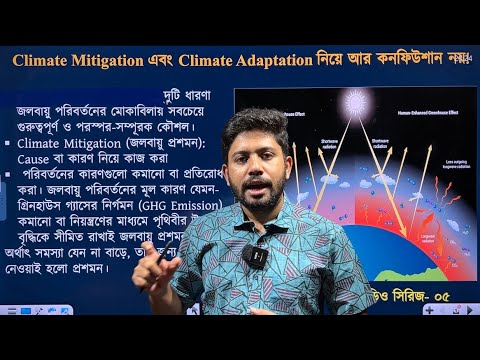
The fundamental economic distinction between climate change mitigation (preventing emissions) and adaptation (adjusting to climate impacts).
An understanding of power grid mechanics, specifically the challenges of resource intermittency and capacity factors associated with wind energy.
Advanced comparative analysis of market-based policy instruments, such as carbon pricing and cap-and-trade, versus direct technology subsidies.
Deep-dive evaluation of grid-scale energy storage economics and the leveling of total system costs for renewable integration.
Empirical case studies of high-penetration renewable grids, such as Germany's Energiewende or the Texas ERCOT system, to assess real-world economic and reliability outcomes.
Quantitative cost-benefit modeling comparing aggressive global decarbonization pathways with targeted infrastructure adaptation strategies.
314.5K views7.7Klikes12:38Original Release: 2018-02-05
Christopher monton vicount Christopher monton he was here last year he was hanging out in the audience this year thank you he a great gu come on ladies and gentlemen and he was apparently stimulated by something that was said about windmills and would like to offer you a few points thank you my Lord that's me ladies and gentlemen I'm here to give you a quickie so lie back and think of Canada I was moved as I think we all were Yesterday by a retired pharmacist who decided to check out windmills which she thought were a good thing and she found they caused harm to human health and hers was one of the most moving presentations we've had she wasn't a campaigner she just looked at the facts in the scientific way that pharmacists are trained to do so I said to Moses can I give the economic fact about windmills so that you can take a view on whether we should endure the health consequences that she so movingly point out so what I'm going to do is to give you the mitigation economics of windmills and this is a macroeconomic presentation which normally takes an hour and it's going to be in 5 minutes now the problems with windmills are that they are expensive there's no need for them they are intermittent they don't deliver continuous power therefore they emit more CO2 under most conditions because of the spinning Reserve that has to be kept constantly there in fossil fuel power stations inefficiently burning than if you didn't have them and they do environmental as well as human harm now the first thing is we don't actually really need them because the ocean the best to whether there's any global warming is indeed warming but at a rate equivalent only to 1 Celsius in 430 years so when they say the warming has gone hidden in the ocean no it hasn't we can measure it all the way down to about 2 kilometers deep it ain't warming you've already seen from Patrick Moore in his wonderful presentation this morning that there's been no global warming of the lower troposphere the atmosphere in which we live for 18 and a half years on both the satellite measures so much then for the consensus that told us that there would be warming in fact it turns out there is no consensus I'm a co-author of the peer-reviewed paper Le Gates etal 2015 published just a few months ago in science and education after peer revie which shows that 99.7% of all 11,944 scientific papers published in the 21 years 1991 to 2011 did not say that most of the global warming since 1950 was caused by us the reason they didn't say it is we don't know whether it was or not there is no consensus and that's the peer-reviewed fact of the matter now I don't do campaigns though I'm in the causes slot here I do math so let's do the math pay close attention to the screen where the math will appear I will be testing you on this later now I'm going to talk about the mitigation economics of the proposed navitus wind array of 194 5 megawatt turbines each standing 581 ft High I'm not sure what that is in meters but it's a lot and it's going to be right off the Heritage Coast the Jurassic Heritage coast of Dorset on the left of the slide there now the first thing we need to know is how much of the global CO2 emissions that would otherwise have occurred in the 20-year lifetime of these turbines from next year until 2035 will be abated if we have these turbines well now they will generate something like one 176th of total UK electricity it's a big Wind Farm UK electricity accounts in turn for one2 200th of all Global CO2 emissions and you multiply those two together and you therefore get the percentage of global CO2 emissions that this wind farm will Abate over its 20 20 year lifetime it's less than 0.3% everything I'm showing you here is mainstream science there's nothing controversial in any of this except the result is fascinating the next thing we need to know is what will the concentration of CO2 at the end of the 20-year lifetime of these turbines be compared with what it would be if we didn't have the turbines now today 400 parts per million in the at spere in 20 years time 460 but if we have these turbines then using the ipcc's own equation mainstream science again that would there would be a reduction in CO2 concentration from 460 to 49998 micro moles per mole or parts per million so we use that figure then uh to find out what would be the radiative forcing the change in net down minus up radiative flux at the tropo pors about 10 Mi up around here about 15 km up what would be the change in radiative flow at that point it would be.002 watts per square meter and that in turn would forall some global warming 0.0000 07 Celsius deges or kelvin which we boffins like to use but that is how little difference this vast scheme would make at a cost of 12 and A2 billion dollar and that means it would cost two quadrillion dollars by measures of equivalent cost Effectiveness to get rid of just one Celsius degree that in turn would be one1 quadrillion dollars just to get rid of the half Celsius degree that was due to happen over the next 20 years but it's not going to because they got it wrong and that means that the global abatement cost would actually come out at 50% of the two quadrillion Global GDP over the next few years next 20 years and the cost of doing nothing and letting global warming happen at a rate of approximately 1 to 3 Celsius per century is around 1% of GDP according to the stern report and also according to the ipcc's latest report so to use measures like these windmills is 50 times cost CER than if you allowed the global warming to happen and paid the cost of adapting to it even if it was going to warm as fast as they said and even if that was going to do as much damage as they said which isn't the case now I haven't costed in various other factors I haven't costed in the fact that the spinning Reserve means you don't get any CO2 savings I pretended you do get Co2 savings likewise I haven't shown the Staggering cost in unemployment of creating green jobs with these windmills here's the Sanic wind array the largest in the world at the moment 21 Green jobs were created at a cost of $100 million per job imagine how many jobs were put out by that I haven't looked at the Staggering inefficiencies and designed effects of the current generation of windmills there's a few of them on the screen now likewise I haven't shown that because of the huge swept area here is the former that says why you have to have a big one to get some electricity out and the very high height that you have to go for the formula for that is on here you're going to have to build these things on a massive scale the ones on the right with the jumbo jet shown in scale are the ones they're going to build off the Jurassic Coast and only about 14 kilometers off it here it is in relation to Salsbury Cathedral here's another view against soulsbury Cathedral that's how big these things Salsbury Cathedral is the tallest Spire in Britain possibly in Europe and here is what the developers did they sh Honey I Shrunk The turbines they made them look small the actual turbines drawn there are them but the red circles that I've added that's the true size of the turbines to scale here is that beautiful Coast I haven't costed in the enormous loss of environmental amenity of wrecking that Coast with these 600 foot windmills and I haven't also included this is a point that Patrick Moore asked me to put in the decommissioning cost they've made no provision for that in any of these Wind Farm schemes and as Patrick rightly says what they're really going to do is just rust in place there's also the environmental cost bird kill and bat kill here's why the um birds get killed they can't work out that even though these turbines are only rotating once every 3 seconds it's quite slow because they're so big the tips are rotating at a speed of around 300 kilm an hour and there's simply the ratio of the circle to the diameter it's all there and this is what happens to the birds it's not very funny it happens over and over again I could show you literally thousands of pictures like this it's happening in Scotland all around me at the moment from 2third of the Scottish land mass you can see these windmills and so can the birds until the windmills bat them out of the sky bats as well we might just look at that University of Calgary three years ago very important report on how the pressure differentials cause the birds the bats to the lungs to implode and so rare bats are being killed all over the world as a result of these windmills economic conclusions are very straightforward no policy to Abate global warming by taxing trading regulating reducing or replacing greenhouse gas emissions will prove cost effective solely on grounds of the welfare benefit from climate mitigation mitigation strategies that are inexpensive enough to be affordable will be ineffective strategies costly enough to be effective will be unaffordable focused adaptation would be better if it were necessary which it's not the cost of the premium exceeds the cost of the risk by a factor of 50 so don't take out Insurance what to do with the money instead give Africa Coal Fired electricity at the moment apart from the major cities and apart from South Africa and Egypt the total consumption of rural Africa of electricity in a day is broadly equivalent to that of dubo New South Wales virtually none of them have got electricity or any of the benefits including prosperity and hence the stabilization of population which would ultimately reduce the environmental footprint of man the quickest way to stabilize the world's population is to give everybody what the Chinese are giving to their people the Indians are going to give to theirs fossil fueled particularly Coal Fired electricity which these days can be burnt very cleanly using modern fluidized bed techniques fly ice trapping so forth now these are the people who are going to be damaged if we go on being silly about global warming which isn't happening and if we go being silly about measures to make it go away which even if it were happening would be prodigiously expensive totally pointless and in the case of windmills altogether ineffective for that reason I hope you will get on to the government of Ontario and of Canada and tell them to back off thank you that was great well done well done I just want to tell you in case you think these kinds of things are only happening in Dorset and in case you think as I do that that cute little windmill at the CN is really kind of a nice structure on the horizon they are today building 77 600 foot that's 55 stories 55 stories they're building 77 turbines and they're going in the NorthShore of Lake Erie dear dear you'd think they'd know better wouldn't you
Up Next

14:51
Understanding Risk Pooling in Insurance: Core Concepts Explained
@jhclassroom5387
7.3K views•2020-05-16

46:36
Retention Habits of Top DTC Ecommerce Brands Revealed
@SendItPodcast
44K views•2026-03-03

15:23
Decoy Effect: How Pricing Psychology Influences Consumer Spending
@bobinvestsUS
90K views•2026-01-05

17:30
The Planned Obsolescence of Light Bulbs and Tech
@veritasium
25.3M views•2021-03-26
Related Study Plans & Knowledge Roadmaps
Structured learning paths in Business
business
Pop-Up Retail: Strategy, Design & Execution
01Introduction to Pop-Up Retail & Strategic Goal Setting
02Budgeting, Site Selection, and Legal Essentials
03Experiential Retail Design & Visual Merchandising
+ 2 more learning modules
15h5 modules
Explore Roadmap
business
Reg CF: Startup Funding, Marketing & Launch
01Introduction to Equity Crowdfunding & Reg CF
02Platform Selection & Legal Preparation
03Crafting High-Converting Campaign Assets
+ 2 more learning modules
14h5 modules
Explore Roadmap
business
Productized Services: Scaling Solo Freelance
01Foundations of Productized Services
02Packaging and Scope Definition
03Pricing and Subscription Models
+ 2 more learning modules
15h5 modules
Explore Roadmap
business
Gov Procurement: Find, Bid & Win Contracts
01Introduction to Government Procurement & Business Setup
02Small Business Certifications & Set-Asides
03Finding and Analyzing Contract Opportunities
+ 2 more learning modules
14h5 modules
Explore Roadmap