







![무역영어 합격버스 태워줄게 올라타!🚍 무역코치 백소라의 무역영어 시험직전 핵심키워드 총망라 ★풀버전★ [와우패스]](https://i.ytimg.com/vi/aUxlTLlQpew/maxresdefault.jpg)














![Félix Camacho Moya: "Riesgos Sistemáticos al Sistema Financiero" [08.10.21]](https://i.ytimg.com/vi/cmvjDAjoHic/maxresdefault.jpg)


Risk pooling is a fundamental concept in insurance where individuals or entities combine their resources to share potential losses, thereby reducing individual risk exposure. When losses are independent among participants, pooling reduces the standard deviation (uncertainty) of losses while keeping the expected loss constant. As the number of participants increases, the distribution of losses becomes less skewed and more bell-shaped due to the law of large numbers and central limit theorem, making losses more predictable. However, pooling is less effective when losses are positively correlated, as seen in cases like spouses traveling together. Insurance companies serve as efficient managers of pooling arrangements by reducing transaction costs and providing expertise in underwriting and claims processing. This principle of diversification applies beyond insurance to scenarios like stock market investments and business operations.
Understanding Risk Pooling in Insurance: Core Concepts Explained
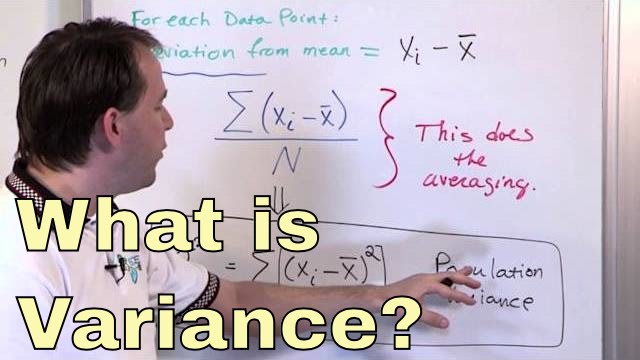
Added:[Music] hi welcome this is dr. Khan and this is chapter 4 on pulley arrangement and diversification of risk do you know what is risk pooling risk pooling is essential to the concept of insurance a risk pool is one of the forms of risk management commonly practiced by insurance company under the system insurance company to come together to form of pool which can provide protection to insurance companies against catastrophic risk or in other words their sharing risk for example health insurance everyone would pool their resources together before anyone for ills so when somebody felt you the pair is going to be paid from the port landing collected earlier so let's learn more about pooling arrangement in this chapter we shall look at how putting of independent loss exposures reduces risk how correlation in losses affects the amount of risk that is reduced in pooling arrangement how pooling arrangement provide the foundation for insurance transactions and how insurance are efficient managers of pooling arrangements and we shall discuss other example of diversification including stock market especially a pooling arrangement is one of the basic characteristics of insurance the basic idea is to replace your loss with the average loss of the group and the main issues that we are going to assume in this chapter is to find out more about impaired pooling arrangement to expect to losses standard deviation loss and maximum probable offs and on top of that we are going to talk and look at how this result change with more participants and correlation in losses among participants increases to better understand what bullying is and what are the impact let's take a look at some example assume there is no pooling arrangement take place yet in this case Bob has 20 percent chance of involving in an accident in a loss of $2,500 and 80% chance of no accident the probability distribution for accident losses is basically summarized in this table and do note that the distribution is skewed there is a high probability of zero loss in this case 80% and relatively small probability for large losses in this case would be 20% so without pulling arrangement you can find that the expected cost for Bob in this case would be 500 so where you can get the data from the probability distribution that shown earlier and the standard deviation in this case would be $1000 how about we have Jane coming to the picture let's assume that Bob and Jane have the same probability distribution we want to examine what will happen if Bob and Jane agree to split evenly on the accident caused in the event of accident on other words they agreed to share the losses if any equally and this kind of arrangements or corn pooling and because Bob and Gina for pulling the resources together they pay any losses that may arise from potential accidents when the pooling arrangement take place you probably notice that there would be more than two outcomes the initial probability distribution only involve two possible outcomes so it's either no loss or loss however when Polly arrangement takes place you shall see there will be more than two outcomes mistake looks our example a lakh resistance both of both Bob and Jane are okay or probably accident happens to Bob but not Jane or vice versa or could be both of them involve an accident the first column of this table lists the possible outcomes for Bob and Jane with pooling if neither one of them has an oxidising then the total accident costs are going to be zero and each of them just pay nothing if either of them has an accident the cost are going to be $2,500 and each of them will have to pay $1,250 but if both of them have an accident then the total cost would be equal to $5,000 and each of them will have to pay 2500 now unless by the probability of each of this outcome which is in the last column of this table since the losses incurred by Bob are independent of the losses incurred by gene the probability that neither of them has an accident is simply the probability that Bob does not have an accident times the probability that Jane does not have an accident therefore the probability of the first outcome is 0.8 times 0.8 which is equal to 0.6 for so the same logic applies to the second and third annals of Forth outcome but both has an accident but Jane does not so the probability will be computed based on 0.2 times 0.8 which is equal to 0.16 and similarly two from outcome tree as for the fourth outcome if both Bob and Jane have and extend then the probability will be equal to 0.04 as can be seen clearly from this example you probably notice that the pooling arrangement changes the probability distribution of accident cost facing each person the probability that Bob will have accident equals to $2,500 is reduced from 0.2 to only 0.04 this is because in order for Bob to pay 2500 both Bob and Jane must experience and accident given that the accidents are independent the probability that both Bob and Jane will have an accident is much lower than the probability that only Bob or only Jane will have an accident the constant folding arrangement reduces the probabilities of the extreme accounts the standard deviation of accident caused by paid by both Bob and Jane is reduced if you can recall with the pooling the standard deviation of accident caused in this example was $1000 but with pooling arrangement you can see that the standard deviation of accident caused decline to 700 oh seven so in summary the Polly arrangement does not change either person's expected cost but it reduced the standard deviation of course in this case you can see that on the reduction from $1000 to 707 how about instead of just Bob and Jane now we have two additional people joining us who are David and also Pauline with the new addition now you probably noticed that the possible outcome become even more so definitely it's more than four that we had earlier this table shows the new probability distribution of accident cost to be paid amount for people with pooling arrangement the possible cause can be all of them had an accident three out of four person had an accident two out of four person had an accident one out of four person had an accident or none of them had accident so once the impact of having more people joining the pudding arrangement if you can see the impact on expected losses remain unchanged similar to the pulling arrangement between Bob and Jane only just now but probably notice that initially when there is no pulley arational take place the standard deviation used to be 1,000 then we only have Bob and Jane the standard deviation reduced to 707 dollar and now before percent the standard deviation even declined more to only $500 if you compare to without the arrangement the distribution used to be very skewed but if we we have additional four people joining us right now then you will notice that the distribution now become less cute so instead of just one or two or 4% how about we have additional person added to our pooling arrangement how about 20 person so let's see what would be the impact of this arrangement with additional participants compared to the distribution where is pulling with four passengers now now with 20% you will notice that the distribution is less cute in fact if you take a look closely the distribution looks very much like a bell curve and other words normally distributed the ones the main takeaway from this example if you look notice it does not change the expected loss and with full arrangement it helped reduce uncertainty or from the calculation or example we saw from in standard deviation reduction or variance decreases losses now become more predictable on other words the distribution become less cute and more bell curve like the on top of that the maximum probable loss also declined and the distribution of costs become more symmetric and less cute well the reason why we see this kind phenomenon is not really uncommon it is actually based on the law of large number for those who have learned about statistics on max probably now you can recall by this law of large number basically the major takeaway is that as n gets larger the average outcome is likely to get very close to the expected value or the mean so you can notice that as n get larger the standard deviation will decline from the example that we had so far probably you'll notice that as the number of people in the pudding arrangement becomes very large the standard deviation approach very close to zero or you can see it under reduction in standard deviation so this does not happen in surprise it actually based on the law of large number and if you can recall the distribution became less cute and it does not happen again in surprise is actually based on central limit theorem based on this term as a number of participants grows the probability distribution of the average loss become more symmetric and bulk bell-shaped or in other words normally distributed very important note to take instead not necessary every time fully arrangement will reduce uncertainty on you will see the reduction in standard deviation the irishman has to be planned accordingly the previous example like button Jaime assume that they are independent but how about now we allow correlation and for instance maybe Bob and Jamie's actually husband and wife and they're living together they're travelling in the same car together so if you notice the uncertainty would not be able to be reduced as much as what we have discussed earlier so why because what happens to one person happens to other person as well person / loss does not tend to be upset by other small losses therefore pooling does not reduce raise as much if the losses are positively correlated so the main points about risk pooling is that pudding reduces each participant risk when you can find that caused from loss exposure become more predictable and the predictability increases with the number of participants but decreases with correlation in losses although there are many benefits arises from pooling arrangement but don't forget there are costs as well so typical example would be distribution cost underwriting and also loss adjustment expenses or another name claim settlement expenses typical example of Trees distribution cars are involved marketing and distribution expenses as for underwriting and example normally is due to screening of applicants and for loss adjustment expenses example is claims monitoring bullying arrangement is one of the basic characteristics of insurance companies so basically Asia's company function as the intermediaries that lower the cost of cooling arrangement by reducing the number of contracts employing people with expertise in marketing underwriting and claims processing insurance company also as a service provider for businesses so they can help in loss control and also processing claims the result that pulling reduces risk applies to many scenarios apart from just insurance we can probably see that as part of stock market diversification example like mutual funds or quarter unit trust and probably you find that in diversification across different lines of businesses within a firm as well in short there are different types of the more people it covers the more people they are to share the risk and the more people are to share the risk the cheaper courage is for everyone remove participants and things get riskier and more expensive that's the end of chapter 4 about putting arrangement and diversification of risk thank you for watching and [Music] you
Up Next

Why Luxury Fashion Adopts Carhartt Workwear: A Sociological Analysis
@tubavalon
68.4K views•2025-07-27

Retention Habits of Top DTC Ecommerce Brands Revealed
@SendItPodcast
44K views•2026-03-03

Decoy Effect: How Pricing Psychology Influences Consumer Spending
@bobinvestsUS
90K views•2026-01-05

The Planned Obsolescence of Light Bulbs and Tech
@veritasium
25.3M views•2021-03-26
Related Study Plans & Knowledge Roadmaps
Structured learning paths in Business