

























![ΠΟΣΟ ΚΟΣΤΙΖΟΥΝ ΤΑ OUTFITS ΣΕ RAP VIDEO CLIPS 7 [BEVERLY HILLS,24HRS,SELFMADE]](https://i.ytimg.com/vi/NB01GyIgGqE/maxresdefault.jpg)




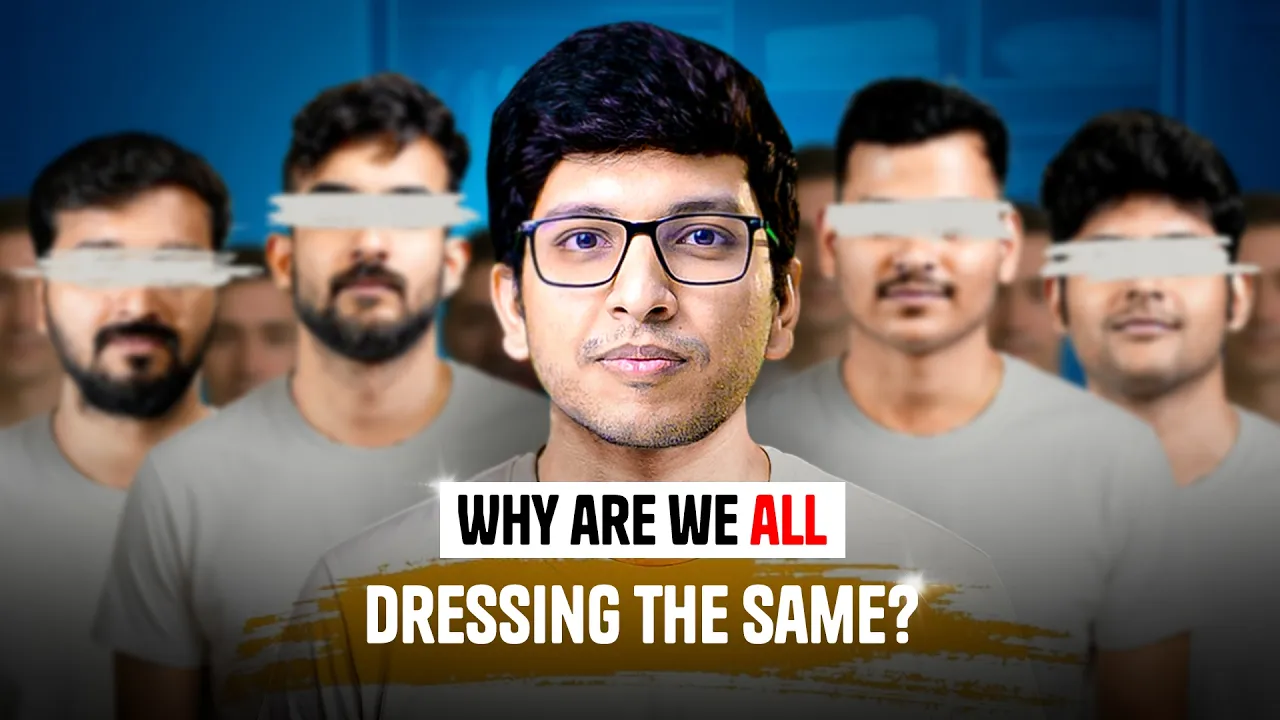



Luxury brands' obsession with Carhartt workwear illustrates Pierre Bourdieu's theory that taste is learned and social, not innate; the brand's transformation from functional railroad gear to luxury fashion demonstrates how cultural capital—knowledge of style codes and social signals—determines what is considered 'tasteful,' with luxury brands using irony and cultural appropriation to maintain exclusivity while democratizing access to working-class aesthetics.
Why Luxury Fashion Adopts Carhartt Workwear: A Sociological Analysis
Added:Pierre Bourdieu's foundational sociological concepts of 'cultural capital,' 'social capital,' and 'habitus.'
Bourdieu's theory of 'Distinction,' which explains how aesthetic taste and consumption choices serve as markers of social class.
The historical origin and brand identity of Carhartt as durable, functional utility-wear designed for blue-collar workers.
Basic fashion dissemination models, particularly the 'trickle-up' (or subcultural adoption) theory versus the classic 'trickle-down' model.
The concept of 'poverty chic' and the sociological and ethical implications of class tourism through fashion.
Richard Peterson's 'Cultural Omnivore' theory, which analyzes how high-status individuals consume a diverse mix of highbrow and lowbrow culture.
Case studies of modern brand collaborations (e.g., Balenciaga, Supreme, Gucci x The North Face) to analyze the financial and cultural mechanics of high-low partnerships.
The role of digital subcultures, social media algorithms, and hip-hop culture in accelerating the gentrification of utilitarian apparel brands.
68.4K views3Klikes17:32Original Release: 2025-07-27
What do Parisian fashion houses and construction sites in the Midwest have in common?
[Music] >> Car.
>> Car company.
[Music] >> So many runways get inspired by the iconic workware jacket that used to only be worn by American railroad workers. It now kind of turned into the darling of luxury fashion. You may think it's a fashion trend, but actually it's a social statement. Today we unpacking why the luxury world is obsessed with this workware brand and what that tells us about class culture and our personal taste. And yes, you might just realize during this video in a self-reflective lonely moment that you're just like any other person pretentious. But to be able to understand the concept of taste fully, I want to introduce you to Pier Bodio. Pabio was a French sociologist that spent his entire career studying how culture actually works. mainly trying to define the invisible rules that govern how we see ourselves and others. In 1979, he releases a book called Distinction, which says in summary that your taste is not really yours. It's learned. It's social. And whenever you feel like something looks good on you and feels natural and it feels like it's your taste. It's actually your education, your background, and your class that is determining if you like something or not. And you explains this with three concepts. And I'm assuring you we will come back to the workware jacket, but that makes really sense to understand why we see so many workware jackets on the runways. He calls the three concepts habitus, capital, and taste. When you're thinking of habitus, think of it as your cultural GPS, but one you didn't choose.
It's all this unconscious ways you've learned to navigate the world based on where you grew up, what class you're from, how your parents talked about money and style. Habitus is what makes some clothes feel right to you and some other clothes make you feel like you're wearing a costume. That's where that feeling comes from. It's not genetics.
It's really what you've absorbed by your surrounding. A kid that grows up surrounded by country clubs and a kid that grows up in a workingclass neighborhood grew up with completely different style instincts and none of them is better, but they have different cultural languages. The second concept he talks about is called capital. And what's really interesting here is that he's not talking about money in some sort, but not essentially. He's talking about cultural capital. This is the ability to decode cultural signals.
Knowing which wine to order without looking pretentious, which bands are cool before they go mainstream, and which brands signal you're in the know versus trying too hard. Cultural capital is when a person walks into a thrift store with a certain budget and can look effortlessly cool and authentic when coming out while another person that had the same budget can just look bad and it feels like they're wearing a costume.
And that's because the first person understood the patterns of style recognition. And this is something everybody can learn. This means the bigger your dictionary of cultural capital is, the more you understand the patterns of stylistic codes which will help you to be recognized in a certain way. And the third big concept he talks about is called taste. Would you say taste is how we signal our place in the social hierarchy. It's never actually about what's objectively beautiful. It's about what separates us from the others.
Taste is a weapon of social distinction and we're all wielding it if we realize it or not. Don't take this personal.
This is really how Bureau sees taste and style in our life and how we are trying to build distinction through it. But if you think about the art world as well, liking pop art versus complicated complex abstract art is probably not a high social code in comparison to something that is very hard to understand. If you look at fashion shows, there are tons of designers that don't like to explain themselves and like their fashion to be misunderstood or not understood at all, which can also be a signifier for a social distinction that they want to artificially create.
This of course just theory of how distinction is being translated in style and taste. But actually, what he's saying is, oh, you don't like pop art because you think abstract art is so much better because it's complex and easily misunderstood. This is a clear distinction between you and people that didn't have access to education to understand abstract art. Yeah, that's kind of pretentious and makes you sound like you think you're something better.
And this means every time you're getting dressed, you're not just getting dressed. You you thought you're waking up 1 hour too late going to work just just wearing your cargo pants and t-shirt because it's the quickest solution. But actually not. This is a statement. This is a statement about your social positioning in life. That's what Bio says. And here's what's interesting. If we look into the world and look at the people with the biggest cultural power, we see that these are often the ones who act like their taste is natural or effortless. They've just internalize the code so well that it looks effortless. So when fashionist suddenly gets obsessed with a $100 kaha jacket that on the runway suddenly turns into a $3,000 piece, but you would just say of of course people get obsessed with this. They just want distinction.
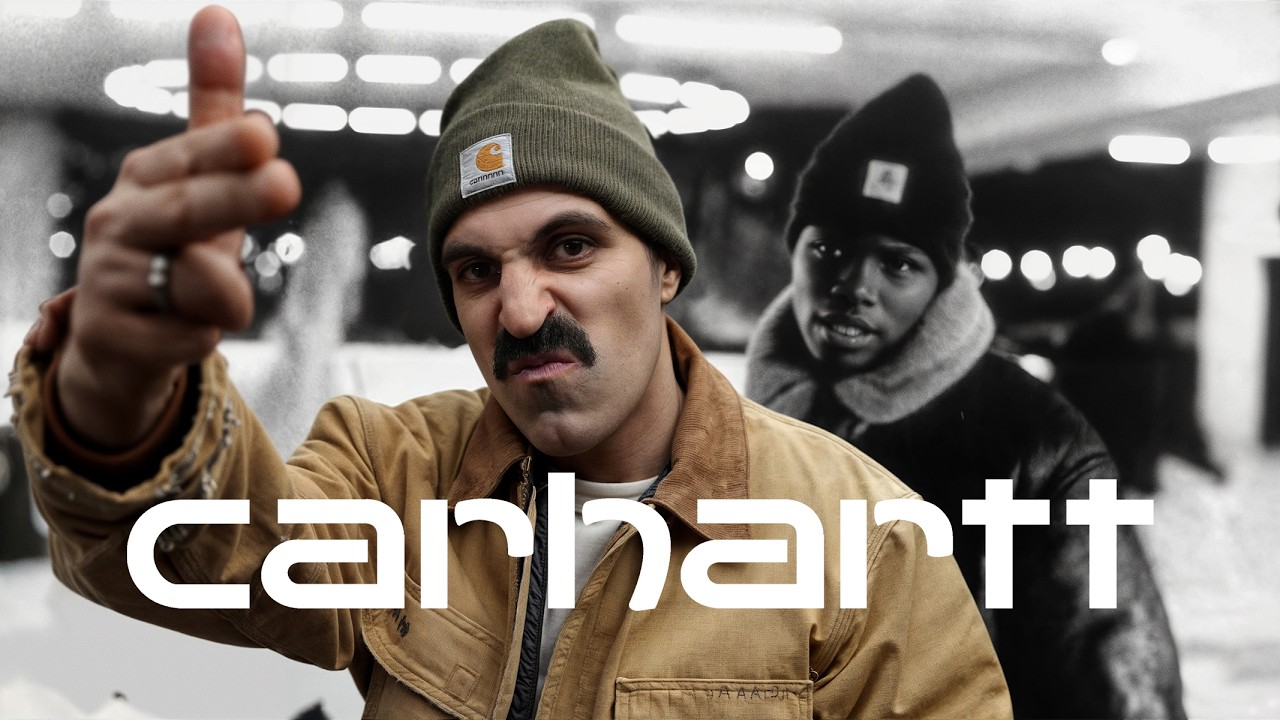
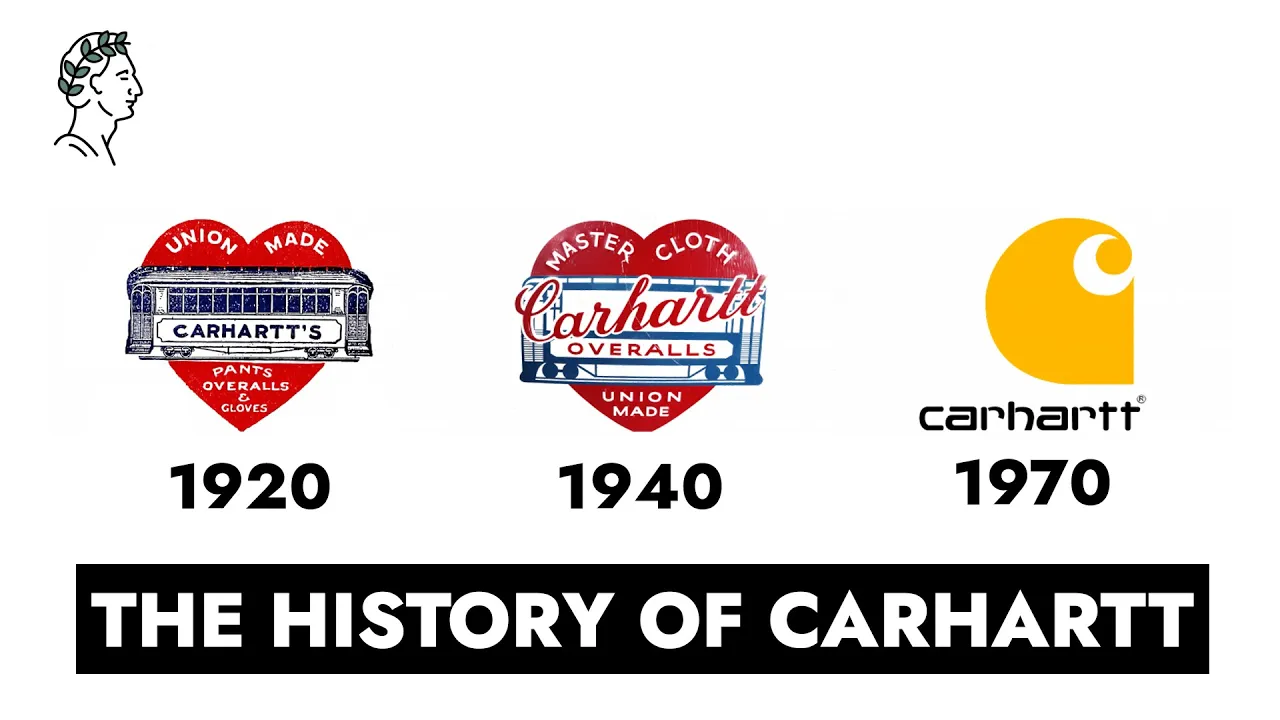
And nothing gives you more cultural distinction and fashion than being anti-fashion. So, since I chose the idea of the car workware jacket because I think it's the most emblematic for this change, let's dive very quickly shortly into the background of the car workware jacket. By the way, if you enjoy these videos, if you want to see more deep dives, if you want to have access to a Discord community, talk daily with people about stuff like this, but also the color of your socks and pants and all these things. If this sounds like a way you can culturally distinct yourself, join the Patreon. you have access about to about like 50 videos and the discord community which is exclusive and join the next live talk because it's happening in like two weeks. So let's get into Kahhat. Back to Kart. It started in 1889 Detroit. Hamilton Kahhat starts making overalls for railroad workers and it's not fashion but probably more like survival gear. Heavy duck canvas that could withstand sparks from train engines, reinforced pockets for tools, cuts designed for movement and absolutely not aesthetics. And this was clothing with one job. Keep working-class bodies protected so they could keep working. And for almost a whole century, Kad was focusing on a completely different universe than the rest of the world was doing. In Europe, it was the beginning of couture. We had Chanel and Scaparelli and Dio and Balenciaga. While card was pretty much focused on how to create clothes for people that need to work on railroads and need to dig under machinery and still have clothes that they can wear.
So it was completely functionality focused only. So Kad the brand had actually for what we'd now call the perfect credentials to be called an anti-fashion brand. It was authentic in the most literal sense zero consideration of aesthetics purely function. If you were car that meant you are working with your hands. End of the story. And it took almost 100red years that something started to slightly shift in the perception of the brand Kahhat.
It was the hip-hop culture that started embracing work wear as street wear. And rappers like Tupac and Biggie weren't wearing car because they worked on construction. They wore it because it represented something authentic, something real, something that couldn't be bought by just mainstream fashion and with money. With its oversized cuts and rugged fabrics, Kahhat's clothing has always chimed with the hyper masculine ideals and aesthetics that have underpinned much of mainstream hip-hop.
Their jackets were bulky and imposing, adding mass and presence to any frame.
And here it starts getting sociologically interesting. Community started to take symbols from that class position, which is blue collar work, and recontextualized it and turned it into cultural capital. Beggy Kahad pants suddenly became a uniform of urban authenticity. Hip-hop was essentially saying, "We're taking these clothes that represent real work, real struggle, and making them ours." because they could identify with the real struggles of blue collar workers as well. Another community that picked up on this in the '90s were the skaters, but they did it also a bit for functional reasons. They needed durable clothes for grinding rails and surviving concrete, but they also wanted to distance themselves from both mainstream fashion and skating fashion. Workware gave them both protection and the subcultural credibility that they aimed for. And then comes the internal shift. Kahhat work in progress. It's being launched in London and it's kind of crucial because work in progress wasn't trying to make work clothes for workers from day one.
They were translating American blue collar authenticity for European urban youth who had never seen a railroad yard in their whole life. Fay is kind of refreshingly honest about this. He says that the active worker wears original car work from USA while the skaters wear just car work in progress products which have been adjusted to the action life of cultural sport. And the differences are of course pretty obvious. That's the whole purpose. That's the whole point.
Kahhat makes things in kahhat brown and dark colors chosen to hide of course from dirt and wear and work in progress makes the same silhouette in black, olive, navy colors chosen to just look cool. An original car prioritizes durability over everything and work in progress keeps the utilitarian aesthetic but refineses the fit, softens the fabrics and adds contemporary details like graphics and prints to them. And the timing was actually perfect because end of the '9s and the beginning of the 2000s was the start of street wear culture. We had limited jobs, collaborations, brands becoming lifestyle signifiers rather than just like clothing makers. and authenticity became the ultimate luxury and nothing felt more authentic than clothes originally designed for people who build things with their hands. But this is actually the most critical point where Bodu would probably not be happy with the evolution that these items, these symbols suddenly have in fashion.
Because in his observation of how the upper classes appropriate culture, he says, and I'm going to translate it with a real example right afterwards, verbal virtuosities or gratuitous expense of time or money that is presupposed by material or symbolic appropriation are so many repetition of that variant of the master slave dialectic through which the possessors affirm their possession of their possessions. Yes, I know. Super easy to understand. If you didn't understand that immediately, that was just a way of me to show you that my cultural capital is way higher than yours. Absolutely no. I needed to Google it to understand this quote fully. But actually what he says here is that the person that has too much time or money to talk about things like discuss wine for hours or anything where you need educational capital for example already shows or like spending money on 800 euro distressed pants because he just likes the distressed look and it just looks like you know it has this patina which is so beautiful when the working class is creating this patina naturally and wants to buy it just means that they already have the educational capital to talk about it had the expenses the money to even just take the time and also the knowledge because education is also part of the cultural capital to talk about these things and understand these things. Sitting somewhere not knowing what fork to take, what wine to pair with your meal already decreases your status in the hierarchy because your cultural capital is just lower already.
So a person that has this kind of capital has also the capital to understand anti-fashion. The irony even that is like hilarious and easy to understand with somebody and increases their social capital in that sense.
Would you also mention here the master slave concept which is a reference to the philosopher Hegel that actually just says the master needs the slave to be the master. And with the example of the car jacket, it would mean that rich people don't just own a product like a car jacket. They need to completely perform ownership about a product. They need to showcase they understood the product, the tragedy behind the workingclass jacket to be able to deserve the product as well. You need the cultural capital to be deserving of the product and to have the social capital with that as well. Everything cleared out, okay? They are allowed to wear workware jackets as well. Don't be so mean to rich people. So, if a rich person buys a 1K car jacket, they're not just buying a car jacket. They're performing a cultural script that says, "Actually, I understand authentic culture. I can afford to pay luxury prices for anti-luxury items. I have the cultural sophistication to appreciate irony. And I'm not like other rich people because nobody, no rich person is like another rich person. They're like the smart versions. And like, you know, they're the logo rich people and the other ones that are so different. Okay, this is not an anti- capitalist video, by the way. I'm just trying to explain something. And once luxury realized how much cultural currency there is in work wear and people are willing to pay a lot of money for this, that's where it got really interesting and that's where we are right now. So now we know why work wear became cool and now let's talk about why luxury is using it so much because they are it's all over the runways. It's everywhere. You can enter any store and you see that also from the fact that it trickled down to fast fashion retailers. You can get the low budget card version even. It's not only luxury, it's also on the lower end of Kahhat, which is even cheaper than there. It's all over the place. Of course, this is still ruled by the luxury market, but I think it's really interesting why we see it so much.
That's why I do this video here. I hope you appreciate it. So, it started kind of in 2015 when luxury brands discovered something we hadn't seen in a long time in fashion and not in in such a strong sense and it's called irony. I think you know what I mean. Suddenly conglomerate executives started to analyze like anthropologist street culture because the impact from street culture was just the biggest on fashion and that just sells really well. And luxury fashion didn't just appropriate workware aesthetic. They created an entire intellectual framework to justify it.
It's called postironic metaf fashion conceptual design. And these aren't just clothes, they are statements about clothes. So you need cultural capital to decode the statement. But you still also need economic capital to be able to afford the decoder ring. You need both of it because how do you stay exclusive when everybody can afford to copy you?
And Budo says you don't. You don't compete on price. You compete on cultural capital. That's something people cannot buy. You make it about knowing the right references, understanding the right codes, having the right ironic taste. This was in summary how you would see the whole workware trend popping up in luxury fashion. But to stay fair and turn this into a good analysis, there's also a different perspective when we're looking at luxury fashion and maybe the perspective that you don't want to call appropriation immediately. Another theory by Walter Benjamin says that mass reproduction enables the product to be only connected to a certain kind of ritual aka work. So he says that luxury also kind of emancipates the work wear from its context of work and emancipates it and brings it into a new environment where it can be free and happy and just be fashion for example and there is some sort of democratization if we don't speak about economics immediately of this effect. There's original workware that was confined to specific social classes and occupations. Luxury reproductions make these aesthetics available across social boundaries even if not so accessible and the authenticity barrier is removed like you don't need to be a construction worker to access construction worker style and this creates new possibilities for identity expression that didn't exist before because people were not aware I can use that for fashion and in the example of kahard work in progress we can say that kahard work in progress brought to Europe the American history of work wear that Europeans were but aware before. So there's also a cultural shift happening with even if it's luxury that it's turning into it is being appreciated and just known more about.
And these new references that suddenly pop up all over the world suddenly lead to shared cultural references as well.
Cultural references communities that were before separated, weren't aware of before. and suddenly seeing an American workware jacket means something to a European or Asian or African person that just didn't know what was the heritage the background of American workware at all. So it does have a cultural reference that suddenly has meaning within the society which it didn't have before. So if you do see a workware jacket that suddenly turns into a luxurious good that kind of denies you accessibility as well more as cultural appropriation then you're probably on the side of bodu when it comes to the influence of cultural capital which is probably the main reason why we consider anything as tasteful or or not in fashion. But when it comes to probably the a bit more positive outcome uh of this analysis, you're sharing the opinion of Benjamin that sees it as a mutual transformation and of social references that can only evolve through this kind of repetition of references by different brands and maybe also luxury.
I think it's a very complex topic. I'd really like to know how you perceive it.
Um in the comments, share that with me.
If you like this video, also don't forget to join the Patreon again because there's more stuff like this and even better stuff because everything better in the world is exclusive because cultural capital is hidden somewhere and you need to get access to it so you can act pretentious and feel again like you're something better because you have access to my Discord community because that's where taste uh is is born. So the next time you're thinking, "Oh, that's super cool. What's hanging there?" Ask yourself, who made you think this is cool? And who are you trying to tell that this is cool?
Up Next

9:38
Implementing Black-Scholes Option Pricing in Python: A Step-by-Step Guide
@QuantPy
35.9K views•2020-05-24

46:36
Retention Habits of Top DTC Ecommerce Brands Revealed
@SendItPodcast
44K views•2026-03-03

15:23
Decoy Effect: How Pricing Psychology Influences Consumer Spending
@bobinvestsUS
90K views•2026-01-05

17:30
The Planned Obsolescence of Light Bulbs and Tech
@veritasium
25.3M views•2021-03-26
Related Study Plans & Knowledge Roadmaps
Structured learning paths in Business
business
Pop-Up Retail: Strategy, Design & Execution
01Introduction to Pop-Up Retail & Strategic Goal Setting
02Budgeting, Site Selection, and Legal Essentials
03Experiential Retail Design & Visual Merchandising
+ 2 more learning modules
15h5 modules
Explore Roadmap
business
Reg CF: Startup Funding, Marketing & Launch
01Introduction to Equity Crowdfunding & Reg CF
02Platform Selection & Legal Preparation
03Crafting High-Converting Campaign Assets
+ 2 more learning modules
14h5 modules
Explore Roadmap
business
Productized Services: Scaling Solo Freelance
01Foundations of Productized Services
02Packaging and Scope Definition
03Pricing and Subscription Models
+ 2 more learning modules
15h5 modules
Explore Roadmap
business
Gov Procurement: Find, Bid & Win Contracts
01Introduction to Government Procurement & Business Setup
02Small Business Certifications & Set-Asides
03Finding and Analyzing Contract Opportunities
+ 2 more learning modules
14h5 modules
Explore Roadmap