



















![[객관식 공기업 경제학] 20차시_기8공_경제학_제 6편_생산요소시장과 소득분배 (4)_381~397](https://i.ytimg.com/vi/61_FSYJxzWQ/maxresdefault.jpg)





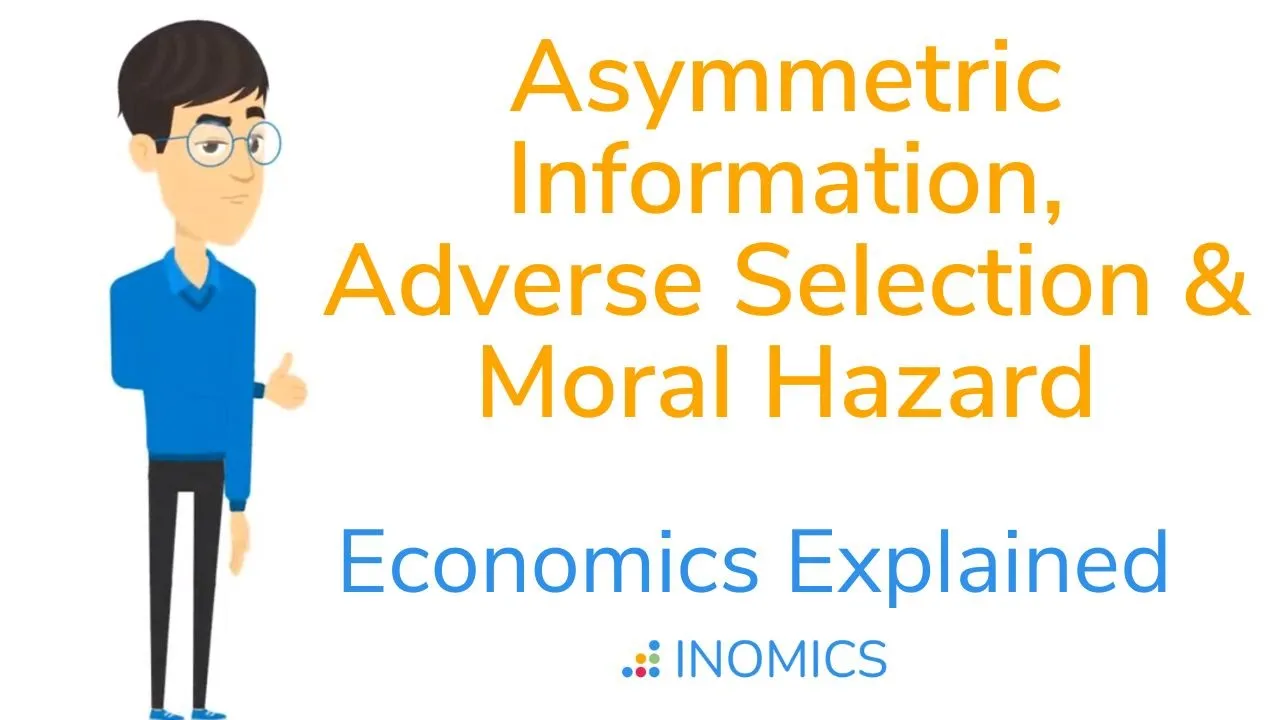
Adverse selection and moral hazard are two distinct economic problems arising from asymmetric information in contracts; adverse selection occurs when asymmetric information about the type of person attracted to a contract causes bias before entering into it (e.g., sick people selecting into low-copay health insurance), while moral hazard occurs when asymmetric information about behavior after entering a contract creates bias due to incentives within the contract (e.g., zero-copay health insurance leading people to choose more expensive treatments).
Adverse Selection vs. Moral Hazard Explained (Economics)
Added:The concept of Asymmetric Information, where one party in a transaction possesses more or better information than the other.
Basic microeconomic principles of market failure, specifically how imperfect information prevents markets from achieving Pareto efficiency.
The fundamental structure of economic contracts and the basic dynamics between buyers and sellers.
The assumption of rational self-interest, where individuals act to maximize their own utility or profit within a market.
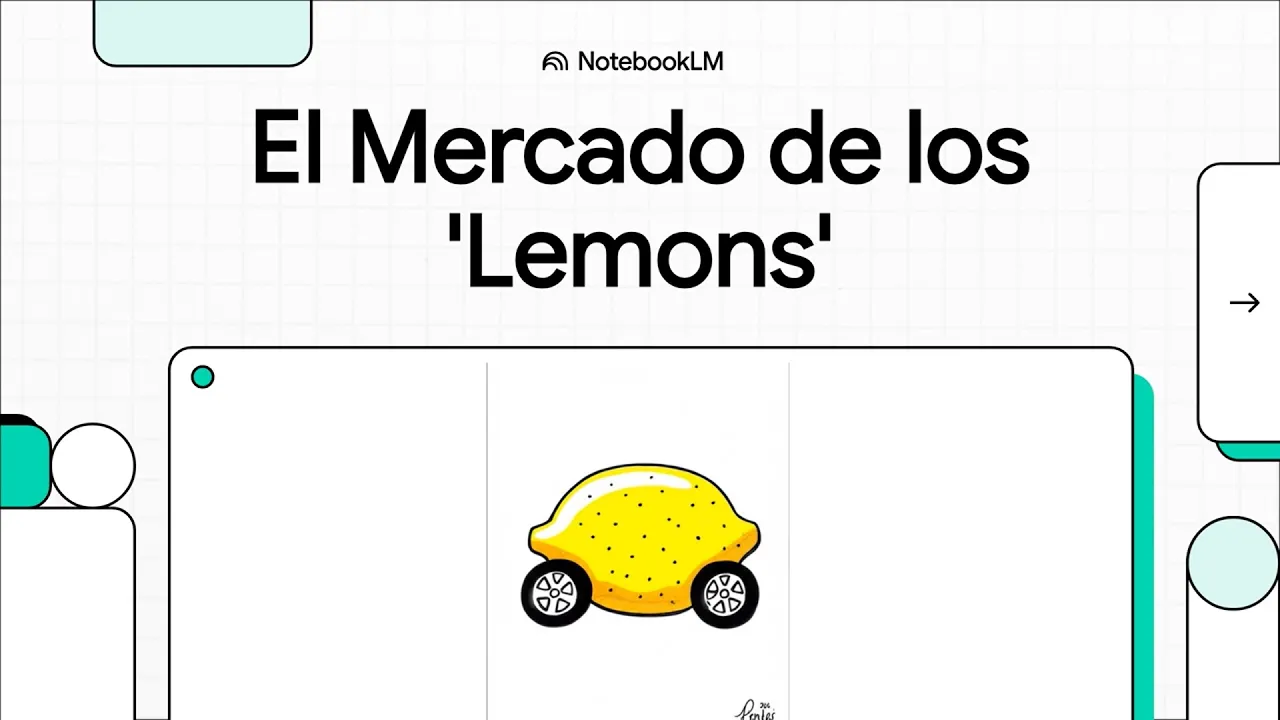
George Akerlof's 'The Market for Lemons' theory, which demonstrates how adverse selection can lead to market degradation or collapse.
The Principal-Agent Problem, exploring how delegation of authority creates conflicts of interest and monitoring challenges.
Market solutions to asymmetric information, such as Signaling (e.g., warranties, education) and Screening (e.g., deductibles in insurance).
Incentive Compatibility and Mechanism Design, focusing on how to design contracts that align the private incentives of individuals with public goals.
The impact of asymmetric information on public policy, particularly in healthcare reform, financial regulation, and labor markets.
51.3K views904likes11:06Original Release: 2020-05-02
all right in this video I'm going over the difference between adverse selection and moral hazard and these are often discussed together and there's good reason for that one reason is oftentimes they happen together like the same type of contract will be associated with both adverse selection and moral hazard they also have some things in common so they're both about a 7 asymmetric information they both are about a bias that happens and they're both about entering into a contract so the difference is with adverse selection the ISA in the asymmetric information is about the type of person who's attracted to particular type of contract and so definitiely adverse selection is were asymmetric information about the type of person attracted to a contract causes a bias before entering into the contract so when when the parties sign on the dotted line for the contract the bias has already happened because of the type of person attracted to it and so this is another way of thinking about adverse selection it has to do with the type of person attracted to the contract on the other hand moral hazard is asymmetric information about the behavior of people who are entering into a contract and that that behavior that's caused by that causes a bias after entering into the contract so moral hazard is really about the incentives created by the contract and the bias that happened because those incentives play out after people are under the contract so let's go through a few examples and of course if we're talking about a contract we need to be thinking about what type of contract and I'll go through a bunch of examples but let's start with health insurance okay so we have health insurance contracts and of course there's a lot of things associated with health insurance contract that network of doctors which procedures are covered which procedures are not covered but one of the most basic things about a health insurance contract is what is the copay how much do you have to pay if you go in to the doctor do you have to pay a hundred percent of the costs or fifty percent of the costs are zero percent and a classic copay might be twenty percent or 30 percent is the responsibility of the patient but you could have higher quality health insurance where the patient pays zero percent so let's imagine a low copay like zero percent the copay you can go to the doctor for free whenever you want versus a high copaque contract now of course if you have a high-paid copay contract that means that the insurance itself the premium you pay for the insurance can be cheaper so if we're thinking about adverse selection this is going to be about what type of person is attracted to each of these types of contracts and as you might imagine the low copay contract is going to be attractive to people who go to the doctor a lot if you expect to go 12 times this year to the doctor you're more likely to choose the plan with a zero copay every time you go whereas if you only plan to go once or not at all to the doctor you might be okay with a higher copay at $20 $30 copay if the price of that insurance is cheaper so because of that there's going to be different types of people that select into these contracts as a matter of fact sick people are more likely to select into the high-quality health insurance the local copay insurance and healthy people are more likely to select into high-quality health insurance now the fact that healthy people do select into this high quality health insurance means that there's actually going to be a lot fewer costs to the health insurance company so it will actually be able to UM they'll actually be able to reduce the cost of that health insurance company so this can actually be even cheaper than it would be if people selected randomly into these bins just because the cheap people to insure and that buying this look quality health insurance so it gets even cheaper and the reverse is true for the high quality health insurance with the Loko payment because sick people select into that plan it's more costly to insure them because they go to the doctor a lot and the insurer will have to pay for more and that leads to the insurance companies needing to raise the price of the insurance so the high quality insurance ends up being more expensive than it would be if people selected randomly into these plans and that's adverse selection at play now health insurance also has a moral hazard effect so if we think about the incentives that are at play based on the co-payment are you gonna get the name-brand drugs or are you gonna get the generic drugs well if you have a zero percent copay you might as well get the name-brand drugs so the copay is something that's going to incentivize watchful behavior in terms of what kinds of things you buy and that's going to in turn affect the the price of the product so if people are incentivized to always take the most expensive option always take that always take the name brand drug always take that the fancy treatment as opposed to watching your pet your every penny then that's going to also drive up the price of health insurance so the copay will lead to different types of behavior based on that contract so there we go that type of insurance contract is going to lead to certain behaviors based on the incentives in that contract based on the co-payments and that's actually going to to influence the quality of the product or the price of the product in this case so both of these factors are going to influence price as a matter of fact both factors will drive up the price the insurance premium for low copay insurance and will drive down the insurance premium for high copay insurance let's look at a different example now actually let's go over a couple of classic examples that actually don't match up between the two and the classic example of adverse selection is the lemon market for cars so in the market for used cars in the used car market the type of person that's attracted to salva car on the used car market is someone who probably has a car that they're no longer that happy with maybe that's because there's something wrong with the car or because they expect it to break down soon or because they're annoyed with some feature of the car there's a lot of reasons you might want to bring your car to the used car market and many of those are bad reasons so if the contract is the sign the dotted line at the used-car lot the type of person attracted to sell their car on that that market is going to have the biased in the direction of having cars that are just about to break down or that have some other annoying feature to them so that's an example of adverse selection it's a classic example an example of moral hazard is ten friends going out to eat and splitting the belt so if the contract is the ten friends coming to an agreement at the beginning of the meal that they'll all just split the meal equally then that incentivizes certain types of behaviors matter of fact it incentivizes you to order dessert to order the expensive dish and a few drinks with your meal and that incentive is created by the contract the verbal contract that all ten friends have agreed to and because of that behavior incentive it influences the experience or the product it drives up the price of the meal because people behave in a way that's responding to the incentives at play so that's moral hazard and adverse selection let's go through a couple more examples where these sides match up so if the contract is renting of a house we're gonna have both moral hazard and adverse selection at place so if you're just not in the stage of life where you really have time to care for a home or have time to really invest in cleaning your house and doing that the regular upkeep you're more likely to be attracted to renting the house and if you're a naturally messy person who doesn't really want to take care of things and maybe is fine destroying things or doesn't want to think about that you're more likely to rent than you are to buy so the type of person who shows up to a rental is a different type of person on average than someone who shows up to buy a house if you show up to buy a house you're more likely to be someone who's interested and caring for the product and of course there's also the incentive after you enter into the contract the contract itself creates incentives the fact that you can leave anytime you want you don't have to pay for any damage that's something that the landlord is responsible for means that based on the contract there's less incentives for rental people than for people who own to take care of their home and do a good job with that so moral hazard and adverse selection are both at play when it comes to housing run adults now of course societies come up with some solutions to try to address the moral hazard and adverse selection problems for example um your credit score is something that can help this particular situation do you pay your bills are you a risky person for your landlord to take on as a renter and that credit score acts as a mechanism for for reducing both of these because um it helps the landlord to sort through the people who show up to make sure people have a history of responsible payment if they show up and the fact that the credit score is in place also creates an incentive for people to pay their bills after they rent because they want to keep that good credit score so that's one solution to both moral hazard and adverse selection that reduces the market inefficiencies that happen because of these two concepts and there are other mechanisms as well and for example that the deposit you put down on a house when you first start to rent it you you put down a thousand or two one month's rent or three months rent and you don't get it back if you destroy the property so that's another mechanism and play to try to reduce the moral hazard problem and it could potentially also have something to do with adverse selection because you need to have saved up for that deposit so that could create some small reduction in the adverse selection problem as well so that's adverse selection and moral hazard really the difference is adverse selection is about the type of person attracted to a contract moral hazard is about their behavior based on the incentives in the contract and both of those things create a bias in the actual product that the contract is meant to enact in the world
Up Next

6:52
The RAND Health Insurance Experiment: Moral Hazard Explained
@healthcaretriage
105.8K views•2014-01-07
5:07
Impact of Yuan in Indo-Russian Trade Amid Sanctions
@WION
261.9K views•2022-07-01

7:42
Stackelberg Oligopoly: Quantity Leadership Model Explained
@AshleyHodgson
34.7K views•2015-04-11

113:18
The Age of Easy Money: Fed & Inflation | Full Documentary
@frontline
21.2M views•2023-03-15
Related Study Plans & Knowledge Roadmaps
Structured learning paths in Economics
economics
Sovereign Debt: Defaults, IMF & Restructuring
01Introduction to Sovereign Debt & Government Bonds
02Debt Sustainability & Credit Ratings
03Anatomy and History of Debt Crises
+ 2 more learning modules
12h5 modules
Explore Roadmap
economics
Market Design: Matching Theory & Gale-Shapley
01Introduction to Market Design and Price-Free Markets
02Two-Sided Matching & The Gale-Shapley Algorithm
03School Choice Systems and Mechanism Design
+ 2 more learning modules
10h5 modules
Explore Roadmap
economics
Impossible Trinity: Forex, Capital & Policy
01Introduction to Monetary Policy and Central Banking
02Exchange Rates and International Capital Flows
03The Mundell-Fleming Model
+ 2 more learning modules
8h5 modules
Explore Roadmap
economics
Healthcare Economics: Market Failures & Systems
01Introduction to Healthcare Markets and Market Failure
02Asymmetric Information and Adverse Selection
03Moral Hazard and Insurance Design
+ 2 more learning modules
12h5 modules
Explore Roadmap