


![arrigo lora totino: logoteatro [intervista di r. boglione e g. torello]](https://i.ytimg.com/vi/Tx-itWNJbKQ/hqdefault.jpg?sqp=-oaymwEmCOADEOgC8quKqQMa8AEB-AGOA4AC4AGKAgwIABABGGQgZShNMA8=&rs=AOn4CLDmqC0FDQJ3rSmxSsASovLwc-k-vg)











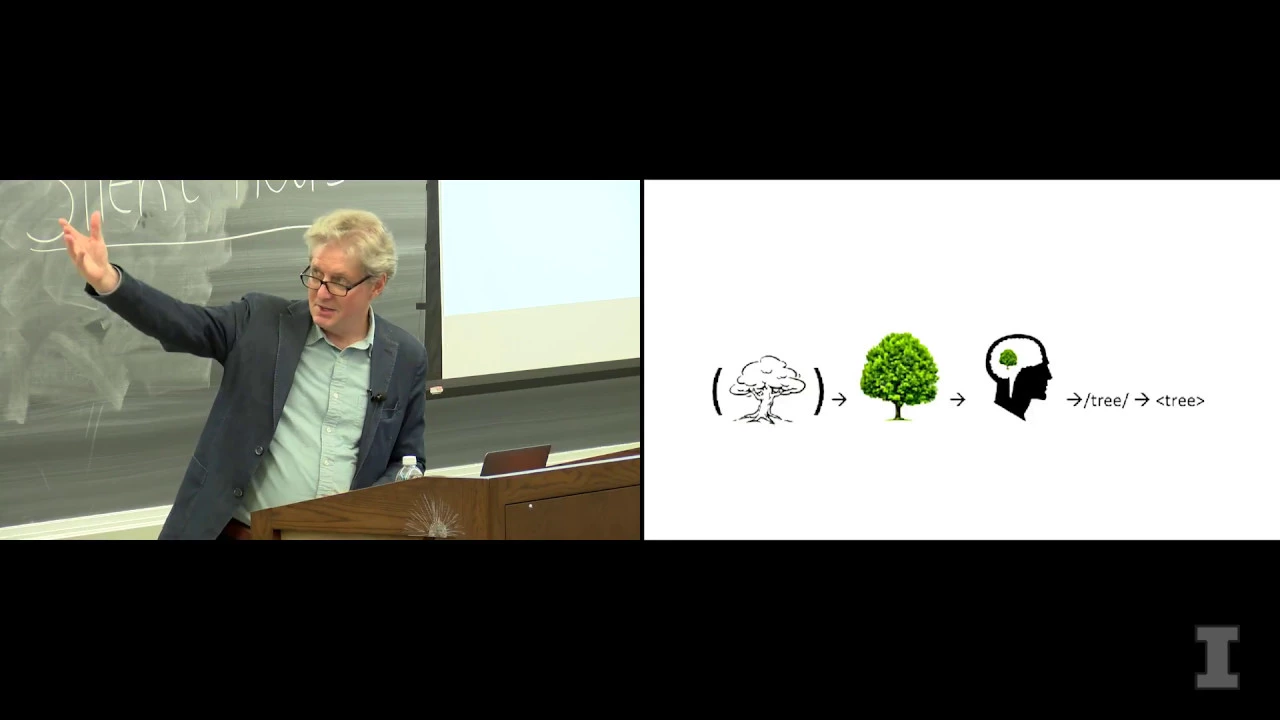


Erasure is an artistic practice where artists create new texts by selectively removing portions of existing written material, transforming original works into new compositions through strategic deletion. This technique, pioneered by artists like Tom Phillips with his 'Human Document' project, operates as a form of visual and textual art that reveals hidden meanings and creates new narratives from pre-existing texts. The process involves artists making deliberate choices about which words to preserve and which to eliminate, effectively 'writing with their eyes' rather than their hands. Erasure can be applied to various media including text, film, and music, and represents a form of artistic deconstruction that allows creators to stand on the shoulders of original authors while producing entirely new works.
Mary Ruefle on Erasure: Visual & Textual Poetics
Added:um before i begin i i brought i i just want to show you what i'm going to be talking about you won't be able to see it that's okay this is like the real thing that's not real i mean not the same everything stated or expressed by man is a note in the margin of a completely erased text fernando pizzowa i was on a plane and as often happens the woman next to me asked me what i did and it often happens in such circumstances as we are no longer actually on earth but suspended in the ether above that a lie takes place but as i was in no mood for a lie to take place i said i do biblical erasures and she said bible erasers you must sell a great many of them i didn't know if she meant pink rubber erasers with biblical quotes stamped on them was a commodity appealing to millions or since i claimed to support myself in this manner i would certainly have to sell millions of them but as i was still in the truth-telling mode i said actually i haven't sold a single one and as the air of the airplane was suddenly warm and oppressive i struggled to remove my overcoat when she reached out to help me and i was overcome by this unexpected and tender gesture of assistance and to my great embarrassment and for reasons having nothing to do with our conversation i began to cry and she said don't worry dear god works in mysterious ways and we never spoke again but a month afterwards i dedicated my new book of poems to her a perfect stranger whose name i don't even know because she had become by then in my mind the perfect stranger and i have since then sold a great many of them an erasure is the creation of a new text by disappearing the old text that surrounds it i don't consider the pages to be poems but i do think of them as poetry when i finish an erasure book i have i feel i have written a book of poetry without a single poem in it and that appeals to me the books have been called found poems but i don't consider them as such a found poem is a text found in the world taken out of its worldly context and labeled a poem i certainly didn't find any of these pages i made them just as i do my other work in the erasures i can only choose words out of all the words on a given page while writing regularly i can choose from all the words in existence in that sense the erasures are like a form i am restricted by certain rules i have resisted formal poetry my whole life but at last found a form i can't resist it is like writing with my eyes instead of my hands i use white out buff out blue out paper ink pencil gouache carbon and marker sometimes i press postage stamps onto the page and pull them off that literally takes the text right off the page once while working on an all-white eraser i had the sense i was somehow blinding the words blindfolding the ones i whited out and those that were left had to become i don't know extra sensory or something and then i thought no i am bandaging the words and the ones left are those that seep out am i burying or unearthing to bury something you must unearth you must heap the soil somewhere think of any gardener digging a hole and next to them a heap of earth bearing some other spot one cannot engage in either activity without enacting the opposite activity and if i am an archaeologist among words it is with a twist i must find new societies under old ones perhaps even ones that don't yet exist i have made 72 erasure books i have given many to friends as gifts one has been published and the bulk sold long after that conversation on the plane into private and public collections one or two of the books work when read aloud in public but most of them don't i can't ever imagine stop stopping making them and i hope to be working on one when i die you know how you go into the wilderness when you go into the wilderness you are expected to bring out your trash leaving nothing behind i spent the first half of my life leaving words in the world and will spend the last half taking them out after all when they asked neil armstrong how he felt about his footsteps being left on the moon he said he'd like to go back up and erase them i call them erasures but elsewhere they have been referred to as elision books hyper editing crossout and my least favorite of all these unfavorites creative defacement they are texts made by getting rid of in a thousand and one ways surrounding pre-existing text governments call it censorship i do not know their origin but any reasonably intelligent person can imagine a worker in a censorship office censoring letters mailed from the front line who to relieve the tedium of his job merely thought to himself if i wanted to i could make this letter say some strange things in such a way that it would actually be more interesting than what is being said now or a government official deleting highly sensitive material in a document in preparation for releasing the document to another party or to the public and the difference between these two imaginary scenarios is that one end is aesthetic and the other is political and in 2014 these two ends are still the only ends of this act though post-modernism has obviously conflated both ends in the erasure work of a great many visual artists such as jenny holtzer to take only one example an exhibition of whose i recently saw in a museum and which was comprised of a great many blown-up and censored documents of the united states government and though miss holzer has produced work in the past i am inordinately fond of it had been a long time since i had seen such a thoroughly boring exhibition the one i want to talk to about is tom phillips because the aesthetic ends of erasure everyone agrees begin with tom phillips and the artifact that was slowly and surprisingly to become his life's work in artifact i'm loath to talk about because it must be seen to be believed by being experienced but i will do the best i can to speak briefly of this work of art one i came to myself in the 1980s when reading an issue of art forum in which prominent artists were asked to name what they considered privately and personally the greatest work of art of the 20th century and the writer william goss gas named huma men by tom phillips this is tom phillips huma mint in the 19 in the mid-1960s tom phillips was inspired by william burrows cut up texts the ones the american writer made by cutting up newspaper texts and rearranging it phillips used british newspapers to the same end but was soon determined to take the whole thing the whole thing further he set a rule for himself he would buy the first book he came across that cost three pence he found for three pence an old used copy of a victorian novel he had never heard of called a human document by william hurle maluk printed in 1872. a novel phillips discovered had been so popular in its day that the addition he purchased was in its seven thousandths printing and so he began the and so began the collaboration of mr phillips and mr malek the original author beginning to erase text using ordinary pen and ink phillips soon switched to gouache and watercolor and began to paint each page of the 367 page novel at the same time leaving selected exposed text so that the treated novel became an illuminated manuscript often compared to the work of william blake and now owned by the tate gallery in london the book was first published in book form such a funny thing to say in eight 1980 and it is a novel within a novel so to speak a narrative made out of another narrative though many of the pages stand alone as poetic or philosophical text there's a character bill toge t-o-g-e whose name phillips could only use on those pages where either the word together or altogether were used the requisite t-o-g-e being found in either of these words to quote phillips speaking of this feast of a book it is the solution for this artist of the problem of wishing to write poetry well not in the real sense of the word being a poet he gets there by standing on someone else's shoulder this quote remains in the present tense because philip has never stopped working on the novel though finishing his first treatment of it long ago he continues to treat the novel page after page never repeating his previous treatments not to mention a complete opera score he made out of the novel to this end of course he needed more copies of the book and by 1997 had 15 copies he has he has done 20 variations alone of page 85. the second copy of a human document that he bought had been bought in 1902 by a woman who had underlined whole passages and added marginalia an act he loved and wholly welcomed because he realized that over time when we underline a passage in a book or add marginalia we ourselves are treating the book we're reading as mandelstem once said erase everything you have written but keep the notes in the margin philip soon realized that he was engaged in a great act of deconstruction to use the byword of those days and beyond all of this and much more which i am not even bothering to mention he realized that he was engaged in a paradoxical enactment of malarmay's famous dictum that everything in the world exists in order to end up in a book even books exist to end up as books he also discovered the original victorian novel a human document is mentioned in a novel by dorothy richardson which is where my life comes in perhaps maybe for no one can ever really tell when a thing or where a thing begins dorothy richardson who lived from 1873 to 1957 was a novelist who was an intimate friend of h.g wells and other avant-garde thinkers of the day all of whom encouraged her to write she wrote a series of autobiographical novels and became a pioneer of the stream of consciousness technique and virginia woolf credited her with inventing the psychological sentence of the feminine gender but she was almost completely ignored and forgotten to the feminist heyday of the 1960s and 70s when she was champion and rose from obscurity to become the feminist avant-garde darling that she well always was in the early 1980s in the early 1980s i was teach when i was teaching at bennington college i had a remarkable student named lisa conrad who is now a visual artist and librarian living in san francisco at some point i no longer remember when she sent me the photograph of an installation she had erected on the outskirts of san francisco a corrugated iron billboard with lettering punched out on it from a text by dorothy richardson i liked it so much and was so moved by the text that i put it in a little plastic frame and hung it on my wall and though i have moved many many times since then it remains this day on my wall this is its text if still astounding being alive enough would lie everything one did instruction astonishment there was a typo it would die if still astounding being alive enough would die everything one did instruction astonishment i did not realize until preparing to talk to you today that the text is an erasure years before i myself began doing erasures i stared at one every day you see discovering tom phillips did not lead me to erasures nor did lisa's billboard or did it nor did the vermont college graduating lecture by my other remarkable student natasha deshomer a photographer who showed us on a screen erased pages which i remember as predominantly in a single color such as bright scarlet with only a single word or at most to left visible home say or nest natasha's work took my breath away i remember silently weeping in the back of the room but she was much much more of a minimalist than i could ever bear to be no i think i only sense then that this thing this using pages of one book to make another book had more possibilities than i had ever dreamt of and that even though i was not a visual artist like tom phillips i was a poet someone who was predominantly a poet and could approach the pages of an old book and find there the possibility of poetic texts that traveled outside the margins of conventional poetry and this was a place i very much wanted to inhabit for the single reason it felt like home i am not and never will be the great visual artist that tom phillips is but i can and this is possibly the boldest statement i have ever made find in five minutes poetic text that it takes tom phillips six months to find my text finding limit is ten minutes mr phillips is one year you see i don't actually read the books i don't read the text unless the book is very very very interesting to me and that has only happened twice in 15 years the only way i can describe it is like this the words rise above the page by say an eighth of an inch and they hover there in space singly and unconnected and they form a kind of field and from this field i pick my words as if they were flowers and so one day in 1998 for three dollars i bought a soft small leather 19th century book and using an ordinary black pen began crossing out words it's crude to be sure i don't care my first 15 books are very crude indeed i learned as i went along and i am learning still i took off on my own private path and i have never looked back at some point i discovered i had a secret bond with whiteout perhaps i have lived through too many blizzards at some point i discovered you can't use graphite unless you use a fixative i discovered gouache because joshua beckman mentioned he was using it at some point i began to cut out pictures from other books and paste them into the pages of my books to collage text and image at some point i heard other writers were doing the same thing i heard jen bervin had done shakespeare's sonnets nets and ronald johnson paradise lost radios but i liked my obscure little books i had no interest in famous works i discovered thomas jefferson had done it and that susan howe matteo harvey sriken thready and jonathan saffron fro among others were doing it i became friends with the visual artist will ashford who had been doing for years exactly what tom phillips was doing without ever having heard of phillips imagine the ultimate artist's crisis to labor for years over what you believe to be a unique form and then find out someone else is famous for the same thing mr ashford did stop working for a while in his shock and then got on with his work picking up where he had left off why stop your own joy from unfolding at some point i became involved in some point i became involved in an erasure correspondence with my editor joshua beckman we erased over six years the entire flaubert george sand correspondents we did it by mail the same form in which they had corresponded he was flaubert i was sand four page letters were reduced to two lines light along the river and i walked pretending i was a tide in thin exaggeration alone i love being particular one existence what a task a little note from your north wind adieu without knowing that phillips redid his own pages with no knowledge of that at all i found a second copy of a book i had previously erased and jumped at the chance to do it all over again to see if i would erase a single page in the same way no i didn't i couldn't it was as philip said a feast but it doesn't interest everyone most people i have found are either horrified or bored by it visual artists will turn the pages of an erasure book and not read the text they will only look for visuals nothing else interests them i find it amusing poets i thought would be interested tell me to my face they don't like it i love it when that happens i love loving something so much you simply don't care what other people think and most of all and most of all i am chagrined by those who think that it's fun and easy and run out and buy a book and then run to me and show me what they've done seeking my approval this has happened more than once or by those who endlessly find little books and send them to me in the hopes i will erase them i like to choose my own books you see i am not encouraging you to do this because it is exactly like art it is a private journey we can be inspired and we can be influenced but the predominant note of any journey must be found in the quiet unfolding of our own time on earth that said i will say this eight times out of ten an erasure of a poem made by the author of that poem will be better than the original poem it is sometimes called revision but of course you cannot actually you cannot actually read the original poem you can only look at the words it's hard you can't really read the text since when it's blown up um years patch up an old one of somebody else's and that does it something like that i will now add you can go through all to the end now i will now add as an addendum to these remarks the information quite logical that erasure is not exclusive to written text bill morrison's film decasia is a film erasure made entirely by editing decayed film stock old film from a variety of sources that had decayed throughout time to the point of being burnt out or erased and as such is a complete and unique erasure experience but be forewarned the film will either change your life or you will not be able to endure it to its end it is a litmus test of how you react to erasure and the same might be said of william balinsky's the disintegration loops music created when balinsky attempted to transfer old tape loops from analog to reel-to-reel tape from analog reel-to-reel tape to digital hard disk but the tapes were old and they were disintegrating the music was dying says balinsky in his liner notes but he kept recording and documenting the death of the loops and as it happened he was doing this on the morning of 9 11 and there you can see on your youtube you can listen to the music oh while what's happening across the river is being filmed it's absolutely extraordinary so sometimes we just stumble upon an act of erasure and recognize its beauty and seek to preserve it seek to preserve that which has not yet been preserved we make compositions out of decompositions and who can forget the famous erased de kooning by robert rauschenberg when the savvy young artist again working in the heyday of deconstruction was given a drawing by william de kooning and took an eraser and erased most of it and promptly sold it for boodles as a de kooning and who can forget and who can forget i can you may be thinking because i never knew any of this before or i can because none of this is of interest to me or changes my life so i i i can forget and that my friend is the art of is the art of erasure as it is enacted in your own life and all lives life is much much more than is necessary and much much more than any of us can bear so we erase it or it erases us we ourselves are an erasure of everything we have forgotten or don't know or haven't experienced and on our deathbed even that limited and erased whole becomes further diminished and if you are lucky really lucky you will remember the one word water all others having been erased and if you are really lucky you will remember one place or one person but no one will ever ever read on their deathbed the whole text intact and in order first your life is erased and then you are erased and don't tell me that erasure is beside the point an artsy fragment of the healthy whole if it is an appropriation it is an appropriation of every single life that has preceded your own just as those in the future will appropriate yours when you are gone and they will appropriate your very needs your very desires your gestures your questions and your words or so i believe and i am glad what is the eternal what is the alternative a blank page i am all the book remembers of itself i will now read an erasure of this talk i call them erasures and so began because lips never stopped working for one can never tell an intimate rose from the remarkable habit of crude time thank you you
Up Next

Stream of Consciousness vs Interior Monologue: Literary Techniques Explained
@LiteraryIcons
243 views•2025-04-18

Formalism in Literary Criticism: An Academic Lecture Overview
@mattalberhasky9952
39.1K views•2015-08-05

Point of View in Fiction: First Person vs. Third Person
@magicalthriftyteacher
153.8K views•2014-03-31

1984: Orwell's Dystopian World and the Mechanisms of Totalitarianism
@AlternateHistoryHub
7M views•2017-03-04
Related Study Plans & Knowledge Roadmaps
Structured learning paths in Literature