



![Dark reactions _ C3 , C4 CAM plants [ photosynthesis] bsc agriculture 1st year crop physiology](https://i.ytimg.com/vi/WfvhmGY82Y8/maxresdefault.jpg)








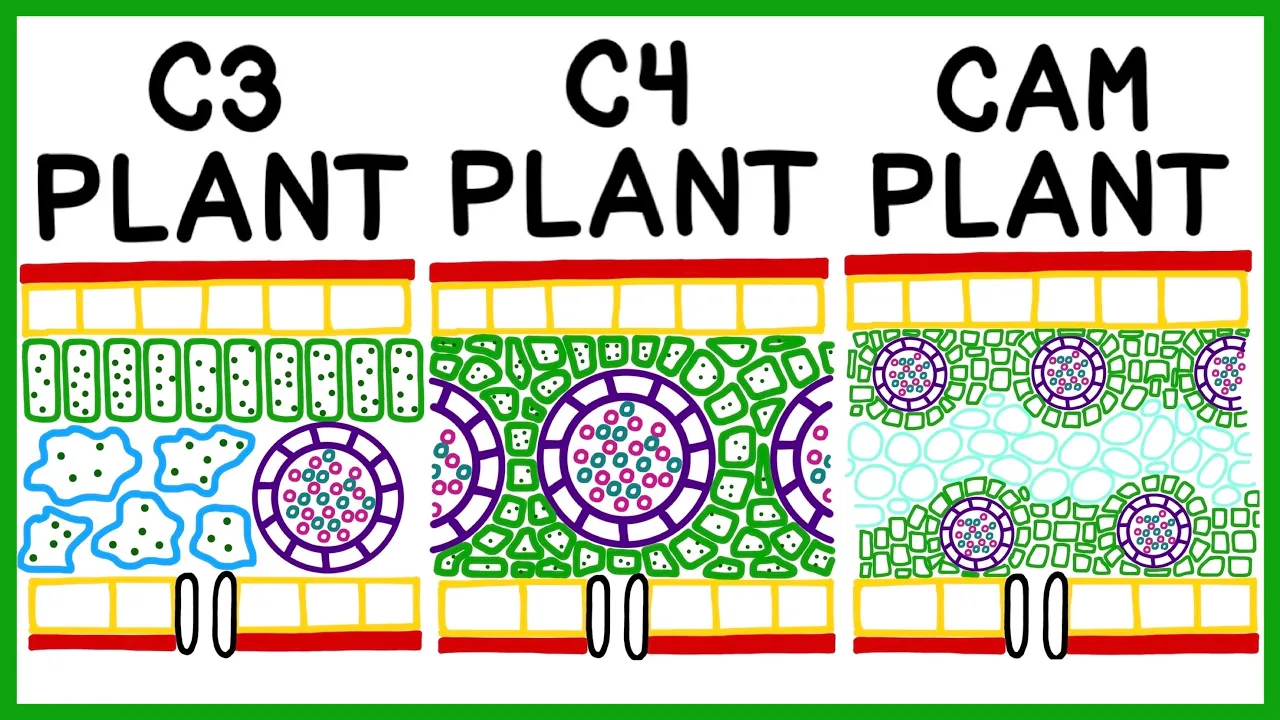
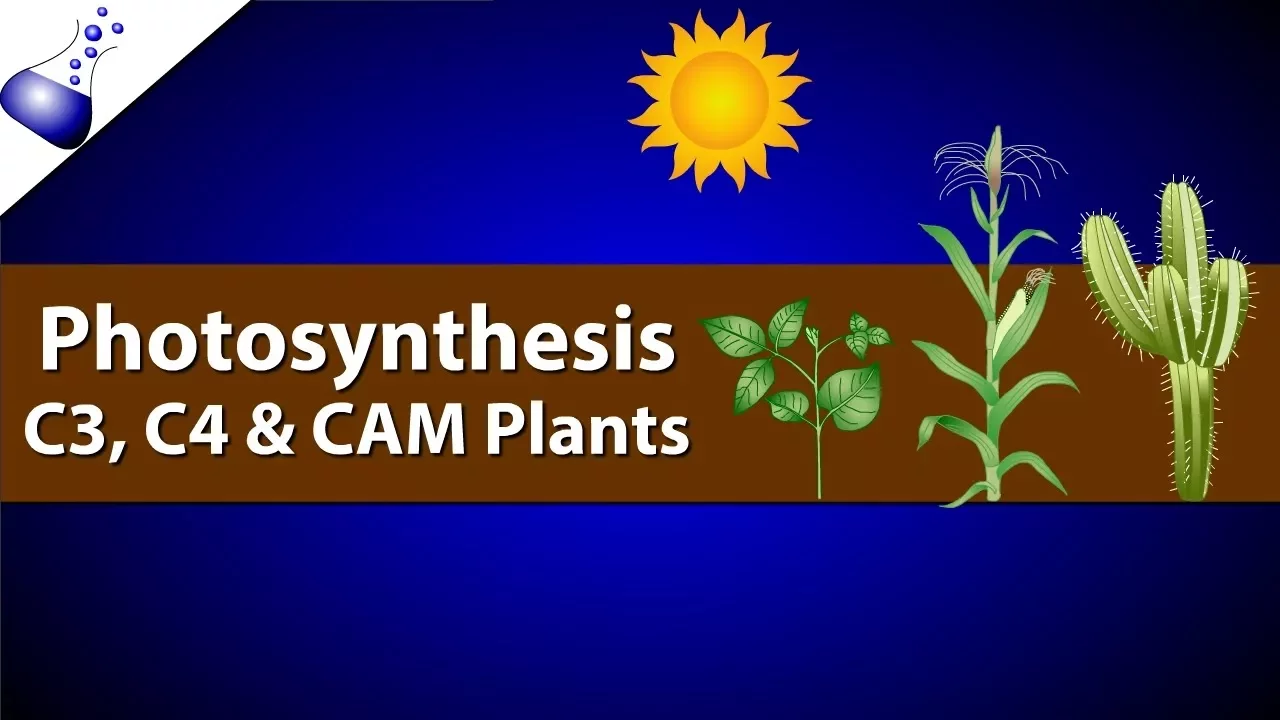
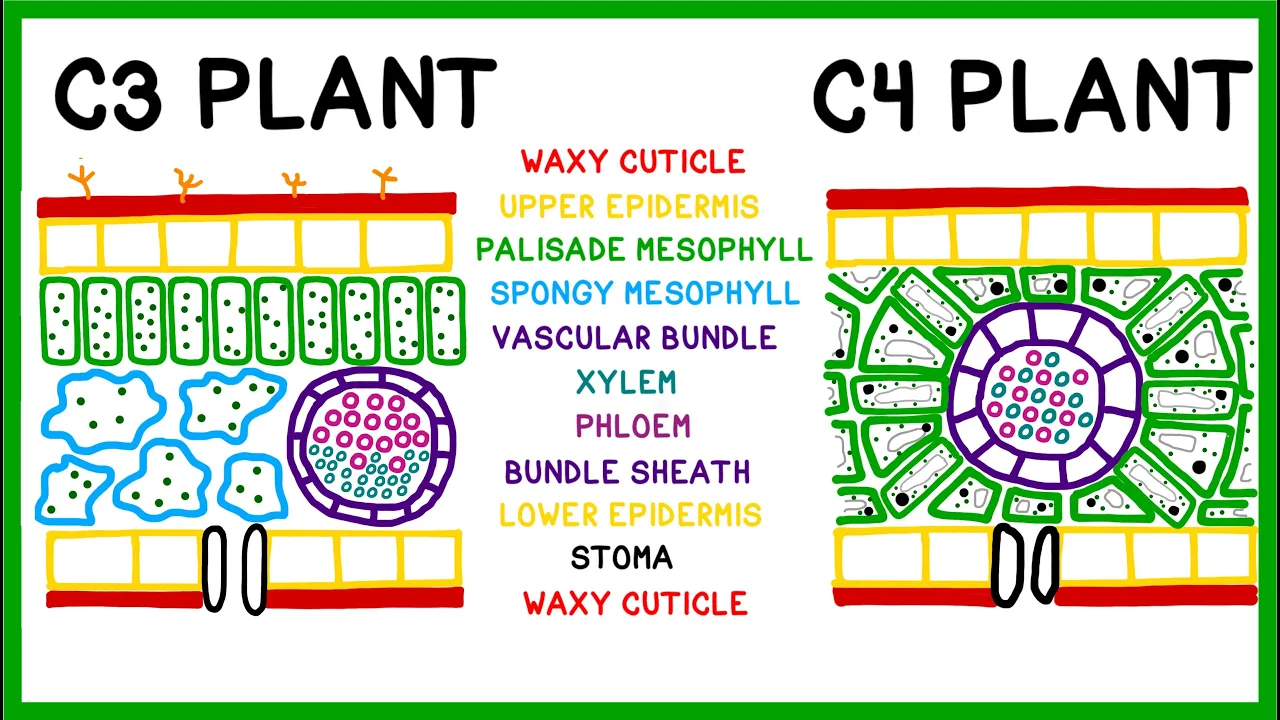





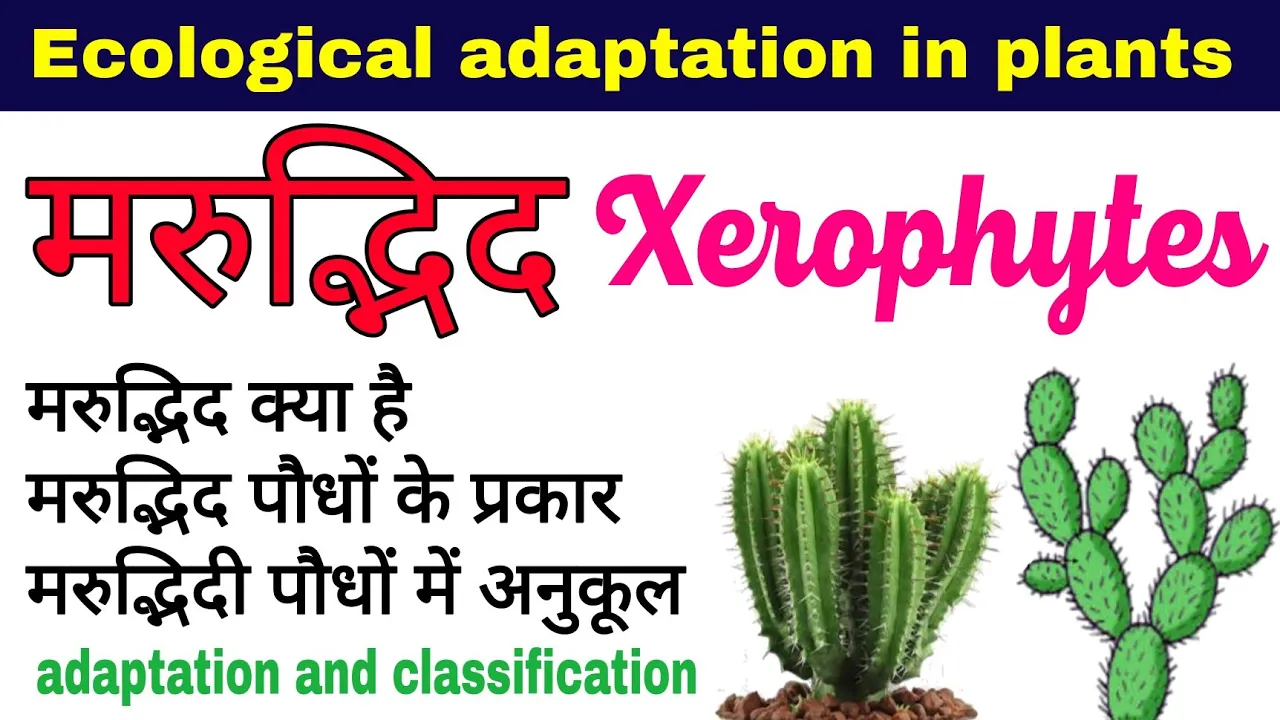

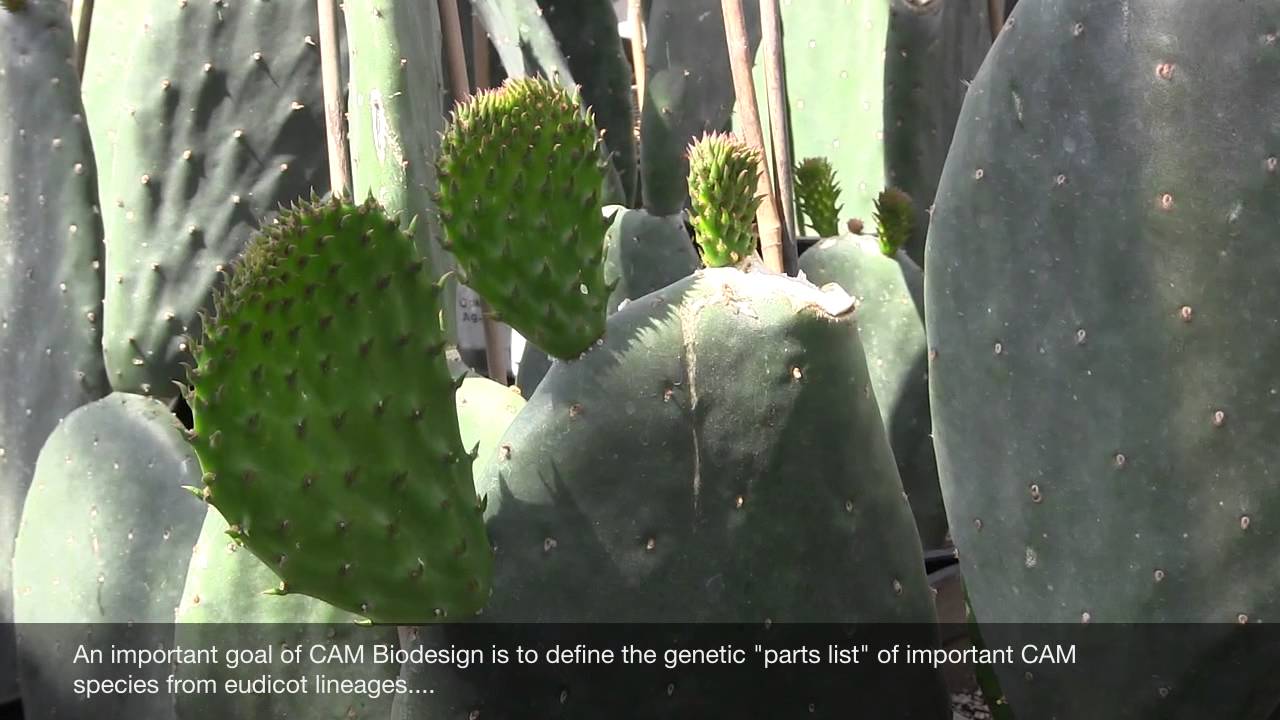





CAM (Crassulacean Acid Metabolism) plants are succulent plants like cacti that have adapted to arid environments by reversing the normal stomatal opening pattern—keeping stomata closed during the hot daytime to minimize water loss through transpiration and opening them at night to absorb CO2. The absorbed CO2 is converted into malic acid and stored in vacuoles during nighttime, then released during daytime when stomata are closed, allowing the C3 cycle to proceed using the stored CO2. This temporal separation of CO2 uptake and fixation enables CAM plants to perform photosynthesis efficiently while conserving water in dry conditions.
CAM Plants Explained: Photosynthesis in Higher Plants | NEET Botany
Added:The basic biochemistry of C3 photosynthesis, specifically the Calvin Cycle and the role of the enzyme RuBisCO.
The structure and function of stomata, including how they regulate gas exchange and transpiration in plants.
The C4 photosynthetic pathway, which introduces the enzyme PEP carboxylase and the concept of carbon concentration mechanisms.
Plant cell anatomy, particularly the role of the central vacuole in storing solutes and maintaining turgor pressure.
A detailed comparison of C3, C4, and CAM pathways, focusing on spatial versus temporal separation of carbon fixation.
The evolutionary ecology of xerophytes and how CAM physiology correlates with morphological adaptations like succulence.
Synthetic biology applications, specifically current research on engineering CAM pathways into C3 crops to improve drought tolerance.
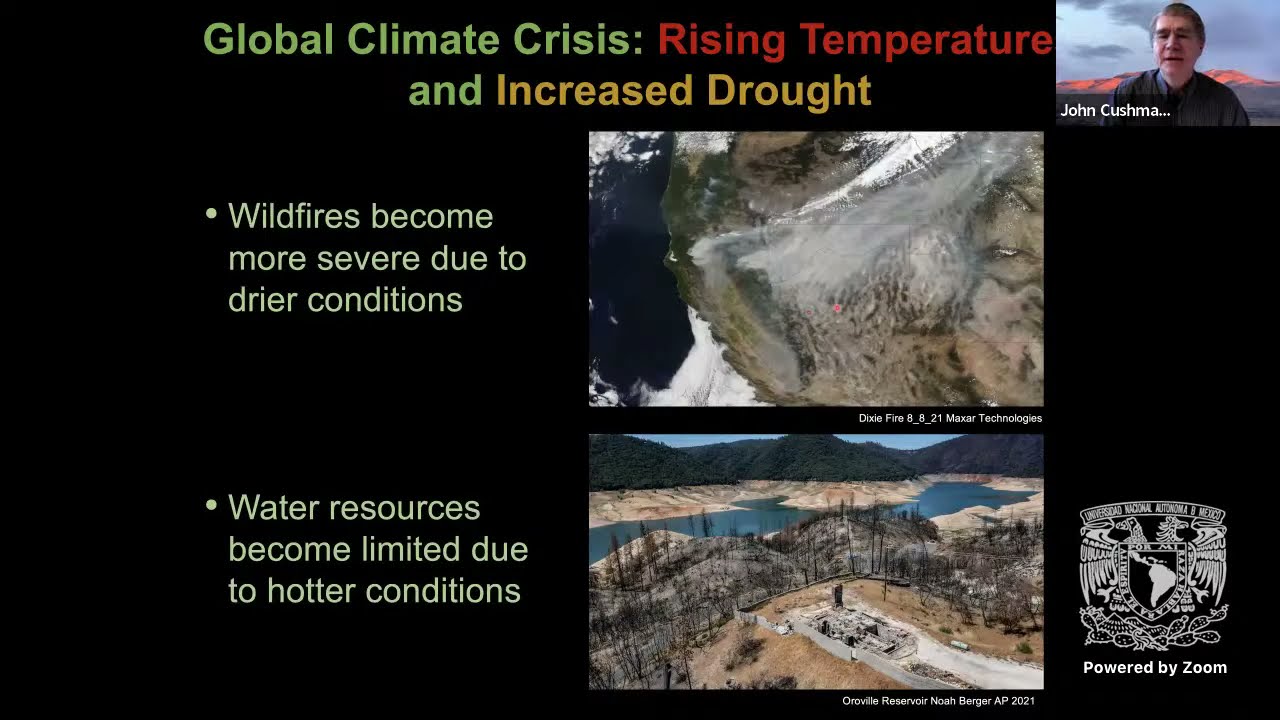
The impact of rising global temperatures and changing precipitation patterns on the distribution and competitiveness of CAM plants.
225.5K views4Klikes13:30Original Release: 2016-07-25
you let us not talk about another category of flames and these lands are Mona's can pledge this camp stands for a type of metabolism it is known as crassulacean acid metabolism so plants which show this kind of meta bodies of those are all cam plants and the example of cam plants that means which plants can be on our quad cam plants are certain succulent zero fights like cactus or open share you can say so cacti are in this category and some members some members of you for BAC family there also are the plants which show the same kind of medabots now we have seen c3 plants and c3 cycle in detail we have also understood c4 plants and what adaptations they have are shown or they show to overcome the problem of photorespiration the plants which are growing in Zurich condition that is dry condition they have another big issue to deal with and that is loss of water due to transportation so the adaptation or modification which takes place in camp plants is slightly different what have they done is they have changed the time or timing of opening and closing of stomata so there is a change timing of opening and closing of stomata normal plans have stomata open during daytime and this time at a close during night but in these cam plants stomata open during night and they close during day so the timing is totally reverse of what is seen in the regular of plants such a stomata which remain open during night and closed during their they are called squat or active stomata this is a characteristic feature of our succulents or zero fights we can say because during daytime if stomata remain open transpiration would take place and as we just now said that zero fights have a problem of water they are growing in dry zurich condition so they want to minimize this water loss so to avoid or minimize that transpiration the timing of stopping the opening and closure has been changed so now what exactly happens in this pathway how do they perform photosynthesis with this changed time the photosynthetic process takes place in needs or fuel cells only so does save location is sale and here the stomata present we are drawing it light on the surface but we know that in zero fights the stomach are also some gun that means if this is the epidermis the stomata would be slightly on the deeper side so they have sunken stomata circle stomata but here we are just drawing it on the surface because our main emphasis is the process by which this takes place and this diamond which we are drawing is of miso fuel cell and we will see what is happening in knee so fuel cell and as we have shown the stomata open that means this is taking place during night so here stomata are open when stomata open transpiration is also taking place plus gaseous exchange is also taking place so carbon dioxide diffuses in this carbon dioxide reacts with water molecule to form same with carbonic acid the enzyme which is going to help here this enzyme is going to make carbonic hydras and then this dissociates into H+ and hco3 that is by type of 8ax this is same what was happening in case of c3 or c4 plant so this is how carbon dioxide is accepted the enzyme here is carbonic and hydrates and this carbon dioxide which is the form of bicarbonate ions is accepted by forceful in all pyruvate that means carboxylation of PEP is taking place that enzyme which is going to help in this process is Petco PEP carboxylic and the first compound which is form is of zero acetic acid so far it is exactly same what was happening in c4 plants this oxaloacetate acid gets reduced that means there is reducing power n 8v p h2 which is required it changes into an ATP and Malak as this synthesized so PEP is forceful in all pyruvate Zelo acetic acid and here we have item for malic acid or malate malic acid or night so during the entire night period carbon dioxide is taken in because the stomata open it is accepted by phosphoenolpyruvate oxaloacetic acid is formed this changes into left and this malate is stored in the vacuum so this is the vacuole which we are drawing here and this malic acid is accumulated here so the entire night what the plan does is carbon dioxide is taken it converted into malic acid and store again carbon dioxide taken in stored in the form of manic acid here there is no light reaction because this is happening in night time and during day time let us see now what is going to happen during day here the stomata are going to close so here we are showing closed stomata we can write here stomata are open and here stomata are closed and if stomata closed there is no exchange that means nothing is going to come in and again let us draw this miso fuel cell and this is during day time where stomata closed the malic acid which was synthesized and stored this is the vacuum malic acid which was stored diffuses out of the vacuole this malic acid gets converted into phospho in all pyruvate malic acid is a 4 carbon let us come back to what is happening during night time carbon dioxide bring in one carbon accepted by PEP which is a three carbon comeback and a four carbon compound observe acetic acid response this is same as C four cycle this four carbon compound changes into another four carbon compound that is malic acid it is the same for carbon contain a bag like acid when it dissociates it gives a three carbon compound that is phosphoenolpyruvate and one carbon is given out in the form of carbon dioxide during this conversion and a DP gets reduced into egg a DP h 2so NADPH two was used during night time and that same energy fields two is produced during day time this pyro phosphoenolpyruvate is now again available to accept new carbon dioxide which would be coming during night time this carbon dioxide will be accepted by ru BP and same C three cycle would take place and glucose will be synthesized so now what is done during day time because for glucose synthesis or - 4 C 3 cycle to take place ATP is also required and NADPH - that is reducing power is also required this is the time that means the light energy is getting absorbed cyclic and noncyclic photophosphorylation are taking place which are supplying ATP and NADPH - from the light reaction so this is supplied by the light reaction for this C 3 cycle to take so modification or adaptation which is seen in care plans is the timing of opening and closing off stomata and why they have shown this change because they grow in selling condition which are extremely dry water availability is very very less so to minimize the water loss through transpiration they open their stomata during nighttime and we're stomata open that is the time when gaseous exchange can take place so carbon dioxide is taken in it is converted into malic acid and stored during their time now the light reaction would start in the same cells and the malic acid is converted into a three carbon compound and one carbon containing Aqueduct say this carbon dioxide is also available and ATP and NADPH - which are required for the c3 cycle they are also made available by this light reaction because this is daytime so light reaction would also stop and glucose synthesis takes place so by changing the time of opening and closing of stomata these plants have shown a slightly different method of photosynthesis these are these are called cam plants and this type of all photosynthesis is known as camp plant photosynthesis or photosynthetic process which is seen in camp plants the most common examples are the succulent zero fights like open share some members of you fold BAC faculty and the plants which are belonging to class sue EAC family they are also the members and that is why this metabolic has been given that name so whether it is regular c3 plants or c4 plants or cam plants by showing modifications or adaptations the process of photosynthesis takes place at glucoses synthesize you
Up Next
25:37
Plant Physiology PYQ for CSIR NET Life Science | Explained
@shomusbiologyofficial
1.4K views•2024-07-05
50:12
Bacterial Communication: Quorum Sensing and Biofilm Formation Explained
@JHUAAP
12.6K views•2011-06-28

11:47
Neural Control & Coordination: Synapse Explained | NEET Biology
@NeelaBakoreTutorials
78.3K views•2017-03-24

7:08
Bacteriophages: Earth's Deadliest Killers and Future Antibiotics
@kurzgesagt
34.6M views•2018-05-13
Related Study Plans & Knowledge Roadmaps
Structured learning paths in Biology
biology
RNAi: Biogenesis, RISC & Gene Silencing
01Molecular Biology Foundations: DNA to Protein
02Introduction to RNA Interference (RNAi)
03Molecular Biogenesis of miRNA and siRNA
+ 2 more learning modules
10h5 modules
Explore Roadmap
biology
Mycorrhizae: Signaling, Biophysics & Ecology
01Foundations of Mycorrhizal Symbiosis
02Molecular Signaling and Root Colonization
03Biophysics and Bioenergetics of Nutrient Exchange
+ 1 more learning modules
11h4 modules
Explore Roadmap
biology
Circadian Clocks: TTFL, SCN & Periphery
01Foundations of Molecular Biology & Gene Expression
02Introduction to Chronobiology and Actograms
03The Core TTFL: Molecular Architecture of the Clock
+ 3 more learning modules
14h6 modules
Explore Roadmap
biology
Population Genetics: Math, Drift & Selection
01Genetic & Probability Foundations
02The Hardy-Weinberg Principle and Baseline Models
03Mathematical Modeling of Natural Selection
+ 3 more learning modules
18h6 modules
Explore Roadmap