




















This video explains how to analyze and answer CSIR NET plant physiology questions by understanding their structure, covering key topics including nitrogen fixation by nitrogenase (energetically expensive, oxygen-sensitive process), C3/C4/CAM plant comparative anatomy (C4 plants have lower compensation points and higher photosynthesis rates at low CO2), secondary metabolites (terpenoids from 5-carbon compounds, alkaloids as nitrogen-containing compounds), transgenic plant engineering (delayed senescence through isopen transferase overexpression), osmotic stress management (compatible solutes like proline and glycine betaine accumulate in cytosol), phloem sugar transport (sucrose is efficiently transported via pressure flow model), and the Z-scheme of photosynthetic electron transport (P680 to P700 pathway).
Plant Physiology PYQ for CSIR NET Life Science | Explained
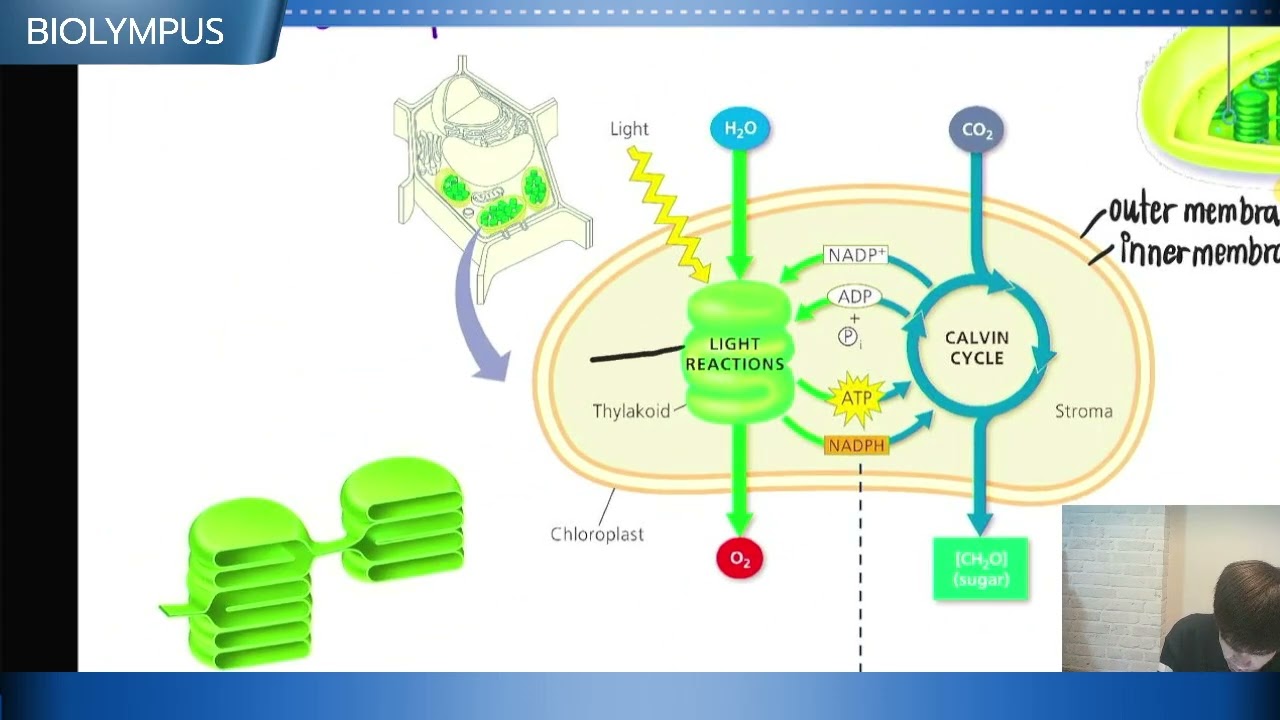
Added:okay so we keep this whole series as anatomy of questions and here we want to discuss about uh the detailed structure of a question because if you understand the structure of a question very clearly you can answer them fast okay and sometimes understanding the structure is more important even important than knowledge of the subject itself so uh today we will talk about unit one and unit two questions okay so six questions from each unit approximate number of questions you can expect from these units in Parts in CSI net exam so this is okay so this is another part of the anatomy of a question and uh this is about unit six plant physiology and the secondary metabolites plant hormon those chapters okay so most of the questions from this unit six in part C in CSR net exam is asked from the plant physiology portion like photosynthesis nitrogen fixation and from hormones also sometimes so let's solve few of these problems now okay so let me take a color first okay so let's begin this is the first question nitrogen fixation is basically a process of converting nitrogen gas into ammonia one of the key enzyme in this process is nitrogenase the production and activity of nitrogenase is very highly regulated as highlighted below so when you read the first part of the question you know that this question is from nitrogen fixation okay that means in this case uh nitrogen fixation process chemically we are going to talk about so if you don't know about nitrogen fixation the chemical process you may leave the question but if you know then attend to the question because most of the statements mentioned here is from nitrogen fixation and the enzyme nitrogenase okay it states that nitrogen fixation through nitrogenase is an energetically expensive process whether the statement is correct or not the answer is yes it's an energetically expensive process because if it's a easy process then anyone can do that it's not that easy it's energetically expensive process so statement a is correct if you know that statement a is correct you know that option three and four are not true so immediately from 25% you get to 55% of this questions probability to answer second statement nitrogen is encoding Gene is under constitutive promoter third statement nitrogenous is highly sensitive to oxygen yes we know that nitrogenous is highly sensitive to oxygen if you know that nitrogen is highly sensitive to oxygen because this is one of the Prime feature of nitrogenous enzyme this is actually a drawback of nitrogenous enzyme okay so A and C so option two will be correct if you read the statement uh d endogenous availability of the co-actor of nitrogenous enzymes is very low no endogenous availability is fairly well all the co-actors needed for nitrogenous functioning is already present so that's not a problem okay the problem here in this A and C so if you look at here these these are the two these are the two are the correct statements so this is the overall features of nitrogen and biological nitrogen fixation done by enzyme nitrogenous present in soil bacteria root nodules and algae two of research has been going on enzymes contain mum and iron both to be present as a co-actor fine proposed mechanism is complexation of nitrogen to metal ions reduce Bond strains breaking first Pi Bond easier now the limitations of biological root nitrogenous is highly sensitive to oxygen requires oxygen free environment that's why it's only done uh in like in the soil in the anerobic medium by the soil bacteria root nodules okay sensitive to environmental conditions such as temperature and pH and cannot be used for large scale nitrogen fixation okay so if you know this properties you already answered this question quite fine okay let's move to the next one following are certain statements regarding C3 C4 and Camp plans now you probably will see this question in the upcoming net exam this kind of question from C 3 C4 and Camp plants comparative anatomy and comparative study the ratio of water loss to C CO2 uptake is higher in Camp plants then it is either in C3 or C4 plants now if you read it very carefully what you'll find out is that the ratio of water loss means water loss and CO2 uptake is higher in cam is it possible no because Camp plans are designed in a way that they should prevent water loss so when you read this question the very first line you know this is from C3 C4 Camp plan so you need to know the comparative anatomy and the and the process of C3 C4 and Camp plan if you know that attain it you'll get it 100% as I mentioned the water loss by CO2 ratio must not be higher for cam because it should be low the water loss is less in cam plants so statement a is wrong and if statement a is wrong then option one is wrong option two is wrong again a 50/50 tie the rate of photosynthesis attains maximum rate at lower intracellular CO2 partial pressure in C4 plant than in the C3 plant now the answer is yes it's true because in C4 plants there a compartmentalization for the photosynthesis and particularly the Kelvin cycle compartmentalization so at even lower intracellular CO2 partial pressure the photosynthesis can continue in C4 plan plant and C4 plant still can give us more y compared to the C3 plant so when the CO2 partial pressure in the environment is less C4 C4 wins over C3 okay in this situation so B is correct so if B is correct then obviously option four is correct you don't need to read even other other statements right but still for understanding I I may read the compensation point in C3 plant are always lower than C4 plants no the compensation point is a Time you know if I explain normally the plants plants take up CO2 uh for the process of photosynthesis plants also release CO2 as a result of aerobic respiration now this uh the rate between the CO2 uptake and CO2 production is not always equal when a situation come when the sunlight is not present no there's no adequate light then the amount of CO2 used is less than the amount of CO2 released so the plant releases more CO2 than the CO2 used for photosynthesis but when the sunlight is more then there is a time when the CO2 taken from the environment becomes the same concentration of CO2 taken becomes the same as the CO2 produced that time is known as the compensation Point okay so this is the idea of a compensation Point call it light compensation point right and this is actually measured in terms of light intensity okay so I explained that term so it says that compensation point in C3 is always lower than C4 the answer is wrong no it's not always in some cases but not always plants with C4 metabolism need less rubis score than C3 plans yes that's true because C4 plans have a compartmentalization and rubisco uh is present in a separate compartment where the rubisco can do the process of can involve in the process of Kelvin cycle okay but the C3 plant needs more rubisco to do the photosynthesis so this is also true D is also true so uh a and I mean B and D both are correct so option four is correct so this question is from exactly the concepts of C3 C4 and Camp PLS now the this one the following are certain statements regarding secondary metabolites found in plants so again if you read it you know it's from secondary metabolites and mostly secondary metabolite question needs your power of memory memory based groups equation so if you know if you prepared you can attain otherwise leave all Tarpin are derived from six carbon element and you need to know at least two of these four statements to answer that for example you know this tens are derived from five carbon compound mostly which form ISO ring this is a unique structure of turpens so a is wrong if a is wrong then one and two both the options are wrong so either option three or option four again 50/50 chance so knowing one statement can reduce the chance from 25% to 50% now you need to know one more statement alkaloids are nitrogen containing compounds it's true alkaloids are nitrogen containing compounds if you know that then option three is correct right don't even need to read C and uh C and D C said the pyoid is a monot found in the leaves and flowers of cenum species show insecticidal activity yes it's actually a true finding but the limonoids from the lonin so group of alkaloids have anti-oral activity this is wrong there's no anti herbal activity from leonine and all so this is not true but uh B and C are true so option three is the correct option now yeah so if you look at this this is the Tarpin and if you talk about the Tarpin a little bit in a nutshell I can tell you that Tarpin is derived from the word Tarpin time terpenoids are oxygen containing Tarpin like alcohols ketones and alhida this C5 five carbon structure and they also form a ring known as isoprene ring and they also have this isoprene rule that there is C5 h8 and bracket suffix n is there where uh n is the number of linked isoprene structures that we can see as many as isopr link structure can be formed but the bezel structure will be formed with five carbon and eight hydrogen okay so if you know that option b is correct I mean the statement B is correct and that's how we can continue okay so again memory based but if you know one or two of the statements you can answer the rest [Music] [Music] a transgenic lettus plant was generated by overexpressing ISO isopen transferase Gene under the control of a promoter of senin activator Gene so we are overexpressing isopen transfer is IP Gene under the control of a promoter of Cent activator Gene S2 following are some statements regarding this transgenic plans okay some statements are provided now when you read this uh this is blank mostly sometimes this question can be from unit 12 or 6 you know you don't know that for sure now this kind of question requires your understanding of constant uh research paper analysis and study otherwise this kind of question you cannot answer most often so we try to answer that you know when you see that you have still many questions left to be answered in the exam you can take this type of questions otherwise don't need to look for these kind of questions because these are not these are tricky more tricky questions the transgenic plants exhibit delate sence exhibit fast cense have higher amount of cyto during cense higher amount of gibber in during cence you need to know the idea about the cyto presence with cense or gibin presence with cense you need to know whether cytokine is the hormone that is linked with cence of the plant or jaline linked with cense now we know that role of cytokine is more associated with the cence effect so if you know that that the C is correct C statement is correct so you can find it out there are four there's only two option given I think the rest of the two options are cut out so I go with c and if you think about exhibit delay sense or not because the thing is the promoter is sence activator Gene so it can cause the sense but the IP IP is present and the promoter of s ag12 which is a sense activator Gene so once this Gene is active it will cause senance okay so now if you think that if we need to overexpress IP we should not allow the S12 to remain active right so in this case if the senance occur early then IP overexpression is not possible for the overexpression of Ip we may cause delay sense Okay so should be exhibiting delay s so a is correct C is also correct so option b uh in this case should be the correct option so without knowing all the rest of the details we can still conclude about it think about it if you want to overexpress IP and if sence occurs early means the plant is dying early then it's not possible okay so to produce IP we need to delay the cense effect okay let's move to this one following are some statements to osmotic stress in Plants a a accumulation of ions during osmotic adjustment is predominantly restricted to the VAC wals B in order to maintain the water potential equilibrium within the cell other solutes or compatible osmolytes accumulate in the cytoplasm C galactose is one of the compatible osmolites involved in the osmotic stress in Plants D there are mainly four groups of molecules that frequently serve as compatible solutes now what about this compatible solutes so this is from the osmotic stress of the plant that is the Stress Management in plant and among the osmotic Stress Management you need to know the idea of compatible solutes if you don't know that you cannot answer the question although even knowing the basics of Cell Biology and the role of vacul in the plants we know that accumulation of ions during osmotic adjustment predominantly trans restricted to the VAC world so this statement is correct we can also assume that we can tell that knowing the basics of uh the plant uh cell structure so if if a is correct then option b i mean option two is wrong option two we can we can remove option two from there so either 1 three or four now we need to read the rest in order to maintain the water potential equilibrium within the cell salute or compatible osmolites accumulate in the cytosol now the question is what are this compatible osmolites because always to maintain osmolarity the the the difference is between the the you know concentration difference of osmolites so if you think about this compatible osmolites there are variety of osmolites such as sugar and sugar alcohols known as polyols Proline tertiary and quinary ammonium compounds are accumulated in the cell and also glycin Bane GB plays an important role as a compatible solute in Plants under various stresses such as salinity or high temperature Proline is also accumulated in large quantities in response to environmental stresses and secondary metabolites are also induced by this kind of response like phenolic compounds Flav oids and Phile propanoids now the question here more concerned about this compatible osmolites the compatible osmolites are sugars but not all the type of sugars okay so if you look at here this this galactose is one of the compatible osmolite this is wrong galactose is not any kind of compatible osmolite so if C is wrong then option four is wrong as well as option one is wrong so we only left up with three but if you read the other in order to maintain the water potential equilibrium within the cell other solutes or compatible osmolites accumulate in the cytosol this is obviously a true fact because this compatible osmolites always present should be in the cytosol during the water stress condition to maintain the water imbalance in the plant cell so obviously B should be true so B is true but we know that D is also true there are mainly four groups of molecules that frequently serve as compatible solutes okay and those molecules are listed in discuss Proline glycin buttine as well as you know the part of sugar alcohols and the quary and tary ammonium compounds so if you know this you can answer this so this is a question you know sometimes this is rare question they don't ask question from this osmotic stress quite often so that's why I we haven't discussed this in the in the earlier class as well so you know you need to take a bait for this kind of questions so that's why there are know variety 25 question you need to attain out of 75 you have this variation so you can select question uh based on your preparation scheme okay and this one carbohydrates synthesized in photosynthesis are converted into sucrose and transported via flam to other parts of the plant the F following aspects are associated with sucros uploading in fluem and its transport so this question is about the flu uploading and the transport uh of sugar through fluem okay so if you know how the Flom is loading and flu unloading process you can answer the question we have already talked about that in the class so let's start statement a both reducing and non- reducing sugars are transported efficiently through fluin the questions answer whether it's true or not I should say no because think about the sugar we have glucose we have fructose we have sucrose and we have starch think about that okay so glucose fructose are readily available okay but uh plants never use glucose fructose for the transport of the sugar because the glucose and fructose are not energetically favorable for storage of the sugar sucros is energetically available for the for the storage uh and another thing is that starch is also good but the problem with starch is that starch is not soluble in water so we cannot take out starch so that's why glucose is cancelled fructose is cancel and generally sucrose is more efficiently transported via fluem compared to glucose or fructose so the statement a uh uh is wrong so if the statement a is wrong then you already get the answer because if a is wrong then option one is wrong option three is wrong option four is wrong because all the options contain a so option two without a should be correct so as per option two all the three statements B CD must be correct B sucros uploading can be both simp plastic and apoplastic yes it's true the root of Flom loading is M Moville cells from Moville to FL parena FL parena to companion cell companion cell to se tube member it's true transport in SE tube is as per pressure flow model which is also true remember if you recall the classes we have talked about that as well and we know how this process work sorry uh it it starts from here uh the you know mesophile cells from there to flu parenchima to companion cell companion to C tube and the water transport from xylm to the sep tube and this pressure flow of water takes the sucros dissolved in water to the rest of the body of the plant so this is correct okay so this question is entirely a mechanism based question a good question and you should always uh ready to answer this kind of question now another a z scheme describe electron transport in oxygen evolving photosynthetic organism the direction of electron flow is presented in the following sequences okay so four different statements are provided which is a correct one you need to find it out now this picture is not given I showed this picture to explain the the situation so you need to keep thinking of this picture in your mind so this question is from The Zed scheme Zed scheme of the photosynthesis the Z scheme of the photosynthesis uh I mean the light reaction of the photosynthesis is the electron transport chain and the electron transport chain sometimes involved two different electron Center one is the 680 and is the p700 both if both of them are involved p700 and p680 then the transport of electron through this via the different electron mobile electron carriers are specific so let's talk about that now primarily you need to know from where the electron transfer begins p680 or p700 in both these cases it begins from p680 there are two statements from p700 there are two statements so if you read from p680 so if you look look at here this is the photo system 2 where p680 and this is photo system one where p700 so in P 680 from there it goes to you know different stepes QA QB then plasto cyanine then cytochrome b6f complex then p700 and this one says that QA QB then cytochrome b6f complex then p c plus to cyanine now if you recall the picture uh from this QA QB then cytochrome b6f complex this is the cytochrome v6f complex and from that transferred to plasto cyanine okay so plasto sinin should be present after the cytochrome b6f complex not before so between a and C C is correct so C is correct so 1 and four should be eliminated so now between D and B which one is correct so from p700 that is a complex number one photo system one now if you look at this picture from p700 how exactly the electrons are transferred a0 A1 FX F AB then FD okay FX faab then FD so transfer goes like first FX then AB then FD here you can see it says plus to quenon after that if s a a b x then FD but we know start with X then a then FD so start with X then a b then FD so D is the correct one not b so D is correct and C is correct so option three is correct one so you can clearly see this question is again asked from a mechanism that is the electron transport chain during the light reaction of photosynthesis so if you recall the picture and remember the picture you can still answer this question with ease without much defect so many of these partsy questions need you to recall and remember a picture even knowing a picture or sometimes recalling a table or a graph can help to answer the questions in part C okay so whenever you're preparing be always focused to every single little details of even most important topics like the light reaction of the photosynthesis okay yes the answer is yes if you ask yourself this question that can you qualify CSI net life science exam within six-month preparation yes and if you don't need to believe me just see the results that our students are getting who join shos biology coaching for 6month period of time so I'm really thankful for sho's biology and I would suggest everyone to go for it a lot of help and support by su s always remembered in my mind the study materials I got helped me to understanding the topic very well and the test series helped me to covering up the syllabus in a perfect time this is all because of the online test Series in depth knowledge what shos biology gave me I want to thank Sho biology I want to thank each and every member of shos biology for their uh effort what they whatever they are putting on us and I am very much happy to choose sh uh for my CS n JF Journey really leled up my preparation I was confident on the day exam the classes helped me a lot to understand my subject from very Basics to advanced level so I really thanks uh Sho sir and also ma'am uh for always guiding me with proper guidance road map and the help and training with perfect amount of study material and how to utilize them the resources everything together can help you qualify that I am the person will help you reach to the Pinnacle of your success and your journey for the cset Life Science examination if you trust me if you trust my lectures then join shus biy online coaching registration is going on the details are there in the description fill the form to reach out to us or simply contact the number given in this video
Up Next

Coniferous Forest Biome: Key Features and Ecology
@CK12
3.9K views•2017-05-24

Bacterial Communication: Quorum Sensing and Biofilm Formation Explained
@JHUAAP
12.6K views•2011-06-28

RNA Interference Mechanism: siRNA and shRNA Pathways Explained
@shomusbiologyofficial
379.7K views•2015-02-21

Bacteriophages: Earth's Deadliest Killers and Future Antibiotics
@kurzgesagt
34.6M views•2018-05-13
Related Study Plans & Knowledge Roadmaps
Structured learning paths in Biology