




























The 5 Pirate Metrics (AARRR framework) are essential marketing metrics for tracking business growth: Acquisition measures new customer acquisition, Activation tracks when customers experience the core value of your product, Retention monitors ongoing customer usage and loyalty, Referral measures word-of-mouth recommendations, and Revenue tracks customer lifetime value (CLV). These metrics help businesses understand their overall health and growth trajectory over time.
Key Marketing Metrics for Business Growth Tracking
Added:Fundamental principles of digital marketing and customer acquisition channels.
The structure of the marketing funnel (Awareness, Consideration, Conversion, Retention).
Basic business finance and revenue models, including the concepts of revenue, profit margin, and costs.
Elementary data literacy, including how to calculate percentages, ratios, and basic growth rates.
Advanced unit economics, specifically calculating and optimizing the LTV:CAC (Lifetime Value to Customer Acquisition Cost) ratio.
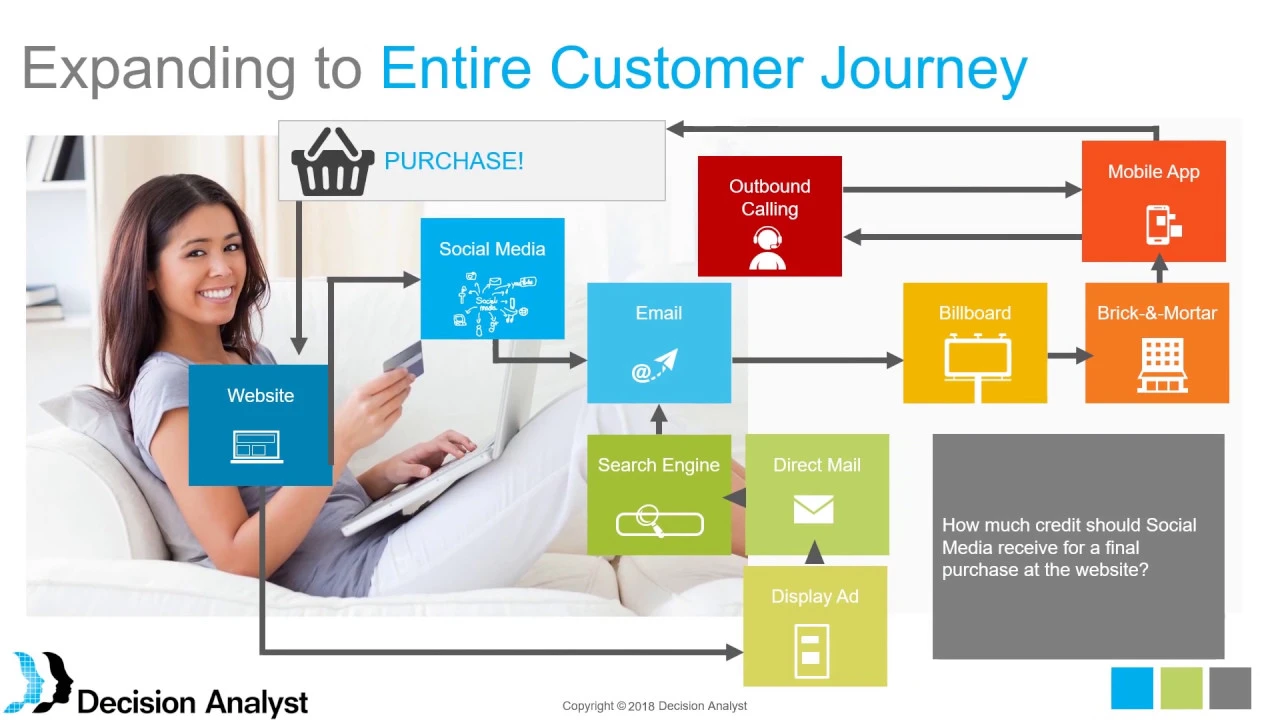
Marketing attribution modeling to accurately credit different touchpoints in the customer journey.
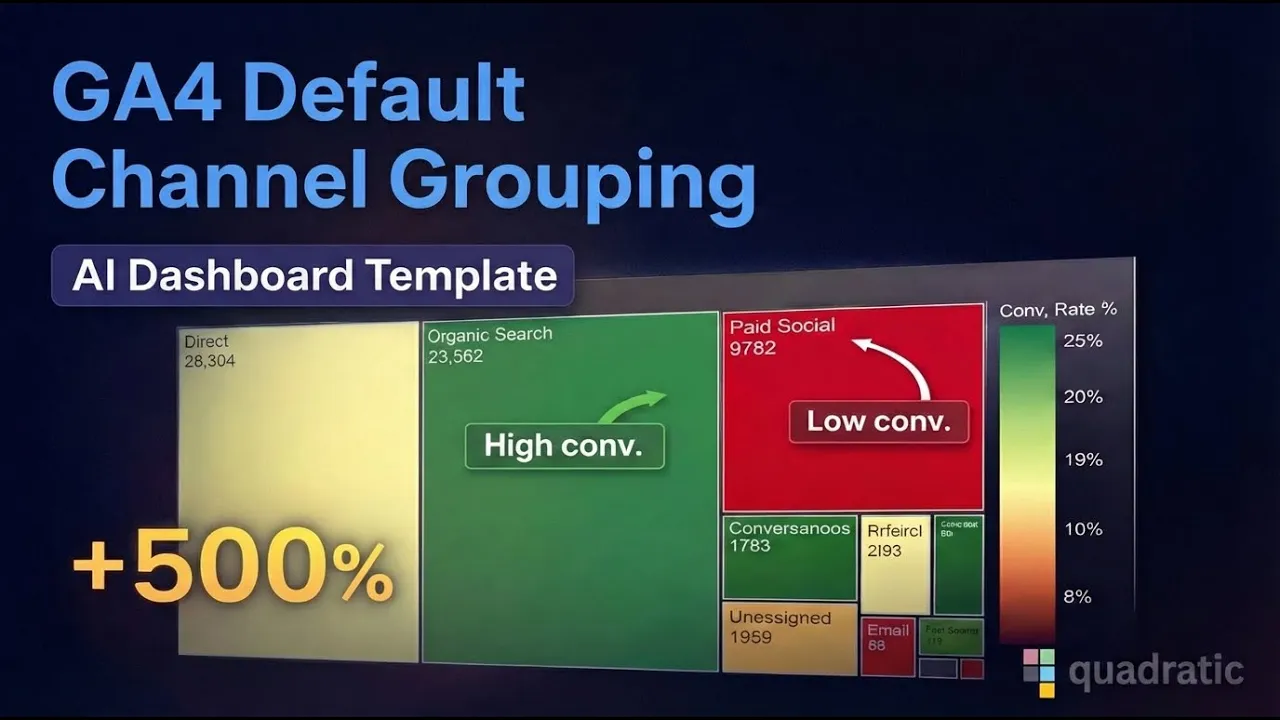
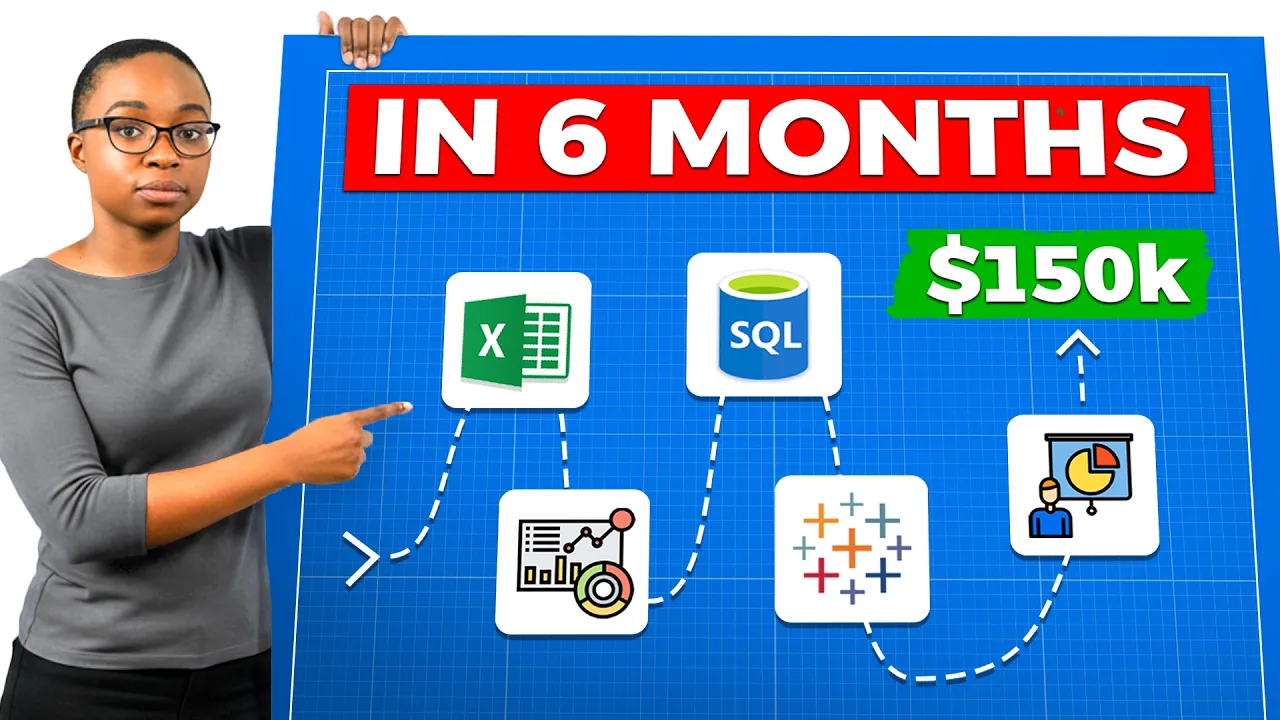
Designing and building marketing dashboards using business intelligence tools like Google Analytics 4, Tableau, or Power BI.
Implementing A/B testing and Conversion Rate Optimization (CRO) methodologies to actively improve tracked metrics.
Predictive marketing analytics and budget forecasting based on historical performance metrics.
5.2K views86likes13:37Original Release: 2020-07-22
- Hey, it's Rick Kettner here, let's explore five of the best marketing metrics that you should be tracking when it comes to business growth.
These are universal metrics that apply to virtually any product, service or business.
We're gonna go through each of the metrics individually.
And as I break them down, we'll talk about which of the metrics tend to be overrated and which tend to not get the time and attention that they deserve when it comes to business growth.
If you enjoy this kinda video, please lemme know by clicking the like button down below.
But let's get into it.
This are often referred to as Pirate Metrics because of the A.A.R.R.R. acronym.
They were created by Dave McClure and the acronym represents, acquisition, activation, retention, referrals, and revenue.
These metrics can help you track the overall health and growth of your business.
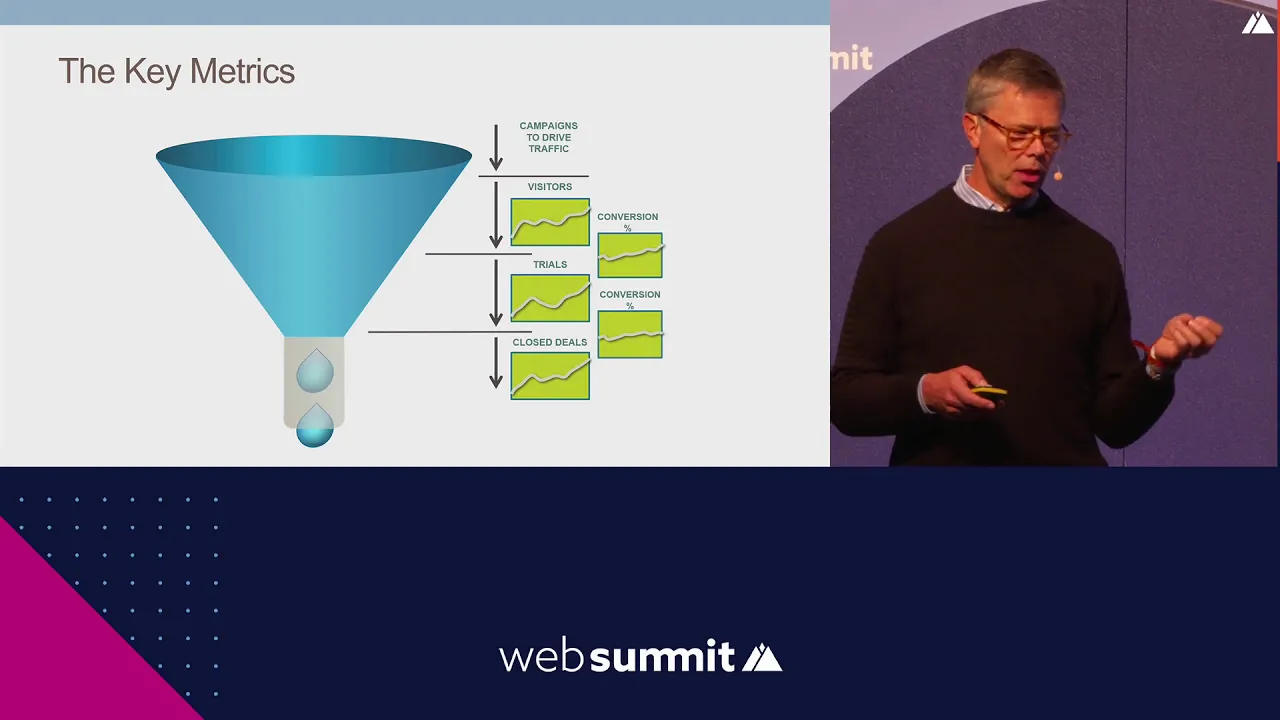
They can be used as a very basic marketing funnel, although there are better marketing funnels out there and that's something that I plan to cover in a future video, but the primary use in my experience for these metrics is measuring and tracking the overall health and growth of your business over time.
Let's dive into metric number one, acquisition.
The goal here is to attract how often you acquire a new customer or a new user.
And the definition is largely gonna depend on your specific business model.
So, for example, if you're running an E-commerce store, every new customer that places an order is a newly acquired costumer.
If you're running a SaaS platform, or a mobile app, every new user that creates an account, whether it's a pay account, a trial account, or a free account, that is a new user, a new customer for your business.
If you're selling a physical product, well of course, every new customer that makes a purchase would count.
And if you're running some kind of a in-person experience, maybe a physiotherapy studio, every new client that registers for a session would count as acquiring a customer.
So, you're gonna wanna get really clear on what this means for your specific business.
But the idea here is you need to track this number and see how it grows over time.
So, whenever someone turns from an unidentified visitor into an engaged prospect or customer, that would be considered acquisition of a new customer or a prospect.
Let's move on to metric number two, activation.
The goal here is to track onboarding or activation for your product or service.
And this is one of those metrics that is really undervalued because most businesses tend to overly focus on making the sale, the acquisition stage.
Where you bring in the new customer, you have them sign up, they create an account, whatever it might be.
But activation is having them actually use the product or service in a meaningful way.
So this all starts with getting really clear about the core value of the product or service.
What is the aha moment?
What is that moment where a customer understands that they made the right purchase, or they made the right decision to acquire your product or service?
They finally get it, they understand how it will help them, and they realize that this is indeed the solution to whatever their problem was.
So lemme give you some examples of this, when it comes to physical products, that moment where they actually unbox and get the product and they understand how to use it.
Let's say it's a pull-up bar, they actually mount it into the doorframe, or however it works, and they do their first pull up.
They see that the product works.
They understand how it's gonna help them.
Let's say they ordered a food mixer, they get it set up in their kitchen, they figure out how it works, and they bake their first original recipe.
And again, this is the moment where they realize, this works, it's gonna have the potential to transform their life in some meaningful way.
If you're running a SaaS platform, the core experience is gonna be, whatever that value is that customers anticipated getting when they signed up.
So for example, Dropbox.
When you sign up for Dropbox, it's not setting up your account.
It's not installing the application.
It's the first time that you actually sync a file to the cloud, either so that you can sync it to another one of your devices or so that you can share it with a friend.
That is the aha moment where you see, "This works, it's actually gonna change my workflow or how I go about managing my files."
Let's say you're running a mobile application like Uber.
Again, not just installing the app, not just creating your account, but actually calling an Uber to come pick you up, and seeing that whole experience.
Getting to appreciate the core value of the service and seeing how it actually operates, and recognizing the huge difference between traditional taxis and how Uber operates.
And finally, going back to our physiotherapy example, not just registering for your first session, but actually showing up and going through your initial assessment and realizing, "Hey, this is probably gonna help me.
It seems like they know what they're doing, and they're putting together a plan for me," whatever that might be, right.
So it's not just about closing the sale.
Here in the second metric, we're focused on activation of the customer.
Getting them to actually experience the core value.
And of course, at the end of the day, your longterm goal with tracking this, is to improve or increase the number of people that are moving from acquisition to activation.
So one core element of that is making it easier and easier.
Stripping away any friction that is between the initial purchase and experiencing the core of your value product.
Making it easier for customers to move from the first stage to the second stage.
But the core idea just to kinda summarize this, track how many people move beyond acquisition and make first use of the product or service.
Let's move on to metric number three, retention.
As you may know, it's much easier to keep a current customer happy than it is to acquire a new customer.
So, this is one of those metrics that is undervalued because again, we tend to focus most of our time and attention as marketers, as entrepreneurs, as business owners on acquiring new customers.
The idea here is we wanna track ongoing usage of our products and services, if at all possible.
So lemme give you some examples of this, if you're running a SaaS app, or a mobile app, how often do people use your product or service?
I'm not just talking about billing.
So if they set up their account, and you're continuing to bill them month after month, that doesn't count, we'll talk about revenue later.
What I'm talking about here is actual repeat usage.
How often do they log back into the mobile app?
How often do they load up the mobile app?
How often are they actually using it?
If you're running an in-person service like physio, as I mentioned earlier, do clients stick with your program all the way through to the end?
Or do they drop off early or give up on the service for some reason?
You wanna be really clear about your retention.
If you're selling a physical product, do customers continue to use the product over time?
Or do they just buy it, use it once or twice, and then throw it in the closet somewhere.
Now, like I mentioned, sometimes this is really difficult to track, and that's okay.
At bare minimum, you wanna be aware of this idea, you wanna be thinking about retention, you wanna be thinking about ways to help your customers continue to get value from your products and services over time.
Because in the case of a physical product, even if it's a one-time purchase, and they're never gonna come back to you for any sort of recurring or renewable, or consumable element of the product, you still want them to be happy because a happy customer, number one, they're more likely to leave you positive reviews.
Number two, they're more likely to recommend your product or service to other people.
And perhaps number three, as an entrepreneur, there's just much more satisfaction that comes from knowing customers are actually using and enjoying your product.
So for a whole variety of reasons, you wanna get clear on simple ways to track customer loyalty and to track repeat usage over time, if at all possible.
And even if not possible, you wanna focus some of your marketing efforts in this area, to make sure that people have the opportunity and the information they need to get better use and more value out of your products and services.
Let's move on to metric number four, referral.
This is critical because word-of-mouth is arguably the single most powerful marketing strategy for most businesses out there.
So you wanna look for ways to encourage and track whenever a customer is referring or recommending your product or service to somebody else.
One of my favorite strategies here is to look for two way rewards.
Some way to reward the person that recommended your product and some way to reward the person that actually took that recommendation and took action by either buying or creating an account, something like that.
So lemme give you a few examples of this, Dropbox.
When you create a free account with Dropbox they encourage you to recommend the service to other people and when you do, if that person accepts, they get a free membership to Dropbox, and you get increased storage for your account.
So both people are being rewarded.
A lot of E-commerce stores follow a similar model by, every time somebody buys a new product or service for the first time, they get a coupon code that they can share with a friend.
And if that person creates a new account and places their first order, they get a discount on their order and you get a discount on your next order, or some variation of this, where both parties are being rewarded.
And totally different approach, if you're running some kind of an online community where people have a profile page, maybe they have a chance to earn achievements, or badges, or something like that.
You can often use a simple system where they actually get social status or some kinda an achievement or indication on their profile, that they are a brand ambassador.
So, if they've invited let's say five other people to the platform, they could get a badge on their profile that says that they are at level one or at level two ambassador of the platform.
And this incentivizes them through social status, through social standing in the community, to further invite more people to the platform.
And the nice thing about this, doesn't cost you money, it gives them a very real reward in the sense of accomplishment.
And it brings other people to the platform without necessarily messing with margins, or price points or anything complicated like that.
So that's another really powerful option.
One thing to keep in mind when it comes to tracking referrals, it's not always possible to track this sort of thing.
So one backup option, if you don't have a really great option available to you, is to simply add a simple drop down box to either your order form or to your thank you page, which simply asks people, where do they hear about your product or service?
You've probably seen this in the checkout process, or just as, "How did you hear about us?"
And then there's a drop down box where they can say, you know, search engine, advertisement, word-of-mouth referral, that sort of thing.
Sometimes they go a little bit more granular, in terms of where the advertisement was or who referred the product, but that kind of solution is a very, very simple way to roughly get a sense of which of your marketing efforts are working.
But the core idea here is you just wanna get a sense of, are your referrals going up or are they declining over time, so that you can focus more or less on this area, depending on how the rest of the marketing metrics are panning out for your business.
But let's move on to metric number five, revenue.
It's really important to track the overall revenue that you're collecting from the average customer.
This is often referred to as CLV, or customer lifetime value.
And the reason why this is so important is because the more value you're able to create for customers, either by offering additional products and services, or by having them continue to come back and buy your existing products and services, or even just maintain their subscription for a longer period of time.
The more value you can create for customers, the more revenue you can earn, and of course, the more revenue you earn, the more you can turn around and spend on advertising to attract new customers.
So the more that you earn, the more you can spend very, very simple.
And of course, the more value and create for customers is also just great because as a business, you wanna create value, you wanna make them happy, you want them to love your brand.
So that's another obvious reason why, you know, the more you can get them to spend with your company, that's indicative of the overall value that you're providing for them.
Now, when it comes to tracking this metric, it's probably one of the easier ones to track in general, whether you're running an E-commerce store, a SaaS platform, a mobile app, a subscription service, it's pretty easy to get this data and have it be really reliable over time.
If you're running a brick and mortar store, you can use loyalty programs, or membership cards of some kind to track this data.
But either way, you wanna account for the age of your customers.
And what I mean by age is how long they've been a customer to your business.
Because one thing you wanna be very aware of is you can bring down your averages, especially if your business is rapidly growing.
If you're looking at averages across all of your customers, including customers that maybe just joined in the past few months.
So let's say that your business is growing really quickly.
A lot of your older customers have spent a lot of money on your business but you're getting a flood of new customers and they've only been with you for a few months.
So maybe they've spent significantly less with you.
Well, obviously, that's gonna bring down your averages, and it's not gonna be as predictive for what you should expect, in terms of what you'll earn from those customers in the future.
And the reason why it's really important to be accurate is because again, it speaks to how much you can afford to spend on advertising.
So in some cases, you're gonna wanna look for ways to segment lists and maybe focus on customers that have been with you for a certain amount of time.
So for example, once a customer has been with you for a minimum of let's say, six months, what is their lifetime customer value once they've reached that level?
Or you might choose a year or two years, depending on your business and how long most of your customers have been with you.
But it's really important to look for accurate numbers when it comes to getting a sense for lifetime customer value, so that when it comes to advertising and looking to grow your business, you have a better sense of how much you can spend.
But those are the five metrics.
Lemme quickly recap them for you here.
You've got acquisition, activation, retention, referral, and revenue.
That's it for this video.
If you enjoy the video, please let me know by clicking the like button down below.
And if you have any questions or comments or thoughts about anything that we covered here in this video or if you want me to create a follow up video, going into even more detail on any one of these metrics, lemme know down in the comment section below.
And if you wanna learn more about business, marketing or entrepreneurship, then I recommend that you subscribe or follow my updates so that you don't miss out on future videos.
Thank you for watching, and I'll see you in the next video.
Up Next

39:48
Designing a Customer Health Score: A Strategic Framework
@Getamity
846 views•2018-04-11

46:36
Retention Habits of Top DTC Ecommerce Brands Revealed
@SendItPodcast
44K views•2026-03-03

15:23
Decoy Effect: How Pricing Psychology Influences Consumer Spending
@bobinvestsUS
90K views•2026-01-05

17:30
The Planned Obsolescence of Light Bulbs and Tech
@veritasium
25.3M views•2021-03-26
Related Study Plans & Knowledge Roadmaps
Structured learning paths in Business
business
Pop-Up Retail: Strategy, Design & Execution
01Introduction to Pop-Up Retail & Strategic Goal Setting
02Budgeting, Site Selection, and Legal Essentials
03Experiential Retail Design & Visual Merchandising
+ 2 more learning modules
15h5 modules
Explore Roadmap
business
Reg CF: Startup Funding, Marketing & Launch
01Introduction to Equity Crowdfunding & Reg CF
02Platform Selection & Legal Preparation
03Crafting High-Converting Campaign Assets
+ 2 more learning modules
14h5 modules
Explore Roadmap
business
Productized Services: Scaling Solo Freelance
01Foundations of Productized Services
02Packaging and Scope Definition
03Pricing and Subscription Models
+ 2 more learning modules
15h5 modules
Explore Roadmap
business
Gov Procurement: Find, Bid & Win Contracts
01Introduction to Government Procurement & Business Setup
02Small Business Certifications & Set-Asides
03Finding and Analyzing Contract Opportunities
+ 2 more learning modules
14h5 modules
Explore Roadmap