












![Edgar Allan Poe: Medo Clássico Vol. 1 [RESENHA]](https://i.ytimg.com/vi_webp/dunltvI00L0/maxresdefault.webp)
![[RESENHA] Contos de Imaginação e Mistério - Edgar Allan Poe](https://i.ytimg.com/vi/KSvDCFEY9Lk/maxresdefault.jpg)

![Como analisar o Conto o Gato Preto? - Análise - Edgar Allan Poe [SEM COMPLICAÇÃO]](https://i.ytimg.com/vi_webp/-V9DPUAtWus/maxresdefault.webp)









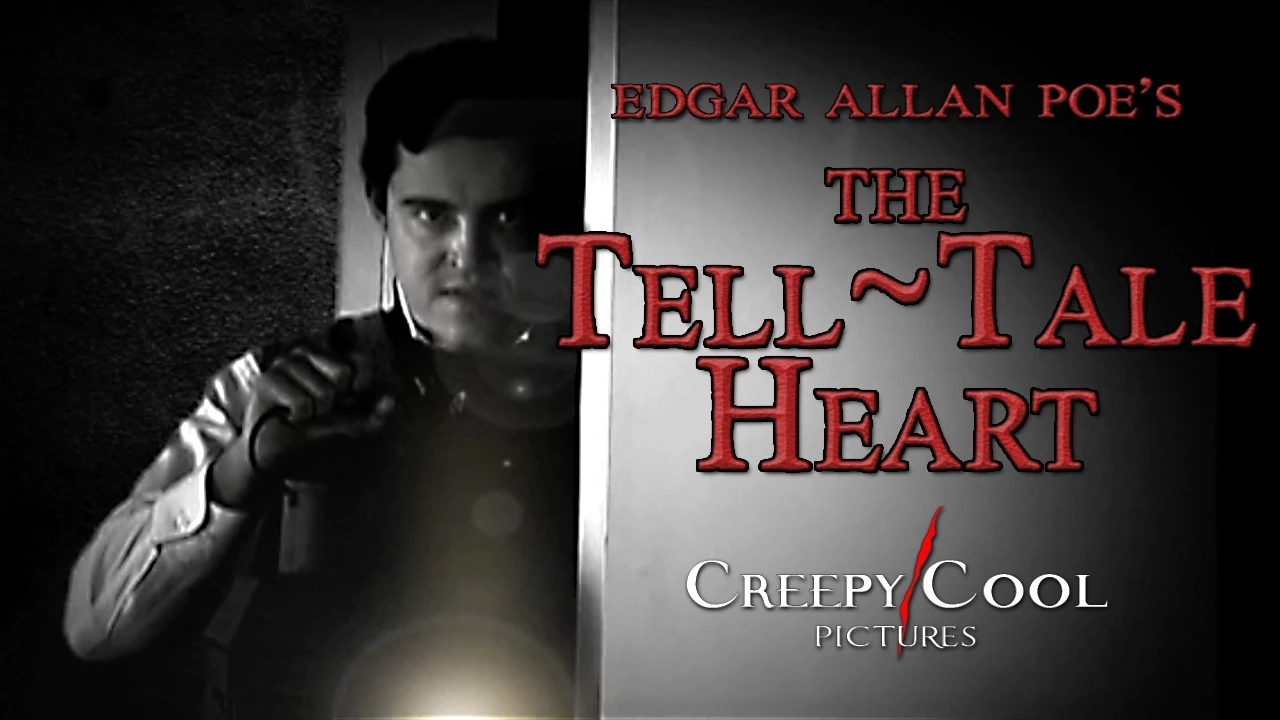
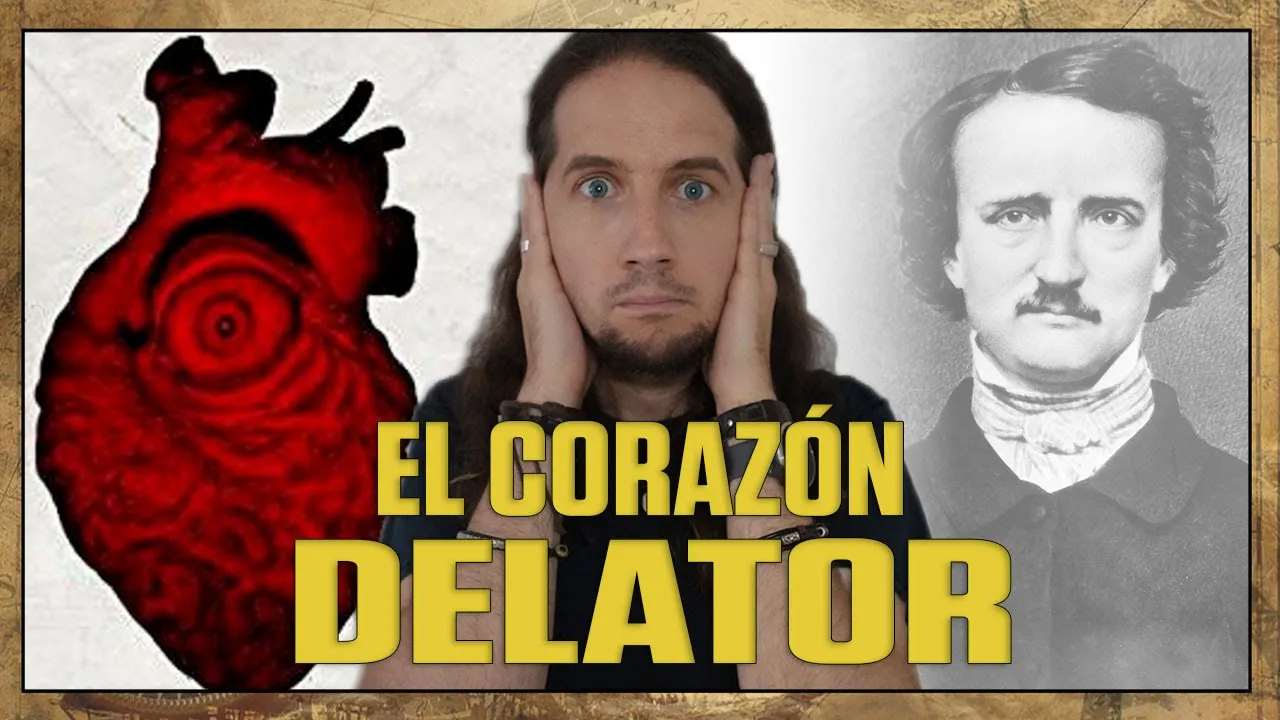
Edgar Allan Poe's 'The Tell-Tale Heart' explores the theme that rationality alone is insufficient for moral goodness, as the narrator demonstrates meticulous planning and execution of murder while lacking compassion and humanity; the story employs an unreliable narrator who tries to prove his sanity by detailing his elaborate crime, yet his obsessive focus on the old man's 'evil eye' and subsequent hallucinations of a beating heart reveal his underlying insanity, illustrating how a rational mind without a heart can become a tool for evil rather than good.
Analyzing Poe's The Tell-Tale Heart: Symbolism & Madness
Added:Familiarity with the plot, characters, and sequence of events in Edgar Allan Poe's short story 'The Tell-Tale Heart'.
Understanding of basic literary devices, particularly the definition and function of a 'symbol' and an 'unreliable narrator'.
An introduction to the characteristics of Gothic literature and Dark Romanticism, including their focus on the macabre, dread, and the human psyche.
A foundational grasp of psychological concepts such as acute paranoia, guilt, and auditory hallucinations.
Comparative literary analysis of 'The Tell-Tale Heart' alongside Poe's other works of psychological horror, such as 'The Black Cat' and 'The Pit and the Pendulum'.
Application of psychoanalytic literary theory (e.g., Freudian concepts of the id, ego, and superego) to dissect the narrator's subconscious motivations and guilt.
Investigation into the 19th-century historical and legal context of the 'insanity defense,' which heavily influenced Poe's depiction of the narrator's plea for sanity.
Exploration of the evolution of the unreliable narrator in modern fiction, comparing Poe's techniques to modern psychological thrillers.
167.8K views3.1Klikes10:46Original Release: 2014-01-19
Hi, I'm Rebecca Balcarcel.
Let's talk about Edgar Allan Poe's "The Tell-Tale Heart," a short story.
He starts off with the narrator speaking directly to us, and he says, "True!
-- nervouse -- very, very dreadfully nervous I had been and am; but why will you say that I am mad?"
And here we find out this speaker's purpose.
What he wants to do is convince us that he is not mad.
Mad here does not mean angry, it means insane.
So the whole time he's saying, "I'm not insane.
I killed someone, but I'm not insane.
I put the body in the floorboards, after carefully chopping it up, but I'm not insane."
And of course, the more he talks, the more we're convinced that he is indeed crazy, mentally ill, insane.
Now, Poe manages to create this voice, this character, who is telling us this, and it's quite an accomplishment because the character speaks against his own purpose.
So the more he talks, and insists that he's not insane, the more we think, "Yes, he is."
So as his own speech convicts him, it's kind of ironic, and it's interesting.
Now why is he killing this man?
Let's find out.
He says, "I loved the old man."
Well, okay, why kill him?
He says, "I think it was his eye... a pale blue eye, with a film over it."
So the man has some kind of, you know, issue with his eye, glaucoma or something, but to the narrator's way of thinking, the eye is somehow evil.
In fact he says, "I made up my mind to take the life of the old man, and thus rid myself of the eye forever."
And further on, he says, "[the] Evil Eye."
So this eye has become an object that he's obsessing over.
And when he sees the old man, he doesn't see him as a full human being anymore.
He sees the eye.
And he's got to rid himself of the eye.
Now why is the eye freakin' him out so much?
Well, in his diseased mind, and in his psychology, he's attributed traits to that eye that are not actually there.
I mean, in real life, it's just an eye, and it probably has some kind of physical problem.
But in the mind of this narrator, the eye is evil.
Maybe it's a symbol of the authority that's over him with the old man there, but we don't really know that.
We don't see any evidence of that.
For some reason it bothers him.
So somehow the eye has become a symbol of evil, so he's got to get rid of it.
Now who is this old man, anyway?
We don't know that either.
Does our narrator, the murderer, just live with him, like he's renting out a room?
Could be.
Is he a servant?
Could be.
Is he the son of this old man?
Could be.
We don't know.
We just know that he lives there, and that he calls him the old man.
Now, he says, "...how wisely I proceeded[, and] with what caution..." The narrator keeps saying, "Look how carefully I proceeded as I decided to kill this man.
Seven nights I spent practicing going into his room, very slowly, with my lantern."
Lots of detail.
And all of this obsessive detail, and the whole elaborate plan of going in the room, the bedroom of the old man, night after night, just serves to show us how freaky this narrator is.
Now finally, we get to the eighth night, and he actually kills him.
When he arrives, the old man wakes up.
So this time the old man is awake and frightened, and makes a sound, and his moan reminds our narrator of the moan he used to make sitting up in the middle of the night, hearing the "death watches" in the wall.
Now he's not talking about watches like you wear on your wrist to tell the time.
He's talking about the beetles in the wall that make little knocking sounds.
So he hears those beetles, that made him feel lonely, made him feel like making this sound, this soul-wrenching sound, the same sound he's hearing from this old man.
Finally he opens the little door of his lamp, and allows a little light to shine onto the man, and it lands exactly on the eye, and it says, "at length a simple dim ray, like the thread of the spider, shot from out the crevice and fell full upon the vulture eye."
And then the eye is open.
"It was open -- wide, wide open -- and I grew furious as I gazed upon it."
So he's doesn't see the old man.
In fact he says, "I could see nothing else of the old man's face or person: for I had directed the ray as if by instinct, precisely upon the damned spot," meaning the eye.
Now the "damned spot" is an allusion to Shakespeare.
We have the play McBETH, in which lady McBeth is responsible for the deaths of several people, and she sees blood on her hands, and she tries to get that spot out, the stain is... She can't wash it off, and so her guilt and her shame is all there on the blood on her hands that she can't wash away.
So that allusion works very well here, because Poe also is in- inside the voice of this murderer, as lady McBeth was a murderer, and this voice also is trying to get rid of something.
Lady McBeth is trying to wash her hands.
Here he thinks he's going to cleanse the world, or cleanse himself, by getting rid of that eye.
Now, he starts hearing the beating of the man's heart.
Now he can't possibly hear the beating of the heart of this man, and that's one of the more insane parts of it.
He can't hear it, but he thinks he can, and it gets so loud that he thinks that the neighbors will hear the old man's heart, and that prompts him to smother him with the bed.
So he pulls down the blankets or the thick, maybe feather, bed.
He pulled that down, smother the man, and he still thinks he can hear the heart, but finally the man does die.
Now, he calmly chops him up and puts him in the floorboards, and then there's a knock at the door.
Now when the policemen arrive (that's who's at the door) our narrator says he's so calm.
He says, "Look how calm I was, inviting the policemen up, even to the very room where this old man was killed and where the body is."
And everything is fine, and the policemen don't realize what's going on, until the narrator starts hearing the heart again.
In his mind, the heart is getting louder and louder, and he assumes that the policemen can hear it too, and that they're just pretending not to hear it.
And he says, "The officers were satisfied.
My manner had convinced them."
So at first they're fine, but when he starts hearing that heart, he says, "I raved.
I swore."
And he starts acting stranger, and talking, and finally he's certain that they hear it.
"They heard, they suspected, they knew.
They were making a mockery of my horror."
So he thinks that they're making fun of him by not acknowledging that sound that is the heart of the dead man.
Eventually he says, "Villains!
Dissemble no more.
I admit the deed."
And he pulls up the planks and shows them.
Now he calls the policemen villains, and that's pretty ironic, because he's the villain, right?
The policemen have not done anything, but he thinks that they're making fun of him.
So he has this impression, and he always acts on his impressions, and unfortunately they're wrong.
This old man's eye is not evil, the policemen are not making fun of him, but he thinks that these things are true.
Now, what is this story saying?
I think a couple things.
One, I think it's a comment on rationality.
Rationality is something that this character has plenty of.
And he explains, in great detail, how calm he is, how organized he is, and how carefully he has carried out his plan.
What's missing is a heart.
This man does not have the sense of compassion and humanity that would guide that rational mind to some good goal.
Instead, he is insane, and so his rationality 'comes a tool for evil, instead of a tool for good.
Because he has a bad goal, all his rational ability goes into achieving something bad.
So rationality alone is not enough to make a good person, make a whole person.
You've got to have not only a head, but a heart.
The heart can direct the head.
And so the tell-tale heart is not only the heartbeat that alerts the officers... well, that makes him reveal his crime of murder.
Right?
The heartbeat.
But also we're seeing that a heart is exactly what's missing from this character.
Now what else is it saying?
Well, I think it's saying something about psychology.
The craft that Poe has put into this story is most noticeable, in terms of the voice, creating a voice that's inside of a mind that is diseased... Now, is there anything else?
Well, there could be, and if you have more ideas about the story, please leave them in the comments.
Join me for another video sometime.
Up Next
13:07
Dr. Jekyll and Mr. Hyde: The True Horror of Victorian Repression
@OverlySarcasticProductions
4M views•2019-10-31

13:43
Formalism in Literary Criticism: An Academic Lecture Overview
@mattalberhasky9952
39.1K views•2015-08-05

6:08
Point of View in Fiction: First Person vs. Third Person
@magicalthriftyteacher
153.8K views•2014-03-31

15:25
1984: Orwell's Dystopian World and the Mechanisms of Totalitarianism
@AlternateHistoryHub
7M views•2017-03-04
Related Study Plans & Knowledge Roadmaps
Structured learning paths in Literature
literature
Graphic Memoirs: Visual Art, Trauma & History
01Foundations of Sequential Art and Visual Language
02Autographics and Processing Historical Trauma
03Visualizing Personal Trauma, Grief, and Graphic Medicine
+ 2 more learning modules
14h5 modules
Explore Roadmap
literature
Campus Novels: Evolution, Themes & Critique
01Introduction to the Campus Novel Genre
02Mid-Century Satire and the Post-War Academy
03Dark Academia and the Critique of Privilege
+ 2 more learning modules
14h5 modules
Explore Roadmap
literature
Theater of the Absurd: Philosophy & Plays
01Postwar Existentialism & Historical Roots
02Dismantling Narrative: Esslin & Absurdist Conventions
03Samuel Beckett and Tragicomic Existentialism
+ 2 more learning modules
12h5 modules
Explore Roadmap
literature
Revenge Tragedy: Justice, Madness & State
01Foundations of Early Modern English Theatre
02Anatomy of Revenge: Structural Conventions
03Psychological Complexity: Madness and Melancholy
+ 2 more learning modules
15h5 modules
Explore Roadmap