






















Warby Parker disrupted the eyewear industry by combining a direct-to-consumer online model with strategic brick-and-mortar retail locations, creating a hybrid approach where sales are now split evenly between online and physical stores; this integrated model allows the company to leverage online cost efficiencies (streamlined manufacturing, no retail markups) while using physical stores to build customer relationships, drive discovery, and create a virtuous cycle where customers can engage with the brand through either channel before completing purchases, ultimately enabling profitability without charging premium prices.
The Economics of Warby Parker's Hybrid Retail Model
Added:Fundamentals of the Direct-to-Consumer (DTC) business model, including disintermediation and margin structures.
Basic retail economics, specifically comparing the cost structures (overhead, rent, inventory) of e-commerce versus brick-and-mortar stores.
Key performance indicators (KPIs) of digital brands, particularly Customer Acquisition Cost (CAC) and Customer Lifetime Value (LTV).
The concept of an 'omnichannel' retail strategy and how modern brands integrate online and physical touchpoints.
In-depth analysis of Warby Parker's post-IPO financial performance and the long-term scalability of the hybrid retail model.
The economics of vertical integration in the eyewear industry, specifically examining Luxottica's market dominance versus DTC disruptors.
Advanced retail analytics concepts, such as measuring 'halo effects' (how opening physical stores impacts localized online sales).
Comparative studies of other DTC giants (e.g., Allbirds, Casper) that transitioned to hybrid models, evaluating their successes and failures.
145.2K views2Klikes7:15Original Release: 2021-09-22
Warby Parker makes popular glasses.
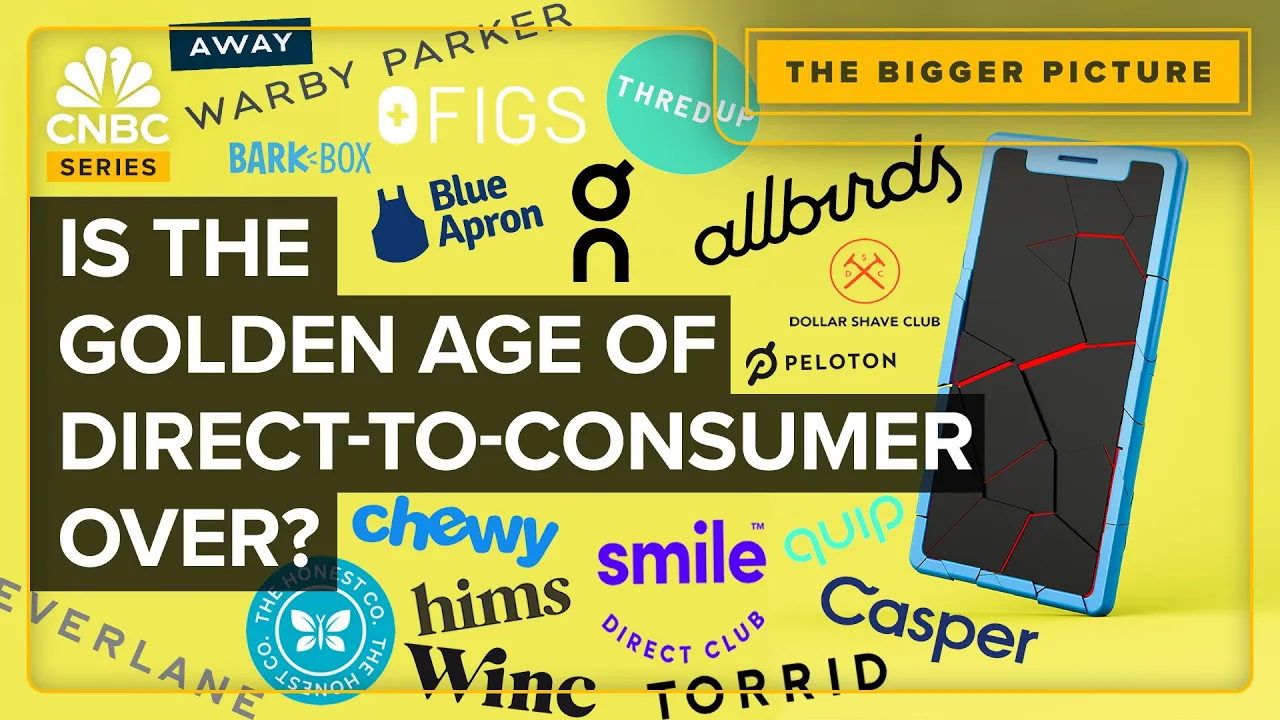
It also has a popular business model brand selling mattresses, luggage, shoes at leisure scrubs, razors, strollers, cookware, bedding, even hair color have all been called.
The Warby parker of what it means to be.
The Warby parker of is basically to be an online disrupter of a well established pre existing category.
The relatively cheap to start Warby parker like businesses can be expensive to market and many have failed.
Warby Parker however, has filed to go public high where Warby Parker, an eyewear company that offers high quality glasses starting at $95.
So as the now 10 year old glasses maker prepares for its stock market debut, let's look at how the business works.
It's a bit different than originally envisioned.
This is the economics of Warby Parker.
Warby Parker launched in 2010.
Quickly generating buzz with placements in GQ and vogue and gaining popularity with its unique home try on offer.
I ordered five free pair of frames from Warby Parker and we're going to try them on.
It took what was usually a in store retail only uh, experience and made it possible for customers to get a miniature version of that from the comfort of their homes.
These are, I don't like these.
Also got sunglasses.
Oh, Hey, you drive a sports car.
The offer to try five frames for free was essential for the brand when it launched as less than 1% of all glasses purchases were happening online back then, it's now about 8%.
So it's not necessarily about making a sale in the moment.
It's about whenever the customer decides that now is the time to purchase glasses, they will feel good about Warby Parker and their experience with Warby Parker the real selling point and the founders initial focus was the price.
The point was to give the consumer a product that felt like a designer frame but did not cost what people expect designer frames to cost.
Since its launch, Warby Parker has sold prescription frames starting at $95, how they do this is in part explained by what they don't pay for, including licensing fees associated with producing brand name eyewear and costs for placement in major retailers.
Instead, they streamline their process by having in house designers, they work directly with manufacturers for both the manufacturing of the materials and the building and assembling of the glasses themselves and all of that streamlining helps to cut costs.
They can essentially pass along those cost savings to their consumers or as the cliche goes, they cut out the middleman.
But as many similar brands have discovered that's not enough to make the company profitable.
One of the biggest challenges for direct to consumer business is getting eyeballs, getting customers you're really reliant on digital marketing and word of mouth and that costs money In 2020.
When many shoppers shifted online, Warby Parker spent an average of $40 per customer on a mix of advertising and home try ons To pay for its expenses over the years, Warby Parker has raised $572 million $3 billion, but it was money from a 2013 round that funded an experiment for Warby Parker that is now key to the company's profitability.
Physical retail, There's nothing quite like walking to a physical space, looking around and feeling the essence of a brand.
Warby Parker's first store was here in Manhattan Soho neighborhood.
It now has more than 140 retail locations in cities and malls across the us.
The company says in store sales averaged $2,900 per square foot annually.
They're not really concerned about overall profitability of the store locations themselves because they really see them as part of this customer relationship.
For Warby Parker, a sale online is as good as a sale in store, but it's worth noting that sales are now split evenly between the two, which marks a shift for what was originally an online only brand even though they have come in as a disruptor they have with their retail locations somewhat recreated the traditional purchasing process for customers.
The stores helped the company's bottom line, not just by generating sales but also by stoking interest.
Think of each store like a street level billboard for the brand.
You have actual discovery ability, which is something that direct to consumer businesses online can struggle with.
You have foot traffic and that's a way to start a customer relationship by the end of this year, Warby Parker plans to have opened over 30 new stores and continue at that pace in years to come to identify new locations.
The company leverages online data, it knows where people are buying and that allows the company to make informed decisions on where it may pick up new customers or drive people who have maybe heard of the brand to check it out.
So there is kind of this virtuous cycle that is created where a customer can find Warby Parker online or by walking past the store and as long as they complete a purchase at some point in the future, the company really isn't too fussed about where they do it.
That's really Warby Parker's secret sauce creating a model where the online and in store experiences work together to drive sales.
The next question, can Warby Parker drive investors?
The company confidentially filed to go public in june and now says it plans to do so via direct listing, an alternative to the traditional IPO for companies that don't need to raise money.
In a recent video to investors.
Warby Parker's co ceo said it was our goal from day one to demonstrate that a business could scale be profitable and do good in the world without charging a premium for it.
It's paperwork filed to the Securities and Exchange Commission offers some clarity.
The company's orders have increased slightly over each of the last three years, but Warby Parker still isn't profitable Last year, the company brought in $394 million 56 million.
How the old way on its future shares remains to be seen.
Casper Sleep, a direct to consumer mattress company went public last year.
Since its debut, shares are down roughly 50%.
If Warby Parker's listing can avoid the same fate, other, Warby Parker of brands will likely be taking notes.
Up Next

13:57
DTC Ecommerce Evolution: Why Online Retailers Expand to Physical Stores
@LogicallyAnswered
127.1K views•2026-01-05
46:36
Retention Habits of Top DTC Ecommerce Brands Revealed
@SendItPodcast
44K views•2026-03-03

15:23
Decoy Effect: How Pricing Psychology Influences Consumer Spending
@bobinvestsUS
90K views•2026-01-05

17:30
The Planned Obsolescence of Light Bulbs and Tech
@veritasium
25.3M views•2021-03-26
Related Study Plans & Knowledge Roadmaps
Structured learning paths in Business
business
Pop-Up Retail: Strategy, Design & Execution
01Introduction to Pop-Up Retail & Strategic Goal Setting
02Budgeting, Site Selection, and Legal Essentials
03Experiential Retail Design & Visual Merchandising
+ 2 more learning modules
15h5 modules
Explore Roadmap
business
Reg CF: Startup Funding, Marketing & Launch
01Introduction to Equity Crowdfunding & Reg CF
02Platform Selection & Legal Preparation
03Crafting High-Converting Campaign Assets
+ 2 more learning modules
14h5 modules
Explore Roadmap
business
Productized Services: Scaling Solo Freelance
01Foundations of Productized Services
02Packaging and Scope Definition
03Pricing and Subscription Models
+ 2 more learning modules
15h5 modules
Explore Roadmap
business
Gov Procurement: Find, Bid & Win Contracts
01Introduction to Government Procurement & Business Setup
02Small Business Certifications & Set-Asides
03Finding and Analyzing Contract Opportunities
+ 2 more learning modules
14h5 modules
Explore Roadmap